CRISPR: Book v. Documentary

by James Wallace Harris, 8/18/21

I’ve been learning about the gene editing tool CRISPR for years in bits and pieces. From reading news and magazines articles I had a vague idea that science had made a tremendous breakthrough, one akin to science fiction imagined in GATTACA and Brave New World. CRISPR/Cas9 will allow us to heal people with inheritable genetic diseases or cure people with conditions caused by defective genes, but more than that, it will allow us to program our own evolutionary developments, and change our reproductive germlines.

I don’t want to try and summarize CRISPR/Cas9 to you in detail because I’m recommending your read The Code Breakers by Walter Isaacson or watching Human Nature. But if you want a quick overview, here’s the Wikipedia entry.

My focus is to compare learning from a book versus a documentary. I’ve already acquired what I would consider rumors about CRISPR via Flipboard and The New York Times. Those are casual, everyday ways to absorb tidbits of information. But what’s the next level up? That depends on the time you’re willing to spend, and the amount of details you wish to digest.

Human Nature (2019) is a 1 hour and 35 minute documentary that’s currently available to Netflix or PBS Documentaries on Amazon subscribers, or to rent or buy from Amazon and other video sources. It’s a superior documentary that quickly covers the background of CRISPR with impressive infographic and animations, while interviewing the major scientists, then moving into the thorny ethical issues of gene editing, before finally wrapping things up by speculating about the future. After watching Human Nature you’ll have a good sense of what CRISPR can do and its science fictional impact on society. The documentary claims CRISPR will change the world more than the internet.

On the other hand, if you want go beyond the Gosh-Wow level, you could read Walter Isaacson’s new book, The Code Breakers. It’s 16 hours and 4 minutes on audio, or 552 pages of reading. The book tells the same story as the documentary but with far more detail. The framing of the book is a semi-biography of Jennifer Doudna, who shared the Nobel Prize with Emmanuelle Charpentier in 2020. Walter Isaacson is noted for his biographies (Leonardo da Vinci, Albert Einstein, Steve Jobs, Ben Franklin), and The Code Breakers is sort of a biography of Doudna, at least when it comes to her scientific career.

But The Code Breakers is much more. It’s a history of a technology that has emerged in our lifetime, and a chronicle how scientists work to discover and apply that new technology. We learn about publishing papers, going to conferences, building labs, forming startup companies, and competing for the Nobel Prize. If you loved books like The Double Helix by James Watson, The First Three Minutes by Steven Weinberg, or The Inflationary Universe by Alan Guth, then you should love this one too. I especially admired how Isaacson’s interviewed the various scientists competing for fame and glory, because he knew that they knew he was giving Doudna the scientific fame over them. Recognizing who came first in a discovery is a challenging piece of detective work that Isaacson pulls off with the skill of a master lawyer working the jury.

What also impressed me was how Isaacson told this complex story. I can’t imagine amassing so much information and then weaving it together into a compelling narrative. I’d love to see a documentary about how Isaacson researches and writes his books.

The Code Breakers will take you much further than the Human Nature regarding how genetic editing history unfolded, but the documentary has its own virtues, especially in compelling visuals. However, I wanted to go even further into learning how CRISPR works. Neither the book nor the documentary gave me the step-by-step concepts of what the lab work was like. Because CRISPR is so damn interesting, I went searching for even more information on YouTube. Both the book and film claims using CRISPR is easy, and that anyone can order educational kits to use the technology. I just couldn’t visualize that.

This short clip gave me more of what I wanted, but it’s still not enough, but I’m going to continue looking for more videos like this one. However, I also found this video about one of the CRISPR kits.

The trouble with wanting to understand even more is I run into the limits of my understanding. I found the 2012 article from Science that’s at the heart of the book. I can read it, and even spot ideas covered in the book and documentary, but 95% lies behind an event horizon of jargon I can’t penetrate. Just look at this one paragraph:

I love popular science books and magazines, but I have to take the working of real science on faith. I don’t like that. I’m hoping to find other books and documentaries that will help me in my quest to visualize how scientists do their work in a step-by-step process. Throughout the book Isaacson wrote about the experiments involved in discovering CRISPR, but I have no mental picture of what they were like.

For example, x-ray crystallography was often mentioned as a vital skill in this lab work. Seeing this video helps me visualize more of the narrative. What I would love is a Ken Burns type documentary, a 10-part series that visually illustrated The Code Breakers.

CRISPR is another example of the positive potential for our future, and another example that validates science. Sure, CRISPR offers all the potential evils of H-Bombs, but it also proves we have great abilities to solve incredibly complex problems.

I feel lucky to have experienced digital revolution, and I’d love to live long enough watch the gene editing revolution unfold. By the time the 2040s and 2050s roll around, society will be transformed again. But then, there will be other transformation happening in the same time frame. Our efforts to slow climate or our failure to do so will reveal another massive transformation. Talk about Future Shock…

JWH

Beyond Ordinary Friendships

by James Wallace Harris, 8/14/21

Lately, I’ve been meditating on the concept of friendship. We all live alone in our heads, spending our entire lives struggling to make contact with others who live alone in their heads. It’s a shame we don’t have telepathy, because we all so badly want to express ourselves. What kind of friendship activities are there that let’s people communicate effectively?

As marvelous as language is, it still fails us most of the time. I’ve been looking back at how well I communicated with different friends at different stages in my life. What worked, and what didn’t, and why.

My first friends should have been my parents, but I was too immature, my father wasn’t around much, and my mother had a philosophy of kids should be seen and not heard. There was definitely a generation gap that didn’t communicate. I did much better with my sister Becky. That’s because we played together.

When we were still rugrats, during the years before school, Becky and I could be thrown in with any kids and we played happily together. But often this was parallel play, or group activities where we didn’t think about what the other kids were thinking. We focused on hitting or catching the ball, or throwing the dice to get the number we needed in Monopoly.

Because my family moved around so much, Becky and I had to make a new set of friends every year or two. Up to junior high, friends were always the kids who lived on our street, or the ones we played with at recess. The activity determined the friendship. Communication was minimal.

Starting with 7th grade, I got good at finding a best friend fast wherever we lived. The key was to seek someone who liked the same games, toys, books, TV shows, movies, and bands I liked and not be shy. This shared interest technique is really the lowest common denominator of friendships.

The dynamics of friendship changed when I started dating. Then it became more about how well I paid attention to her and her interests. Years of dating, over forty years of marriage, and decades of friendships with women has taught me a whole different kind of communication. Not to sound cliché, but this was often about feelings and emotions, a language I was never good at. However, I learned to listen. But relationships were about getting what we wanted by helping someone else get what they wanted, and isn’t that a higher form of communication?

Work brought about another kind of communication. Fitting in and working together towards a common goal is a whole other kind of interaction and relationship. You didn’t have to know or like a person to work well with them, but you did have to know how to cooperate, take orders, or sometimes give them. There is a dynamics to that type of communication that’s not found in personal friendships, or romantic relationships.

Now that I’m retired I think about new types of friendships. When I worked I felt like I had dozens of friends, but nearly all of them disappeared when I quit. Susan and I spend a lot of time at home, especially since the pandemic. I mostly keep up with friends via the telephone. And most of my friends are people I’ve known for more than twenty years. This is back to the level of shared interests.

I have made one new kind of friend in recent years, and that’s internet friends. For example, I work with a guy from South Africa and a guy from Great Britain to run a short story reading group on Facebook. We are building a long distant friendship based on our love of old magazines and anthologies. It keeps us busy, and our group has grown to over five hundred members.

This has got me to wondering. What activities in the last third of life would make for interesting friendships? Of the retired people I know, many of them talk about maintaining old friends because they aren’t making new friends anymore. But don’t we have to make new friends? That’s one reason why I thought moving to The Villages in Florida would be fun. There are thousands of organized activities for retired people.

My friend Linda and I have accidently hit upon a new activity. We call it a two-person book club. We pick a book, then divide it into sections that we can read in a week. Then once a week discuss the section on the phone for an hour or two. This makes me feel much closer to Linda because we’re working on a specific wavelength. We don’t read ahead because we focus only on the ideas in the defined section. This forces us to think about the same things at roughly the same time.

When Mike, Piet, and I were working on a new version of a database about science fiction, I thought having that project put us on a shared wavelength for several weeks. That made for an interesting kind of friendship. I miss having that kind of project now.

This has gotten me to think about other projects or activities that bring me together with the people. For the four years while Trump was president, it created a bond of shared hatred with some friends. That was different. From the 1990s until 2020, I had a several friends I went to the movies with at least once or twice a week. Also before Covid-19 Susan and I were developing a group of friends with game night. Those two bonding activities haven’t been reestablished yet. Susan and I have developed a new connection when we got the cats. Because we don’t have kids, we’re missing out on a lot of social dynamics that some of our friends have.

Lately, I’ve been wondering if there are activities that bring about closer forms of friendship than just shared interests. Ones that promote higher levels of communication. I’m reading The Code Breakers by Walter Isaacson about the scientists competing to make CRISPR into biotech companies. These scientists don’t all like each other, but their work and competition has forced them to communicate at an exceptionally complex levels.

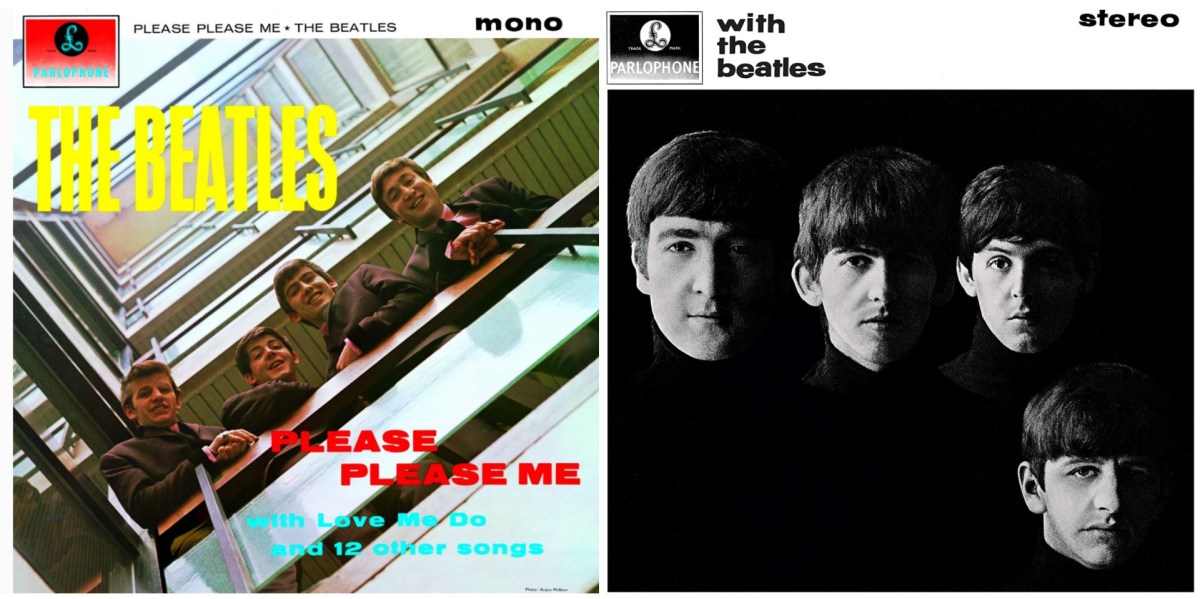
This leads me to see two kinds of friendships. Consumers and creators. Most of the time we communicate with our friends about the things we consume. We’re looking for common interests and loves. But if you’re in a partnership or on a team that’s building something, you don’t have to like the other people, you can even hate them, but you cooperate and communicate at a much higher level of complexity to achieve a common goal. I keep thinking about Steve Wozniak and Steve Jobs creating Apple Computers, and John, Paul, George, and Ringo creating The Beatles. I’d say those were two examples that required communication just short of telepathy. I also say that Walter Isaacson achieved an extremely high level of communicating when interviewing people to write The Code Breakers.

I doubt I’ll start a business in my seventies, but I wonder if there’s a project I’d like to start with other people. That could be volunteer work, but I’m thinking along the lines of building something. Maybe something with computers.

JWH

A Bright Vision of a Positive Future

by James Wallace Harris, August 12, 2021

Last night I had an epiphany while watching the NOVA episode entitled “Great Electric Airplane Race” on my Roku PBS channel. It’s available to view online or stream with the PBS channel (but it might require a Passport membership).

The show was overwhelmingly positive about the future, and it conveyed that hope by showing rather than telling. To avert the catastrophes of climate change will require leaving fossil fuels in the ground. That means converting to other forms of energy. Air travel is a big contributor of CO2, but designing electric airplanes has tremendous challenges. The example given was for a Boeing 737. It uses 40,000 pounds of jet fuel, but the weight of the batteries to replace that jet fuel would total 1.2 million pounds. How is it even possible to overcome such a Mt. Everest of a technical obstacle?

The answer is science. The rest of the show was about how science and engineering is actually tackling the problem. Expect a great transformation in the airline industry over the next two decades. One person in the show called it Air Travel 3.0. I had no idea that these inventions were that close to going into production.

And the new technology wasn’t even the most inspiring part of the show. Miles O’Brien interviewed and profiled many entrepreneurs, scientists, and engineers who were creating these new aircraft, business plans, and air control systems, and it uplifting to see so many women and minorities in leadership roles. This show proved social progress is happening too.

While I watched this episode I realized it was a vision of how things could be. We could solve our environmental, social, economic, and technical problems if we choose. That is, if we choose to be rational and scientific. This show was practically utopian in its scenes and implications. If you can, watch this episode of NOVA and meditate on what positives each scene suggests.

Of course, this isn’t proof we’ll solve our problems, just a vision of what it would be like if we tried. To succeed we need to overcome denialism. Denialism is holding us back. It’s why the pandemic rages on, it’s why we don’t commit to solving climate change. The denialists are going to destroy us.

The epiphany I had is we will succeed if everyone accepts science. Science is capable of solving our problems. The deniers don’t want to believe that for various philosophical reasons. I’m not sure if it’s possible to convert deniers into scientific believers, but that’s our pivot point between future success and failure.

For my own peace of mind, I’ve got to find more sources of inspiration like this episode of NOVA. Up till now I had given up on the future because I was convinced the deniers will bring us down. Now I want to focus on the doers. If you’re going to bet, especially psychological capital, bet on the winners.

JWH

The Most Disturbing Dream I’ve Ever Had

by James Wallace Harris, 8/9/21

Last night I awoke from a dream that was so disturbing I didn’t want to go back to sleep. I was afraid I’d end up dreaming it again. I used reading Facebook on my phone so I wouldn’t fall back asleep.

The dream began when I was walking down a sidewalk. I saw people up ahead and didn’t know them. When I got up to them they asked me who I was and I couldn’t tell them. They asked where I lived and I said at the other end of the block. I told them I only walked to the end of the block and returned because I’d forget where I lived. But when I turned around to walk back home I couldn’t find it.

I kept walking through suburban streets looking for a street sign name I knew, but none of them made sense to me. Eventually, I realized I was in an urban area with traffic. I kept thinking if only I could find the main street I could walk home by following familiar streets.

As I got more disturbed people would stop me. I couldn’t tell what they wanted. I started becoming afraid of people. I thought people were hitting me and I was blacking out. Whenever I came to I was someplace else. I kept having more and more blackouts. I felt people were hurting me, even molesting me. I wanted to find home so badly.

The last scene I remembered was pushing a car door open. I was trying to run away from the people in the car. I got out of the car and ran, but everywhere was so strange. Then I woke up.

This dream was so unpleasant. I went and sat on the commode for a while thinking about it. A dream can meaning anything, but my first thought was I was suffering from dementia or Alzheimer’s in the dream.

Eventually, I went back to bed, but I got out my phone and read things off of Facebook. I remember now I wanted to see names and places I knew. Sometime after that I fell asleep. Luckily I didn’t have that dream again.

I hope I never do.

JWH

How Well Do You and Pop Culture Remember Your Favorite TV Season?

by James Wallace Harris, 8/7/21

I recently joined the Facebook group The History of American Television. It has 73.4 thousand members, and I feel many are Baby Boomers. We were the first generation to grow up with a TV. It’s both remarkable and disturbing how many thousands of hours we’ve spent in front of a cathode ray tube. Television imprinted on us like ducklings to their mother. Now that we’re old, we nostalgically remember TV shows, and some of us even rewatch our childhood favorite series time and again. Everyone I know loves TV, but most stick to the new shows. However, a large percentage of my friends if they don’t occasionally rewatch TV from the past, wistfully remember shows from when they were tykes and teens.

My father (1920-1970) and mother (1916-2007) liked TV but they seldom talked about pop culture from their youth, or tried to reexperience it. And my mother’s mother (1881-1972) never talked about pop culture at all to me, and neither did my father’s mother (1898-1981). My generation, the Baby Boomers seems obsessed with remembering TV shows, movies, albums, books, games, sports – everything they loved growing up. That’s quite evident by all the diverse groups on Facebook devoted to wallowing in Oldie Goldie pop culture.

When the TV History Facebook group began discussing the first TV show they remembered I posted a photo from the show Topper (CBS 1953-55). That was the first television series I remembered watching when I was four or five. Up till then I never met anyone who talked about seeing Topper as a kid. I got 7,300 likes and 746 shares. I was amazed that so many people had the same blast from the past.

Like my peers, I’m hung up on memory and pop culture. Individually, we have personal memories, but collectively we have history. Both kinds of recall tend to forget and distort the past, often rewriting it. I’m old enough that every year is the 50th anniversary of a year I remember living, and the media celebrates with a string of significant anniversaries. For younger people it’s only abstract history. But if a kid today grows up watching Star Trek and digging The Beatles, do they have the same experience we had?

I find it enlightening to challenge my memories. Because of this Facebook group, I struggled to recall everything I could about the TV I watched in the 1966/67 season and compare it to how pop culture remembers those shows today. I was 15 and in the 10th grade. A great deal of real history happened during those months, especially regarding the Vietnam war, but I’m only going to focus only on TV shows.

First, my memories without using Google for help. Here are the shows I remember now and believed I tried to watch every week.

  • Star Trek
  • The Time Tunnel
  • The Girl from U.N.C.L.E.
  • ABC Stage 67

Of course Star Trek has become a cultural phenomenon and I’ve seen all the first season episodes since, some several times. I’ve also read books about the creation and production of the program, meaning my memories have been reinforced. I do have a memory of watching the very first episode of Star Trek when it premiered, and I have vague memories of liking specific first season episodes that existed before I saw the reruns. I think it came on Thursdays.

My memories of The Time Tunnel are vaguer. In recent years I’ve caught a few episodes shown on MeTV, and I remembered seeing them in 1966 but I couldn’t have recalled them before hand.

I’ve never seen The Girl From U.N.C.L.E. again but I remember it starred Stephanie Powers and Noel Harrison, Rex Harrison’s son. I have seen The Man From U.N.C.L.E. in reruns, a show I also loved from that time period, but I find them impossible to watch now. I’d love to see The Girl From U.N.C.L.E. again, but I assume it would be just as stupid to me now.

I can only recall one episode from ABC Stage 67, a musical with Ricky Nelson. I think it was called “Yesterday’s Heroes.” I’ve always had fond memories of that episode and even tracked down a copy of the soundtrack years ago.

That’s not much to remember to believe the 1966-1967 television season was my favorite. I can’t watch Star Trek anymore, but I did love it for many years and watched all the sequel series through Voyager. Star Trek has made a huge impact on pop culture, and even young people today know about it. I’ve had dreams over the years where I’m flipping through the TV channels and find an episode of Star Trek I haven’t seen before. I wake up feeling this tremendous sense of nostalgia, and wanting to watch Star Trek again. When I do I’m always disappointed. It’s never as good as my memories.

Now, using help from Wikipedia’s page for the 1966-1967 television schedule. It triggered countless memories I’ve forgotten. And that makes me wonder just how many memories are still recorded in my brain? I can only access them when triggered with an external clue. Could complete ancient episodes be recorded in my brain?

Sunday: I watched Voyage to the Bottom of the Sea by myself, The Ed Sullivan Show with my family, and then my sister Becky and I would fight with my dad over the final hour. He wanted Bonanza and we wanted The Smothers Brothers Comedy Hour.

Monday: My sister and I would watch The Monkees and I Dream of Jeannie, then I’d watch The Rat Patrol. I’d skip the rest of the evening, but I think my sister and mom watched The Andy Griffiths Show and Family Affair.

Tuesday: I watched The Girl From U.N.C.L.E, and then the family would watch The Red Skelton Hour (which is probably why I don’t remember The Invaders, a show I would have watched), and then my dad watched The Fugitive. The Fugitive bored me then, but a few years ago I bought the complete season on DVD and got into it.

Wednesday: My mom commandeered the first hour with The Virginian, which meant I usually didn’t get to see Lost in Space. I remember the kids at school loved Batman, but I thought it stupid. The family would watch Green Acres and Gomer Pyle. Sometimes I would stay, but mostly I’d go read science fiction. If I came back out I’d watch ABC Stage 67 or I, Spy, shows no one else in my family liked. I, Spy was my favorite show from the 1965-1966 season.

Thursday: I’d hog the TV on Thursday for Star Trek. Me and Becky would sometimes watch F Troop or That Girl. And my parents like The Dean Martin Show.

Friday: I’d watch The Wild Wild West or Tarzan, and then The Time Tunnel, and then 12 O’Clock High, sometimes with my dad, but usually I was by myself with the TV on Friday nights.

Saturday Night: This wasn’t a big night except for Mission Impossible which I think the whole family enjoyed. However, we often skipped it for Saturday Night at the Movies. That’s the show we watched most as a family.

Before I started these memory excavations I assumed I watched TV every night, and caught every episode of my favorite shows. But when I’ve tried to watch these shows again as reruns, DVDs, or streaming, I seldom found episodes I remember, except for Star Trek or The Time Tunnel.

As I squeeze my brain cells I realize I don’t believe now I watched as much television as I thought I did, and I don’t think we had as many regular family viewings. But I’m not sure. I do remember what I watched, and to a much lesser degree, remember who I watched with.

My mother and father were separated for the first half of that TV season, so we couldn’t have had that many family viewings that year. And once they were reunited, and we were all together again, we did watch TV as a foursome like I describe above, but I’m not sure how often. Once I began remembering TV from 1966-1967 season other memories emerged like digging for fishing worms in cow pies.

On the other hand, most of the shows from the 1966-1967 schedule are still being rerun, streamed, or sold on DVD today. Well, except the variety shows, but even clips and compilations from The Ed Sullivan Show and The Smothers Brothers Comedy Hour still show up. Pop culture has a more powerful memory than I do, especially after digitizing it. I could recreate and relive my 1966 days from artifacts off the internet.

These efforts to remember watching television is unearthing all kinds of connected memories. I need to stop here otherwise this blog would turn into a book. But I have one last interesting observation. I no longer like the shows I loved as a kid, but I discovered I now enjoy the shows my parents loved back then. I’ve bought the complete series DVDs of my mother’s favorite show, Perry Mason, and my father’s favorite show, The Fugitive. In the 1960s, both bored the crap out of me. In the 2020s I enjoy them.

JWH