Classic Science Fiction Books on Audio, Kindle and Nook

First off, look at the PDF report I made:  Classics of Science Fiction on Audio, Kindle, and Nook.  [Excel version.] What I did was take the ranked list from the Classics of Science Fiction web site and make a spreadsheet adding columns for Audio, Kindle, Nook and In Print.  By “In Print” I meant there was a paper copy for sale.  I then looked for the books on Amazon, B&N and Audible.com web sites, marking their columns Yes or No.

The original Classics of Science Fiction list was pulled from a database of SF titles that had been recommended from 28 different sources.  The final list were all books that had been on at least 7 of the recommended lists.  What I wanted to know is how well these books are represented in ebook and audiobook editions.

Of the 193 titles, 143 can still be bought as old fashion books.  81 can be listened to as audio books, 69 read on the Kindle and 64 on the Nook.  So a little less than half are available as audio books, and about a third as ebooks.  That doesn’t sound too bad.

However, if you use just a Kindle for reading, two thirds are not available, so that does feel bad.  Or if you’re an audiobook fanatic, a little more than half are unavailable.

35 books were not available from any source and 35 books were available from all four sources.  I made the all sources blue, and the no sources red.  Some of the red books might be available from other sources like print on demand, for ebook readers other than Kindle or Nook, or even on the web as public domain. 

Many of the red titles were collections, so I don’t worry about them going out of print.  Often a writer’s short stories get recollected under new titles.  If I saw a new collection that appears to have most of the original stories I counted the old title as being in print.

What’s troublesome is the number of novels that are no longer available.  Should John Brunner’s Stand On Zanibar really be considered a classic if no one is selling it?  Some of these novels do come back into print every decade or so, so if this list was made again in a year it would all be different.  Yet, I would think with the advent of ebooks all books will become “in print” digitally.

Some of the short story collections really should be in print today because they are major collections that deserve to maintain their identity, such as:

  • Adventures in Time and Space edited by Healy & McComas
  • Before the Golden Age edited by Isaac Asimov
  • The Past Through Tomorrow by Robert A. Heinlein

Someday I might reevaluate this list and remove the books that people have obviously lost interest in, and remove most of the short story collections, and titles that really shouldn’t be listed as science fiction, like Gulliver’s Travels and Animal Farm.  They are on here because fans polls or critics included them, but I think they shouldn’t be.

I’m also surprised by how many famous SF books are not available on the Kindle or Nook.  Do some authors not like ebooks and refuse to let their work appear in digital editions, or are there legal problems, or do some publishers think ebooks compete too well with print editions?

What’s fascinating is some books are only available in audiobook editions, like The Lensman series from E. E. “Doc” Smith.

JWH – 9/4/10

Revised 9/5/10:  I replaced the reference to Frank Herbert’s Under Pressure to John Brunner’s Stand on Zanzibar because Chistopher Carey below pointed out that Under Pressure is also known as The Dragon in the Sea.  Thanks for that information.  I also found a little know hardback version of The City and the Stars by Arthur C. Clarke.  I also added an Excel version because of a reader request.

I also changed the totals in various places.  I don’t know if it’s going to be practical to update the essay every time I update the spreadsheet/pdf report.
The Hunger Games Trilogy by Suzanne Collins

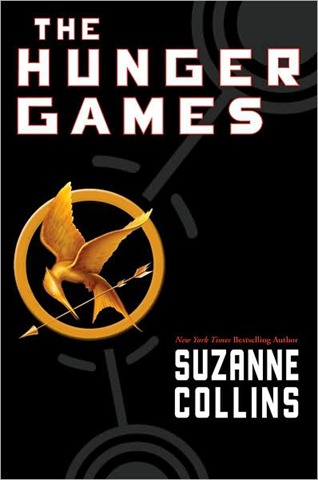
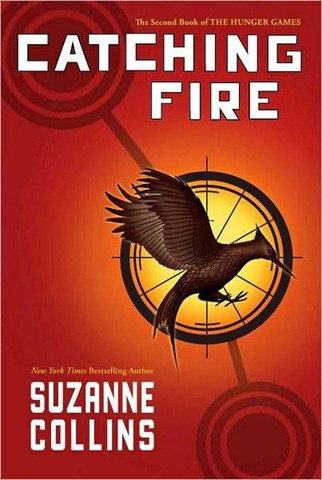
Why are YA novels so appealing right now?  I know many people in their fifties reading young adult novels like the Harry Potter series and The Hunger Games trilogy.  And these non-YA readers just gush about the great storytelling they are finding in their kids’ books.  I recently listened to The Hunger Games trilogy by Suzanne Collins, which includes The Hunger Games (2008), Catching Fire (2009) and Mockingjay (2010) and was amazed by how much I enjoyed them.  I was just blown away by Suzanne Collins’ narrative skills and plotting.  Nothing was conventional.  The story was completely fresh. 

I won’t tell you about the plot, because it sounded bizarrely unappealing when I first heard it.  But my friend Linda insisted that I get over that.  I’m glad I took her advice.  Just get a copy of the first book, The Hunger Games and give it a try.  Don’t spoil it by reading reviews.  Let me just say one lady I recommended The Hunger Games to has since read all three books and has already started rereading them.  If you liked The Giver by Lois Lowry or Ender’s Game by Orson Scott Card, the odds you should read The Hunger Games.

I caught this YA trilogy at the perfect time, finishing the first two the night before the third was released on August 24th, which I got from Audible that morning when I woke up.  I’m not sure I would have loved them so intensely if I had to read them a year apart, like I’m doing with the WWW trilogy by Robert J. Sawyer, another story that I highly recommend, also featuring a teenage girl as the hero of the story.

hunger-games hunger-games-2 mockingjay

My all-time favorite novels are the Heinlein juveniles, twelve science fiction books written in the late 1940s and 1950s by Robert A. Heinlein.  I read those books when I was a teenager, and the only books that come close to their excitement since then have been YA novels.  Is that a failure to grow up? 

Oh, I’ve read hundreds of adult novels that I greatly admire, but they lack the emotional excitement of YA novels.  That’s one clue.  Adult novels are great for intellectual reasons, but YA novels are fun for their emotions.  YA novels are like roller coasters – thrill rides, and even when they deal with ideas, they are sense of wonder thrilling.  Maybe us oldsters just want to feel young again.

YA novels defy genre classifications – they are all shelved together and not segregated by topics.  For instance The Hunger Games is science fiction, but it’s read and loved by all kinds of readers, including those who would never choose to call themselves fans of science fiction.    Stranger still, this trilogy has flown completely under the radar of most hard core science fiction readers. 

The Hunger Games and Catching Fire should have been Hugo winners, but they didn’t even make it to the nominee level.  Why?  I’ve read the 2010 nominees and I think Catching Fire stands up equal to any of those books.  Wake, by Robert J. Sawyer also features a teenage girl protagonist and is a YA novel too, but Sawyer is a big name in the SF genre, and Suzanne Collins is not.  Julian Comstock is also about tyrannical government that occupies the former United States like The Hunger Games, and its author, but Robert Charles Wilson has already won a Hugo and is well known to SF readers.

In other words, YA novels seem to be a world unto themselves.  According to Wikipedia, young-adult fiction is intended for 14 to 21 year olds.  I’m not the only one wondering about why us old folks are reading kids’ books, the New York Times ran “The Kids’ Books Are All Right” recently asking the same questions.  I agree completely with:

“A lot of contemporary adult literature is characterized by a real distrust of plot,” Grossman said. “I think young adult fiction is one of the few areas of literature right now where storytelling really thrives.”

Over at Ground Zero they asked what has sparked a YA golden age?  They point out that sales of adult novels are in decline while YA sales are growing.  They also give more first person accounts of adults reading more YA novels than their young adult children.  Did the Harry Potter books get us all hooked on reading kids’ books?

Over at the American Library Association they have their YALSA lists of Best Books for Young Adults broken down by long lists and top ten lists going back to 1996.  The Hunger Games was on their Top 10 Best Books for 2009, picked from 86 books from the longer list.  The Hunger Games was the only book I recognized, so maybe I have a treasure trove of great books to mine.  I didn’t recognize any of the 2010 top 10, and only one each from the 2007 and 2008 lists.  (I did read that one 2007 book, The Book Thief by Markus Zusak, and it was impressive.)

YA lit is a vast area of literature that I’m mostly unfamiliar.  I need to change that and go exploring.  It will give me something to do in my old age, and maybe even help rejuvenate my old mind.  Maybe YA books are appealing to us OA (Old Adults) because we’re weary of this old world and crave a younger one.

JWH – 9/1/10

My Pitiful Poor Empty Bucket List

Among my friends we’ve been talking about our bucket lists and I’m always embarrassed to admit that my current bucket list is empty.  In case you don’t know about the concept, it’s anything you want to do before you kick the bucket.  Many of my friends have a number of places they want to visit before they pass on, but I just don’t feel that way about travel.  I have eight weeks of unused vacation and enough money to fly anywhere in the world, but I just don’t have the desire to go anywhere.  Nor do I want to go skydiving or swim with dolphins or see the pyramids.  I’m not dying to do anything, and I wonder if I’m pitiful because of that.

I have to wonder if the fullness of people’s bucket lists are related to their age.  When you are young you feel desperate to do and see everything.  Because I don’t have much energy anymore, and I’ve got a lot of aches and pains, I just want to relax and kick back when the world is not being demanding.  The idea of flying to Paris sounds painful to me, even though I’d love to go there.  And I certainly wouldn’t want any more aches and pains by doing something foolish like sky diving.

No, at this time and condition in my life, I need to reevaluate the whole bucket list concept.  My wife tells me I’m too young to feel old, but I do.  Both mentally and physically.  I’m approaching my 59th birthday, which makes me think about the big six oh.  I really don’t believe 60 is the new 30.

Be that as it may, I do want to find things for my bucket list.  Even I would think I’d be too pathetic if it was empty.  But my current desires don’t really feel like bucket list items.  For about thirty years now I’ve wanted to lose weight.  I don’t need to be my skinny 27 year old self, when I weighed 155, but being under 200 would be a dream come true.  On the other hand I need to be careful what I wished for, because many conditions leading to kicking the bucket would bring on such weight loss.

There are destinations I could add to my bucket list, but they aren’t practical, like going to Mars, or time traveling back in time to June 16, 1967 to see the Monterey Pop Festival.  I do have one desire that’s semi-realistic.  I’ve always wanted to write a novel that got published.  Maybe I should alter that some, and put in my bucket list the desire to have a short story published.  Okay, I will.  That’s one item in my bucket list.

That’s the trouble with my desires, they all involved being accomplished at some skill.  I’ve never wanted anything involving plunking down some cash and just having it.  And many of my desires from youth were downright foolish, like wanting to play the guitar.  I have absolutely no musical talent.  I can’t hum a melody, I can’t even recite the lines to any of my favorite songs, so why wish to play the guitar?  Because I love hearing music.  Even now I have the urge to make number two on my bucket list to be able to play seven songs on the guitar well enough to be recognizable.

Like that will happen!  But what if it could?  Okay, number two on the bucket list is knowing my limitations and truly understanding them.

I’m not sure if the whole concept of the bucket list doesn’t belong to a certain kind of person, the thrill seeker.  When I was young I did a lot of things that could have gotten me killed or jailed, and I was lucky to keep my brain and body as intact as it is.  I have a lot of regrets, but they aren’t about places and activities I missed.  If I ended up on my deathbed tonight, the regrets I’d have about running out of time would be over my failure to be a better person.  And those details are not ones I’m ready to confess now.  There’s no place on the globe I can visit than can make me a better person.

But that’s another failure.  I’m too contemplative.  I can’t be a better person by thinking, only by doing.  Nor do I wish to imply I want to be a good person, that’s another trap like seeking thrills.

I’m not sure if life is about the cards in your hand, but how you play them.

JWH – 8/31/10

Kindle 3 and Science Fiction Short Stories

My Kindle 3, the wi-fi model, arrived Friday, August 27th.  I had bought a Kindle 1 when they first came out, but sold it a few months later to a lady friend who reads and travels more than I do.  At the time I was mostly listening to books and discovered I didn’t read much with my eyes any more.  Well, this year I joined four online book clubs and I’m doing far more eye reading.  Many of the books we read are out of print, with no Kindle editions, but a few are, so I thought I’d try another Kindle.

After unpacking my new toy, I was immediately struck by the Kindle 3’s elegant design.  The Kindle 1 had been clunky to hold, and much bigger and heavier.

kindle

kindle2

The new Kindle 3 is very light.  I couldn’t tell the difference between it and the weight of two books I’m comparing it to above.  The Catcher in the Rye is a trade paperback on the small size, so the Kindle is just a tiny bit taller and wider than the mass market paperback on the right, but much thinner.

My main purpose for the Kindle 3 is to read free science fiction short stories, especially free ones off the internet.  The first short story I loaded was “The Island” by Peter Watts, which I found in .PDF format.  I plugged in the Kindle 3 and found the documents folder and dropped it in.  It appears very sharp on the Kindle 3, even though it had a very tiny font.  Readable, but not font resizable.  If you read it online, the text looks larger, maybe 10-11 pt, but on the Kindle 3 it looks like its 8-9 pt.  Of course on, my 22” monitor, the page is much bigger.

This brings up the whole problem of getting content on the Kindle.  Books bought at Amazon are breeze to load and read with all the options.  These books have a DRM that protects them.  DRM free ebooks in the .MOBI, .TXT and .AZW formats can be copied directly to the Kindle with the USB cable, or with networking via Amazon.  With .MOBI or .AZW all the reformatting features work, but not with .PDF.  You can magnify the page, but that’s not very reader friendly.

Most .PDF documents are formatted for 8.5 x 11 paper – but if people wanted to create .PDF files specifically for ebook readers they should create a custom page size to fit ebook readers.    The Kindle screen is roughly 3 and 5/8th by 4 and 3/4th inches, which explains why the words are so small when reading a normal .PDF.

So I will prefer to avoid PDF stories if I can unless they have larger typefaces.  There are converters for PDF to MOBI but I don’t want to mess with a converter if I don’t have to.  I’d like to plug in my Kindle and just do a Save As to its documents folder.  There are websites like ManyBooks and Feedbooks that offer a variety of ebook formats that are directly Kindle compatible.  That’s nice.  So the second short story I got, “The Altar at Midnight” by C. M. Kornbluth, in .AZW was font adjustable, unlike the .PDF story.

In my online book clubs we’ll discuss short stories in addition to the novel of the month if they are available online and free for anyone to read.   (It’s too much trouble for everyone to track down a paper copy.)  I wanted the Kindle so I could read these stories not at my desk, but in my reading chair.  Now that I have the Kindle, I’m trying to find the easiest way to get these stories off the computer and onto the Kindle.  If they are too much trouble I won’t get around to reading them.

It’s a shame there isn’t just one format that all ebook readers to use.  Amazon really should support the unencrypted .EPUB format.  That would save a tremendous amount of work for web sites putting free ebook content online.  .MOBI seems to be the go-to format for free Kindle ebooks and it’s easy to get novels that way, but free short stories online tend to be in .HTML or .PDF, which if I want resizable fonts would require going through a converter.

It’s going to be a while before there’s enough people with ebook readers before a popular format will emerge to replace .PDF online.  Sorry Adobe, but .PDF just isn’t ebook friendly.  I tend to think .EPUB will be that universal format, but we will need Amazon’s help.

Besides the free content, there is a wealth of science fiction short stories to buy for the Kindle.  My first purchase for my new Kindle was The Year’s Best Science Fiction: Twenty-Seventh Annual Collection edited by Gardner Dozois, which turns out to have “The Island” by Peter Watts.  The annual Hartwell collection is available for the Kindle, but not the Horton and Strahan, but I expect that to change.  Amazon offers several years of previous editions of these anthologies too, so my Kindle will become a short story reading machine.

I can also get Analog, Asimov’s, F&SF, Interzone and Lightspeed magazines for the Kindle through Fictionwise, and Analog, Asimov’s and Lightspeed through Amazon.

Finally, Amazon offers a many reprint, theme and original story anthologies for the Kindle too.  The Kindle 3 will hold 3,500 books, which could mean 40,000 short stories.  That’s pretty nifty, when you think about it.

JWH – 8/29/10

Update: The 2010 Rich Horton collection is available at Lightspeed Magazine Store for $7.95.  Unfortunately, I see no sign of what formats are available.

Special thanks to Ignacio, whose comment below convinced me to try Calibre.  It solved the PDF conversion problem.  This elegant program does wonders with dicing and slicing ebooks.  http://calibre-ebook.com/

Ebook Ethics

Everything we do in life has ethical considerations, even something simple as buying books.  Ebooks represent a change, and that change has good and bad consequences.

Bad

  • Ebooks will put a lot of people out of work.  Bookstores may disappear like record stores.  This is a horrible consequence in these bad economic times.  The digital world is just more efficient than the analog world and that kills jobs.
  • Ebooks will also kill competition, reducing the number of businesses in the marketplace.  Amazon and Apple could theoretically take over all the book and music business from tens of thousands of small businesses.
  • Ebooks are anti-social.  Instead of buying books at a bookstore and meeting other people you order books directly.  Instead of sharing books with friends, readers are locked into a closed world of DRM.
  • Ebooks could damage cultural heritage and history.  Printed books can last for hundreds of years, and people value them, but ebooks probably have no lasting power at all.
  • Bookstores might become extinct which would be a huge cultural loss.
  • Book ownership is probably a deceptive concept and sellers like Amazon shouldn’t describe their ebooks are “for sale.”  To be honest, sellers should claim they are long term rentals until DRM copy protection is removed.

Good

  • Ebooks are extremely environmental.  Wood pulp technology uses lots of water, energy and chemicals, and those chemicals get into the environment.  Printing takes both energy and chemicals.  Distributing books creates lots of carbon and other pollutants.  The carbon footprint of ebooks is almost zero.
  • Ebooks could mean more money for writers, editors and publishers because ebooks could do away with the used book market.  As long as DRM technology is successful, more readers would actually buy books, instead of borrowing them or buying used, which is more ethical for the writer and publisher.
  • Ebooks might encourage more reading and literacy because of their convenience and possibly make reading more appealing to young people because ebooks are available on smart phones, an essential device for kids.
  • Ebooks could enhance cultural heritage and history.  It’s quite easy to load up an ebook reader with the great books of the western world.  Every child or family could have their own library of thousands of free books.

Ethically, the primary conflict is jobs versus the environment.  But that will be true of all industries and businesses as time passes.  If all books, magazines and newspapers were read on digital readers it would have a positive impact on the environment, but at a terrible cost in jobs.

The secondary ethical concern is which format is better for promoting literacy, knowledge and culture?  This is much harder to judge until after ebooks have taken over.  We won’t know their full impact for a very long time.  But consider this:  What if you could hold a device that had every book you ever bought or read in your entire life with annotations, notes, and supplemental reference essays and reviews?  Would such a superbook library have a positive social impact?

I already miss record stores and LP album covers, but I don’t miss LPs.  I don’t even miss CDs, but I do miss shopping for music at record stores.  I have a subscription to Rhapsody Music and can listen to as many CDs as I can cram into my month for $9.99, but the fun of discovering new albums is gone.   From about 1965-1995 I bought 2-4 albums a week.  I loved going to record stores, but that activity is as ancient as horse and buggy rides. 

I’ve been going to bookstores 1-2 times a week since 1965.  It’s about the only shopping I still like to do recreationally.  I’ve bought far more books than I have ever read, or will ever have time to read.  I will truly miss bookstores if they disappear.

On the other hand, I discover all my books and music now from the Internet.  I’m in four online book clubs.  I’m far more involved with books, authors and readers then when I only shopped at bookstores.  Most of my friendships are based around talking about books or music.  I never really went to bookstores or record stores to socialize with the staff, or ask them for recommendations, although I’ve always liked meeting other book and music fans.

Amazon, with its supplemental content and customer reviews has been a quantum leap in helping me discover new books to read.  It’s far more social in helping me make book buying decisions than bookstores ever were.  Web 2.0 technology is a different kind of socializing.  It’s intellectual over physical. 

JWH 8/21/10