Should We Feel Guilty for Not Buying Books in Bookstores?

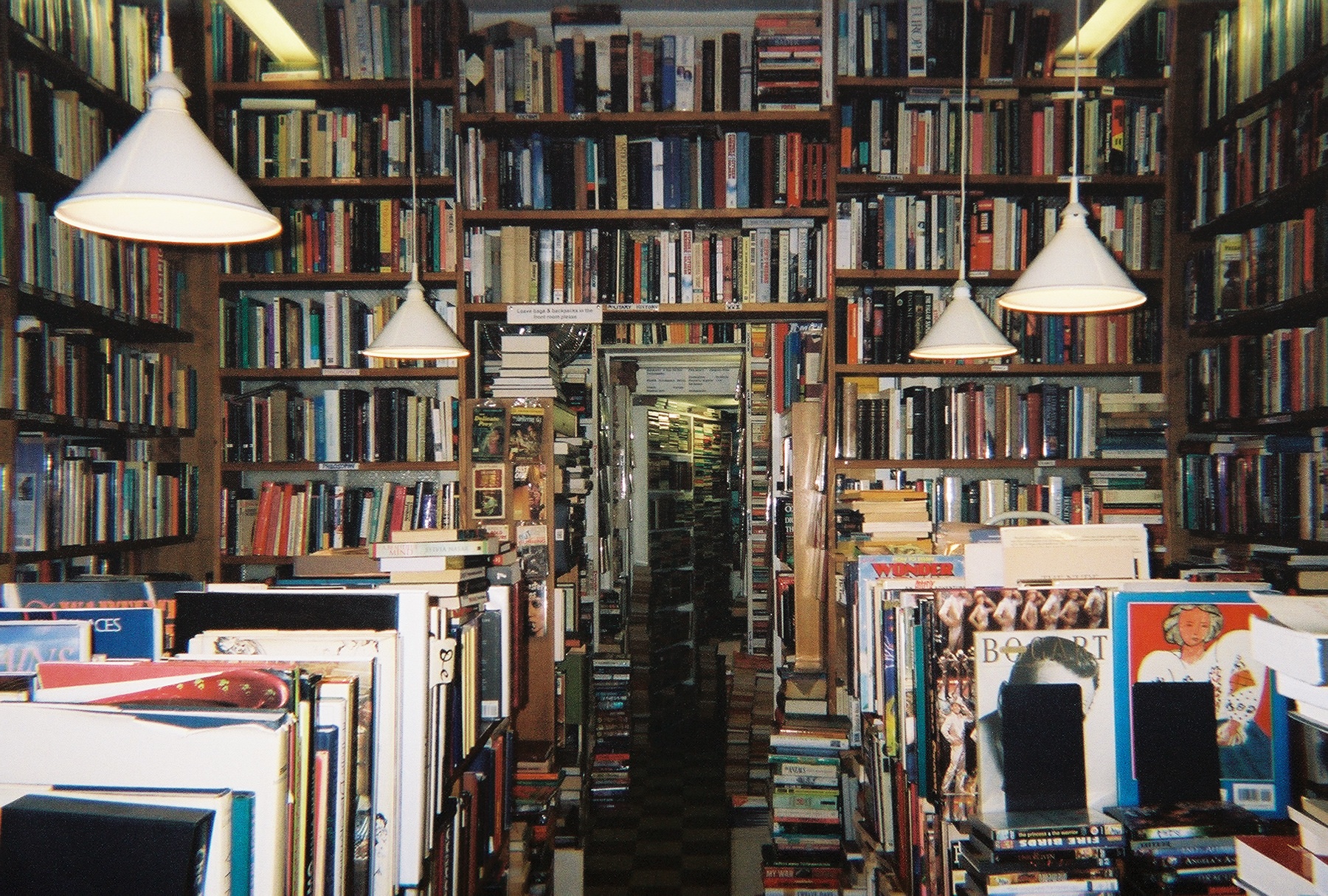
I’m a guy who hates to shop, but for my whole life I’ve loved shopping in bookstores and record stores.  I gave up on record stores years ago, but I still shop at bookstores, but not as much as I used to.  Yesterday I visited my local indie bookstore and bought a hardback The Man Who Invented the Computer  by Jane Smiley just to support them.  I could have bought it at Amazon and saved $12 in discounts and taxes, but I thought I’d help my store and state.

Well, no good deed goes unpunished as my mother-in-law used to say.  I get home and read the reviews on Amazon and they aren’t good at all, including many claims of poor research, inaccuracies and even fraud and scandal.  Of 24 customer reviews 12 gave it 1 star, 5 people gave it 3 stars.  If I had been shopping at Amazon those reviews would have stopped me from buying the book.  Now this isn’t the fault of my bookstore, but it does point out a major advantage of shopping online.

The main reason to shop at a bookstore is to see books before you buy and allow yourself the pleasure of discovering something new and exciting.  But shopping at a store literally means judging a book by its cover.

I’m in three online book clubs and a hot topic in all of them are ebooks.  Some folks are pro, and others are definitely con.  But we all lament the disappearance of bookstores, and feel guilty that we buy books online or via those new fangled contraptions like Kindles, iPads and Nooks.  But I’m wondering if we really should feel guilty?

Quite a few club members, especially those living in small towns, say going to a bookstore is expensive and time consuming.  Others are housebound and feel online shopping and ebooks are a godsend.  Me, I like to study reviews before I buy.  And despite what everyone says about personal customer service, I’ve never met a sales clerk as knowledgeable as good reviewers.

Another thing to consider, among my bookworm friends who love shopping for books locally, many of them actually treasure the used bookstores and looking for good deals.

But I hate the idea of just letting bookstores disappear like record stores.  I’ve read that Germany protects bookstores from online sales and ebooks by outlawing discounting.  This makes books more expensive, but protects bookstores, publishers and authors.  I’ve also read that other countries have various ways of mandating price controls.  This is great for saving jobs and keeping businesses afloat, but it’s not very free market.  Should we reevaluate our ideas about free markets?  I don’t know.

What if online sellers had to sell books for the same price as local bookstores and charge the same sales tax, so books were equally priced no matter where you bought them.  I’d still say Amazon was a better place to shop because it’s so much more informative.

I’d also prefer buying used books online.  I bought three used books this week, The Year of the Quiet Sun by Wilson Tucker, The Last Starship From Earth by John Boyd and I, robot – the illustrated screenplay by Harlan Ellison and Isaac Asimov.  I would have to shop for years before I would have even seen copies of any of those books in local used bookstores, but they were a few keystrokes away with ABE Books.  I also bought an ebook, Aegean Dreams by Dario Ciriello because it was only $5.99 on the Kindle, versus $14.44 for the trade paper at Amazon.

At the Classic Science Fiction Online Book Club, we’re voting on the books we’re going to read for the next six months, and one of the major considerations is availability and price.  Members are scattered all over the world, and few want to buy new copies.  Most of the books we’re nominating can be found at ABE Books for $4-5 used, including shipping, and some can be had as ebooks for $5-10, or new for $8-20.  Some of the members with ebook readers say they will buy the ebook edition if it’s priced closed to the used edition.  Others with good used bookstore nearby are finding copies for less than a dollar.  But see the trend?  New hardbacks and trade paper editions have to compete with online discounted books and used books, so it’s not just ebooks hurting new book sales.

One member found this list of Science Fiction, Fantasy and Horror Bookstores that include online and local bookstores.  There’s a huge variety of options for shopping online.  Some stores on the list do have a physical buildings to visit, but they also do business online.  How does an old fashion bookstore compete?

And maybe that’s the clue.  Maybe online is just a new kind of bookstore.

The times are changing and more and more people are seeing the wind is blowing in a new direction.  There’s a new documentary, Press Pause Play about how technology is impacting artists, musicians, writers, filmmakers and other creative folk.  It’s scary to them because they don’t know how they can earn a living when the traditional methods of marketing their work are disappearing.

We are living in evolutionary times.  I’m turning 60 this year, and many of the people that I know lamenting the loss of bookstores are my age or older.  Have the young already forgotten bookstores?  Our nephew while giving directions to his apartment today said to turn past that building where you mail stuff.  Will concepts like the post office, book store, record store, phone booth, and video rental store even be known to the young in a few years?

It’s weird to be an anachronism in your own time.

JWH – 10/2/11

Why Haven’t We Done Anything About Global Warming?

When Barack Obama was elected President I thought he would put global warming at the forefront of his environmental policies and lead America into doing the right thing.  Three years later and its like George Bush is still president.  What happened?

Global warming is the defining ethical issue of our time, and it seems that most people want to ignore it.  Why?

I can only assume it’s greed and hatred of liberal philosophy.

I can’t believe that global warming deniers actual believe the crap that spews from their mouths.  I believe conservatives associate global warming with liberal politics and they will fight the idea even if God’s face filled the sky and told them Al Gore was his chosen prophet.  The conservatives hate liberal philosophy so much that they would turn to devil worship if God joined the liberals.  The oceans could rise ten feet and they would still deny global warming.  No amount of evidence will convince these people we have a problem with putting too much carbon in the atmosphere.

ABC News has a nice essay on this, “The American ‘Allergy’ to Global Warming: Why?”  This article even states the percentage of Republicans accepting the idea of global warming has gone down.  That’s because of the Tea Party influence on the GOP.  All the 2012 Republican candidates have embraced the idea that conservatives should all believe the exact same philosophy and anyone that doesn’t is a traitor to the party.  Any deviance from the party line and you’re a rabid yellow-dog Democrat.

America is the leader of the world on this issue – and we’re got our heads jammed in the sands and our asses hanging out for all the rest of the world to admire.  Conservatives would rather make a virtue of being an asshole than admit to any idea associated with liberal thinkers.

To my Republican friends, you need to look at yourself and do some soul searching about your reputation.  I’m not the only one worried about you, even some Republicans are worried about their image.  See “Goodbye to All That: Reflections of a GOP Operative Who Left the Cult.”  It’s one thing to believe in paying less taxes and promoting business, and another thing to running the country (and the world) into the ground.

One of the problems dealing with global warming is misinformation.  Conservative politicians tell their followers the issue is still open for discussion.  Really.   Read “Scientific Consensus on Global Warming” which shows clearly that there’s no quibbling among scientists.  Yet, the American public continues to think there is.  Read Politics & Global Warming.  Here’s the key finding of the report:

image

The right answer is about 98% of climate scientists think global warming is happening and caused by man. And supposedly the other 2% think global warming is happening but there might be additional causes.  76% of the Tea Party folks are either not very worried or not worried at all about global warming yet only one percent of them got the question right.  Of course only 18% of Democrats and Independents got the question right too.  Global warming is not a problem for most Americans, even though 98% of the people most trained to know think there is a problem.

Climate scientists spend their whole lives studying this issue, and they have billions of dollars in research money to apply to the problem, while harnessing the most powerful supercomputers, and using the resources of NASA and other scientific organizations around the world.  They are telling us we have a problem and no one believe them.  Why?

Because they don’t want to believe.

The human race is about to be tested on how smart it is and it’s going to fail miserably.

My only conclusion is we prefer our fantasies over reality.

And you know what’s tragically hilarious.  If we had applied the money we spent on the Iraq war to retrofitting for global warming we’d be well on our way to solving the problem and have created a tremendous boost for the economy that would have kept America in the economic lead for the rest of the 21st century.  By refusing to face up to reality, the conservatives have put the American Empire on the quick road to decline.

Instead of seeing global warming as the defining challenge of our lives, something to face up to and make ourselves great, conservatives had chosen to run away.  Instead of seeing green technology as a gold mine of economic expansion, conservatives have decided to cling to their old ways and let the country go down the tubes.

I hate that the conservatives have made this choice for us, but we can’t do anything unless we all pull together.

I’m getting close to being old – turning 60 soon, so there’s no telling how much longer I’ll be around.  I feel sorry for the youngest generation though.  Conservatives think the worse thing that will happen to the young is they will get the bill for social security.  That’s actually something that could be easily fixed with some minor policy changes and small tax increases.  All the plagues  in the Old Testament will be nothing compared to what global warming will do to our country and the world.

Hey, I wouldn’t count the rapture getting you off this sinking ship either – we’re all going down together.

To answer my original question, why haven’t we done anything about global warming, well the answer is we did.  We chose to ignore it.

JWH – 9/25/11

I am not the only one asking this question, at the New York Times, Elisabeth Rosenthal asks “Where Did Global Warming Go?”  She only confirms what I said about our country, but does point out that Europe and other countries do take this problem seriously.

JWH – 10/16/11

The Information: A History, A Theory, a Flood by James Gleick

If you read only one science book in a decade The Information by James Gleick should be it.  I’m not saying The Information is the best science book in a decade, but if you don’t read much about science then this book is for you.  It’s not an easy read, but if you’ve ever felt information overload this book will help explain how and why it’s happening.

We live in accelerating times that are hard to comprehend – the flow of information is like a category 5 hurricane that has stationed itself permanently over our lives, never leaving, and only intensifying.  Unless you have a fairly good education it’s doubtful you’ll truly comprehend this book, but there’s plenty of easy to understand history for the non-scientific minded to get the gist of things. 

Here’s one anecdote from the book that might help.  When the telegraph was first developed, people would go to the telegraph office and write down a message and give it to the operator who would key it in and then act finished.  Many people expected to see their message to go off, leave the building.  They couldn’t comprehend how information could be translated from words on the paper, to electrical pulses of dots and dashes that would travel along a wire.  Now this is hard for us to comprehend because we’re used to the world wide web, but the history of our species is a history of conceptual breakthroughs dealing with information.  But more than that, our minds, bodies and reality are information.

When my mother and father were children growing up in the 1920s all they had for news was the radio and newspaper.  My mother grew up in the country and didn’t even have the radio right away.  My father grew up in Miami, so he was closer to the cutting edge of communication technology.  My mother’s mother, born in 1881, and grew up in rural Mississippi probably didn’t even see a newspaper that often.  Most of the information in her world came from the Bible, static news that has been lingering around for 2,000-3,000 years.

James Gleick hooks us into his story by starting with African talking drums.  European explorers were blown away by African tribes communicating across great distances with drums, and sending rather complex messages.  The best the Europeans could do were things like signal lights, one if by land, two if by sea, or blow the bugle for retreat.  It’s very hard for us modern people to understand how talking drums worked because we no longer live in an oral culture.  Before writing people memorized everything, and often would know very long poems or songs they would memorize and pass on.  Drum talking is based on knowing the sound patterns of common phrases, with the drums having enough pitch to “talk” or mimic the phrase.  Basically the African drummers would imitate a line of a song and the receiver would interpret the phrase.  What would you think to do if you were in a sticky situation and your buddy started humming “Born to Run?” Gleick gives this example:

Make your feet come back the way they went,

Make your legs come back the way they went,

plant your feet and your legs below,

in the village which belongs to us.

If the African drummer created a pattern that sounded like that song, people were supposed to interpret as, “Come back home.”  It’s a rather neat trick when you think about it.

When humans lived like animals, communication and information was very immediate – “I found some grapes.”  But as we organized and formed permanent tribes, information became more complex and abstract, for example, the ten commandments.  Before the invention of writing there was a limit to how much and how far humans could communicate.

Writing was a real breakthrough because it conquered space and time.  A message could be copied and sent in many directions at once, and it would last as long as the medium it was written on.  There was a time when writing was even mistrusted.  Socrates felt writing was bad for memory.  He was right, but writing became a new form of memory. 

Early writing was still limited.  It was very hard to copy, few people could write and few could read.  From Bart Ehrman’s Forged, I learned something very interesting.  In ancient times reading and writing didn’t always go together.  Some people could read but not write, others would write by not read.  It took centuries to get from writing to printing, but after Guttenberg literacy took off, changing our world.  Computers have again transformed how we process information, but it’s a quantum leap over the printing press.  Quantum leaps were also made by the telegraph, the photograph, the radio and the television.

Each time, people protested.  Not long after the invention of the printing press people started complaining there were too many books – meaning there was too much to know.  Here is a quote I love from 1621, given in the final chapter of The Information.  It reminds me how I feel watching the NBC Nightly News every evening.  It is from Robert Burton’s The Anatomy of Melancholy.

I hear new news every day, and those ordinary rumours of war, plagues, fires, inundations, thefts, murders, massacres, meteors, comets, spectrums, prodigies, apparitions, of towns taken, cities besieged in France, Germany, Turkey, Persia, Poland, &c., daily musters and preparations, and such like, which these tempestuous times afford, battles fought, so many men slain, monomachies, shipwrecks, piracies and sea-fights; peace, leagues, stratagems, and fresh alarms. A vast confusion of vows, wishes, actions, edicts, petitions, lawsuits, pleas, laws, proclamations, complaints, grievances are daily brought to our ears. New books every day, pamphlets, corantoes, stories, whole catalogues of volumes of all sorts, new paradoxes, opinions, schisms, heresies, controversies in philosophy, religion, &c. Now come tidings of weddings, maskings, mummeries, entertainments, jubilees, embassies, tilts and tournaments, trophies, triumphs, revels, sports, plays: then again, as in a new shifted scene, treasons, cheating tricks, robberies, enormous villainies in all kinds, funerals, burials, deaths of princes, new discoveries, expeditions, now comical, then tragical matters. Today we hear of new lords and officers created, tomorrow of some great men deposed, and then again of fresh honours conferred; one is let loose, another imprisoned; one purchaseth, another breaketh: he thrives, his neighbour turns bankrupt; now plenty, then again dearth and famine; one runs, another rides, wrangles, laughs, weeps, &c. This I daily hear, and such like, both private and public news, amidst the gallantry and misery of the world; jollity, pride, perplexities and cares, simplicity and villainy; subtlety, knavery, candour and integrity, mutually mixed and offering themselves; I rub on privus privatus; as I have still lived, so I now continue, statu quo prius, left to a solitary life, and mine own domestic discontents: saving that sometimes, ne quid mentiar, as Diogenes went into the city, and Democritus to the haven to see fashions, I did for my recreation now and then walk abroad, look into the world, and could not choose but make some little observation, non tam sagax observator ac simplex recitator, [45] not as they did, to scoff or laugh at all, but with a mixed passion.

I’m jumping to the end of The Information, the part about the information flood because I think that’s how most people will relate to this book.  The subtitle, “a history, a theory, a flood” is very apt.  For about half the book Gleick gives us a history of how we got here, reading, printing, computing – inventing the telegraph, radio, television, internet, etc.  Then he gets into Claude Shannon and information theory, and finally ends up with information overload.  That’s a very quick summary that does the book a disservice, but I’m trying to get you to read it, and if I started talking about Norbert Weiner and Cybernetics I’d probably scare you off.  (By the way, this book is very popular at my online book club, impressing a variety of different reading tastes.)

James Gleick covers a lot of fascinating history, like that of Charles Babbage and Ada Lovelace developing computer programming in the 19th century, or how Morse code was developed, which created a 19th century form of geek culture that inspired developments in cryptography and information compression.  Did you know that Edgar Allan Poe was obsessed with cryptography?  I find the 19th century tremendously exciting, and Gleick spends a lot of time there.  But it’s when Gleick gets to the 20th century that book becomes important.  Most people’s knowledge of 20th century science is of the flashy stuff, like Einstein’s theory of relativity, or NASA’s explorations, or the dazzling development of medical science.  Some people are familiar with Crick and Watson’s DNA and maybe even gene sequencing.  Particle physics is often written about, and all kids love dinosaurs and a bit of astronomy.  But few people want to go deeper.

Gleick gives us a geekier history of 20th century science, almost a secret history not because it was hidden, but because it’s closer to math than pure science like physics, chemistry and biology.  This scares away the average pop science reader, but don’t let it.  Gleick wants to tell us how we are information, our minds, our bodies, our society, our reality, and it requires understanding some mathematical concepts.  But we live in a digital age and really need to understand communication theory.  Why?  That’s harder to explain, but I shall try.

Remember recently when Michele Bachmann was in the news with the story about her comment on the HPV Vaccine and it causing mental retardation?  This incident demonstrated many dimensions of her ignorance which gets into all kinds of ways we communicate and process information.  First off, notice that her information came to her verbally, in person.  She proudly cited it as such.  Before the scientific era, the eye witness was the highest forms of information validation.  We now know that first person accounts are among the least valid, but back then it was considered the gold standard of proof.  If someone claimed to have seen a mermaid then they existed.  Bachmann was merely acting like a 17th century person, or even a 4th century BCE person.  Not only did she collect her facts in a poor manner, she spread them by 21st century technology, and thus became a dangerous carrier of misinformation.  She may have created a meme and become a viral vector spreading unhealthy information.  Here reaction was based on previous memes.

But it is much more complicated than that.  How do we know if the HPV Vaccine is good or bad, or even how it works?  Your answer will place you along a history of information understanding time line.  Sadly, most conservative people are going to place somewhere before the 19th century.  But even well educated liberals might only peg in at early 20th century.  The Information, and many books like it that have come out in the last few years are trying to catch people up with things we’ve learned from the 1940s on.  There is an exciting synergy going on among the sciences and it’s a tragedy that most of the people living in these early 21st century times are missing it.

It’s very hard to explain this.  Physics was the first science to explain reality.  Then chemistry.  For a long time biology and botany was divorced from pure science of physics.  But in our lifetimes biology has reached the level of chemistry and physics, moving ever closer to the quantum level of reality, and this brings us to communication theory and mathematics.  19th century evolution is being validated by 20th century discoveries in genetics and DNA, which are now being connected to the subatomic world, which leads us to the world of probability and pure information.  It’s all coming together.  The Information: a History, a Theory, a Flood by James Gleick is your introduction.

Normally, this is where I would stop my book reviewing process, but this book makes me want to write more.  I listened to The Information, but I now plan to read and study it carefully.  This book is a gold mine of learning, and I’ve just barely taken away some quick riches, but there are billions to be learned in it still.  While researching this review I discovered that several other books essentially covering the same topic, or extensions of it.  I’m going to have to buy and study them too.  Read the reviews and comments on them here:

But returning to The Information, I’d also like to outline the essential topics that Gleick covers.  I want to list them to help people decide about reading the book, and to make a handy-dandy reference for myself to the subjects I want to further study.  Wikipedia covers these topics wonderfully, probably because if you’re geeky enough to work on Wikipedia you are also probably interested in these topics.  Plus Wikipedia was an important topic in The Information.  Furthermore, many of these Wikipedia articles cover the topics in more detail than Gleick does in book.

Other Reviews


JWH – 9/24/11
Nora (1994-2011)

Kitten Nora

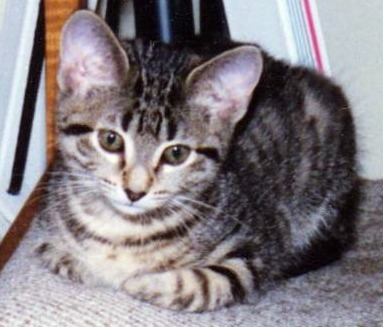
Back in 1994, Susan and I were eating at our favorite restaurant, Salsa, and talking to our favorite waitress, Wendy, who mentioned that her cat had recently had kittens on Halloween.  We told her we were looking for a couple of kittens and went to see them.  They were all brown-grey tabbies, and we picked out a boy and girl and named them Nick and Nora after the Thin Man movies with William Powell and Myrna Loy.

Today, September 17th, we had to put Nora to sleep – she was six weeks shy of her 17th birthday.  It was a hard decision to make this morning because Nick and Nora are my all-time favorite pets.  Susan and I have been married for 33 years, and for the first half we had Yin and Yang, two sister cats.  We loved Yin and Yang, but they weren’t very affectionate.  Before Yin died we got Nick and Nora.  So we’ve had cats most of our marriage.  We never had children – cats were our substitutes.

Jim-Nora-Nick

Nick and Nora loved us, slept with us, and if we were sitting down, slept on our laps.  Nora was more skittish than Nick, and would retreat to the bedroom when company came, but when it was just Susan and I, Nick and Nora always hung out with us.  They were like dogs.  The photo above is me, Nora and Nick in my reading chair.

Nora became mysteriously ill a few months ago when we noticed she had lost a lot of weight.  We never found out what was wrong with her, but we eventually noticed she wouldn’t use her tongue to lap water.  Nick and Nora loved to drink water from the faucet.  They would stand in the sink and turn their heads and lap water from the stream.  When Nora started losing weight we noticed that she didn’t do this, but stuck her head under the water and let it roll down the front of her face.

Nora-before-she-died-400

For her last months, Nora became very close to me and would often sleep on my chest at night, sometimes even wrapped around my neck. Because Nick had fought off an illness last year after shrinking down to nothing and returning to health and becoming a giant fat cat again, we kept hoping Nora would do the same thing.  We eventually realized it was more than weight loss, but pain. We think she might have had a tumor in her neck or throat, but we never knew. I’d wake up with her restlessly walking up and down on me. I’d get up and give her some pain medicine and she’d settle down for a couple hours. 

We kept hoping it was a temporary kind of pain, but today when they weighed her at the vet and she’d lost .8 pounds in a week, down from 5 pounds last week to 4.2, we knew it was something more.  She once weighed 12 pounds.  We have been spending a lot of time visiting Green Animal Hospital trying to figure out what was wrong with Nora.  Dr. Kahn tried so hard to save Nora, but it wasn’t meant to be.  Debra, Amy and Jo Beth were so nice to us that I feel bad that I won’t be seeing them again unless we can teach Nick to be a hypochondriac. 

Even though the people at the clinic are wonderful, our cats have always hated being at the vet, but today Nora just laid on the table not showing any signs of wanting to go home, so I took that as her way of saying it was time to say goodbye.  We had been trying all kinds of treatments for weeks.  I was giving her water with a syringe five times a day against her will.  But she was still eating, but not gaining weight.  It’s hard to decide when a creature should die, especially one you’ve been living with for seventeen years.  But I realized we were prolonging her life only to avoid making the decision, and it was obvious she wasn’t feeling good and never would again.

I wish I had more photos of Nora.  I have a lot, but they are mostly of her curled up asleep.  Here’s one of her reading my magazines.

Nora reading

What I really wish I had were videos of Nick and Nora playing fetch.  They both loved fetching paper balls.  We could get them to sit on a footstool, throw a paper ball over their heads, and Nick and Nora would leap up into the air to catch the balls and make wonderful backflips before they landed – and then bring us back the ball. 

They would even bring us paper balls when they wanted to play this game.  Susan and I would be watching television or reading and look down to see a cat and a bunch of paper balls they had stacked by our chairs.  Sadly, they quit playing this game when they got old.

I’ve decided that when Nick goes we won’t have any more pets.  I don’t know if I could outlive another pair of cats, and I definitely don’t want to outlive them.

JWH 9/17/11

All Agony and No Ecstasy

In 1961 Irving Stone published The Agony and the Ecstasy about Michelangelo’s struggles to produce great art.  I never read the book but saw the 1965 movie.  I think most artists are driven.  I always wanted to be creative as a great artist, but I’ve never wanted to be that driven – it scares me because it seems like possession.  But man, I need to be a bit more driven than my laidback lazy self.  Where does drive come from?  Inside or out?  Can it be self-induced?  Would I take a pill to produce it like in the film Limitless.

Once again I’ve taken a week off from work to write on my novel, and once again it is all agony and no ecstasy.  I have no trouble writing non-fiction, but fiction is painful to produce.  And yet, writing fiction is the one ambition I still have left in life.

This morning Zite brought me a link to “To Who it May Inspire,” a letter at Letters of Note.  It’s a handwritten note from Austin Madison, a Pixar animator, who tells people to persist, and reminds them that only 3% of the time is it fun to be creative, and the other 97% of the creative process is painful, and finally he encourages people to always persist in working through the 97%.

That’s always been my problem, I keep waiting for the 3% mood to hit, and not putting in my 97% of the time actually drudging away.  And that’s the regret of my life I would say.  I don’t know how to persist through drudgery. 

I’ll turn 60 soon and I wonder if I shouldn’t give up on this last dream.  I don’t know if I can though – it might be a permanent fantasy that runs in my head no matter what.  When I was young I dreamed of writing novels as a way of getting out of 9 to 5 work, but over the years I’ve learned that it’s easier to go to work every day than write.  In a couple of years I’ll be able to retire and the incentive to write to avoid work won’t matter any more.  What then?

I don’t think about writing for money anymore, anyway.  I hope this won’t sound silly, but the reason why I still feel guilty about not writing is because I have so many characters that will die unless I create a story for them to live in.  Even though I don’t write regularly, I do fantasize about my characters all the time.  I think my main problem is I don’t have a good plot for them to live out.  I started watching this week Martha Alderson’s 27 part series on YouTube about plotting.  She discusses many examples from classic and current books, so these videos are enlightening even if you don’t want to write.  They would also be good for people who like to review books.

Martha reminded me of something I’ve learned from many writing classes – that is my character must want something.  And my characters are ambitious, but they are like me, they don’t want to work at the drudgery any more than I do.  So now I’m working on two dimensions of persistence – I must persist and making my characters persist.

Another piece of advice from Martha is I need to know where my novel is going.  That’s always been my biggest weakness.  I’ll start writing, and crank out scene after scene, and eventually realize I’m not going anywhere.  I’ll stop for awhile, maybe months.  Then I’ll return to it and start at the beginning again and write all new scenes until I once again peter out.  I’ve finished 30+ stories for writing classes, but only two of them were ever liked by other people, and that was because I created satisfactory plots. 

My best example is “Annaclara’s Heroes” written almost ten years ago.  It’s as closest to Martha’s advice as anything I’ve written.  I went ahead and published it on my blog this morning to see if seeing it inspires me to write more.  Also, I feel bad about not letting Annaclara out of her desk drawer dungeon. 

“Annaclara’s Heroes” is the best I was ever able to do with fiction writing.  It was 12,000 words and I wanted to make it a real novel.  I was only able to complete it because it was the major class assignment for a Historical Fiction course.  Reading it now reminds me of how much work it took to produce.  I had to focus very hard for weeks.  And I think I did because I wanted to impress my classmates and teacher.  I don’t have that incentive when I write stories now. 

That’s the thing about writing fiction, it takes weeks of intense focus.  And for what?  Let’s say I sold a story to F&SF or Asimov’s and got $400.  That’s not a lot of monetary incentive.  I think the real motivation is to create something beautiful, and I do have that kind of motivation.  Just not the drive – but can I reprogram myself to have the drive?  That’s a fancy way of saying, “Can you teach an old dog new tricks?”

I think about writing when I retire, and I take off a week now and then to imagine being retired to see if I can get to work.  But a week is never enough.  I usually have a zillion things to do with my meager week of freedom.  And that might be key to my failure.  Creative people can focus on one ambition with laser-like focus.  My inner light is like a campfire that flickers, jumps, pops, flares, fades, and never stays focused – it creates more heat than light.

I’ve got hundreds of books on my shelf waiting to be read, and hundreds of movies waiting to be watched, and a dozen half-ass hobbies I want to spend more time on – and all of this distracts me from writing.  I keep telling myself I must free myself from all desires but one, but I can’t.

I am reminded of the movie Destination Moon from 1950.  The crew of the first rocket to the moon uses up too much fuel landing and can’t take off unless they can get rid of enough mass.  They end up throwing everything imaginable out onto the surface of the moon to lighten the ship, including their radio and space suits.  If I ever really want to be serious about writing I’ll need to jettison all my other distractions to sharpen my focus.  In the film the astronauts have one great incentive – they’ll die if they don’t.  I don’t have that kind force driving me.

I think I’m not a writer because of lack of drive rather than talent.  I’m not sure talent is critical to the equation, at least I hope not because I’ve never felt talented.  I’d like to believe its how hard you work, and I’m just too lazy.  The fascinating question is whether or not laziness is a quality I can change.  After fifty years of not applying myself diligently I should be able to answer that question without equivocation, but that old adage about hope springing eternal seems to trump it.

I tend to think we all have unfulfilled ambitions we carry around our whole life.  At what point do we give them up.  I have friends who claim they gave up long ago, but I wonder about their secret fantasies they never tell about.  I like to contemplate changing myself.  I don’t know if its possible, but I tend to think I’m not alone.

JWH – 9/9/11