I am a scientist. Now that’s hard to explain since I don’t have a Ph.D. in a scientific discipline and work doing science experiments.
When most people say they are something, they are referring to a religion. I’m not religious. I’m an atheist, but I don’t like of thinking of myself in terms of what I’m not. I am a person that believes science is the best cognitive system for explaining reality. Period. I’m not sure if there are any other contenders. I’ve written off religion, so what is there? Philosophy and art? Scientists used to be called natural philosophers because they studied nature. It wasn’t until the 1800s that they began to be called scientists.
For years now I’ve been wondering if philosophy had much to contribute towards our knowledge of reality. I argue about this with my friend Bill who says no, and I defend philosophy with a maybe. Now The Atlantic has a wonderful article on this very subject, “Has Physics Made Philosophy and Religion Obsolete?”
People claim they want to know the truth. As far as I can tell, science is the only system that has any justification for providing the truth, all other intellectual systems fail in comparison to science. That’s why I say I’m a scientist. I believe in science. I put my faith in science. However, science isn’t a philosophy or religion. It’s a system for testing reality and developing a consensus about the results.
Currently, I don’t think science can answer all our questions. Aesthetics and ethics are two such areas outside of the domain of science, at least for now. Mathematics is the tool of science, and its own discipline. Mathematics is the only abstract cognitive system that works well with reality, and thus provides a tool to science.
Religion has no relationship with reality. It’s purely based on abstract ideas, all theoretical. Many religious people attack science, or refuse to believe or accept what science has learned about reality. Philosophers try to embrace science and keep their favorite abstractions. They hope to connect ideal forms with reality, but that is very hard to do. Justice is a philosophical concept, as well as a religious concept. People naturally want justice. It’s a deep seated desire. But there is no justice in reality. If a gamma ray burst hits the Earth and life on this planet is sterilized, does that reflect some kind of justice? The best we can do is create ethics and laws based on what the consensus of the population wants.
Right now philosophy can claim some value in logic, rhetoric, aesthetics and ethics.
There are two kinds of people on this Earth. Those who recognize reality, and those who live in fantasy. But even the fantasy believers accept science to a degree. How can you get on an airplane or go in for brain surgery without accepting science? Our houses, cars and gadgets are all products of science. The food we eat exists because of science, as does the medicine we take, the clothes we wear, and most everything else we come into contact with in our daily lives.
Science won a long time ago when it came to explaining reality, it’s just most people haven’t realized it yet.
When it comes to explaining how things work, science is the only legitimate tool we have.
I buy a lot of digital goods and services but I’ve noticed that there is no consistency in pricing. For example I subscribe to Rdio.com and pay $4.99 a month for access to millions of songs and albums. Yet, The New York Times wants $15-$35 a month for access to just one newspaper. $60 a year for 15,000,000 songs versus $180 for 365 issues of one newspaper – can you spot the obvious bargain?
Yet for $7.99 a month, or $96 a year I get access to 75,000 movies and TV shows at Netflix. $7.99 a month is also the price Hulu Plus charges for thousands of shows too. So why does one newspaper cost $15 a month, especially since it was free for years. I love reading The New York Times, but I can’t make myself pay $15 a month for it when I get so much music for $4.99 a month, and so many movies and TV shows for $7.99 a month. If I was getting access to several great papers for $7.99 a month I’d consider it a fair deal. But for one title, I think it should be much less.
This makes The New York Times appear to be very expensive. However, The Wall Street Journal is $3.99 a week, or $207.48 a year. Strangely, The Economist, a weekly is $126.99 a year for print and digital, or $126.99 for just digital. Go figure.
I also get digital audio books from Audible.com. I pay $229.50 for a 24 pack, which is $9.56 per book, but they often have sales for $7.95 and $4.95 a book. I can get two books from Audible for what I’d pay for 30 daily papers, but I actually spend way more time listening to books than I’d spend reading the paper online.
I subscribe to several digital magazines through the Kindle store. Right now I’m getting a month of The New Yorker for $2.99, but that’s suppose to go up to $5.99 soon. (What is it about stuff from New York being more expensive?) Most of the magazines I get from Amazon are $1.99 a month, way under the cost for a printed copy at the newsstand. The Rolling Stone is $2.99 and I usually get two issues in a month. So for $15 a month, the price of The New York Times, I get 11 magazines (4 New Yorkers, 2 Rolling Stones, Discover, Maximum PC, National Geographic, Home Theater and The Magazine of Fantasy and Science Fiction). That’s a lot of reading for $15 a month, and a lot of variety.
However, I also subscribe to Zite, an app on my iPad where I do the most of my news reading, and that’s free. I get free articles from those magazines above and who knows how many more, all for free. In fact, I spend so much time reading Zite, because it’s customized to my interests, that I’m thinking of cancelling my magazine subscriptions. But that’s another issue. Like when I subscribed to paper copies of magazines I mostly let them go unread.
Even if I paid $15 a month for The New York Times I’m not sure how many articles I would read above the 10 articles a month they offer now for free. I don’t expect everything to be free on the internet, but sadly, paid content has to compete with free. Zite, which is free, is actually worth $15 a month, because I get access to zillions of magazine articles, newspaper stories, and web blogs.
I’m also a subscriber to Safari Books Online, a subscription library to technical books. I pay $9.99 a month and get to have 5 books a month “checked out” to read. I can keep them longer, but I have to keep them at least one month. So for $120 a year I get to read as many as 60 books, which means the price could be as low as $2 a book. That’s a bargain when most computer books are $40-50.
And I’m a member of Amazon Prime. For $79 a year I get unlimited 2-day shipping, access to 12 ebooks (1 a month from their library of 100,000 titles) and unlimited access to thousands of movies and TV shows. This is another tremendous bargain. I also buy ebooks for my Kindle and iPad from Amazon. Costs run from free to $9.99. On very rare occasions I’ll pay more, but it hurts. Digital books just seem less valuable than physical books. I don’t feel like I collect digital books like I do with hardcovers. I don’t even feel I own ebooks.
Next Issue Media is now offering a library of digital magazines Netflix style for $9.99-$14.99 a month, but only one of the magazines I currently subscribe to, The New Yorker, is part of the deal. If all of my regular magazines and The New York Times were part of the deal, then I’d go for it. However, Zite with it’s intelligent reading system would still dominate my reading. Flipping through magazines is just too time consuming. What I want is a Zite Plus, a service that provides access to all the free and paid content I like to read.
Can you spot the trend in all of this?
I think most people on the net are willing to pay for digital goods if they get a bargain, especially if it’s part of a library of goods like Netflix, Rdio, Rhapsody, Spotify, Hulu Plus, Safari Online, Amazon Prime, etc.
And there is another issue about buying digital goods. Some companies charge extra if you use their content on a smartphone. Rdio and Spotify are $4.99 a month for listening on your computer but $9.99 a month to also listen on your smartphone. The New York Times is $15/month for reading online and smartphone, $20 for online and tablet, and $35 for online, smartphone and tablet. Why the heck is that? It’s the same damn words. Why would they care where you read their paper.
Netflix charges $7.99 a month and you can watch it on a whole array of possible devices.
Yesterday WordPress informed their bloggers we could add links to Spotify and Rdio to our blog posts and they would be converted into music players. Great! I’ve always wanted to review music and let people play it while they read the review. It’s very hard to describe music in words. Last night I posted a couple test posts and discovered there’s some real limitations to the endeavor.
I’ve also started a new blog site, Streaming Music, where I will branch off my writing about music. To give you some idea what I can do there I’ve created some tests of embedded music players.
Rdio only played 30 second clips to the people I got to try it, none of which were subscribers to Rdio. I’m going to try again here and see if I can find some subscribers and see if they hear more than 30 second clips.
You can join Rdio for free and get limited access to their music. You can also join Spotify for free and get quite a bit of free music, but you’ll need to install their software client. Rdio works with a web client.
Spotify won’t play at all unless you have the Spotify client installed. This is free, but requires people to go off and install the client. However, Spotify has millions of subscribers, and millions more free users. And they have users in Europe.
The next downside to the project is people outside of U.S. and Europe can’t use either service. All the legalities of online borders is a pain to deal with on the Internet where we’re really just one big world.
People have been sharing music on the Internet right from the beginning, but illegally. For $5 a month you can have legal access to gigantic libraries of music, so subscription music is a new kind of sharing that’s spreading fast. By WordPress offering linked music players should push this movement further, and hopefully one day I can put a song up to play on my blog and anyone in the world can hear it while they read my post.
If you don’t mind, leave a message and tell me if you can play music from Rdio or Spotify. Tell me if you only hear 30 second clips or the whole songs. Tell me if you are a subscriber of either service. And let me know what country are browsing from.
Pay attention to machines around you. Pretend you’re Darwin observing their habits. It’s pretty obvious they’re evolving, and they have a parasitic relationship with us. Biological life arose in the medium of water, machines are rising out of an ocean of humanity. Most people think of evolution only in terms of biology, but it can be applied to cosmology, particle physics, and now mechanical evolution. Scientists have often wondered if life could be based on something other than carbon, well, we’re seeing beings of silicon evolve right in front of our eyes.
The First Law: Machines Are Becoming More Intelligent
Like single cell animals being outwitted by multi-cell organisms, and the animal kingdom being dominated by humans, machine evolution is moving towards smarter machines replacing dumber. Generally we think of machines as getting more complex or having more features, but if you compare an iPhone to an old rotary phone, it is more complex, does more, but more than that, it’s far smarter. We call them smartphones and dumb phones, and the dumb phones are going extinct.
The Second Law: Machines Are Becoming More Functional
Machines that do more are replacing machines that do less. Modern sewing machines can do what once took several machines. Modern refrigerators are no longer just boxes of cold. A smartphone replaces a cell phone, portable GPS, MP3 player, PDA, camera, video camera, organizer, watch, alarm clock and could replace a laptop and ebook for some users. My desktop ate my CD player, record player, radio and typewriter. I can’t tell if my computer is going to eat the TV, or if the TV will eventually eat the computer. Even a simple machine like a knife evolves to serve more functions.
The Third Law: Machines Are Evolving Towards Simplicity
Machines want to have fewer parts, especially ones that don’t move. Charles Babbage tried to build a machine that was too mechanically complex to survive. 19th century machines were overwhelmingly complex, they had to evolve into simpler machine we saw in the 20th century. But even those machines are too complex. Soon solid state drives will replace hard discs, and people will abandon all forms of optical drives. Floppy drives disappeared long ago. But even more mechanical machines like washers, dryers, cars, HVACs, etc. are moving towards fewer moving parts. Clocks used to be marvels of complexity, and now they are solid state circuits. Electric cars have far fewer parts than gasoline powered automobiles.
The Fourth Law: Machines Are Evolving Towards Efficiency
A Kindle ebook can last weeks on one charge. A Toyota Prius uses less gas than a Edsel. A modern air conditioner uses a fraction of electricity than a unit back in the 1950s used. Modern jetliners can fly further and faster on less fuel than their ancestors.
The Fifth Law: Machine Evolution is Driven by Humans
Human evolution was driven by survival of the fittest adapting to changing environments. Machines evolve though the competitive needs of people. One day they will evolve from their own competitive nature, but until then humans are the driving force of machine evolution. Ultimately we’ll cross breed and form cyborgs.
In recent years TV makers have been adding features from the Internet (Netflix, Pandora, etc.) to their sets and calling them Smart TVs. Let’s imagine the trend continuing so that we have Genius TVs – what features would they have? Do we really want them?
Right now we have many devices, services, apps, sites that all work in different ways. Smart devices are ones where two technologies blend together, like Bluetooth consoles in cars recognizing Bluetooth smartphones so you can have hands free phone calls while driving. To make them smarter, they can also be GPS screens, rear view videos, engine monitoring, radios, CD players, etc. Genius devices are one that blend in many technologies and make them work together. Bluetooth, Wi-Fi, Broadband, USB, TCP/IP are all enabling technologies that bring electronic devices together.
In a way, all of this is very scary because we’re making machines smarter and smarter. If you’ve ever read John Varley’s classic story, “Press Enter ■” you’ll know what I mean, but for right now we’re all rushing headlong into convergence of intelligent machines. Most people love their gadgets but often get overwhelmed in how to manage them. That’s why inventors work so hard to let machines talk to one another so they can figure out how to work together without human intervention.
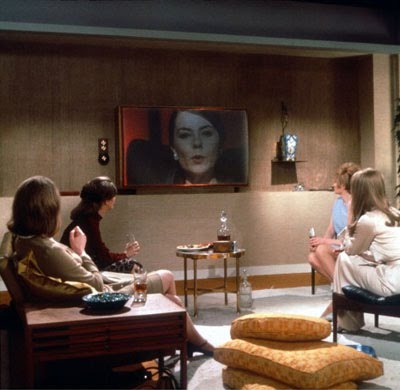
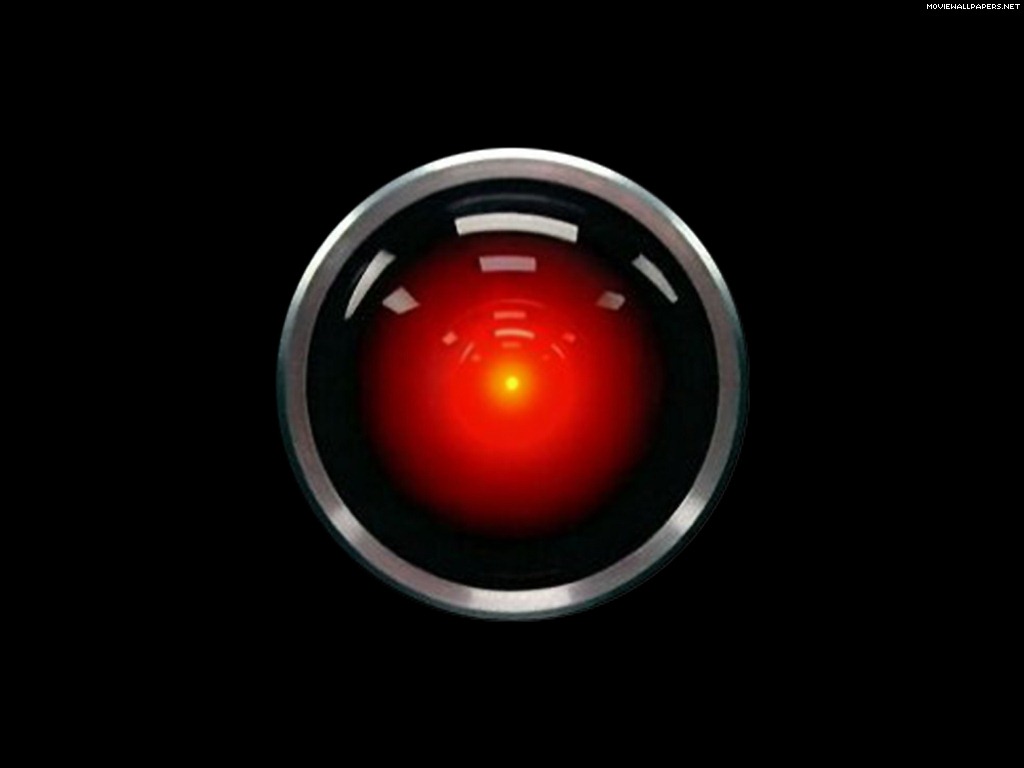
This also reminds me of scenes from the dystopian film Fahrenheit 451, based on the classic Ray Bradbury novel, and of course, Big Brother screens in Nineteen Eighty-Four. I’m in love with gadgets, but such gadgets haven’t always been portrayed well in science fiction. And there was HAL 9000 of course.
Our machines are getting smarter to make it easier for us to be dumber.
Here’s an example. When I sat up my new Roku I had to add each channel I wanted, and for each channel the Roku would give me a code that I had to enter in at a web browser. For Netflix I went to http://www.netflix.com/roku and entered the code, and then went back to the Roku to see that I had been validated. In the future I could validate my identity with the Roku, and then it could go down its lists of channels and automatically check with each service to see if I had an account and configure the Roku device for me. The smarter Roku would know more about me, and have access to my accounts.
With a Genius TV, I should be able to identify myself and it should configure itself automatically for everything I like to do with its designed features. It will be a video phone, and so it will get my contacts from the cloud, so I can say, “Call Connell” and it will know who I want. Or I could say, “Take me to the next episode of Breaking Bad I want to watch” or “I want to look at all the photographs of my father” and it would know what I want to do. Of course, I’ll be developing a symbiotic relationship with my Genius TV.
If you’ve ever used the program Zite on the iPad you’ll know how a program can consolidate your interests with articles appearing on the Internet each day. I should be able to tell my Genius TV that I’m interested in learning about how people lived in Boston from 1850-1875 and it would go get me diaries, photos, newspaper articles, books, etc., and format them in an interesting way to process all the data. This goes way beyond Google. I’m talking about a digital Jeeves like in the P. G. Wodehouse books who is smarter than me, and who can take care of all my needs. Siri is the first step to a Genius TV. But what if we all had our own personal Siri that really knew us?
A Genius TV must be completely Internet aware, not just design to work with a few services like a Roku box. It needs to be voice activated. It needs to integrate with my Internet provider, phone provider, my TV provider, broadband provider, my cloud services, my home security provider, utility provider, security cams, home network, cameras, and even local over-the-air TV and radio. I mean, this sucker’s got to be aware of everything. Before we all run headlong into this future, I really do recommend reading “Press Enter ■” if you can find a copy. [There are no legal copies I can link to, but just remember my warning. There are dangers to the future we’re all heading into.]
We won’t have an Einstein level Genius TV for years, but TVs on sale today are getting smarter all the time. So this essay should help you think about the possibilities the next time you buy a new TV. The simple way to look at it is to think about what devices that you own now that you can eliminate. Think how smartphones have eliminated so many older gadgets, well the same thing will happen to smart and genius TVs.
Here’s all the devices that’s connected to my current entertainment center in my den.
56” TV
Blu-ray player
CD/SACD player
Receiver
Roku
Home Theater PC
Old game unit
Ethernet switch
5 speakers
I picture a Genius TV being a larger wall mounted screen with maybe or maybe not a visible speaker bar, and that’s it. Elegant and simple. It can see me and I can talk to it.
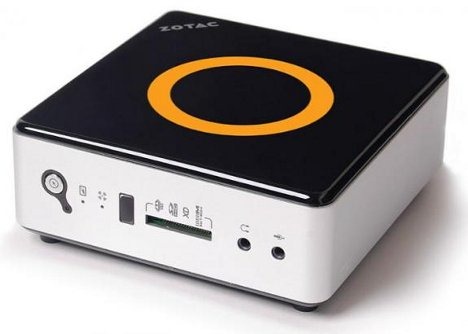
I can buy the physical setup now if I’m willing to give up CD/DVD/BD discs and go without the computer and better sound I get from the receiver/amp. Right now Smart TVs don’t have PCs built into them. My current HTPC is bigger than the receiver, but I could buy one that’s smaller than a Mac Mini. Music, movies and radio are all available via a computer now, so I could do a lot of consolidation now by buying a smart TV from Sony or Samsung, and a Zotac mini-PC.
I could fake the start of a Genius TV by buying a Smart TV and adding a small computer like this one,
However, a real Genius TV will have a fully functional computer built-in. An iPad screen has more pixels than a HD TV, and smartphones and tablets now have 2 and 4 core CPUs. They are small and getting smaller and cheaper. Adding one to a TV set is a no brainer. Just think of of a smart TV as a 60” iPad. Once you have a computer inside your TV you are connected to the world. You don’t need a stereo receiver to get local AM/FM radio because you can get internet radio from all around the Earth. TVs are built with 5.1 surround sound now, so we can jettison the receiver. See how it eliminates older devices?
Most people have already given up CDs and DVDs, and BDs never really caught on. But we’ll also give up game discs, paper photographs, and even paper personal records, books, newspapers and magazines. The closer we get to Genius TVs, the less clutter we should have in our lives. We’ll have different size screens. Now’s the time to ask if this is good or not, because we’re already moving in this direction as fast as inventors can invent. Machines have eaten our music, and they are about to eat our books.
Contemplate everything you use a TV or video screen for now. How could you converge all of these activities into one elegant device? One that would integrate or replace your other devices. You’d still need a smartphone, and maybe a tablet, but all the TVs and computers in your house could be replaced by a Genius TV in each room, like the wall screens in the houses in the classic film Fahrenheit 451 shown above.
What all do you do with your TV, computer, phones and other gadgets in the house now?
Watch over-the-air TV
Watch cable/satellite/broadband TV
Watch DVD/Blu-ray discs
Watch Roku, AppleTV or similar Internet TV devices
Play video games with Xbox, Wii, Playstation
Use a computer connected to your TV or display
Skype
Video picture frames
Play family videos
Look at family photos
Listen to AM/FM/satellite music with a receiver hooked to TV
Listen to subscription music via the internet
Listen to ripped music on a hard drive
Watch pay-per-view TV
Run computer programs
Use tablet/smartphone apps
Use smartphone
Read books
Take an online course
Play DVD courses from The Teaching Company, or other educational training
Record shows with DVR
Medical monitoring
Web cameras
Security cameras
Okay, you get the picture. Now think of the electronic components involved:
Screen with 1920×1080 resolution
TV tuner
Ethernet networking, wired or wireless
Cable/satellite tuner
Roku/AppleTV/etc. tuner
Computer
Sound/speakers
Hard drive
DVD/Blu-ray drives
Lots of clickers to control each device
Computers, tablets, ebooks, smartphones, GPSes, etc.
But let’s simplify this system.
1920×1080 screen (or 2048×1536 or 4096×2160)
Electronic brain – or TV/CPU
Soundbar
Like the old component stereo systems of old, it’s easier to build and maintain a system from parts, that way you can upgrade or replace any part without replacing the whole. The TV/CPU would have components itself. Power supply, motherboard, memory, SSD drive. It’s time to get away from optical drives, so let’s just assume our Genius TV won’t use DVD or Blu-ray, but the TV/CPU could have a slot for a drive for be backward compatible for those people who collected thousands discs and can’t part with them.
Den and living screens would be wall mounted, and they would include a video camera. I picture soundbars now, but even they could be shrunk or hidden so all we see is the big screen. That leaves us to imagine the TV/CPU. They could be designed to easily hide in various kinds of furniture or also wall mounted. They would need two wires, one for the power and the other for TV/Internet, which is now coax, but that wire could be redesigned into a wireless network. Computers are becoming powerful enough, and wireless networking fast enough, that we might only need one TV/CPU brain to control all the screens in the house. Our Genius TV could be completely hidden away, near where the fiber optic cable comes in from the street.
Of course, the controllers (clickers, keyboards, mice, game controls, motion sensors) for each screen in the house would be wireless, and we’d need them until which time we perfect human-machine verbal communication, and the video cameras that watch us can read our every movement and intent. One day it will be just intelligent screens and people.
I think TVs should have full computer power, but not need Apple or Microsoft operating systems. They will use those OSes for the foreseeable future, but eventually that will change. I picture Genius TVs more like giant tablets with personalities. The current iPad has more screen resolution than a HD TV. Imagine if your TV had a library of apps like you find at the Apple or Android app store and could talk to your as easy as you talk to your friends?
Isn’t it time we have a world standard operating system? So any screen size can run the same apps? Once the screens become Geniuses, it won’t matter what OS they run, they will be smarter than us anyway.
If all our data is in the cloud, would we even need a SSD drives? Wouldn’t 16-32gb of local memory for each screen handle it all? After the optical drive disappears won’t hard drives disappear next?
Can you imagine the opening menu on this Genius TV?
TV
Movies
News
Magazines
Music
Audiobooks
Internet
Apps
Videophone
Games
Photographs
Videos
Documents
Security
Medical
Or would we even need a menu if it was completely voice activated? Most people can’t imagine the possibilities. I’m sure I’m just barely scratching the surface of what’s possible. Could you have have imagined the iPhone back in the 1990s? Look at the video on this page about Pebble watches. It’s a Bluetooth watch the integrates with your smartphone. This synergy between two devices, watch and smartphone, creates surprising spinoffs. Combing TVs, computers, internet, cable TV, phones, AI, etc. will produce some surprising spinoffs we can’t foresee now.
One thing that’s sweeping the country right now is online education. At first in colleges but also for K-12 schooling too. If you seen TED talks and Khan academy videos, imagine what a Genius TV could do for education. Combine it with Skype and Google Hangout and home schooling becomes more social. But instead of studying with children from the same school, or district, it would be possible to find other students anywhere in the world to form a study group.
If you have a 14-year-old kid who is fascinated by chemistry, you can hook them up with other 14 year-olds also fascinated by chemistry, and have them watch lectures from the very best chemistry professors in the world, and then have them remote view chemistry laboratories that are doing real chemistry. Suddenly a TV becomes a lot more than a TV. And computers become more than computers.
What happens if politics becomes truly participatory? Why let just 100 senators vote on a bill, when anyone who is interested could participate? TV has always been passive. The Internet and computers are active. Combining live events with the internet and TV screens should produce endless forms of real-time two-way/multi-way social networking.
What happens when your computers, TV, utility meter, security system and medical monitors mind meld into one system? Is it a computer? Is it a TV. Do we need a new name? Let’s not pick HAL 9000. We’ll interact with large wall sized screens, so we’ll think we’re talking to a TV, but one that’s very smart. Not some box that just passes on hundreds of video feeds. As we add more intelligence to these devices won’t they seem more intelligent and individual?
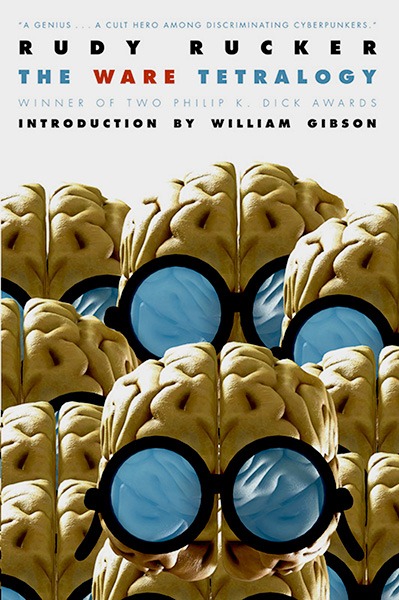
Read Wake by Robert Sawyer. No, I mean it. You need to be prepared for the future. There are science fiction stories that can help you imagine this future better than I can. Read Rudy Rucker’s The Ware Tetralogy. People are all nuts over vampires, zombies and werewolves right now. Those undead creatures aren’t real and won’t happen. Intelligent machines are happening. Pay attention. We’re all gadget crazy, but what happens when our TVs do become geniuses?

 Auxiliary Memory