The Clear Choice: Socialism v. Social Darwinism

When Mitt Romney selected Paul Ryan to be his running mate, conservatives were overjoyed, proclaiming America now had a clear choice in November.  Republicans feel America is going down the drain and voters should choose between Socialism and Capitalism.  As a liberal, I feel the choice is between Socialism and Social Darwinism, but I don’t think it’s a clear choice.  Romney and Ryan are already claiming the Republicans will save Medicare, because even though they’d like to delete it from the budget, they know millions of voters want it.  Conservatives are far more socialistic than they are willing to admit.
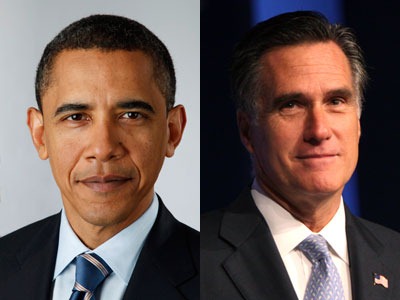
Obama-Romney

I’m more than willing to accept the Socialistic label, but I believe conservatives need to accept the Social Darwinism label.   The United States has been socialistic since the 1930s.  Republicans obviously want to reverse that trend, although I doubt many of them want to return to absolute free market capitalism.  I don’t believe there really is a clear choice, but I do believe the overall directions of both parties are clear.  Liberals want to spend the money on social support systems to give everyone a minimum level standard of living, and conservatives want to dismantle the safety net and introduce a kind of Social Darwinism so nobody gets a free lunch and everyone competes.

Over population and the removal of real survival of the fittest cruelty, has produced an excess of humans that can’t compete.  The world is fat with people, and there’s not enough natural jobs to let them all survive.  Republicans want to go on a diet and let the excess fat die off.

Either we’ve got to create a safety net, or let nature take it’s natural course.  Free market capitalism is based on survival of the fittest competition.  As a liberal, I don’t want to see the kind of suffering that real Social Darwinism will create and wish to fall back on Socialism.  Nor, do I think Republicans really have the stomach for tooth and claw competition.  What the leaders of the Republicans really want is unrestrained competition to pursue wealth and they see the safety net, environmental protection, and other social engineering as getting in the way.

Most conservatives aren’t rich, and just as vulnerable as liberals to fall victim of Social Darwinism.  In their struggle to stay afloat they have developed a tremendous resentment against others who don’t struggle because they are protected by Socialism.  You can’t blame them, but do they really want to see millions suffer without government handouts?  Would the Republicans really have let the banks and car companies go bankrupted a few years ago?

If we could reach some kind of consensus most people wouldn’t mind giving food stamps and welfare to the truly needy, if we also had an effective system that could distinguish the Meek of the Earth, from the free lunch opportunists.  Americans give billions to charity every year to help the helpless, but Americans also hate ineffective charities that waste money.

There is no clear choice in how be efficient with tax money.  Republicans scream they want to reduce spending, but all they ever do is reduce taxes, and going into national debt is no solution to the problem.  Neither Obama or Romney offer an effective solutions to problems we face.  All they do is play on people’s emotions.  I really believe many Republicans feel the United States will suffer an economic collapse if we don’t elect Romney.  They really are in an emotional panic over this, but us liberals just as strongly believe Romney has no magic bullet to save the country. 

Predicting the future is impossible, but I’m to describe the liberal’s fear of the future.  Republicans will win in November because the party in power seldom maintains power in a bad economy.  Wall Street will be overjoyed at this Republican victory and the economy will heat up, and the unemployment rate will go down.  Republicans will then start dismantling Socialism in America to a small degree reducing the middle class and increase the poor.  Unless there is some kind of new economic bubble, growth will be slow, and hidden unemployment will be high.  The Republicans will cut taxes but not pay off the debt.  If there is a bubble that heats up the economy, it will eventually pop like the housing bubble and we’d go into an even worse recession than we’ve just had.  The Republicans will not do anything about the Environment and will work to dismantle the EPA.  In the next twenty-five years global warming will become obvious to all, but it will be much too late to do anything about it.

See, us liberals fear for our country too, just as much as conservatives.  There are real solutions to our problems, but the clear choice Republicans talk about from both parties in 2012 won’t help us all find them, and we can’t find them without working together, which appears to be unlikely in this ever growing politically polarized society. 

I think both current choices will lead to doom.  We need a third option, but not a third party.

JWH – 8/16/12

Make Your First Song Count!!!

Listeners of Rdio, Spotify, Rhapsody, MOG and other subscription music services get to hear hundreds of new albums every Tuesday.  I’ve already tried six or seven new albums while eating my morning Quaker Squares.  I use Rdio, and on Tuesday when new albums are released I hit the New Releases button and see a scrolling parading of new albums marching by, in rows of five at a time.  I roll the wheel on my mouse and they just keep on coming, row after row, of new albums.  I don’t have time to listen to them all, or even a tiny fraction of them.  I just have to click the mouse to play – almost no effort at all.  What’s hard is finding a song that makes me want to play the whole album.

New-releases

Now here’s the thing:  The first song is everything.  If you don’t grab me with the first song I just click on another album.

In the old days, when we bought LPs or CDs at the store, often we bought them because it already had a hit song on it, or it was a band we liked.  Spending the money on an album meant you were willing to take the time to listen to all the songs, and the song order didn’t matter.  I’m just not willing to spend time on whole albums anymore when I have access to so many.

I’m quite anxious to give an unknown album a chance, especially if it has a cool cover, clever title, or interesting band name.  Those are the initial impressions that catch my eye.  Those three factors decide whether I hit the Play button.  What keeps me playing is my impression of that first song.  If I like the first song, even moderately, and especially if I think it’s new and different in a creative way, or has a distinctive vocalist, or addictive music, I’ll play the whole album hoping to find a great song.  That’s what I’m looking for, a great song I’ll add to my playlists.

It’s obvious most of the time when I don’t like a song.  What’s disappointing is to play a new album and the first song sounds good, but feels like too many other good songs.  I’ll agonize awhile, hoping the music will get beyond the cliché, but all too often I give these songs the hook as fast the the songs I immediately dislike.  When you’re wadding through 17 million songs you just don’t have time to waste.

Tonight, for instance the song “Tickle” from What You Want by Eyes Lips Eyes started off with a nice instrumental that grabbed me, so I added it to my Under Consideration playlist.  It’s not great, but it showed enough promise to listen to more.

I liked “Tickle” enough to try all four songs from the EP.  It’s growing on me.  But I’ve got to admit if any of the other three songs had been first, I’d would have gone on to the next album.

eyes-lips-eyes

The next album to catch my attention was another EP of five songs, The Colour Age by Red Ink.  “Empty Town” had a nice 80s pop feel too it, and I liked the vocalist.  I almost didn’t give it a try because the cover is bland, the title dull and the group name gives off a negative vibe, but I did, and it’s a decent album.  I like all the songs, but don’t know if any merit going on a playlist, although “Promise” had a nice emotional feel to the vocal.  I added the album to my Collection, and put it the Queue to play again later.  [I did add it to my main playlist. “Promise” should have been cut 1.]

red-ink

Now, “Cheek Mountain” piqued my musical taste buds immediately.  It’s from a group Cheek Mountain Thief with a self-titled album.  I liked the first song enough to put the album in my Queue to play later as background music.  The songs are on the moody side, so I need a moody moment to give it a good listening.  But that first song earned it a further play.

cheek-mountain-thief

How could I not play an album by a group named The Dirty Gov’nahs?  And I liked the title too, Somewhere Beneath These Southern Skies.  The first song, “Can You Feel It” grabbed me.  The music and vocals reminded me a bit of Kings of Leon.  The first song got the album on the Queue for playing later, but the opening guitar of the second song, “Don’t Give Up On Me” got the album added to my Collection.  Playing on through album makes me wonder if I like it well enough to buy a CD copy.  It has a big rock sound, not quite old Southern Rock, maybe a bit like later Rolling Stones kind of beat.

The Dirty Guv’nahs are the kind of band I like discovering on subscription music.  So far the album only has 482 plays, but it sounds good enough to expect it will catch a lot more attention.  I put “Temptation” on my main playlist.

dirty-govnahs

The vocals of The Dahls grabbed me right away for “Josephine,” the first song on their album midnight picnic.  Country music with a twinge of folk, or maybe vice versa, with a dash of witchy music.  These two girl singers sound nice enough to add their album to the play later Queue.

The-Dahls

Now this is just five albums to play after scrolling past over a hundred albums attempting to catch my attention.  It’s work to find an album I’m willing to listen to all the way through.  And the odds are I won’t keep playing these albums.  I only find about one album a month that I really love.  The best I’ve found in the last couple months has been Our Version of Events by Emeli Sandé.

emili-sandi

JWH – 8/14/12

How Good is Your Visual Memory?

I recently read The Mind’s Eye by Oliver Sacks and I can’t stop thinking about it.  Sacks is professor of neurology and psychiatry that writes about medical oddities relating to cognition.  The Mind’s Eye is about all aspects of vision and how it impacts the brain, our behavior and our perception of reality.

I’ve always assumed I was an average person, with average abilities, so that I was smarter than some, but dumber than others.  That I was stronger than some, and weaker than others.  I’ve always assumed I fit comfortably in the middle of the bell curve of what it means to be human, and thus assumed what I see and feel is pretty much what other people see and feel.  Reading Oliver Sacks proves that assumption completely wrong.

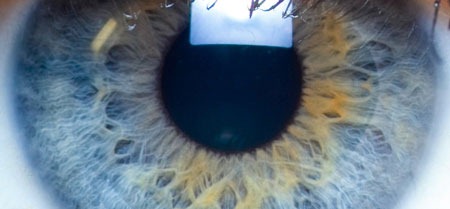
Iris

We all see the world drastically different, both at a physical level and at a conceptual level.  People aren’t a homogenous species.  If you’ve watched the recent Olympics you know what physical extremes exists.  Reading Oliver Sacks will illustrate the cognitive extremes.

Even in the snug middle of the bell curve, we’re all very different.  In the last chapter of The Mind’s Eye, Sacks writes about blindness and talked about his essay on John Hull, author of Touching the Rock: An Experience of Blindness.  Hull wrote about losing his sight, and slowly forgetting all visual memories until years later he reached what he called “deep blindness.”   Hull blew my mind, when he wrote that he felt deep blindness was a richer state of mind. 

In his essay on Hull, Sacks seem to imply this was how blindness worked in general.  Later he was surprised by all the letters he got from blind people explaining how their blindness had not worked that way.  He soon learned there was an array of human responses to going blind.

From this Sacks wrote about visual memory.  Sacks himself discovered he himself had poor visual memory when he took a lizard skeleton to his mother and she visually memorized it by turning it 360 degrees, stopping each 30 degrees to memorize that view.  She was a surgeon and had expected her son to be a surgeon too, but when she realized he didn’t have her visual memory, she told Sacks he shouldn’t go into surgery.  I suggest you find a copy of The Mind’s Eye and read the whole chapter rather than me paraphrasing it all, because it has an astounding amount of information about visual memory to contemplate.  Especially the stories about blind people who still feel they live in a visual world – an artificial reality inside their heads.

Like Sacks I have poor visual memory. Sometimes when I listen to music with my eyes closed, I’ll have flashes of visual scenes, but I have no control over them, and they last so little time I can’t study their details.  People with great visual memory can study their mind’s image and draw them.  A stunning example is Stephen Wiltshire, who draws Rome from one helicopter ride.  (See other videos here.)

If I was to go blind, I assume my experience would be pretty much like John Hull, and I’d eventually forget my visual memories and end up in deep blindness.  But thinking about this, I wondered if I couldn’t exercise my visual memory, like doing push-ups to make my arms stronger, and develop my visual memory.  After I read the last chapter in The Mind’s Eye I started paying more attention to visual details and became fixated on a church steeple I see on my drive to work, atop Audubon Baptist Church.  I drive by a 8:25 in the morning when the sun is behind me and there is no shadows, and again at 1:55 when I’m returning from lunch, and it does have shadows.

The first time I noticed this steeple after reading the book, I tried to memorize as much as I could when I was at the light near the church.  The steeple sits on a peaked A-shape roof.  The steeple has four parts, a square based with one round window per side, an eight-sided level above that with large rectangular windows, an even smaller level above that with wooden shudders, again eight sides I think, and a tall steeple that comes to a very sharp point.

When I got back to work the first time I tried to draw it from memory.  But I didn’t have any visual memory.  I remember the peaked roof, the four sided box, an eight-sided box on top of it, and another eight-sided box on it, and then the steeple, so I tried to draw those geometric shapes.  It was a terrible drawing because I tried to draw all the sides.  The next time I drove by I studied it again and realized, duh!, that I only see one side of things, and only a portion of the geometric shapes, and from a certain angle.  I had started my drawing with an 3d octagon wire shape, and that’s a conceptual view, not a visual view.  So if I’m looking from the side, I’ll see one side of the 4 sides, and 3 sides of the 8 sides, and essentially a very long triangle.

To test my memory just now I found a picture of the church on the web and it’s nothing like what I remember seeing.  For some reason I remember the church as having wood siding, and it’s brick.  I did remember the wooden slates on the third level, but I didn’t remember the tall windows of the second layer.  I’m no Stephen Wiltshire.

I remember having a much better visual memory when I was young and smoked pot.  Oliver Sacks said he experimented with large dosages of amphetamines when he was young and for a few weeks could draw quite well, especially from his visual memory.  After he stopped taking the drugs he lost all ability to draw.  The poet W. H. Auden took Benzedrine to write poetry, because it helped him to concentrate intensely on detailed verbal imagery.  I assume drugs in each case helps tune out larger reality so we can zoom in on a single tiny aspect, which helps the brain focus.  But can visual memory be enhanced without drugs?

I’m pretty sure it can because of my experiment with looking at the church steeple.  If I studied that steeple every day, and tried to draw it every day, and checked my errors every day, I’d learn about seeing and drawing, but I don’t know if I would have a better visual memory.  Many of the blind people Oliver Sacks wrote about, have extremely detailed inner worlds.  They know they aren’t accurate compared to the outer world they can’t see, but they are very functional models and maps that help them live and work in reality.  One blind man even re-shingled his own roof, freaking out his neighbors because he worked at night.  Another could design machinery with his inner sight.

I think when I have flashes of visual memory it’s more like dream memory.  I have very vivid dreams, but sometimes I’ll have microsecond flashes of dream memory when I’m awake.  When I took drugs when I was a kid, some of those memory flashes would last seconds.  I remember one of flying over the Golden Gate bridge, as if I was a bird, or riding in a helicopter.  Often my flash memories are visions from great heights – and I can’t explain that.  A person with good visual memory could retain those images in their mind.  I can’t.  My memory of them are more like wordy descriptions, which probably explains why I write rather than paint.

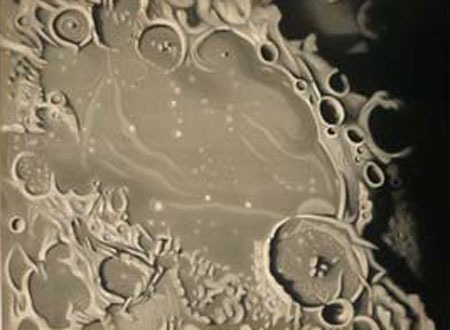
I’ve always been impressed by 19th century scientific drawings.  Drawing was an important skill to a scientist.  I don’t know if this meant they had good visual memory, or just a good eye for detail.  And that makes me wonder if I developed an eye for detail would that enhance my visual memory?

Reproduction, © Bloomsbury Auctionsmoon-drawing

I’ve always wondered if painters had to paint 100% of what they put on canvas while observing their subjects, or did they paint some of their pictures from memory.  Often when I look at photographs I think I remember in great detail, I’m shocked to find my memories are either wrong or just fuzzy smudges at best.  People with perfect visual memories are often autistic.  Temple Grandin, a famous autistic person, profiled by Oliver Sacks and featured in the wonderful HBO movie of the same name, thinks in visual imagery.  I’ve many times wondered if animals, who don’t have our language skills, think in pictures too.

To be honest, I believe I have a poor visual memory because I go through life not paying attention to visual reality.  My life is books and words.  I think in concepts.  And I wondered if John Hull felt deep blindness was more rewarding because it allowed him to focus more intensely on concepts.  Now, I have no desire to go blind, but I can imagine after reading Sacks, that blindness isn’t the sensory depravation I once thought it was.

Also, I wonder if I can improve my current abilities.  The cliché is your hearing and touch senses improve if you go blind, but do you have to go blind to improve your other senses?  Can one enhance all our senses, or is their a limitation in brain processing?  Because I’m getting older and my memory is failing, I pay attention to all that advice about improving memory.  I started playing Words with Friends.  I used to be terrible at Scrabble, but now I keep 6-8 Words with Friends games going and I can now beat people that used to always stomp me.

I’m confident if I got some drawing books and practiced, or even took some drawing classes, I could improve my drawing skills, but I also wonder if those skills would translate into better visual memory?  Is that a physical limitation – you either have it or you don’t?

How good is your visual memory?  Post a comment.

JWH – 8/11/12 

Living in a 2D World

I’m reading The Mind’s Eye by Oliver Sacks, and his chapter on stereoscopic vision made me think about my own vision and how I live my life.  I have a bad right eye and I have poor stereoscopic vision.  When I close one eye I don’t notice any difference.  I was told when I was young that my mind compensates with a pseudo-sense of 3D.  Dr. Sacks spends quite a bit of time talking about how much he loves his stereoscopic vision, that he’s even a member of New York Stereoscopic Society and has been a lifelong collector of stereoscopic cameras and viewers.  When he lost vision in one eye he wrote quite eloquently about what it means to live in a 2D world after being so attuned to 3D reality.  He also chronicles a patient that spent most of her life in a 2D world, and acquired 3D vision late in life.

The Mind's Eye by Oliver Sacks

Sacks mentioned several times in chapter 6 that many people have weak stereoscopic vision and have learned to compensate and don’t even know what they are missing.  I guess I’m one of them.  But then I got to thinking about my visual world.  I spend all day working in front of a computer, and all evening either at the computer, TV set, or reading books, and that means I spend a majority of my day looking at 2D fields, either of LCD or paper.  I also love paintings, cover art on books, CDs, LPs, magazines, and photography.  I also have a tablet computer and iPod touch – more 2D living.

I wonder if my lack of 3D vision pushed me into enjoying 2D hobbies and jobs?  I love hi-rez computer screens.  I’m happiest when I’m immersed in one of my 2D worlds.  But I’m not alone.  Is all our gadgets and screens pushing us all into preferring a 2D world?  If I had been born with great vision would I have become a bookworm and computer geek?  From reading The Mind’s Eye we are warned very vividly to expect a lot of changes and adapting to failing bodies and brains when we get old.  All his case histories are about people adapting, so I assume I adapted before I even knew I was missing anything.

I can’t recommend The Mind’s Eye highly enough.  It’s fucking intense.  It’s the scariest book I’ve ever read.  Most people will find this book immensely depressing and horrifying.  Zombies and vampires are kittens and puppies compared to what awaits us in old age.  It scares me and inspires me at the same time.  It’s about people with various kinds of brain damage, usually from dementia, stroke, aging, birth defects, etc., and how they coped when their way of life was greatly disturbed when one day one of their abilities were taken away.

What’s funny is most of the people that Sacks writes about deal with their disability with great bravery, but Sacks tells us how frightening and depressed he got when he chronicles losing vision in his right eye.  But even with all his physical failings, this 79-year-old man does more each day in old age than I ever did on any day in my prime. 

That’s why this book is so inspiring.  We’re all going to die, and more than likely, we’re all going to see our bodies and minds deteriorate before we get to take that long dirt nap.  It’s going to be painful, scary, depressing and hard.  But Sacks tells us stories about how people go through horrible conditions.  If I have a stroke in my future, then I’ve very glad I read this book.  I once had a stroke like incidence and the details in this book explained what happened to me.  For a short time I lost all language awareness.

We are used to thinking that aging means failure of our physical health.  But our brains wear down too, and in many ways.  Sacks profiles people who have lost the ability to read or recognize faces or objects, things when we read about them sound bizarre.  But if you’ve ever known people who have had a stroke, or dementia, you’ll recognize all of these horrifying failures of brain functionality.

We like to think of ourselves as little souls inside a body.  That if we lose a leg or have a heart attack it’s something that’s happening to our body.  We seldom contemplate what happens when our soul comes apart?  If you woke up one day and couldn’t tell the difference between your wife, mother and daughter, how are you going to react?  Quite a few of these stories are about people who have healthy eyes but can no longer process vision in a normal way.  Sacks explores many subprograms that make up our visual processing of reality.

If you read The Mind’s Eye you’ll see how everyone adapts their limited senses to reality.  No one is 100% functioning in all brain processing.  Reading this book makes me realize how I’ve adapted to living in a 2D reality.  My brain has adapted my vision so I can drive, walk down stairs, wash the dishes, play ball, catch a Frisbee, but from what I’ve read I’ve never known the beauty of stereoscopic vision as Dr. Sacks describes it.  When Sacks lost his 3D vision, he had trouble walking down stairs, taking ahold of objects, and did things like pour wine into people’s laps.

I hope I can remember this book, because when I experience brain damage or mental malfunction, I want to stay calm and not freak out.  When my brain starts breaking down and my consciousness observes the world going wacky, I want to go, “Hey, I know what this is, the area of my brain that processes written words must have conked out.”  Several people in this book described seeing words as if everything was written in a different language and alphabet.  Can you imagine how scary that would be?  Hopefully understanding the ideas in The Mind’s Eye might help deal with such experiences – if I can remember.

The thing I fear the most is not remembering who I am.  But you know what?  People adapt to that too.   

JWH – 8/8/12

What 12 Lessons About Life Would You Teach Your Younger Self If You Had A Time Machine?

Nobody likes taking advice from other people. 

What if you could get advice from an older, wiser version of yourself?  Would you take it?  What if you had a time machine and could travel back to visit your younger self and spend one day to help him or her prepare for the future?  Would your younger self listen and learn?

What advice would you give you?  How would you be convincing.  What proof could you bring?

There are two ways to approach this problem.  First, you could teach yourself how to get more of what you wanted in this life with hindsight, or you could convince yourself that you should be a totally different person, a better person.  If you collected rare baseball cards you could tell yourself how to get the rarest ones for your future self.  Or, you could tell your younger self, don’t waste a lifetime on collecting baseball cards, just play a lot of baseball.

As much as I’ve enjoyed my life, as much as I love my wife and friends, I have never been the person I wanted to be because of introverted habits and laziness.  I would go back and try to convince my younger self to become a different person knowing full well it would erase me and my current life.

If you had a time machine and could spend a day with a younger self, what age would you target?  Why?  What would you say?

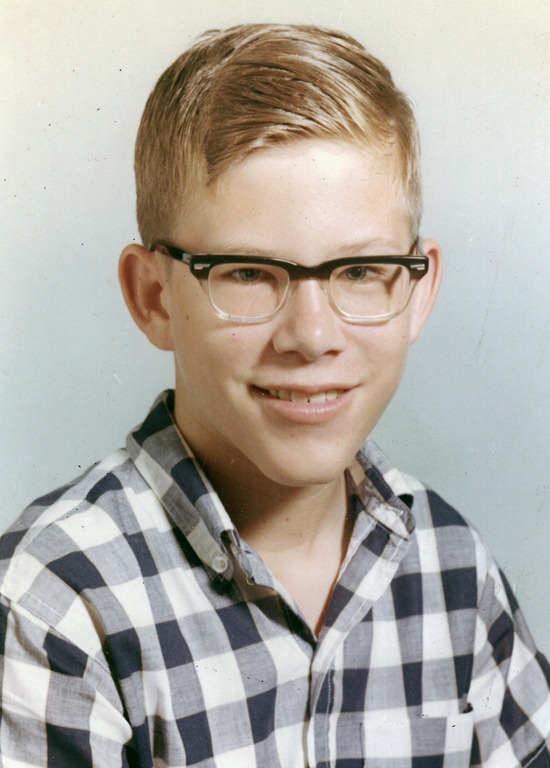
I’d go back to 1964 when I turned 13, when I understood science fiction.  I think Jim-13 could understand Jim-60 and time travel.

jim-001

Here’s what I’d try to teach Jim-13.

  1. Give up my addiction to science fiction.  I have a life-long addiction to fantasy that I overindulge with books, television and movies.  I’d work very hard to convince my younger self to never look at television again, and to promise to read no more than one novel a month.  I’d try to convince him to read more non-fiction and classics.  I’d tell him when he did read SF, to find and read the very best science fiction, but no more than four SF books a year.  I’d try to convince him to seek out SF books that taught him more about reality and not use science fiction to escape reality.
  2. Study science and mathematics.  I wouldn’t try to help my younger self get rich by telling him to buy key stocks, or which horses or football teams to bet on.   I’d try to teach him that the key to a good life is working hard at something you love and that being a scientist is probably the best way to spend a lifetime.
  3. Give up junk food, eat healthy, and exercise.   I was an active kid, and skinny until after I got married, but I have an addictive personality and I ate lots of junk food.  Seeing Jim-60 weighing 234 pounds would probably be pretty convincing evidence.
  4. Don’t get involved with drugs.  Hey, I grew up in the 1960s, so that will be a hard lesson to teach.  I might tell him to experiment under certain social conditions, but convince Jim-13 that drugs will waste a lot of time and money.
  5. Pay more attention to other people.  I’ve always been introverted, self-centered and egocentric.   I’d try to convince Jim-13 that getting out of his head and focusing on what’s going on in other people’s heads will lead to more social success and a richer life.
  6. Warn him about sex.  Hey, he’s 13.  I’d try to convince him that all those gazillion hours of sex fantasies won’t get him laid.  I’d try to teach him not to think about what he wanted but learn to observe women and study what they wanted.  I’d tell him, yes, all the girls have pussies, but the organ you really want to lust after is brains.  I’d tell him to learn to dance.
  7. Take good notes.  I’d try very hard to teach Jim-13 to keep a journal, studying the art of writing as deeply as possible, learn to draw and sketch, and take one photo a day.
  8. Find ways to make money and save it.  I’d teach him working provides social contacts and access to mentors, and that saving money will mean freedom to do more.  I tell him that easy money from time travel tips is wrong and a waste of time.
  9. Finish school as fast as possible and get into college as soon as you can.  I’d convince Jim-13 that it’s very important to become independent as soon as possible and college is one way to do that.   Try to get in by 16.
  10. Move in with your grandmother.  My parents were alcoholics and at age 13 I was about to go through some very bad years.  If I could have gotten away from them it really would have helped me tremendously.  And my grandmother managed an apartment building in her old age, and could have used the help.  If I could have grown up living in one place and had a stable life for junior high and high school I would have been a much different person.  I’d tell my younger self to not leave Miami until after college – to even get into the University of Miami for college.  Maybe even study marine biology.  I’d also advise him to leave for grad school and to study physics or astronomy then.
  11. Find mentors.  I think the key to success is to start work young and find mentors that can help you understand the game in any situation.
  12. Learn to focus and work hard.   I’d tell Jim-13 to push himself to work a little harder at his favorite projects each day.  To learned to focus his concentration a little harder on every task each day.   If you can spend 30 minutes focused on learning calculus one day, try for 31 the next.  If you can grind on a telescope mirror for 2 hours on one day, try for 2 hours and 5 minutes the next.  If you can run four miles one day, try for 4.1 the next.  Just keep pushing your body and mind to go further.

I know this is a fantasy and time travel isn’t possible. But playing this little thought experiment is very educational. I can always pretend its advice for Jim-13 from Jim-60, but it could be advice for Jim-80 to me at this moment.

But if this little fantasy was possible it would have played out different than what I wanted.

Convincing my younger self of all of this would be hard.  If I could print out all my blog posts into a book, I give him that.  I might bring an iPad to show him how far out technology gets.  I might bring him the book Replay by Ken Grimwood.  I might bring him a photo album of my life. 

I was a bullheaded kid, so I’m not sure I could have convinced him of anything.

I’m pretty sure he would have demanded that Jim-60 stay in 1964 so he, Jim-13 could return in the time machine to 2012.

I would have agreed.

JWH – 8/4/12