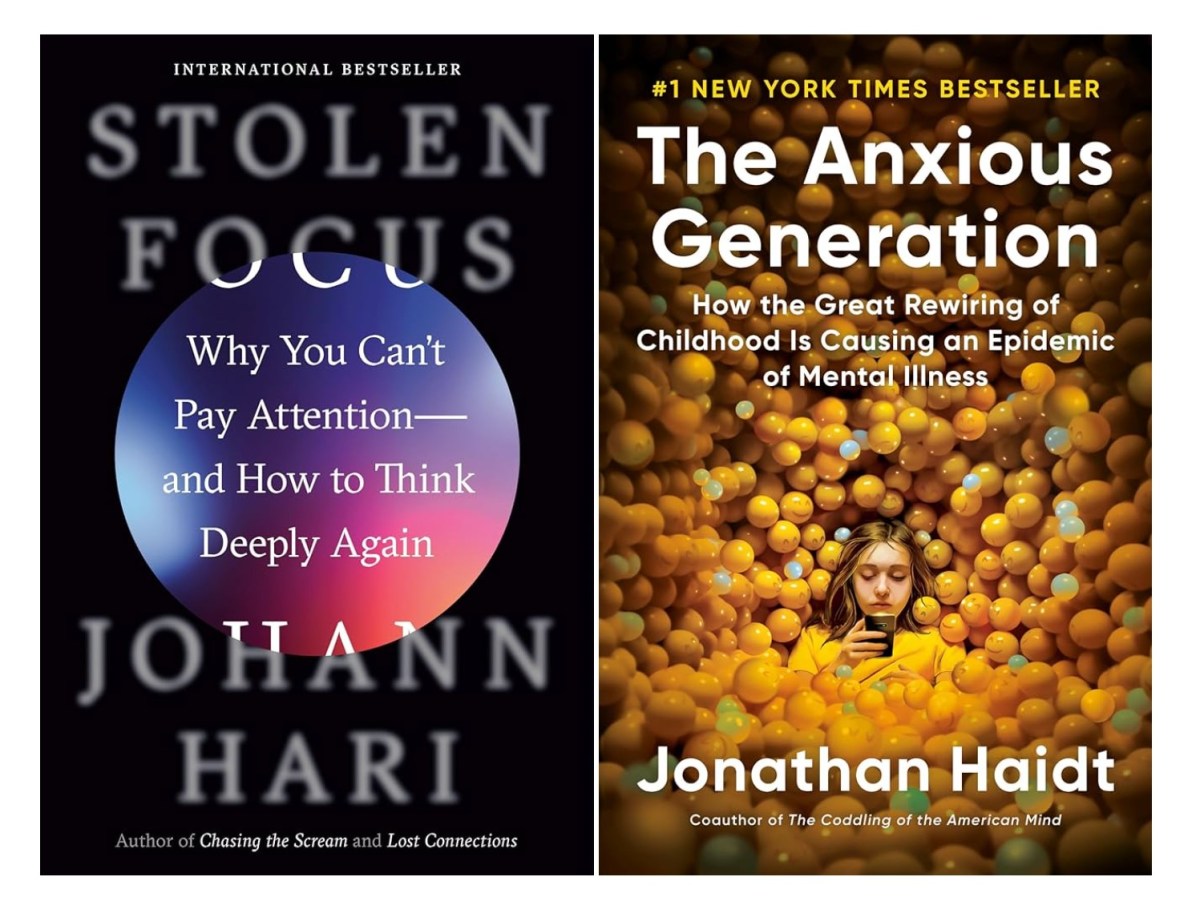
What Method of Cursive Handwriting Was I Taught in 1959-1960?

by James Wallace Harris

I’ve been wanting to write by hand again, using cursive handwriting. For decades now, whenever I’ve had to write anything by hand, I printed it with block letters. It’s terribly slow. I keep trying to switch back to cursive so I can write faster and fluidly. However, the muscle memory of whatever cursive technique I was taught is faulty, causing frequent crashes in my penmanship. Such bumps in my inky road cause me to switch back to printing.

My friend Leigh Ann lent me The Art of Cursive Penmanship by Michael R. Sull after I mentioned to her that I wanted to learn handwriting again. Leigh Ann said most older people were taught the Palmer Method of penmanship, which was common in schools until the 1950s. In his book, Sull adapted a consensus of hand movements used in teaching the various forms of the Palmer Method and calls his version American Cursive. However, when he started using it, I realized I hadn’t learned to write certain letters that way, especially the upper-case F Q R and Z or the lower-case z. Here’s an example from Wikipedia.

I have a vague memory of learning cursive writing in school. I think it was in the third grade, which would have been the 1959-1960 school year for me. I completely have no memory of learning to write Qs and Zs this way. Now it’s possible that I’ve just forgotten. I’m forgetting words all the time nowadays, so why not forget some letters too?

According to Wikipedia, the Palmer Method might have been phased out by then and the new teaching method was called the Zaner-Bloser Method. It looks like this:

The differences are very slight. I think the big differences were in the teaching methods, especially how the hand and fingers were positioned and held. I believe each successive method aimed to make it easier for students to write by hand. It’s funny that most of us have forgotten this.

These are still the strange Qs and Zs. And I can’t make myself write zoo in cursive, either with a capital or lower case. It’s like my hand has no memory of writing Zs. Nor can I write anything with a capital Q. I do use that lower-case q.

Wikipedia says the Zaner-Bloser Method began to decline after the D’Nealian Method was introduced in 1978. It looks like this:

What’s weird is all the letters look about the same from method to method. It appears the physical method of writing them differs. I’ve also read that teaching penmanship varied depending on the teacher. I wonder if I had a weird teacher that didn’t like the Qs and Zs and created his/her own? (I went to three different third grade schools, in two states, and had a man, and two women teachers.)

What I’ve been learning this afternoon is my memory, especially my muscle memory, balks at writing some of these letters in the way they are being taught in their specific method. That suggests that the teacher taught me differently, or my teacher wasn’t paying close attention to me developing wayward habits. Do we all put our own spin on lettering? Is that why we have such a tough time reading each other’s cursive handwriting?

The reason I want to learn to write by hand again, using cursive, is because I want to write quickly and smoothly with a pen and have the results be easily readable. I’m not going for beautiful handwriting. I just want to develop a comfortable way to write with pen and paper. I keep reading that using pen and paper is better for my mind and memory than using a computer. I don’t know if that’s true or not, but I will assume it is until proven false.

I also have back trouble if I sit at the computer for too long, so I’m hoping to learn to write with pen and notebook while in my La-Z-Boy.

What I’ve decided to do is practice handwriting by studying these techniques in a general sense to see if I can figure out the smoothest way to cursively move from one letter to another. I want my writing to flow so I don’t have to think about it. If I could handwrite without letters crashing together, I think I would be satisfied.

I doubt I need to study a whole book, but I do need to do a lot of practice until I can figure out how my pen should move from one letter to the next depending on all the combinations. Michael R. Sull has people copy poems and other kinds of writing, and I think that’s a promising idea.

I do find it fascinating I was taught something around 1959/1960 that became muscle memory, and it should be a clue to which writing method I was taught.

JWH

Growing Old with Television

by James Wallace Harris

Don’t you think it rather absurd that we’re conscious beings who have emerged into this fantastic reality for no reason that we can confirm and yet spend so much of our lives watching television and computer screens, which are essentially fake realities? Or look at it another way. They say when you die your whole life flashes in front of you in an instant. How will we feel when we see that a large fraction of our life was staring at a screen?

I’m not saying we shouldn’t watch TV or play on a computer, but I’m just asking if it isn’t weird when the universe around us is so far out that we should? Or maybe television is the most far-out thing this reality has produced?

I belong to the first generation brought up on television, and now we’re the generation that will spend our waning years going out watching TV. I’m 72 and can remember 69 years of screen addiction. Was it worth it? Or was it a lifetime devoted to a false idol?

When I was young, television shows were probably the most common topic of discussion I had with other people, and now that I’m old, that’s become true again. Whenever I get together with people, or talk with them on the phone, we generally always compare what television shows we’ve been watching, and which ones we recommend. Is that true for you and your friends?

Over the years I have found several ways to mark, rule, and remember time. Who was I living with, where was I living (state, city, street, house), what grade or job was I in, who was president, what songs were popular, what books I read, where I went to school or work, and of course, what was popular on TV.

Television has become a time machine because we can now watch shows from any period of our lives. The same is true with music and books, but television has more details that connect us with our past. If I watch an old show from the 1950s it reminds me of what the clothes, cars, houses, furniture, and people looked like back then.

Television is also transgenerational. The other night on Survivor, a few of the young contestants talked about how they loved to watch The Andy Griffith Show. I must wonder if that’s where they get their mental conception of the 1960s. I know I’m getting a mental image of the Nazi occupation of Paris from The New Look on Apple+ TV.

This makes me realize that I have several modes for evaluating reality. I assume the best mode is direct experience. Just above my monitor is a picture window, and outside that window is a tree. Books and magazines give me another view of nature via words. I’ve learned a lot about trees from them. But then, I’ve seen the most variety of trees and landscapes with trees on television. I’ve lived in many states, north, south, east, and west. But I’ve seen more places on TV.

TV is like our sixth sense. However, it can be a sense that looks out on reality like we do with our eyes, or it looks at make believe fantasies, like we do with our inner vision and daydreams.

I probably spend 4-5 hours a day watching TV. During my working years, I believe that number was less. In my childhood I think it was more. I’ve always wondered what life would have been like if I never watched television. I think it would have been more real but duller. I try to imagine what life was like in the 19th century, say as a farmer or factory worker. News about the world at large would come through newspapers and magazines, and it would be much delayed in time.

Now that I’m getting old and wanting to do less, I thought I would be watching more television. We think of television as a babysitter for children, but isn’t that also true for us old folks? However, I’m losing my ability to watch TV for some reason. I can only watch TV series and movies if I’m watching them with other people. Watching them by myself makes me restless. I can watch short things like YouTube videos by myself, but I’m even getting restless watching that stuff too.

I had planned to catch up on a lot of television shows and movies in retirement, but that’s not working out. I’m wondering if this is happening to other people. Does the novelty of television ever wear off?

JWH

I Gleaned Two Useful Bits of Wisdom from YouTube This Morning

by James Wallace Harris, 3/18/24

The first insight applies to internet addiction. I constantly check several apps on my iPhone all day, and regularly browse YouTube on my television. It’s gotten to be a terrible habit, even though it’s so satisfying.

The first video made an analogy to rats and internet use. If you provide a button to a caged rat that when pressed provides a food pellet, the rat will eat its fill and then stop pressing the button. But if you set the button to randomly provide a food pellet the rat will constantly push the button. The analogy is we constantly check the internet hoping to get a reward, but because we don’t always find something rewarding, we keep checking. I believe that describes my internet habit.

I’m going to take his advice and set a limited time to enjoy browsing. But for the other times I’ll only use the internet when I know I want something specific.

The second piece of advice is about To-Do lists. The guy on the video said if your To-List is too long, you’ll avoid using it. And that’s true for me. I use the same To-Do list app he uses, Todoist. So, I went and rescheduled most of my tasks for the future, and just left five on the main page. I might even reduce it to three. Or even one. I want to try extremely hard and get more things done, even if it’s only one thing a day.

It’s ironic that I found these two insights that are perfect for me by browsing. I think it’s important to do some internet browsing, but I was like a rat in a cage always pushing the button hoping that I’d get a reward. There’s just not that many truly significant rewards to be had on the internet every day.

I hope I can apply these two insights and stick to using them. I might even add them to my habit tracker. Since I started using it, I’ve been doing seven core habits for 151 days straight.

JWH

“Sorry, I’m Not a Human, I’m A Computer”

by James Wallace Harris, 3/10/24

What will happen if we all end up embracing artificial intelligence (AI)?

My friend Linda told me a funny story today. Her robotic vacuum cleaner was acting up, so she called its tech support number. The tech immediately started telling her how to troubleshoot the problem, but Linda had to tell her to hold on a minute.

Linda went off and gathered up her robot. When she came back, she said, “I’m sorry I took so long, I didn’t expect you to fix it right away.”

The tech replied, “That doesn’t matter, I’m a recording.”

Linda said the computer spoke perfectly and told her exactly what to do. She was shocked by how well the call went.

At first Linda and I joked about this incident, thinking up funny scenarios that standup comics could create about humans interacting with artificial intelligence machines.

I even thought I would try to write up some of those humorous ideas, but then I started thinking along a different track. What if people prefer getting phone help from an AI rather than real people? For years now everyone I know has complained about how hard it is to get any kind of support over the phone. Most folks hate phone trees. Many acquaintances complained they couldn’t understand phone support from foreign call centers. And everyone seems to think it’s almost impossible to get a human on the phone.

What if AI chatbots change all that? What if computers start giving us perfect service over the phone, the kind we used to think humans provided? No one wants humans to lose jobs to automation, but what if we end up preferring the AI voice over the human voice?

How far will that acceptance go? It’s one thing to want to get help from Amazon when your return doesn’t fit any of the listed reasons on the website. But what about more sophisticated support over phones? Would you choose to pay $20 an hour to talk to an AI psychiatrist over Zoom or $100-300 an hour to human psychiatrist in person? What if the cheap AI psychiatrist helps you become happier sooner?

Right now, AI chatbots aren’t factually trustworthy. What if they were? What if it was impossible to tell the difference between AIs and humans by talking to them over the phone? Synthetic voices are getting closer to sounding human. But with AI generated video, soon chatbots will be able to talk and look like a human over video calls too. What if AI chatbots could pass the Turing Test? Will you care? Remember that old New Yorker cartoon showing two mutts with the capture, “On the internet no one knows you’re a dog.”

Already people are using chatbots for friendship. I imagine they will soon offer phone sex talk if they don’t already. Will Only Fans users care if they see AI generated nudity rather than video images of real people?

We must ask, what do we really want from other people?

I’ve been watching the excellent limited series Feud on Hulu. The first season was about the feud between Bette Davis and Joan Crawford. The second season is about Truman Capote and how he ruined his friendship with several New York society women he called his swans. On the surface, the show is about famous conflicts, but below the surface it’s about hurt. It’s about what we want from friends, and why we don’t get what we want, which is recognition and support.

How often are you disappointed with technical or business phone support because the offered solution didn’t recognize your individual problem or solve it? What will happen to society if AI chatbots see deeper into our souls and give us more support than other humans? Will we let millions go unemployed?

This whole AI thing is going to be a lot more complicated than anyone ever imagined.

JWH

“At some point in your childhood, you and your friends went outside to play together for the last time, and nobody knew it.”

by James Wallace Harris, 3/4/24

My cousins and I on my mother’s side of the family occasionally exchange emails. There were sixteen of us first cousins, from five sisters. There are only nine of us left, and all the sisters have passed on. Recently, we’ve been talking about our memories of my grandmother’s house. The house was out in the country, near the little town of Enid, Mississippi.

I only have one memory of that house. I think it was from 1968, but I’m not sure. I believe my mother, along with one or two of my aunts, I’m thinking it was Aunt Let, but maybe Aunt Sissy was with us too, and maybe even a couple of my cousins, all went to see the house. By then it was abandoned and run down.

I stole the title of this essay from a meme I saw on Facebook. I wish I knew before I visited the house what I’ve learned from my cousins’ memories in their emails. I wish I had been shown the photos of the house before that visit. I would have asked all the questions I had to my mother, her sisters, and my cousins. Some of my cousins were even born in the Enid house.

Why are memories more emotionally intense now in old age, than the original experience that created them? I wish I could save all my memories perfectly. I wish I could copy my cousins’ memories into my memory bank.

I recently reread Slaughterhouse Five by Kurt Vonnegut. His protagonist, Billy Pilgrim, became unstuck in time, so he randomly popped in and out of all the moments of his life. I wish I could do that. Billy was also abducted by aliens from Tralfamadore. They didn’t experience time like we do. They didn’t experience moments one after another, but all at once. I wish I could do that sometimes, to be shown the big picture. It might have helped me always understand the small moments better.

Lastly, I’m reminded of the film Blade Runner, and the “Tears in the Rain” speech given by Roy Batty just as he’s dying.

I’ve seen things you people wouldn’t believe… Attack ships on fire off the shoulder of Orion… I watched C-beams glitter in the dark near the Tannhäuser Gate. All those moments will be lost in time, like tears in rain… Time to die.

When I and all my cousins die, all our memories will be lost. Susan and I don’t have children to pass on our memories. And I’m not even sure my cousins’ children can tune into what my cousins felt about their lives. My father died when I was eighteen, and I never talked to him much about his past. My mother lived to be ninety-one, and I did talk to her, and she told me a lot, but I never felt it the way I feel my own memories.

In the decades since my parents died, I’ve tried to imagine their lives from the clues they’ve left. Too bad we weren’t a race of telepaths because I don’t believe words are ever enough.

I believe this photo is the last time all sixteen cousins were together. I wish I remember that day better too. (I’m on the far left.)

JWH