How To Change The World?

I want to change the world
I want to make it well
How can I change the world
When I can’t change myself

“Change Myself” by Todd Rundgren

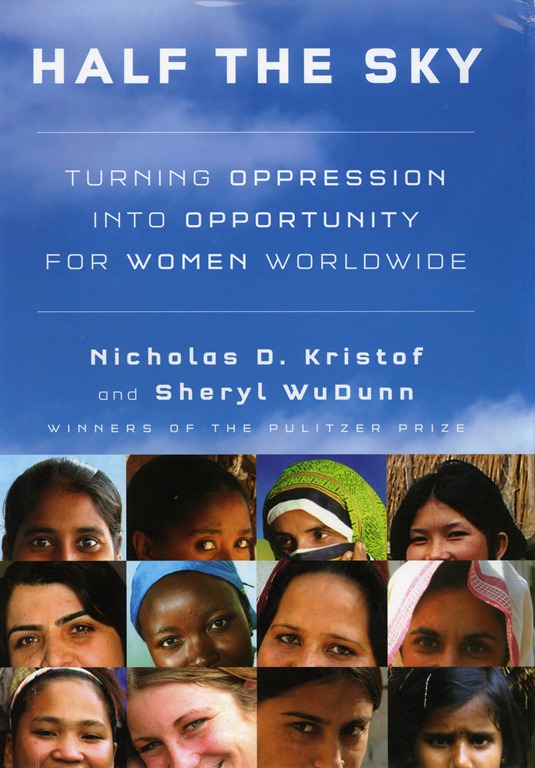
Half the Sky: Turning Oppression into Opportunity for Women Worldwide by Nicholas Kristof and Sheryl WuDunn has dozens of real life stories about exceptional women changing the world.  Kristof and WuDunn are two Pulitzer Prize winning reporters who have traveled the globe, gathering thousands of facts culled from hundreds of research articles and interviews with leaders about the problems we face making women truly equal to men.  Half the Sky is a gut wrenching chronicle of real life suffering, more horrific than the wretched that Victor Hugo wrote about in Les MisérablesHalf the Sky is a book that will make many readers want to change the world too, although I’m afraid most will want to hide away in escapist fiction.  This is an intense book about the nature of our reality.

For all the misery that Half the Sky presents, it’s important to know Half the Sky is a positive narrative about heroic women changing themselves and their communities.  I doubt there will be any readers not humbled by this book.  Changing the world is tremendously difficult.  We’re talking theory of relativity hard, but not impossible as these stories prove so dramatically.  Helping others is far more difficult than writing a check, although you should write plenty.  Charity is a complex endeavor.   Often helping others causes more misery, and just giving money can be corrupting.

Half the Sky is about finding the right way to help others.  Half the Sky is not about helping the helpless, but finding the right female outlier who is willing to change herself dramatically with just the right amount of help.  Often this is minimal to individuals, but it can be very expensive getting resources to the right women.

We need to change the way we see charity.  Changing the world is about changing ourselves.  And we all know how well we do with New Year’s resolutions.  To help others, we have to help ourselves first, and reading Half the Sky is a start.

I’ve come to this 2009 book late, but I’ve yet to meet any of my bookworm friends that’s read it.  A few months ago, PBS presented a two part documentary based on this book.  It’s now available for sale and on Netflix streaming.  Half the Sky is becoming a movement.  I highly recommend reading the book first, because its far more educational. It will prepare you to appreciate the documentary all the more.

half-the-sky

Americans Have Already Won The Lottery

It’s hard to think about so much suffering worlds away.  We have plenty of poverty and injustice in this country, yet compared to the rest of the world, most Americans have already won the lottery – in money, freedom and equality.  And we spend hundreds of billions every year on protecting our country, either through defense, foreign aid, or influence.  And after eleven years of war in Afghanistan and Iraq, and trillions of dollars, we have not eliminated terrorism.  Kristof and WuDunn point out, time and again, that terrorism is a product of male dominated societies, and that we could more effectively fight it far cheaper by just promoting the equality of women in these cultures.  I don’t know if they are right, but we should try.  Our expensive testosterone solutions haven’t worked, have they?

Americans are quite charitable, we give away billions of our own money to help others, but how effective are our dollars?  In case after case, Kristof and WuDunn show how insanely hard it is to actually help people, even when we have the money and volunteers.  You can’t just buy equality.  You can’t just pay men to stop enslaving and raping women.  And even when our hearts and money are in the right place, like with Three Cups of Tea and the education of girls, things get corrupted.

Read Half the Sky carefully, because it’s about creating effective business plans to change the world.  That means changing ourselves.  We have to help people help themselves.  It’s about teaching people to fish, rather than giving them fish.  It’s about education.  But it’s also about how we help ourselves, our country and our culture by uplifting women in distant lands.

Even though America is a leader in gender equality, we still have a long way to go.  As long as Americans bitch about paying property taxes for education, or can’t understand concepts like Title IX, or why fifty percent of Congress and corporate leadership shouldn’t be women, then we do have a long way to go, but we can still help the women elsewhere.  The battles won by the women portrayed in Half the Sky should inspire us.  I don’t have one millionth of the guts and determination of some of these women I read about, and I’ve had a million times more money and opportunity than they have.

With every TV show you watch, with every movie you attend, with every book you read, with every song you hear, observe closely and ask yourself do you see gender equality, freedom from sexual oppression, equal opportunity for women?

Until women are truly free and equal everywhere, most of the problems we face as an evolving species won’t be solved.  It will take one hundred percent participation, and quite often as I think Half the Sky so effectively proves, it’s the inequality of women that’s causing our bigger problems.

JWH – 1/12/13

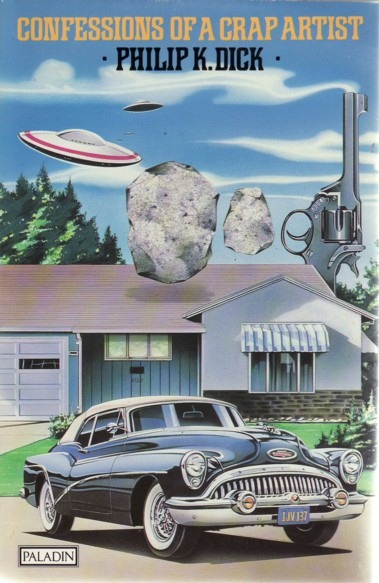
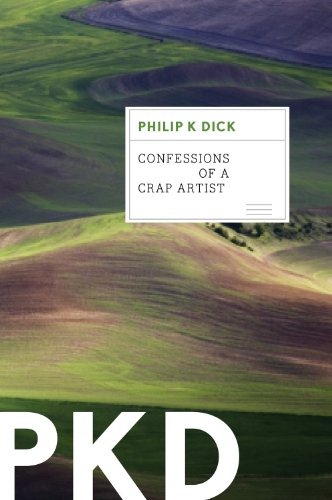
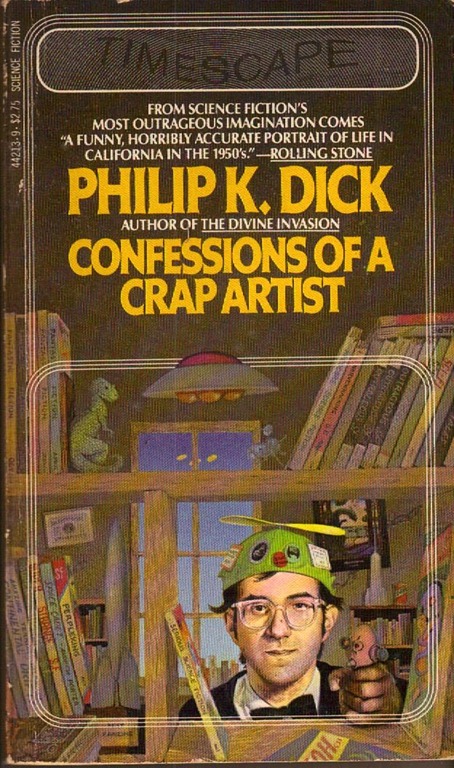
Confessions of a Crap Artist by Philip K. Dick

Philip K. Dick is probably one of the most famous science fiction writers to ever live, but few people remember his name.  At least ten of his stories have been made into motion pictures, but few people who have seen those films took the time to read the stories the films were based on.  Philip K. Dick was the first science fiction author to be published by Library of America, which seeks to issue the best American writers in uniform, durable and authoritative editions.  But when I bring up the name Philip K. Dick among my bookworm friends, most ask, who?

Why isn’t PKD more famous?  The easy answer is writers seldom become famous, even though most writers hope for literary immortality.

Movie stars, music stars, sports stars become household names with the citizens of our pop culture, but few writers do, and especially not science fiction writers. Philip K. Dick knew this back in the 1950s when he began writing.  He wanted to be more than just a science fiction writer selling stories to pulp magazines for a half cent a word.

How do writers become famous?  Write an unforgettable novel!  What’s the formula for doing that?  Did Jane Austen, Charles Dickens, Louisa May Alcott know that formula when they wrote Pride and Prejudice, A Christmas Carol and Little Women, stories so famous they get a new film adaptation every decade or two?  Philip K. Dick’s success with getting filmed should have made him more famous, but it hasn’t.

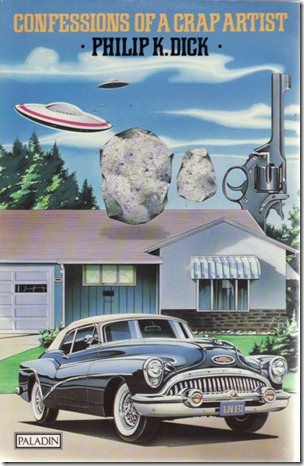
Fame is of little value itself, other than to draw attention to artistic work that might be worthy of our attention.  That’s what all artists really want, to create something worthy of fame.  Philip K. Dick didn’t figure his pulp writing was worthy of literary fame, so he wrote a series of mainstream novels in the 1950s hoping to prove his writing ability at observing real life in Marin County, California.  Only one of those novels was even published during his lifetime, Confessions of a Crap Artist.  Phil’s fame rest entirely on his science fiction, and among science fiction fans, PKD had the reputation for being weird even among the denizens of the geeky, nerdy world of science fiction fandom.  I think that’s a shame because Confessions of a Crap Artist is probably his best and most sane book.
confessions-of-a-crap-artist-1

Here I am claiming that one of a minor writer’s least famous books is his best.  How can that be?  I’m claiming that Confessions of a Crap Artist is as least as good as Jonathan Franzen’s Freedom, another book about marital conflict I’ve recently read.  And although I admired Freedom a good bit, I think Dick reveals better writing techniques for getting inside his characters’ heads than Franzen.  Freedom is more contemporary, sophisticated, and larger in scope, and thus more suited to modern readers, but my life resonates with Confessions of a Crap Artist, so I loved it more.

To me, the goal of literary novels, as oppose to genre novels, is to observe a place and time, and get into the heads of people to chronicle their emotion conflicts and growth.  Most bookworms prefer made up fictional worlds that have complicated plots and exciting characters that offer a thrill ride for their readers.  Often genre fans find literary novels to be about nothing in particular, and fans of genre novels, even fans of Philip K. Dick’s science fiction novels, may find Confessions of a Crap Artist boring.

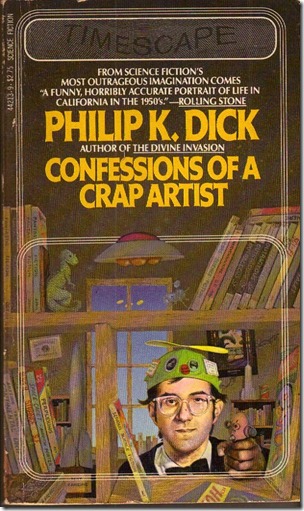
Confessions of a Crap Artist is about Fay and Charley Hume’s marriage falling apart and how it’s observed by Fay’s brother. Jack Isidore, a rather oddball child man in his thirties who sees the world in a peculiar fashion.   Jack is a science fiction fan, flying saucer nut, believer in crackpot ideas, thinks the world is hollow,  that Mu and Atlantis existed, that people can receive telegraphic messages.  He think fiction offers just as much scientific evidence about reality as nonfiction.  Charley Hume calls Jack a crap artist for all his weird ideas.  Jack Isidore’s extremely literal view of reality, and his poor social skills, makes me wonder if Dick had known someone with Asperger’s.  That should appeal to modern readers.  There are end of the world cults and mad shooters in this story too, that might also appeal to modern readers.  There’s a lot to 1959 that’s very much like 2013, and that might be a selling point too.

confessions-of-a-crap-artist-4

So why should you read this book?  If publishers didn’t want to publish Confessions of a Crap Artist when Dick wrote it back in 1959, why should you want to read it now?  Internet Science Fiction Database shows it’s had a dozen editions from 1975-2012.  Now that’s interesting.  And that’s not even counting the audiobook edition I just listened to or foreign editions with alternate titles.  What’s going on here?  I’ve heard that 99% of all books never have a second printing, much less a second edition.  Could Confessions of a Crap Artist be a minor underground classic?

I first read Confessions of a Crap Artist when it came out back in the mid-seventies, and was very impressed then.  I read a couple more of PKD’s mainstream novels and thought they captured the 1950s wonderfully, but then I forgot about them.  Recently many of PKD’s novels have been getting new uniform editions in book, ebook and audiobook formats and I bought several on sale from Audible.com.  I started listening to Confessions of a Crap Artist just before New Year and was mesmerized by the writing.  Peter Berkrot narration for the audiobook perfectly captured the first person inner thoughts of the four main characters, Jack Isidore, his sister Fay, her husband Charley, and Fay’s lover Nat Anteil.

The book also captured many wonderful details that I remember about the 1950s.

Why remember the year 1959?   You could read 1959: The Year Everything Changed by Fred Kaplan, a book I’ve read twice because it’s so fascinating.  You could read some of the books that came out in 1959 to try and capture the feel of that year, but if you look at the list I linked to at Wikipedia, many of the books that came out that year weren’t about 1959, they were science fiction books about the future, like Starship Troopers or The Sirens of Titan, or they were best sellers like Psycho and Goldfinger, which I hope aren’t the real 1959, or books like The Tin Drum or Hawaii, which are histories of earlier times.

I remember 1959, but just barely.  I was 7 until November 25th, when I turned 8.  I was living in New Jersey at the time.  But over in California, Philip K. Dick was living in Marin County, and he wrote a book about life in his place and time that captures 1959 better than anything I’ve ever read before.  So why would a science fiction writer back in 1959 want to write about suburban life?  Well, Philip K. Dick told his publisher that he was quitting science fiction to write mainstream novels.  He wrote several novels before giving up, and returned to writing science fiction.  When he did, he wrote is science fiction masterpiece, The Man in the High Castle, which won a Hugo Award.  I’m thinking 1959-1960 was a peak creative period for PKD.

So you might be wondering by now, why I would be trying to convince you to read a book that no publisher wanted when it was written, and was only published by a small press just seven years before the writer died in 1982, and is over 50 years old.  Shouldn’t it be lame and dated?  For some reason Confessions of a Crap Artist amazed me.  It has a 3.63 average rating over that GoodReads, so not everyone is impressed.

Why am I so impressed and others aren’t?  I hate to encourage you to go buy a book and that you read and think, “What is that Harris talking about?  This book stinks!”

I’ve been reading and rereading books by Philip K. Dick most of my life.  I’ve read biographies about him, read countless articles and interviews about and with him, listened to tapes of his conversations and I even visited his gravesite.   I now think Confessions of a Crap Artist is Philip K. Dick’s best book.  First published in 1975, but written in 1959, and in late 2012 appeared on audio from Brilliance Audio, running 8 hours and 13 minutes.
confessions-of-a-crap-artist-3

This still doesn’t answer:  Why remember the year 1959?  I’m not talking about nostalgia.  When we read Pride and Prejudice, are we learning about 1813?  When we read The Great Gatsby are we exploring 1925?  When we read The New Testament, are we time traveling back to 70 AD?  Yes and no.  A photograph or film of 1925 or 1959 is more revealing of what reality was like than a novel or even a nonfiction book.  Books give us words and ideas from a writer long ago.  So Confessions of a Crap Artist is really a tour of the mind of Philip K. Dick in 1959.  PKD was a certain kind of reporter about a very specific place and time.

Now I’ve mentioned before Dick was a weird guy.  He has a reputation for being weird, but Confessions of a Crap Artist is vivid, exact and very sane.  It’s a sane book about how everyone is crazy to one degree or another.  At first you think Jack Isidore is the only Joker in the deck, but as you read on, and get into the heads of the characters, you realize there are no normal people in this story.  By the time you finish the book you might be thinking there are no normal people in this world.

This is the second time I’ve “read” Confessions of a Crap Artist, or more precisely, I listened to it this time, and the narrator Peter Berkrot made it come alive in a vivid dramatic reading that caught the four principal characters perfectly.  Confessions of a Crap Artist is told through four first person accounts in a round robin order, so the reader feels like they’re inside the heads of Jack Isidore, his sister Fay Hume, her husband Charley, and Fay’s lover Nat Anteil.  This works much better on audio I think, especially with Peter Berkrot’s reading, because you actually feel the different personalities.  PKD did a fantastic job of thinking in different POVs.

Philip K. Dick is famous for writing science fiction, but Confessions of a Crap Artist isn’t science fiction.  To the public outside of the science fiction community, Philip K. Dick is known for several movies based on his novels:  Blade Runner, Total Recall, Screamers, Minority Report, Impostor, Paycheck, A Scanner Darkly, Radio Free Albemuth and The Adjustment BureauConfessions of a Crap Artist was filmed in France in 1992 as Confessions d’un Barjo.  It’s not available on Netflix and is out of print at Amazon, but some used VHS copies are available.

Charlie Hume calls his brother-in-law a crap artist because Jack Isidore collects facts about the world that most people consider nutty, stupid or insane.  Jack looks to his science fiction magazines for scientific validation of reality.  He’s involved with flying saucer cults, and hangs out with people who channel past lives and believes higher beings are preparing the end of the world for Earth.

I remember my uncles talking about Bridey Murphy, George Adamski, Edgar Cayce, and other writers who used to pray on crap artists of the 1950s.  I thought my uncles were nuts.  Most people think the 1960s was when times got wild, but the real 1950s wasn’t Leave It To Beaver or Father Knows Best, it was much closer to The Twilight Zone.

Of course, I was a science fiction fan back then, and that was considered pretty nutty too.  Another thing I remember from the late 1950s and early 1960s, was how everyone wanted to go to a psychiatrist.  Fay Hume goes to her analyst three times a week and brags about it.  Fay does not work, takes care of two little girls, but uses her charm, good looks, and manipulative ways, to get ahead.  On the outside Fay is a model wife, community organizer, and charming.  Charley, her husband thinks she’s a psychopath.  Nat, her lover thinks of her as childish and willful, but totally alluring.  Jack, her brother sees Fay in a particular strange analytical way.

Charley Hume was like a lot of men I remember from back then, he was obsessed about getting ahead, owning a big car and house, and having a beautiful wife and kids to show off.   Think Don Draper from Mad Men.  Finally, Nat Anteil, is the young college kid who could have been a beatnik.  He worked part time, him and his wife rode bikes, wore jeans, and wanted to be intellectuals.  In a few years they would become hippies probably.  Confessions of a Crap Artist reveals itself as an embryo of the 1960s.  The 1960s wasn’t that radically different from the 1950s if you knew where to look for the seeds of the sixties.

On the Road, which came out in 1957 has a reputation for being the bible of the Beats, and people remember it as one of the defining books about the 1950s.  But it was really about the 1940s.  Ditto for A Catcher in the Rye, another 1950s classics.  I think Confessions of a Crap Artist is a detail painting of 1959.

Maybe given enough time Philip K. Dick will be remembered for his literary efforts in the 1950s, not because he wrote about the future, but because he wrote about the moment, his life in 1959.  I’d love to know more about his life then and who the models were for Jack, Fay, Charley and Nat.

confessions-of-a-crap-artist-2

JWH – 1/7/13

2012 Year in Reading

By the way, just to be upfront about things, when I say “read” I often mean “listen” – but I consider consuming books with eyes, ears or fingertips to be reading.

This is the 5th year I’ve done these annual reading summaries.  Writing about reading is turning into an enlightening subject because over time I can see my reading habits evolving and showing trends.  I’ve been logging what I’ve read since 1983, and I’ve often wish I had started recording which books I read right from my very first book.  (Just some advice to any bookworm tykes reading this.)

I kept a reading log once before, in the early 1970s when I was in college and had a lot more free time, and I read 452 books in 18 months.  I hate that I lost that list.  That epic reading period was mostly short science fiction paperbacks.  I’ve always read mostly science fiction, a smattering of science, a handful of history books, and a few odds and ends.  Since I’ve started these yearly summaries I always end up wishing I’d try more variety.  I slowly have.

In 2012 I read 49 books.

I again read too much science fiction this year, but then I’m in the Classic Science Fiction Book Club.  I’m also addicted to audiobooks and love to listen to all the old science fiction novels I first discovered back in the 1960s.  I ended up reading to 22 science fiction books, way more than I should because I only read three actual science books.  I’d be a lot more impressed with myself if I had read 22 science books and only 3 science fiction titles.  Resolutions for next year:  read only one SF book a month and read at least one science book a month.

Of course that brings up the whole fiction versus nonfiction guilt that I have.  For me fiction is more fun, but nonfiction is more rewarding.  Fiction can be deeply philosophical and observant of reality, but usually it’s just escapism.  Science fiction is known for its sense of wonder, but none of the SF books I read this year could touch A Universe From Nothing, From Eternity to Here and The Mind’s Eye for their overwhelming sense of wonder.

Regarding the quality of fiction, the most thought provoking novels I read in 2012 were:  Anna Karenina, A Portrait of an Artist as a Young Man, Freeman, On the Beach, The English Patient, The Age of MiraclesFrankenstein, Ready Player One and The Windup Girl.   If I was honest with myself, I’d stop reading so much old science fiction because it’s just not that worthwhile.  However, nostalgia often overwhelms my to read impulses.  Science fiction imprinted on me at that impressionable age of 12 and I’ve never been able to give it up the habit.

I did read eight history books this year and they were so rewarding that I feel I need to up their number next year.  My yearly averages for books read usually runs around four a month.  See my past years 2011 (58), 2010 (53), 2009 (40), and 2008 (45).

For 2013 I’d like to aim for a monthly mix of:

  • 1 novel
  • 1 science book
  • 1 history/other nonfiction book
  • 1 new (2012/2013) title per month.

I’d also like to read one big classic novel during the year.  This year was Anna Karenina.  I’m thinking about Les Misérables for 2013.

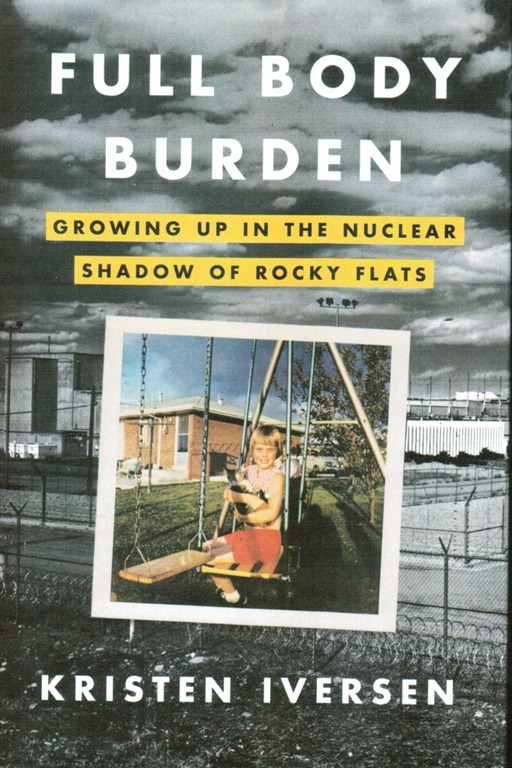
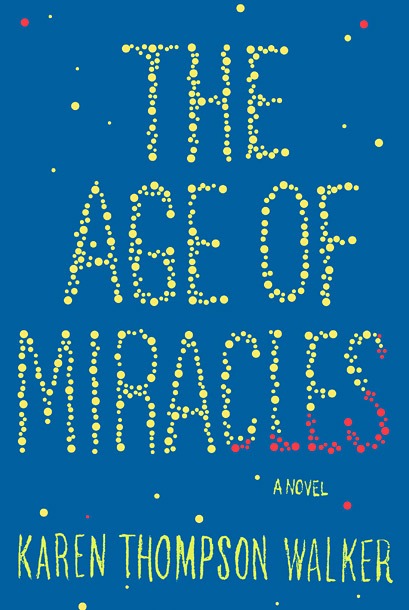
Besides loving audiobooks, I love reading new books that just came out. It’s great fun to discover books published during the year and promote them with your friends and then have those books validated at the end of the year by showing up on Best Books of the Year lists. This year’s discoveries was Full Body Burden by Kristen Iverson and The Age of Miracles by Karen Thompson Walker, but sadly they were only on a couple best of lists. I didn’t read Behind the Beautiful Forevers by Katherine Boo until after I saw it on a zillion lists this month, so it doesn’t count.

FullBodyBurdenthe-age-of-miracles

Every year when I write this summary of books read, I also think about which books I want to read for the next year.  Since I have over 500 unread books sitting on my physical bookshelf, and over a 100 unread audiobooks sitting in my digital bookshelf, I should be concentrating on clearing out my backlog, but that doesn’t happen.  Many of the books on my list below were bought just before I read them.  I’m in three online and one local book club that discusses 5 books a month.  That’s dictating too many of my reads – 19 this year.  Obviously I didn’t read all 60 discussed books.

I would like to participate more in the book clubs, read more books off my to be read pile, as well as read as many new books as possible.  That’s only possible if I read more books.  I could give up television, but I’m not sure I can digest more than a book a week anyway.

In a perfect world, every book I read should be thought about for hours, researched, studied, discussed in a book club, and reviewed for my blog.  To do all that would require 10-30 hours each week depending on the size of the book.  Most books are 10-20 hours of listening time.  Anna Karenina was 42 hours long, and it took me three weeks to finish.  As a hobby I’m pushing my limits as a bookworm.  I know bloggers who read 100+, 200+ and even 300+ books a year and write reviews.  There are some real super-bookworms out there.  I’m just not one of them.  I can accept my smallish total if I read 52 great books each year.  My goal is not to read more books, but better books.

Most of the books I “read” every year are books I listened too.  I just don’t have much time for eyeball reading anymore.  Theoretically, I might average two books a week, one listening and one reading, but I’d need to find more La-Z-Boy reading time, and that’s hard.  I do watch a lot of TV and listen to a lot of music, so I suppose I could sacrifice some of that time.  But do I want to be more of a bookworm?  Sometimes I think I should be less of a bookworm, and do more active things.  Or instead of reading books I should be writing them.  I’m happy with the book a week pace.  It would be nice to actually hit 52 books a year though.

Here are my favorite books I’ve read this year.  Only the first was actually published in 2012.

Novel of the Year

   The Age of Miracles by Karen Thompson Walker

Nonfiction Book of the Year

   Eden’s Outcasts by John Matteson

Classic Science Fiction Book of the Year

   The Day of the Triffids by John Wyndham

Modern Science Fiction Book of the Year

   Ready Player One by Ernest Cline

Most Recommended Book This Year

   The Merchants of Doubt by Naomi Orekes and Erik Conway

Books Read in 2012

  1. The Gnostic Gospels (1979) – Elaine Pagels
  2. Tunnel in the Sky (1955) – Robert A. Heinlein
  3. Ready Player One (2011) – Ernest Cline
  4. 1959 (2009) – Fred Kaplan
  5. The Ecstasy of Influence (2011) – Jonathan Lethem
  6. Midnight Rising (2011) – Tony Horowitz
  7. The Forge of God (1987) – Greg Bear
  8. A Universe from Nothing (2012) – Lawrence M. Krauss
  9. Life (2010) – Keith Richards
  10. The Swerve (2011) – Stephen Greenblatt
  11. Pushing Ice (2005) – Alastair Reynolds
  12. Anna Karenina (1877) – Leo Tolstoy
  13. The Year of the Quiet Sun (1970) – Wilson Tucker
  14. Embassytown (2011) – China Miéville
  15. Let’s Pretend This Never Happened (2012) – Jenny Lawson
  16. The Last Starship From Earth (1968) – John Boyd
  17. Little Women (1868) – Louisa May Alcott
  18. Beyond This Horizon (1948) – Robert A. Heinlein
  19. The Day of the Triffids (1951) – John Wyndham
  20. Glory Road (1963) – Robert A. Heinlein
  21. Assignment in Eternity (1953) – Robert A. Heinlein
  22. Merchants of Doubt (2010) – Naomi Orekes and Erik Conway
  23. A For Andromeda (1962) – Fred Hoyle and John Elliot
  24. Imagine (2012) – Jonah Lehrer
  25. The Age of Miracles (2012) – Karen Thompson Walker
  26. The Listeners (1972) – James E. Gunn
  27. The Year’s Top Ten Tales of Science Fiction (2009) – edited by Allan Kaster
  28. Full Body Burden (2012) – Kristen Iversen
  29. The Black Cloud (1957) – Fred Hoyle
  30. Freeman (2012) – Leonard Pitts, Jr.
  31. The Mind’s Eye (2010) – Oliver Sacks
  32. Horseman, Pass By (1961) – Larry McMurtry
  33. From Eternity to Here (2010) – Sean Carroll
  34. Ubik (1969) – Philip K. Dick
  35. A Portrait of an Artist as a Young Man (1916) – James Joyce
  36. The Dog Stars (2012) – Peter Heller
  37. Eden’s Outcasts (2007) – John Matteson
  38. Aftershock (2010) – Robert B. Reich
  39. Frankenstein (1818) – Mary Shelley
  40. Mrs. Robinson’s Disgrace (2012) – Kate Summerscale
  41. The Windup Girl (2009) – Paolo Bacigalupi
  42. The English Patient (1992) – Michael Ondaatje
  43. Space Cadet (1948) – Robert A. Heinlein
  44. The Worst Hard Times (2006) – Timothy Egan
  45. On the Beach (1957) – Nevil Shute
  46. Jumper (1992) – Steven Gould
  47. Behind The Beautiful Forevers (2012) – Katherine Boo
  48. Revelations  (2012) – Elaine Pagels
  49. The Wizard of Oz (1900) – L. Brank Baum

I’ve annotated this list with links to my reviews.

The last book I read in 2012 was The Wizard of Oz in anticipation of Oz the Great and Powerful that comes out in Spring 2013.

JWH – 12/19/12

Time, Time, Time

I never have enough time.  And I’m always craving more time.  Days flick by like I’m an accelerating time traveler.

Every year at Christmas I take off two weeks.  I always have big ambitions for my windfall of free time, but I never get done all the things I plan.  This year is no exception.  I have two days of freedom left and I’m depressed that I won’t have more.  I never have enough time, and I’m so envious of all my friends who have retired.  But those friends tell me that they’re as busy as ever.  I guess we never get enough time, even when we have all our time free.

And it’s not like I’m doing anything very important.  I go to bed at night regretting the friends I didn’t see, the albums I didn’t play, the television shows I didn’t watch, the books I didn’t read, the dirt I didn’t clean, the clutter I didn’t organize, the thoughts I didn’t think, the ideas I didn’t write about, the characters I didn’t develop, the photographs I didn’t take, the programs I didn’t write, and so on.  And that doesn’t even count the big ambitious goals I’ll never do like learn how to play the guitar, build a robot or become a chess player.  The list goes on and on.

My days start the same way every day, and my nights end the same way every night.  These morning and evening routines remind me just how much my life is like a clock, or how much our lives are based on rhythms.

I get up and let Nicky the cat out of the bedroom, petting him while he meows loudly at me for locking him in for the night.  He yells at me every morning.  I pick up his wet food bowl and follow him to the main bathroom where I get him fresh water for his daytime water bowl.  I take the wet food bowl to the kitchen and put it in the sink to rinse out, and then put on a finger cot and squeeze out .5 ml of medicine and go rub it in Nicky’s ear while he’s drinking his water.  I set my watch timer for 25 minutes and go check email.  Nicky comes in and sits in his chair next my desk chair and I pet him while I read emails.  When the alarm goes off I go back in the kitchen and fix Nicky one quarter can of Fancy Feast.  I then get a syringe and fill it with .5 cc of lactulose.  I pick Nicky up and put him on the counter and calm him down  with some petting and friendly chatting before forcing his mouth open and squirting the medicine onto the side of his mouth.  His reward is the bowl of wet food.

Now I go back to the bedroom take off my clothes, start the shower, weigh myself and touch my toes 15 times.  I shower, dry off, put on my underwear.  I go back into the kitchen and repeat the procedure with the lactulose but this time reward Nicky with one teaspoon of Yoplait original yogurt.  Then I go to my exercise room, put on my socks and do 15 minutes of physical therapy exercises for my back.  After that I put on my pants and shoes and do 130 reps of rowing and 30 arms pulls on the Bowflex to further strengthen my lower back.  Finally I eat my breakfast.

With all that done I can start my day.  What I do each day varies, but it’s surprisingly routine.

At night, around 10 pm I do Nicky’s medicine again, the third round of the day, in three parts spaced 25 minutes apart.  I usually watch TV while waiting between doses.  Finally, I lock Nicky in the bedroom, with his bowl of wet food, some extra crunchies, his heating pad and some new water in his nighttime bowl.  I then go to my office where I sleep in a chair because of my back.  If I didn’t lock Nick in the bedroom he’d walk on me all night long.  I undress and put on sweat pants for PJs, and put Restasis in my eyes.  I then go put on the alarm, turn off the lights and go to bed in my La-Z-Boy.  The last thing I do is think about all the things I didn’t get done during the day and think about all the things I want to do the next day.

Nicky’s getting old and I have no plans for another pet.  I’ll have to alter my routine, but I guess I get a few more minutes of time for each day.

jim

In about a year I hope to retire.  That will get me a lot more time, but it will never be enough.  And then one day I’ll run out of time completely.

Maybe it’s time to think about the things I really want to do.  Maybe now is the time to prioritize my activities and time.

Is that even possible?

The year 2012 is almost over.  I wonder if there’s anything I really meant to do before it finishes?  How did it get to be 2012?  I remember so clearly 50 years ago thinking 1992 was the far future, and 2012 was unthinkable almost.

Time, time, time…

Does time really exist?  Is it a quantity we can bank or squander?

I love my life and what I do.  One of the things I like to do is bitch about not having enough time.  Bitch, bitch, bitch, that’s how I am about time.

Doesn’t everyone?  Does anyone ever have enough time?

So it goes.

JWH – 12/30/12

The Big Trail (1930)

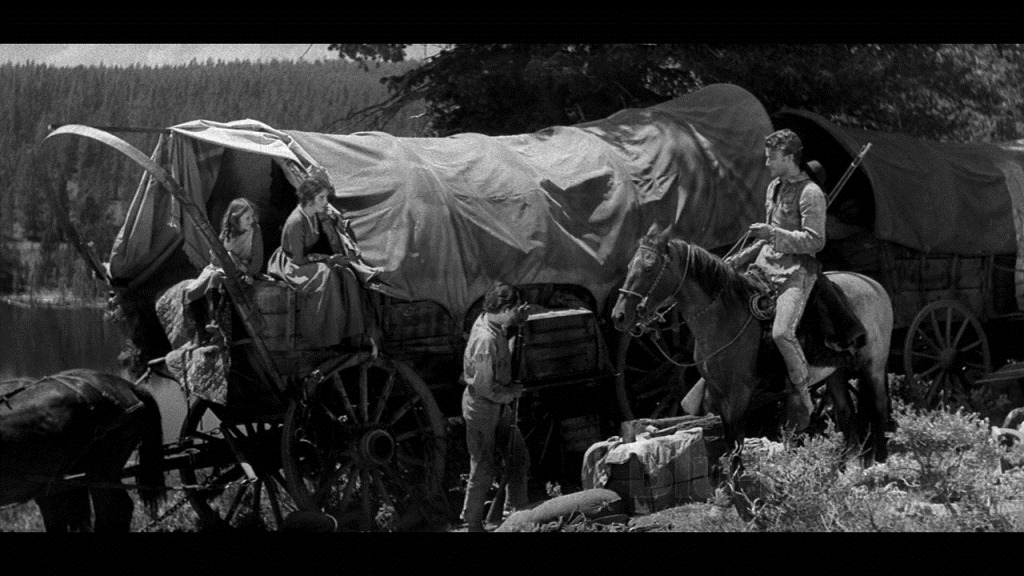
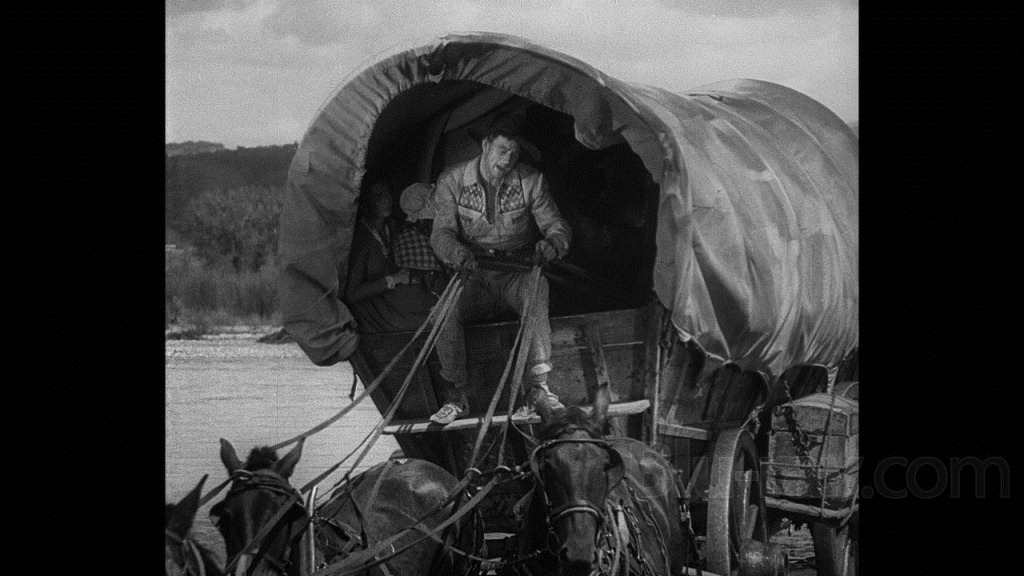
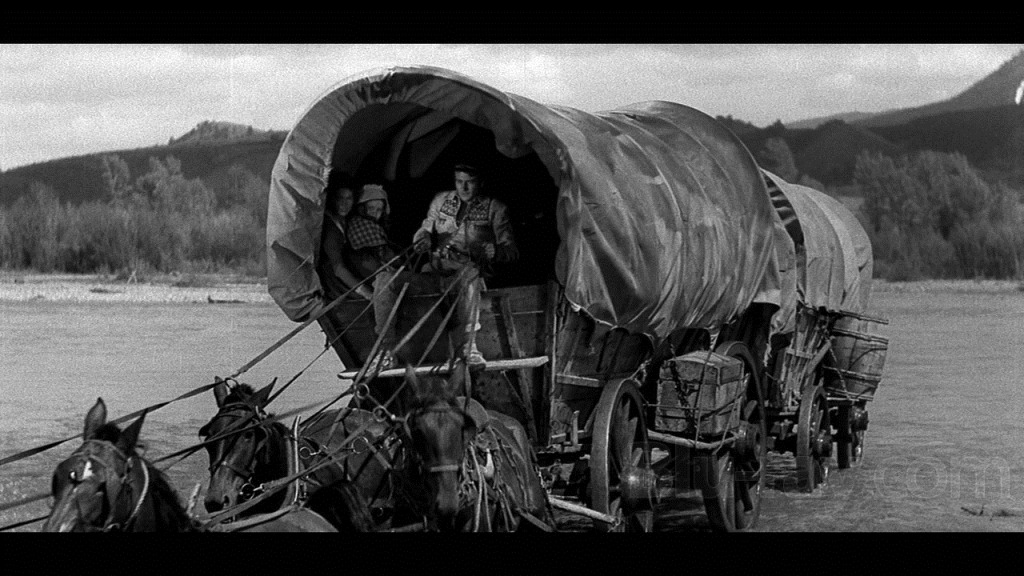
Yesterday I got in a Blu-ray copy of The Big Trail, an early widescreen movie from 1930.  The Big Trail has quite a fascinating history behind it.  Starting in the late 1920s Hollywood began experimenting with widescreen and Technicolor, but the depression killed off interest in these technologies, especially widescreen because it required special theaters, screens and projectors.   The Big Trail was filmed from April to August in 1930 in black and white using both 70mm and 35mm cameras, creating two unique versions from different camera angles.  The whole production was also shot in five languages using different lineup of actors for each language.

Epic production doesn’t begin to describe the making of The Big Trail.  Seven different states were used for film locations, covering 4,300 miles, traveling in 123 baggage cars, with 93 principle actors, 2,000 extras at all the locations, 725 Indians from five tribes, 12 Indian guides, 22 cameramen, 1,800 cattle, 1,400 horses, 500 buffalo, 185 wagons and a production staff of 200.  And they had the wagon train do everything wagon trains did back in those pioneering days, cross rivers, get lowered down cliffs, blaze trails through timbered lands, cross deserts, climb mountains, survive snow storms.  All other wagon train movies since have been puny in scale.  The Big Trail was a very gigantic production, but it’s not as famous as Gone With the Wind from 1939.  That’s too bad, it should be better remembered.

I had to watch The Big Trail alone last night because none of my movie friends like old black and white films and I couldn’t convince them to give The Big Trail a try.  What a loss for them.  It’s a shame because as soon as I started up The Big Trail I was stunned by it’s beauty.  Old movies are in a square format and seeing this movie in widescreen format on my 56” HDTV made my heart ache.  If only this 70mm widescreen format had caught on in 1930.  All my favorite old films from the 1930s and 1940s would have been so much more grandeur looking.  And that’s what Fox called their experimental format, the “Fox Grandeur” process.  What if Grand Hotel had been widescreen, or The Maltese Falcon, or The Wizard of Oz, just imagine how more magnificent they would have been.

The-Big-Trail-screenshot

[This screenshot is from Blu-ray.com – click for full size version]

Modern movie goers are used to high tech visual productions and when they see old movies, especially silent films and films from the 1930s, they think of them as primitive and crude, and often assume people of those days saw what we see today.  Their technology was older and less sophisticated, but the prints we have are old and in bad shape compared to the original pristine prints audiences viewed in their day.  Silent movie film goers didn’t see jerky prints with faded splotches and lines running through them.  They were sharp and vivid with wonderful contrast and the motion was as natural as modern films.  Sure the acting style is strange to us, but the acting style was normal to them.  It was great acting by the way they judged acting.

Old movies are being restored all the time now, especially for the Turner Classic Movie crowd and Blu-ray movie fans.  The restoration of The Big Trail is far from perfect, but I found it impressive to watch visually.  I expect someday that digital processing will clean up even more of these film defects, and created a print closer to the 1930 original.  For the most part the defects weren’t distracting.  A couple of times I thought it was raining because of the tiny scratches.

The Big Trail was an experiment in many ways, not only for the widescreen filming.  It was an early epic western about settlers crossing the country in a huge wagon train.  The Big Trail was the first starring role for John Wayne, but many of the actors were from Broadway, because it was an early talky and they needed actors that could project their voices to outdoor microphones.  Much of the dialog is stagey, and the cinematography is reminiscent of great silent films.  Yet, the sets and costumes look very realistic.  It would take another 60 years before citizens of the pioneering west looked so realistically dirty and grungy.  Plus the Indians were real.  Often the wagons were drawn by oxen and cattle rather than horses.

The-Big-Trail-normal

The-Big-Trail-wide

[Click for full size versions.  From Blu-Ray.com]

Westerns weren’t this good for a long time, not until Stagecoach, ten years later.  Most westerns of that era were B movies, shot full of action, produced from very small budgets.  As I watched The Big Trail, I wondered how many people living in 1930 had once traveled across the country in a wagon train.  The heyday of the wagon train was from the 1840 to the 1860s, when the continental railroad was built.  It was possible that some of these pioneers were still alive to verify the realism of the film.  I wonder if any of them wrote about it?

Westerns today, 80 years later, often work hard to appear realistic and historical.  It seems like every decade has a different view on how the old west looked.  Just compare the two versions of True Grit.  There’s also a difference in how violence was portrayed.  In The Big Trail, John Wayne only kills one of the bad guys, and with a knife.  And the bad guys were on the hesitant and cowardly side, only willing to kill when no one was looking.  Nobody was a great shot either.  Today’s westerns have heroes that kill as many people as a mass murderer.

The Big Trail was an innocent portrayal of pioneers.  At one point the John Wayne character was telling a bunch of boys what all he learned from living with the Indians and one of the kids asked, “Did they teach you were papooses come from?”  That’s about as risqué as this movie got.  But it was realistic enough to show a woman nursing a baby.  And I thought the love conflict was reasonably sophisticated for a movie of its time.  The plot of The Big Trail was gentile and slow.  I’m not sure people only used to modern films would like it.  Modern audiences are addicted to fast action, fast dialog, and lots of plot twists.  I’ve seen The Big Trail three times now and I’m looking forward to seeing it again.  It’s a classic western, and a classic 1930s film, my two favorite genres.

JWH – 12/29/12