
Decades ago ambitious young writers hoping to take the literary world by storm would attempt to write The Great American Novel. The phrase “writing the great American novel” has fallen out of fashion. Well, I’ve retired and want to write a novel, but I want to write a science fiction novel. Science fiction has fallen out of fashion too. Oh sure, there’s a healthy little genre for hardcore science fiction readers, but they aren’t many compared to the legions of bookworms at large. Science fiction might be an extremely popular movie genre, but for some strange reason its success does not translate into frequently seeing science fiction books on the New York Times best sellers lists.

If I’m going to delude myself into thinking I can be a late bloomer in the novel writing business, I might as well be ambitious about it, so I’ve gotten the idea of trying to write the great American science fiction novel. I picture my would-be novel being a literary novel set 40-50 years in the future, thus making it science fiction. The goal for writing the great American novel was to capture an essential defining moment in America life. Examples are such books as Adventures of Huckleberry Finn, Little Women, The Great Gatsby, The Grapes of Wrath, The Catcher in the Rye, Invisible Man, On the Road, To Kill a Mockingbird – novels that defined an era and place.
Because science fiction is generally about the future and is often set in space or other exotic locales, it almost never attempts to be The Great American Novel. There are a damn few exceptions, most notably Stranger in a Strange Land by Robert A. Heinlein. Some people think of it as the counter-culture novel of the 1960s because when they think of the 1960s they think of all the weirdness and Stranger in a Strange Land is one weird-ass novel. The trouble is Stranger captures a late 1940s to somewhat mid-1950s weirdo mentality about America, and not the hippie weirdness of the 1960s. If I wrote a SF novel set in the 2050s it’s going to be damn hard for it not to feel like the 2010s. That would be like F. Scott Fitzgerald imagining the 1960s. I’m not sure if that will work, but it won’t keep me from trying.
For my novel writing ambition I feel the need to find models to study, from both American literature and science fiction. Now I don’t want to start a flame war about what are the absolute best science fiction novels, but I’ve decided to pick those that are most remembered and read by non-SF fans. I wrote a whole essay on this topic: The Greatest Science Fiction Novels of the 20th Century. It’s been the most popular essay I’ve written – at least in terms of hits, but not with what it says. Few science fiction books are well known with the literary world at large, and most of them were written by writers not from the genre.
- Frankenstein by Mary Shelley
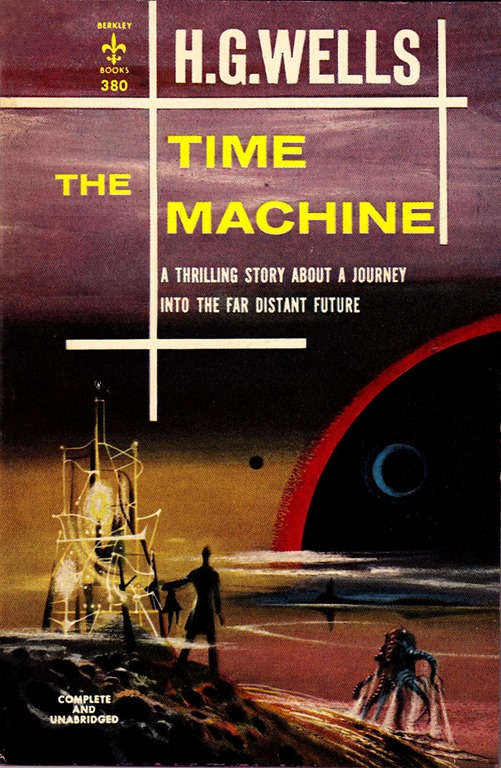
- The Time Machine by H. G. Wells
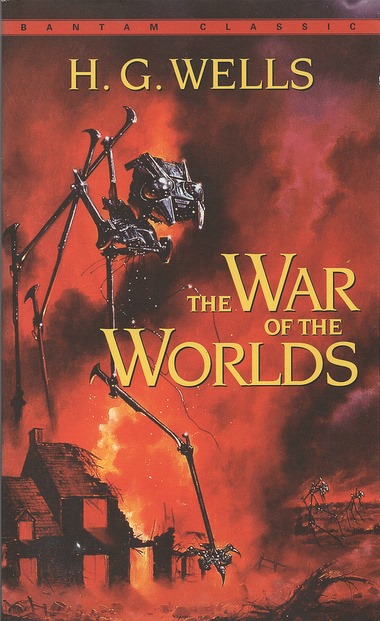
- The War of the Worlds by H. G. Wells
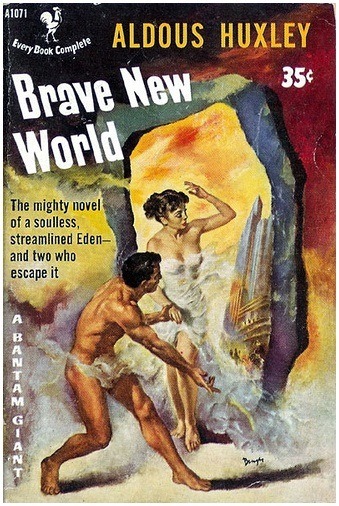
- Brave New World (1932) by Aldous Huxley
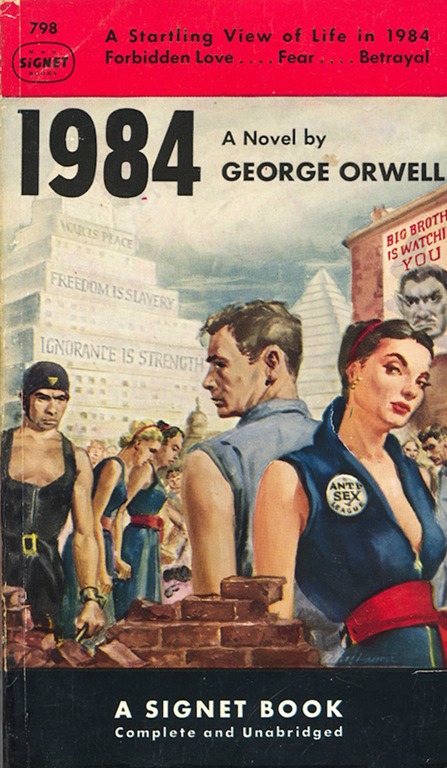
- Nineteen Eighty-Four (1949) by George Orwell
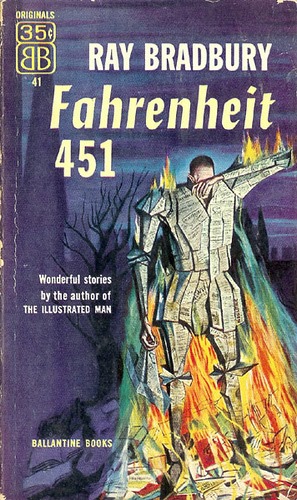
- Fahrenheit 451 (1953) by Ray Bradbury
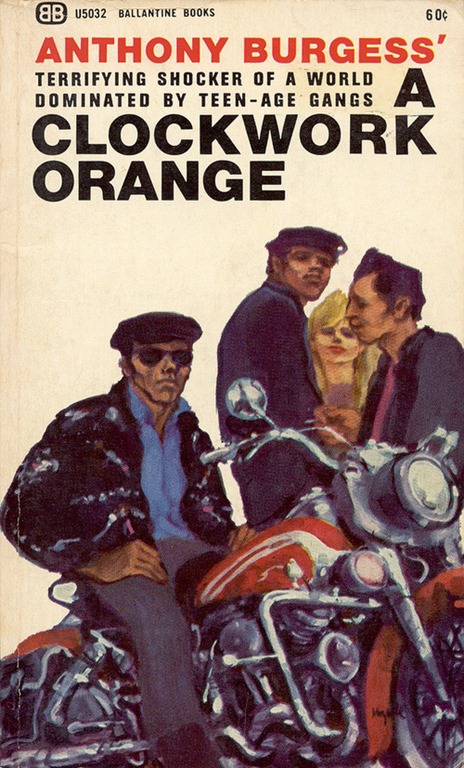
- A Clockwork Orange (1962) by Anthony Burgess
- Dune (1965) by Frank Herbert
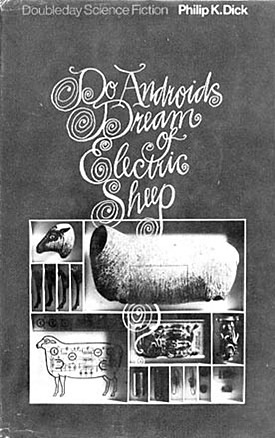
- Do Androids Dream of Electric Sheep? (1968) by Philip K. Dick
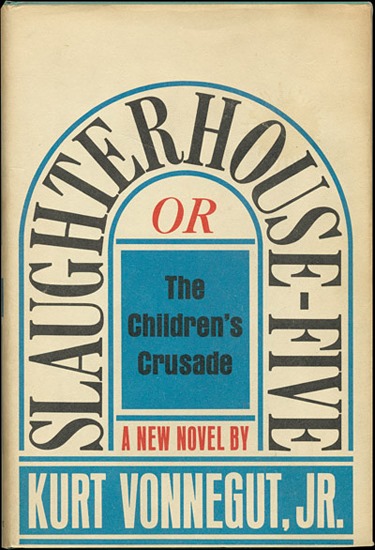
- Slaughterhouse-Five (1969) by Kurt Vonnegut
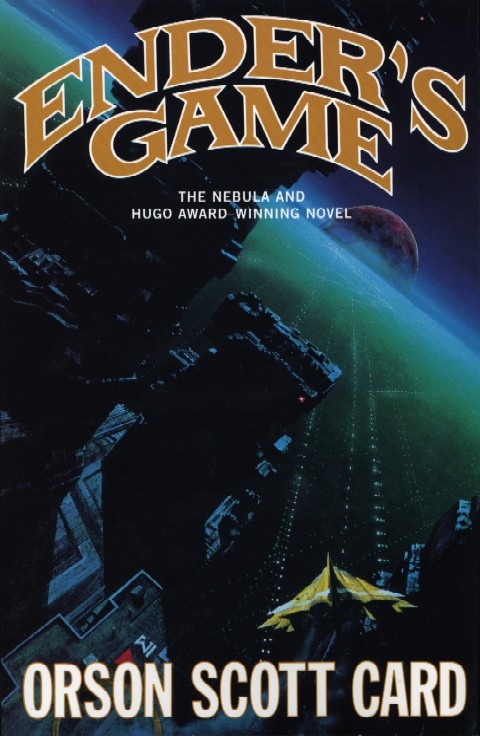
- Ender’s Game (1985) by Orson Scott Card
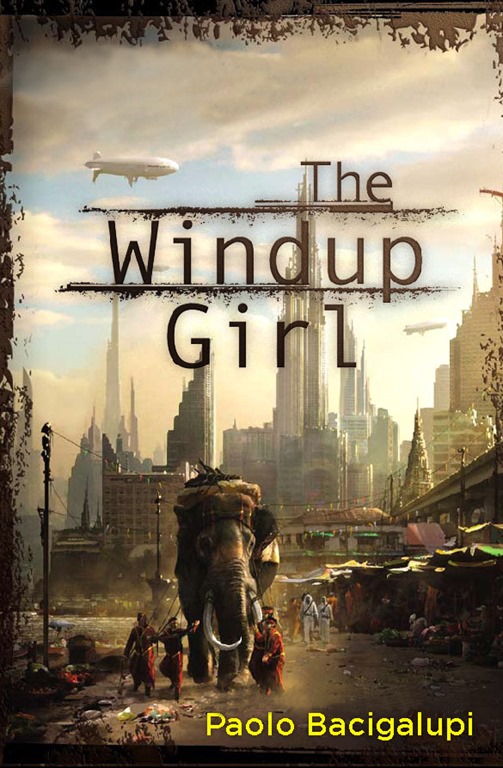
- The Windup Girl (2009) by Paolo Bacigalupi
Now I know that regular science fiction readers are going to be outraged by this list, but the huge world outside of their little genre seldom thinks about science fiction, and the books that do pop into their collective memory are the ones they were made to read in school. I wanted to include Stranger in a Strange Land, not because I admire it, but because it was once a cult classic, however I think it’s mostly forgotten now. If a book isn’t taught in school or gets the movie treatment every generation, they are usually forgotten by the following generations.
Do Androids Dream of Electric Sheep? wasn’t PKD’s best novel, not by a long shot, but because of Blade Runner, it’s remembered, but even Blade Runner is fading from collective memory. I keep Androids on the list because there’s talk of making a new version of it. The controversial Ender’s Game is on the list because it is often taught in schools, often loved by teachers, and was recently made into a movie.
There are many science fiction books that have legions of fans that love them, but most never have enough fans to make them well known in pop culture at large. Notice that I didn’t include Jules Verne, Robert A. Heinlein, Isaac Asimov and Arthur C. Clarke, authors who are known for writing great classic novels within the SF genre. Their books are very big fish in a very little pond. The twelve above titles aren’t even the biggest fish in the big literary ocean, but they are big enough.
In terms of memorable novels, science fiction seldom gets remembered. So why have an ambition to write science fiction? Well, it’s what I like to read. However, if an ambitious science fiction writer wanted to get remembered, studying the above novels for clues is a start. But also studying mainstream popular novels for why they are remembered is another lesson of study.
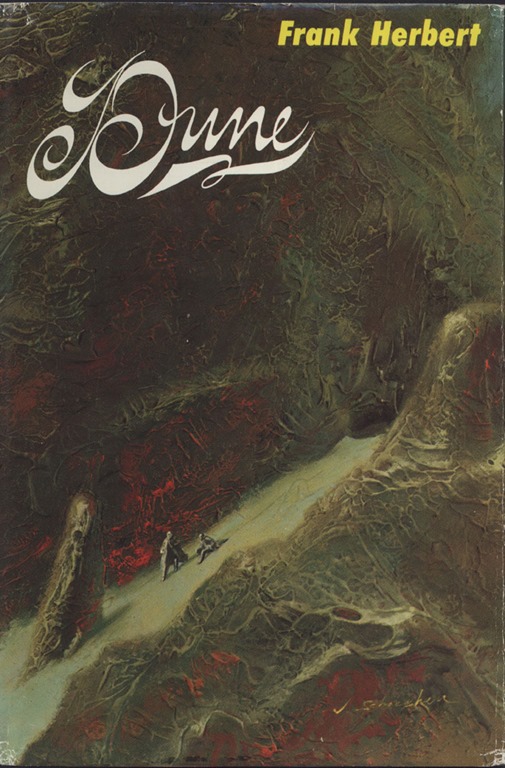
I watch a lot of old movies and I’m always surprised to see films based on hit novels of their day that are now completely forgotten. Dune has attracted a lot of cinematic attention, but so far I don’t think moviemakers have captured the novel. However, their attempts have made the novel very famous. There is a weird symbiotic relationship between books and movies. So far, none of the model SF books I’ve listed has been created into a cinematic masterpiece except Do Androids Dream of Electric Sheep? None of them have achieved that immense status of being routinely made into new film versions every generation like A Christmas Carol, Little Women, Pride and Prejudice, or Great Expectations.
Evidently, the real key to writing a great science fiction book is having something startling or profound to say. Now regular science fiction fans will claim all their favorite SF books have something startling or profound to say. I think that’s the general appeal of science fiction – the ideas. However, the public at large seems to embrace some science fictional ideas as iconic pop culture concepts, and ignores the rest. The public at large seems to care little for reading about space travel, time travel, robots, galactic civilizations, and so on. In fact, the most popular science fictional concepts that appeal to the public appear to be on the morbid side of things – they love a good dystopian tale. Evidently, if you can imagine a scary future that will scare the bejesus out of them then you’ve struck gold.
If I’m going to write the great American science fiction novel it will need to capture an era and place in America where dystopian feelings are strongest. You’d think bookworms would embrace upbeat views of the future, ones that promise scientific successes and thrilling times. But I’ve got to admit, that these books listed here, with all their bleakness, were powerful stories, with impressive memorable concepts. When you read them they feel heavy-duty.
I don’t think any of these books are particularly well-written, not in the literary sense. Their narrative style gets the job done, but I’m not sure how often their writing is quoted for being beautiful. Today I started collecting copies of these novels to study. I’m using my retirement to be like Henry David Thoreau at Walden Pond, to contemplate life carefully. However, I have no interest in going outside to study plants and animals. Instead I’m observing my reactions to fiction. Thoreau really wanted to get to know his deepest self, his most real self, and he felt getting away from it all and observing nature would reveal his true self to is contemplative mind. I’m hoping my true self will be revealed by studying fiction.
I’m selecting ambitious novels, in particularly, science fiction, to see what they reveal about me, and how I tick. Why do we respond to their ideas, characters, plots and settings? Many people claim to love science fiction, but they are generally referring to science fiction in the movies and on television – fluff Sci-Fi. That kind of science fiction is very different from book science fiction. And a lot of modern science fiction book fans love particular authors because of their series – they love the setting and characters because they’re fun and even within the SF book genre, serious SF is avoided. I’m not sure many SF readers have a deep understanding of what draws them into science fiction, and the type of stories their minds resonate with.
Other than winning awards and being selected by Time Magazine as being one of the best novels of 2009, The Windup Girl doesn’t have much validation as the kind of SF classic that the rest of these novels represent. But The Windup Girl feels like them, and I responded to it in the same way. I admired its sheer intellectual speculation about the future. It’s also a novel that I’ve recommend to my bookworm friends who don’t read science fiction and they’ve liked it very well.
Ender’s Game seems like an oddball on this list because on the surface it seems like just another alien invasion adventure story, but down deep it has a disturbing core. In fact, to some people it’s as disturbing as A Clockwork Orange. Strangely, many readers see it as a fun romp, like it was a video game. But like video games, we need to question our thirst for violence, and our constant justification of violence.
None of these science fiction books represent my sentimental favorites, books hardcore science fiction fans would pick as their favorites. There’s no need to list such books, we all know have our own classics of science fiction lists. The twelve books I list here are the science fiction titles that go up against literary classics read by people who normally never read science fiction. They’re the books taught in school, the ones teachers torture kids with test questions because they supposedly deal with important themes.
It’s sad that the literary world chooses to ignore fun science fiction. Evidently they feel sense-of-wonder is for adolescents. Sometimes there’s a crossover, like The Hunger Games series, that fans love for the adventure, but still have the dystopian seriousness to evaluate. Another good example is The Giver by Lois Lowry. If I included YA novels, my list would be much longer. Science fiction is taken seriously at the YA level by teachers. And that might be why so many ambitious young writers are working the YA field. Winning the Newberry Award will keep your book around a lot longer than the Hugo Award. Take for instance 50 years ago, 1963, A Wrinkle in Time by Madeleine L’Engle has had far more success with the public at large than The Man in the High Castle by Philip K. Dick, even though I much prefer PKD’s novel.
I guess another way to express what I’m saying is to talk about your targeted audience. To create a hit of the year in the science fiction sub-culture of books, you need to make just a few thousand people happy. To create a hit in the YA world, you’ll need to make tens of thousands of readers happy. To write a standout best seller of the year, you’ll need to write a book that maybe a hundred thousand or more people will choose to love. But to get into Nineteen Eighty-Four’s territory, you’ll need to impress millions of people, even tens of millions. That’s not easy!
Now it’s extremely presumptuous of me to even think of trying to write such a novel. At this stage, I’m just trying to understand how such novels work. Now that I have the contemplative time to explore such issues I think I need to do it. If you move to Walden Pond and just goof off, isn’t that just tragic? Or pathetic? Like the philosopher said, an unexamined life is not worth living. Well, I want to examine my fictional life. And then I want to play the game by writing my own novel from what I’ve learned.
JWH – 11/5/13