Who Knows Where The Time Goes?

A very long time ago, Judy Collins sang a song called “Who Knows Where The Times Goes?” that is very relevant to me now.  Play this video to hear the song, and to have a soundtrack for this essay.  Play the other two if you have the time, and especially if you don’t, and you’ll know which by the end of this story.

I’ve been retired five weeks now, and I’m constantly asking myself, where does the time go?  For my entire work life I dreamed of having more time by not having to work, and now that I don’t have to work, I’m not finding that abundance of time for which I wished so hard.  What’s happened?  I should have a third more time – where did it go?

Before I retired I read about a book a week.  I thought after retiring I’d have so much more time that I might get to read two books a week.  I’m not even reading as much as when I worked full time.  Does anyone really knows where their time goes?

I’m not watching more TV, or even doing more housework.  I’m certainly not writing more.  Days have gone into hyperdrive, and time has just disappeared – going who knows where.  I no longer think about tomorrow, and everyday is Saturday, and it’s very pleasant indeed, but I keep asking myself, who knows where the time goes?

Was time ever a commodity? 

Just because we can count the hours and minutes doesn’t mean we have them to spend and save.

“Who Knows Where the Time Goes?” is a folk song written by Sandy Denny in 1967, and here’s a tribute to her, which ends with a photo of her headstone.  She didn’t live long, and her grave marker is a very sad way we all ask where does the time go?

I’m watching a television series called Lark Rise to Candleford about life in England in the 1880s.  In one episode a craftsman comes to Candleford to build the town a clock and he warns the folk their old life will disappear when they live by the clock.  After retiring I’m living in a different dimension, without a clock, where time is disappearing.  I’m already forgetting the days of the weeks, and it’s hard to remember the days of the month, and now, even the hours of the day seem unimportant.

Time is something we have when we live by the clock.  I no longer look at the time to see that I have three more hours till lunch, or two more hours until I need to do something else.  It only intrudes when the outside world asks me to do something at a specific time.  I get up when I feel like it, I eat when I’m hungry.  I watch television when I want, from streaming or DVD, not a schedule.  I read when the urge strikes, and nap when I’m drowsy.  Sometimes it’s light outside, sometimes it’s not, and that doesn’t seem to matter anymore.

Yesterday I turned 62.  If I stopped following the calendar I wouldn’t even feel the time of getting older.  Maybe it doesn’t even matter where the time goes.  Can time be an illusion?  Maybe time only exists if we count minutes, and it ceases to exist when we don’t.  What if I was brave enough to throw away my clocks, watch and calendars?  Would time disappear completely?  Would living become timeless?

I really love this song.  Here’s another version, a more recent version.  Does it matter that there’s been 43 years since the first version?  It doesn’t feel like it, not if you’ve stopped counting the minutes. 

I know how to find the time again – if I wanted to.  All I have to do is live by the clock.  If I want my 8:30 am to 5:00 pm hours again all I have to do is live by numbers.  Require myself start writing at 8:30, and take lunch at 12, and to read between 1 and 3, and work at hobbies between 3 and 5, and I’ll find my lost time.  I don’t know if I will though.  Living without time is a different state of mind, and I’m digging my new kind of consciousness.  I just hope it’s not the land of the Lotus eaters.

JWH 11/26/13

I Had a Dream–But Was it Mine?

Are dreams a form of communication from our subconscious?  That sounds much too mystical for an atheist like myself.  Last night I awoke from a dream with a strong sense of message.  Essentially my dream was telling me that the important things we do in life are those we do with other people.  That two or more heads are better than one.  I can barely remember the dream now, but I know I was trying to do something in the dream, accomplish some goal, but it might have been as trivial as playing a game, and a woman told me we can only get ahead by working together.  That struck me as profound – at least in the context of the dream.  I have a vague memory in the dream that everyone was competing against each other and getting nowhere.  But I have no idea at what.

Now I’m not going to start a religion of cooperation, but instead I’m going to ask:  who is the author of my dreams.  Quite often I wake up and feel like I’ve been jerked out of a complexly plotted story.  I don’t feel “I” was writing the story.  I haven’t read Freud or Jung, but I get the feeling that my subconscious is more thoughtful than I’ve ever given it credit for before.  Now I don’t feel possessed, or think I have multiple personalities, but I feel there’s an unconscious thinking machine in my head processing data while I’m not paying attention.  In recent years, I feel it’s doing far more than processing random data, but is the novelist of my dreams, making sense of a random series of scenes?

Reality doesn’t come with a story.  It happens.  If a dog chases a chipmunk it’s not a scene in a story, it’s just another event in reality.  Humans want to make everything into a story.  The reason why there are so many JFK conspiracy theories is because people can’t just accept that Lee Harvey Oswald just happen to be in the right place, at the right time, with the right experience, to kill the president.  They want more, they want it to fit a story.

I need to read up on recent research into the subconscious.  I’m wondering if decades of reading and thinking about writing hasn’t affected my subconscious.  I can’t help but believe that it’s getting better at plotting.  In recent decades I feel my dreams are shaped more like stories, with good plotting.

But was my dreaming subconscious sending the conscious me a message last night?  It’s obvious that cooperation produces more success than lone wolf endeavors.  I wonder if my dream is commenting on my retired life, where I spend a lot of time alone.  I don’t know.  It could be my story telling mechanism is reading the dream that way.  It could be I was only competing in some kind of game in the dream and the woman was trying to convince me to work together to win.

JWH – 11/22/13

The Addiction to Fiction

Have you ever wondered about the nature of fiction?

Reality is what we see with our eyes, hear with our ears, feel with our hands, taste with our mouth and smell with our nose.  Fiction is the way we fool our senses into thinking we’re perceiving another reality, one that isn’t there, but one we want to temporarily inhabit.  Fiction is our effort to create virtual realities without computers, using just the power of our minds, or the illusion of television/movie screens.

From amoebas to chimpanzees, we’re probably the only creature on Earth that spend so much time rejecting reality.  Why?  Have we evolve more brain power than we need to live, so we use the excess to imagine?  Or is sitting around in trees eating grubs just not enough to keep our brains busy?  We created civilization after civilization trying to find the right alternative to nature, but we’re never happy.  We always want more.

Or did our addiction to fiction start with “Once upon a time” when were were so very little?

I have met people who lived their lives without fiction, but they were usually graduate students from Asian countries whose ambitions didn’t allow for them to waste time on books, movies, television, comics and video games.  Busy people, especially those who go on to make billions, usually don’t waste time with fiction.  Which makes me wonder if I hadn’t had my lifelong addiction to fiction if I would have been busier, more creative and productive?  Or is it, if we don’t find exciting lives to live, we read about them instead?

Don’t get me wrong, I’m not regretting my addiction.  I am not trying to talk myself into going cold turkey.  I am too far gone to ever contemplate giving up my addiction.

I want to understand the nature of fiction so I can seek more powerful fictional highs. 

Most bookworms are beer drinkers and marijuana tokers, merely satisfied with using one genre their entire life.  I’m not sure any mystery or science fiction novel ever gets beyond the buzz of beer or the high of grass – for the real opium and heroin level highs you have to move on to literary writers.  And that’s so hilarious, because the most addictive fiction, the hardest of the hard stuff, are those books that get the closest to writing about reality.

Television and movies are more like crack highs that become all consuming.  Which makes video games the crystal meth of fiction.

I like to rationalize that fiction represents the greatest form of communication.  In real life we can listen to each other chatter on for minutes at a time at most, but when we read a book, some of those communiqués last for thirty or forty hours.  How many people would listen to their friends if they talked as long as Tolstoy, Proust or even Stephen King?  And is Anna Karenina or War and Peace escapism, or capsule summaries of 19th century life?

JWH – 11/18/13 

The Flavors of Science Fiction

Science fiction is not a good term for pointing to the things I like about science fiction books.  I know too many people who claim to love science fiction, but we don’t share the same favorite movies and books.  Why is that?  Well, because the term science fiction is not a very good term for pointing at a specific type of stories.  It’s a collective term for a whole spectrum of fantastic tales.  I’m now thinking we need a new way of describing the stories we love that go beyond genre labels.

I’m not even sure the standard genres labels, mystery, romance, science fiction, fantasy, westerns, historical, thriller, etc. are all that useful for readers.  They’re a rough categorization for book publishers and bookstores, but not very precise for reading moods.  I think readers like particular flavors featured in fiction, rather than their genre classification.

Take witty romantic comedies.  Does it really matter where the witty romance takes place, in the old west, in Regency England, in outer space, as part of a murder mystery in 1939 New York City, if that’s the kind of story you’re in the mood to read?  If you’re in the mood to shoot a lot of bad guys, does it matter if it’s Al Qaeda terrorists you blow away, or aliens from Betelgeuse or Nazis in WWII?

I believe readers who love Military SF would probably enjoy just as much, high-tech, squad level combat stories set in other times and places.  Combat stories with band of brothers camaraderie is the flavor readers crave.  Or a grunt working up the ranks is another flavor people love.  Honor Harrington stories are appealing in the same way many people love stories about Horatio Hornblower or Aubrey-Maturin stories.  I think they reflect a flavor of fiction rather than a genre.  Although some readers might find they love stories about very tall women, and thus the connection to other sea stories wouldn’t matter.

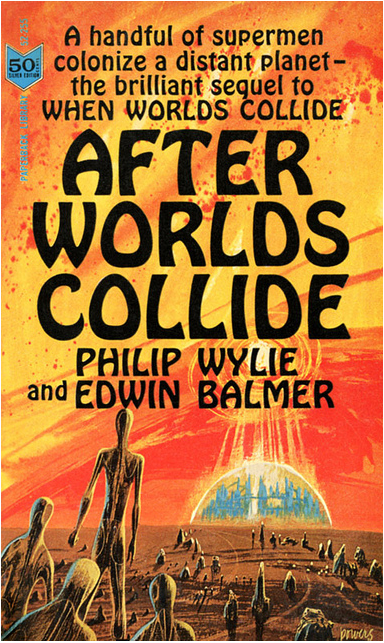
Growing up I loved “sense of wonder” stories.  I thought the label meant specific kinds of science fiction, but I don’t now.  Now I know there are several buttons to push to turn on my sense of wonder.   When I was a kid and read books like After Worlds Collide by Philip Wylie and Edwin Balmer, it pushed my sense of wonder button in a big way.  When the humans were exploring the ancient city of Bronson Beta, that pegged my sense of wonder meter.  Any science fiction book that has explorers walking around in long dead civilizations pushes my sense of wonder button.  But when I read regular fiction and nonfiction books about explorers poking around in long dead human civilizations of Earth, it pushes the same button.

after-worlds-collide

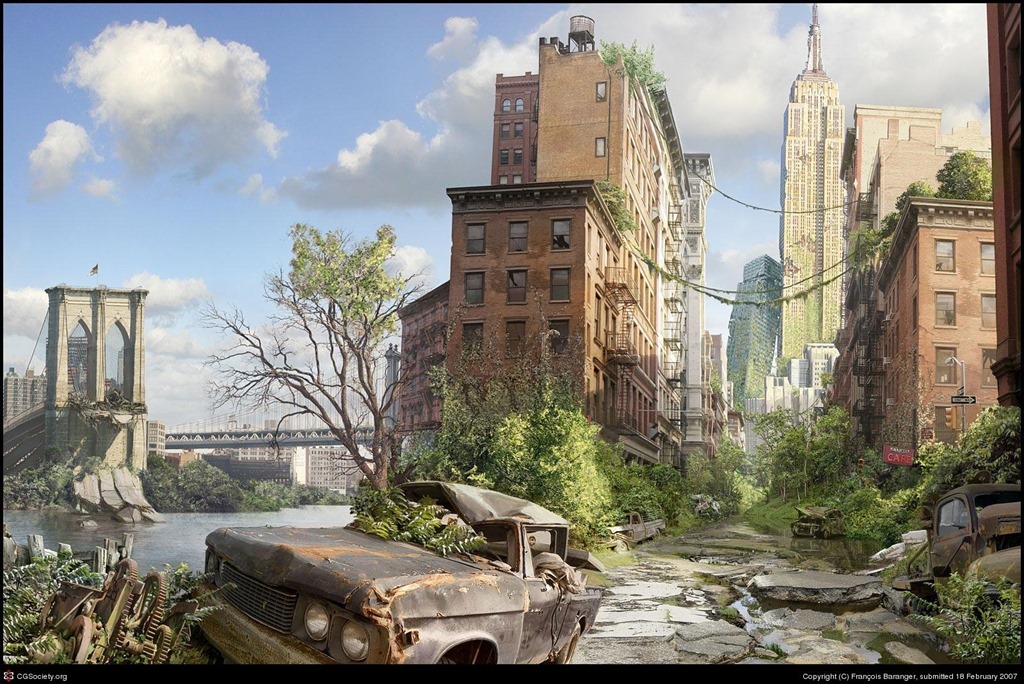
Another type of story that sets off my sense of wonder button are those that remember humans after they became extinct, like the connecting pieces to City by Clifford Simak, or the later chapters of The Time Machine by H. G. Wells.  But watching documentaries about life after people sets off the same flavor.  Theoretically I should be able to seek out all the stories, whether science fiction, or nonfiction, and find the flavor I desire to experience.  The same powerful sense of wonder flavor came in the 1920 poem “There Will Come Soft Rains.”  The World Without Us is evoked by a very specific idea.  It shows up every now and then in science fiction, but elsewhere too.

the-world-without-us-new-york

Another flavor I realized I loved as a kid that I completely associated with Robert Heinlein’s juvenile novels, is the young adult science fiction novel.  I found the same flavor in many Winston Science Fiction novels and books by Andre Norton.  But over the years I realized that any story about a teen without parents struggling to make it in a new environment does the trick.  Part of the enticing flavor is the kid must be on their own, or their parents must be mostly tuned out.  National Velvet by Enid Bagnold works because Velvet Brown is learning to do something behind her parent’s back, and something girls, especially young girls in the 1920s, didn’t do, which was jockey a horse in a national race.

What I point to when I use the term science fiction, are those books which extrapolate on current trends to speculate about possible futures.  Brave New World, Nineteen Eighty-Four, Stand on Zanzibar, and The Windup Girl are examples of what I mean.  But there are many kinds of science fiction that I read that don’t fit that flavor.  Space opera is one.  PKD type stories are another.  In fact, Philip K. Dick wrote a flavor of story I really crave that’s not science fiction at all, and those where his stories about the 1950s.  I really love Confessions of a Crap Artist, and would read more like it if I could find them.

confessions-of-a-crap-artist-5

I often meet people who love Lois McMaster Bujold’s Vorkosigan Saga series.  That’s the flavor they think of when they crave science fiction, but most science fiction stories are not like her books about Miles and Cordelia.  Her books are a mixture of romance, military, thriller and mystery set in an aristocratic galactic empire.  Her books have so many other flavors that I don’t think of them as science fiction at all, at least by my definition.  But that’s my point.  Fans of Bujold seek a certain flavor or flavors in their fiction that can’t be described by the generic term science fiction.  I find her books very pleasant, but none of their flavors actually make me think of science fiction.

To me, when a group of people all claim to love science fiction, I no longer think they love the same thing, even though they are all using the same phrase, science fiction.  In reality, they could all hate each other’s favorite books and movies.  We have to accept the term science fiction because it’s so widely used, but I think impossible to universally define.  Now when I talk to friends about books, or read reviews, I’m going to see if I can find out the flavors of the stories, because I know I love certain flavors of fiction and crave them.

JWH – 11/15/13

Has Humanity Given Up on the Three Major Promises of Science Fiction?

Science fiction has been around a very long time, but it wasn’t always called that.  The essential core of science fiction has always been three promises:  space travel, intelligent alien beings and intelligent robots.  We know as far back as the classical Greece, that there has been speculation about travel to other worlds and finding intelligent beings on them.  The idea of building an artificial human is as old as memory too.

There’s always been a few outliers in society that think up far out ideas and a larger group of fans who favor them.  Currently we call these two groups science fiction writers and science fiction fans.  During the second half of the 20th century I believe certain science fiction ideas peaked in popularity, and that we’re now detecting a possible diminishment of their popularity.

I strongly felt the public turning against the major promises of science fiction when I read the new issue of The Atlantic, and the essay “The Man Who Would Teach Machines to Think” by James Somers that profiles Douglas Hofstadter, author of the 1980 Pulitzer Prize winning Gödel, Escher, Bach.  Hofstadter hit a home run with his first book, but has been mostly missing in action all these years since, even though he continues to write brilliant books about artificial intelligence (AI).  The trouble, as The Atlantic article points out, is Hofstadter’s idea of artificial intelligence is different from what the academic world has come to accept for the term.  Douglas Hofstadter wants to teach machines to think, just like us, while the industry is happy enough to program computers to accomplish fantastic data processing feats that give the illusion of thinking.
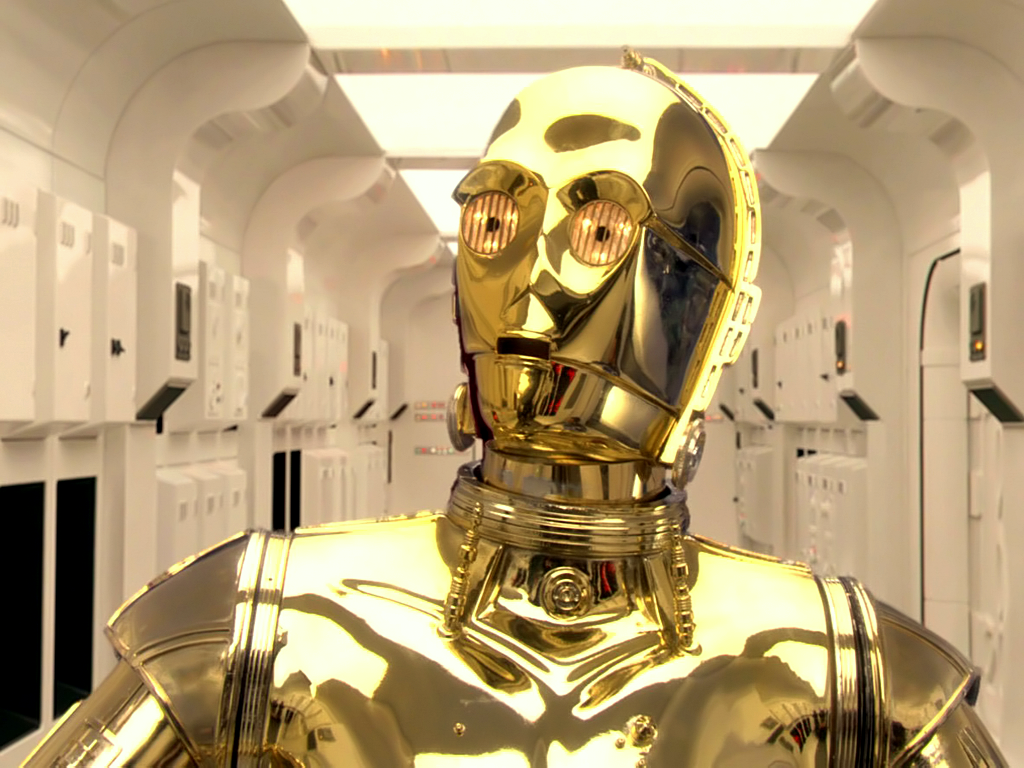
c-3po

If we want robots like C-3PO, then we need Douglas Hofstadter.  If you’re happy with IBM’s Watson, then we don’t.  And I’m worried that most people on Earth don’t have the sense of wonder that it takes to want a C-3PO.  And that’s a fucking crying shame.  I want Star Trek, but the public is only grudgingly willing to pay for NASA.  I want humanity to become friends with all the aliens in the galaxy, but all the vast run of people on Earth want is to thrill to the xenophobia of alien invasion movies and to shoot ETs in video games.

I have pretty much given up on seeing the public support space travel, and figure our only hope of meeting aliens would be through SETI projects, but I figured we had a real chance of seeing intelligent machines in my lifetime.  I might have to give up on that dream too.

For most people artificial intelligence is not an issue they will ever concern themselves with, but if you’re a philosopher, computer scientist, or science fiction fan, then it is.  The crux of the matter is whether or not machines will ever be able to think like us.  Here’s my logic.  Humans are self-aware thinkers and we’re the accidental creation of evolution.  If nature can randomly rub molecules together until it produces a self-aware biological being why shouldn’t we create thinking machines intentionally?  Sure, it took 13.78 billion years for reality to create us, but that doesn’t mean it will take as long for us to engineer intelligent machines if we put our minds to the task – we have 13.73 billion years of experience to consciously study.

Up to now, we’ve mostly tried to program machines to do specific jobs, some of these jobs used to be tasks we thought required thinking, like playing chess, being a contestant on Jeopardy or translating foreign languages.  We can program machines to do these tasks, but they don’t think, not in the way we think.  That’s not a failure of AI, it’s a lesson in what makes us conscious beings.

To do what Hofstadter wants will require building machines that can learn and evolve.  This is completely different from the direction that AI is taking now.  We can’t program machines to be self-aware, but we should be able to program machines to learn and evolve, and eventually that will lead to self-aware AI.

Think about the evolution of life on Earth.  It reflects the growth of simplicity into complexity.  It shows how simple creatures learn to interact with its environment and evolve better senses.  Over time those senses could interpret more and more complex patterns in the environment.  Look around you.  Everything you see is recognize as a distinct object.  In a cluttered room you might be seeing hundreds of different things.  Think how, and how long it took you to learn what all those things are.  Computer scientists for the longest time have tried to just tell machines what to see.  That won’t work for a thinking machine.  Like a human child, a thinking machine will have to grow up and learn everything on its own.

It does no good to create code that tells a computer what a banana is.  Can you remember learning what a banana was, and how to tell it from all the other kinds of fruits, or even distinguish it from vegetables?  I bet you can remember learning what an iPhone is, and maybe you can even tell the difference between an iPhone 3S and a 5S.  You’d think it would be easy to tell a computer to do the same thing, but it’s not.  Modern AI can be programmed to spot an iPhone, but not out of context of knowing what everything else is around it.  Not seeing and understanding the complete context of the visual field shows why the machine isn’t thinking.  It’s how we learn about new things that’s thinking, not knowing what they are.

The same problem we face building thinking machines are the ones we face for creating true space travel and finding alien life forms in the galaxy.  Most people just don’t see the point.  They don’t want to waste the money.  And they’re xenophobic.  But what it comes down to is most people really don’t care.  It’s not on their radar.  Space travel, aliens and robots have no value to them at all.  Zip. Nada.  Nothing.

So why the immense popularity of science fiction at the movies, on television and in video games?  Well, that’s another essay.

When I was a kid back in the 1950s and 1960s I embraced science fiction because I wanted to see space travel in my lifetime.  I wanted first contact in my lifetime, even if it was just SETI contact.  And I expected intelligent machines to be created in my lifetime.  Hell, I thought all of these things would have happened by the beginning of the 21st century.  Boy, was I wrong.
st

I thought we took a bad turn when the Apollo program was cancelled, but felt things were back on schedule with the emerging popularity of Star Wars and the return of Stat Trek.  I felt millions and millions of Earthlings were embracing the three great promises of science fiction as science fiction at the movies became huge box office successes.  But I was wrong.  All those people weren’t dreaming the same dreams as I had.  They are getting something else out of science fiction.

Orphans of the Sky is a powerful story by Robert A. Heinlein about a generation ship traveling the vast distances between the stars for so long that the passengers have forgotten that they live in a spaceship.  Their self-contained world becomes their entire universe and they forget the larger universe exists at all.  When I read Orphans of the Sky back in the 1960s I felt that humanity was waking up and realizing that they were living on spaceship Earth.  Hell, again I was so goddamn wrong. 

In most people’s minds, people on Earth live in a small place where God rules over them and cruelly holds out promise of everlasting life if they only confess belief.  Earth is a ball of dust God created as a classroom for us to live on while we decide.  Earth has no purpose other than a staging area for heaven and hell.  All the rest of the vast universe is a big distracting illusion.

The future used to be a vision of mankind spreading out to the stars making endless discoveries, but now I have a different vision.  Humans will continue to live on the Earth forgetting it’s a spaceship traveling through a vast universe, and the inhabitants will continue to follow their illusions century after century until they destroy their ship.  I could be wrong – I’ve shown that to often be true.  Let’s hope.  Maybe The Enlightenment is just taking longer than we thought.

Now it might sound like I’m depressed over this reevaluation of my beliefs, but I’m not.  I consider it far more healthy to be realistic than try to keep my own cherished fantasies.   The truth is always discovering the true mission of the spaceship where you become self-aware.  Which brings me back to robots.  If we ever create truly self-aware robots, what will they make of old spaceship Earth?

JWH – 11/6/13