Why Writing Dates Older Science Fiction Rather Than Science

By James Wallace Harris, Thursday, May 7, 2015

If you live long enough you can watch science fiction evolve. Most fans automatically assume that it’s the advancement of science that spoils older science fiction, but I disagree. “A Rose for Ecclesiastes” by Roger Zelazny is downright silly when it comes to science, but I still love the hell out of that story. It’s my contention that writing dates older science fiction, and not the science.

The War of the Worldsthree-body-cover

I just finished reading The Three-Body Problem by Liu Cixin, a sophisticated 21st century science fiction novel from China. Joshua Rothman at The New Yorker called Cixin “China’s Arthur C. Clarke.” I’ve read others who have given Cixin that tag too. Clarke wrote some exciting science fiction back in the 20th century, but The Three-Body Problem storytelling dwarfs anything Clarke wrote. Clarke wasn’t much of a writer, and no stylist at all. His characters were chess pieces used to fictionally illustrate his scientific prophecies.  Isaac Asimov wasn’t much better. Heinlein had some writing chops, decent enough in the 1950s, but his later works devolved into solipsistic characters all chatting amongst themselves.

The prose of The Three-Body Problem is refined in ways older science fiction writers never imagined. One way to understand why, is to read another essay by Joshua Rothman, “A Better Way to Think About the Genre Debate.” Rothman uses an idea by the critic Northrop Frye to explain the evolution of fiction over time. Frye believed four genres exist: novel, romance, anatomy and confession. Most science fiction and fantasies are romances. Back in the 19th century before the term science fiction existed, science fiction was called scientific romances. What we call literary, Frye calls novel. Satire, social commentary, philosophy is what goes into anatomy. Confession is autobiographical. The best fiction combines three or four of Frye’s genres. The best of 1950s science fiction combined romance and anatomy. The better 21st century science fiction writers combine novel, romance and anatomy. Ulysses by James Joyce is considered a novel that combines all four forms.

Gray_lensmanLeckie_AncillaryJustice_TP

I’m in a 1950s science fiction reading group and we’re discovering that most of the books now considered classics of the genre are rather poorly written. Many, are becoming almost unreadable.  But that writing was light-years beyond the  science fiction written in the 1920s and 1930s. E. E. “Doc” Smith is painful to read today. I’m worried that my favorite SF books from the 1950s and 1960s will cause young readers today to cringe at its creakiness.

Part of the clunky factor of older science fiction was the poor writing standards of that era. SF editors of the time were not very discerning, and most SF writers wrote quickly to pay bills. Much of the stuff being published in the 1950s came from 1930s and 1940s pulps, and most of the original SF written in the 1950s was slapped together for cheap paperback publishers.

Genre SF tended to focus on the fantastic, the adventure, and were all romance in Frye’s terminology. The trouble is, the fantasies of one generation eventually fail for future generations. To last, a book needs elements of the novel and anatomy by Frye’s definitions.  Modern readers will find E. E. “Doc” Smith’s romances silly today. They were pure romance, crudely written. His books might still work for people who enjoy a comic book level of fictional reality, but not for anyone who enjoys the richness of modern fantastic literature.

Rocket-to-the-Morgue Ready Player One

Goodreads has a nice listing of Best Science Fiction of the 21st Century. At the top of the list is Ready Player One by Ernest Cline. Cline’s exciting and fun story is still not a literary masterpiece by snooty New York literary types, but it is better written and told than most 20th century science fiction. It’s not brilliant like Nineteen Eighty-Four, but then George Orwell wasn’t a genre novelist. Nor does Cline attempt a distinctive style like Samuel R. Delany, J. G. Ballard or Ursula K. Le Guin began doing for SF back in the 1960s. Cline just uses all the good writing practices that modern writers use today. Cline’s novel is fun and speaks to a 21st century audience that remembers the 1980s. I grew up reading Heinlein and Bradbury, writers shaped by their personal experiences of the 1930s and 1940s. Since science fiction tends to be about the future, younger writers are both more savvy about the future, and better trained as writers. They have decades of better novels to study, and they probably graduated from  writer workshops like Clarion, or even attend MFA programs.

Forbidden-Planetex-machina-poster

The exciting aspects of The Three-Body Problem still involve science fictional concepts that have been around since the 19th century, but with new 21st century twists. Just being able to integrate computer networks, the world wide web and computer games into a story gives 21st century science fiction a huge advantage over 20th century science fiction.  But I don’t think that’s why Cixin novel is better. His plot is elegantly complex. His characters, although not great by modern literary standards, are far more engaging than what we encountered in most 20th century science fiction. But most of all, he knows how to weave far more information into his fiction without doing infodumps. Older writers often stopped their story to just narrate information they wanted their readers to know. Newer writers know how to paint the background while keeping the story going.

Certainly the Ex Machina robot Ava beats the hell out of Robbie the Robot from Forbidden Planet in both looks and AI mind power. But if you watch the old movie today it creaks. Ex Machina deals with the complexity of artificial intelligence so adroitly that it’s narrative creates a thrilling fictional mystery that even people who have no interest in AI can engage. That was also true for The Imitation Game. Good modern writers can take even the most abstract subject and make it into a compelling story.
a case of consciencesparrow_cover

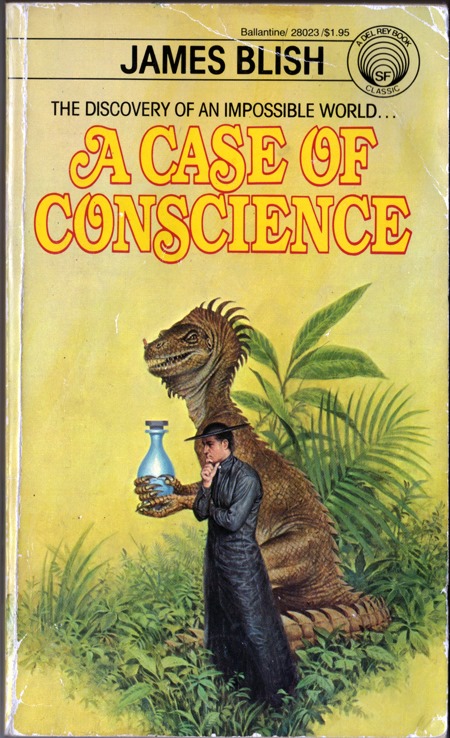
It’s surprising how quickly old science fiction develops a patina of quaintness.  And for any theme within science fiction, we can see evolutionary development over time. The Sparrow by Mary Doria Russell from 1996 is far more sophisticated at exploring religion and first contact than 1958’s A Case of Conscience by James Blish. More than that, her story is told with far more skill. I expect the next science fiction writer to take a swing at the subject will supplant the other two for a couple decades. And that’s the nature of writing science fiction. We’ve been rewriting the old science fiction ideas since H. G. Wells. New writers have to top old writers. If they don’t, readers will just keep reading the old favorites. Sure science advances, but writing seems to be advancing faster. Otherwise, how could we keep telling alien invasion stories over and over?

Earth_AbidesStation Eleven

Sometimes an old book is just as good or better than a modern equivalent exploring the same theme. Station Eleven is beautiful written, but it doesn’t have the insight into after the apocalypse that Earth Abides revealed to readers in 1949. Both are great novels. And here’s the case for young people to read older novels. Not everything from the past suffers literary decay. Earth Abides can still take on a recent heavy-weight like The Road by Cormac McCarthy. George R. Stewart wasn’t writing from inside the SF genre. And many of the powerful science fiction books that survive from that era turn out to be written by non-genre writers.  Two other examples are On the Beach by Neville Shute and Alas, Babylon by Pat Frank. Fifty years from now, future readers will probably be reading The Time Travel’s Wife by Auddrey Niffenneggar rather than any time travel stories from Asimov’s Science Fiction or Analog.

I believe most of the old classic science fiction from the 20th century that’s still in print is because of nostalgic rereading. Baby boomers and millennials push their favorite books onto their children and grand children, and keep them in print. Very few great science fiction novels from mid-20th century remain relevant today. A story like Earth Abides by George R. Stewart still works because a world-wide plague that kills off 99.99% of the population can still happen. But 1950s interplanetary adventures and galactic empires just seem silly today, like a Buck Rodgers serial did to me in the 1960s.

Post Hubble Space Telescope astronomy has made the cosmos light up in IMAX Technicolor so old science fiction seems like old black and white movies. Yet, that’s not the reason why those old novels are becoming forgotten. It’s the writing. Not the science. I’m not sure any of the nine novels selected by the Library of America as the best of 1950s science fiction will survive. My friend Mike claims The Stars My Destination by Alfred Bester is just as fresh today as it was in the 1950s. That’s because of Bester’s skill at writing. In the last few years I’ve reread A Case of Conscience, The Long Tomorrow, Double Star, The Space Merchants and More Than Human, I tried to read Who? and The Big Time. I’m sorry, but these books just don’t stack up to what I’m reading today.

flowers for algernonevolution of bruno littlemore

One of the challenges facing older science fiction fans reading modern science fiction is the trend for literary writers to invade our genre. Literary novels are slower in pace and more wordy, so fans of older action oriented pulp fiction can find the newer stories plodding. But I encourage them to try and adapt. One reason why Flowers for Algernon is still loved and read today is because Daniel Keyes was a good writer and introducing literary techniques to the genre fifty years ago.

Every decade or two I’ll reread my favorite science fiction books I grew up reading. Sometimes I find a nostalgic glow of rediscovery and sometimes I find a scary sensation of surprised disbelief that I ever loved this story. Because the words in the books don’t change I have to worry that it’s me that’s gone through some kind of cynical transformation. As teenagers we find books that are easy and exciting to read. We don’t have much life experience or critical wisdom. Most of us at that age read whatever we stumble upon. We can bond and imprint on books that are terrible examples of writing. Then as we grow older, and read widely, we get exposed to better writing and writers. We may love our old raggedy stories, but eventually they become toys we need to put away.
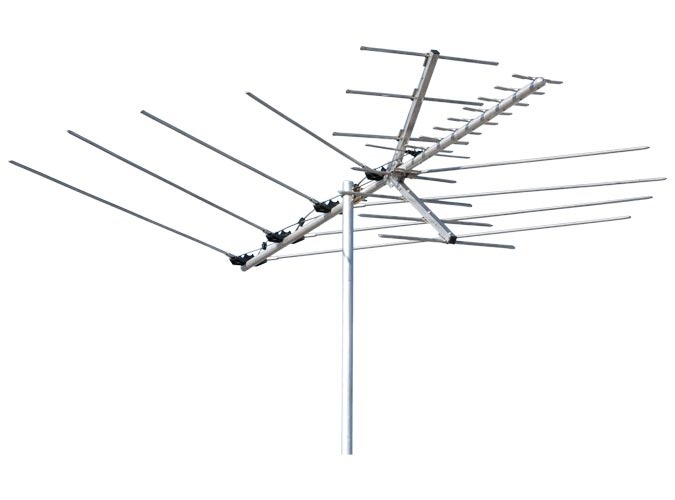
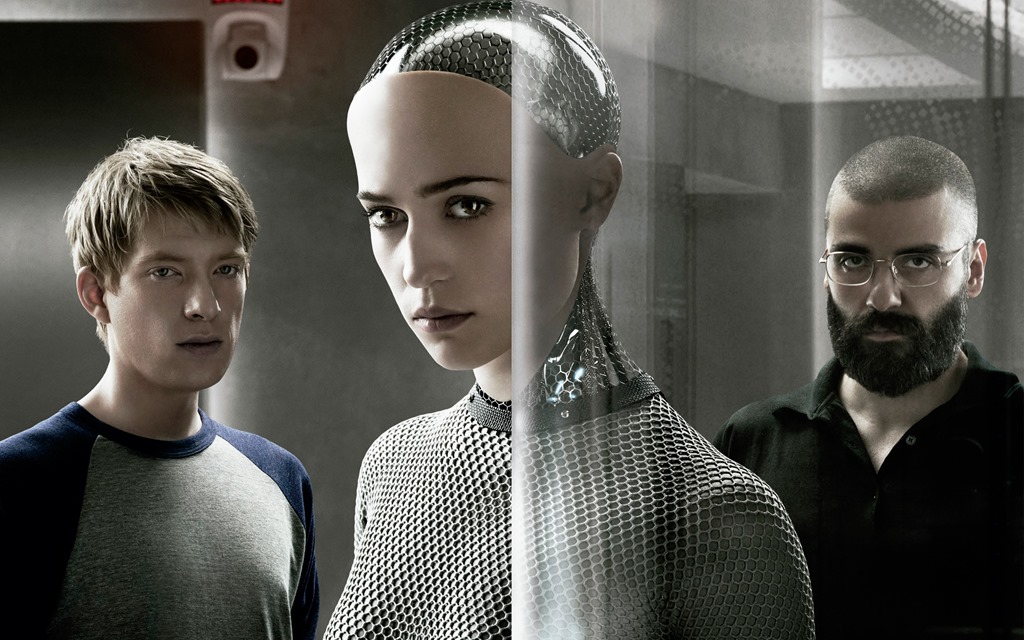
Table of Contents

Rethinking Cord Cutting

By James Wallace Harris, Monday, May 4, 2015

Because Microsoft has decided to kill off Windows Media Center starting with Windows 10, and I plan to upgrade to Windows 10 on all my machines because it will be free the first year, I will lose my homemade DVR. Using a PC to record TV shows from over-the-air (OTA) broadcasts takes a good deal more work than using the DVR that comes with a cable box. But if you want to give up paying for cable and still record TV shows to watch later, you need something like Windows Media Center to do the job.

antenna

Microsoft’s decision is forcing me to rethink my whole cord cutting approach to television, because I don’t want to go back to Xfinity or U-verse. Basically there are two modes for watching TV:

  • Live – by the schedule
  • Recorded – on demand

Cord cutter means getting TV from the internet or over-the-air broadcasts. Anyone accustomed to using a DVR will feel imprisoned by watching TV live again. Living around the TV schedule is so 20th century. That’s why I had to build my own DVR with Windows Media Center. DVRs let us save TV shows to watch later, skip commercials, pause, and scroll back to replay.

If I give up Windows Media Center I will have to learn to live without a DVR or find another solution.

I hate commercials, so I love skipping over them with a DVR. I could bypass commercials altogether if I gave up broadcast TV and got all my shows from the Roku. Without a DVR I wouldn’t watch broadcast TV. That’s not a possible solution for my wife though. She works out of town, but when she comes home for the weekend she loves TV. She splits her viewing between Netflix and tuning into AntennaTVMeTV, and Movies! – local channels targeted to cheap-ass baby-boomer cord cutters. I should confess I’ve become addicted to watching the old westerns on Grit TV. OTA broadcast channels seem to be popping up all the time, and strangely enough I find more to watch now than when I had cable. Sort of sad, to be stuck in a retro-TV-land, but it reminds me of how TV was when I were growing up.

Yet we can’t live without that modern doohickey, the DVR.

There are other media center software programs I could install and learn to record TV shows, but I’m through with being a do-it-yourselfer. Luckily, since I built my first DVR, several OTA DVRs have come onto the market. The market leader is TiVo, with it’s Roamio OTA, but there’s also ChannelMaster’s DVR+, Simple.TV and the multi-room networked Tablo. Until yesterday I was considering all of them except the Roamio OTA because TiVo charges $15 a month for its on-screen guide. It’s free for the DVR+, and just $4-5 a month for the other two. However, I just read that TiVo was selling it’s heavily subsidized $49 machine for $300 with unlimited access to their guide. That made me rethink the TiVo. Sadly, the $300 deal is over.The Roamio OTA is a 4-tuner device – meaning your can record up to four shows at once – and is considered the nicest to use by most reviewers. The TiVo has slick search features, as well as pause and replay controls. Those same reviewers all said they wouldn’t consider the TiVo with a $15 monthly fee. Obviously TiVo should listen, and since the other devices are already in the $300 ballpark, this could be a no-brainer decision if they offer the $300 deal again. TiVo could sell millions because their product is a broadcast TV watcher dream come true. Cord cutters are cheap, and a $15 monthly fee is too much for us cheapskates. Yet, my wife wants us to think about the TiVo because it’s DVR is equal to one you get with cable.

My current antenna is a RCA outdoor one, but it’s not great. It’s flaky in bad weather, and some channels come in much better than others. I should get a stronger antenna and put it up higher. However, I’m too old for working on my roof. I’ve been searching around Angie’s List and The Yellow Pages looking for TV antenna installers, but can’t find any. That’s annoying. With all this cord cutting going on, there’s good opportunity now for people to start a small business selling and installing antennas and OTA DVRs.

Investing in a great outdoor antenna and buying the Roamio OTA should solve my problem. I’ll be able to take the computer out of the den, and reduce the clutter in my entertainment center. Yet, there is something that urges me to cut the cord to the antenna too. We live in a TCP/IP world, so why not go completely Internet only TV?

$50, plus $15 a month will give us a deluxe broadcast TV setup. Susan and I have to think what we’re actually spending our money for though. To record the NBC Nightly News, CBS Sunday Morning, a few network TV shows we still watch, and to record a bunch of old nostalgic TV shows and movies. I would have included a long list of PBS shows I love, but I can now get them on my Roku through the PBS channel there. I could do all my TV watching through the Roku, but not Susan.

Cord cutters have given up on cable TV, but could they also  give up antenna television? Are we ready for a world with no live television? That’s weird to think about. Television is seldom truly live except for sports, news announcers showing prerecorded news and a rare live broadcast. Sport fans keep the cable companies in business. If live sports came over the Internet they’d be in real trouble. Current TCP/IP networking isn’t really suited for live broadcasting to billions, so they are safe for now. OTA TV does have a fair amount of sports. Enough for millions of cord cutters.

In ten years, maybe even five, things could be very different indeed. Think of how different our technological lives have changed since the year 2000. Should we be watching television like we did in the 1950s – with an antenna on the roof? I have to admit though, broadcast TV is still a viable solution for watching live TV, and it’s free.

JWH

Why Did The Robot in Ex Machina Look Like a Beautiful Woman?

By James Wallace Harris, Thursday, April 30, 2015

Ex Machina is a 2015 British science fiction film about artificial intelligence (AI) written and directed by Alex Garland. The story is about a billionaire  who connives to have a brilliant programmer come to a secret location to Turing Test a robot prototype. Oscar Isaac plays Nathan Bateman, the billionaire, Domhnall Gleeson plays Caleb Smith, the programmer, and Alicia Vikander plays Ava, the AI robot.  The film has little action but is quite thrilling. And I’m overjoyed to have a science fiction movie without silly macho weapons, fantasy feats of martial arts, and cartoonish battles to save the world.

Ex Machina asks, like computer scientists have been asking for the last sixty years, and philosophers for the last 2,500 years, what makes us human? Once we understood how evolution shaped life, we knew that whatever qualities that make us different from animals should explain our humanity. Artificial intelligence seeks to reproduce those qualities in a machine. We have yet to define and understand what makes us human, and robot engineers are far from making machines that demonstrate humanness in robots.

Although I’m going to be asking a lot of questions about Ex Machina, my questions aren’t meant to be criticisms. Ex Machina entices its audience to think very hard about the nature of artificial intelligence. I hope it makes people think of even more about the movie, like I’m doing here.

ex_machina-wide

The main idea I want to explore is why the robot had a female form. The obvious answer is movie goers find sexy females appealing. But is looking human the same as being human? AI scientists has always wondered if they could build a machine that average people couldn’t distinguished from a human, but they always planned to make the tests so Turing testers couldn’t see the humans and machines. However, in movies and books, we get to see the machine beings. Adding looks to the equations make them more complicated.

Because so many robot engineers and storytellers make their robots look like human females, we have to ask:

Would Ex Machina have the same impact if the robot had a human male shape or non-human shape?

Is the female body the ultimate human form in our mind? In a movie that explores if a machine can have a self-aware conscious mind isn’t it cheating to make it look just like a human? Since we judge books by their covers, wouldn’t most people think a mechanical being that looks and acts exactly like beautiful woman be human? By the way, I can’t wait to see how feminists analyze this film. Imagine see this movie a different way. Instead of asking if robots have souls, if the film was asking if women had souls. In the theater, we could also see two extremely intelligent men testing to see if a beautiful woman is their equal.

By making the robots female, the filmmakers both confuse the machine intelligence issue, and add a layer of gender issues. It also shoves us into the Philip K. Dick headspace of wondering about our own nature. Is everyone you know equal to you? Do they think just like you? Do they feel just like you? Could some people we know be machines? What makes us different from a machine or animal? In the book Blade Runner was based on, Do Androids Dream of Electric Sheep?, Dick was comparing soulless humans to machines with his androids. Machines are his metaphor for people without empathy.

If the two scientists had been played by actresses, and the robot was a sexy actor, how would we have interpreted the movie differently? A bookshelf of dissertations could be written on that question. What are the Freudian implications of us wanting the robots to look like beautiful young women? How would society react if scientists really could build artificial mind and bodies, manufacturing millions of beautiful women sexbots that have to integrate into our society? Of course, many humans will immediate try to fuck them. But if AI machines looked like people, why should they act like people? Guys will screw blowup dolls now – is a vaguely womanly shaped piece of plastic all it takes to fool those men into replacing real woman?

How would audiences have reacted if the robots of Ex Machina looked like giant mechanical insects?

Ex Machina explores many of the questions AI scientists are still puzzling over. Personally, I think it confuses the issue for us to build intelligent machines to look like us. Yes, our minds are the gold standard by which we measure artificial intelligence, but do they need bodies that match ours?

If the robot in Ex Machina had looked like a giant metal insect would the audience ever believed it was equal to a human? We think Ava is a person right from the first time we see her. Even though it’s obvious she has a machine body, her face is so human we never think of her as a machine. This is the main flaw of the film. I understand it’s cheaper to have humans play android robots than build real robots, and people powered robots look too fake, but in the end, anything that looks human will always feel human to the audience.  Can we ever have a fair Turing Test with a creature that looks like us?

We don’t want to believe that computers can be self-aware conscious beings. Actually, I think this film would have been many magnitudes more powerful if its robot had looked a like giant mechanical insect, had a non gender specific name, and convinced us to feel it was intelligent, willful, self-aware, feeling, and growing. Which is what happened in Short Circuit (1986) with its robot Johnny Five.

The trouble is we equate true artificial intelligence with being equal to humans. Artificial Intelligence is turning out to be a bad label for the concept. Computers that play chess exhibit artificial intelligence. Computers that recognize faces exhibit artificial intelligence. Computers that drive cars exhibit artificial intelligence. We’ll eventually be able to build machines that can do everything we can, but will they be equal to us?

What we were shown is artificial people, and what the film was really asking:

Is it possible to create artificial souls?

Creating an artificial human body is a different goal than creating an artificial soul. We have too many humans on this planet now, so why find another way of manufacturing them? What we really want to do is create artificial beings that have souls and are better than us. That’s the real goal, even though most people are terrified at the idea.

Alan Turning invented the Imitation Game that we now call the Turing Test, but the original Turing Test might not be sufficient to identify artificial souls. We’re not even sure all people have souls of equal scope. Are the men of ISIS equal in compassion to the people who win a Nobel for Peace? We can probably create robots that kill other humans by distinguishing sectarian affiliations, but it’s doubtful we could create a robot that works to solve the Earth’s problems with compassion. If we did, wouldn’t you think it had a soul? What if we created an expert system that solved climate change, would it only be very intelligent, or would it have to have a soul?

In the end, I believe we can invent machines that can do anything we can. Eventually they will do things better, and do things we can’t. But will they have what we have, that sense of being alive? What would a machine have to do to reveal it had an artificial soul?

Can a machine have a soul?

In the course of the movie, we’re asked to believe if a robot likes a human that might mean they are human like. Eventually, we’re also led to ask if a robot hates a human, does that make them human too? Is love and hate our definition of having souls? Is it compassion? Empathy? We’ll eventually create a computer that can derive all the laws of physics. But if a machine can recreate the work of Einstein, does it make it equal to Einstein?

Ex Machina is sophisticated enough to make its audience ask some very discerning questions about AI minds. Why did Alex Garland make Ava female? Across the globe robot engineers and sex toy manufacturers are working to build life-like robots that look like sexy women. The idea of a sexbot has been around for decades. Are super-Nerds building fembots to replace the real women they can’t find through Match.com? If men could buy or rent artificial women to make their sexual fantasies come true, will they ever bother getting to know real women? Why does Nathan really build Ava?

Caleb falls for Ava. We all fall for Ava. But is that all we’re interested in – looks? If Caleb thinks Ava is a machine, especially one with no conscious mind, he will not care for her. But how much do Ava’s looks fool Caleb? How much are we fooled by other people’s looks anyway? If you fall in love with a beautiful woman just because of looks, does that justify thinking you’re in love with her?

We’re all programmed at a deeply genetic level to be social, to seek out at least one other person to bond with and develop a deeper communication. What Ex Machina explores is what features beyond the body do we need to make a connection. A new version of the Turing Test could be one in which we offer people the friendship of humans or the friendship of machines. If a majority of people start preferring to hang out with AI beings that might indicate we’ve succeeded – but again it might not. Many people find pets as suitable substitutes for human companionship. I’m worried if we gave most young men the option to marry sexbots, they might. I also picture them keeping their artificial women in a closet and only getting them out to play with for very short periods of time. Would male friends and female robots fulfill all their social needs?

Ex Machina is supposed to make us ask about what is human, but I’m worried how many males left the theater wishing they could trade in their girlfriend or wife for Ava? So is Ex Machina also asking if society will accept sexbots? Is that way Ava had a human female body?

Table of Contents

The Delicate Chemical Balance of Health and Consciousness

By James Wallace Harris, Tuesday, April 28, 2015

What if how we feel and think is determined by what we eat?

Human beings are fleshy bags of water and chemicals. Lots of chemicals. Our minds work because of countless chemical reactions. I say countless, because their number is beyond my comprehension, but I suppose scientists might have an exact list somewhere. Both our physical and mental health depend on walking a razor’s edge chemical balance. Every time we eat something we change that balance. Taking medicine also stirs up our chemicals. And drink and drugs do who knows what. And as we age, maintaining that chemical balance becomes trickier.

We’re all used to taking a Tylenol when we get a headache. A fraction of a gram of a single chemical makes our headache go away. But what caused the headache in the first place? Other chemical reactions set off pain receptors. And pain receptors, again work through chemistry, causes our consciousness to experience pain.

colorsjuicing-rainbow

I’ve been experimenting with juicing because I saw Fat, Sick and Nearly Dead, and Joe Cross claims it will make me feel great.  Last night I made a concoction called a Mean Green that was quite stimulating, even though it tasted god awful. It didn’t quite make me high, but did made me more alert, energetic and I think speeded up my heart a bit. This morning, after a good night’s sleep, my mind is back to its more sedate steady state. However, on average lately, I’ve been rather lethargic, thus the impetus to try juicing.  Does drinking vegetables and fruits juices make my overall balance of chemicals better, or just give me a temporary micronutrient boost? Is better health a different blend of chemicals?

When studying the pros and cons of a juicing diet I came across an interesting YouTube video by Matt Monarch warning about raw food diets. The interesting aspect of the video was it was from a pro raw food site. Here was a prophet warning people against his own message. Monarch warns eating extremely healthy is hard, and going back to do your old diet would have consequences. He placed a raw food diet at one end of a spectrum, with whole food eating in the middle, and the average American diet at the other end. He didn’t focus on health per se, but how you’d feel on each diet.

If all you know is the normal American diet, then what you feel is normal. And what you feel might be your baseline for what you think of as a health reality. What if eating whole foods creates a different state of mind, and eating raw foods creates even another state of mind? Monarch says there’s a danger to switching to healthier states of mind. This suggests we may prefer our junk food state of mind over health food state of mind. This guy is warning people that the healthy state of mind is different, and if you get used to it, or even addicted to it, he says it might be too much work to maintain, and going back to even the whole foods stage will have consequences.

In Fat, Sick and Nearly Dead 2 Joe Cross deals with falling off the juice diet and what it means. Even he can’t always maintain the discipline.

In the last few years I’ve been eating healthier, and every time I fall off the wagon the effects of eating junk food hit me harder. My junk food binges are also getting shorter because they make me sicker quicker. I’m not sure I can go back to the junk food diet. And now I’m worried about playing around with juicing and raw foods. What if feels bad to return to just eating whole foods? Is Monarch warning us that we can’t return from extreme health once we find it? Or is his extreme health some kind of altered consciousness caused by an extreme diet?

We like to assume that health is like inner vitality. We like to think health is a reservoir of energy that slowly drains away as we get older.  You either have it or you don’t. What if health is like juggling balls – the more you can keep in the air the better you feel. If optimal health requires effort and skill, then being lazy or unskilled means losing health or never gaining higher levels of wellbeing. What if mastering ten balls in the air feels really good, does juggling just five seem unhealthy, even if it’s whole foods? Can we all be Jack LaLane, or should we aim to just be Dr. Joel Fuhrman?

I’m lazy. I just want to feel healthy without any effort. But what I’ve learned from eating a lifetime of junk food is I have an unhealthy consciousness. That the balance of chemicals I call normal is really not what I’d like to be feeling all the time. I think some health is youthful vitality. And when we’re young we have an abundance of wellbeing because our chemical systems are all running in an optimal fashion. It’s robust and its momentum is hard to alter. Part of the bad feeling is getting old could be due to a lifetime of imbibing chemicals that abuse our system, or not eating the right chemicals to maintain it.

At 63 I’m struggling to find the right list of chemicals to add to my body each day. But the complexity of our system is hard to understand. Between my normal chemical processes I’m having to add chemicals my doctors tell me I need, but they have side effects. Whenever I change my diet, hopefully for the better, it has side effects too. At 63 I’m suddenly realizing I’m juggling a whole lot of balls – more than I can count. If I mess up, and they all fall to the ground, I get sick. After being sick, it gets harder to get those all those balls juggling again.

When I was growing up, DuPont had an advertising slogan, “Better living through chemistry.” In the 1960s hippies coopted it as their slogan for getting high. Now in the 21st century, the phrase takes on another new meaning. We used to worry about a small list of chemicals that aided health – vitamins and minerals. The macronutrients. Now with whole foods we worry about hundreds, if not thousands of chemicals called micronutrients. It’s impossible to know which recipe of chemicals creates the perfect state of mind.

It’s a shame I didn’t understand the importance of body chemistry when I was a child, and worked to eat healthy right from the start. I’ve waited to when I got on the home stretch of life to study chemistry. Now that my arteries are clogged and my bones are growing arthritis deposits, I’m suddenly needing a PhD in bio-molecular interactions.

JWH

The Coca Cola Company Versus the Nanny State

By James Wallace Harris, Monday, April 27, 2015

I saw Fed Up last night on Netflix streaming, a documentary about how the food industry is acting like the tobacco industry when it comes down to choosing between the bottom line and the health of Americans. The documentary makes the case the Coca Cola Company sells only products that will make us fat, and it’s only value to society is the wealth it generates. To be fair, the film targets other food industries, but soft drinks are portrayed as one of society’s main causes of obesity.

What struck me was how food corporations defend dangerous foods in the same way the tobacco industry defended cigarettes.  What’s more, conservatives attack any effort by politicians to keep children from becoming addicted to junk food by referring to such laws as promoting the Nanny State. If you Google Nanny State you’ll find some very interesting political sites and news stories.

Are conservatives right? Should we have the freedom to eat whatever we want? You’d think, by the same logic, they’d be against laws that controlled recreational drugs. And if the FDA keeps our food safe and our medicine effective, is that coddling of the Nanny State?

Should the government regulate products that make us unhealthy? Or should we all be responsible for ourselves? We’ve known that junk food is bad for decades. We know that drugs and alcohol ruins lives. We know what’s bad for us, but how many people do anything about it? Fed Up shows that children have little choice in choosing good food at school, and become addicted to bad food. That’s exactly why we don’t want drug dealers selling to kids. Should kids need an ID proving they are 21 to buy a Coke and Mars bar? Or if the Nanny State theory is correct, should we let kids buy joints and beer in their cafeteria because to not let them takes away their freedom?

The epidemic of obesity has occurred in my lifetime, and I’m obese myself. I’ve been a junk food addict my whole life. This documentary makes a great case that the current obesity crisis is not due to lack of exercise or the ability to diet, but we’re conditioned to eat bad food. I now struggle every day to eat good food. I have to ask myself: Would I have preferred that bad food had been made illegal in the 1950s and 1960s when I was growing up and we lived in a Nanny State, or do I prefer the freedom of choice I’ve had for the past fifty years?

I’m suffering from the results of a lifetime of poor eating, I do wish I had lived in a Nanny State. I have an addictive personality. In the film, they showed an experiment with rats addicted to cocaine were offered cocaine or sugar water. Nearly all of them switched to the sugar water.

Is it really a Nanny State to keep children from becoming addicted to foods, especially when they are offered no healthy alternatives? We know these food makes us fat. We know even as little kids that fat is socially and sexually unattractive. Yet, kids and adults will keep eating the food  that makes them fat, just like rats in a cage. And that experiment has a ring of truth to it. Most people prefer junk food to drugs. Junk food makes us happy. Junk food fights boredom and loneliness.

Do we really have the freedom to choose? Do we really have freedom from the Nanny State when most of us spend our free time drinking Coke and eating Doritos and M&Ms, while playing video games and listening to the television? Is that what makes us free? Or does it really reflect that we’re rats in a cage sucking on a bottle of sugar water?

Is it really a Nanny State to make school cafeterias serve healthy food? Or do we live in a Corporate State where kids are forced to eat what makes the most money? Is it freedom to be free of laws, or to make laws that help make us a better society? I don’t know. I don’t drink or smoke because my parents were alcoholics that smoked like crazy. Will the next generation be horrified at all us fat people and choose a different path? Can they make that decision if they aren’t protected from addictive food while growing up?

JWH