by James Wallace Harris, Tuesday, October 31, 2017
 Have you been depressed since last November? Does the institutionalization of anti-science horrify you? Do you feel irrational politicians have hijacked our country? Does your soul ache because liberal compassions are under siege from conservative prejudices? Do you wonder if our collective mind has blown a gasket? Then you need to read Fantasyland: How America Went Haywire: A 500-Year History by Kurt Andersen. This book will not solve our problems, but it does explain how our nation has been crap-believing crazy for five centuries. Fantasyland is the most entertaining, informative, and comforting nonfiction book I’ve read in years. Fantasyland soothes my America-is-collapsing anxiety by reporting on all the dumbass fantasies Americans have embraced since Jamestown.
Because I can’t cast any first stones, reading this book makes me want to list all the stupid concepts I’ve tried to embrace in the last sixty years. We’re all suckers for fantasylands. We all hope to find saviors that will rescue us from our mundane lives. The desire to better ourselves, to create, to build an ideal world is one of the admirable qualities of our species. However, to live a life of delusion is sad.
Fantasyland proves hope for a better future depends on getting clean with reality. Recognizing we have a fantasy addiction is the first step. We need to simplify the serenity prayer, “God, grant me the serenity to accept the things I cannot change, Courage to change the things I can, And wisdom to know the difference” to “I seek wisdom to know the difference between reality and fantasy.”
As I read Fantasyland I constantly used it to condemn the conservatives for ruining our society with their delusions. However, I have my own delusions, we all do. I thought it might be fun to confess the history of my personal fantasylands. This inspired many questions as I wrote this essay we should consider.
- Should we lie to children, especially during their formative years, even if it’s in fun?
- At what age, if any, is make-believe safe?
- Should schools teach how to discern fantasy from reality?
- Does the Constitution protect us from other people’s delusions and fantasies?
- Do people have a right to believe anything they want?
- How do we teach history to convey the lessons of failed fantasies?
- Is fantasy in books, television, and movies a cause of our personal delusions?
- Aren’t most fantasies promoted by people trying to make money or at least validate their own delusions or egos?
An Abbreviated History of My Fantasies
Looking backward, I realize books often sold me on a new fantasyland. We seldom originate our own fantasies. As Kurt Andersen reports in Fantasyland, America was created by people with either a fantasy for finding gold or a fantasy for establishing a religious utopia. Evidently today, we have a greater abundance of fantasies to choose from, especially with mass media and the internet inspiring us. I wonder, without all our fantasies would this country be quiet and dull – or would it?
The Age of Magic (My Early Years)
#1 – Easter Bunny
I doubt the Easter Bunny is my first fantasy belief, but I’m listing it first because it’s the most embarrassing, even for a little kid. I can’t believe I ever believed a large rabbit went around hiding chocolate bunnies and colored hens’ eggs. Damn, I must have been a gullible toddler.
#2 – The Tooth Fairy
Okay, I was old enough to lose teeth, I should have been skeptical that any creature would pay a quarter for a rotten tooth. I can barely remember when this happened. I hope I actually didn’t believe what my parents were telling me, and that all I wanted was that change under my pillow.
#3 – Santa Claus
I was a total dumbass for the guy in the red suit. I remember being red face hot when a little girl put me down for being so stupid as to believe in Santa Claus. In my defense, I started first grade a year earlier than I should, so all the other kids were a year older than me. But still, I should have thought this through logically, there were plenty of clues.
#4 – Oz and Magic
I discovered the Oz books by L. Frank Baum when I was ten. I had been watching the annual showing of The Wizard of Oz since I was four. Oz was a fantasy world with magic that I wanted to exist. I have read there was a period when American librarians banned Oz books because they felt Oz books gave children unrealistic expectations about life. In my case, they were dead on.
#4 – Jesus/God
If parents really want kids to accept Jesus and God as the literal truth, they shouldn’t tell us about #1-3 first. It only sets us up to be skeptical about all invisible beings. My road to atheism began at age 11 when I got Baptized and I didn’t see the light. It totally confused me when Christians said one thing in church but did the opposite Monday through Saturday. I became a complete atheist by the 8th grade.
This ends my period of wanting to believe in magic. Maybe it’s something all kids want. I find it strange that the most fundamentalist of Christian believers reject the concept of magic when Bible stories are full of magic. God created the Earth with words. My rejection of magic was so strong I rejected all fantasy stories in favor of science fiction. It wasn’t until my fifties that I was able to enjoy fantasy novels like Harry Potter just for fun.
The Age of Science (Junior High)
#5 – Science Fiction
Science fiction was supposed to be the opposite of fantasy. When I was young I believe all the classics themes of science fiction were theoretically possible. Over the years I’ve slowly become a disbeliever to many of them, like faster-than-light travel, time travel, galactic empires, brain downloading, scientific immortality, etc. I still cling to intelligent robots or AI machines with conscious minds will be built someday.
#6 – Becoming an Astronaut
By the 8th grade I had exchanged religion for science fiction. This led me to an array of beliefs that would take me the rest of my life to realize were irrational. The first, the belief I would grow up and work in space took a long time to get over. Back in the 1960s, I was totally in awe of NASA and faithfully followed Projects Mercury, Gemini, and Apollo. Sputnik went up just before I started Kindergarten and Apollo 11 landed on the Moon just after I graduated the 12th grade. I had even gone to watch Apollo 8 launch Christmastime 1968, during my senior year. Sometime in my high school years, I learned astronauts had to have 20-20 vision, and I was a four-eyed geek with thick lenses. I still fantasized that science could fix my eyes, or NASA would eventually hire people with glasses. After reading Tom Wolfe’s famous book, I realized I never had the right stuff, and never would. It galled me when rich people started buying their way to space, but if I’m honest with myself, even if I was a billionaire I would never leave Earth. Space travel is just too inconvenient and uncomfortable for me.
#7 Becoming a Scientist
Probably the greatest regret of my life is not becoming a scientist. This was not an impossible dream – theoretically. However, even though I took biology, chemistry, and physics in high school, I just couldn’t devote myself to those subjects and work hard. Nor could I apply myself to math. I eventually got through calculus, but only with a half-ass effort. I even went to a tech school majoring in computer science in 1971, but I never could commit to studying hard. I wanted to have fun. I hated the classroom. One of the dumbest fantasies I had about myself involved being a disciplined scholar of science. I was always more science fiction fan than a scientist. Being successful at any pursuit requires hard work, concentration, and grit. My biggest fantasy in my life has been believing I could make myself acquire those qualities.
#8 – The Final Frontier
Instead of believing in heaven like most folks growing up in the south, I believed mankind’s was destined to travel across the solar system and out into the galaxy. That was my teenage religion. For most of my life, I believed colonizing space was our species purpose in existence. I’m now an atheist to that idea. We might travel to Mars or a few other places in the solar system, and even build colonies on the Moon and Mars, but I doubt much will come of it. Going to the stars is a fantasy for humans. I currently believe robots are destined to be interstellar travelers, but that too might be a fantasy.
The Counter Culture (High School and Early College Years)
#9 – Hippies and the Counter Culture
I remember in 1967 after reading about the march on the Pentagon standing at my school bus stop arguing with my longhair buddies about how the counter-culture was going to revolutionize America. In 1968 The Electric Kool-Aid Acid Test by Tom Wolfe and The Rolling Stone magazine started defining a new fantasyland future for me. It also introduced me to Jack Kerouac, who drew me backwards into an older fantasyland.
#10 – Expanding My Mind with Drugs
The 1960s had another impact on me. Besides science fiction and NASA, I loved rock music and drugs. So did many in my age cohort. I was influenced by Aldous Huxley, Timothy Leary and Richard Alpert and believed psychedelic drugs were the doors of perception. I sought transcendence with chemicals. I wanted them to take me as far as John Lilly claimed they took him, out into the galaxy to meet other beings – see The Programming and Metaprogramming of the Human Biocomputer. Yeah, if you mix belief in science fiction with acid it produces some far out fantasies, but really no different from mixing religion and faith.
#11 – The Beats and On the Road
I was completely romanced by Jack Kerouac and his on-the-road philosophy. I started hitchhiking around Miami when I was in high school, and continued when I went to college in Memphis. I did two short trips across states, one with my friend Connell. I learned I preferred the comforts of home. However, to this day, I still enjoy reading Kerouac. I see him as a tragic figure who followed many paths I wanted to follow but didn’t because I was either too scared or too smart. Kerouac was my father-figure substitute. My dad and Jack were horrible alcoholics that died within months of each other, both still in their forties. If I had gotten only my father’s genes that would have been my fate. I have a huge psychic connection with Kerouac.
#12 – Becoming Bob Dylan
Another absurd fantasy involved buying a guitar and harmonica and teaching myself to play and write music. This is an absurd fantasy because I can’t carry a tune, or even remember the words to favorite songs I’ve heard hundreds of times. I’m sure most kids have rockstar/sportstar/moviestar/writer/artist type fantasies. Probably every kid dreams of being famous for something. Fame is possible, certainly more possible than dying and going to heaven. Sadly, fame comes to about as many people as those winning big jackpots in Lotto.
#13 – Communes
At the end of the 1960s and beginning of the 1970s the idea of intentional communities began spreading through the counter culture. I loved the idea, and had brief stints in two communal groups. I quickly learned I loved privacy, personal possessions, and having my own way. This was a very short-lived fantasy, but it still affects me. I now dream of living in a high-rise retirement community where all my friends each have an apartment.
#14 – Back to Nature
After realizing I wasn’t suited for group living I dreamed of buying my own land and escaping the rat race. I just didn’t want to join the 9-to-5 world. My bibles were Mother Earth News, Five Acres and Independence, and The Whole Earth Catalog. Several of my buddies had this dream too, but after several failures at handy crafts, gardening, and fixing machinery, reality taught me something different. I loved Henry David Thoreau, but I only read Walden and not his biography. I should have. The back to nature fantasy hadn’t worked for him either. This fantasy still returns to me occasionally, like the other night when I watched the beautiful documentary, Off the Grid.
#15 – Carlos Castaneda
I loved these books that were supposed to be anthropological. Even though I gave up Christianity, I was still gullible to other religious ideas. I figured there might be some truth in old spiritual studies. Castaneda mixed sacred drugs and the wisdom of indigenous people, and that had the appeal of promising ancient wisdom. I learned a lot, but mostly the wisdom of what to avoid.
#16 – Hinduism and Ram Das
Be Here Now really hooked me. Ram Das (aka Richard Albert) convinced me to open my mind to Hinduism. I even read The Bhagavad Gita, took up yoga, joined some New Age groups with Hindu teachers, and read a bunch of books about the sacred literature of India. I just never could believe. I tried.
#17 – Buddhism, Zen Buddhism, Alan Watts
I had been reading Alan Watts since I started reading Jack Kerouac. Ram Das further encouraged me to accept Buddhism. I liked Zen Buddhism because it seemed the least magical/metaphysical of all religions. I still admire Zen and meditation for their anti-bullshit methods of perceiving reality, but Buddhism has its fundamental side too, that can be just as dogmatic, and miracle driven as Christianity. Theoretically, I believe a reality-based religion is possible, but so far I haven’t found one.
#18 – Spiritualism, Channeling Seth
For a brief period, I read books about communicating with other beings by mediums like Jane Roberts. My science fictional fantasies were susceptible to alien beings communicating with us through other dimensions. John Lilly promoted this idea, and he was a scientist (although zonked out on drugs) and the great science fiction philosopher of the 1930s, Olaf Stapledon, also promoted these ideas. I soon rejected astral worlds because they were too inconsistent.
#19 – New Age Psychologies
Back in the 1970s there was almost a new psychology of the month coming out of California. I wanted to go and try things like EST, Rolfing, primal screaming, etc. I might have been converted if I could have gotten to Los Angles, but I didn’t. I just read the books, joined a local New Age community and subscribed to New Age Magazine. Like spiritualism, I gave up hope on these therapies because there were too many of them that offered conflicting truths.
My Work Years
By the end of the 1970s I got into microcomputers, and spent all my time thinking about computers. For the next 36 years I was preoccupied with being married, hanging out with friends, working, computers, science fiction, music, movies, television, and other down-to-earth pursuits. I read lots of nonfiction books, and slowly began developing more mature philosophies about life. However, I eventually learned of other fantasylands I had tried to find.
#20 – Romance/Sex/Love
Over the years I realized our society is gaga over romantic love. Love stories program us for romantic fantasylands. Gender stereotypes and sexual desires cause us to see each other in very unreal ways. It’s very hard not to objectify the people we want sexual. All these desires lead us to countless fantasylands.
#21 – Political Solutions
We all have fantasyland beliefs on how to solve our political problems. I used to believe we could come to a rational agreement on how to govern society. That’s a huge fantasy. I keep hoping it’s not, but all the evidence says it is.
#22 – We Can Solve Our Big Problems
We have all the knowledge and technology we need to save the planet, but the reality is human nature won’t let us use that knowledge and technology. We all fantasize that humans have always survived so we always will. I think that’s our most dangerous fantasy. It’s a shame that two-thirds of us are deluded by childlike belief in a heavenly father. It keeps us from growing up and taking responsibility. It’s a shame that two-thirds of us believe lying to preserve personal beliefs is wiser than accepting the wisdom of science and giving up those beliefs.
Finding Reality
If we study our fantasylands, we’ll see we’re all looking for place to exist that rejects reality. We’re an adaptable species that can live in a variety of environments. We’re also clever beings that can adapt to any environment for our physical needs. Our failure comes from trying to pretend reality is something that matches our mental needs. Our superpower is the ability to delude ourselves. Our brains have countless cognitive skills to paint over reality, deny evidence, and to allow us to see our beliefs as real. It’s probably a survival mechanism, a way to cope as individuals. But it means we fail to cooperate in our shared reality by agreeing on its actual details.
JWH

 Back in the 1970s, I developed an addiction for computer magazines. My favorites were Byte Magazine, Creative Computing, and InfoWorld. But there were countless others popping in and out of existence. During that period I’d go out driving two or three times a week to bookstores, newsstands, and computer shops looking for new issues to buy. I loved Byte Magazine the best because it was so well rounded, covering all kinds of computers, computer history, computer theory, computer science, featuring code and wiring schematics – great reading for hackers and wireheads. Plus in the early years before small computers became an industry, they had fantastic covers.
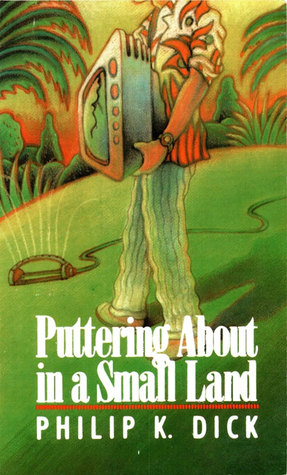 The other day an old friend texted me and asked how I was doing. I texted back I was fine, enjoying puttering around in a small land. She immediately called me worrying that something bad had happened. I had to explain I wasn’t in a hospital room but enjoying my hobbies at home. I was riffing off the name of a Philip K. Dick novel,