Classroom Learning v. Online Learning

By James Wallace Harris, Thursday, October 15, 2015

This week I started a continuing education class in beginning drawing. It’s the first classroom learning experience I’ve had in over a decade. Of course, folks my age don’t usually go to school, but I was still taking some graduate courses in my fifties. In recent years I’ve been using online courses from Coursera and Udemy, or I sometimes buy Great Courses on DVD. And whenever I want to learn something quickly, I go to YouTube and find a How-To video. Plus, I’ve been an autodidactic my whole life, and learn on my own with books.

Taking this drawing course is way off my beaten path because I’m trying to learn something I have absolutely no previous experience with in any context. Even my expectations for what the class would be like was completely different from what I experienced. I assumed the teacher would start us with pencil and paper and teach us the rudimentary skills of line drawing. Instead she had us create two 1-10 gray scales with 9B pencil and black Conte crayon. Then she had us “draw” from still-life objects by using shading rather than lines. She took us through a tour of the building where the walls were covered with student artwork and showed us how it’s possible to draw without lines, and explained the lines we see in reality are just edges to various levels of shading.

An_elderly_man_Realistic-Pencil-Drawing

[See the power of the pencil]

It was when we actually got down to work that I realized the difference between classroom learning and online learning. Nine-seven percent of my time I worked alone, but when I did get the teacher to come by to show me something it caused a big leap in my ability. Unfortunately, my teacher didn’t spend that much time with me. She had to lecture and visit the other students. Now this one little insight is the intent of this whole essay. I have found numerous videos online that teach drawing. They are all equal or better to classroom lectures when dealing with information. The same is true for books, although seeing someone demonstrate drawing techniques works much better in videos than from the printed page.

Where the classroom wins is when you get feedback. Sadly, most classroom instruction is built around lectures, and the reality is most video lectures come from top tier instructors. I also watched my fellow students in class and realized if I could work with them, all of whom had more experience drawing than I did, I could learn from them as well. This reminds me of when I went to computer school back in the early 1970s, at the State Technical Institute in Memphis. Classes were three hours. The first hour was lecture. The next two hours were programming. The teacher hung around to give one-on-one help, plus students worked together and helped each other. This method was perfect. This is how Pythagoras and Aristotle taught over two thousand years ago. This is not how most of my university classes were like. It was better decades ago when classes were lectures and discussions, but unfortunately, someone asshole invented PowerPoint, and things got real boring. That’s why my last stint at college was taking fiction writing workshops.

My guess, the best way to learn is with a tutor, with one-on-one instruction. And I’d advise colleges and professors who don’t want to be put out of business by online courses to spend more time interacting with students while they work. Leave the lecturing to the folks who are most eloquent in front of a camera. Instruct while walking between your students, and having them work on something you can guide them personally. Stop by each student often to see how they are progressing. Give the students time to work together. Spend as much time as possible away from the front of the class. Online learning can’t compete to this kind of instruction.

Here are some samples of online lectures. Notice how the video deletes dead time—some of these seven minutes lessons would be a whole class period in the real world. It’s very easy to go back and repeat parts. It’s also easy to find other teachers covering similar topics. What the videos can’t do is give instant feedback and guidance. It really helps to have a human say, “That won’t work, try this.”

My continuing education course would actually be far more effective if it was built around a computer lecture series, and all the time I got to spend in class was interacting with a teacher and my fellow students.

JWH – #973

San Francisco-The Shining Example of Wealth Inequality

By James Wallace Harris, Saturday, October 10, 2015

HBO is showing a new documentary, San Francisco 2.0 by Alexandra Pelosi, the youngest daughter of Nancy Pelosi, that reveals how the successes of giant IT companies are changing a legendary city. Like most documentaries, I have to assume it overstates its case, but then I read, “Seattle, in Midst of Tech Boom, Tries to Keep Its Soul” from The New York Times. Other cities hoping to cash in on the tech boom and lure big IT companies to their part of the country, are also fearing what’s happening in San Francisco.

This documentary doesn’t claim to be specifically about wealth inequality, but it’s a shining example. Pelosi laments the changes to her beloved city, worrying about what’s happening to all the people who are middleclass and below, because she feels it’s those people who have always given San Francisco its character. Pelosi fears the Geeks have inherited the Earth, or at least her city, and are pushing out all the colorful bohemians. Read “San Francisco is Losing Its Artists.” To counter that, couldn’t we say computer programmers are the new artists of the 21st century?

san-francisco

San Francisco is a special case because it is bordered on three sides by water, making it very easy for the wealthy to buy up all the limited land, forcing the not so wealthy to move elsewhere, or live on the streets. Hordes of wealthy IT immigrants from several dozen famous companies are making other residents feel like they are taking over the city. Silicon Valley is near San Francisco, which helped draw workers to those companies. As rewards, IT companies would bus their workers into San Francisco to enjoy the city. The trouble began when they started to stay. Then the IT companies followed.

To be fair to the rich, does the counter-culture poor that Pelosi wants to preserve have any claim on the city? Isn’t she being a liberal wanting to conserve the past, making her a new generation of conservative? We people who want to fight wealth inequality are really wanting to preserve a time in America when there was a large middle class. Donald Trump campaigns on the promise to Make America Great Again. Well, we were great when there was a huge middle class, unions were strong, and taxes were high. What conservatives really want is for the wealthier to get wealthier, and to ignore that everyone else is getting poorer, which is what’s happening in San Francisco. Now is the time to ask all Americans if what they want is for whole cities to become gated communities of the rich? There’s more to diversity than just ethnic heritage. We need diversity in all its dimensions.

Can we make a choice, or is the path we’re on inevitable? We have perfected an economy that concentrates wealth with the few. We’ve done this by making everything cheap, and lowering the average real earnings. This has deflated the middle class, moving more people towards the minimum wage. Even if we raise the minimum wage, we’re creating a society were most people can afford to live in Tupelo, Mississippi, while an elite few get to live in San Francisco, California. Personally, I’d prefer Tupelo, because the rich make me nervous, but do we really want to stratify society where most people shop at Walmart, ruled by a minority who shop for their Gulfstreams and yachts at stores most people can’t even name?

Start reading about wealth inequality. There’s lots being written. I consider Capital in the Twenty-First Century by Thomas Piketty a great place to start. Wealth inequality is Bernier Sanders’ major political focus. In fact, some conservatives are now taking an interest in this socialist because of this very problem. Wealth inequality should be a major issue for 2016. If you don’t like to read, watch Inequality for All, a documentary focusing on Robert Reich and his riveting assessment of the problem. Because changes have been gradual for the last forty years, most Americans haven’t noticed that the middle class is shrinking. Films like San Francisco 2.0 are like canaries in the coal mine.

JWH – #972

What Is Outside of the Box?

By James Wallace Harris, Friday, October 9, 2015

We are constantly advised to think outside of the box. This usually comes on the job, when a breakthrough is needed because doing things the old ways are obviously no longer working. But what is outside the box? For a CPA, it might be new ways to shelter taxes, or for a NASA engineer, a completely novel way to land a rover on Mars, but for most people it means, “Try thinking other than the way you’ve always thought.”

Think-Outside-the-Box

To understand how that’s done really requires knowing what’s in the box and what’s outside the box. I like to think of the box as our skull. Our brains are inside a bone box, connected to the outer world by five sensory input ports. You can read 2,500 years of philosophy about what’s outside the box, but it essentially comes down to three things. Solipsistic thinkers believe only the self exists and there’s nothing outside the box. It’s all an illusion. Theistic thinkers believe we are souls embedded in a physical reality created by God, that obscures a greater spiritual reality . Finally, scientific thinkers believe there is a vast singular objective reality outside our heads that can be understood through gathering evidence with scientific and statistical methods using our five senses.

Each of these viewpoints can hinder the perception of what’s outside of the box through rigid adherence to beliefs about what might potentially be outside the box. Which is why we’re constantly told to think outside the box. If you believe your religion explains what’s outside the box, then why are there so many other religions? Which one explains reality? If you believe the religion you were brought up to believe, how can you know if you’re not culturally brainwashed? To think outside the box would require studying a good sampling of all religions, and then deciding which theological ontology is the most valid, if any. Any scientist who’s heard the phrase paradigm shift will understand their own potential for rigid thinking that blinds them to something new.

Inside our heads, we build the walls of our box with cultural brainwashing. Most people think the way they do because they were taught to think that way by parents and peers. We seldom escape that original packaging. Anyone who is completely confident in believing what they were taught are delusional. And even when taking on new views, it’s very easy to take on new delusions about what’s outside the box. Can we ever really know what’s exists outside our skulls?

It’s very easy to find masters of hidden wisdom who to claim to teach the ultimate secrets to what’s outside of the box. Just watch this entertaining video about thinking outside the box. It’s a come-on for the esoteric belief in hidden knowledge called Kabbalah. I highly recommend watching this video because it’s very convincing. And that’s the trouble, there’s an infinity of convincing cases made to what’s outside the box. There are plenty of other ancient systems of hidden knowledge, like Gnosticism and Pythagoreanism. Folks have been trying to figure out what’s outside the box for thousands and thousands of years. Yuval Noah Harari suggests in his book Sapiens that humans have been inventing ideas since the cognitive revolution 17,000 years ago. Homo sapiens are experts as making shit up—it might be our defining characteristic.

For the last five hundred years, science has been trying to measure data from outside the box by looking for consistent behavior. During the time it has developed an extremely statistically consistent view of what’s outside the box. It’s precise down to enough decimal places to allow scientists to send probes to Pluto billions of miles away or let giant heavy-than-air jumbo jets fly around the world.

We all live in a subjective reality created by our minds which give us delusions that we know what’s outside the box. We’d like to believe there an objective reality that is the same for all seven billion of us to perceive. Subjective reality might be too powerful to ever let us comprehend what’s outside the box. Culturally we carry the baggage of thousands of years of religious and philosophical thinking that provide no actual evidence to what’s outside the box. Zen Buddhists work to teach people to see directly with their senses and forget corrupting concepts, but few people can do that.

Often to think outside of the box requires us to stop thinking inside the box. It helps to let new concepts inside.

If you’re following the 2016 U.S. Presidential campaign, so far all the candidates are rigidly thinking inside their boxes, and so are the voters. Essentially politics have become a way to form coalitions of like minded subjective thinkers, usually based on the same moldy old issues inspired by subjective desires. If there is an objective reality out there, we must work on the actual problems that we face to let us live safely in that objective reality. If it’s a solipsistic or metaphysical reality, it hardly matters. Sadly, most voters are seeking candidates that validate their delusions. Isn’t time we all start wondering what’s actually outside our boxes?

Flammarion_Woodcut

JWH #971

The Science Fiction in The Martian

By James Wallace Harris, Monday, October 5, 2015

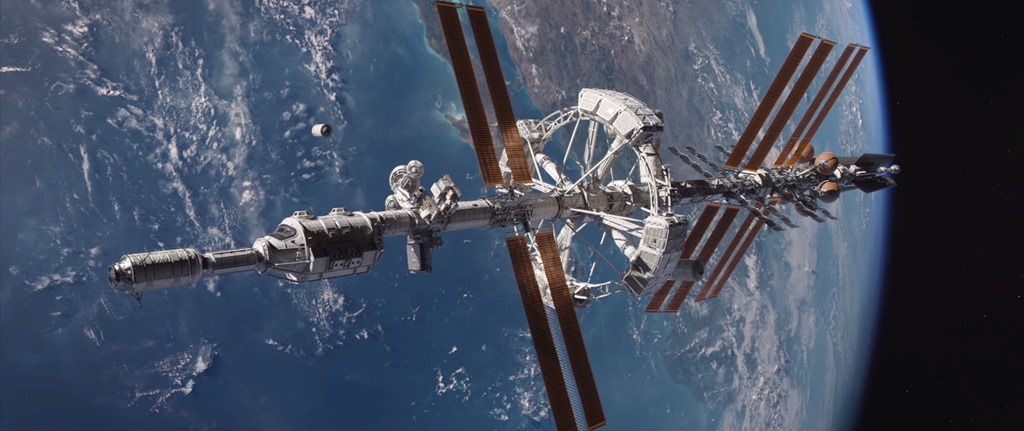
Most folks call The Martian science fiction, even when most of the articles I read about the book and movie praise its science. After I thought about it, I find it very difficult to find anything science fictional about The Martian. When does fiction mutate into science fiction? Science fiction has always been notoriously hard to define. Does rocketships and a Mars setting automatically make The Martian science fiction? Is being set slightly in the future make it science fiction? In terms of publishing categories and movie marketing labeling, it’s pretty natural to call The Martian science fiction, but I’m wondering if that’s old habit or lazy convenience.

martianteaser-hermes

Don’t get me wrong, I love super hard science fiction that doesn’t stray far from scientific laws. But from the vantage point of when I grew up back in the 1950s and 1960s, our lives in the 2010s are already science fictional. So it’s hard to discern everyday far out from imaginative far out. The Martian would definitely be science fiction if it was written back when Robert Heinlein, Arthur C. Clarke and Isaac Asimov were telling stories about going to Mars hoping to inspire humanity to really go. Isn’t Andy Weir and his work a child of science fiction, but not necessarily science fiction? Aren’t we too close to going to Mars for stories about going to Mars to be called science fiction?

One reviewer said The Martian should just be called fiction. Even if we haven’t gone to Mars yet, it doesn’t mean a story about going to Mars is science fiction. Science fiction speculates about the possibilities of what science might discover, and The Martian uses science that engineers routinely apply now to existing space missions. About the only fantastic speculation I can see The Martian is the belief that the United States will spend trillions of dollars on a Mars mission sometime in the near future. The only area where I see Ridley Scott pushing believability is the scale of his Mars rockets, rovers, habitats and equipment. It’s been a while since I read the book, so I don’t remember if Andy Weir imagined everything so big.

Science fiction is about a sense of wonder that pushes the limits of knowledge. Sure it’s often unbelievable and even ultimately unscientific, and although science fiction is fantastic like fantasy fiction, science fiction is something we want to believe is possible even though it’s probably not. The Martian is far out, and has tremendous sense of wonder, but isn’t it too mundane to be science fiction? Isn’t it really just fiction? We could do everything in The Martian if Uncle Sam would write NASA a big enough check. And I say again, that’s about the only thing I think is science fictional in The Martian.

I’m wondering if there are qualities to science fiction that we don’t understand. That it’s too easy to call anything about the future, or anything that takes place in outer space as science fiction. Maybe we don’t know what to point to when we’re looking for the essence of science fiction. For 99.9% of people, science fiction is the perfect label for The Martian. The book and movie are wonderful, inspiring and filled with a powerful sense of wonder. I think they make people feel like they used to when they were kids reading science fiction for the first time. However, I think there is something more to science fiction. Something elusive that we can’t easily pin down. Something that we long for when we’re old, and wish we could find it again. I’m not sure that’s in The Martian. I believe it has too much science for that ineffable quality.

Nor do I mean any criticism of The Martian by thinking about not calling it science fiction. It’s a standout story and movie. I was just wondering when times get so close to science fictional if we need to reserve the label for stories a little more into the twilight zone.

JWH