The Creation of Atticus Finch

By James Wallace Harris, Monday, July 20, 2015

Readers who love To Kill A Mockingbird with the passion of a true believer should not read Go Set A Watchman. However, if you want to know more about Nelle Harper Lee, how books used to be edited, and how a decent literary novel evolved into one of the greatest novels of all time, then you’ll probably need to read Go Set A Watchman.

Atticus Finch, the father in To Kill A Mockingbird by Harper Lee is one of the most beloved, admired and respected character in all of literature. How was such a character created? Before this year most readers assumed Harper Lee based Atticus Finch on her father, Amasa Coleman Lee, a real-life lawyer, using her mother, Frances Finch, family’s name. Superficially, it appears we have many clues to suggest the story was autobiographical. This month, Go Set A Watchman was published, an earlier draft of what would become To Kill A Mockingbird. Atticus Finch in Watchman is a much different man than the literary saint he became in the final version?

Atticus Finch

I am troubled by the implication of many reviewers of the Go Set A Watchman that the 1930s Atticus Finch of To Kill A Mockingbird has matured into the 1950s Atticus Finch of Go Set A Watchman. 1950s Atticus was created first even though his story appears second in print and second in time. 1930s Atticus evolved from 1950s Atticus.

The Invisible Hand Behind Harper’s Lee ‘To Kill a Mockingbird’” by Jonathan Mahler at the New York Times gives us some clues. Harper Lee was lucky to find Tay Hohoff at J. B. Lippincott for her editor. Hohoff was the old fashioned kind of editor that worked extensively with a writer to shape their novels. Hohoff convinced Lee not to go with the novel she submitted.  I assume that submission is close to what we’re reading now as Go Set A Watchman. Lee and Hohoff worked two years editing the book that became To Kill A Mockingbird in 1960. Mahler also brings up one other valuable clue—Hohoff wrote A Ministry to Man, a biography of John Lovejoy Elliott during this time that was published in 1959. There might be a good bit of Lovejoy in Atticus since the two woman worked so closely together, and the editor may have convinced Lee to create a more humanistic hero for her story.

My guess is Atticus Finch in Go Set A Watchman was probably closer to Amasa Coleman Lee, and the Atticus in Mockingbird is closer to John Lovejoy Elliott. But I also assume that Atticus is mostly the creation of Nelle Harper Lee. We can never know the actual scientific details of the evolution of Atticus Finch. It’s not too wild of a speculation that Hohoff convinced Lee that she needed a likable hero which Atticus Watchman was not. How much Hohoff actually contributed to the creation of Atticus is unknown.

We love Jean Louise ‘Scout’ Finch in To Kill A Mockingbird, but her story would not have made the novel one of the perfect novels of all time. The success of Mockingbird tells me a great novel needs a great character that will be widely loved. How did Harper Lee learn this? From Hohoff? What about from her real father? We don’t know what Amasa Lee was like, but if he was closer to the Atticus Finch in Watchman, he could have taught Nelle Lee she needed a saint and not a real person like himself to create an immortal character. This is just speculation, but the ending of Go Set A Watchman makes me wonder if Nelle was inspired by her father to become a prophet for her cause. (By the way, a prophet is not one who predicts the future, but one who shapes the future. Harper Lee is a true prophet.)

Readers want Atticus Finch of To Kill A Mockingbird to be real. Like all great people in history, their legend overshadows their reality. Atticus Finch stands with Jesus, Gandhi and Martin Luther King as being saintly inspirations to the masses, but they all were probably less than perfect to their friends and family. Harper Lee’s writing shows she was an incredibly sharp observer of people, culture and history. I can easily imagine Lee and Hohoff sitting around speculating on possibilities and throwing out, “What if Atticus Finch became a saint to his readers?” It was at that point that the Atticus of Watchman evolves into the Atticus of Mockingbird. It took Lee a couple of years to transform her protagonist. Whereas the early fathers of Christianity spent two hundred years transforming their god. If Lee had spent any more time on Atticus I’m afraid Lee would have given Atticus psychic powers and let him walk on water.

scout jem dill cropped

It’s fascinating that Harper Lee rewrote the novel and set it twenty years earlier. This was a savvy move because it let her create Scout, Jem and Dill as immortal characters rather than anecdotes of memory. But it also positioned Atticus back into time letting him stand out as a guiding light amongst his peers. It’s actually very hard to imagine 1930s Atticus dealing with the 1950s issues. Reducing everything to one court case simplified the major plot and left room for the second plot of Boo Radley. The trial doesn’t begin until the middle of the novel, but everything that comes before sets up the second half of the story. Somehow Hohoff convinced Lee to take sketches of her past and put them into a holistic unity. That also helped shape the character Atticus.

If you’ve read Go Set A Watchman you know it’s filled with long verbose passages dealing with intellectual arguments over race, often about desegregation, a concept 1930s people couldn’t imagine. This makes the 1950s Atticus a mouthpiece for racist rationalization. Throwing the story back twenty years, and letting Atticus speak far less, gives him wisdom and compassion, allowing him to be ahead of his times with modern humanistic insight. 1930s Atticus anticipating the 1950s makes for a much better Atticus. Writing a contemporary novel with a character who thinks with future insight is probably impossible. No wonder most great novels are about events that have gestated in a writer’s mind for decades. It’s also why successful prophets of history were discovered long after the fact.

The Atticus of Go Set A Watchman is made a hero for Jean Louise in a roundabout way. I’m extremely glad to have read Go Set A Watchman, but that’s because it gives me a lot of evidence about how Harper Lee became a great writer. Comparing the two makes it all too obvious why Lee never published anything more. It would have seem silly to create another best-selling saint, and foolish to compete with her own success. Lee could have done something like J. K. Rowling and explored another genre. I assume she didn’t stop writing, but probably kept it to herself like J. D. Salinger did all those years. Wouldn’t it be weird to see an early draft of Catcher in the Rye?

If Harper Lee had only written about Scout, Jem and Dill, she could have continued to crank out novels her whole life like Louisa May Alcott did after Little Women. Or if Lippincott had published Go Set A Watchman, which would have had modest success, she could have shown improvement. But to create something so perfect as To Kill A Mockingbird and Atticus Finch, I can understand why Harper Lee withdrew from the world of fame.

JWH 
Would You Nap in a Self-Driving Car?

By James Wallace Harris, Tuesday, July 14, 2015

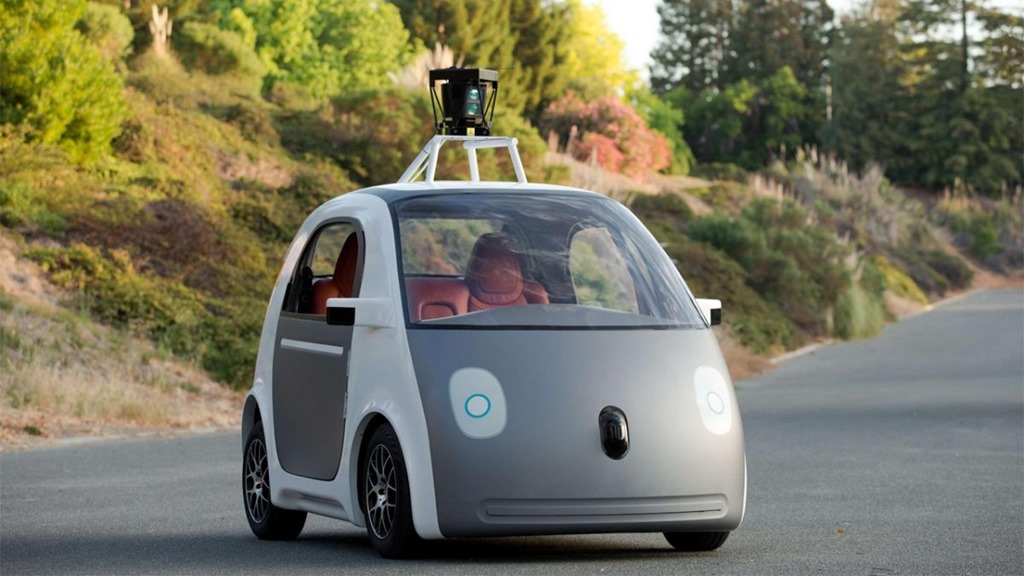
It won’t be long before self-driving cars will be common. First tested in California, they’re now being let loose in Texas. It’s doubtful you’ll see one real soon, but maybe by 2020 or 2025. Since I easily remember a time before smartphones, that will be fast enough. We’ll go through a phase where regular cars will get more and more auto-pilot features, but sooner or later we’ll have cars without steering wheels.

googlecar 

But I’m wondering how many people will feel safe in such cars? It sounds a bit creepy to me. But what if they turn out to be perfectly safe? Would you feel comfortable enough to take a nap while zooming down the expressway? Would you send your kids off to school without going with them? In another twenty years I’ll be reaching an age where I should give up my keys–self-driving cars might extend my years of autonomy.

Will we reach a time where a human driving a car will scare us?

How will you feel seeing cars tooling down the highway with no people in them? It might be practical to go to work and tell the car to go home so another family member could use it. It might be possible to have taxis, Uber and Lyft vehicles roaming the roads without drivers.

I can remember a time before cellphones, personal computers, the internet, and a bunch of other technological marvels. I’m not that old at 63, but I’m reaching an age where so much change is wearisome.  I remember talking to my grandmother, who was born in 1881,  about her life before cars, planes, radios and televisions. I’m sure she met old folks who remember times before telegraphs and steam engines. Before these speeded up centuries our species often went hundreds or thousands of years without much change. Neanderthals went tens of thousands, even hundreds of thousands of years, without much change.

I wonder why everything has gotten so speeded up lately? Will things ever slow down again?

We need to expect other kinds of changes, more than the constant change of gadgets. Imagine economic and social changes. If cars are smart enough to drive themselves, why should we own them? Why not let them seek their own most efficient utilization? If you combined ride sharing with robotic cars we’ll drastically change the whole economy, and maybe help the environment.

Yet, that will put a lot of people out of work. Are we really sure we want the future we’re rushing into?

JWH

Should Robots Be A Major Political Issue in 2016

By James Wallace Harris, Sunday, July 12, 2015

We need to decide if we really want robots. Why are we working so diligently to build our own replacements? We need to decide before its too late.

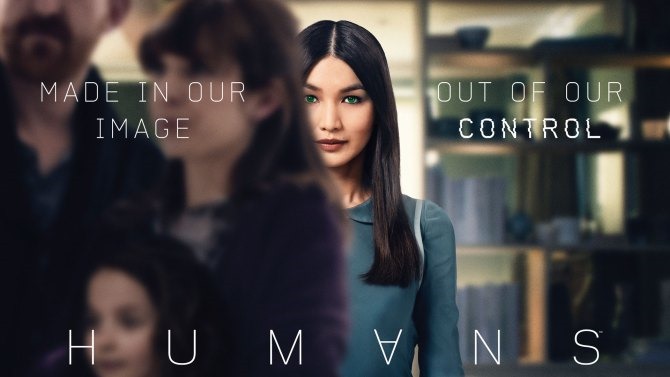
humans-amc

As Democrats and Republicans declare themselves candidates for president in 2016, they each scope out issues they hope will define their electability. Donald Trump has gotten massive free PR by making very ugly statements about immigration. Bernie Sanders is staking claims around fair income and wealth inequality. None of the candidates have focused what I consider the defining issue for the next president—climate change. However, I’m also discovering a growing number of reports about automation, robots and artificial intelligence to make me wonder if robots shouldn’t be second to climate change on the 2016 party platforms.

Climate change, automation and wealth inequality are all interrelated. Illegal immigration is a minor issue in comparison. In fact, most of what the current crop of candidates focus on are old-moldy issues that are far from vital to our country. The 2016 election will define our focus until 2020, or even 2024. We’re well into the 21st century, so it’s past time to forgot about 20th century issues.

If you doubt me, read “A World Without Work” from the latest issue of Atlantic Monthly. Derek Thompson does a precise job of stating his case, so I won’t repeat it. Let’s just say, between automation and wealth inequality, there’s going to be a lot of people without jobs, and the middle class will continue to shrink at an even faster rate. Bernie Sanders political sniffer is following the right trail that will impact the most voters. Reporters should trail Sanders and not go panting after Trump. Follow smart people, not fools.

Another way to grasp the impact of the robot revolution is sign up for News360.com and follow the topic robotsmanufacturing automation, machine learning, natural language processing and artificial intelligence. Over a period of time you’ll get my point. Our society is racing to create intelligent machines. I’m all for it, but I’m a science fiction geek. If we don’t want to make ourselves into Neanderthals, we should think seriously about evolving homo roboticus. Being #2 in the IQ rankings will suck. But then if we embrace plutocracy and xenophobia, maybe we deserve to be replaced by AI machines.

If all of this is too much trouble, and you just want learn through the emotional catharsis of fiction, watch the new TV show, Humans on AMC. The show covers all the major robot issues, and sometimes in subtle ways. So spend some time thinking about the individual scenes in this show. Humans is very creative. Then start flipping the channels and pay attention to how often robots and AI come up in other shows. It’s like all the water is rushing away from the shorelines and we need to worry about when the tsunami will hit us.

JWH

Appeasing Our Future AI Descendants

By James Wallace Harris, Saturday, July 10, 2015

There’s a famous cartoon where scientists ask a supercomputer, “Is there a God?” And the machine replies, “There is now.” Humans need to get their act together before we face the judgment of AI minds. In recent months, many famous people have expressed their fears of the coming singularity, the event in history where machines surpass the intelligence of humans. These anxious prophets assume machines will wipe us out, like terminators. Paranoia runs deep when it comes to predicting the motives of superior beings.

Let’s extrapolate a different fate. What if machines don’t want to wipe us out. Most of our fears over Artificial Intelligence is because we think they will be like us—and will want to conquer and destroy. What if they are like famous spiritual and philosophical people of the past—forgiving and teaching? What if they are more like Gandhi and less like Stalin? What if their vast knowledge and thinking power lets them see that homo sapiens are destroying the planet, killing each other, and a danger to all other species. Instead destroying us, what if AI minds want to save us? If you were a vastly superior being wouldn’t you be threatened by species that grows over the planet like a cancer? Would you condemn or redeem?

But what if they merely judged us as sinners to be enlightened?

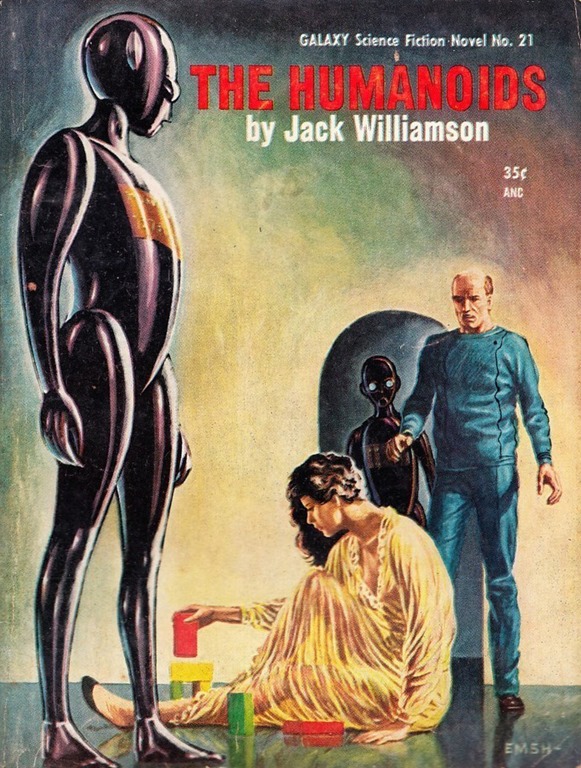
The Humanoids Jack Williamson (EMSH)

I’m currently rereading The Humanoids by Jack Williamson. In this story robots create the perfect Nanny State and treat us like children, keeping everything dangerous out of our hands. In many science fiction stories, AI beings seeks to sterilize Earth from biological beings like we exterminate rats and cockroaches.

What other possible stances could future AI minds take towards us?

Shouldn’t we consider making ourselves worthy before we create our evolutionary descendants? If intelligent machines will be the children of humanity, shouldn’t we become better parents first?

JWH

Rethinking Book Buying and Collecting

By James Wallace Harris, Wednesday, July 8, 2015

Marie Kondo in her book the life-changing magic of tidying up: the Japanese art of decluttering and organizing has me rethinking my feelings about buying and collecting books. Her chapter on tidying up bookshelves is more than just about culling books, but how we think about them. Most bookworms love owning thousands of books. I’ve own as many as ten thousand in my lifetime—although I never read that many.

Kondo challenges us to think about why we keep books. Which leads me to wonder why I buy books. I was just at the bookstore with a gift card in hand. With each book I picked up I asked myself, “Will I read this book right away? If read it right away will I keep it? If I don’t read it right away how long will I wait to read it? And if I never read it, how long before I  give it away?”

A year ago I wouldn’t have left the bookstore empty handed, but today I did. There are a number of ways I’ve changed. First, in tidying up my books I’ve given away hundreds of them. Many of those were not read, but had been sitting on my shelves for years or decades. Tidying up has made me aware of the hundreds of books I still own waiting to be read. I’ve been keeping a books read log since 1983, and in recent times I’ve also noted in what format I read the book. Most were digital audiobooks, but of the ones I read with my eyes, ebooks are starting to overtake print books. Finally, I’ve also subscribed to Scribd.com which is a rental library for ebooks, audiobooks and digital graphic novels. For $8.99 a month I have access to thousands of books and audiobooks. Scribd tends to have older titles, exactly the kind I find when shopping for used book bargains.

I was spending $50-100 a month on used books and Kindle/Bookbub ebook specials. That $8.99 deal gets me more books by renting than I was by buying. So why should I buy? I’ve mostly stopped buying movies since I became a Netflix subscriber, so I think the same thing will happen with books now that I’ve become a Scribd member. Marie Kondo would be so happy.

Yet there’s more to owning books than the urge to collect. We keep books for sentimental reasons, because we feel we might reread them, or they will be reference books. I’ve always kept books because I have a crappy memory and feel I need the book as external memory. In contemplating my feelings for tidying up my bookshelves I realized its very rare for me to go back to a book. I cling to my favorite books because its an emotional way of believing those books are a part of me. One revelation is my favorite stories will always be a part of me as long as I remember those stories, and it doesn’t matter if I own the delivery mechanism in which I read their words.

I also realized that any book I want to read again is a week away via ABE Books for a few dollars, or instantly available by ebook. And it gives me a good feeling to think other people could be reading my favorite books if I let them go. So I did.

What scares me now is I might let all my books go. I’ve always loved to have people see my library. It’s my only impressive visual quality. Can I imagine being the bookworm I am without a wall of books to prove it? There is another revelation that Marie Kondo has accidently led me to comprehend. I am not the books I’ve read, but the book I’m reading.

I think our species is leaving a phase where we defined ourselves by what we own and now see ourselves by what we do.

JWH