Living To Do Everything–And Getting Nothing Done

We want it all.  To do more, see more, go more, feel more, taste more…

We rush to fill every hour with more activities.  We hate to miss anything our heart desires.  Yet, how much do we really get done?

Patricia Hampl said in Blue Arabesque:

Isn’t that why I’d majored in English to begin with, without knowing it?  Not to teach, not to be a librarian, not for a job.  To be left alone to read an endless novel, looking up from time to time for whole minutes out of the window, letting the story impress itself not only on my mind, but on the world out there, letting the words and world get all mixed up together.  To gaze at the world and make sentences from its passing images.  That was eternity, it was time as it should be, moving like clouds, the forms changing into story.

matisse_aquarium

By doing too much, we do too little.  Hampl blames modernity on our failure to see the sublime in life.

Is it more enriching to hear 1,000 different songs than to get to know 100 songs by playing them 10 times?  Is it a richer experience to study 10 songs by living with each a 100 times?  Or should we devote ourselves to 1 song until we can sing and play it note for note, either in perfect imitation or in wild improvising? 

The time spent is the same, but how deeply do we experience time when listening to 1,000 songs versus listening to a song 1,000 times?  How productive is contemplation?

I woke up this morning, lingering between sleep and wakefulness, entertaining myself with thoughts about what I would do today.  I’d like to pick just one goal and accomplish it each day, but no matter how hard I try, the whirlwind of life diverts me from the ambition I pick.  I can never focus because my environment pulls me in endless directions.

For example, between all forms of books, hardbacks, trade editions, paperbacks, ebooks, and audiobooks, I have about 1,000 books waiting for me to read.  What would life be like if I only had one?  Ditto for friendships, movies, television shows, photos, albums, hobbies, household responsibilities – all vying for my attention.  Not that I have a 1,000 of each – some much less, but others much more.

I can’t honestly say I have 1,000 essays and stories waiting to be written, but the number is large.  If I had no other distractions and only one idea I wanted to write about, how much more could I accomplish in one day?

I think we all want too much.  Wouldn’t we all benefit from a stay at Walden’s Pond and being Thoreau for a year?

While laying in my dreamy state of mind this morning, my subconscious told me I could get more done if I did less.

Why don’t I listen?

JWH – 8/26/12

Studying Science in My Retirement Years–Breaking the Science Barrier

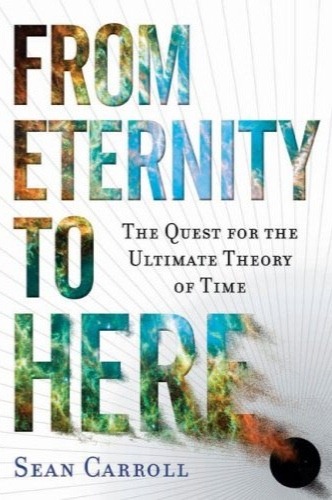
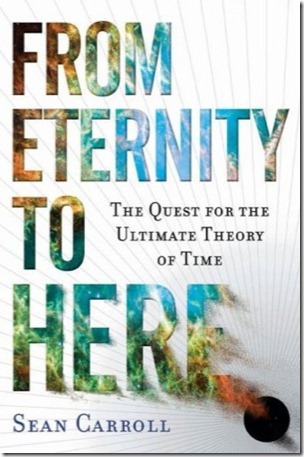
I am listening to From Eternity to Here by Sean Carroll and although I can understand his words I doubt I understand what he’s trying to tell me.  The book is about time and entropy, and how they are seen from classical physics, relativity, and quantum physics.  I read and listen to a lot of science books, but I believe there’s a science barrier that I can’t break through.  I’ve also been reading Brian Greene and Lawrence M. Krauss, whose books often overlap what Carroll is covering.  These books are fantastic, both in the quality of writing and research, and in scope of topic.  They take the reader to the edge of space and time and describe the cutting edge of scientific knowledge.

The fruits of my study show a murky comprehension at best.  I can understand science at the level Galileo and Newton understood it, but 21st Century science is magical and closer to science fiction, lots of razzle-dazzle.  I’d like to truly see where science is pointing.  I’d like to grasp the experimental logic of how scientists got there.
From-eternity-to-here-2

I’m sixty years old and I never stopped trying to understand reality.  The older I get the more sure I am that religion has nothing to say about the nature of reality.  In recent years I’ve come doubt the validity of philosophy.  Logic and rhetoric can be very seductive, but also deceptive.  I am quite confident that science is the only system that explains reality. 

But I’m not sure I can understand science’s explanation!

What’s hilariously ironic, is we believers in science must take so much of what we’re taught about science on faith.

a-universe-from-nothing

I struggle to make sense of quantum physics.  I wish they’d stop talking about cats and talk about actual experiments.  When science writers try to convey quantum physics they end up talking in metaphors that just don’t make a lot of sense.  Black holes and cosmology have a conceptual reality that makes sense, even though I can’t understand why information won’t be destroyed if it fell into a singularity.  I was very lucky to read The Information by James Gleick before reading these books, because information theory does make sense to me, just not at the quantum mechanics level yet.

When little kids ask their mommies where everything comes from and their moms answer “God created everything” – that’s a big convenient cheat.  Moms really don’t know or don’t want to take the time to explain what science has learned about the nature of reality.  The truth is out there, at least part of it, and it’s not what Fox Mulder and Dana Scully discovered with the help of Chris Carter, or anything you can learn from prophets and their religions, or even from Plato and Aristotle, and their philosophical descendants.

the-hidden-realities  

If you want to know the truth you have to study science.  It’s the only game in town.  Trust me.  I’ve read hundreds of books searching for the truth, and it all distills down to that.  Religion and philosophy can take you down years of blind alleys.

How badly do you want to know the truth?  Bad enough to study math?  Yeah, I thought so.  At 60, I don’t think I can go back and pick up where I left off after my B in Calculus I.  Without being a math whiz, how close can we come to really understanding science?  Without math, how close can anyone get to understanding what science has to teach?  I don’t want to accept science on faith.  Nor should anyone else.

In school and college I studied physics, chemistry and biology.  I know a fair history of science and great experiments, and how we gained the scientific knowledge we have up until around Einstein.  This is classical science.  It’s the science at the world’s eye view of things, where most experiments can be repeated in the classroom.  I’ve explored the larger world of astronomy with telescopes and books, and the mechanical universe makes sense too.  It’s when cosmology melds with particle physics and the quantum reality that my mind fails to grasp what’s going on.

Since I never had my own personal atom smasher, I’ve never really understood how scientists know what they know about the zoo of sub-atomic particles, much less quantum physics.  Because this world is invisible, and exploring it is so mathematical, science writers often resort to analogies, metaphors, similes, and thought experiments to explain this frontier of reality.  These stories sound wonderful, but they don’t help me see what’s really happening.  Classical experiments in gravity, optics and electricity have a immediate truth to them that doesn’t work when studying particle physics.  Chemistry is abstract, but models of molecular bonds help picture it.  The microscope gives biology a direct view.  Animations of the sub-atomic world help me picture things, but I’ve been told my whole life these animations are wrong.

What I need to do is go back to the 1600 and retrace all the experiments that were done to set the stage for particle physics.  That might help me conceptualize quantum mechanics.

I did find Following the Path of Discovery – Repeat Famous Experiments and Inventions – Hands on Activities for High School and College Students.

I once bought a CD-ROM copy of Scientific American’s “The Amateur Scientist” but I can’t find it now.  Too bad, it’s out of print and selling for $852 used.  But it contains the complete run of the “The Amateur Scientist” from Scientific American.  That would be a great way to spend my retirement years, doing those experiments myself.  But DIY science has gone out of fashion.  SciAm dropped “The Amateur Scientist” in 2001.  Heathkit and Edmund Scientific gave up on budding scientists years ago.  Make Magazine has rekindled the old DIY craze, but it’s not quite the same.

The big movement in Education now-a-days is STEM (Science, Technology, Engineering and Mathematics).  Maybe it will reignite a rediscovery of science learning through teaching classic experiments.

PBS should create a television series on historical science experiments.  There’s lots of stuff on the net about fun science experiments, like what Steve Spangler does, but that’s not what I’m talking about.  PBS NOVA comes close sometimes, but they don’t follow an experiment step-by-step, but instead create a historical summary of it.

And I might not need to see historical experiments performed to understand particle physics.  Studying the history of quantum mechanics from the beginning, starting with Michael Faraday, might do the trick.  I’m reading 21st century books when I might need to read 19th century books first, or good histories of that period.

I’ve often wondered if I should start a reading program that covered the history of science.  My problem might be I’m reading about modern science without enough historical foundation in science.

If I was an ambitious blogger I’d create a timeline of science history, and then link the best science books I could find to the timeline.  Maybe someone has already done that?  So far I haven’t found such a timeline, so I might get to work on it.  It would be a great retirement project that could take years.

Here’s an example.  In 1838, Michael Faraday noticed a strange light arc between the cathode and anode in a glass tube.  It took science until 1897 to discover this light was electrons.  At the time science thought atoms were the smallest bits of matter.  What are the best science books that cover those years and experiments?  How would I arrange such books on a timeline?  What other science experiments were going on between 1838-1897 that should go on the timeline too.  What books cover their history?

I’m rearranging my books right now, so this gives me an idea.  I want to start a reading project that starts with 1600 and moves forward in time.

JWH – 8/22/12

So Many Books, Too Little Time

My motto should be:  “ Quot Libros, Quam Breve Tempus” or so many books, so little time.

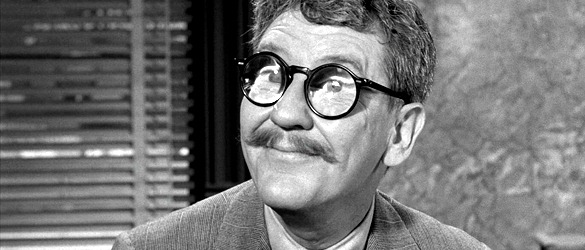
My patron saint is Henry Bemis.

henry-bemis

In case you don’t know Henry Bemis, he was played by Burgess Meredith in a very famous episode of Twilight Zone, “Time Enough at Last” about a super-bookworm, Henry Bemis.  Henry was a bank clerk who never could find enough time to read, until the world came to an end.

I never can find enough time to read either.  It’s a life of quiet desperation for words.   I have more unread books on my shelves than I will be able to read if I lived to be 100.  I also have a book buying addiction – I buy 7-10 books for every one I read.  I’ve always rationalized I will read them someday, but at 60, I know that’s not true.

I had an epiphany the other day.  I was flipping through some free books I had picked up and it dawned on me that I will never run out of something to read, even if I didn’t own a single book.  I have access to so many free or cheap books, that owning books doesn’t matter anymore.  I even pictured myself finishing a book and just leaving it where someone else could find it, and then stumbling onto my next read.  There’s a service for leaving books for other people to find called Book Crossing.

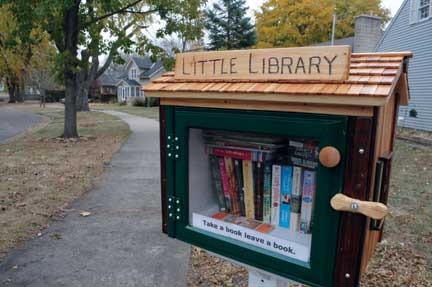
There’s also a movement called Little Free Libraries, where people build tiny waterproof libraries to give away books.  They put them in public places, or in front of their homes, with a sign “Take a book, leave a book.”  I wonder if I built a little free library box for my yard, would there always be a book in it I’d want to read when I finished my current book?

little-free-library-3

Where I work we’ve had a free book table for years.  I always find something to read there.  Today I snagged The Victorians by A. N. Wilson, and Us and Them: Understanding Your Tribal Mind by David Berreby.  Yesterday my friend Ted handed me Fooled by Randomness by Nassim Nicholas Taleb.  Before that I brought home The Closing of the Western Mind by Charles Freeman.  Don’t be too impressed, I doubt I’ll actually read them, but like Henry Bemis I dream of the day when I could.  Ted is giving away hundreds of books.  Over the years so have I.

I’ve also rediscovered libraries, and my main library now has a used bookstore as part of the library.  So there’s a library book sale every day except Sunday.  It’s classic section always has at least one book I’ve always wanted to read.  Last Saturday I came home with five such books, for about $9.

And even if I couldn’t find a free book, there’s never been a time I’ve walked into a bookstore and not found a book I wanted to read.

This makes me wonder why I hoard books.  Generally I don’t read books off my bookshelves because I’m always hearing about a new book I want to read.  Serendipity always selects my next read, so why should I bother gathering books to somehow plan my future reading?

Well, it’s an addiction.  Not a bad one.  I don’t have to steal to keep up my habit.  The worse aspect about it is my house fills up with books and I have to decide which ones to give away.  That’s what I’m doing this week.  So far I’ve brought five cloth bags of books to the free book table at work.  The fall classes start this week and they will disappear quickly.

Another source of books is friends.  I know enough bookworms telling me about great books that I could mooch off of them for the rest of my life.

There’s also an Internet service called BookMooch.  You list books you want to give away by mail and people contact you.  You earn points towards mooching books off of other members.  I have access to so many free books that this service wouldn’t help me, but people living where books were hard to find should love it.

And just remember the new world of ebooks.  Feedbooks and Manybooks fills my Kindle and iPad with classics and public domain books.  And Books on the Knob daily reports all the great free ebooks that are available.   My library provides me with free ebooks to check out, and Amazon Prime lends me free books too.

I could reduce my bookshelves down to one volume, a Kindle, and never have to worry about finding something to read again.

I don’t think I’ll give away all my books.  I have too many I keep for sentimental reasons, but I do think I might try overcoming my book buying addition.  There’s no reason to hoard books.  Well, I can think of one reason.  If the world came to an end like in the Twilight Zone show, it would be great to have a stockpile of books to read if I was a sole survivor.

JWH – 8/21/12

The Clear Choice: Socialism v. Social Darwinism

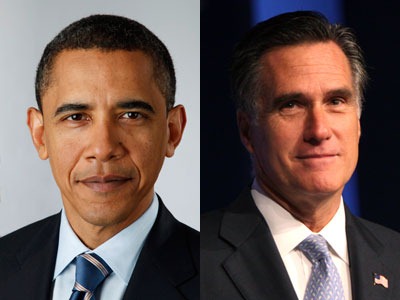
When Mitt Romney selected Paul Ryan to be his running mate, conservatives were overjoyed, proclaiming America now had a clear choice in November.  Republicans feel America is going down the drain and voters should choose between Socialism and Capitalism.  As a liberal, I feel the choice is between Socialism and Social Darwinism, but I don’t think it’s a clear choice.  Romney and Ryan are already claiming the Republicans will save Medicare, because even though they’d like to delete it from the budget, they know millions of voters want it.  Conservatives are far more socialistic than they are willing to admit.

Obama-Romney

I’m more than willing to accept the Socialistic label, but I believe conservatives need to accept the Social Darwinism label.   The United States has been socialistic since the 1930s.  Republicans obviously want to reverse that trend, although I doubt many of them want to return to absolute free market capitalism.  I don’t believe there really is a clear choice, but I do believe the overall directions of both parties are clear.  Liberals want to spend the money on social support systems to give everyone a minimum level standard of living, and conservatives want to dismantle the safety net and introduce a kind of Social Darwinism so nobody gets a free lunch and everyone competes.

Over population and the removal of real survival of the fittest cruelty, has produced an excess of humans that can’t compete.  The world is fat with people, and there’s not enough natural jobs to let them all survive.  Republicans want to go on a diet and let the excess fat die off.

Either we’ve got to create a safety net, or let nature take it’s natural course.  Free market capitalism is based on survival of the fittest competition.  As a liberal, I don’t want to see the kind of suffering that real Social Darwinism will create and wish to fall back on Socialism.  Nor, do I think Republicans really have the stomach for tooth and claw competition.  What the leaders of the Republicans really want is unrestrained competition to pursue wealth and they see the safety net, environmental protection, and other social engineering as getting in the way.

Most conservatives aren’t rich, and just as vulnerable as liberals to fall victim of Social Darwinism.  In their struggle to stay afloat they have developed a tremendous resentment against others who don’t struggle because they are protected by Socialism.  You can’t blame them, but do they really want to see millions suffer without government handouts?  Would the Republicans really have let the banks and car companies go bankrupted a few years ago?

If we could reach some kind of consensus most people wouldn’t mind giving food stamps and welfare to the truly needy, if we also had an effective system that could distinguish the Meek of the Earth, from the free lunch opportunists.  Americans give billions to charity every year to help the helpless, but Americans also hate ineffective charities that waste money.

There is no clear choice in how be efficient with tax money.  Republicans scream they want to reduce spending, but all they ever do is reduce taxes, and going into national debt is no solution to the problem.  Neither Obama or Romney offer an effective solutions to problems we face.  All they do is play on people’s emotions.  I really believe many Republicans feel the United States will suffer an economic collapse if we don’t elect Romney.  They really are in an emotional panic over this, but us liberals just as strongly believe Romney has no magic bullet to save the country. 

Predicting the future is impossible, but I’m to describe the liberal’s fear of the future.  Republicans will win in November because the party in power seldom maintains power in a bad economy.  Wall Street will be overjoyed at this Republican victory and the economy will heat up, and the unemployment rate will go down.  Republicans will then start dismantling Socialism in America to a small degree reducing the middle class and increase the poor.  Unless there is some kind of new economic bubble, growth will be slow, and hidden unemployment will be high.  The Republicans will cut taxes but not pay off the debt.  If there is a bubble that heats up the economy, it will eventually pop like the housing bubble and we’d go into an even worse recession than we’ve just had.  The Republicans will not do anything about the Environment and will work to dismantle the EPA.  In the next twenty-five years global warming will become obvious to all, but it will be much too late to do anything about it.

See, us liberals fear for our country too, just as much as conservatives.  There are real solutions to our problems, but the clear choice Republicans talk about from both parties in 2012 won’t help us all find them, and we can’t find them without working together, which appears to be unlikely in this ever growing politically polarized society. 

I think both current choices will lead to doom.  We need a third option, but not a third party.

JWH – 8/16/12

Make Your First Song Count!!!

Listeners of Rdio, Spotify, Rhapsody, MOG and other subscription music services get to hear hundreds of new albums every Tuesday.  I’ve already tried six or seven new albums while eating my morning Quaker Squares.  I use Rdio, and on Tuesday when new albums are released I hit the New Releases button and see a scrolling parading of new albums marching by, in rows of five at a time.  I roll the wheel on my mouse and they just keep on coming, row after row, of new albums.  I don’t have time to listen to them all, or even a tiny fraction of them.  I just have to click the mouse to play – almost no effort at all.  What’s hard is finding a song that makes me want to play the whole album.

New-releases

Now here’s the thing:  The first song is everything.  If you don’t grab me with the first song I just click on another album.

In the old days, when we bought LPs or CDs at the store, often we bought them because it already had a hit song on it, or it was a band we liked.  Spending the money on an album meant you were willing to take the time to listen to all the songs, and the song order didn’t matter.  I’m just not willing to spend time on whole albums anymore when I have access to so many.

I’m quite anxious to give an unknown album a chance, especially if it has a cool cover, clever title, or interesting band name.  Those are the initial impressions that catch my eye.  Those three factors decide whether I hit the Play button.  What keeps me playing is my impression of that first song.  If I like the first song, even moderately, and especially if I think it’s new and different in a creative way, or has a distinctive vocalist, or addictive music, I’ll play the whole album hoping to find a great song.  That’s what I’m looking for, a great song I’ll add to my playlists.

It’s obvious most of the time when I don’t like a song.  What’s disappointing is to play a new album and the first song sounds good, but feels like too many other good songs.  I’ll agonize awhile, hoping the music will get beyond the cliché, but all too often I give these songs the hook as fast the the songs I immediately dislike.  When you’re wadding through 17 million songs you just don’t have time to waste.

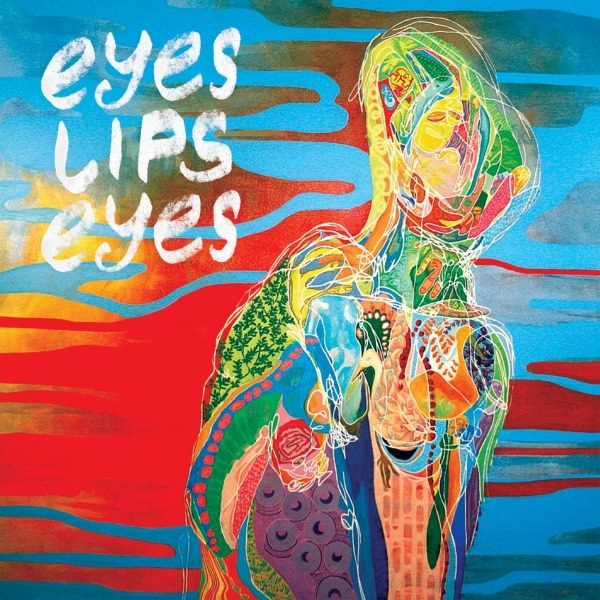
Tonight, for instance the song “Tickle” from What You Want by Eyes Lips Eyes started off with a nice instrumental that grabbed me, so I added it to my Under Consideration playlist.  It’s not great, but it showed enough promise to listen to more.

I liked “Tickle” enough to try all four songs from the EP.  It’s growing on me.  But I’ve got to admit if any of the other three songs had been first, I’d would have gone on to the next album.

eyes-lips-eyes

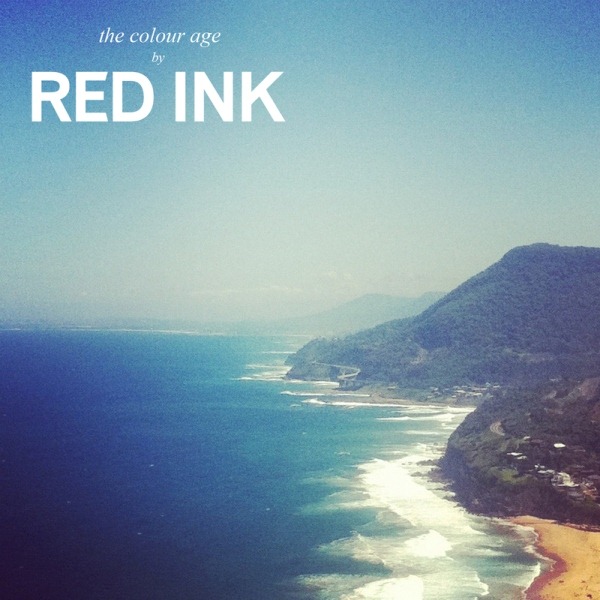
The next album to catch my attention was another EP of five songs, The Colour Age by Red Ink.  “Empty Town” had a nice 80s pop feel too it, and I liked the vocalist.  I almost didn’t give it a try because the cover is bland, the title dull and the group name gives off a negative vibe, but I did, and it’s a decent album.  I like all the songs, but don’t know if any merit going on a playlist, although “Promise” had a nice emotional feel to the vocal.  I added the album to my Collection, and put it the Queue to play again later.  [I did add it to my main playlist. “Promise” should have been cut 1.]

red-ink

Now, “Cheek Mountain” piqued my musical taste buds immediately.  It’s from a group Cheek Mountain Thief with a self-titled album.  I liked the first song enough to put the album in my Queue to play later as background music.  The songs are on the moody side, so I need a moody moment to give it a good listening.  But that first song earned it a further play.

cheek-mountain-thief

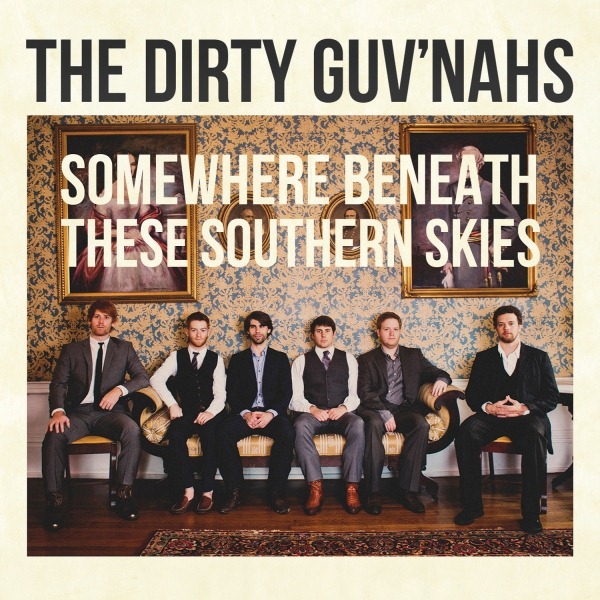
How could I not play an album by a group named The Dirty Gov’nahs?  And I liked the title too, Somewhere Beneath These Southern Skies.  The first song, “Can You Feel It” grabbed me.  The music and vocals reminded me a bit of Kings of Leon.  The first song got the album on the Queue for playing later, but the opening guitar of the second song, “Don’t Give Up On Me” got the album added to my Collection.  Playing on through album makes me wonder if I like it well enough to buy a CD copy.  It has a big rock sound, not quite old Southern Rock, maybe a bit like later Rolling Stones kind of beat.

The Dirty Guv’nahs are the kind of band I like discovering on subscription music.  So far the album only has 482 plays, but it sounds good enough to expect it will catch a lot more attention.  I put “Temptation” on my main playlist.

dirty-govnahs

The vocals of The Dahls grabbed me right away for “Josephine,” the first song on their album midnight picnic.  Country music with a twinge of folk, or maybe vice versa, with a dash of witchy music.  These two girl singers sound nice enough to add their album to the play later Queue.

The-Dahls

Now this is just five albums to play after scrolling past over a hundred albums attempting to catch my attention.  It’s work to find an album I’m willing to listen to all the way through.  And the odds are I won’t keep playing these albums.  I only find about one album a month that I really love.  The best I’ve found in the last couple months has been Our Version of Events by Emeli Sandé.

emili-sandi

JWH – 8/14/12