
by James Wallace Harris, 3/23/26
The 2030s will cover ages 78 to 88 for me. If you’re a teenager, the 2030s will cover your college and job-seeking years. If you’re in your twenties, the 2030s could be the years you get married and start a family. If I hadn’t started seriously saving in my fifties, I couldn’t have retired in the 2010s.
It is impossible to know the future. Even speculations based on extrapolation about present trends are nearly always wrong. However, it doesn’t hurt to be prepared like good Boy Scouts. In fact, I’ve heard luck defined as merely proper preparation.
For those of us who have orbited the Sun dozens of times, we have lived through constant change. We’ve learned that society never stays the same. People and their behaviors never seem to change, but relentless change churns our lives. Just observe the 14 decades of change in the films presented by TCM.
The iPhone was announced on January 9, 2007. I don’t even think Steve Jobs had any idea what it would do to the world in the 2010s and 2020s. Nor did we imagine what Amazon (1994), Facebook (2004), Twitter (2006), Instagram (2010), TikTok (2016), and ChatGPT (2022) would do to society. And how many folks expected the end of Globalism and the return to nationalism in the 2010s?
I believe two technologies will transform society in the 2030s: AI and intelligent general-purpose robots. Ever since the Industrial Age began, Capitalists have resented the cost of Labor. But the reason we’ve always needed capitalism is that it gives most citizens employment. Capital and Labor were always tied together, but AI and robots could disconnect the relationship. What will that mean in the 2030s?
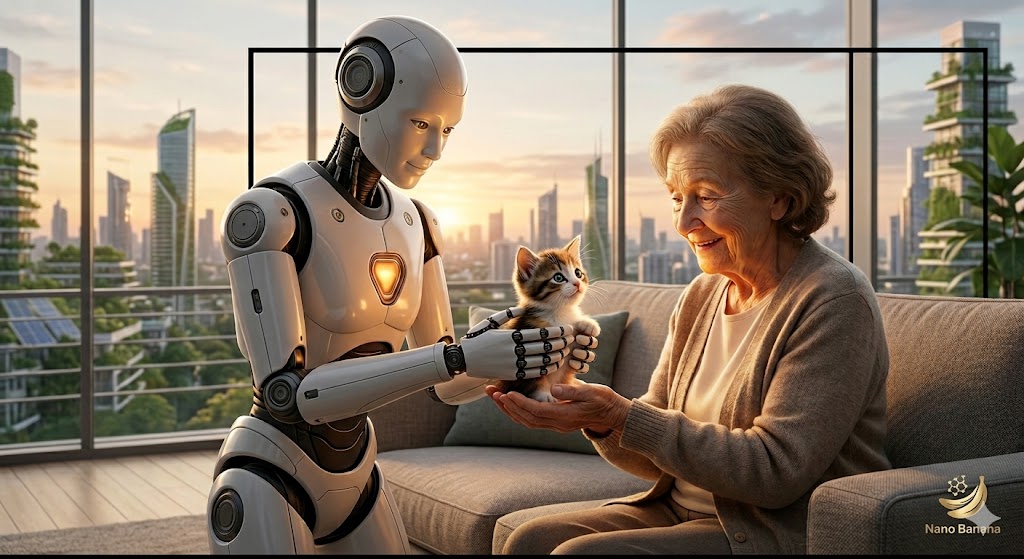
I know AI and robots will transform society in ways that will be judged evil in the coming decade. However, I will consider buying robotic caretakers for my wife and me in the 2030s. For a childless couple in their 80s, robots might be the cheapest and most advantageous solution. We will all find reasons (excuses?) to go along.
Humanity should decide to halt all development in AI and robotics right now. But we won’t. Greed is a dependable predictor of human behavior, and the millionaires and billionaires who see trillions in AI aren’t going to allow their greed to be curtailed.
It’s the same way the owners of trillions in fossil fuels haven’t let the threat of climate change interfere with their greed. But we can’t put all the blame on the rich, because we’ve all continued to consume fossil fuels. The weakness of human nature is also a reliable predictor of the future.
Societies only change during violent upheavals, such as the American, French, and Russian revolutions, the Civil War, WWI, and WWII. Moral upheavals, such as feminism, civil rights, and LGBTQIA+ rights, have been less effective at creating long-term, permanent change. Even the great upheaval created by the Enlightenment might not be permanent.
When thinking about what we might experience in the 2030s, we need to consider Black Swans. Donald Trump was a political black swan in 2016. There’s always a chance we’ll elect an Abraham Lincoln black swan in 2028 that will pull the nation back together. But black swans can’t be predicted.
Predictions for artificial intelligence range from the extinction of humanity to an age of unlimited abundance. Because technology has been a reliable agent of change for many decades, it’s probably safe to assume that trend will continue.
For example, if battery technology improves as much as companies working on battery science promise, expect a huge transformation. If just the Donut Labs battery turns out to be real, no one will want fossil fuels because renewable energy will be so dramatically cheaper.
If Elon Musk keeps his promise to manufacture millions of general-purpose robots with AI-powered minds, what will that do to human employment? Of course, business owners will buy them, but what about you? Could you resist owning your own Jeeves? How many fans of Downton Abbey and The Gilded Age will try to create a cybernetic service class? If you asked people in the 1950s if they’d ever want a computer in their homes, 99.9999% of them would have said no.
We can’t imagine black swans; that’s part of their definition. But most of the spectacular changes in society have come from technology that began its existence decades before transforming society. To imagine the 2030s, look at everything discovered in the last two decades.
As a science fiction fan, this will sound odd, but I think science fiction is a poor weathervane for the future. I believe the best bellwethers for the next decade are always revealed in the current decade.
JWH
 Auxiliary Memory