by James Wallace Harris, 3/30/25
In 1992, I read a one-paragraph description of a science fiction novel published in 1926 by a woman named Lady Dorothy Mills. The book was called Phoenix. The blurb said the book was about an elderly woman undergoing a rejuvenation treatment that made her look twenty again. Because very few SF books were being published in hardback in the 1920s, especially by women, I decided I wanted to find a copy to read. However, it took ten years of dedicated searching before a copy came up for sale. Along the way, I became intrigued by finding out more about Lady Dorothy Mills. It hasn’t been easy.
Many writers dream of achieving immortality through publishing a book. Sadly, that seldom happens. Most books are first and only editions. Writers are remembered only as long as readers read their books. Dead writers tend to fade into forgotten writers as their books disappear from bookstores. Lady Dorothy Mills is almost forgotten today.
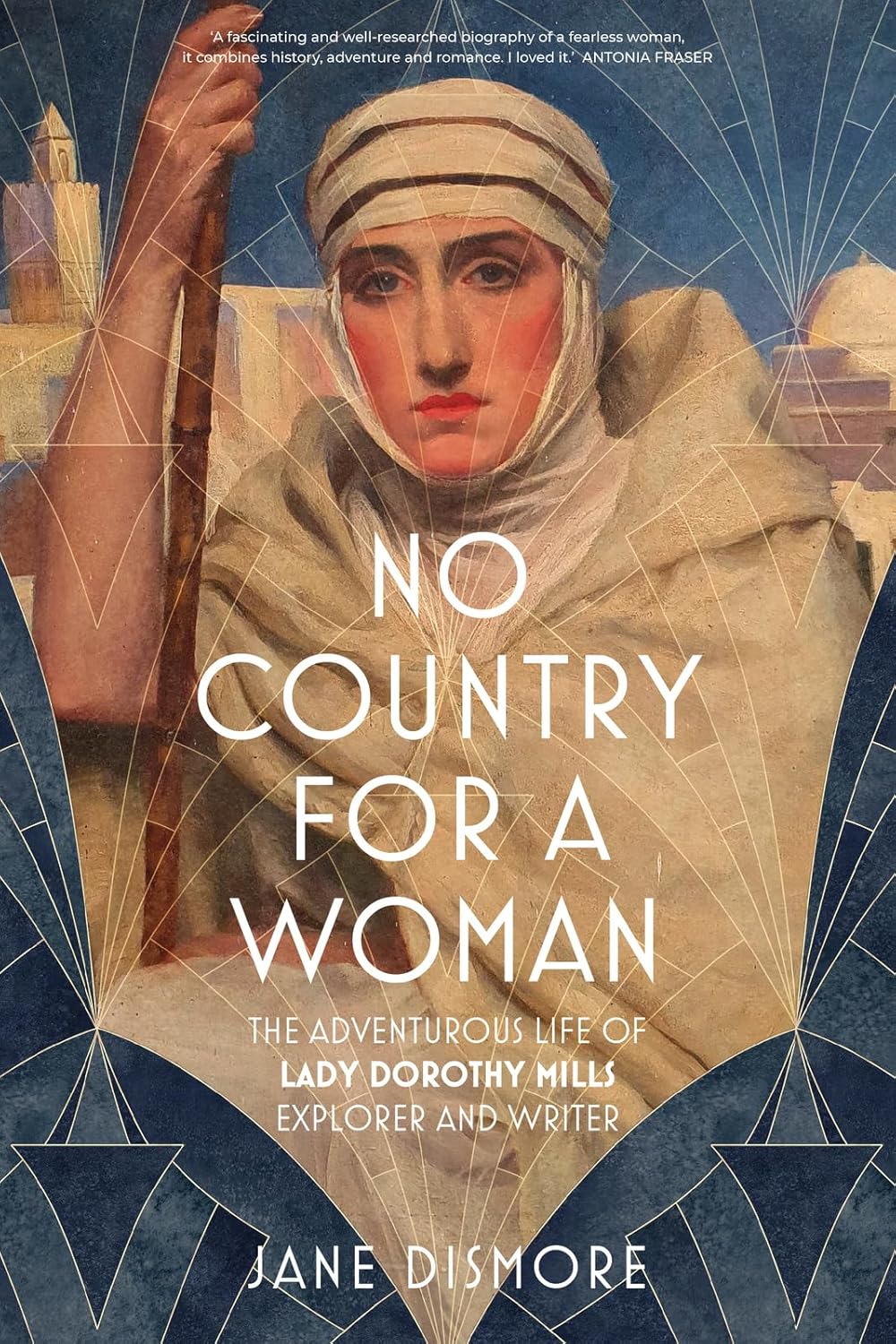
No Country for a Woman, a biography of Lady Dorothy Mills by Jane Dismore, might change that. (Amazon USA: Kindle, Hardback). I knew Dismore was on the trail of Lady Dorothy Mills when she published a two-page newspaper article about Lady Dorothy in 2014, where I learned more about Mills than I had in twenty-two years of research. I contacted Dismore. She replied that she was working on a full biography. I’ve been waiting years to read No Country for a Woman. I hoped it would do two things. First, it would answer the many questions I still had about Lady Dorothy Mills, and it has, and much more. Second, I wanted it to resurrect Lady Dorothy Mills. By that, I mean to get new readers for Mills. That remains to be seen.
Unfortunately, Lady Dorothy Mills’ books are out of print, and used copies are rare, so even if No Country for a Woman becomes a best seller for Jane Dismore, Mills won’t get new readers unless her books are reprinted. Dismore’s excellent biography chronicles Lady Dorothy Mills’ rise to fame in the 1920s and 1930s, but will it inspire publishers to reprint Mills’ books today? Evidently, Dismore is more realistic than I am. Her biography makes Lady Dorothy Mills into an exciting woman to read about, but nowhere in the biography does Dismore promote reprinting Mills or recommend reading her books.
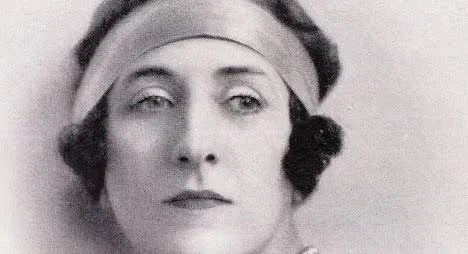
Lady Mills was a fascinating woman. To be honest, I don’t know how well her books would be received today. I used to ask my friends: Which would you rather be, a famous novelist or an exciting person that inspired a famous novel or biography? Lady Mills achieved a level of fame in the 1920s and 1930s as a novelist and travel writer. However, No Country for a Woman, focuses on the woman, and not her books. The immortality that Lady Dorothy Mills ultimately finds might not be based on what she wrote, but how she lived. Jane Dismore pictures a woman worthy of a bio movie.
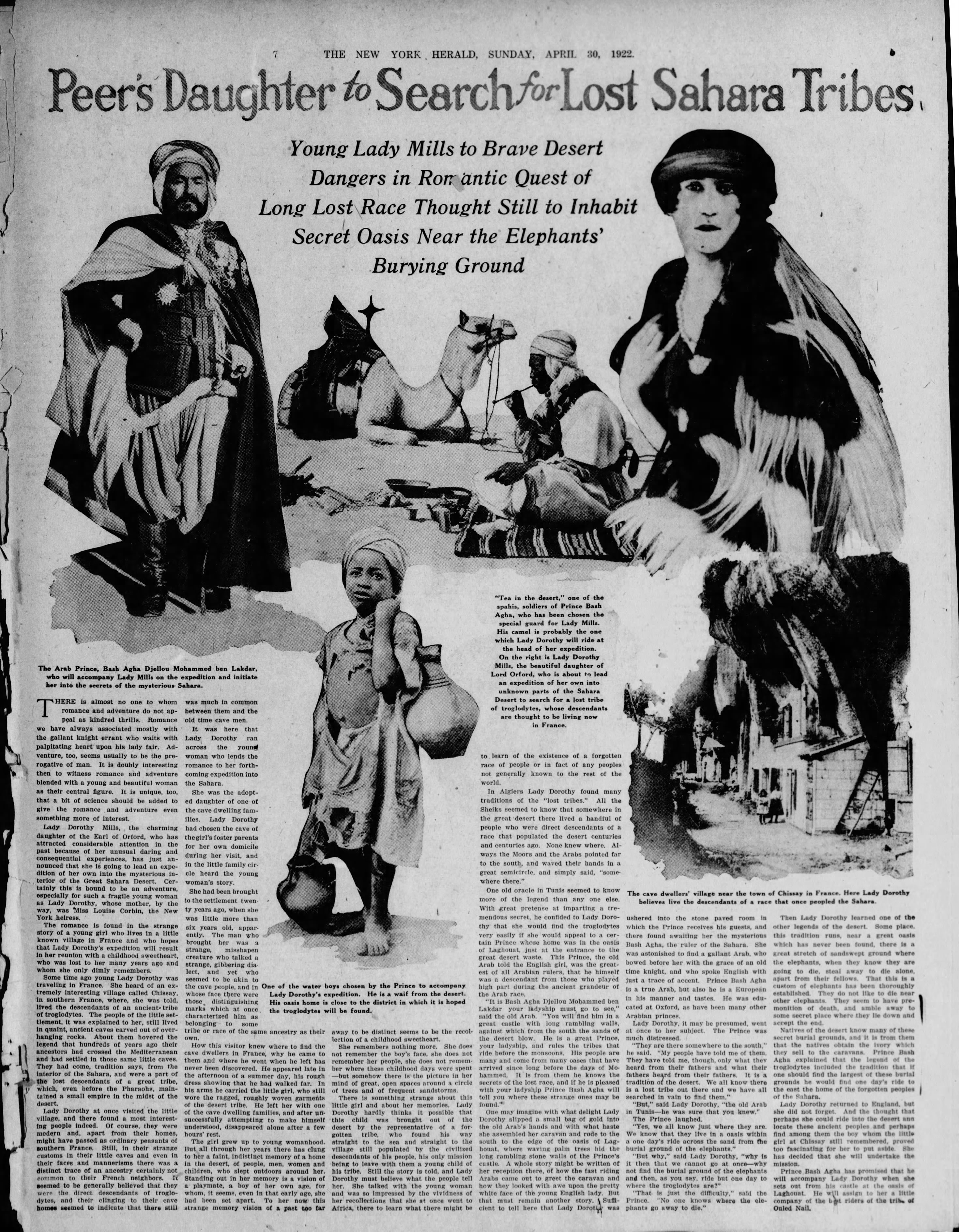
Lady Dorothy Mills’ real life upbringing rivals the fictional Lady Mary Crawley in Downton Abbey. Unlike Lady Mary’s sister, Lady Sybil, Lady Dorothy was cut off from her family when she married a commoner. To make ends meet, Lady Dorothy and her husband, Arthur Mills, wrote novels and travel books to make a living. They each spent three months a year traveling alone in exotic locations hunting material for their next book. Lady Mills first gained fame in the English-speaking world with her 1924 travel book The Road to Timbuktu. The press claimed she was the first white woman to visit Timbuktu alone; after that, it became a tourist destination for adventurous rich travelers.
Over the next ten years, Lady Mills visited several hard-to-reach and dangerous destinations in North and East Africa, the Middle East, and South America, publishing five travel books and one memoir. Newspapers in America, Canada, England, and Australia often ran sensational articles by and about Lady Mills. Mills even got minor respect as a legitimate explorer and was one of the early women accepted into the Royal Geographical Society.
Lady Dorothy also wrote nine novels, but they mostly appealed to shop girls who wanted to read about romances set in exotic locales. A couple of them were science fiction and fantasy. However, her heroines were progressive, promoting feminism and advocating diversity. Lady Dorothy Mills’ early novels dealt with upper-class England during the fading aristocracy. And Lady Mills hung out with many famous English people, including many in the Bright Young Things crowd. Unfortunately, even though her novels often got good reviews for being fun reads, they were never considered part of the English literary movement between the wars.
I hope Jane Dismore’s biography of Lady Dorothy Mills will resurrect Lady Dorothy so she won’t be forgotten. Unfortunately, the website I maintain, ladydorothymills.com, gets damn few hits. It averages about forty hits a week, with zero hits on many days. The only way Lady Dorothy Mills will ever be as famous as she was in the 1920s is if someone makes a movie out of No Country for a Woman. I doubt that will happen but there’s abundant content in the biography for several possible films.
I’ve considered taking down the website I maintain for Lady Mills. The key information has been put on Wikipedia, and No Country for a Woman is now the best source of information for Lady Dorothy Mills. I’ve also thought of putting Lady Dorothy Mills’ public domain books online. I just don’t know if there would be enough interest to merit all the hard.
I do have one regret about the Dismore biography. During the 1930s, Lady Dorothy Mills disappeared from the spotlight of the popular press. She quit writing. Evidently, after inheriting a small amount of money from her mother’s estate after her father died, Lady Mills no longer needed to write for a living. Lady Dorothy eventually became a recluse, living in a seaside hotel. I wanted to know what she thought during all those lonely years.
It’s not Dismore’s fault for not knowing what Lady Mills was like during her fading years because I don’t think anyone knew. But if I had a time machine, I would visit her.
Further Reading:
- Discovering Lady Dorothy Mills
- The Resurrection of Lady Dorothy Mills
- Review: No Country for a Woman by Jane Dismore (Geographical)
- Lady Dorothy Mills, explorer and writer (Historia Magazine)
My Collection of Books by and about Lady Dorothy Mills:
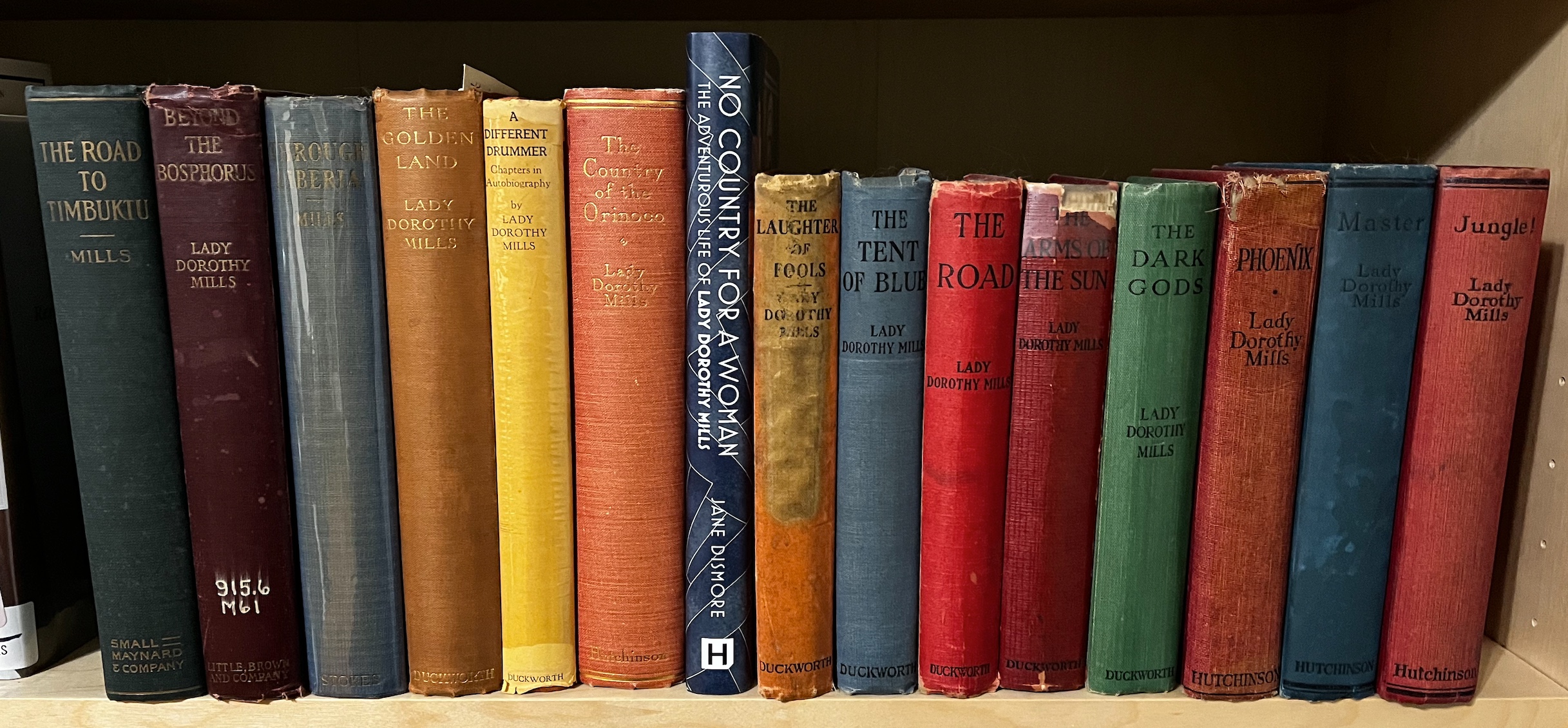
JWH
 Auxiliary Memory