
Reading History Books About Events I Originally Watched on Television

by James Wallace Harris, 12/8/24

The 1960 U.S. presidential election is the first one I remember, but just barely. I was eight years old. My father was for Nixon and my mother for Kennedy. I decided I liked Kennedy because he was younger, more dynamic and had a good-looking wife. Even at eight, good looking women were often a deciding factor. I remember getting in a fight in the school playground because I was for Kennedy and the other kid was for Nixon. Neither of us got to decide the issue because a teacher pulled us apart.

During the Kennedy years I didn’t watch TV news. I would sometimes stay home from school to watch the Mercury space launches. Back then the TV news departments of each network would take over all broadcasting. In the first half of the 1960s, the space program was about the only real-world activity I paid any attention to.

I did pay some attention during the Cuban Missile Crisis in 1962, mainly because I lived on Homestead Air Force Base, and everyone talked about it constantly. I remember having duck and cover drills at Homestead Air Force Base Elementary, but I was disappointed when there were no real A-bombs dropped. (I was very immature for my age.)

I didn’t become a news watcher until Kennedy’s death. I remember that weekend, my family watched the news constantly, and the following week too. That’s when I started following Walter Cronkite. I turned twelve three days after Kennedy was shot.

The news also became exciting in February of 1964 when The Beatles came to America. It was during 1965 that older boys I knew began worrying about being drafted, and I started paying attention to news about Vietnam.

The CBS Evening News was my main source of information about life beyond my own little world during the 1960s. I sometimes got to see The Today Show on NBC because my mother watched it while making breakfast. I liked that show because I found Barbara Walters hot. (Okay, I’ve already said I was a weird kid.) Sometimes I would watch news specials or documentaries. While in the ninth grade (1965-66) I had a civics course. But for the most part I just wasn’t that aware of what was going on in the world except for Top 40 AM music.

I don’t remember reading the paper, The Miami Herald, until 1968. I did start to read magazines in 1965, but that was haphazard. People would give my parents copies of Life, Time, Newsweek, Look, Saturday Evening Post, and National Geographic from time to time, and I found them fascinating. On my own, after 1965, I would buy Popular Science, Popular Mechanics, and MAD Magazine. During twelfth grade (1968-69) my English teacher got me interested in literary fiction, and I subscribed to Saturday Review with money I made from working in a grocery store. I really didn’t understand it though. In late 1968 or early 1969, I got hooked on Rolling Stone magazine and sometimes bought Creem when it started publishing.

A whole lot of what I knew about the counterculture came from Life Magazine.

If you think about it one way, television and magazines offered a fairly diverse view on what was happening in the world, but squinted at it another way, it was a rather limited view.

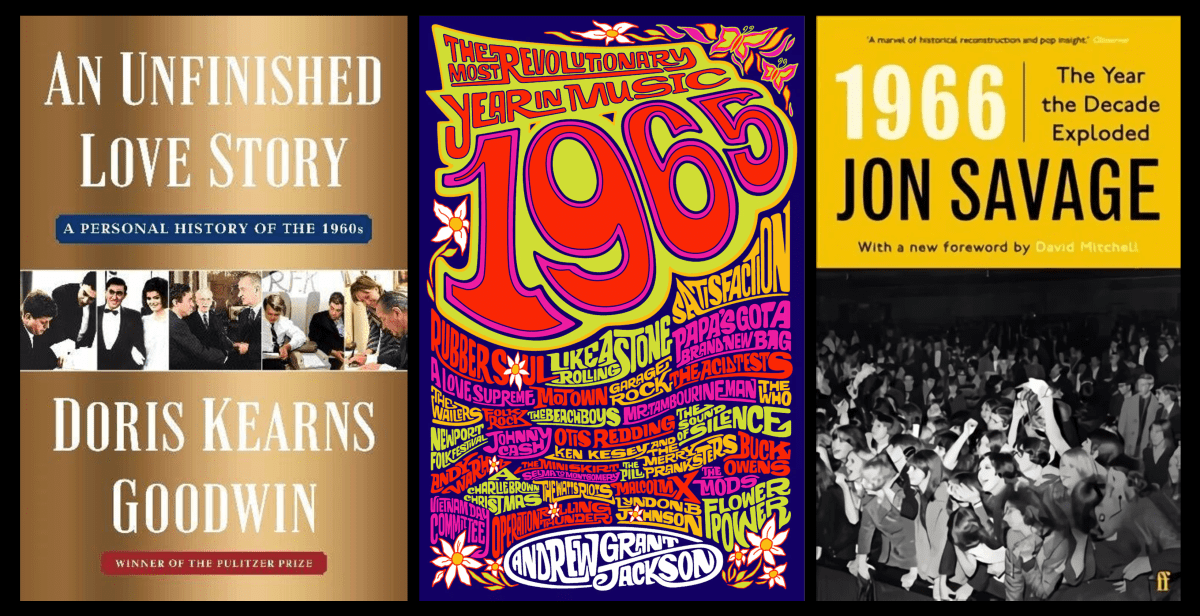
In December 2024, I’ve been reading three books about the 1960s that explore events I encountered in two minute stories on TV, or read about in a few pages in a magazine when they first happened. Some of those short snippets of current events made huge impressions on me as a kid. They shaped who I thought I was. The history books makes me realize I was mostly uninformed.

The reality of the 1960s is I was a kid going to school every day except for long summer vacations. I started 1960 in New Jersey but moved to Mississippi then to Florida then to South Carolina back to Florida, then Mississippi again, and back to Florida. I went to thirteen different schools during the 1960s. The only newsworthy event I saw live was the launch of Apollo 8. I had a chance to see Kennedy in 1962 when he came to Homestead Air Force Base. They let us out of school to see him, but me and my friends went fishing instead. My sister was at Dinner Key Auditorium when Jim Morrison flashed the crowd. I got to meet an astronaut in 1968, but I’ve forgotten which one. And this is hardly newsworthy. I got to see Cream play during their farewell tour in 1968. Oh, and I attended one SDS rally.

In other words, I experienced the legendary Sixties mostly via AM radio, television, and magazines. I did have long hair sometimes, and I sometimes messed around with drugs, but I was hardly a hippie or a radical. I did get into the counterculture more in the 1970s, but that’s another story.

The point of this long-winded essay is I’m now reading history books about years I lived through. I can contrast my memories to behind the scenes accounts of things I got from soundbites. That’s quite enlightening.

We live with the illusion that we think we understand what is real and true. We delude ourselves that we make decisions on relevant information. But we don’t. If I could have read the history books about the sixties I’m reading in old age when I was young, I could have gotten closer to seeing reality.

Timothy Leary and Aldous Huxley, two heroes of my youth, claimed that LSD opened the doors of perception, and that might be true on a nonverbal level, but a deep reading of history books is far greater at revealing reality that we can comprehend on a verbal level.

Lately, I’ve been reading that reading is going out of fashion with young people. That’s a shame. Even back when I was a teen, and only got superficial understandings about the events around me from superficial news sources, it did make me more aware.

The three books above are filling in details on things happening around me as I was growing up. I’m reminded of Bob Dylan’s “Ballad of the Thin Man.”
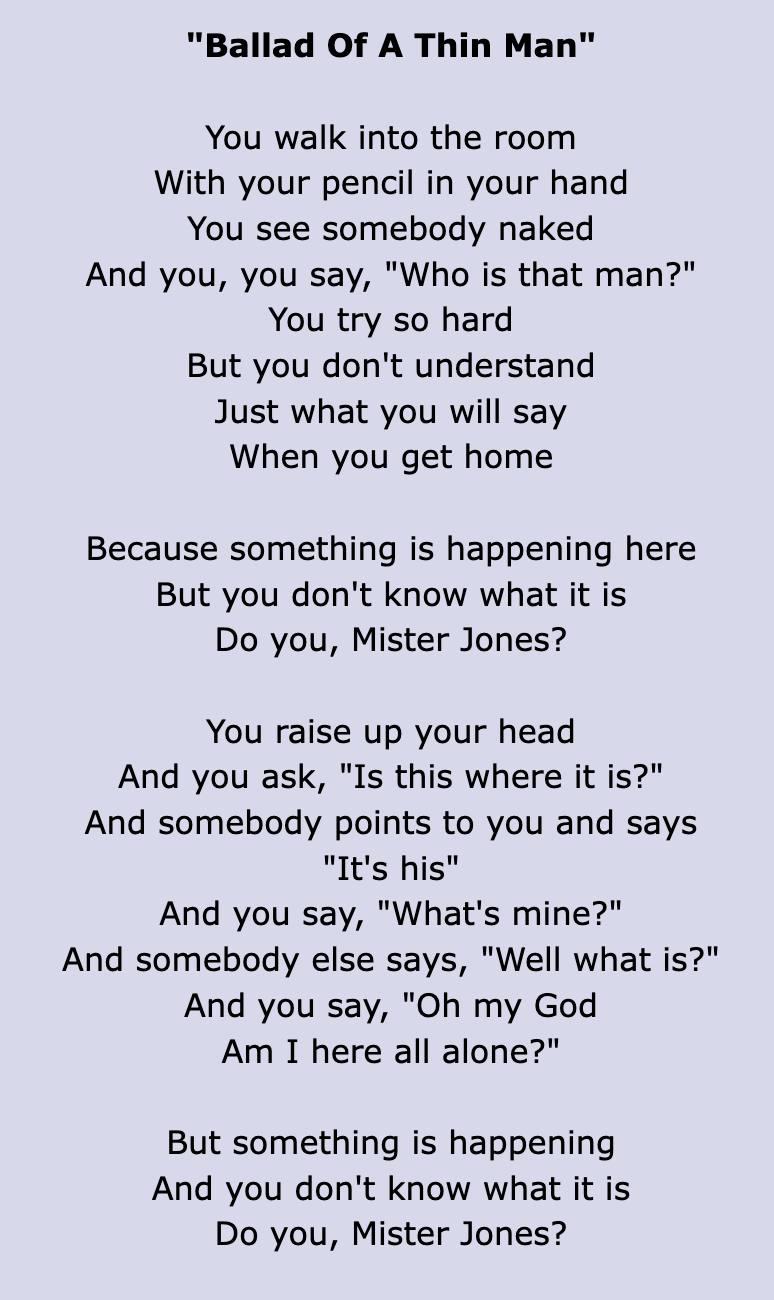
I realize I’ve been Mr. Jones my whole life, and I’m still trying to figure out what happened.

JWH
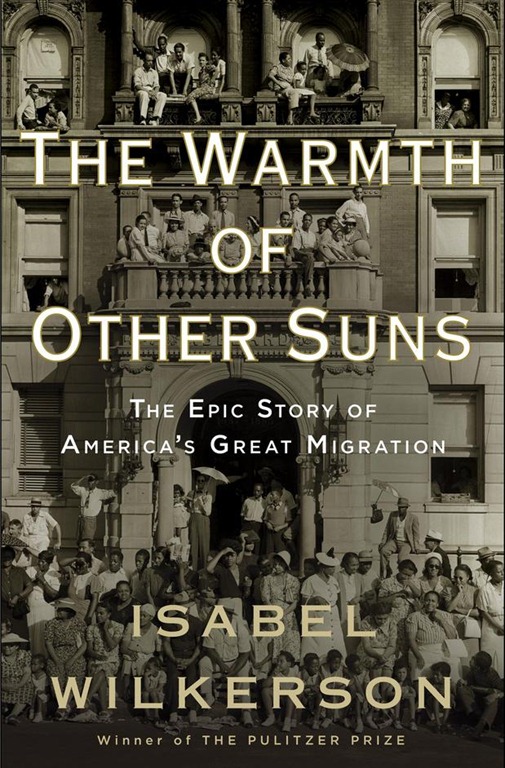
The Warmth of Other Suns by Isabel Wilkerson

With a title like The Warmth of Other Suns you’d think this book would be about interstellar travel, but it’s not, this book is about how we’re all so alien to one another.  From 1915 until the 1970s six million African Americans left the old south to find freedom living up north and out west hoping to escape the cruel Jim Crow laws that continued to enslave them long after the Civil War had ended.  These immigrants fled a homeland filled with oppression and cruelty hoping to find freedom in a new land that was ironically part of the same country they were leaving.

warmth-of-other-sun_571052c

The Warmth of Other Sun reads like a novel, but it’s a history book, one if you’re old enough you might remember living.  This is a great book, a wonderful book, and a very painful book to read because it paints scenes from an inglorious America that we must never forget even though most people have.   This is a tremendous book to contrast the past with the present and show us how far we’ve come with changing our society for the better.  Race relations is a tired subject for most people, so I worry this book won’t get the audience it deserves.  People need to read The Warmth of Other Suns because it’s a great story, amazingly told, and yes, it will be good for you, even if it hurts.

Watching TV after reading The Warmth of Other Suns is startling, because this book chronicles the horrors of the Jim Crow era so vividly that seeing so much diversity on the television screen makes it hard to believe this book is true.  One of the great sad aspects of this book is none of the principal characters lived to read it, or to see Barack Obama become President.  We haven’t reach the promised land, but I think we can see it in our telescopes, if we look hard.

Growing up the phrase “silent majority” was often used to mean the common people that didn’t get heard in the press.  The Warmth of Other Suns tells us there are more than one silent majority, and we each bask in the warmth of different suns.  There is no one group of blacks or whites that represent their races.  I hate the term race because it’s an optical illusion.  To talk about specifics we use generalities.  In this book we have the black people who immigrated to the north and west, and we have the black folk who stayed home in the south, and we have the whites of the south and the whites of the north and west.  But in end, every last person is different.  I think Wilkerson reflects this reality.

Wilkerson writes about three principal characters to tell her story, after interviewing over 1,200.  She could have written about three different people fleeing the dying Dixie and told a completely different story.  She could have written about three people that stayed in the south and their story could have reflected an equal amount of bravery as those who left.

I’d like to coin a different term, “silent heroes.”  This is what The Warmth of Other Suns is about, about three people brave enough to build a new life.  Isabel Wilkerson’s three silent heroes are:

  • Ida Mae Brandon Gladney  – Mississippi sharecropper
  • George Swanson Starling – Florida fruit picker
  • Robert Joseph Pershing Foster – Louisiana doctor

The history of humanity has been the story of men and women seeking personal freedom, but Americans have for so long lived with security, success and smugness that I’m not sure they even know what freedom means anymore.  Reading The Warmth of Other Suns will remind them with intense details and powerful emotions.  Americans love to think of themselves as living in the land of the free, but stories like The Warmth of Other Suns reminds us we have a long way to go until everyone is free in this country.  And freedom doesn’t mean just being free of metal shackles – because the southern racists who mistreated, tortured and murdered the blacks are imprisoned by psychological chains stronger than any metal.

We all have physical and mental chains that bind us from being truly free – read this book and see what I mean.  In reality The Warmth of Other Suns is another chronicle of the Greatest Generation.  I could never have been as brave as Ida Mae, George and Robert.  I never worked as hard in my life at anything as they did just to survive most of their routine days.

In the United States we all love the heroic soldiers fighting for freedom in distant lands, but somehow we feel threatened by freedom fighters in our own country.  I’ve always loved movies about brave soldiers in war movies, or brave cowboys in westerns, or tough cops that fight crime, but there are all kinds of brave people we don’t celebrate in movies, and the people in The Warmth of Other Suns are very brave people indeed, ones that need to be saluted and remembered.

Isabel Wilkerson also needs to be amply rewarded and recognized for the many years she spent researching this story.  The Warmth of Other Suns is an amazing accomplishment.

If I had the time and energy I could write thousands of words about this book, but I don’t know if any more would convince you to read it.  Most people read fiction.  Most bookworms stick close to their favorite genre, whether it’s murder mysteries, science fiction or romance.  I suggest skipping your next novel and reading this this non-fiction book because you might just find it far more exciting, emotional and wonderful.

Other Reviews:

JWH – 5/16/11

Biblical Documentaries

I’m not religious, but I’ve been watching a lot of TV about the Bible lately.  National Geographic Channel, The Discovery Channel, The History Channel and even PBS have been showing some fascinating shows about the Bible in recent years.  Last night I watched “Jesus’ Tomb” from the National Geographic Channel’s Mysteries of the Bible series.  Mysteries of the Bible is an entertaining series, but their episodes are no match compared to “The Bible’s Buried Secrets” that appeared on PBS’s NOVA a few weeks ago.  All these documentaries vary greatly in quality, and that’s what I want to talk about.

It’s hard to discuss shows about the Bible without ruffling religious feathers.  I love science and history shows, and these biblical documentaries combine archeology and anthropology with history, to explain the origins of western civilization.   So, when I analyze these programs, I’m not dealing with the related spiritual issues, and for the most part, that’s how the documentary makers work too.  They often try to compare what is written in the Bible with what we know from historical research and from scientific studies.

If you watch these shows you’ll learn a lot, but if you hold certain religious beliefs dear, some ideas presented might annoy you.  Don’t get me wrong, I think religious folk are the intended audience, because atheists who like Bible history, like me, are not that common.  But I’m guessing most of these shows try hard to walk the razor’s edge when it comes to controversial issues of faith.

When watching any documentary you have to analyze the producer’s motive.  Many filmmakers start with a cherish idea of their own and do all they can to document the proof of their belief.  Others pick an interesting mystery and try very hard to be impartial.  One way to judge a film is if it examines the obvious questions that come to your mind while watching.  Last night’s show, “Jesus’ Tomb” avoided several issues that popped into my head while watching.

Another way to measure the quality of these TV documentaries is track how often they repeat images or ideas.  These one-hour shows actually have about 45-50 minutes of show-time versus the remainder of an hour to fill with commercials.  Some shows are stretched by constantly repeating material both visually and verbally.  I don’t know if it’s because the show’s producers don’t have enough content, or they think we’re stupid and their viewers need constant reiteration to actually comprehend their discoveries, or they figure most viewers are channel surfing and they want to make sure those drive-by watchers get hooked with the high points.

If repetition is because of the channel flippers, I hope TV producers stop that practice quick.  It’s not fair for the serious viewers of their shows to have to be bombarded with sing-song phrases, and psychedelic video flashbacks.  I don’t mind shows repeating a complex concept in different ways to help people to understand, but to flat out say and show the same words and pictures over and over again is just damn annoying.  One reason PBS documentaries often seem head and shoulders above the documentaries on all the other channels is because they don’t have commercials to interrupt their flow, so PBS shows don’t do that say it five times song and dance crap.

Another thing commercial driven channels do is spend too much of their times before and after commercials presenting teases for what’s to come.  Last night’s one-hour show, “Jesus’ Tomb” could easily have been a nice 30-minute documentary.  If they had put in 20 more minutes of genuine content, it would have been a very good hour show even with commercials.  And all my criticisms could have been answered in those twenty minutes too.

One thing I love about these biblical documentaries is they show video of where historical events took place.  Seeing all the various kinds of tombs cut out of rock in last night’s show was a great way to illustrate the Bible.  The filmmakers interviewed scholars about Jewish burial practices of the time, checked with what archeologists were finding, quoted related biblical verses, and showed how various beliefs came down through history in stories, paintings, and religious beliefs.  Last night’s show did a pretty good job of exploring why and how Jesus might have been put in a nearby tomb, but I was left with a bunch of questions for the filmmakers, even at their simple level.

How common was it to put people in those small tombs cut into solid rock?  If it was very common, wouldn’t there be millions of them in Israel?  To the spiritually minded, the important issue is the resurrection of Jesus.  For that story to work a tomb is a good stage, but would a common criminal be buried in a tomb?  (That’s what the Romans and Jewish leaders thought of him.) The show spent a lot of time exploring how and why Jesus’ body could have been removed from the tomb, but they didn’t explain two ways that popped into my mind.

Could some his followers have removed him and buried him elsewhere, not telling the women who found the tomb empty the next day?  And were there no grave-robbers in that time, even Romans who wanted to get rid of a martyr’s body?  Of course, for the spiritual story to work, Jesus’ body had to disappear, so does it really matter how?

And here’s the part of the show that the filmmakers avoided, but I wanted explored.  In the early parts of the Bible the concept of afterlife is missing.  The show did interview one scholar that said Jews of the time believed in the resurrection, and wanted their bodies gathered in ossuaries, but they believed all people would be returned to their bodies at the end of time.  For centuries Christians believed something like this too.  So when did the idea of dying and immediately going to heaven come about?

The point of Jesus’ tomb story is about resurrection.  Why couldn’t the show’s filmmaker spend twenty minutes on the history of this idea rather than repeating so much of the other information.  At what point in the history of mankind did people start thinking about living after death?  And is the story of Jesus and his tomb the pivotal point in history when this idea was born?  I’m not asking the filmmaker to state whether resurrection is possible or not possible, I just want the history and archeology of that idea.

Many of the biblical documentaries are quite timid on exploring the depth of an idea.  They love to bring up startling ideas, like another show that dealt with apocryphal stories of Jesus, including one where Jesus killed a child when he was a child himself.  They are not afraid to have National Enquirer headlines, but they don’t want to have scholarly expositions because that might bore people.

On the whole I find these shows very entertaining because of they usually give me a good deal of history I haven’t known about before, along with some nice video of archeological digs, science labs pursing arcane mysteries of ancient evidence, and interviews with fascinating scholars.  However, sometimes I think they throw in some interviews with wild-eyed theorists and fanatics too.

Studying the Bible is like studying the founding fathers of America, but the people of the Bible are the founding fathers of Western civilization.  So far these Bible documentary makers examine artifacts and compare them to Bible stories.  What I’d like to see is for them to examine the history of the mind of the people.  A history of psychological development.  Please show a history of the common ideas that arose during biblical times.  The NOVA show, “The Bible’s Buried Secrets” is a step in the right direction.

Understanding the early history of mankind is like researching our childhood to figure out how we came to be who we are.  Every age interprets the Bible anew, reinventing religion.  Most people ignore that or never knew that, and assume that current religious beliefs have always existed as they do now.  I want these biblical documentary historians to show how beliefs were different century by century and how the people were different because of their beliefs.  Some Christians hate the word evolution, but all the concepts we hold in our head are a product of evolution too.

God, Satan, Heaven, Hell, sin, redemption, charity, faith, etc., all started out as tiny one cell ideas in the mind of man and over the centuries have evolved into the dinosaur ideas they are today.  This season’s shows about Bible history barely touch on this, but I expect the biblical documentaries to evolve too.

JWH 12/17/8