Helen Imojean Delaney Harris (1898-1981)

by James Wallace Harris, 1/14/25

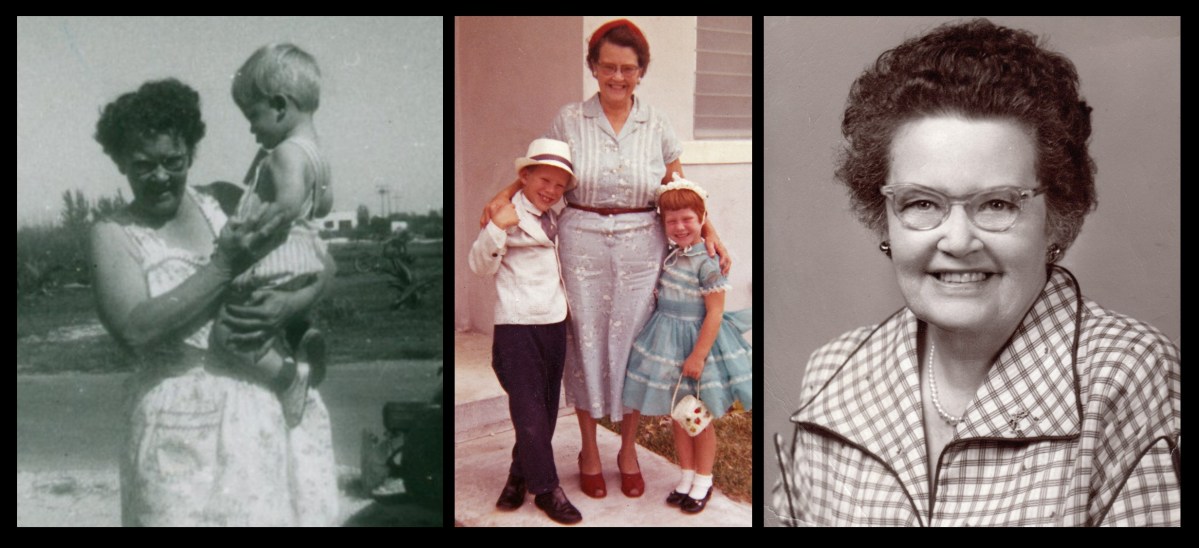
This essay is about memory and history. What can I remember? What can I document with photographs or research with Ancestry.com? What can I find on the internet? I want to know as much as possible about Helen Harris. I plan to update this page as I find more information. The photo on the left at the top of the page is me with my grandmother around 1953. I was her first grandchild. The next photograph is of my grandmother with me and my sister in 1959. The last picture is just the best portrait I have of her. I believe it was taken in the 1960s.

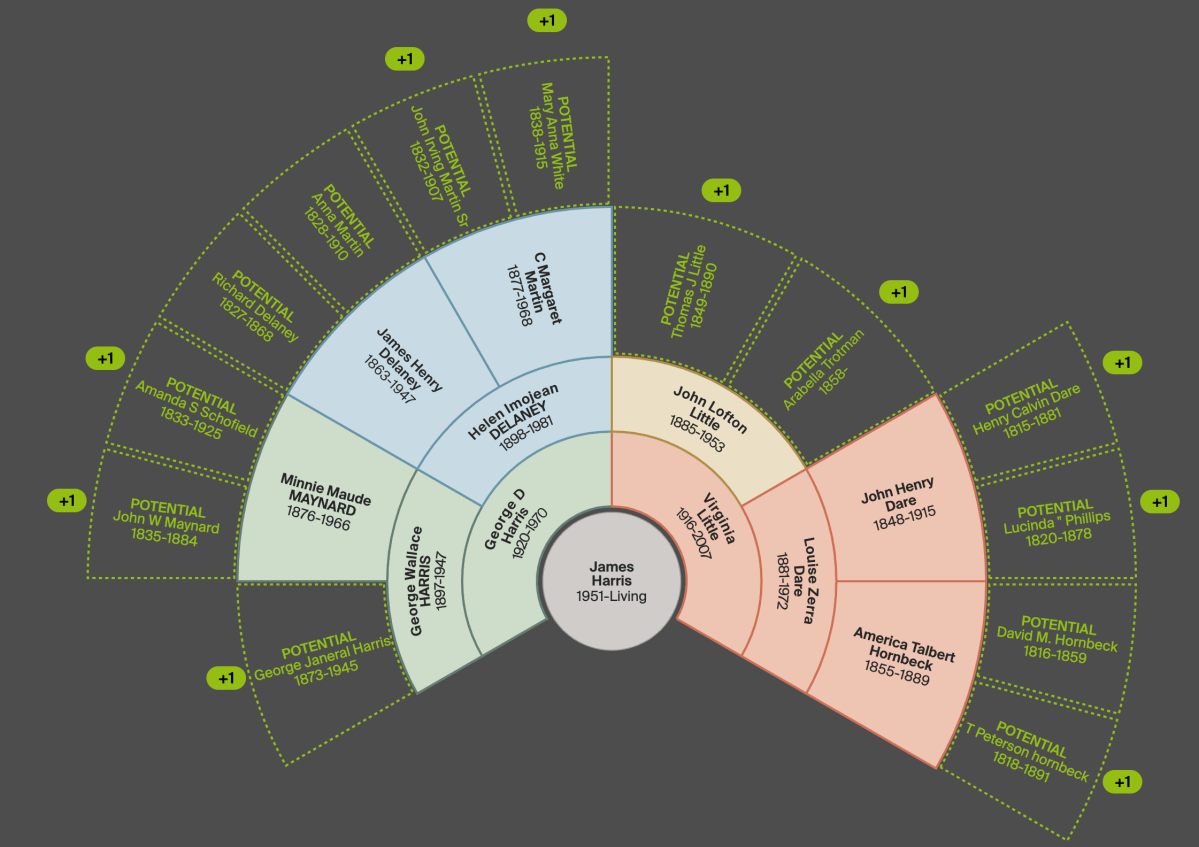
Helen Harris was my grandmother, my father’s mother. I’m learning to use Ancestry.com by researching her records. This essay aims to show how genealogy research works and to push my memory to remember everything I can about my paternal grandmother. I’m also using clues I found on Ancestry.com to research on Google. Here is the current state of my family tree.

I’m going to start with my grandmother’s birth and work forward in time.

1900 United States Federal Census (June 20, 1900)

I cannot find a birth certificate for my grandmother. I discovered on Google that Indiana didn’t require birth certificates until 1907 (but some counties had them as early as 1882). I’m not exactly sure where my grandmother was born. The first official document that lists my grandmother is the 1900 United States Federal Census.

Helen is listed as a granddaughter living with John I. Martin and Mary A. Martin, her maternal grandparents. My grandmother’s mother is listed as Margarete Delany and her father James Delany lived with them. Delaney was spelled without the e. Spellings, especially first and last names were often inconsistent in historical documents.

They lived on 484 Third Street, Hoopeston, Grant Township, Vermilion County, Illinois. The census was taken on June 20, 1900. My grandmother’s grandfather was born in Ireland in 1848. His wife came from Ireland in 1857. I don’t know if they were married in Ireland or America. That puts me five generations from being an immigrant on that side of the family?

Third St. Hoopeston is now divided between north and south. There’s no telling where 484 would have been. This photo shows a 2024 view of 452 and 498 of N. Third. The house in the back looks old. Maybe 498 could have once been 484?
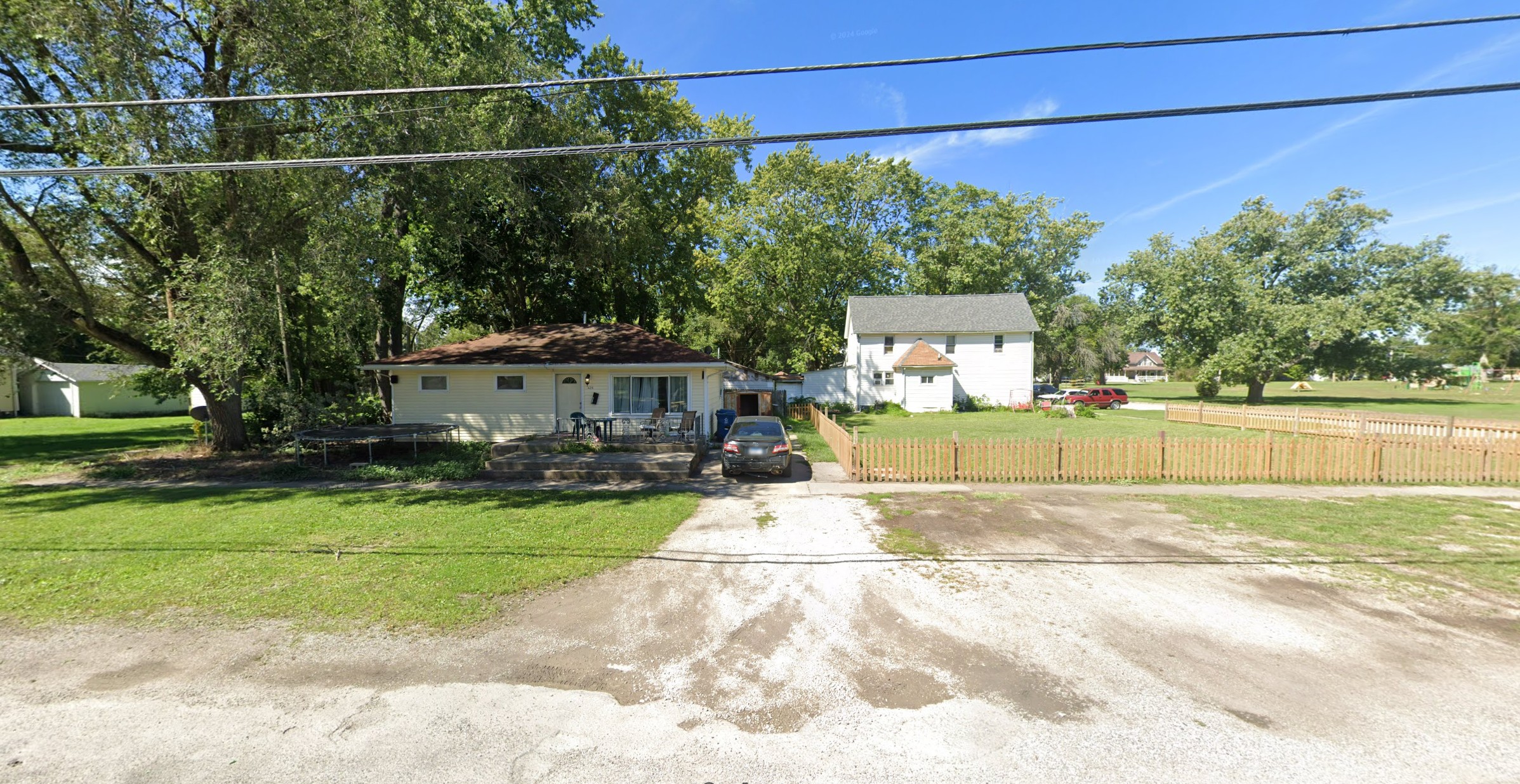
This is about where 484 S. Third Street should be.
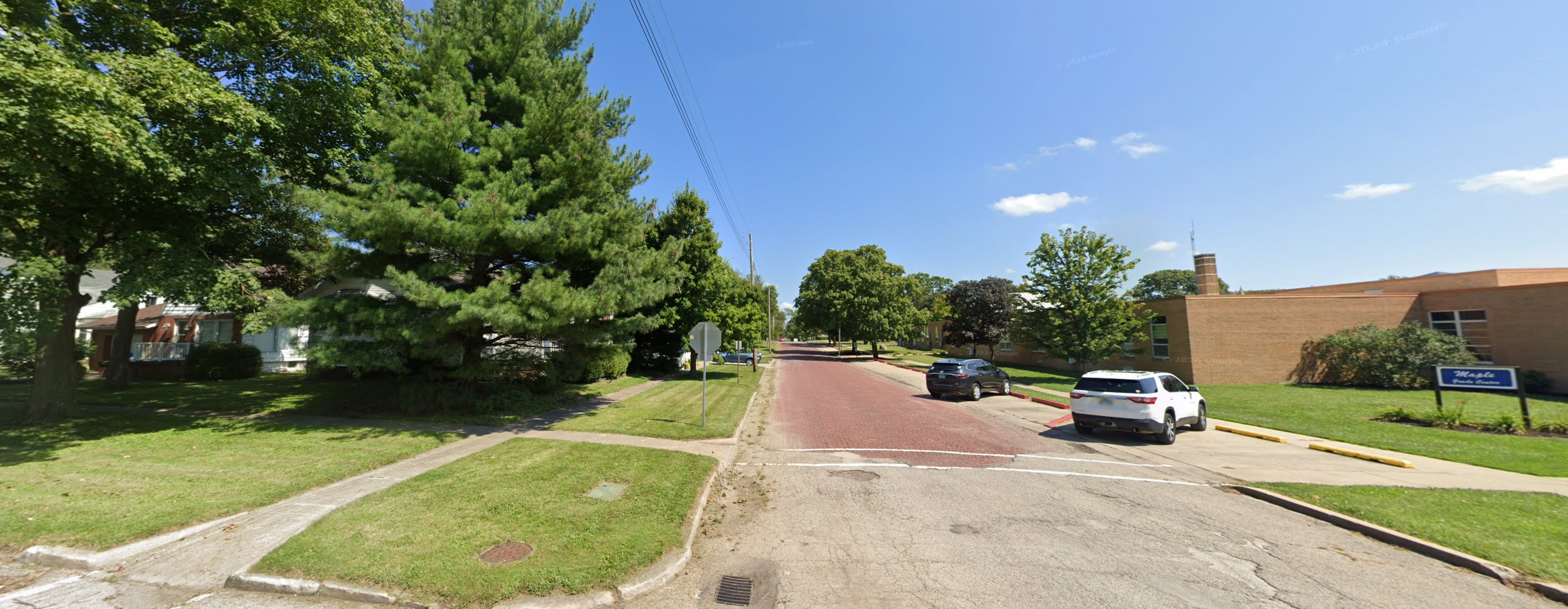
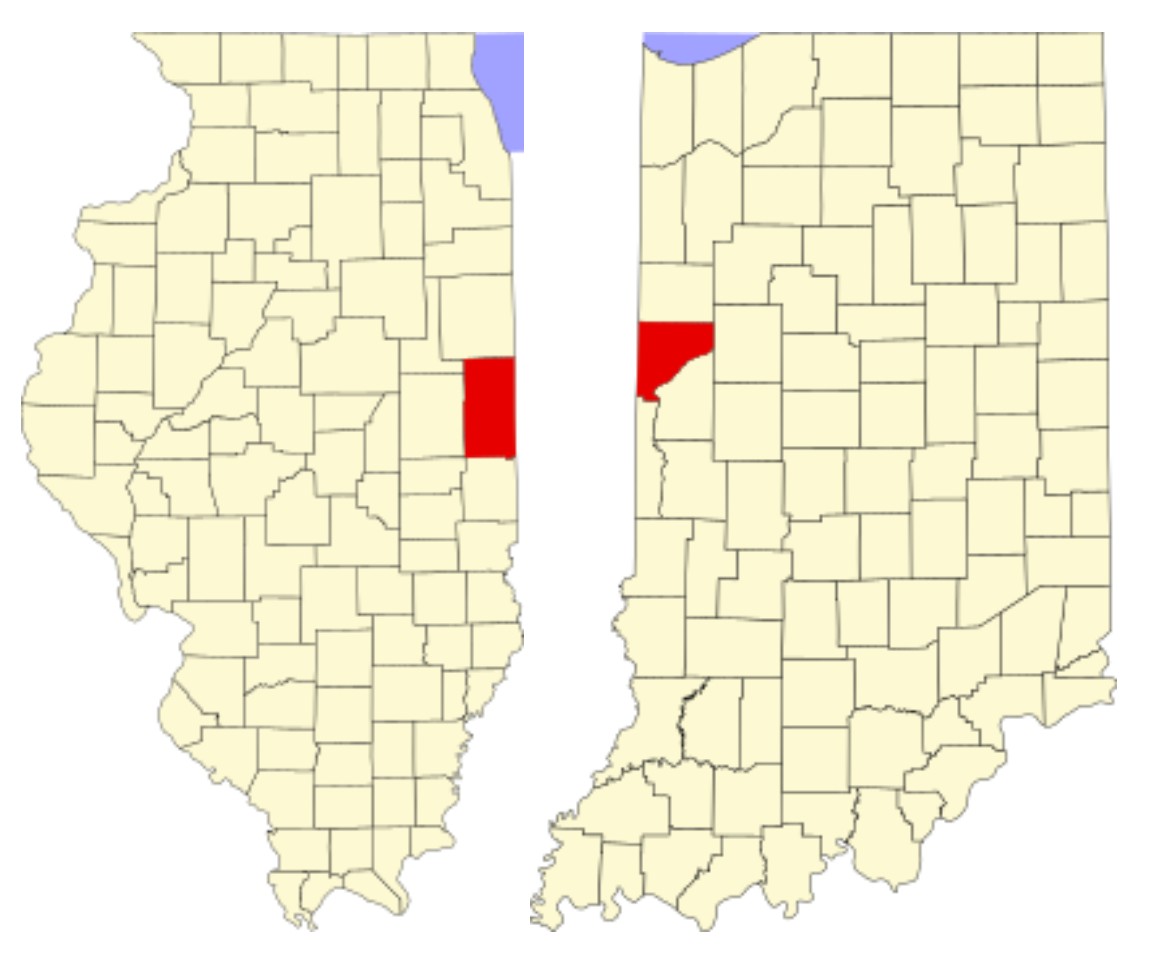
This brings up the question: Why was my grandmother living in Illinois at one year and seven months when she was born in Indiana? Vermilion County is right on the border with Warren County, Indiana. Evidently, it’s close enough for dating. I wish I knew where my grandmother was born.
1910 United States Census (April 10, 1910)
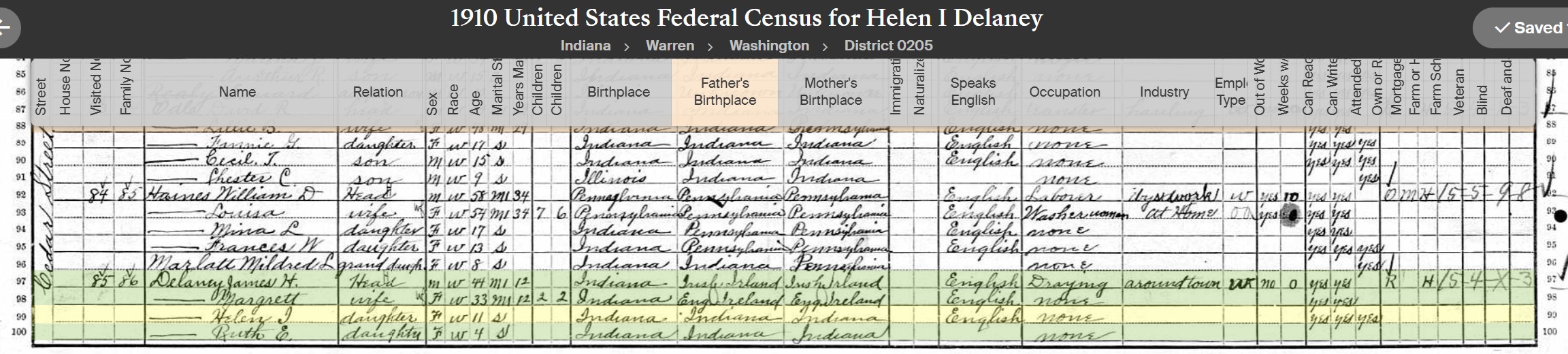
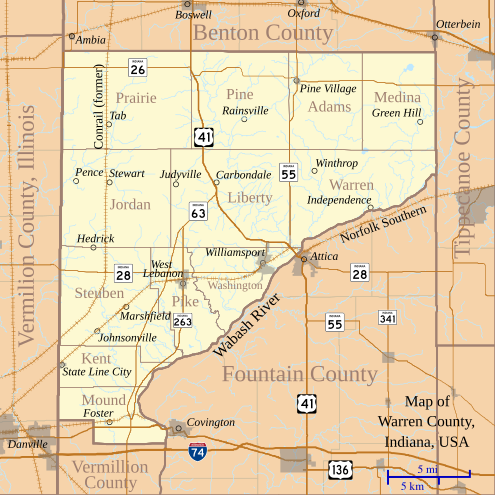
Helen Harris was 11 and living on Cedar Street, Williamsport, Washington Township, Warren County, Indiana. Her father was listed as James H. Delaney (44) and her mother Margrett Delaney (33). My grandmother now had a 4-year-old sister Ruth. That validates real life because my grandmother had a sister Ruth. The names have different spellings. This map shows how close they were to Vermilion County, Illinois, and the location of Williamsport. In 1910, the town’s population was only around 1,200.
I was always told she was born in Indiana, but I can’t validate that in any way. Was Williamsport her birthplace and family home? Later records claim she was born Helen Imojean Delaney on November 28, 1898, to James Henry Delaney (1863-1947) and C. Margaret Martin (1877-1968). I might find out more when I research Margeret Martin.

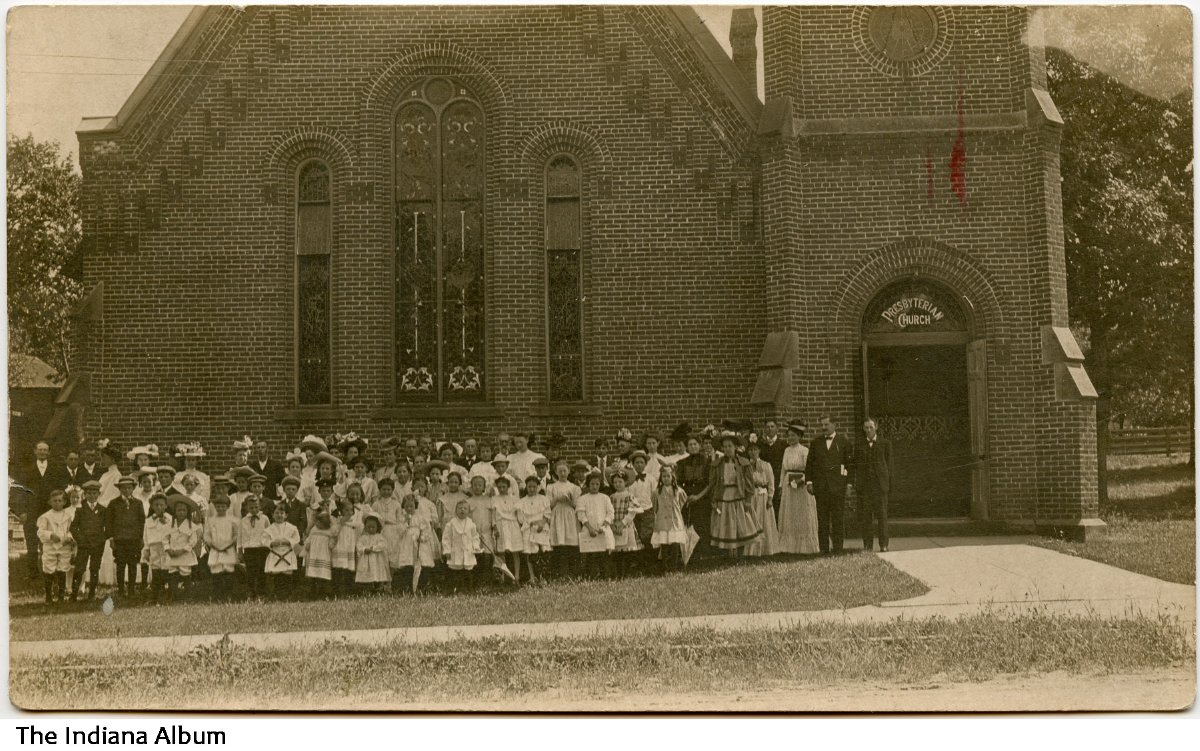
Here is a photograph from Williamsport in 1910. My grandmother would have been eleven. I wonder if she is in this group of people? How far can I go with this research? Just how many pieces of evidence of our lives do we leave behind? I wonder if I drove to Williamsport if I could find more clues?
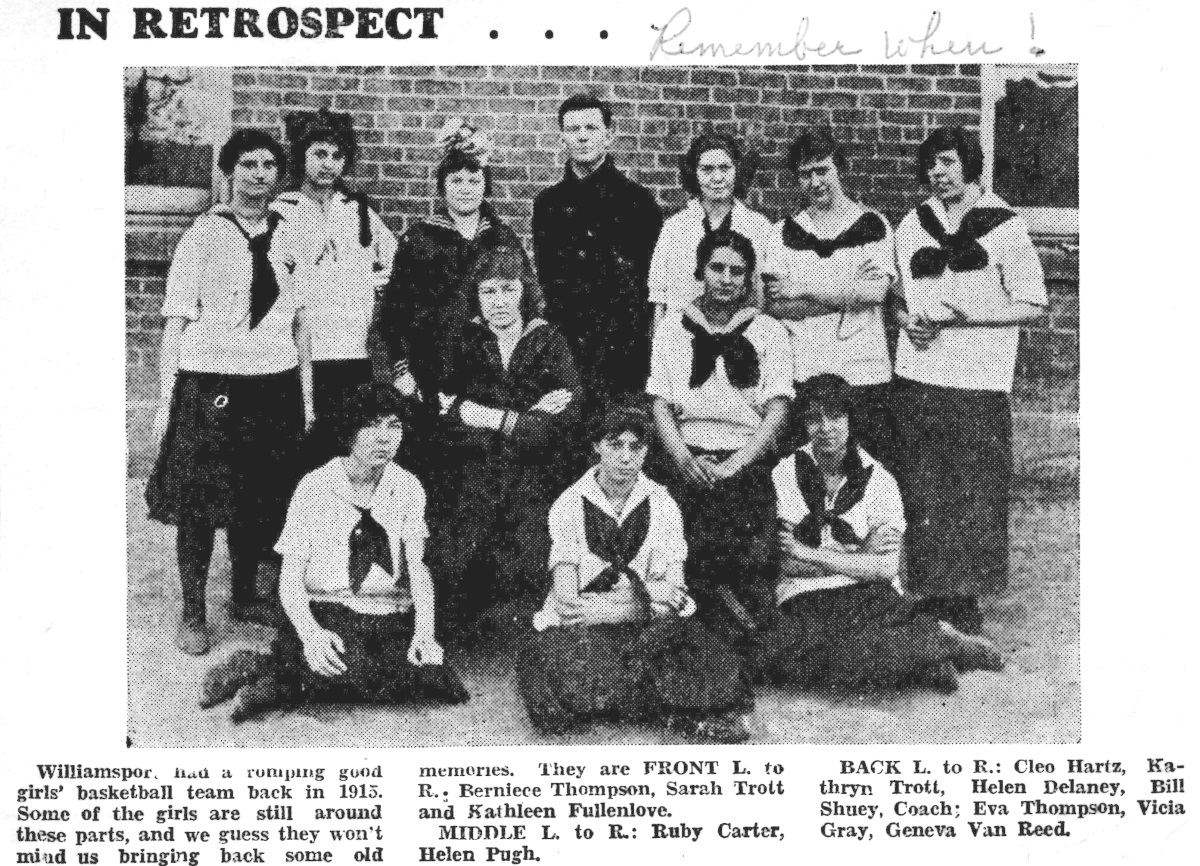
My next bit of evidence comes from 1915. I don’t know where this clipping came from. It appears to be a look at the past. My grandmother is about 16. She’s third from left in the back, wearing the weird hat. It’s the earliest photograph I have of her. (Strangely, I also have an old newspaper photograph of my mother on a basketball team.)
The next record I can find about my grandmother is a marriage notice in The Grand Island Daily Independent for Monday, January 5, 1920. Helen Delaney married George W. Harris, 22, an engineer. She is listed as 21 and a school teacher.
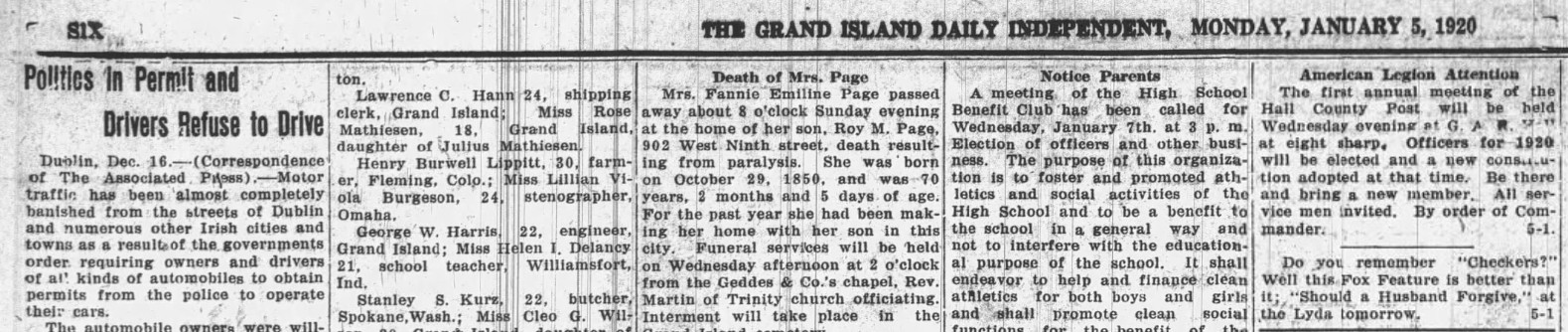
I wonder what they mean by an engineer? Was he a college graduate? After he moved to Florida, my grandfather worked as a border agent. Supposedly, his picture was once in Life Magazine arresting illegal aliens coming in by boat. My grandmother once told me she had been a schoolteacher in a one-room schoolhouse. So that fits. My father, George Delaney Harris, their first child was born on October 12, 1920.

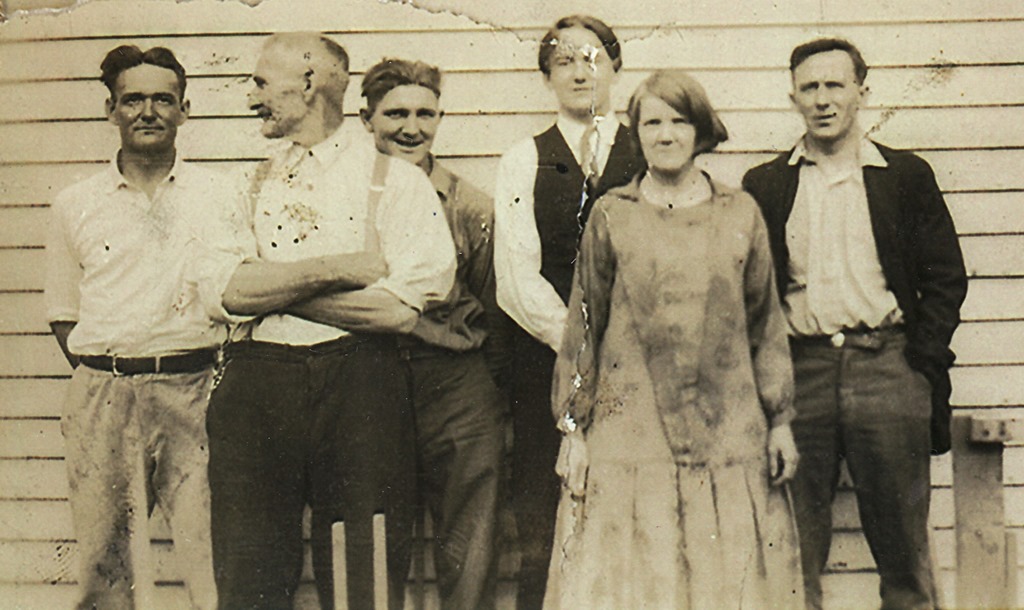
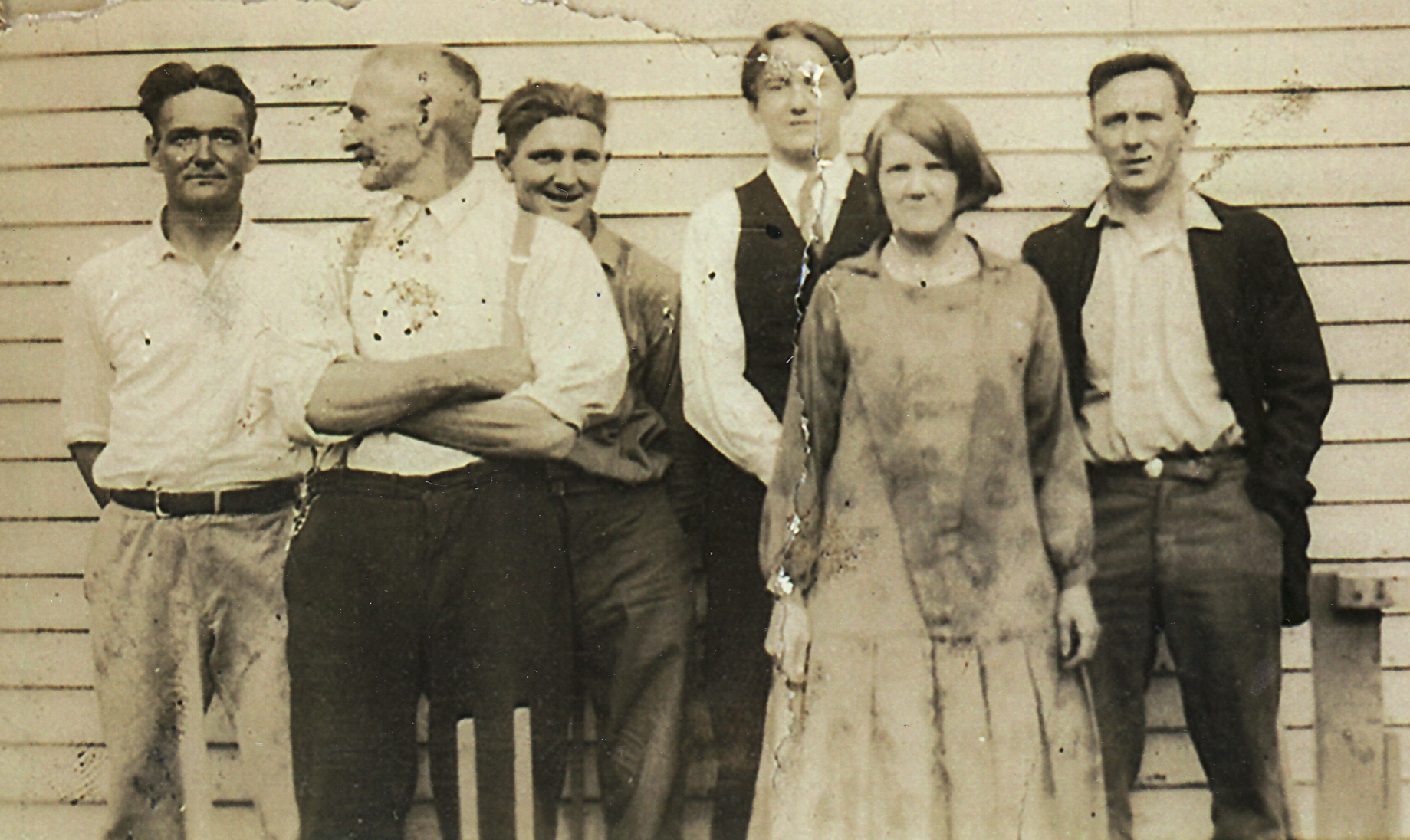
How did she meet a man from Nebraska? This is the earliest photo I have of my paternal grandfather, George W. Harris. He is on the far right. Those are his parents and brothers, my great-great-grandparents. He looks older than 22 there, so I’m guessing it was after 1920.
1920 United States Federal Census (June 2, 1920)
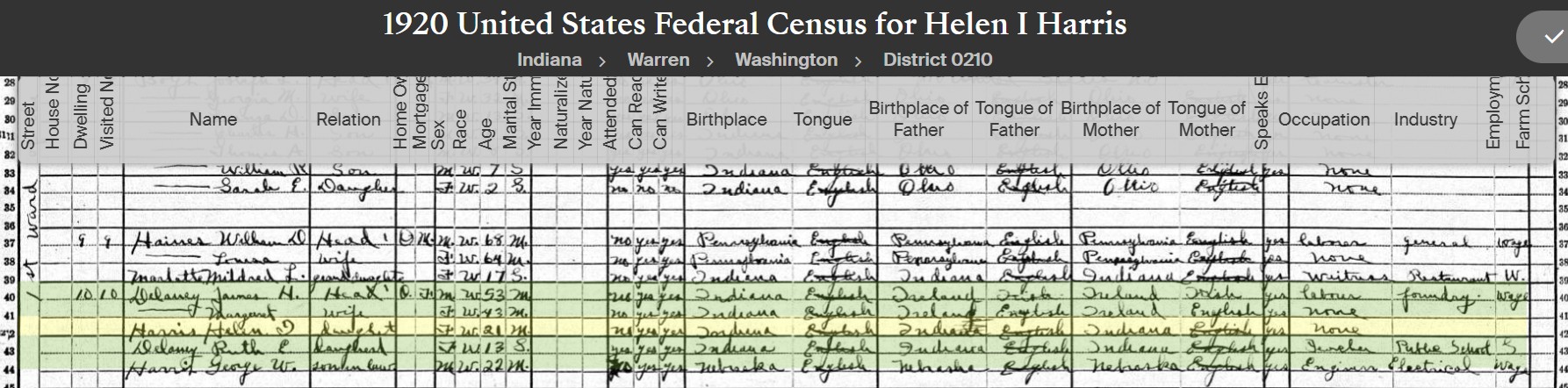
My grandmother and grandfather are living with her parents in Williamsport, Indiana. Was the Nebraska newspaper notice of their marriage just a notice, and they weren’t living in Nebraska? Or had they gone there to marry, and then returned to Indiana to live? My grandmother is unemployed, but my grandfather is now an electrical engineer.

Sometime during the 1920s, they move to Florida. I have no proof of when or where. The next record to validate their existence does put them in Florida. I’d love to know the story behind the move.

1930 United States Federal Census (April 4, 1930)
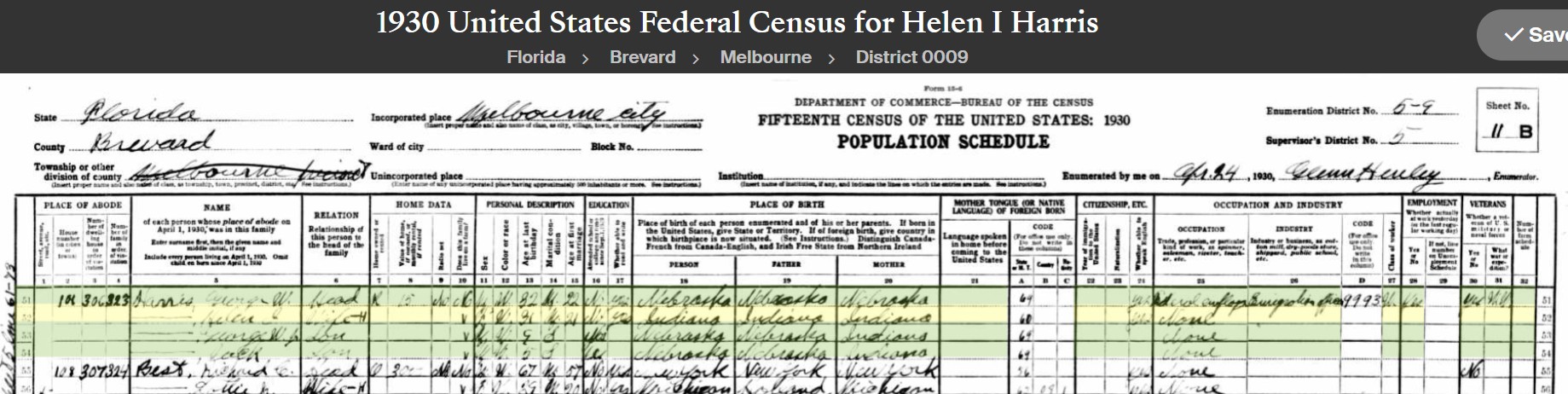
I never heard anyone in the family saying they lived in Melbourne, Florida in Brevard County. The census document says they live at 101 “Wolfe” Street. But I’m not sure of the handwriting. Can’t find a Wolfe street. My grandfather’s occupation is now listed as a federal employee and an emigration officer. That fits with family stories. My grandmother is still unemployed, but now has a second son, my uncle Jack.

1935 Florida Dade County Census

They rented a house at 193 NW 54th St. My grandfather was a federal inspector. All three sons are now here, including my Uncle Bob. My dad was 14.

1936 City Directory

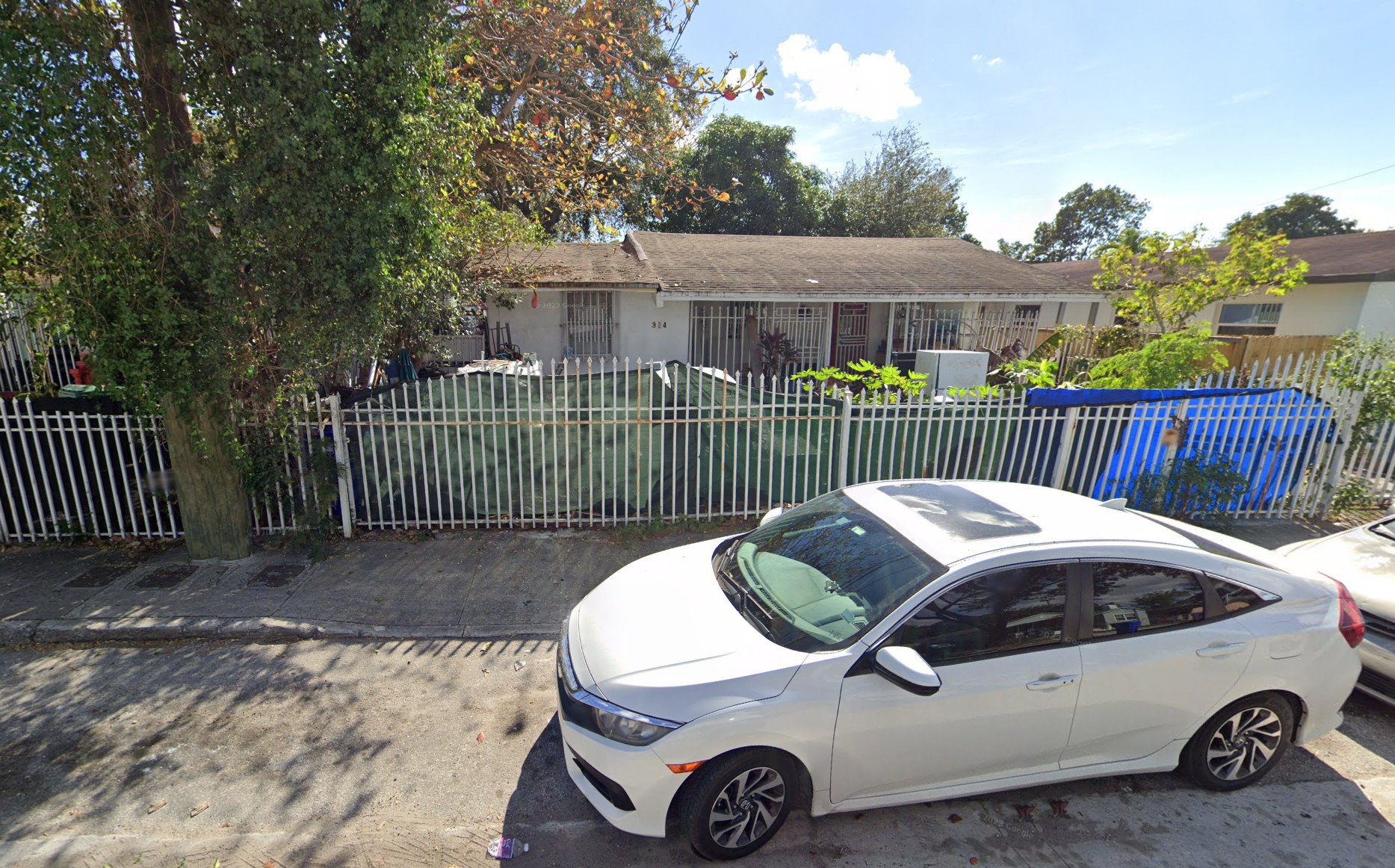
My grandmother is listed as living at 324 NW 53rd Street in Miami. Here is a current Google Maps Streetview photo. This
1940 United States Federal Census (April 8, 1940)
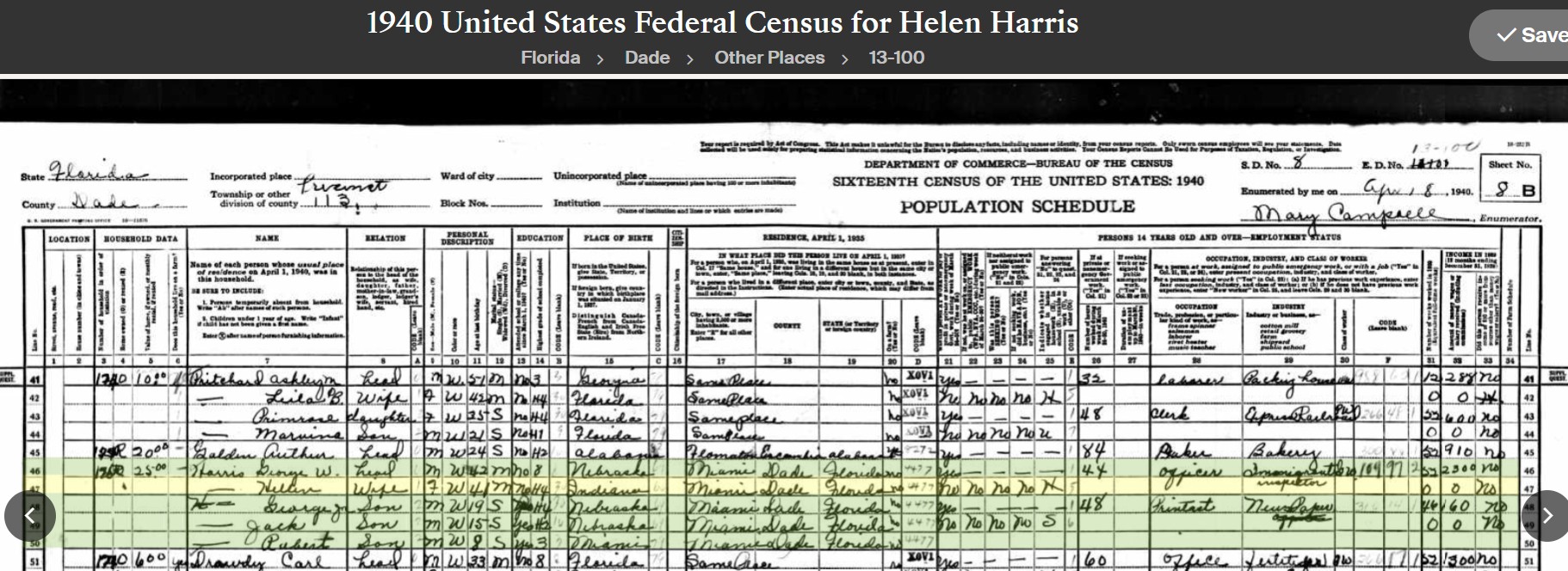
They are now living in Dade County, where Miami is located. However, I can not make out the township. I would love to know their address. I remember visiting my grandmother in a little house in the early 1950s. My grandfather had died in 1947.

My grandfather is now an Immigration Inspector, and my father, 19, works for a newspaper. I have a clipping from a Miami newspaper, describing my father studying advertising layout in high school. I won’t include it here, just evidence for my grandmother. Uncle Jack is 15 and Uncle Bob is 8. I have one photo from around this time. My Uncle Bob is in the middle, and he looks like a teen, so I’m guessing it’s around 1945?
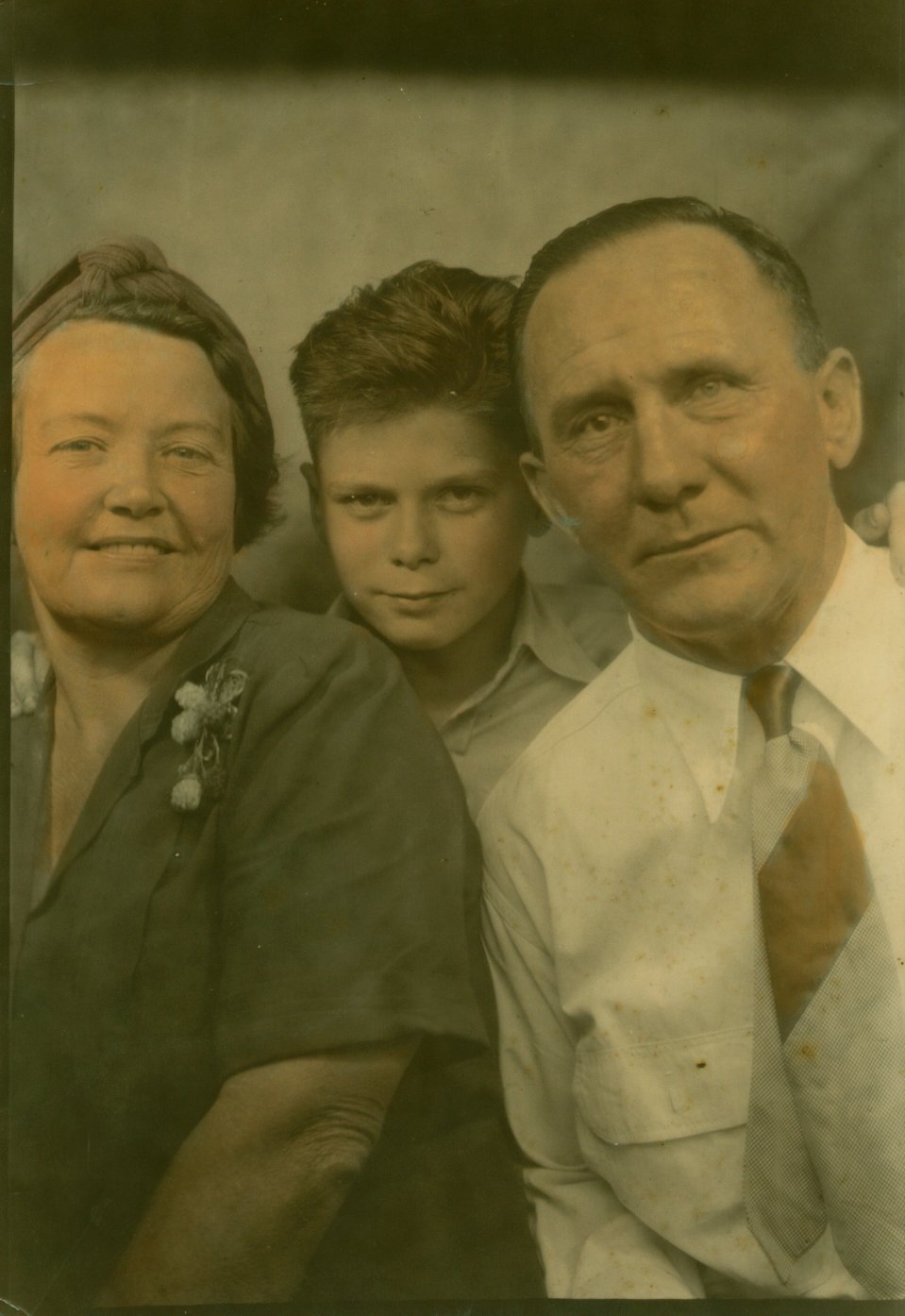
Here’s a picture of my grandmother with my mother. My mother and father got married in 1945. I assume this photo was taken before I was born in 1951.
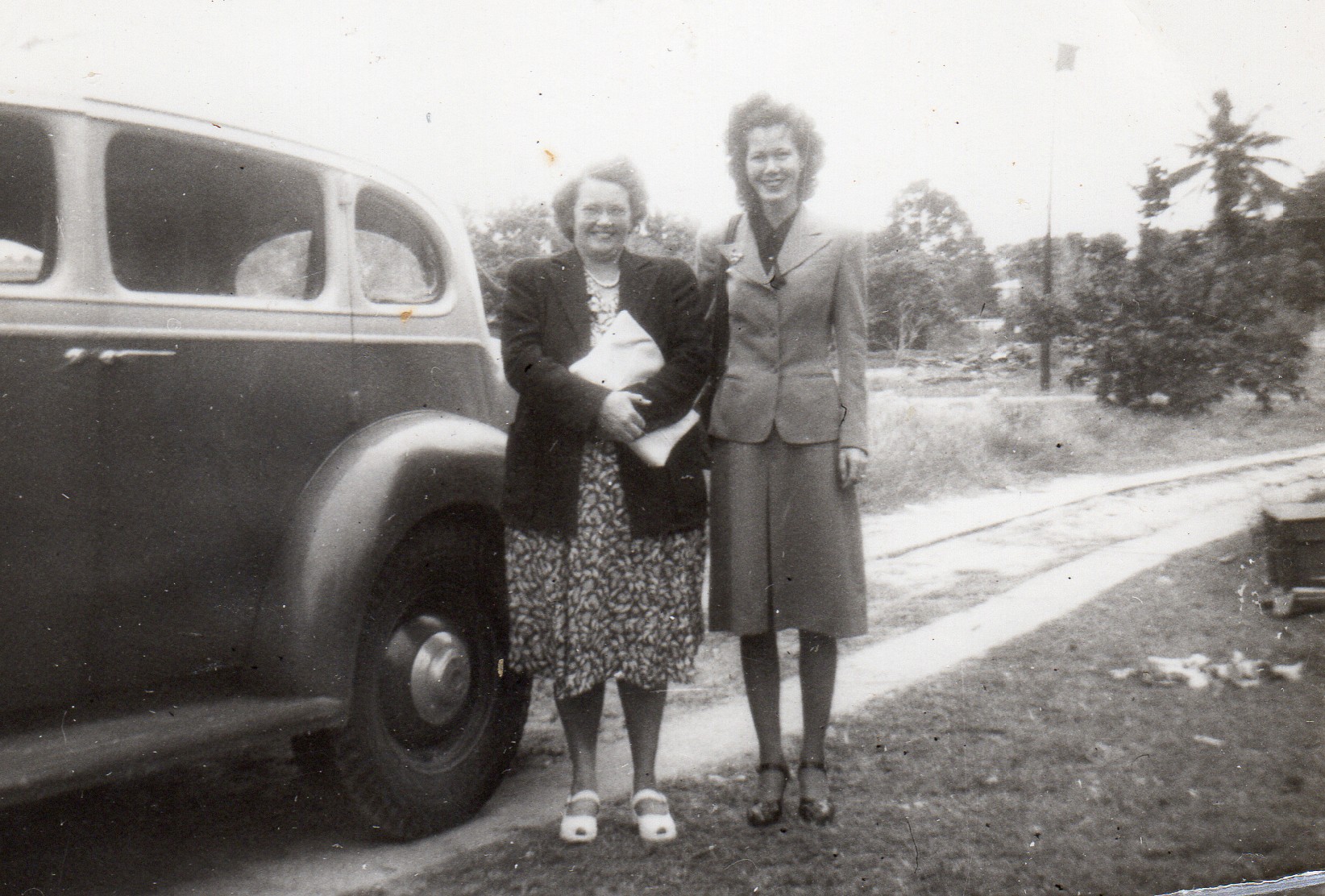
1953 City Directory

My grandmother is listed as living at 1131 NW 55th Terrace in Miami. I would have turned two that year. I remember visiting her in the mid-1950s, in a small house. This could have been it. Evidently, she was living alone by then. Here’s what it looks like from Google Maps Streetview. My memory is of a house on a corner surrounded by lots of trees looking like the two below.
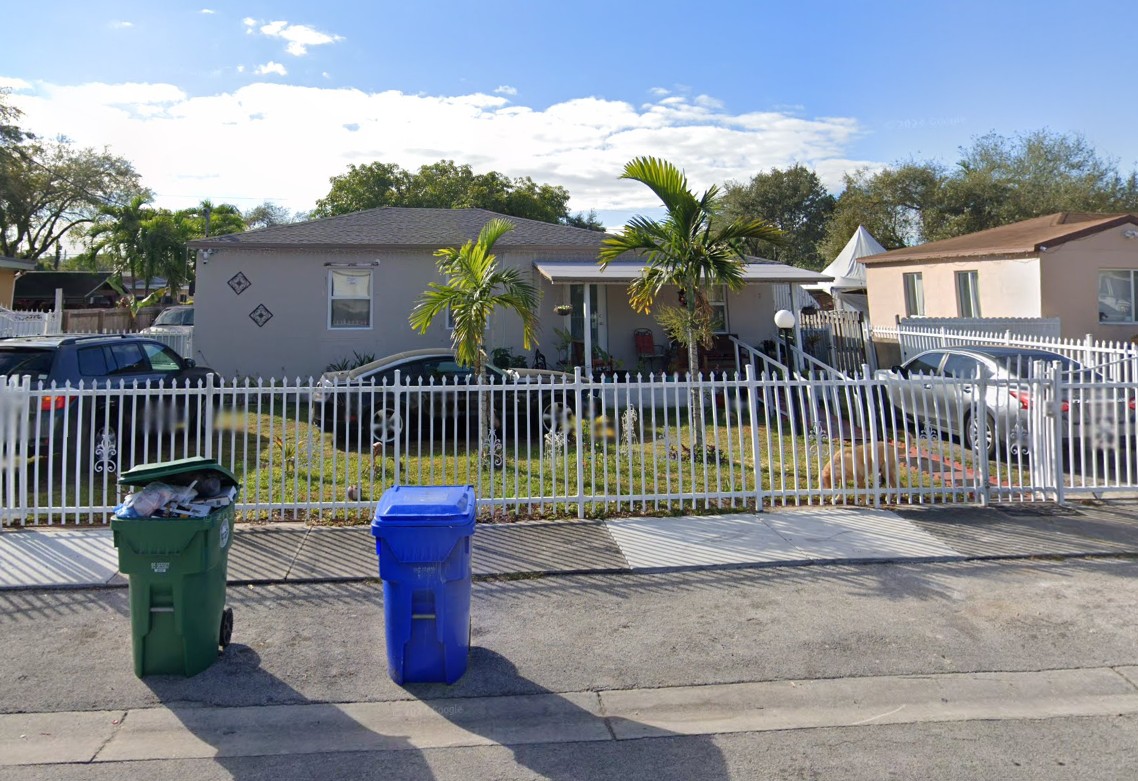
I can’t find any more resources on Ancestry.com for my grandmother. She’s not in the 1950 United States Federal Census, and Ancestry.com doesn’t seem to have access to censuses from 1960 forward. Nor can I find any more city directories. I wonder if my grandmother didn’t fill out a 1950 census. She was a widow by then, and I assume her three boys had moved out.

My Memories

I mainly grew up around Miami Florida. That’s where my father’s side of the family had been living since the 1920s, or so I thought. However, my father and his father were from Nebraska, and his mother and family were from Indiana. I never knew how my father’s parents met. That’s the kind of mystery you wish pursuing genealogy would answer but doesn’t. My grandfather died before I was born, so I have no memory of him, and very few stories.

My earliest memory of my grandmother, Helen Harris, is visiting her in a tiny house in an old section of Miami. Back in the 1950s, Miami seemed mostly new housing divisions, but sometimes we’d visit older sections that were probably built in the 1920s or 1930s. I’d love to know where that house was located. This was probably mid 1950s.

My next memory of my grandmother was visiting her at an old apartment on 8th Avenue, which I believe is Flagler, and is now considered part of Little Havana. She was the manager, and this was in the late 1950s or early 1960s. The place was old. I loved roaming the old interior halls, with the ancient musky-smelling rugs, and talking to the old people living there.

Around 1959 my mother was diagnosed with TB and was sent to stay at a sanatorium in Valley Forge, Pennsylvania. My father was in the Air Force and stationed in Canada. So my grandmother moved into our house in Hollywood, Florida to care for Becky and me for about six months. I have several memories from this time. (The center picture at the top of the page is from this time.)

After that, she moved to an apartment complex on Bayshore Avenue, right on Biscayne Bay. She stayed there, I believe until she died in 1981. But I’m not positive. My father died in 1970 and my mother, sister, and I moved to Memphis, Tennessee. I only saw my grandmother a couple more times after that when I would visit Miami to see a friend. The last time was in 1978 when I got married and took my wife Susan to meet her.

Most of the other memories I have of Helen Harris were when she came to family Thanksgiving and Christmas dinners. I did stay with her several times at the apartments on Flagler and Bayshore Drive.

I do have some specific memories. When my grandmother kept Becky and me in 1959, I was seven, and sometimes still wet the bed. She knew I admired her large leather-bound zip-up 3-ring notebook which she used to organize all her bills and paperwork. She told me when she came that if I didn’t wet the bed while she was there she’d give me her notebook when she left. I got that notebook. My parents should have tried bribing me earlier.

One of the most exciting memories I have of my grandmother is when I stayed with her at the apartments she was managing. I had seen the 1958 movie, A Night to Remember about the Titanic, and told her about it. She introduced me to an old lady living at the apartments who had been on the Titanic as a child. Years later, I wondered if I could track down who that lady was. I don’t remember her name.

I can’t remember too many details about my grandmother’s personality. She was jolly and I loved her. She collected glass figurines of dogs, so my sister and I always gave her a little dog figurine for her birthday or Christmas. I remember seeing her several times reading a book about the medicinal value of honey. She also talked about Edgar Cayce, the psychic. I can’t remember anything else she liked. I don’t recall her watching TV, playing music, or reading novels.

In 1965, I stayed with her at the Bayshore Drive apartments. I remember helping her clean out an apartment. I found an old tackle box which she let me keep. She didn’t see that it had a switchblade knife in it. I loved that knife and took it to school with me. I never told any grownups about it. I use the tackle to fish off the sea wall. While I was staying with her I would gather coconuts and unhusk them. I sold a dozen coconuts to a vegetable stand in Homestead for 50 cents each.

I remember she had friends named John and Alice. I believe we rented their house for a couple months in 1958 before we moved into our house in Hollywood, Florida. I think this might be Alice and John on the left, but I’m not sure. The other man was named Ollie. But that’s all I know.
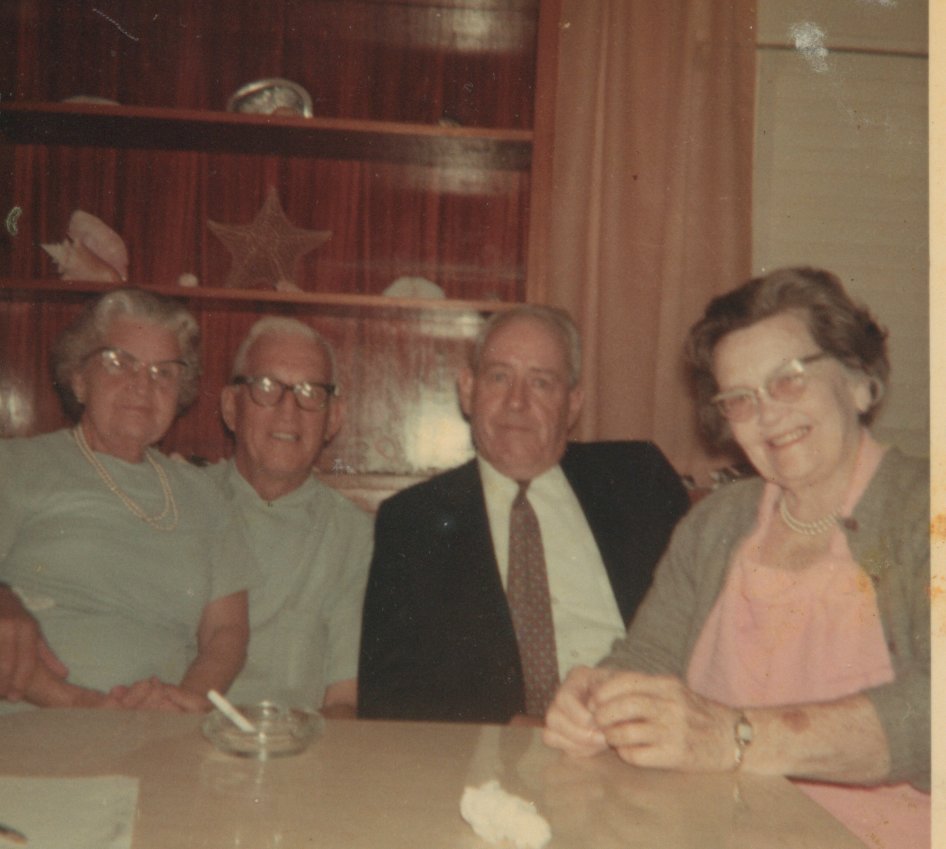
The next photo might be the last photo I have of my grandmother. I believe it’s with her sister Ruth but it might be Alice. It was taken at the Bayshore Drive apartments, I believe in the 1970s. The last time I visited my grandmother was in 1978. I had just married Susan and we had gone down to Miami so I could introduce her to my grandmother.
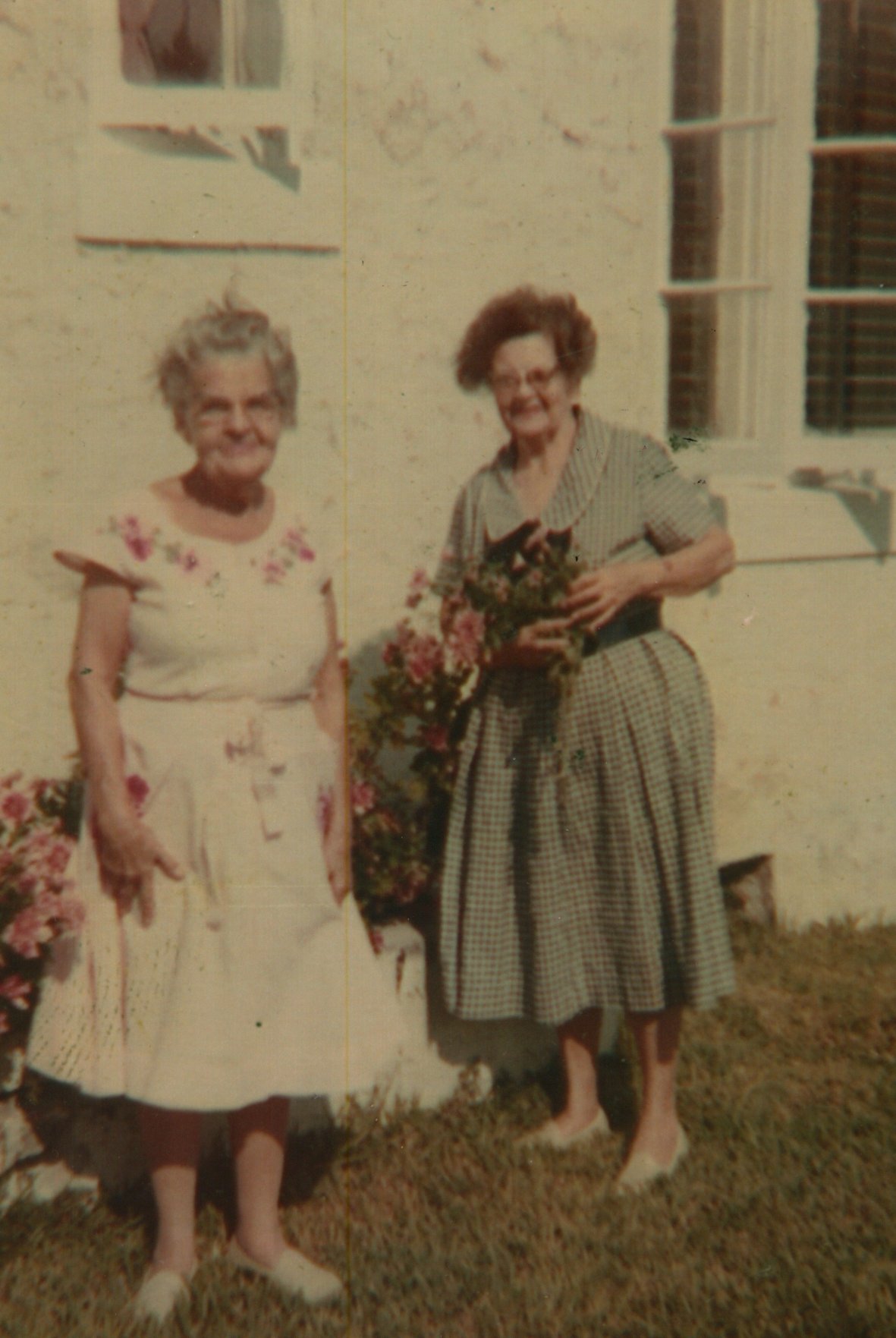
Helen Harris died in 1981. I regret not calling or writing her more. If I had known I would one day be writing this essay I would have asked her a lot more questions. And I would have saved more documentation.

The faithful believe they will be reunited in heaven with their loved ones. That would be nice, but I’m not a believer. We’re often told that those who pass will live as long as someone remembers them. Helen Harris might be down to three people who remember her, maybe four. If by chance you do, leave a comment. I might have hordes of unknown relatives that remember her.

One last memory. Once my grandmother told me about her high school class. It was small. I want to say thirty people. She said they had agreed to a tontine, and the last person living would get some object I’ve now forgotten. Over the years, I wonder who won the tontine. I wonder if genealogy research could lead me to her graduation class.

We leave behind very little which proves that we were once here. Eventually, it all fades away.

JWH
Ancestry.com Isn’t What I Expected

by James Wallace Harris, 1/6/25

I joined Ancestry.com so I could upload old family photos. I thought they should be saved somewhere because all my family photos will be thrown away after I die. Many of my photographs have already been converted into digital files, so I figured it would only require looking up the person and uploading the files for that person.

Because the government knows so much about us, I assumed that kinship relationships for the last three or four generations would already be in the Ancestry.com system. That was a big false assumption.

Ancestry.com claims to have over 60 billion records. I don’t know if that’s 60 billion different pieces of paper or 60 billion references to individuals. The trick using Ancestry.com is to start with a name and then use all its records to verify the identity of each person. It’s not easy. You can’t trust any one record. You need to find several records with connecting information that’s already been previously validated.

My assumption was recent family members would be known and family from the past would be harder to identify. It turned out that parents, siblings, cousins, and grandparents are hard to verify but once I did, Ancestry.com offered a lot of hints about my great-grandparents, and their ancestors. However, the hints need to be verified. Those hints are probably based on distant relatives in the past, working up family trees, and those trees might not be accurate.

I was shocked by how many people have similar names, with similar dates of birth and death, coming from the same part of the country. I could very easily add photos of people who were not the people photographed.

Before I joined Ancestry.com and used it, I thought family trees were already well established, and I could quickly upload all my family photos. That won’t be the case.

Just to cover my parents, grandparents, great-grandparents, and great-great-grandparents, I’ll need to research and identify 30 people. I only knew four of them. If I go back to another generation, that would add 32 more people. This completely ignores aunts, uncles, and cousins from each generation. Adding them to my family three would mean researching another hundred people, maybe two hundred.

Another assumption I had before working with Ancestry.com was the belief that building a family tree would help me get to know my ancestors. It hasn’t worked out that way. Finding names and dates to add to my tree reveals nothing about those people.

Genealogy is interesting and even educational. It’s revealing in unexpected ways. It shows that blood is not thicker than water. Kinship is meaningless. Actual interactions with each other are everything.

I’m not sure if saving my photographs will be of any real value. I’ll save them anyway, but I’m uncertain if anyone will care. Now I understand why so many people I’ve talked to about this project said they had zero interest in genealogy. They instinctively knew that people they never met were just meaningless names and dates on a chart

However, learning genealogy offers other rewards. It teaches research skills. It reveals how society knows and remembers people. Pursuing genealogy shows the limits of identity and identification. Unless a person is worthy of a biography, history only knows us by our names, marriages, addresses, birthdates, and death dates. And don’t those details say absolutely nothing about true selves?

Maybe I’m wrong. As I dig into the past, maybe I’ll find revelations I never expected.

By the way, genealogy should benefit greatly from AI.

JWH

Archiving the Past for the Future

Are you throwing away history? How you perceive yourself is determined by what you remember. How society remembers itself is through histories. Histories are written based on the evidence the past leaves for the future.

If our eyes and ears were a video camera, each day we take in several terabytes of information, yet we remember very little. Our brains decide to throw away most of our sensory input. How many commutes to work or school can you remember? There are many theories as to how we select what to save, but I don’t science has found a consensus yet. We can’t recall the past with TiVo-like utility. Our memories are vague impressions squirreled away inside our heads. Most people don’t have photographic memories, much less video-graphic. This is also true of historians, they only have tiny incomplete fragments of the past.

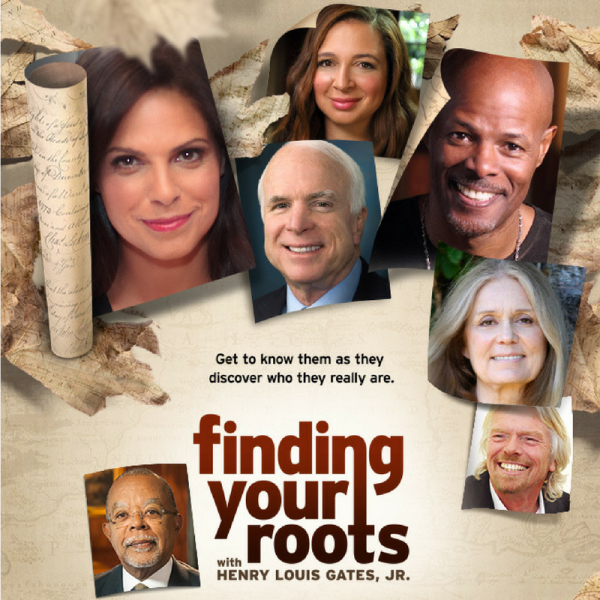
Now that we’re entering into the Marie Kondo phase of our lives, many of us are throwing away the physical evidence of what we’ve done at the same time many of us have become interested genealogy. If you’ve ever watched Finding Your Roots you know how important physical records are for reconstructing the past. What’s true for individuals is even truer for society.

My father died when I was 18, and I’ve often wished I had more evidence of his life to figure out who he was. I don’t have that evidence, but I wonder if it exists elsewhere. I’ve also wanted more evidence of my own life to remember who I was. I’ve spent a good deal of time reading about world history, trying to put together a consistent memory of our past. Too much of history is opinion because we don’t have enough hard evidence.

The current decluttering mania teaches us to categorize our discards into three piles: Keep, Give Away or Sell, or Throw Away. I believe we should keep an eye out for a fourth category – Save for History. When we hold an object and ask ourselves, “Does it bring me joy?” we should also ask, “Could future historians use this?” The trouble is, what is of historical value, and who do we give it to?

Any document that connects people to events might be valuable. Of course, ticket stubs to a Bob Dylan concert might only help you remember where you were on a night in 1978. But what about a schedule of speeches for a conference? Or an old menu saved for sentimental reasons? Or a video of a family reunion? Or a catalog from an art exhibit? Anything that might help other people remember might be worthy to save.

We need to think about how we remember who we are as a society and what artifacts to save? I’m currently reading Leonardo Da Vinci by Walter Isaacson and I’m amazed by how much information we have about people who lived over five hundred years ago. Few of us have that kind of information even if we wanted to write our own autobiographies. Evidently, people who get into genealogy learn what’s important to identify people connections. And anyone who has written up an event or documented a house for sale knows about the importance of supporting facts.

What evidence should we save today about our past to help people in the future understand us? I’ve acquired a new hobby of scanning old magazines and fanzines. There are hundreds, maybe even thousands of people digitizing popular culture and uploading it into libraries, and sites on the internet like Internet Archive. However, like our own minds, we have to decide what tiny bit is worth saving, and what massive amount of junk is not. We’re actually Marie Kondoising our culture every day.

The next time you have a box of junk to throw out, don’t just ask if each item gives you joy, but would it give a future historian joy too.

One kind of evidence I ache to have for my own personal history are photographs. I wish I had pictures of all my schools and classmates since kindergarten. I also wish I had photos of all the houses I’ve lived in, their yards, and of each room. My father was in the Air Force and we moved around so much that I can’t remember all the houses I lived in or the schools I attended. I wish I had evidence to recreate that knowledge. In other words, I wish I had documentation to support my memory. There’s a chance that other people photographed what I wanted. It’s a shame we don’t have a photograph database, especially one controlled by artificial intelligence with machine learning.

PBS - Finding Your Roots with Henry Louis Gates, Jr.Most of us do not have evidence that will matter to historians, but you never know. And even if we did, how do we pass it on? If you’re a famous person you can donate your papers to a library. One thing us ordinary folks can do is to share photographs with relatives, or anyone who is pictured in the photographs. I have some old school yearbooks that I’m going to scan and upload to the Internet Archive. Yearbooks are starting to show up there. I keep hoping yearbooks from schools I went to that I don’t have will show up. Classmates.com has yearbooks for a fee, and I use it, but I think this information should be public. Eventually, items in the Internet Archive, which hopes to save everything digitally, will be churned through by AI and data miners, and there’s no telling what kind of results will turn up. I highly recommend watching the PBS show Finding Your Roots to see how sleuthing personal histories work.
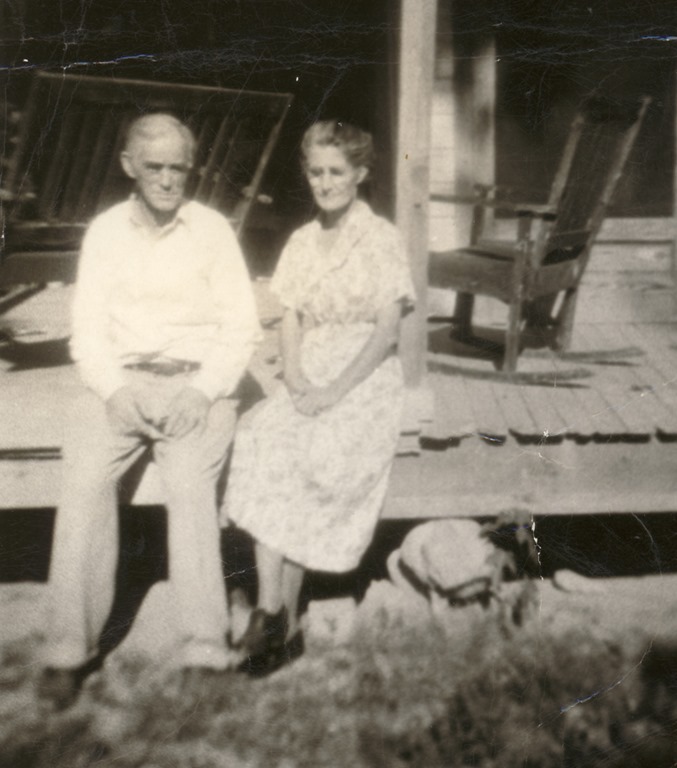
I’m also scanning and uploading old fanzines to Internet Archive. It’s a skill that takes a little work to acquire, but I like rescuing these old documents. I worked in a library while going to college, and one of my jobs was finding missing issues to make whole volumes to bind. I’d send snail mail requests around the world to track down lost/stolen issues. Now, I get on eBay to look for missing issues to scan.

I haven’t gotten into genealogy yet, but I’ve thought about getting into that hobby just learn what kinds of things people save. I’m just getting into this idea of what to save for history. I know I don’t have items for big history, but I wonder if I have little clues that other people want for their small histories.

JWH

Wanted: U.S. Genealogy Database with Photographs

by James Wallace Harris, Sunday, January 1, 2017

Friday, I attended my Aunt Louise’s funeral. She was the last living aunt on my mother’s side, dying at 94. One thing I like about funerals is seeing the photographs family members bring to the funeral. My mother was one of five sisters, and all the cousins have photographs the other cousins don’t. Especially photos of our grandparents and great grandparents. Plus each aunt & uncle had pictures of nieces & nephews some cousins have never seen. After the funeral my cousin Reed called and asked me if I had any photographs of our grandfather holding a corn cob pipe. He had a memory of seeing such a picture, but didn’t know who owned it. I only had three photos of our grandfather in my digital collection, and none were with a pipe.

Littles
[My mother’s parents probably taken in the 1950s. I’ve lost count of all their descendants.]

This got me to thinking. There should be a national genealogy database where people can upload family photos. I inherited my mother’s family photos. I have no children. There’s a good chance if I died, my wife would just toss them out. I will try to give them to my nephew, or his daughters, but I’m not sure if young people want them. It would be a shame for such artifacts of history to disappear.

Imagine logging into the U.S. Genealogy Database at the Library of Congress (it doesn’t exist) and looking up your great grandparents. What if besides showing when they were born and died, the names and dates of their parents and children – it showed photographs and documents with annotations. This shouldn’t be an impossible task. I doubt there’s been more than 1-2 billion Americans to ever live. A big number, but not for computers. Photography didn’t exist for most of our country’s history, but for the part that did in the 19th and 20th centuries, most of those photos have already been lost. We should try to save what’s left, especially while the people live who can identify the subjects in the photos.

If everyone submitted photographs of people they can identify, soon we’d have a large enough database that an artificial intelligence could begin identifying unknown subjects. Historians could go to flea markets, buy a box of old photographs, upload them to the system, and in some cases, the AI could identify them. Wouldn’t that be far out?

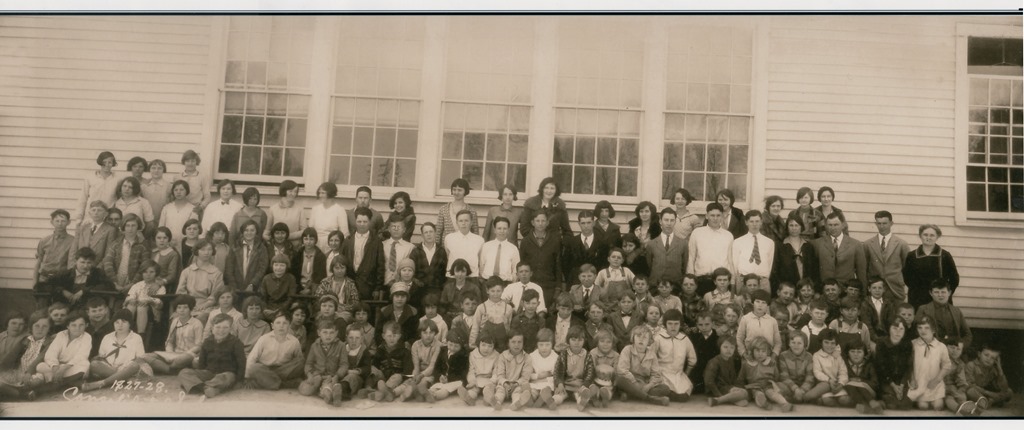
What if you logged into the USGDB and searched on your parents and discovered their friends had submitted photographs with your folks in them you had never seen before. Wouldn’t that be cool too? What if everyone you ever went to school, dated, or worked with submitted photos that you were in, and the AI linked them to you? What if the AI found every class and school photo ever taken of you and your family. Just before my Aunt Louise died she identify three people in this photo. If my USGDB system existed, it might eventually identify everyone. [Double click for larger view.]

1927 photo_600dpi

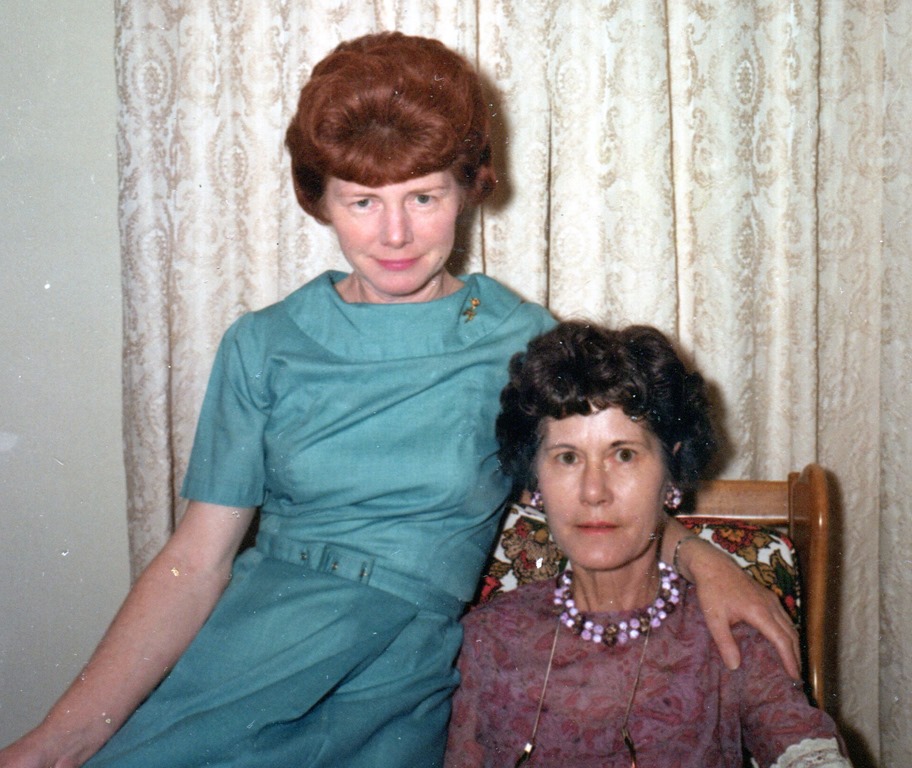
Goodbye Aunt Louise. She’s the redhead posing with my mother Virginia. We will all miss you.

img321

JWH

Why Do We Fall In Love With The Past?

By James Wallace Harris, Thursday, January 28, 2016

We explore the past through infinite paths. The past no longer exists, yet we recreate “what was” with artifacts that continue to exist in the now. We use our neurons as virtual reality machines to remember. Most of us have a rough map of our own life, and hazier maps of our own culture. Beyond those maps lie the unknown territory of the collective past, which we are all deeply rooted. We have all shook hands with someone who shook hands with a 19th century person, who had shaken hands with someone from the 18th century. I am old enough to have shaken hands with many people born in the 19th century. Every history book we read weaves thousands of threads that link us to a past.

Have you ever contemplated how we build the past in our minds? As individuals we use memories. We talk to other people and use their memories. Novels, movies, songs, television shows, paintings – are fundamental ways of recalling the past. Art is recorded memories. Think of cave paintings, probably among our oldest memories. Slowly, education and scholarship evolved to organize the details of the past. Whether you’re studying math or The New Testament, you’re recreating the past. The discipline of history isn’t that old in the big scheme of things. In recent times we have journalism and the internet to extend our sense of the past.

Whenever we play an old piece of music or see a work if art in a museum, it connects us to people, places and things who lived and died long ago. For example, I’m currently reading I Am Alive and You Are Dead by Emmanuel Carrère (19281982, San Francisco, Berkeley, Point Reyes, Santa Ana) a biography of Philip K. Dick. Or I recently saw The Revenant (1823, Montana, South Dakota) about Hugh Glass. I could link to dozen more movies and books I’ve recently seen that connect me to the past. Just follow those few links to understand how we network with the past, and how far and quickly that web of memory will carry you away. Trying to grasp the fullness of past is like falling into a black hole.

1920s - Dad's father on right - with parents and brothers - cropped

Here’s a photo of my father’s father, his brothers and their parents (my great grand parents). I know next to nothing about these people, and can only remember a couple of anecdotes. What would it take to learn about them?

The answer comes in a book I just finished, The Hare with the Amber Eyes by Edmund de Waal, who took a couple years out of his life to learn about his ancestors on his father’s side. This wondrous book will delight lovers of history, art and culture. There’s enough material here for six fascinating historical movies, and seeds for many more. The challenge here is for me to describe it in a way that will make you want to read it. It’s not a book for everyone, but it is a book for everyone that loves the past.

The Hare with the Amber Eyes by Edmund de Waal

When I was young, I’d often hear or read that America had no old culture, not like the Europeans. It’s taken me a lifetime to understand what they meant. Except for a few mementos, like your granny’s quilt, or collecting antiques, we seldom dwell on our own heritage. We’re always thinking about the next new gadget to buy (as we throw away the old ones), or the next new show to binge-watch. Some Americans are into genealogy, but not that many. We generally embrace the pop culture of our teenage years, which we cherish our whole life, but few people branch from from there.

Edmund de Waal has written a book that succeeds in capturing a panoramic snapshot of his cultural heritage that spans three centuries. The Hare with the Amber Eyes starts off as a quiet unassuming memoir that slowly builds into an atomic explosion of multicultural history of art collecting. The story is anchored by a collection of 264 Japanese netsukes that came into his family in 19th century, and de Waal inherited in 21st. The book is set in Paris, Vienna, Odessa, Tokyo and London.

I have read this book for three book clubs now. It’s a challenge to explain its appeal. If you love art history, especially French Impressionism, or how Japanese art came to 19th century Europe and 20th century America, this book will appeal to you. If you like to read about Jewish history, especially about Jews living in Odessa, Vienna and Paris in the 19th and 20th century before WWII, this book will grab your attention. If you are fascinated by the American occupation of Japan after the war, the book has insights for you too. If you’re fascinated by Nazi art theft like The Monuments Men (the book, not the movie) and The Woman in Gold (the movie), then this book has stories for you. If you’ve ever tried to write your own families history and wondered what kind of effort it takes, then this book is for you. If you love the PBS shows Antiques Roadshow and Finding Your Roots, then this book is for you.

Most of all, if you’ve ever seen old photographs of your great grandparents and your great great grandparents and wonder what their daily lives were like, this book is for you.

I would be hard press to make a list of all the subjects de Waal touches upon in his small book. The frame of his story is to take his 21st readers back to the 19th century Paris to explain how his family first acquired the netsuke. His story begins in France as Impressionism is coming into vogue, which is concurrent with Europeans becoming obsessed with Japanese culture and art. The story then travels to turn of the century Vienna, past WWI, through the years between the wars, WWII in Europe, to the Japanese occupation by Americans, and then into the home stretch of this century. Along the way, The Hare With Amber Eyes encounters many famous people and events in 20th century history. If de Waal played six-degrees of separation, he’s only a few degrees from some very historical folk. Yet, de Waal current life is very unassuming. He’s an artist, a maker of porcelain. When heading into the past, you never know what you’ll find. Besides, we have four grandparents, eight great grandparents and sixteen great great grandparents. It gets pretty easy to make some marvelous connections.

My goal is to try and explain why I liked the particular details in The Hare With Amber Eyes, and that’s rather difficult. I’m not that into Japanese netsuke, although they are impressive little sculptures. There’s no reason for me to identify with de Waal’s genealogy, my family was nothing like his. What enchanted my reading is their love of art and culture. The book’s connections to 19th century Paris and early 20th century Vienna provides vivid details of what it’s like to be great patrons of art. The book gives me another side of the history of Impressionism – the buyers side. Charles Ephrussi, who originally bought the netsuke, was even painted into Renoir’s “Luncheon of the Boating Party.” Charles is the guy in the top hat. What a way to be remembered!

But why should I care about Charles? Reading The Hare with the Amber Eyes makes me wonder why I care about anyone in the past. But I do. We all do. Most of us are obsessed with the past. I keep looking at that painting above and wonder what it was like to have been at that party. In the book, the netsuke are touchstones to the past. De Waal owns them now, and the netsuke put him one degree from Charles and many of his relatives between the 1870s and now. They tie a family history together. De Waal focuses on three of his ancestors, and the cities that shaped their souls, Paris, Vienna and Tokyo.

I can’t think of anything I own that ties me to the past like that, other than photographs. I wonder how many hands have held that photograph of my great grand parents? My mother’s mother, Lou Dare Little, was born in 1881. She held my mother’s side of the family together for decades. She bore five daughters, which held the family together for several more decades. But now that only my Aunt Louise is still alive, the family seems to be coming undone. What de Waal shows with The Hare with Amber Eyes, is how history and art can sew a family back together. However, it took two years out of his regular life to accomplish that effort. My cousin Jane wrote a book many years ago that tied the descendants of Lou Dare Little together – at least for a while. How many of my cousins and their descendants will keep reading Jane’s book in the future? Will anyone from newer generations write another book? We don’t have anything like the netsuke to travel into the future, to get later generations to remember us. Or do we?

I’m not sure I’m accomplishing my goal here. All I can really say is read The Hare with the Amber Eyes, and let it convey what I want to say. It is a cornucopia of memory triggers. But also, every time you turn on your TV, or go to a movie, think about what you’re seeing is saying about the past. Whenever you read a book, have a family reunion, or go to an antiques dealer, think about how the past won’t let us go, or we won’t let it go.

JWH