Apple’s Dangerous Storefront Paradigm

What if you bought a Sony TV and then discovered you could only watch shows that Sony okayed ahead of time?  Furthermore, what if Sony decided that anyone wanting to create a show to broadcast to your TV had to pay Sony a fee?  What if some TVs worked with some networks but not others?  How would you feel if you wanted to watch a certain show but discovered that Sony censored that TV production?

Radios, televisions, record/tape/CD/DVD players have always been sold as machines that were universal devices.  They would work with the same content everyone was providing.  You bought a RCA television and it played the same shows as a Sears set.  A GE clock radio would pick up the same stations as any other AM/FM set.

When computers came out there were many types, with different chips and operating systems, and there was no universal system.  Then came the IBM PC in 1981, followed by PC clones, and things settled down, but not quite, because in 1984 the Apple Macintosh came out with all intentions of being different.   The Mac’s market share has always hovered around 1/20th of the PCs.  It wasn’t quite disruptive, but offered an alternative.  But if you bought a Macintosh computer you could buy any Mac compatible software you wanted.

Now, with the iPhone and iPad, and the Apple App Store, Apple is creating a paradigm shift that will shake up things and change the way we do things completely on computers.  And don’t be fooled, smartphones and tablet are computers.

Apple is changing the computer from being a general purpose device that the buyer has control over into one that’s essentially a tiny Apple storefront.  Apple wants to get a cut of the action on any program, service or content that runs on their machines.  Not only that, they want to control what services, programs and content that can be used on their machines.

This is like Samsung saying “If you want to watch The Social Network on our TVs, we get a percentage of its selling price.”  Because computers never completely became universal devices like radios, TVs and DVD players, computer makers can get away with trying something different.

What Apple is saying, we don’t want to be a computer maker anymore, we want to be a retailer that sells products for computers.  They couldn’t do this before because they didn’t have the App Store.  The App Store is a choke point that Apple can control.

Under the old paradigm if you wanted a tax program for your computer you picked out a program you liked and bought it direct from its maker, or from a mail order store like Amazon or New Egg, or a retailer like Office Depot.  Now Apple can say the only way you will get a program for your iPhone, iPad, and soon maybe your iMac is through an App Store they control, and which they charge a 30% cut.  Now some people like this paradigm shift, it does have merits, but I for one find it scary too.

For instance I was going to buy the iPad 2 as soon as it came out.  I changed my mind weeks ago when Apple announced their 30% fee.  I was wanting an iPad to read magazines on, and my first magazine subscription was going to be The New Yorker.  Right now The New Yorker is $4.99 an issue on the iPad.  It’s $2.99 a month (4 issues) on the Kindle, and $39.95 for the PC version, that includes access to the complete back run of the magazine.  I don’t know what the subscription fee will be on the iPad because Apple is just now working out the deals and technology to sell subscriptions.

Now Amazon has a choke point for Kindle users too, and I’m sure Amazon is making something for selling magazines, but I doubt it’s 30%.  But see the difference?  Under the old PC model of buying content we can deal directly with the seller.  $39.95 a year is a great deal.  It’s $3 more a year than the Kindle price, but I would get all the back issues to read while I’m a subscriber, plus I’d see the full magazine page with all it’s ads and illustrations, and not just the content and cartoons as I do on the Kindle.

I was hoping The New Yorker would provide the same deal on the iPad for $39.95, but will it when Apple wants $12 for its share?  Does Apple deserve a share?  Are they really a retail store?  Google has since claimed that sellers on the Android platform will only have to kick back 10% to them.  But is being cheaper any fairer?

See the paradigm shift coming?  Computers are becoming storefronts.  Apple tells its users that programs bought from their App Store are safer than those purchased elsewhere, but isn’t that some kind of protection racket?  And isn’t this also a kind of Monopoly too?  To be legal shouldn’t iPad users have the right to visit any application store they choose?  Imagine if Ford sold you a car but enforced where you bought your gas and oil because they claimed it was safer?

Before Apple announced their shakedown plans I had imagined having an iPad with Rhapsody Music on it.  I pictured in my head what a beautiful app Rhapsody could design for listening to music while looking at appealing visuals, like large size photos of album covers.  But will Rhapsody still develop such an app?  Many content producers are saying they might have to pull their wares from the App Store, but I don’t picture that happening.  I just see them jacking up their prices.

The New York Times plans to sell the online version of their paper for PC users for $15 a month, and charge $20 a month for iPad users.  But to be fair it’s $19.99 for Kindle users now.  If they didn’t have to go through Apple or Amazon, and Kindles and iPads were just generic devices, would The New York Times just charge $15 a month to their users?

Is having the device maker controlling a choke point on sales of content for their devices really needed?  If you buy stuff from Target at their stores or online you really need Target to manage all the stuff they sale, so they deserve making money.  But do Google and Apple really do that much to run their stores?  It’s nice to have one payment system, and it’s nice to have one installation system, but is it really worth 30%.  Their fees should be more in line with what credit card companies charge retailers.  I’d say 3% tops.  And how many retail stores can get away with a 30% mark-up – most live and profit by razor thin margins.

Whether we like it or not, tablet computers are our future, and this is a good thing.  But giving Apple, Google, and Microsoft the right to control all sales on their devices is not.  Microsoft is a dark horse in the tablet race.  What if they came out with a hands off approach, and just sold their OS to tablet makers, would that change the game?  There’s a reason why PCs dominate the market share.  They may be open to attack from hackers, but they are open.

JWH – 3/20/11
How Can Bookstores Compete with Amazon.com?

Last year I had four large bookstores I could visit.  My favorite is Davis-Kidd Booksellers, a chain in Tennessee.  The other three are Borders, Barnes & Noble and Bookstar.  This year Bookstar closed, and the future of Borders is uncertain.  And the parent company of Davis-Kidd filed for bankruptcy, but luckily, the Memphis store was the robust one of the group and is continuing to operate. 

My wife and I were shopping at Davis-Kidd last night because I had gotten an email saying everything was 20% off March 18.   When we went to check-out we found the 20% only applied to its Members club, which costs $25 a year.  The book we were buying to read for our book club, The History of the World in 6 Glasses by Tom Standage was $15.95.  We had decided to buy it because of the sale, otherwise we thought $16 was too much for a paperback.  When we found out we weren’t going to get the sale price left the store without it.  The same book at Amazon for $10.56, or $8.61 for the Kindle edition.  We would have paid $13.60 for the book locally, but not full list.

Now I like supporting my local bookstores and buy a fair amount of books from them at full price, but mostly I buy their remaindered books.  Hardbacks have gotten too expensive to buy new at list price, so I enjoy getting a book I want when they are discounted.  We were disappointed to leave the store empty handed and annoyed that we had been enticed to a sale that we weren’t entitled to use.

This got me to thinking, how should local bookstores compete with Amazon?  Are bookstores failing because they charge full price when online retailers are always offering sales?  If the price of the book were the same I would probably always buy locally.  I will buy loads of books when they are for sale at remaindered prices.  But unless it’s something special I need immediately, or for a gift, I just won’t buy books at list price anymore.

The History of the World in 6 Glasses is also available for the Kindle for $8.61.  I have a Kindle but my wife doesn’t.  She does have an iPhone with the Kindle reader.  So we could save even more money by buying the Kindle edition.  By the way, if a married couple both want to read the book on a Kindle they have to buy two Kindles and register them to the same account.

Local bookstores have to compete with discounted books sold online and with emerging ebooks.  Competing will be tough, but I think it will still be possible.  Right now books best read on ebooks are words only books, especially fiction.  But nonfiction books with photos, diagrams, maps, etc. don’t work well on ebook readers.  Any book you just want to flip around and discover things randomly doesn’t work well as ebooks.

Bookstores will have the advantage on selling books you want to look at, and for selling books you don’t know you wanted to buy until you see them, either because of illustrations, or because you are just shopping for a sale like going through the remaindered titles.  But can bookstores make it without selling fiction?  Fiction is perfect for ebook readers, especially for hardcore bookworms that read one book after another.

Amazon has been selling used books for years and I often buy them over new books when shopping Amazon.  I’m thinking local bookstores should start selling used books, especially upscale collector editions.  Local bookstores have online stores beat when it comes to tactile browsing, and thus should succeed with books that are appealing as objects, like special editions, rare editions, or heavily illustrated books.

One of the books we read for our book club is Cheap: The High Cost of Discount Culture by Ellen Ruppel Shell.  It’s a history of shopping, sales and marketing, and one of the lessons is buyers don’t like to pay full retail, and yet bookstores try to compete with online stores by selling at full list price.  If they want to stay in business they will have to stop that practice.  Davis-Kidd got us in their store last night with the promise of 20% off, but it turned out to only be for their club members.  They need to make 20% off their standard price for everyone and see if they sell more books.  I know I’d buy far less books at Amazon.com if they did.

They also need to get more remaindered books – because that’s what keeps me shopping regularly at their store.  But if they also had a nice selection of used books that would get me shopping more often.  But it can’t be crappy books like you find at the library book sale.  They need to be beautiful books, in near mint condition, great dust jackets, something people would want to own for their physical beauty and collecting appeal.

Davis-Kidd and Borders also sell music, but they have full priced CDs which I won’t buy.  If they priced CDs closer to what Amazon, or even Target does I’d browse their selection every week.  Bookstores might also  consider selling LPs.  LPs are making a comeback and their large beautiful covers could be a big selling point.  If fact, music publishers who want to sell CDs should package them in collector picture books editions that sell in bookstores.

And I think the publishers should make special editions of new books that appeal to the visual buyer.  And they shouldn’t be $99, but priced for impulse buying.  I wouldn’t buy a $19 CD, but it it came with a beautiful book for $19 I would.  Ditto for DVD movies.  However, if they are expensive I’ll just shop Amazon looking for 40% discounts.

I love going to book and record stores, but I don’t buy like I used to.  Bookworms love bookstores, but if it came down to a choice between Amazon and Davis-Kidd, I’d take Amazon.  Amazon is actually far more helpful at selling books because of the customer reviews and other sales information at the site.  The assumption is human help is better than software, but it’s not.  Bookstores are great for browsing the visual and tactile qualities of books, for random impulse buying and instant need.  They need to capitalize on these functions.  Otherwise, books as a commodity are better marketed on the web.

JWH – 3/19/11

How to Organize and Store Photographs???

I have stacks of photo albums, boxes of loose photos, pictures framed on the walls and standing around as knickknacks, gigabytes of digital photos, photos stuck in books, pics left in drawers and stuck to the refrigerator, and who knows where else.  And like most people, if my house burned down I think I would morn the photos the most.  I have family photos going back 90 years.

Not only that, I have many sets of digital photos because I keep backing them up to multiple devices.  This might sound good, but I no longer know which set is the master set, and I’m not sure if any one set of digital photos is a complete set.  I put Picasa on my computer and it found zillions of photos on two internal drives and one external, but so far I haven’t found out how to use it to organize my photo collection.  I also have three more external hard drives that I used with my last four computers that also have caches of photographs.

And if my house burned down or got blown away by a tornado, all my digital copies wouldn’t help me because they are all at the house.  Sensible people scan all their photos and then back them up to online backup sites.  I was doing that until Mozy wanted to quadruple my yearly fee and I had to cancel my account.  So I’m thinking of new ways to get a handle on my photo collection that keeps multiplying like Tribbles.

However, it’s an enormous task and I’m big fat lazy person.  When I wrote the title of this post it wasn’t because I was offering authoritative answers, but because I’m looking for advice.  I want to spend some time here and think about the best way to solve this problem and hopeful get some useful suggestions.

I’ve been researching fireproof boxes and safes but I don’t know if that’s the answer.  Common fireproof boxes and safes aren’t suitable for photographs and negatives.  Most professional photographers recommend media safes, which are expensive.  Some people recommend bank safety deposit boxes, but other people don’t recommend them because even they aren’t completely trustworthy.  In other words there is no real guarantee of protecting your photographs, just various levels of precaution.

We’re living in a digital age so I’m going to go with digital protection.  I love my old photos that look old, but they look old because they are deteriorating from fading and discoloring.  I figure the oldest of the photos I might put in a fireproof box or get a safety deposit box, but the first thing I want to do is get them all scanned and copies given to my relatives.

The biggest problem I see facing digitizing my photo collection is how to organize the files.  What good is thousands of pictures with cryptic names filed away in a confusion of folder names?  I have lots of folders that say things like Washington trip (but there were two) and Snow Days (of which there were many).

When my mother died we had a slideshow at her funeral that I prepared.  Putting it together made me realize that I think organizing pictures by people might be a good organizing principle.  It was fun trying to find all the photos I could of my mother and then ordering them chronologically.  That’s very hard to do when people don’t write dates and locations on the back of  the pictures, but with detective work and the memory of many it can be done.

But this solution isn’t perfect because most photos have more than one person in them.  My solution to this was to repeat photos in each folder.  For instance I have a folder for my mother Virginia Little Harris and my dad George Delaney Harris.  Now I could have made another folder for Mom and Dad together, but it seemed redundant because if you look at each of their folders you see all their together photographs.

My first solution was to make folders for all of our photos which would be a massive collection:

  • 2 folders – couple
  • 4 folders – parents
  • 8 folders – grandparents
  • 32 folders – great grandparents
  • Many folders for aunts and uncles, and great variations
  • Many many folders for cousins of various generations
  • Many folders for friends
  • Many folders for pets
  • Many folders for houses
  • Vacations

I then decided we should divide the work and keep our families separate and each person would have a genealogy of photos:

  • Top Level Person
  • Spouses
  • Parents
  • Aunts and Uncles
  • Cousins
  • Grandparents
  • Great Grandparents
  • Friends
  • Pets
  • Objects (houses, cars, schools, etc.)
  • Vacations

So for my household we’d have two main collections:

/photos/jim/subfolders

/photos/susan/subfolders

That’s pretty manageable, and it divides up the work, and we can easily separate out folders to give away to our individual relatives.

The next step is ordering the photos within a folder.  Personal I like order them by year.  I’m very time oriented.  I like seeing pictures of people from when they were born till they die.  But to do this you have to name the photos by year, like “1928-04 Dad and great grandfather” or “1940s – xxx” or “1957g – xxxx.”   I use g for guess.  I’d love to know exactly when a photo was taken so I could prefix it with YEAR-MO-DA, but that seldom happens.

Of course this scheme fails miserably if you’re an art photographer and take pictures of everything under the sun.  Hell, how does a photographer of nude women organize their files?  Where’s that photo of the brunette with a emerald stud in her navel?  But hell, I can’t worry about such mind bending problems since my task is to organize family photos.

My mother put most of her photos in albums that have begun eating the photos, so my first step was to convert all these albums to archival quality albums.  That took days, but the process was personally transformative.  Looking at family photos for days on end conjured up endless forgotten memories.  This was a rather philosophical experience.  Each photo triggered a memory, or emotion, or a thought about a dead person or people I haven’t seen in years – and I looked at hundreds of them and that had impact.  The whole experience also instilled a desire to know my family better, but also made me wonder about that old saying, “blood is thicker than water.”  Blood ties me to so many people I never knew or know little, so just how important is my genetic connections?

When I was in my twenties I decided I didn’t want to be the kind of person that looked backwards, so I threw all my photos and mementos away.  And even though I had been into photography enough  to have a darkroom, I stopped taking pictures.  And for many years I didn’t own a camera.  And I’ve known other people that don’t like taking photos.  They want to just experience the moment without always trying to record it.  Now that I’m older I realize that isn’t a good plan.  Memory is a piss poor way to recall the past.  Living in the now means only having the now.  I’m older, and naturally looking backwards, and I have very few clues to help me see how things unfolded.  Luckily, other people took photographs, and my wife remembers much better than I do.

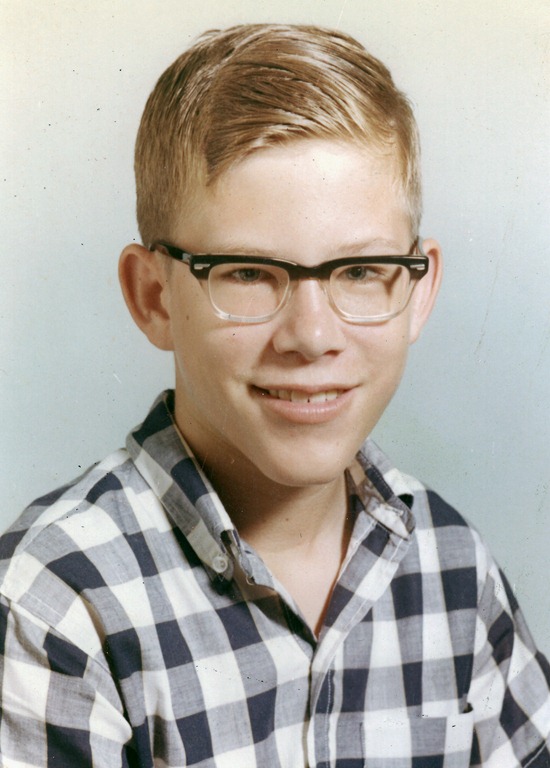
Organizing photographs has also become organizing memories, which leads to philosophical observations.  Life is very short and fleeting when all you can find of your past is a 25-30 images of yourself taken over 59 years of life.  One thing that’s amusing is I spend a lot of time on this blog remember when I first started reading science fiction, so I tried to find a photo from 1964 when I discovered the books of Robert A. Heinlein that have remained so memorable to me.  Here’s one that might be from that time, and a recent photo.  It’s hard to believe that so much of my mental kid world from 1964 is still surviving in the old bald head of the 2011 me.  By the way, my big fat head is blocking the view of the 12 Heinlein YA novels I ordered directly from Charles Scribners in 1967, that I first read in 1964 and bought with my first paycheck when I got a job at 16.

jim-001Jim-58

JWH – 3/16/11

The Burden and Responsibilities of Family Photos

When people die their children usually go through the deceased possessions and divvy up the family mementos which usually include photographs the dying person has collected in their lifetime.  My wife and I have the photographs from her family and my family.  And when people in your family know you have the family photos they tend to send you the odd photo in their collection that would mean something to you from their family.  Awhile back my cousin Alana sent me some pictures she had inherited from my grandmother when she died.  I had not heard from my father’s side of the family in decades, so we had a lot of catching up to do.

One of the photographs is four grown sons and their father and mother.  One of the sons is my father’s father, or my paternal grandfather that I never knew.  I never knew my maternal grandfather either.  All I ever knew about family history was was from my two grandmothers.  So this photograph introduced me to my grandfather, and great grandfather and grandmother, as well as three great uncles I never remembered even mentioned by anyone.  I wonder about their families.  Is there anyone like me with a copy of this photo wondering about the other three brothers?

1920s - Dad's father on right - with parents and brothers - cropped

My grandfather was named George Wallis Harris.  I’m James Wallace Harris, so somehow the spelling got changed, or the spelling from the genealogy was wrong about my grandfather.  He married Helen Imogene Delaney, and my dad was called George Delaney Harris.  I almost was James Delaney Harris.  My father’s father was the man on the right.  His brothers were from the left, Jan, Charlie and Carl.  My grandfather was born in 1897 and my grandmother in 1898.

The older couple in front of the sons are my great grandparents George General Harris, born 1872, and Minnie Maude Maynard, born 1871.  All I know about these people is they lived in Nebraska.  My father was born in Nebraska in 1920, but moved to Miami as a small child.  I can remember him telling me stories about visiting Nebraska, and how the farmers would get together to kill jack rabbits by walking side by side down the fields to flush them out.

I think my great grandparents worked a farm, but I don’t know. Only two of them bothered to dress up for the photo. I can’t tell if my great grandmother’s dress was dirty or is the smudges part of the photo or the copy of the photo.

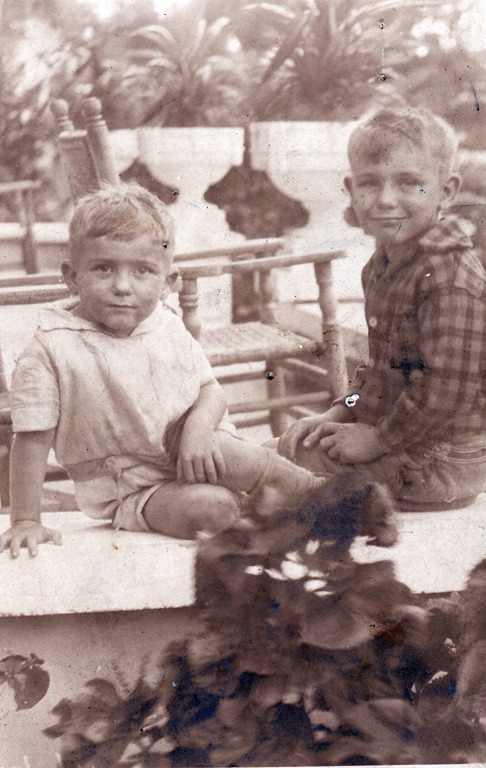
I found one other photo among my mother’s photos that I think is of my great grandfather and my father and his younger brother Jack.  I don’t have any photos of their younger brother Bob at all.

1929q Jack Grandfather Dad - I guess

When I say owning the families photos are a burden or responsibility it’s because I have pieces of history, and maybe the only known copies that are evidence to people’s lives in the past.  I uploaded this photo to the web so my cousins could have it, and maybe convince my nephews to take interest.  Since Susan and I have no children I’m not sure where our photo collection will go when we die.  I assume we’ll give everything to our nephews and nieces.  We should give them copies now before something happens.

If our photos were to be burned up in a fire or destroyed in a flood, all these unique views of the past would be gone.  So I’m thinking I should put in the extra effort to preserve them.  It’s a shame there isn’t some kind of national historical photo registry.  There might be people alive today that could tell me more stories about these people.

All I know is my grandfather and grandmother, who is from Indiana, moved from Nebraska to Miami in the 1920s, but I don’t know how early.  I do know they were there by 1928 because I have this photo labeled “George Jr. and Jack Harris 1928, Coronado Apts. N.E. 17th Terrace.”  I had heard stories of them talking about the great Miami hurricane of 1926, but I don’t know if they there then or not.  My sister says my grandfather was referred to as a barefoot mailman, but that was something that started in the 1890s and I don’t think they were there that early.  Uncle Jack was born in Nebraska in 1924, so I assume they came to Miami between 1924 and 1928.

1928 Jack and Dad Coronado Apts

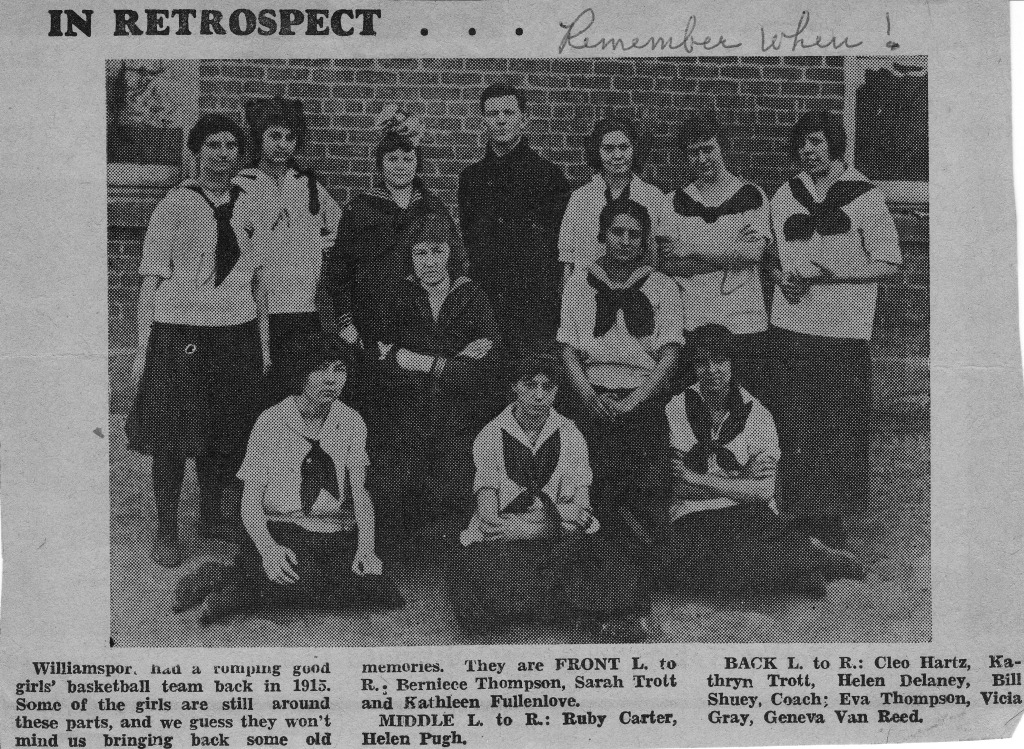
My father died when I was 19.  He always worked two and three jobs and was never home except to sleep, so I don’t remember talking to him much.  He was in the Air Force and we moved around a lot.  But we mostly lived around Miami, and when we were there I’d see my grandmother Helen Delaney Harris, whom I called Ma.  She mostly talked about growing up in Indiana.  I only have a few photos of her, the earliest of which is a newspaper clipping.  She’s third from the left on the top row wearing some god awful bow or flower on her head.

Helen Delaney Harris - school girl

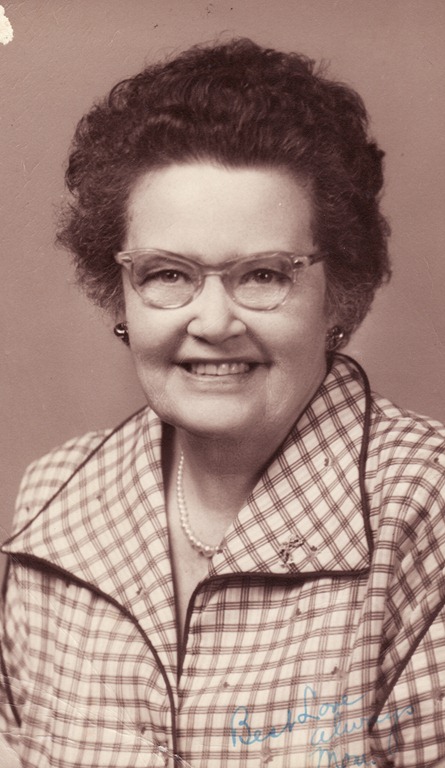
I only remember a few stories about Ma even though I used to stay with her.  She managed apartments when I was growing up and sometimes my parents would leave me with her.  The apartments were always ones where old people lived and I’d hear a lot of stories about the old days, including meeting an old lady who had been on the Titanic.  I wished cheap video cameras had existed back in the 1950s and 1960s so I could have recorded these memories.  That’s the thing, all we have now are the photographs.  The stories pretty much went in one ear and out the other.  I wished I could have saved them.  Here’s the best photo I have of Ma.

1957-04 Dad's Mom Helen Delaney Harris

I do remember stories about her teaching in a one room school house, and that during the war she drove trucks and chauffeured officers as a staff driver.  She had lots of old friends and loved to collect figurines of dogs.  That’s not a lot to remember is it?  That’s why these photos are so important.  They are my only real evidence of the past.  I’m like that guy in that movie Memento trying to figure out life with only short term memories.  I have another photo of Ma.  When my mother got tuberculosis and went to stay in a sanatorium up north at Valley Forge, and my father was stationed in Canada, Ma took care of my sister Becky and I for several months.  This photo is from that time.

1959 - Jim Helen Becky

She looks so old there, but was just 61.  I’m turning 60 this year.  This photo was taking in Hollywood, Florida around 1958-59.  The house there is one of my favorites of childhood but I have no photographs of what it looked like on the inside.  I’d give anything if my parents had taken more photos.  I’m not sure who took the photo here, but I think it was taken to send to my mother in the hospital.  Those were our Easter outfits that year, and my snappy white hat blew out of the car window coming back from church.  Would I remember that without this photo?

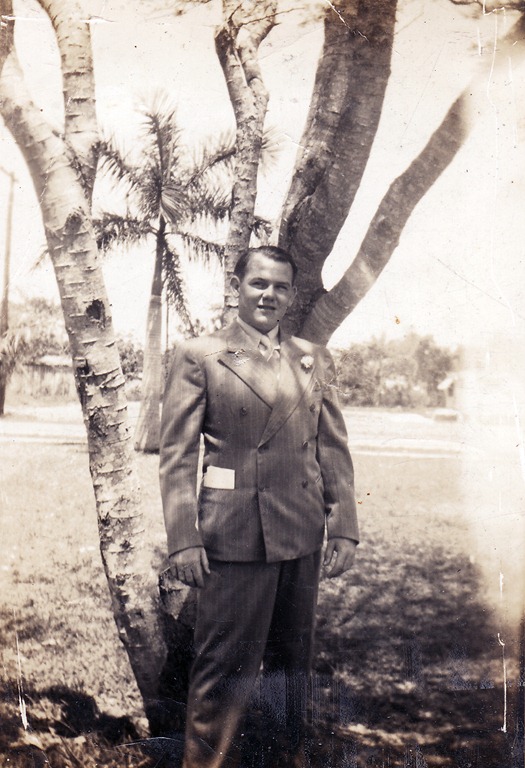
I really don’t remember much about my father.  I don’t have many photos of him either.  Here’s one I like taken when he graduated high school.

1939-05 - Dad at Homestead FL

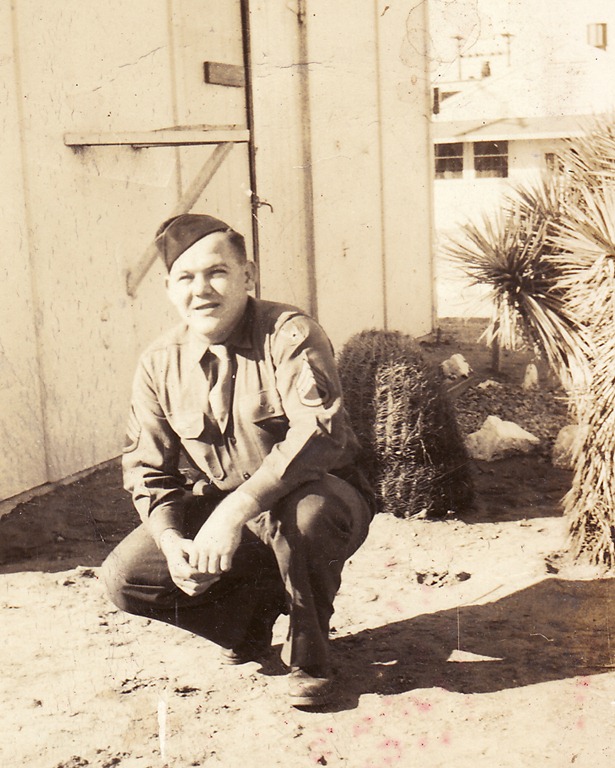
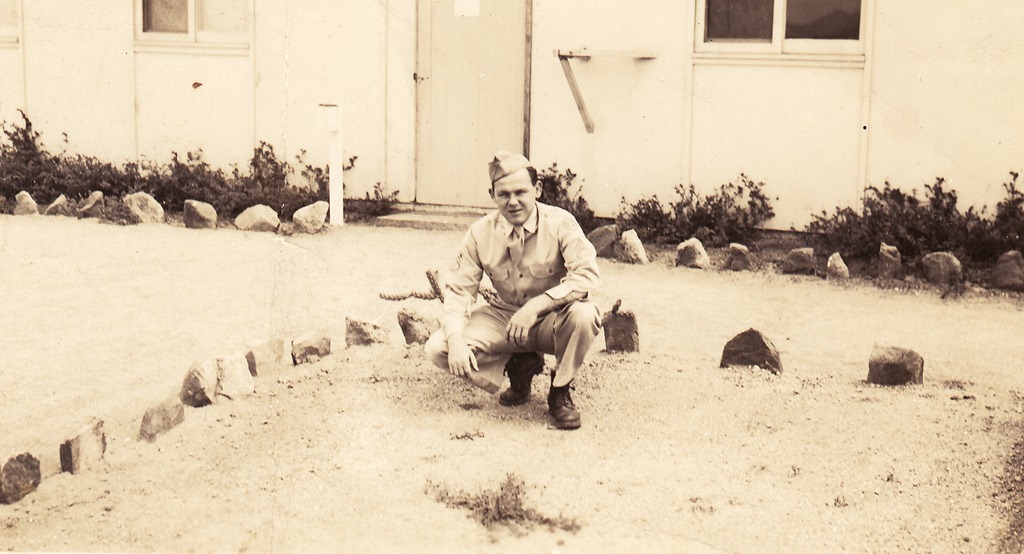
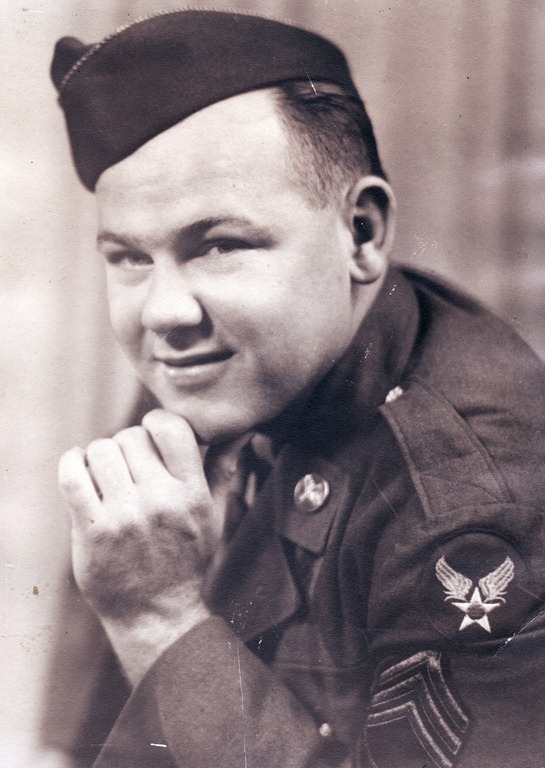
He’s a little younger in this photo than I was when he died in 1970.  I was 19.  I know very little about his teenage years, but I do know he hated my teenage years.  I had long hair, did drugs and was against the Vietnam war.  His dream for me was to go to the Air Force Academy.  I don’t know what his dreams for himself were.  Years ago I found a clipping from the Miami Herald that mentioned he and some of his classmates working on a project for the paper.  He told me he delivered telegrams for Western Union to make money in high school.  In 1942 he joined the Army and ended up a drill sergeant out in Arizona.  Somehow he started in the Army but ended in the Air Force.  I don’t know if he was ever in the Army Air Corps.  Maybe these uniforms can reveal that.  For all I know he could have been in the Army during the war and got out and then joined the Air Force.

1945-01 Dad in Arizona

1944-04 SSgt George D

1945 Dad

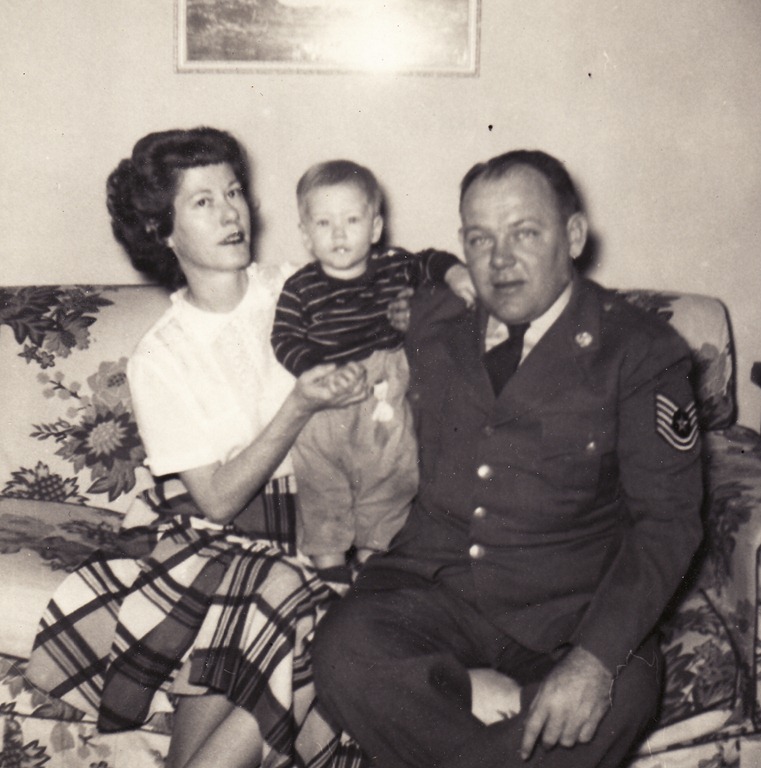
1949g -Mom and Dad

1952 - Mom Me Dad 2

The last photo with me and my mom from 1952.  The one before that was with my mom, before I was born, when they lived in Puerto Rico, probably round 1949.  I think that was the happiest time of their marriage.  For the first six years of their marriage they were told they couldn’t have children.  I do know Becky and I were a handful.

I can only find one later photo of my dad, an accidental photo, taken in 1969.  He’s profiled by the light, shining on his bald head.

1969 - Last photo of Dad

I have a few more photos from when he in high school and in the service, but these few here are pretty much all the evidence I have of my dad’s existence. When my sister and I die, and these photos are given to my nephews, this is all they will know about their maternal grandfather.  Maybe I can convince them to read this blog.  (Nick and Mack, if you want want copies of all the photographs just let me know.)

That’s the thing, what kind of past would we have without photos to remind us?  I have a responsibility to preserve the evidence that I have, but I don’t know how long people will care.   We believe people continue to exist as long as other people remember them.  That’s an interesting obligation.

If you keep the family photos you become the family historian, and a detective.  I really wasn’t prepared for this job.  Instead of inheriting all the pictures when the last member of the previous generation dies, children should each be given a copy of the family photos when they are little and encouraged to talk to the people in the photos when they are still living.  Probably good families do this, but we were wild active kids who couldn’t sit still.  We were hyperactive before they invented the word.

Like I said, Susan and I never had kids, so who will remember us?  And I probably don’t have many more photos of myself than I do of my dad.  I wished we were a family that liked to take pictures.  I wished we had taken one good photo of every family member each year.  I wished we had taken photos of all our pets.  I wished we had taken photos of all my friends and classmates.  I wished we had taken photos of all my houses, schools and neighborhoods.  I even wished we had photos of all our cars.

Hell, I didn’t know I’d get old some day and be tested on this stuff.  And I certainly didn’t know it would be my own desires that would be doing the testing.  I wish I had been forewarned that I would someday be the family historian and keeper of memories.

For my next project I’m going to research how to properly find, repair, store, and maintain old photographs.

JWH – 3/6/11

Outlook Tasks v. Remember the Milk v. ToodleDo

I’ve always have a million things I want to do, but not the discipline for getting things done.  I tend to get distracted by reading, surfing the web, watching television or listening to music.  All my life I’ve made to-do lists on note cards, backs of envelopes, post-it notes, Moleskine notebooks and even emails.  I’ll make up a good list of things to accomplish and then do a couple items and then loose the list and not think about it.

Taking the time to concentrate on what I want to do is good, but following through is hard.

Keeping a to-do list is like trying to make New Year’s resolutions every day, and that ain’t natural.  On the other hand, I do have a lot of tasks I want to get done.  On most days I struggle to remember my to-do list in my head.  I go to sleep at night thinking about things do to and I tell myself to try and remember just two things.  Some days I do and some days I don’t.  Like last night, I thought to myself I should take an old bottle of pills for my back to work so I’d have some there.  I actually remembered to do that.  I was also going to post a comment on Amazon about some t-shirts I bought that promised generous length but warn others that the extra length disappeared after one washing.  I forgot that one.

At work I started putting my work to-dos in Outlook Tasks.  I’ve tried that before but would forget they were there.  But this time I set a reminder date and they pop up like calendar reminders.  That was a key lesson – using reminders.  One cool thing I discovered about Outlook was the ability to organize tasks into folders, so I can separate various work and home to-dos into separate groups.

The first thing I do in the morning, well after taking a pee and giving the cats some crunchies, is to read my email.  I’ve tried emailing to-do lists, but they get pushed down by all the other email.  Since I’m always in Outlook I figured I should try to make use of its built in to-do list Tasks feature.  Outlook is always running in the background at home or work, but I never developed the addiction to Tasks.

Tasks don’t show up as part my my Exchange client on my iPad touch.  That means I don’t see my To Do lists away from the computer.  I do carry my iPod touch with me everywhere because I’m addicted to listening to audio books and playing Words With Friends.  I needed a To Do App that would be my vital third reason to carry the iPod touch. 

So I started looking for something more.  What I wanted was something that would work on every computer and on my iPod touch, or any future smart phone I might buy.  It turns out there’s lots of companies selling To Do List software that meets my requirements.  Along the way I encountered the Getting Things Done philosophy.  Here’s a pretty extensive list of To Do programs that use the GTD concepts.  Here’s another site I found, 50+ Online To Do List Managers.

43 Folders even has a section on “Getting started with ‘Getting Things Done’” that convinced me to order the David Allen book, which is more complicated than just keeping lists.  But I still needed a program for lists.  I looked at many.  I had heard of Remember the Milk which I signed up for the free account.  It looked slick and promised to work with all kinds of other programs and mobile devices, but I just didn’t find the online interface intuitive. 

I also signed up for the free account at Toodledo.  The program is far less slick but I could immediately work it, and it’s interface reminded me of LibraryThing, another online program I love.  I played with the free version Toodledo for awhile, bought the $2.99 App for my iPod touch, and then paid for the Pro version ($14.95/year).  It’s nice to study my To Do list when I’m away from my desks at home and work, plus the more I used Toodledo the more I liked it.  I’m already getting more things done.  Now I need to study the Getting Things Done philosophy and integrate it into my life.

I’m learning things like putting deadlines on my To Do items.  I never did that before, but once I started the impulse to get items off my list increased.  Toodledo allows me to send emails to the program and it will automatically add items to my list of things to do.  This is convenient because I have email open all day long.  The key to using To Do lists is to look at them frequently and to add items as soon as you think of them. 

I’m combining this endeavor with a concurrent task of getting rid of as much stuff as I can.  We’re getting rid of furniture, old clothes, sentimental junk, books, DVDs, etc.  I’m converting a four drawer file cabinet to three small plastic folder boxes which I’ll keep in a closet I’ve cleaned out.

I don’t know yet if Toodledo is perfect for me.  Outlook Tasks has some great integrated features with its calendar and email functions, and even Remember the Milk has many features to integrate with other apps.  What I’m learning is one program can’t stand alone.  If a new version of the Exchange client for iOS shows up offering Tasks I could go back to Outlook – but I actually like the simple interface of Doodledo over Outlook Tasks interface.

I wished I would get up very early, bathe, do yoga and then light some incense like a monk, and meditate on my To Do lists for twenty minutes.  I need to develop my priorities and learn to understand the differences between tasks, goals and ambitions.

JWH – 3/2/11