Classic Science Fiction Anthologies Wanted for My Kindle and iPod

Ebook publishing offers a new lease on life for reprinting old novels but what about short stories and classic anthologies?  Successful novels tend to stay in print, but not anthologies.  I suppose editors buy rights for a limited time and when the anthology goes out of print they no longer have the rights to use the stories any more. But I’d sure love to have a lot of classic science fiction anthologies on my Kindle.

I like my Kindle best for reading short stories.  I’ve been getting the annual Dozois and Hartwell/Cramer collections for my Kindle for a couple years now and it really works out well.  The Dozois book is HUGE with small print, so its much easier to plow through the volume reading on an ebook.

I wished Dozois and the Hartwell/Cramer collections were available on audio, but alas they are not.  But I do get  The Year’s Top Ten Tales of Science Fiction series, edited by Allan Kastor, now in it’s third year.

So I’m well covered on current stories, but what about classic science fiction short stories?

What if it was possible to reprint classic anthologies, which ones would I want?

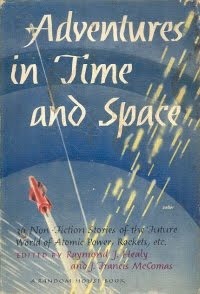
Adventures in Time and Space edited by Healy and McComas

Adventures_in_time_and_space

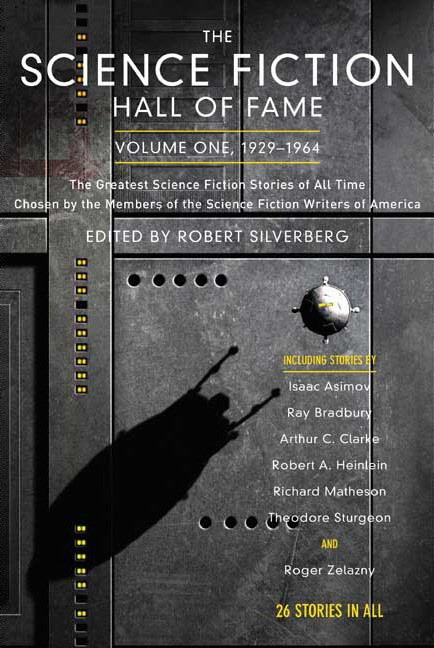
The Science Fiction Hall of Fame, Volume One, 1929-1964

sf-hall-1

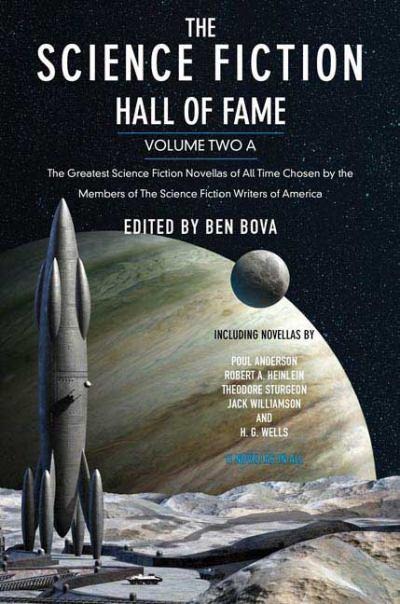
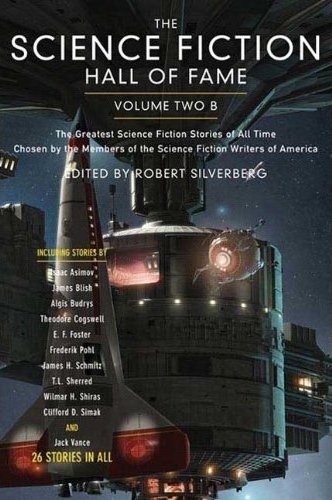
Science Fiction Hall of Fame, Volume 2

sf-hall-2a

sf-hall-2b

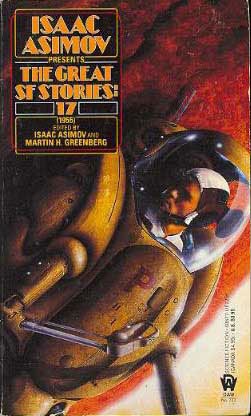
Asimov’s Great SF Stories (series 1-25, 1939-1963)

Asimov_Great_SF_stories17_Daw_1988

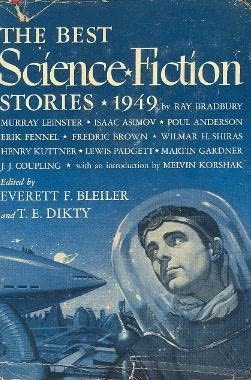
The Best Science Fiction Stories: 1949, 1950, 1951, 1952, 1953, 1954

Best_science_fiction_stories_1949

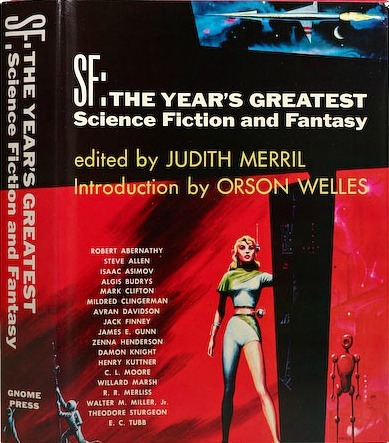
Judith Merril Year’s Greatest (1956-59) and Year’s Best S-F (1960-66)

SF-The Year's Greatest

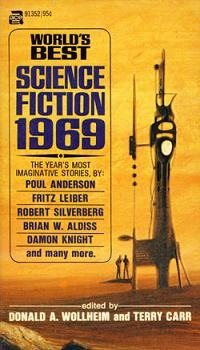
World’s Best Science Fiction (1965-1971) edited by Wollheim and Carr

Worlds_Best_Science_Fiction_1969_cover

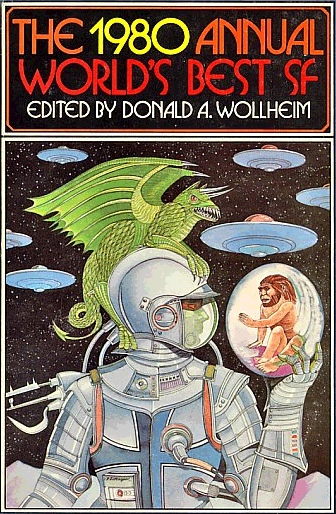
The 1972-1990 Annual World’s Best SF edited by Donald A. Wollheim

the_1980_annual_worlds_best_sf

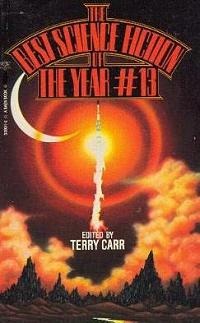
Best Science Fiction of the Year edited by Terry Carr (1-16)

Best_Science_Fiction_of_the_Year_13_cover

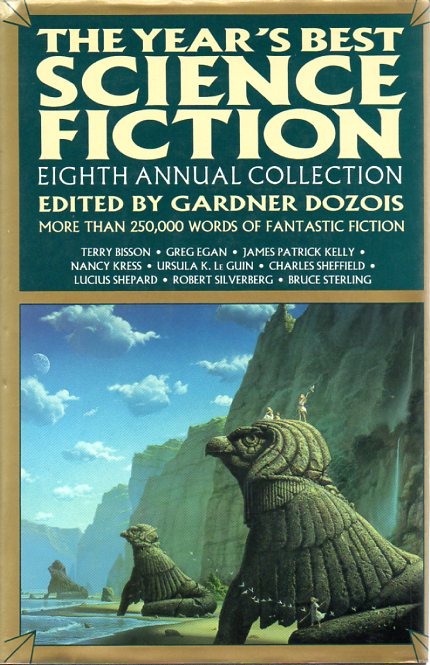
The Year’s Best Science Fiction edited by Gardner Dozois 1984-present

Year'sbestDozois


This hardly scratches the surface of great science fiction anthologies, but by using the annual bests it systematically covers all the years from 1939 to the present.  And we can capture the 1930s with these two collections.

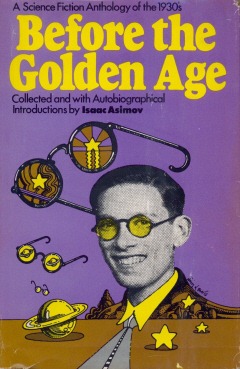
Before the Golden Age edited by Isaac Asimov

Before-the-Golden-Age

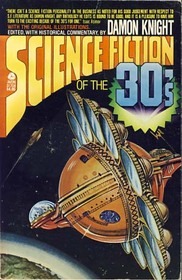
Science Fiction of the Thirties edited by Damon Knight

science-fiction-of-the-thirties

I could go back even further with the Sam Moskowitz collections like Under the Moons of Mars and Science Fiction by Gaslight.

If only all these fantastic collections could be reprinted as ebooks, or better yet, as audio books.  I suppose some enterprising publisher and editor could look at the stories in all these collections and seek to get reprint rights and create a new series of anthologies.  They could call it Classic Science Fiction for the Digital Age and publish it in a series of volumes for ebooks and audio.

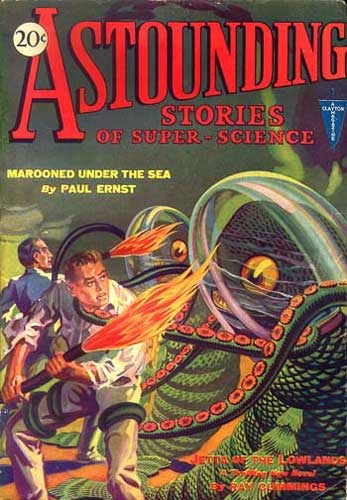
Would there be much of an audience for this old science fiction?  I don’t know.  Project Guttenberg is reprinting a lot of early science fiction in multiple ebook formats that often include the original art.  Take a look at this September 1930 issue of Astounding Magazine.  It’s beautifully laid out for html, but also offers many ebook formats here.

astound-1930-09

Copyrights will keep modern science fiction, like what’s in most of the best of the best-of anthologies above out of these public domain offerings, which is rather sad.  It means most of those stories will probably be never read again.  Of course, I don’t know if there are readers for these public domain reprints.  I do wish someone would make an easy to use app to add the Project Guttenberg issues of Astounding to my iPad.  I’ll have to experiment with this and write about it in a future blog.

JWH – 9/3/11


Empire of the Summer Moon by S. C. Gwynne

Empire of the Summer Moon by S. C. Gwynne is subtitled “Quanah Parker and the Rise and Fall of the Comanches, the Most Powerful Indian Tribe in American History.”  Empire of the Summer Moon is the kind of history book that makes you want to give up reading fiction, because it’s far more riveting than most novels.  Empire of the Summer Moon starts with the Fort Parker massacre in May of 1836, when Cynthia Ann Parker, then 9 years old, was captured by the Comanches.  After the gruesome attack on the private fort, S. C. Gwynne digresses by jumping back to give a bit of history of the Nermernuh, the Comanche name for their people, migrating down from what is now Wyoming, to Texas, Oklahoma, New Mexico and southern Kansas.

empire-of-the-summer-moon

Gwynne teases us through the whole book, by returning to the story of Cynthia Ann Parker, one of the most famous captives of the West, and her son Quanah Parker who became the final leader of the Comanches, which I considered the main story.  Gwynne often leaves their personal story to explore on the larger history of the Comanches, and how the Spanish and Mexicans came up from the South, and the Americans from the East,  to invade and destroy Comancheria over four hundred years.

Empire of the Summer Moon is a story about a clash of cultures between 19th century Europe invading the territory of what is essentially a late stone age hunting and gathering people.  If you’ve seen John Wayne’s great film The Searchers, then you’ve seen a cleaned up story based on the same real-life history chronicled in this non-fiction book.  I grew up loving westerns – movies, TV shows and books, but they don’t hold a candle to Empire of the Summer Moon when it comes to gritty realism.

This is a complex story.  It involves genocide, terrible acts of violence, rape, torture and war, with magnificent struggles of survival by individuals, and the  manifest destiny of one people against the way of life of another.  This is a meaty book that begs for the 12 hour Ken Burns documentary treatment.

It’s also a book of ethical issues.  Should the Europeans have destroyed the Indian way of life?  As Gwynne points out, the Indians loved warring amongst themselves, and everything the Comanches did to the whites they also did to all the tribes around them.  And for most of several hundred years the Comanches were the superior fighting force able to hold their own against the invading white man.  It wasn’t until after early Colt revolvers were introduced in 1844 that technology changed in favor of the Texans battling the Comanches, but it wasn’t until after the civil war ended that the U.S. got serious about ending the conflict for good.  Whether this was intentional genocide or just crushing cultural imperialism is hard to say.

Either way you look at it, we took away the Comanche way of life of living on the plains and hunting the buffalo.  The Comanches had their own form of assimilation.  They would attack their enemies, kill the males, rape and enslave the woman, but adopt the children.  Cynthia Ann Parker grew up with the Comanches and loved their way of life and did everything she could to keep from being recaptured by the whites.  The Comanches knew they couldn’t convert grown male captives, and didn’t try.  But that’s exactly what the Americans wanted to do, to convert the male Comanches from buffalo hunters into dirt farmers.  We thought we were being fair and enlightened, but maybe it was the most unethical and cruelest treatment of all.

Few Indians could adapt to the white man’s ways, especially in the corrupt reservation system, but Quanah Parker, a young Comanche chief and fierce raider did just that.  Did Cynthia Ann Parker’s genes help him?  I would think so, but I’m not sure.  Quanah Parker moved to the reservation in 1875 and lived to 1911, becoming quite successful and was even a friend to former enemies and presidents, often traveling east, and even got to act in an early silent movie.  I wished that Wynne had written twice as much material on this part of the story because Quanah Parker was an amazing man – especially when you consider his early life was spent in acts that would sicken all but the worst serial killers.

I’m not sure who the targeted audience is for this book.  I would think anyone who loves American history, especially history of the westward expansion in the 19th century, would love this book.  I would also think anyone who loves watching westerns would love this book.  I wonder what the 14,700 modern day Comanche readers would think of this book?  Was it a fair portrayal?  But I also wonder what the citizens of our country who dislike criticism of America will think.  Gwynne does make a good case that many 19th century Americans did want to flat out exterminate the Native Americans, and even showed the eastern liberals who wanted to do fair by the Indians failed miserably.

I highly recommend this book to fans of westerns though.  Empire of the Summer Moon proves that most westerns are inaccurate at best, but more than that, makes me realize that most fail to capture the time in any authentic way.  The book shows we have a collective fantasy about the old west that is absurdly simple minded.

JWH – 8/21/11

News Processing on the iPad with Flipboard

There is too much goddamn information in this world – but what can we do about it?

First off, we could ignore it.  Take up reading  Sci-Fi novels or watching reality TV and just tune out the world.  Well, that doesn’t work for me.  I’m a little like that robot in Short Circuit, Johnny 5, who craves more input.  Johnny 5 can read an encyclopedia in a matter of minutes and begs for more, but I can’t.  I don’t want to be like God and know about every dang sparrow that falls from a tree, but I do want a rough idea of what’s going on around this old reality each day.

What I crave is a good steady flow of knowledge about this world and the cosmos.  I like learning new things, but I also need time to ponder fresh data and digest it.  Like most people I want to be up on current events, and not too out of touch with popular culture.  I’m not quite ready for the youngsters to be laughing at me for not knowing the current crop of glitterati of the moment, although I really don’t care, either about being laughed at or who is currently grabbing their 15 minutes of fame.

The trouble is we live in world overflowing with information.  If facts were water droplets there would be no land on this planet.

Keeping up with the news used to mean reading the newspaper or maybe a couple of magazines. Then came television which really made being nosey addictive.  Now with the world wide web we have access to countless newspapers, magazines, television stations, web sites, blogs all coming to us at once.  It’s a wise man who knows what he doesn’t want to know.

For some people getting their daily dose of reality is as simple as watching the NBC Nightly News 30 minutes a day.  But this is baby food news, predigested bites served from little jars and spoon fed to those who are still in the crawling stage of exploring reality.  The next step up for toddlers is the PBS NewsHour.  But then we run into the issue of facts per hour barrier.  How many people really want to spend more than a hour a day getting the news when most of it is repetitive and overly verbose.

What if you could read reports, study graphs and photos and see video clips at your own pace – tailored just your informational curiosity?  That’s what I’m trying to do with my iPad

A tablet computer can nicely format text for reading, show video clips in bright clarity, and display photos that look better than a slick magazine with the extra feature that you can zoom in on them for close study.  It’s outdoes the newspaper, magazine and competes well against the television and the web.

The trick is to get just the right words, videos and photos to view on the tablet.  And it’s a very hard trick.

Enter Flipboard for the iPad.  It does several things, but not perfectly – yet.

  • RSS feed reader
  • Twitter client
  • Facebook client
  • Digests many popular magazines, newspapers and websites

I already like taking in Facebook and Twitter content better on the iPad and Flipboard because Flipboard formats this web content to look like a elegantly laid out magazine.  It’s far more eye catching, but then Facebook is a homely looking website, so it’s not that hard to beat.

It’s also nicer to read RSS content on Flipboard than Google Reader, although there are some big limitations.  RSS feeds come through in two styles.  Some sites send the whole page, and others send just a teaser and a link back to the original web page.  They want you to come look at their ads.  Falling out of Flipboard into its browser mode is unpleasant.  I don’t like reading web pages on the tablet even with the magic of spreading and pinching pages to make them readable.  If I’m going to read the web I’d rather be sitting at my 22” desktop screen. 

However, many websites do send the full pages in their feeds and these look wonderful on the iPad because Flipboard makes their content look like it was published in an issue of National Geographic.

To make up for this limitation of RSS feeds Flipboard has contracted with publishers like Condé Nast to stream their content into Flipboard’s beautiful formatting.  These do come with original ads or even extra ads, but they look like they do in magazines, and not like web pages.  However, these pages are handled different from the RSS content.  Instead of scrolling up to read a long article, they are formatted into pages that you have to flip.  Here’s what Flipboard looks like:

After configuring Flipboard with my accounts at Facebook, Twitter and Google Reader I opened Flipboard and started flipping.  Fantastic first impression, and then I noticed, gee, there’s a lot of damn pages to read here.  Now that’s the essential key to using Flipboard, cutting down your input.

I’m leaving Facebook as it is, but I’m thinking of cutting out a lot of “friends.”  On Twitter, which was already minimally used, I cut out very active feeds.  Then I went to Google Reader and deleted RSS subscriptions to any feed that used the teaser method of providing content.  I only want complete articles sent to me.  I also deleted feeds that sent articles by the hundreds.

What I want is my own personalized digital magazine that I can flip through each day and keep up with what I’m interested in.  It’s going to take awhile to customize Flipboard to get things just the way I like things.  It will  take a few more revisions of the program too.

Flipboard opens on the Favorites section.  The first page has 9 photo squares that each equal a content source.  With the More feature you can add 12 more squares on the next page, each a new content source.

Through the More feature – content from professional publishers like Time, Wired, National Geographic, The New Yorker, Salon, Huffington Post, Elle, Rolling Stone, etc. can be added to the Favorites squares.  Flipboard can expand your magazine to cover endless varieties of news.  This canned list of content that Flipboard has arranged with publishers is ever growing.  They sort this content by twelve categories but that will probably expand too.   You can use these many sources to build new Favorites sections. These pages look like actual magazine pages with ads, and they might be direct copies from printed pages, or facsimiles.

What Flipboard is doing is trying to be the best RSS feed reader possible, but it’s going beyond the RSS feed with contractual agreements with magazines, newspapers and television shows to provide custom Flipboard feeds not based on the RSS standard.

Now this is all wonderful, and it does reduce the hurricane of data from the Internet into merely a fire hose of magazine pages, but it’s still too much.

What’s needed is artificial intelligence to monitor my reading tastes and further customize the content flow to just stuff I want to read.  I want Flipboard to be much more than what it is.  Which brings me to Instapaper – a web service that allows web readers to save content to read later.  Flipboard can be configured so if you tap an icon at the bottom of the page and select Read Later the article is saved at Instapaper so you can read it later.  But you have to read it at Instapaper web or quit Flipboard on the iPad and launch the Instapaper app.  What would be neat is if Flipboard saved the read later articles in it’s own app – so one of my Favorites squares would be Read Later.  And of course, Flipboard would need to create a browser add-on to mark pages like Instapaper.

Now, I have figured out how create a workaround for this.  I can just Tweet everything I see on the web that I want to read later.  But this isn’t exactly what I want.  What I want is for a Flipboard AI to know what I want to read and have it ready like the President’s assistants with his morning briefing of the news.

The whole key to all of this is reducing the flow of things to read.  Flipboard can’t do this – yet.  Maybe not ever.  It might take another app invention to do what I want.  What might be needed is a social network of very like minded readers.  Digg, Reddit and StubleUpon are much too broad.  Essentially I want a 30 minute briefing on reality each day, with the option to read one long article that might take 15-30 minutes more reading time if I have it.  I don’t want to spend 30 minutes a day trying to find the news that I want.

It might be possible to hook me up with the right 100 people who like to read the same exact content as I  do.  Then each of us would have to spend 5-10 minutes a day looking at Flipboard or the web and mark the best articles for our daily custom reading, which would be a cross tabulated to find the most popular for all of us to read.

Another way would be to allow readers to list specific topics they are interested in and the amount of words they want on these topics.  For example, I might say I want Cosmology articles that run from 500-1,500 words.  Anything shorter or longer is excluded.

Right now the iPad is another big time waster like TV and the web.  I know a lot of people who like to watch their TV shows and movies on their iPad.  The iPod made music listening very private, now tablet computers are making TV watching very private.  Apps like Flipboard could also manage my TV shows too – that’s another issue.

JWH – 8/16/11

The Things I Should Be Doing

I tend to do whatever I feel like.

But then I’m sixty pounds overweight and my health is going down hill.  My house could use a good deal of renovation, and even though my yard guys keep my lawn close-clipped, it’s a green carpet of weeds.  I feel great relief when I see those shows about hoarders because it makes me feel clean and orderly in comparison.  I take a certain pride that I’m not an alcoholic like my parents but I have quite a reading addiction.  I wanted to be a writer, and although I can churn out the blog posts, I never write the fiction I constantly create in daydreams.

One of the biggest problems in my life is I’ve been reasonably happy and content – I think drive comes from dissatisfaction.  If it wasn’t for the guilt over being unproductive I could cruise to my deathbed with no regrets.  Yeah, that’s a pretty big exception though.

A friend of mine recently got some paid-for psychological advice which she shared with me for free.  She was told to picture herself dying comfortable, able to think clearly – and then asked to imagine what her regrets about leaving life would be.

Now that can be taken a number of ways.  There’s a difference between the fantasies that didn’t come true and the ambitions I gave up because of laziness.  Remember that movie about the bucket list – well how many people can die with the aid of a billionaire to finance an expensive life-improvement checklist?  I could say my life sucked because I didn’t become a rock star like Bob Dylan but is that fair when I can’t carry a tune and the only song I can remember the words to is “Happy Birthday” and I screw that up half the time.

Studies have shown that success is about 10,000 hours of practice, so should we all be regretful that we didn’t pick something and have applied ourselves diligently for three hours a day for ten years?

Maybe that psychiatrist meant something different.  Maybe he meant that people should regret not being nicer, or more generous, or more caring.  Many people believe a good life is based on how much you do for others and not what you do for yourself.  And to be honest, I’m a very selfish person.  I don’t feel too guilty though, I try to be a helpful person in my own way, and I give regularly to a number of charities, but the reality is I have no more talent for providing human comfort then I do music.

I really wish I could have be more generous with my wife Susan, doing more things she likes to do, like going to baseball games or to bars on trivia night.  I just can’t though.  Baseball is boring, and I don’t like loud bars.  And I’m sure she feels bad about not liking the many things I like to do, like watching documentaries on cosmology or sitting around listening to jazz from 1959.

When it comes down to dealing with regret I think we need to be realistic.

I need to picture lying in my nursing home bed and think of things I should have done that I could have done.  And since I’m turning 60 in a couple of months, it should be things I could start doing right now.  Crying over my first six decades is pointless.  In all honesty, I can make a long list of things I wished I had done in those first sixty years and it would come down to a long list of “I wish I hadn’t been too chicken-shit to do X.”  But what’s the point of that, I have a timid omega male personality and that’s not going to change.

Sure I can think of a few things to wish for that might have been practical.  I wished I started caring for my teeth as a kid instead of waiting until I was in my forties.  I suppose I could have given up my favorite foods at 175 pounds instead of 235.  And if I had only maintained my exercise levels that I acquired in gym class in junior and senior high I could have been the person I always fantasized being.  Ha-ha.

See, that’s the thing about thinking about our dying regrets – it’s easy to make bucket lists, but it’s hard to judge who we really are.

I’ve known I should lose my extra pounds ever since I gained them.  I’ve always regretted them.  I’ve quit eating all my fun foods decades ago.  Other than forcing myself to live with constant craving, I don’t know what else to do.  And the same is true of having a beautifully decorated house and spiffy all grass lawn – I’d have to have a personality change.

I could write on my bucket list that life would have been great if I could have had sex with Catherine Zeta Jones or spent a year living in Paris writing a brilliant unforgettable novel.  But should I really downgrade my life on Earth because I didn’t?

At work people laugh at me because I all too often make references to things I read in books.  They say I shouldn’t read so much.  But, hey, I’m a bookworm.  That’s like telling a giraffe that he’d have a better life without that long neck.  Hell, when it comes down to it, I’m going to regret not reading more books, or listening to more music, or watching more documentaries, or all the other things I really love doing.

When I’m old and dying I’m going to regret losing my health and dying because I’ll have to stop doing what I’ve been doing my whole life, which is being me.

JWH – 8/7/11

The Significance of the Spotify Revenue Model–A New Social Promotion Paradigm

Spotify is popular European streaming music service that has come to America.  It’s not that we didn’t already have American streaming music services from Rhapsody, Rdio, MOG, Napster, Microsoft, Sony and others, but Spotify is different, it has a free, ad-supported option besides it’s two paid options.

Allowing people to listen to music for free is significant.  Lala.com, also offered a free option, but Apple bought Lala and killed it.  I wonder if Apple will buy Spotify?  Free is a threat to the status quo, but legally free means a new paradigm in promoting music.

Would-be rock stars dream of riches so how will free music help them? To become an actual star means finding a million fans – it’s all about promotion.  If your songs sucks, no amount of promotion will help, but if they are great, without listeners no one will know.  And the best way to promote a product is word of mouth.  And social networking on web pages, blogs, Twitter, Facebook, or even email, is word of mouth promotion on steroids.

It used to be radio airplay created hit songs. But who listens to radio anymore?  Now-a-days people use YouTube.  Adele’s “Rolling in the Deep” is at 106,083,210 plays on YouTube.  Of course that could be 10 million fans listening 10 times each, or 1 million fans listening to the song a hundred times, or it could be me listening for 10 times before I bought the CD, and another guy out there listening to it for 106,083,200 times.  But this is the kind of promotion that payola can’t even touch.  Free is more contagious than the common cold. 

Most people I know who want to share a song with a friend checks YouTube to see if there’s a video so their friends can hear it for free.  But what if there’s no video?  Bummer.  There’s always finding a pirate copy, but that’s a pain and could be dangerous.

Spotify is the new kid in town that could replace YouTube’s as the go-to place to have friends try out songs.  But there’s a minor hitch.  You have to be a Spotify member and install the client software before you can play songs for free.  Now that’s not much more work than getting Acrobat Reader so you can read PDF files, but it is some extra work.  If Spotify gets the kind of market penetration as Flash then it will be a snap to share songs.

Spotify will replace Billboard as the definer of Hit Lists. But this depends on everyone using Spotify.  It would help if they had a web client.  It would also help if they had an embeddable player so web pages and blogs could just add a play button so when someone writes about a song they could press a button and listen while they read. 

WordPress does have a MP3 player I could embed in my writing here, but I’d have to load the song onto the WordPress server first, and since most songs are copyrighted, that’s illegal.  But Spotify, and other streaming services, could legally arrange to stream music to such embedded buttons, and they and the record companies would want such buttons if they also had a button next to the play button to return you to the album page where you’d see ads and more promotions for the artist and their albums.

Now this assumes Spotify remaining the only music streaming service with a free option.  What if that’s not the case?  What if they all offer ad-supported listening?  This will cause terrific competition for membership.  People will chose which service from a variety of features.  Price has always settled down to $5 a month for computer streaming and no ads, and $10 a month if you want to hear music on your mobile device (smartphone, MP3 player, tablet).  I would expect the Spotify competitors to come out with free ad-supported versions soon.  The ad supported version is like getting heroin for free.  Anyone who loves music will pop for the $10 deal eventually.

What the artists and record companies will want is the most efficient way to create massive audiences for songs.  I would guess royalties from subscription music is based on plays.  If no one listens to your album, you don’t make any money.  So they game switches from how many songs you can sell, to how many people can you get to play your song on the various subscription services.  Money from subscribers and ads are out of your control – everything is about getting people to listen.

And since anyone can listen for free, this should wipe our piracy – at least for songs on subscription services.

I’d love to be able to write album reviews and be able to embed a player for each song I review so people could play the songs while they read what I’m saying about them.  Right now I can do this:  “Rolling in the Deep” by Adele.  If you have Spotify you can click the link to play that song.  What I want is a graphic with CD controls and a play button so if you pressed it the song would play right in the browser where you are reading this.  WordPress offers that feature if I pay $19.95, but I couldn’t legally upload the song for you to try it.  If I could, I would gladly pay the $19.95 – but then the artist wouldn’t earned royalty credits.  It would be much easier for all concerned if streaming music services just offered embedding controls that WordPress, Facebook, etc. could incorporate like they do when I embed a YouTube video.

If such subscription music players were widely used, artists would get more play credits.

By the way, Adele’s “Rolling in the Deep” gained 26,000 plays as I wrote this blog.

JWH – 8/5/11