From Words to Films: Cloud Atlas, The Life of Pi, The Hobbit, Anna Karenina

Yesterday I saw Cloud Atlas at the theater, and it had previews for The Life of Pi and The Hobbit.  I’ve also seen recent previews for Anna Karenina.  All books I’ve read.  While watching the preview for The Life of Pi I wondered what Yann Martel and David Mitchell are feeling now that their words have become movies.  Do they feel like gods creating new worlds?

Lucky writers type words on their computer and a few years later those words become images on the big screen.  How marvelous must that feel for a writer?  Of course, a writer creates all their characters and scenes in their head by themselves, and a movie requires hundreds, if not thousands of people to create images on the screen for us to see.  And often, they aren’t the same visions the writer first imagined.  I can’t imagine David Mitchell picturing so many of his characters looking like Tom Hanks, but Tom Hanks with the help of make-up artists have fleshed out Mitchell’s characters in a world of pixels that is so much more vivid than printed words on a page.

I have to admit while watching the previews that I wished I could write something worthy of filming.  Few books are given birth on the big screen, so it’s a very rare honor that few writers get to enjoy. 

Look at the opening page of Cloud Atlas by David Mitchell – I saw it acted out yesterday.  It’s not the same at all, these words inspired a movie scene on the beach.
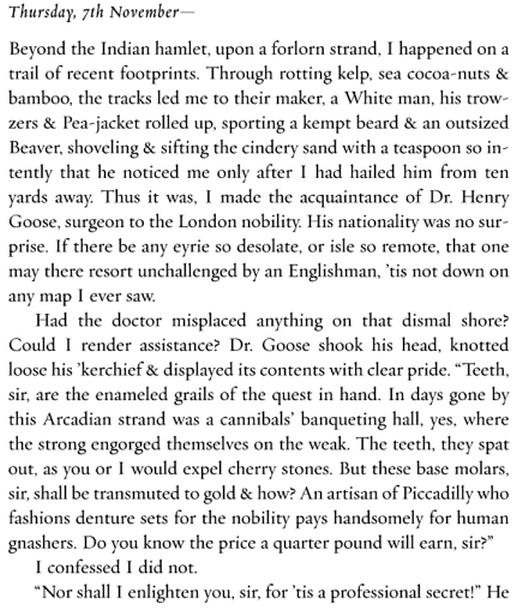
cloud-atlas


Next, watch this clip:


Now read from the The Life of Pi by Yann Martel.
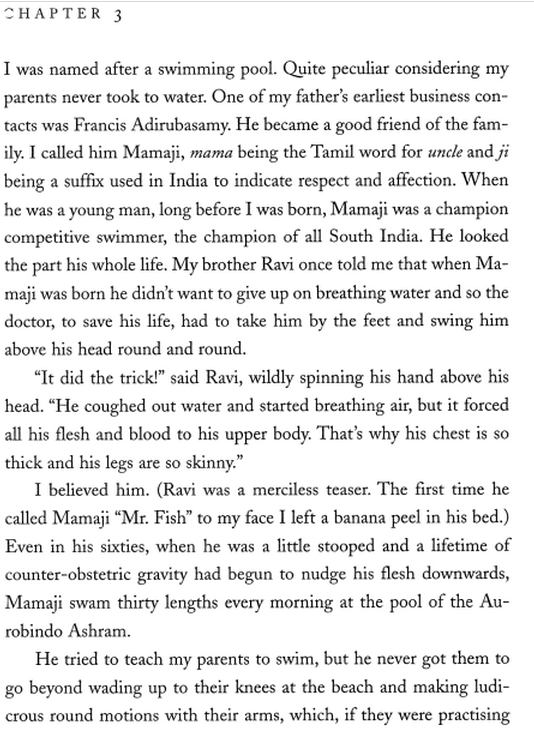
 

Life-of-Pi


And then look at the trailer for The Life of Pi:


These are just two examples.  I wish I had the time and technology to show several examples, with the exact book pages and filmed scenes.  Both Cloud Atlas and The Life of Pi are books of astounding feats of imagination.  I’m sure bookworms hope all their favorite books will become films, but few do.  I’d love to see The Windup Girl by Paolo Bacigalupi made into a movie.   That book also exhibited tremendous feats of imagination, although it’s a bleak view of the future.  I’m thinking movie makers prefer upbeat stories based on fantastic events.

I wonder how many writers sit down to write a story they hope will be filmed?  If you’ve read Cloud Atlas or The Life of Pi, you probably thought like me at the time that it would be impossible to film these stories.  Watching the preview of The Life of Pi made me realize that anything a writer can think up movie makers can film.  Watching the preview of Anna Karenina made me realize that movie makers are going far beyond what writers can do with words.  I don’t think any one mind can imagine so much beauty, color and vivid detail.
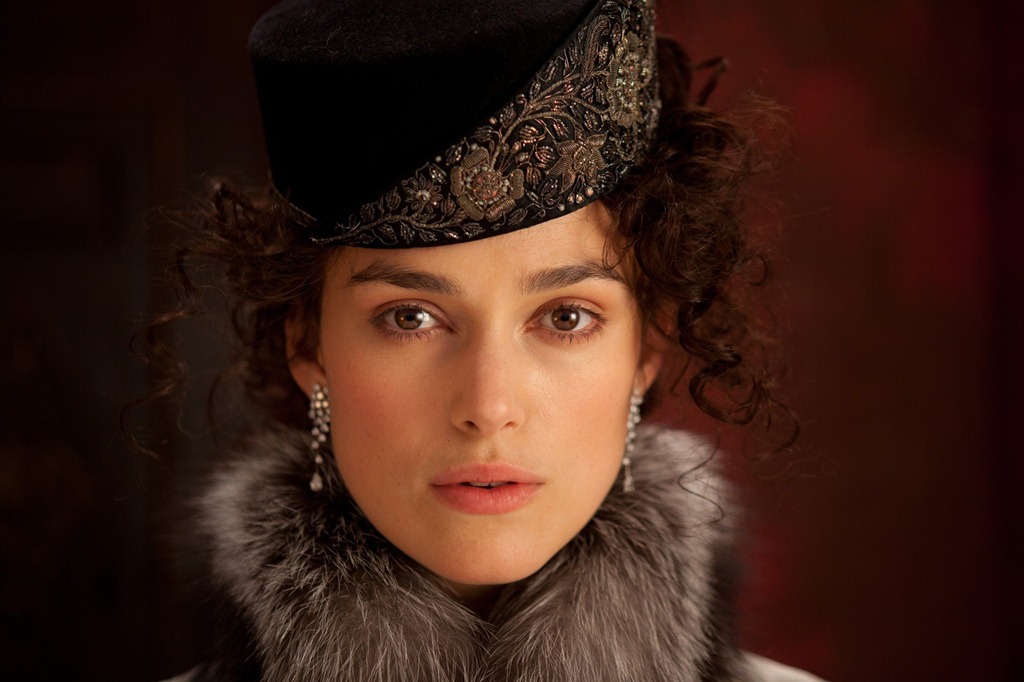
anna-karenina-kk

Look at this photo and then read Tolstoy’s words:

Anna was not in lilac, the colour Kitty was so sure she ought to have worn, but in a low-necked black velvet dress which exposed her full shoulder and bosom that seemed carved out of old ivory, and her rounded arms with the very small hands. Her dress was richly trimmed with Venetian lace. In her black hair, all her own, she wore a little garland of pansies, and in her girdle, among the lace, a bunch of the same flowers. Her coiffure was very unobtrusive. The only noticeable things about it were the wilful ringlets that always escaped at her temples and on the nape of her neck and added to her beauty. Round her finely chiselled neck she wore a string of pearls.

Well, they got the ringlets.  Can any words ever describe what we actually see?  What is the power of Tolstoy’s words that have made Anna Karenina one of the greatest novels of all time?   It is a novel that has inspired the production of many movies.  Will there be additional productions of The Life of Pi and Cloud Atlas?  Will Martel and Mitchell be as inspiring as Tolstoy?

Like I said, I wish I could write a story other people felt compelled to film.  The old saying is, a picture is worth a thousand words, well that means most novels have about 100 pictures in them.  But novels are really about characters fighting adversity, and that’s where movies and books really overlap.  I believe if I wanted to write a novel worth filming, I’d need to create unique characters facing unique conflicts.  Words are great for that.

I think it’s fascinating to read the words that become movies.  I think it’s even more fascinating see characters on pages become characters on screen.  I think it’s also fascinating  for stories to come alive before our eyes in the dark that we once read as black marks on white pages.

[By the way, is film even a valid word to use regarding movies anymore?  Are movies still filmed?  Or do they use high resolution video cameras?  In our modern times both novels and movies appear on screens.  I guess I could have talked about stories that appear in black and white on small screens and in color on large screens.  Is that the transformation good stories should expect – more pixels with great color depth?]

JWH – 11/5/12
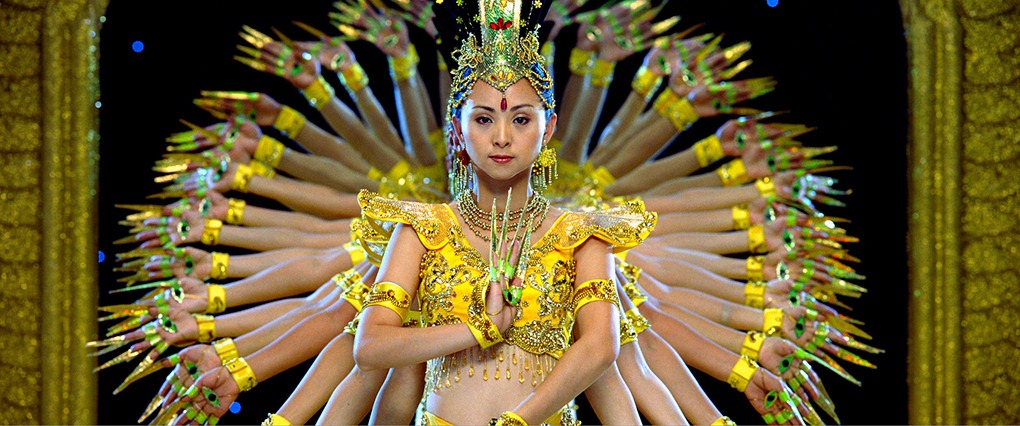
Samsara (2011)–Ron Fricke Shows Us the Diversity of Mankind

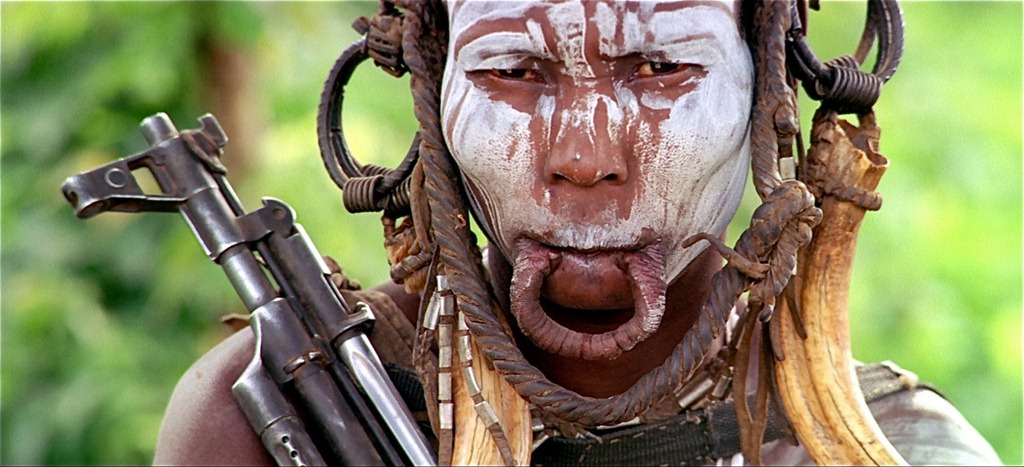
It is impossible to express how beautiful Samsara is to see on a big screen.  If you’ve seen Baraka or Chronos at the theater, then you’ll have the best idea of what you are in store for visually.  And this film is all about visuals.  It’s a documentary without narrative.  Beautiful hypnotic music, gorgeous exotic music, lush sacred music adds to the impact of the visuals, but this film is all about seeing.

If a picture is worth a thousand words, your mind will race through an encyclopedia worth of words as you watch Samsara.  It’s a rush.

I can’t emphasize this enough, but to truly experience this film you need to go see it in a theater.  I have Baraka on DVD and watch it on a 56” TV, and I love it.  But it’s not the full experience.  Nothing I can say can convey the full impact of the film.  No photograph or film clip does the film justice.

Now I warn you, this is an intensely intellectual film, even though it has no words.  Many people, will find it boring – if you have a fascination about this reality we live in, then your lifetime of thoughts will make this film great.  Your mind will create a narrative as you watch.  This show is a head trip, and your thoughts will script the film as you watch.  You’ll write it different every time you watch it.  The many scenes from around the world are meant to trigger deep philosophical responses. 

Samsara will probably only play one week in your town, so if its on, go see it while you can.

Be sure and set this clip to the highest resolution and watch it full screen.  Or visit the official site and watch the clip there.

Samsara was filmed in 25 countries with 70mm film, and converted to digital with a 8k scan, creating a 20 terabyte file.  That’s a lot of details to shoot up into your brain in one hour and thirty-nine minutes.  Most Blu-Ray films come in around 20 gigabytes, so Samsara has a 1,000 times more bytes of detail.

samsara_01

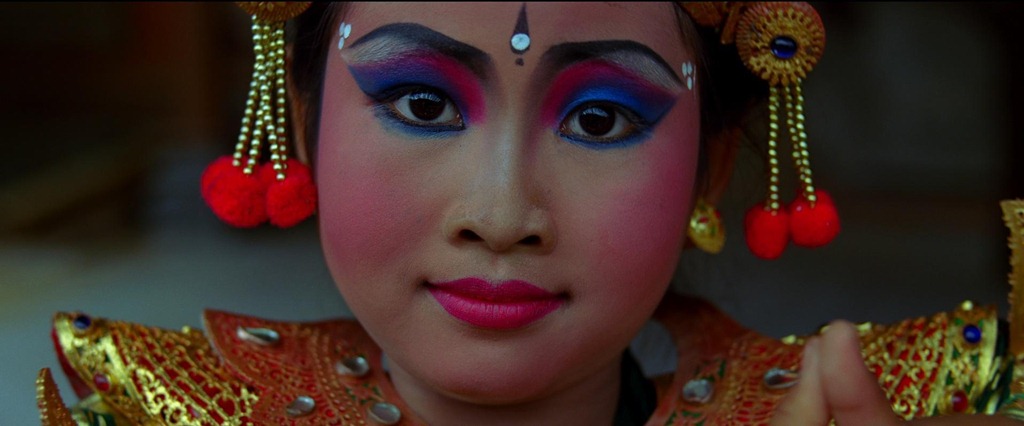
Samsara is a spiritual ride around the globe, zooming in on monasteries and prisons, jungles and deserts, slums and hi-rises, the poor and the rich, the beautiful and the grotesque, the living and the dead, a baby in the womb, and people in their coffins.

Samsara and Baraka shows how immensely diverse our world is.  It makes you realize that your view of reality, the one you’re so obsessed with, is really so very small.  Just before Samsara came on tonight they had a preview for The Hobbit.  That preview entices movie goers to come see a fantasy world rich in landscape and full of colorful fantasy beings.  It was a thrilling preview until Samsara came on.  The real world Samsara made the fantasy world of The Hobbit seem pathetic and dull.

samsara_02 

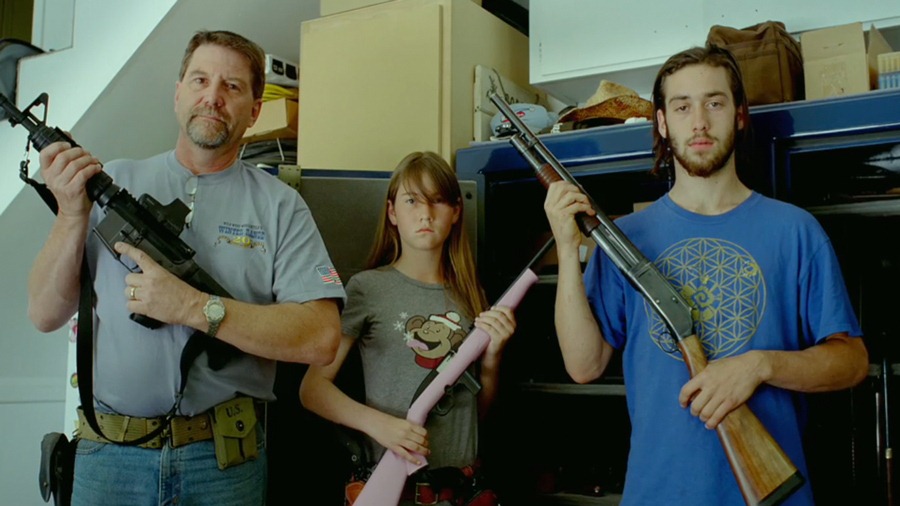
It’s very hard to describe Samsara because it doesn’t stay on any scene for very long.  Each clip is glimpse of a subculture from around the world.  Only a well traveled world traveler will know about most of these sites and people.  There’s even a humorous look of gun owners from around the globe, and beautiful sequences of bullet manufacturing.

samsara_03

Samsara spends quite a lot of time showing exotic locations of religious worship.  This was also true of Baraka.  I believe the filmmakers must be very spiritual people, but I see what they show in a different light.  I see the temples as relics of history, and their worshipers as primitive souls trying to hang onto a dying past in our fast pace world that’s constantly changing.  Our modern world, shown at night, looks like red blood cells coursing through veins.

samsara_04

The Buddhist monks carefully create a mandala with colored sand, but in the end they destroy their creation.  I assume to make it again the next day.  That focus on creating the details in the image is a kind of worship, or prayer.  Filming Samsara is the same kind of worship.

samsara_05

There will be scenes that might shock, disturb or disgust you, but they are all filmed so beautifully that I have to assume that the filmmakers see everything on Earth in a spiritual light.  Many of the scenes are just exotic people that live their lives so much different from ours.  Seeing the film makes me realize how parochial I am.

samsara_06

If Samsara isn’t at a nearby theater, then buy Baraka on Blu-Ray.  You can watch the entire film online, to get some idea of how Ron Fricke sees the world.  Watch it at least long enough to study the faces of the snow monkeys bathing in the warm water.  Think about how they see this world.  Think of the snow monkey watching this film like an alien from outer space seeing our world for the first time.  I’ve watch Baraka many times now, and I want to be the snow monkey.

Samsara and Baraka will not appeal to a lot of people.  I’m sorry that’s so.  People really should spend one evening watching a movie that so much different from their usual multiplex fare.  Take a trip around the real world, it’s more far-out than any CGI world ever created – even Avatar.

JWH – 11/2/12

Why We Can’t Trust Subscription Music Services Like Rdio, Rhapsody, Spotify, MOG, etc.

In the post-CD world of music, the challenge is to keep our favorite songs forever even though we have nothing physical to hold and protect.  If your computer crashes or you lose your smart phone, can you recover all your favorite songs you’ve bought over the years?  (Or stolen.)

Digital music is in a total state of chaos.  I have songs in Windows Media Play, iTunes, Google Music, Amazon Cloud Player, iTunes Music Match and I have rights to listen to albums in Rdio, Rhapsody and Spotify, plus I own about 1500+ CDs.  No one site can play all the songs.

My favorite way to listen to music is via Rdio.  Rdio plays on all my computers at home and work.  It plays on my iPod touch, iPad 2, and it plays on my TV/stereo through a Roku box.  However, it doesn’t play all the albums I own, nor out-of-print albums, but it does play millions and millions of songs, so for 90% of what I want it’s excellent.  However, for those favorite songs it doesn’t have, it ruins the whole concept of subscription music.

For example, one of my favorite albums is No Guru No Method No Teacher by Van Morrison.  It’s now out-of-print, and I recently discovered that  when the song “Thanks for the Information” disappeared from my Songs Rated 10 playlist.  I thought I had it on CD, but evidently not.  I did have it on LP, but I got rid of my LPs years ago.

I probably didn’t get it on CD because it was on Rhapsody and Rdio and I got used to it being there, and thought it would always be there.  I was wrong, it’s been pulled.  I just ordered a used copy on Amazon for $10.25 + $2.98 shipping.  I’m sure I could have gone and found a stolen copy, but I’m not into that.  Once I get it I can rip it and put the songs on Amazon and Google.  I’m not renewing iTunes Music Match.

The problem is my favorite way to play my favorite songs is via playlists on Rdio.  Over time some songs disappear from subscription music services because the album goes out-of-print.  I HATE THAT!  I’ve been trusting subscription music services for years, and slowly it’s becoming obvious that if you really love a song and want to play it for the rest of your life you have to buy it.

But buying digital songs is iffy.  I’m trusting Amazon to always preserve the songs I buy from them – but what if Amazon goes out of business or gives up on Amazon Cloud Player?  How long will Amazon, iTunes and Google back up music if you buy it from them?  And what if they don’t sell the songs you want?

I should consider the CD as my master copy for life, but the CD format might not last that much longer.  Is the MP3 any kind of real archival medium?

Because music goes out-of-print and gets removed from Rdio and Rhapsody I’m going to have to change the way I listen to music.   I might need to move my playlists to Amazon Cloud Player (and maybe Google Music) and then use Rdio and Rhapsody as tools to discover music.  When I find a great song I want to listen to the rest of my life, I’m going to have to buy it and put it on Amazon Cloud Player.  I’m paying Amazon $20 a year to store the 20,000 songs I own so I can play them from all my computers and mobile devices.

Or I could stick with Rdio and just let out-of-print songs become forgotten songs.  I wish there was a way to upload out-of-print songs I own to Rdio so I could keep all my songs in one library.  Rdio is far superior to Amazon Cloud Player for managing playlists.  I can’t even find a way to delete a playlist on Amazon Cloud Player.

Why can’t I have all my music in one place where I can play it from all my devices?  Life was so much simpler when I had LPs and all the music I owned was on one bookshelf.  But back in those nostalgic times, I could only play that music in one place.  Now I can play my music anywhere, if I can keep up with all my song files.

JWH – 10/28/12

When I Was a Remote Control

If the remote control had been invented before 1951 I’m not sure my parents would have had me and my sister Becky.  As toddlers, my parents taught us how to change the channels on our Sears black and white TV, so they could laze on the couch smoking their Camels and Winstons and drink Seagram 7 and Canada Dry ginger ale while we twirled the knob to locate Topper or Have Gun Will Travel.

tv-1950s

Kids born today come out of the womb with giant IQs, able to handle hundreds of stations and dozens of gadgets.  I wonder if my four-year old self from 1955 could have competed with a 2012 four year old at all?  If my parents were still alive, I wonder if they’d long for the days when things were simple without all these goddamn gadgets.  Life was easier with a Kid Channel Flipper, or the Rug Rat Reciting TV Guide.  Oh yeah, that was another childhood duty – to memorize the TV schedule and let my folks know when their favorite shows were on.  It’s also why my parent’s generation had so many kids.  We baby boomers were conceived to manage TV technology for the Greatest Generation, or the radio generation.

Today, anyone with a finger can change the channel, and onscreen guides have made the Rug Rat Reciting TV Guide go the way of the Bad Child Switch Fetcher.  If political correctness had been invented before 1951 and my parents told that kid herding couldn’t involve belts and switches, they’d definitely been willing to get off their Brooks Brothers covered butts and do their own TV knob twirling.

I’ve seen some real cultural and social changes in my lifetime due to fantastic inventions like the TV clicker and screen guide.  Young people really have no idea how hard life was back in the 1950s.   Toddlers today are whizzes at iPads, but could they have dialed a rotary phone?  OK, I admit they could – modern tot nerds would beat wee baby boomers at any kind of pre-school smack down.  We never had any of those fancy Sesame Street advantages, but we did have to work harder for less rewards, which us boomers like to brag is character building.

TV was dinosaur primitive back then, with small low-rez screens that frequently got out of adjustment so you had to fine tune the vertical and horizontal hold knobs just right to see a steady, but grainy black and white picture.  And that picture had visible scan lines.   There was an array of other knob-less adjustment dials inconveniently located on the back of the set that required a screw driver to twist and mirror to see the results.  If you were too lazy to get the dressing mirror off the back of the closet door you could try to talk someone into describing the picture while subtly adjusting the settings from verbal clues.  What a lost art!

Also, TVs had vacuum tubes instead of solid state devices, and when a tube blew you had to get dad to drive you to the 7 Eleven. While he waited drinking his Schlitz in the Pontiac, you dashed inside to run the tube tester and hopeful find the arcane coded replacement in the test cabinet.  All this just to see some show call Huckleberry Hound that was so moronic you’d poke your eyes to avoid seeing it today but your seven year old self thought state of Eisenhower era pop art brilliance.

But back to the future – or our present.  Even though today’s TV pictures are rock solid, hi-rez, and huge, the show selection takes more brain power to select than that famous wild hair guy figuring out general relativity.

Now this brings us to the greatest invention in television history:  Netflix streaming.  It’s not perfect, but it’s almost as easy as Samantha’s twitch of her cute magical nose.  If they could only combine Siri with the Netflix interface, and we could sit in our recliners like Captain Picard and tell the HDTV what show we wanted and then say the words, “Make it so” we’d all reach video nirvana.

Recently I had to anxiously wait for Netflix to send me Blu-ray discs of Season 3 of Glee after watching Season 1 and Season 2 via their streaming service.  Don’t get me wrong, a Blu-ray picture and sound is Breaking Bad better than the current state of Netflix best streaming resolution, but the convenience of clicking to Glee on the Roku is Friday Night Lights goodness.

What a philosophical conundrum!  Fantastic picture versus fat-ass lazy highness.  Well, you know which one we’ll always choose, don’t you?

Music on iTunes iPhones is 5 transistor* radio crappy, but it’s what people prefer over the pain-in-the-ass fetch the CD and put it in the player hard work.

Streaming video and music is going to kill off the CD, DVD and BD disc.  So it goes, as Mr. Vonnegut used to say.  Vinyl, formerly known as the LP, is making a technological comeback, even through it requires the physical effort of storing albums, cleaning them, and playing them on mechanical players.  I’m sure it’s a passing fad.

If you pay attention to technology there are two consistent trends.  First, the evolution towards fewer moving parts.  Second, the evolution of ease of use.  We’re all heading to a future of moronic simplicity and slothfulness.

I love the CD and Blu-ray disc for their wonderful high resolution music and video, but they are goners.  Resting on my big motionless butt enjoying the brilliance of streaming music and video will always overcome the theoretical desire for high fidelity and high definition.

My wife and I never had children.  We never needed them.  We grew up with the remote control.  If you charted this essay on a graph, it would show the decline of civilization.  Well, like I said before, so it goes.  If you don’t believe we’re actually devolving with all this technological evolution, just picture this:  The Victorians had to play their own musical instruments if they wanted to hear music.  Even cavemen could drum like crazy man.  Imagine what Spotify would have done to the British Empire.

Stream with the flow.  Make it so.

JWH – 10/22/12

* When I was a kid, the cutting edge technology of portable sound was the transistor radio.  They came with a single mono earplug, and you listened to AM radio.  Of course 1961-1968 AM radio was the peak of musical genius in the 20th century.  These transistor radios were about the size of a iPhone (which by the way have millions of transistors) and  a tinny sound.  50 years later, I think portable sound still sounds tiny and tinny.   Listening to The Beatles on an iPhones makes them sound like they are five inches tall.

I Need A New TV Show!

I just finished 70 episodes of Glee and I need a new TV show to feed my TV addiction.  I’m not a super binger like those described by John Jurgensen in “Binge Viewing:  TV’s Lost Weekends.”  This Wall Street Journal article reported on heavy weight TV bingers like Chad Rohrbacher who watched 22 straight hours of Breaking Bad in one sitting.  I’m a fly weight when it comes to binge TV watch, just watching 2-3 episodes at a time.  At the end of the day, I love to have one or two episodes of a fabulous TV show to watch before I go to bed.  And if they’re really fantastic I might stay up past my bedtime to watch a third.

breaking-bad

Having a TV series that covers several TV seasons is like having a very long novel to read before falling asleep.  I recently read Anna Karenina, which clocked in at 42 hours on audio.  That’s about three seasons of Big Love or The Sopranos.

Before I watched all of Glee I watched all of Breaking Bad.  I go months without a TV show fix because I can’t always find a series insanely great enough to trigger the addictive response.  I really hate when I don’t have a TV show to look forward to each day.  I’m in one of those dry periods now, and I need a new TV show!  I ache with TV withdrawal.

That’s kind of sick when you think about it – I should use these long periods on the wagon to go cold turkey and break this habit, but I don’t want to.  I should work on my novel.  I should write on my blog.  I should finish the essays I’m writing.  But instead, I want to veg out with another epic TV series.  I know this is the worst kind of escapism – I’m turning off reality and switching on virtual reality.  But this kind of TV is fiction at its very best, and I’m a life-long fiction junky.

Here’s my problem.  I need GREAT television to feed my addiction.  Merely good, is not good enough.  I thought after Friday Night Lights, Downtown Abbey and Breaking Bad that I’d never find television that good again.  Then I discovered Glee.  Now, it’s not that Glee is better than those shows, but the shear creative innovation that went into Glee made it stand out.  I was hooked on it’s extreme novelty.  Now, I’m going through Glee withdrawal.

It seems every TV series I consume must be better than all the ones before it.  And sadly, re-watching old favorites don’t ease the cravings.  Neither do shows that are self-contained in each episode.  I need long story arcs.  I need my nightly soap opera.

From the WSJ article, Jurgensen describes the social change that’s going on.

Binge viewing is transforming the way people watch television and changing the economics of the industry. The passive couch potato of the broadcast era turned into the channel surfer, flipping through hundreds of cable channels. Now, technologies such as on-demand video and digital video recorders are giving rise to the binge viewer, who devours shows in quick succession—episode after episode, season after season, perhaps for $7.99 a month, the cost of a basic Netflix membership. In the past, such sessions required buying stacks of costly DVDs ($66.99 for seasons one through four of “Mad Men”) or special broadcast marathons.

Having a great TV show to look forward to each week was the standard way I watched TV for almost fifty years.  Then came DVD box sets and that changed everything.   Thinking of TV as whole seasons was a game changer.

Now with Netflix, where you can pick a show like Glee and have 66 episodes waiting to be seen one after another.  That’s another quantum leap in TV watching.  Is it good or bad?  I don’t know.  I don’t care.  I love it.  It’s better than binge eating, it’s even better than drugs, may even be better than sex.

I think the first TV show I watched from first episode to last in a binge fashion was Northern Exposure, when it was first syndicated.  I printed an episode guide off the Internet and watched its entire 110 episodes.  After that I watched seven seasons of Buffy the Vampire Slayer, starting with season one and catching so I could watch season seven live.  Battlestar Galactica was another show I caught up with before watching the last season live.  That also happened with Breaking Bad and Friday Night Lights.  I watched the final season not on cable, but on Amazon, buying the new episodes a day late.  I prefer to have shows I binge on to be finished, or have many successful seasons.

So, if you know of a great TV show to recommend, please let me know.  Here’s are the ones I’ve already discovered – in no particular order.

  • Breaking Bad
  • Glee
  • Friday Night Lights
  • Big Love
  • Sopranos
  • ER
  • Dexter
  • Weeds
  • Californication
  • Six Feet Under
  • Deadwood
  • Mad Men
  • Hell on Wheels
  • Dead Like Me
  • Most Masterpiece Theater shows
  • Battlestar Galactica
  • Lost
  • United States of Tara
  • Nurse Jackie
  • True Blood
  • Rescue Me

JWH – 10/21/12