Has Humanity Given Up on the Three Major Promises of Science Fiction?

Science fiction has been around a very long time, but it wasn’t always called that.  The essential core of science fiction has always been three promises:  space travel, intelligent alien beings and intelligent robots.  We know as far back as the classical Greece, that there has been speculation about travel to other worlds and finding intelligent beings on them.  The idea of building an artificial human is as old as memory too.

There’s always been a few outliers in society that think up far out ideas and a larger group of fans who favor them.  Currently we call these two groups science fiction writers and science fiction fans.  During the second half of the 20th century I believe certain science fiction ideas peaked in popularity, and that we’re now detecting a possible diminishment of their popularity.

I strongly felt the public turning against the major promises of science fiction when I read the new issue of The Atlantic, and the essay “The Man Who Would Teach Machines to Think” by James Somers that profiles Douglas Hofstadter, author of the 1980 Pulitzer Prize winning Gödel, Escher, Bach.  Hofstadter hit a home run with his first book, but has been mostly missing in action all these years since, even though he continues to write brilliant books about artificial intelligence (AI).  The trouble, as The Atlantic article points out, is Hofstadter’s idea of artificial intelligence is different from what the academic world has come to accept for the term.  Douglas Hofstadter wants to teach machines to think, just like us, while the industry is happy enough to program computers to accomplish fantastic data processing feats that give the illusion of thinking.

c-3po

If we want robots like C-3PO, then we need Douglas Hofstadter.  If you’re happy with IBM’s Watson, then we don’t.  And I’m worried that most people on Earth don’t have the sense of wonder that it takes to want a C-3PO.  And that’s a fucking crying shame.  I want Star Trek, but the public is only grudgingly willing to pay for NASA.  I want humanity to become friends with all the aliens in the galaxy, but all the vast run of people on Earth want is to thrill to the xenophobia of alien invasion movies and to shoot ETs in video games.

I have pretty much given up on seeing the public support space travel, and figure our only hope of meeting aliens would be through SETI projects, but I figured we had a real chance of seeing intelligent machines in my lifetime.  I might have to give up on that dream too.

For most people artificial intelligence is not an issue they will ever concern themselves with, but if you’re a philosopher, computer scientist, or science fiction fan, then it is.  The crux of the matter is whether or not machines will ever be able to think like us.  Here’s my logic.  Humans are self-aware thinkers and we’re the accidental creation of evolution.  If nature can randomly rub molecules together until it produces a self-aware biological being why shouldn’t we create thinking machines intentionally?  Sure, it took 13.78 billion years for reality to create us, but that doesn’t mean it will take as long for us to engineer intelligent machines if we put our minds to the task – we have 13.73 billion years of experience to consciously study.

Up to now, we’ve mostly tried to program machines to do specific jobs, some of these jobs used to be tasks we thought required thinking, like playing chess, being a contestant on Jeopardy or translating foreign languages.  We can program machines to do these tasks, but they don’t think, not in the way we think.  That’s not a failure of AI, it’s a lesson in what makes us conscious beings.

To do what Hofstadter wants will require building machines that can learn and evolve.  This is completely different from the direction that AI is taking now.  We can’t program machines to be self-aware, but we should be able to program machines to learn and evolve, and eventually that will lead to self-aware AI.

Think about the evolution of life on Earth.  It reflects the growth of simplicity into complexity.  It shows how simple creatures learn to interact with its environment and evolve better senses.  Over time those senses could interpret more and more complex patterns in the environment.  Look around you.  Everything you see is recognize as a distinct object.  In a cluttered room you might be seeing hundreds of different things.  Think how, and how long it took you to learn what all those things are.  Computer scientists for the longest time have tried to just tell machines what to see.  That won’t work for a thinking machine.  Like a human child, a thinking machine will have to grow up and learn everything on its own.

It does no good to create code that tells a computer what a banana is.  Can you remember learning what a banana was, and how to tell it from all the other kinds of fruits, or even distinguish it from vegetables?  I bet you can remember learning what an iPhone is, and maybe you can even tell the difference between an iPhone 3S and a 5S.  You’d think it would be easy to tell a computer to do the same thing, but it’s not.  Modern AI can be programmed to spot an iPhone, but not out of context of knowing what everything else is around it.  Not seeing and understanding the complete context of the visual field shows why the machine isn’t thinking.  It’s how we learn about new things that’s thinking, not knowing what they are.

The same problem we face building thinking machines are the ones we face for creating true space travel and finding alien life forms in the galaxy.  Most people just don’t see the point.  They don’t want to waste the money.  And they’re xenophobic.  But what it comes down to is most people really don’t care.  It’s not on their radar.  Space travel, aliens and robots have no value to them at all.  Zip. Nada.  Nothing.

So why the immense popularity of science fiction at the movies, on television and in video games?  Well, that’s another essay.

When I was a kid back in the 1950s and 1960s I embraced science fiction because I wanted to see space travel in my lifetime.  I wanted first contact in my lifetime, even if it was just SETI contact.  And I expected intelligent machines to be created in my lifetime.  Hell, I thought all of these things would have happened by the beginning of the 21st century.  Boy, was I wrong.

st

I thought we took a bad turn when the Apollo program was cancelled, but felt things were back on schedule with the emerging popularity of Star Wars and the return of Stat Trek.  I felt millions and millions of Earthlings were embracing the three great promises of science fiction as science fiction at the movies became huge box office successes.  But I was wrong.  All those people weren’t dreaming the same dreams as I had.  They are getting something else out of science fiction.

Orphans of the Sky is a powerful story by Robert A. Heinlein about a generation ship traveling the vast distances between the stars for so long that the passengers have forgotten that they live in a spaceship.  Their self-contained world becomes their entire universe and they forget the larger universe exists at all.  When I read Orphans of the Sky back in the 1960s I felt that humanity was waking up and realizing that they were living on spaceship Earth.  Hell, again I was so goddamn wrong. 

In most people’s minds, people on Earth live in a small place where God rules over them and cruelly holds out promise of everlasting life if they only confess belief.  Earth is a ball of dust God created as a classroom for us to live on while we decide.  Earth has no purpose other than a staging area for heaven and hell.  All the rest of the vast universe is a big distracting illusion.

The future used to be a vision of mankind spreading out to the stars making endless discoveries, but now I have a different vision.  Humans will continue to live on the Earth forgetting it’s a spaceship traveling through a vast universe, and the inhabitants will continue to follow their illusions century after century until they destroy their ship.  I could be wrong – I’ve shown that to often be true.  Let’s hope.  Maybe The Enlightenment is just taking longer than we thought.

Now it might sound like I’m depressed over this reevaluation of my beliefs, but I’m not.  I consider it far more healthy to be realistic than try to keep my own cherished fantasies.   The truth is always discovering the true mission of the spaceship where you become self-aware.  Which brings me back to robots.  If we ever create truly self-aware robots, what will they make of old spaceship Earth?

JWH – 11/6/13

Models for Writing the Great American Science Fiction Novel

Decades ago ambitious young writers hoping to take the literary world by storm would attempt to write The Great American Novel.  The phrase “writing the great American novel” has fallen out of fashion.  Well, I’ve retired and want to write a novel, but I want to write a science fiction novel.  Science fiction has fallen out of fashion too.  Oh sure, there’s a healthy little genre for hardcore science fiction readers, but they aren’t many compared to the legions of bookworms at large.  Science fiction might be an extremely popular movie genre, but for some strange reason its success does not translate into frequently seeing science fiction books on the New York Times best sellers lists.

Frankenstein

If I’m going to delude myself into thinking I can be a late bloomer in the novel writing business, I might as well be ambitious about it, so I’ve gotten the idea of trying to write the great American science fiction novel.  I picture my would-be novel being a literary novel set 40-50 years in the future, thus making it science fiction.  The goal for writing the great American novel was to capture an essential defining moment in America life.  Examples are such books as Adventures of Huckleberry Finn, Little Women, The Great Gatsby, The Grapes of Wrath, The Catcher in the Rye, Invisible Man, On the Road, To Kill a Mockingbird – novels that defined an era and place.

HG-Wells-The-Time-Machine

Because science fiction is generally about the future and is often set in space or other exotic locales, it almost never attempts to be The Great American Novel.  There are a damn few exceptions, most notably Stranger in a Strange Land by Robert A. Heinlein.  Some people think of it as the counter-culture novel of the 1960s because when they think of the 1960s they think of all the weirdness and Stranger in a Strange Land is one weird-ass novel.  The trouble is Stranger captures a late 1940s to somewhat mid-1950s weirdo mentality about America, and not the hippie weirdness of the 1960s.  If I wrote a SF novel set in the 2050s it’s going to be damn hard for it not to feel like the 2010s.  That would be like F. Scott Fitzgerald imagining the 1960s.  I’m not sure if that will work, but it won’t keep me from trying.

the-war-of-the-worlds

For my novel writing ambition I feel the need to find models to study, from both American literature and science fiction.  Now I don’t want to start a flame war about what are the absolute best science fiction novels, but I’ve decided to pick those that are most remembered and read by non-SF fans.  I wrote a whole essay on this topic:  The Greatest Science Fiction Novels of the 20th Century.  It’s been the most popular essay I’ve written – at least in terms of hits, but not with what it says.  Few science fiction books are well known with the literary world at large, and most of them were written by writers not from the genre.

  1. Frankenstein by Mary Shelley
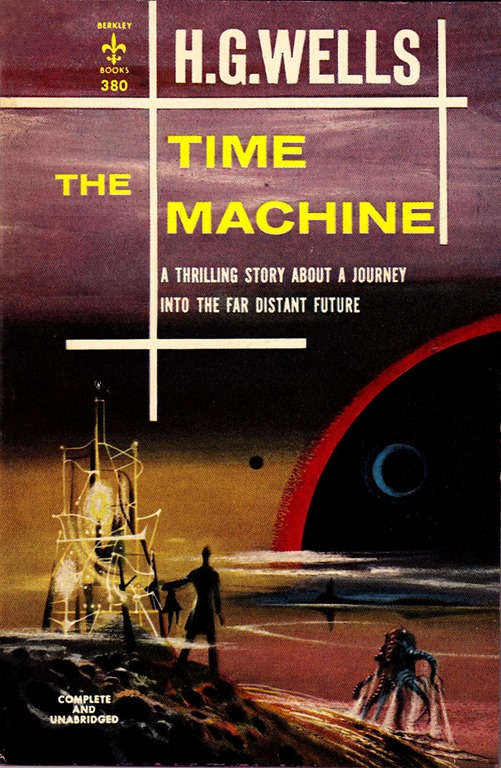
  2. The Time Machine by H. G. Wells
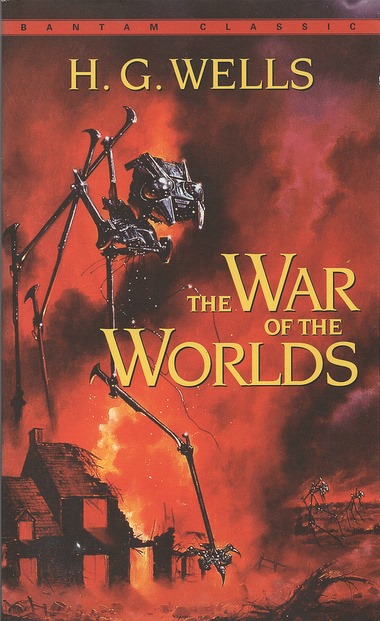
  3. The War of the Worlds by H. G. Wells
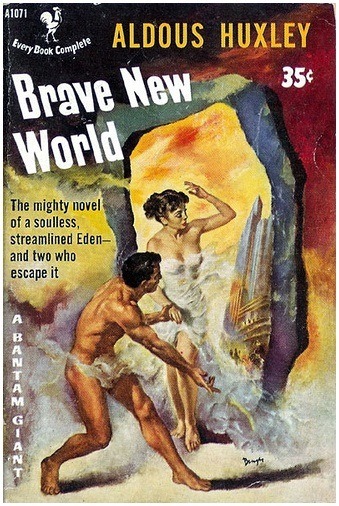
  4. Brave New World (1932) by Aldous Huxley
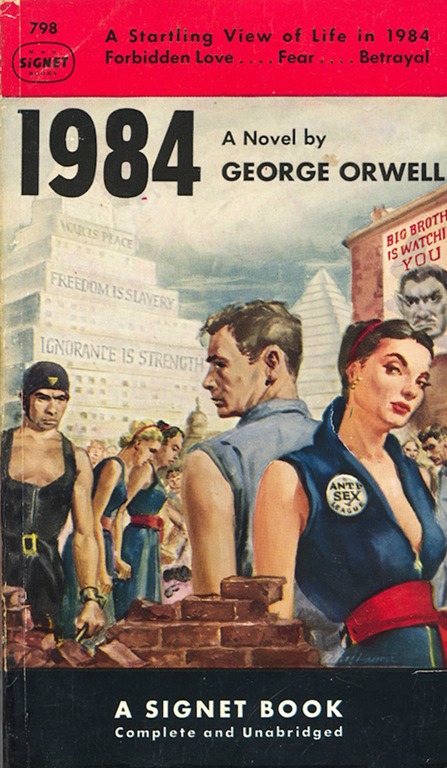
  5. Nineteen Eighty-Four (1949) by George Orwell
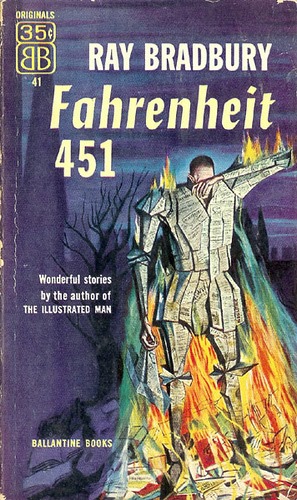
  6. Fahrenheit 451 (1953) by Ray Bradbury
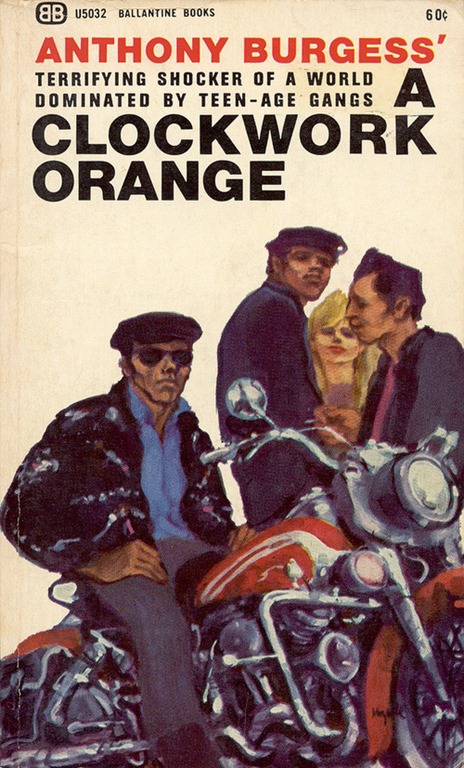
  7. A Clockwork Orange (1962) by Anthony Burgess
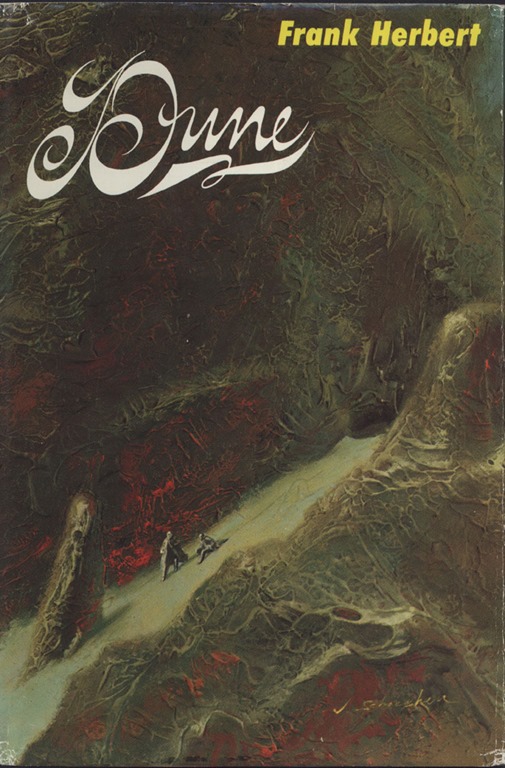
  8. Dune (1965) by Frank Herbert
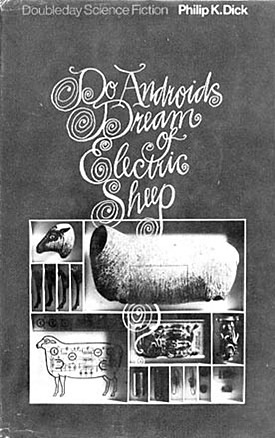
  9. Do Androids Dream of Electric Sheep? (1968) by Philip K. Dick
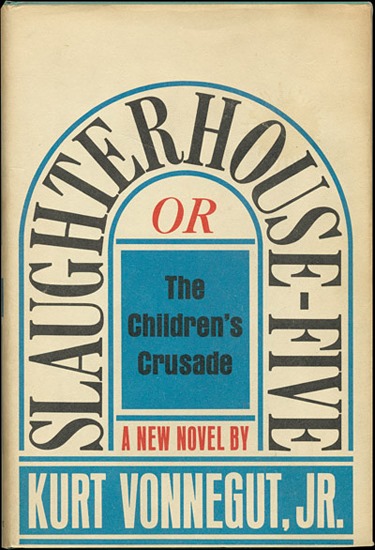
  10. Slaughterhouse-Five (1969) by Kurt Vonnegut
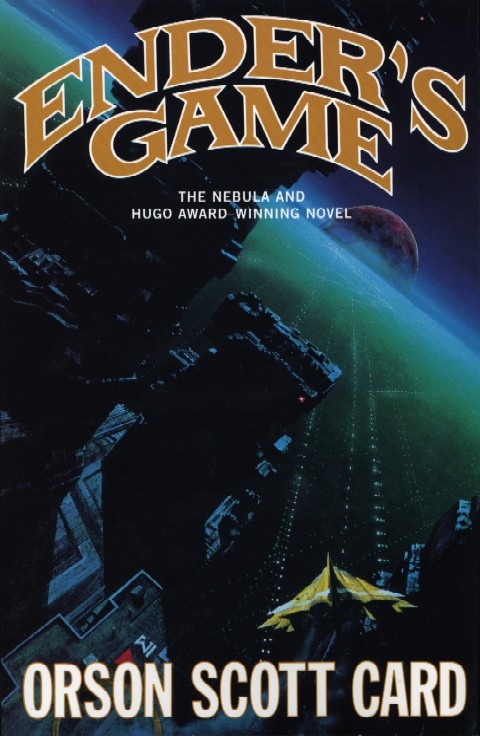
  11. Ender’s Game (1985) by Orson Scott Card
  12. The Windup Girl (2009) by Paolo Bacigalupi

brave-new-world1

Now I know that regular science fiction readers are going to be outraged by this list, but the huge world outside of their little genre seldom thinks about science fiction, and the books that do pop into their collective memory are the ones they were made to read in school.  I wanted to include Stranger in a Strange Land, not because I admire it, but because it was once a cult classic, however I think it’s mostly forgotten now.  If a book isn’t taught in school or gets the movie treatment every generation, they are usually forgotten by the following generations.

1984_pulp3

Do Androids Dream of Electric Sheep? wasn’t PKD’s best novel, not by a long shot, but because of Blade Runner, it’s remembered, but even Blade Runner is fading from collective memory.  I keep Androids on the list because there’s talk of making a new version of it.  The controversial Ender’s Game is on the list because it is often taught in schools, often loved by teachers, and was recently made into a movie.

fahrenheit-451

There are many science fiction books that have legions of fans that love them, but most never have enough fans to make them well known in pop culture at large.  Notice that I didn’t include Jules Verne, Robert A. Heinlein, Isaac Asimov and Arthur C. Clarke, authors who are known for writing great classic novels within the SF genre.  Their books are very big fish in a very little pond.  The twelve above titles aren’t even the biggest fish in the big literary ocean, but they are big enough.

clockwork-orange

In terms of memorable novels, science fiction seldom gets remembered.  So why have an ambition to write science fiction?  Well, it’s what I like to read.  However, if an ambitious science fiction writer wanted to get remembered, studying the above novels for clues is a start.  But also studying mainstream popular novels for why they are remembered is another lesson of study.

dune

I watch a lot of old movies and I’m always surprised to see films based on hit novels of their day that are now completely forgotten.  Dune has attracted a lot of cinematic attention, but so far I don’t think moviemakers have captured the novel.   However, their attempts have made the novel very famous.  There is a weird symbiotic relationship between books and movies.  So far, none of the model SF books I’ve listed has been created into a cinematic masterpiece except Do Androids Dream of Electric Sheep?  None of them have achieved that immense status of being routinely made into new film versions every generation like A Christmas Carol, Little Women, Pride and Prejudice, or Great Expectations.

DoAndroidsDreamOfElectricSheep1stEd

Evidently, the real key to writing a great science fiction book is having something startling or profound to say.  Now regular science fiction fans will claim all their favorite SF books have something startling or profound to say.  I think that’s the general appeal of science fiction – the ideas.  However, the public at large seems to embrace some science fictional ideas as iconic pop culture concepts, and ignores the rest.  The public at large seems to care little for reading about space travel, time travel, robots, galactic civilizations, and so on.  In fact, the most popular science fictional concepts that appeal to the public appear to be on the morbid side of things – they love a good dystopian tale.  Evidently, if you can imagine a scary future that will scare the bejesus out of them then you’ve struck gold. 

slaughterhousefive

If I’m going to write the great American science fiction novel it will need to capture an era and place in America where dystopian feelings are strongest.  You’d think bookworms would embrace upbeat views of the future, ones that promise scientific successes and thrilling times.  But I’ve got to admit, that these books listed here, with all their bleakness, were powerful stories, with impressive memorable concepts.  When you read them they feel heavy-duty.

enders-game-novel-cover

I don’t think any of these books are particularly well-written, not in the literary sense.  Their narrative style gets the job done, but I’m not sure how often their writing is quoted for being beautiful.  Today I started collecting copies of these novels to study.  I’m using my retirement to be like Henry David Thoreau at Walden Pond, to contemplate life carefully.  However, I have no interest in going outside to study plants and animals.  Instead I’m observing my reactions to fiction.  Thoreau really wanted to get to know his deepest self, his most real self, and he felt getting away from it all and observing nature would reveal his true self to is contemplative mind.  I’m hoping my true self will be revealed by studying fiction.

the-windup-girl-shopped

I’m selecting ambitious novels, in particularly, science fiction, to see what they reveal about me, and how I tick.  Why do we respond to their ideas, characters, plots and settings?  Many people claim to love science fiction, but they are generally referring to science fiction in the movies and on television – fluff Sci-Fi.  That kind of science fiction is very different from book science fiction.  And a lot of modern science fiction book fans love particular authors because of their series – they love the setting and characters because they’re fun and even within the SF book genre, serious SF is avoided.  I’m not sure many SF readers have a deep understanding of what draws them into science fiction, and the type of stories their minds resonate with.

Other than winning awards and being selected by Time Magazine as being one of the best novels of 2009, The Windup Girl doesn’t have much validation as the kind of SF classic that the rest of these novels represent.  But The Windup Girl feels like them, and I responded to it in the same way.  I admired its sheer intellectual speculation about the future.  It’s also a novel that I’ve recommend to my bookworm friends who don’t read science fiction and they’ve liked it very well.

Ender’s Game seems like an oddball on this list because on the surface it seems like just another alien invasion adventure story, but down deep it has a disturbing core.  In fact, to some people it’s as disturbing as A Clockwork Orange.  Strangely, many readers see it as a fun romp, like it was a video game.  But like video games, we need to question our thirst for violence, and our constant justification of violence.

None of these science fiction books represent my sentimental favorites, books hardcore science fiction fans would pick as their favorites.  There’s no need to list such books, we all know have our own classics of science fiction lists.  The twelve books I list here are the science fiction titles that go up against literary classics read by people who normally never read science fiction.  They’re the books taught in school, the ones teachers torture kids with test questions because they supposedly deal with important themes.

It’s sad that the literary world chooses to ignore fun science fiction.  Evidently they feel sense-of-wonder is for adolescents.  Sometimes there’s a crossover, like The Hunger Games series, that fans love for the adventure, but still have the dystopian seriousness to evaluate.  Another good example is The Giver by Lois Lowry.  If I included YA novels, my list would be much longer.  Science fiction is taken seriously at the YA level by teachers.  And that might be why so many ambitious young writers are working the YA field.  Winning the Newberry Award will keep your book around a lot longer than the Hugo Award.  Take for instance 50 years ago, 1963, A Wrinkle in Time by Madeleine L’Engle has had far more success with the public at large than The Man in the High Castle by Philip K. Dick, even though I much prefer PKD’s novel.

I guess another way to express what I’m saying is to talk about your targeted audience.  To create a hit of the year in the science fiction sub-culture of books, you need to make just a few thousand people happy.  To create a hit in the YA world, you’ll need to make tens of thousands of readers happy.  To write a standout best seller of the year, you’ll need to write a book that maybe a hundred thousand or more people will choose to love.  But to get into Nineteen Eighty-Four’s territory, you’ll need to impress millions of people, even tens of millions.  That’s not easy!

Now it’s extremely presumptuous of me to even think of trying to write such a novel.  At this stage, I’m just trying to understand how such novels work.  Now that I have the contemplative time to explore such issues I think I need to do it.  If you move to Walden Pond and just goof off, isn’t that just tragic?  Or pathetic?  Like the philosopher said, an unexamined life is not worth living.  Well, I want to examine my fictional life.  And then I want to play the game by writing my own novel from what I’ve learned.  

JWH – 11/5/13  

How To Write a Sermon to Inspire Thousands

Most people are used to getting jokes, cute pictures and funny videos forwarded to them in emails, tweets or posted on Facebook by their friends.  But there’s another type of forwarded message that’s not as popular, the inspirational message.  These internet homilies usually involve a moving story and sometimes a bonus list of lessons, just like a sermon you’d hear in church.  Sometimes they mean to be religious, or at least worshipful of God, but usually they are just heartwarming anecdotes that intend to inspire goodwill and positive thinking.

Inspiration-cropped

I’ve sometimes fantasized about writing a joke and sending it to all my friends and hoping that one day years later it would come back to me in some anonymous way after being spread all over the internet.  But since I’m terrible at telling jokes I doubt I would write a popular one.  I assume internet inspirational messages are from people who would love to write a good sermon themselves, or at least enjoy inspiring others.  It’s an interesting writing challenge to think about.

I got this message overnight and I’ve decided to analyze it as a model for writing internet sermons.

BANK ACCOUNT!!!

This is AWESOME … something we should all remember.

A 92-year-old, petite, well-poised and proud man, who is fully dressed each morning by eight o’clock, with his hair fashionably combed and shaved perfectly, even though he is legally blind, moved to a nursing home today.

His wife of 70 years recently passed away, making the move necessary. After many hours of waiting patiently in the lobby of the nursing home, he smiled sweetly when told his room was ready.

As he maneuvered his walker to the elevator, I provided a visual description of his tiny room, including the eyelet sheets that had been hung on his window.

‘I love it,’ he stated with the enthusiasm of an eight-year-old having just been presented with a new puppy.

‘Mr. Jones, you haven’t seen the room; just wait..’

‘That doesn’t have anything to do with it,’ he replied.

Happiness is something you decide on ahead of time.

Whether I like my room or not doesn’t depend on how the furniture is arranged .. it’s how I arrange my mind. I already decided to love it.

‘It’s a decision I make every morning when I wake up. I have a choice;

I can spend the day in bed recounting the difficulty I have with the parts of my body that no longer work, or get out of bed and be thankful for the ones that do.

Each day is a gift, and as long as my eyes open, I’ll focus on the new day and all the happy memories I’ve stored away.. Just for this time in my life..

Old age is like a bank account. You withdraw from what you’ve put in.

So, my advice to you would be to deposit a lot of happiness in the bank account of memories!

Thank you for your part in filling my Memory Bank.

I am still depositing.

Remember the five simple rules to be happy:

  1. Free your heart from hatred.
  2. Free your mind from worries.
  3. Live simply.
  4. Give Thanks to God for your Blessings.
  5. Expect less.

Pass this message to 7 people except me. You will receive a miracle tomorrow.

Now, STOP! Did you hear what I just said. You WILL receive a miracle

Tomorrow.. So send it right now!

Have a nice day, unless you already have other plans.

I believe my friend Linda sent this message because I wrote about whether or not I should get up early or sleep late in my retirement.  This is a story about a 92 year-old legally blind man who gets up, shaves, dresses and is ready to start his day by 8 am.

Now I’m fascinated by the story process here.  How did it come about?  Is it true?  Or is it made up?  Do people sit around thinking up inspirational stories like other people sit around thinking up jokes to tell?  I’m going to guess that this story has a kernel of truth, and the rest is added by a writer or writers, maybe a blogger like me.  There’s even a chance that as it’s been passed around, the story could have been altered or added to.

Most of the inspirational stories I get by email are about old people, or people overcoming adversity.  I suppose that’s because of my age and the age of the people sending me messages.  I suppose if I was younger and had children, I’d receive a lot of children inspired stories.  Or if I was a young divorced woman I’d see a lot of stories about meeting guys who weren’t dickheads.  So the first lesson of writing an internet sermon is to target your audience carefully.  The message above is aimed at people getting older, especially those fearing nursing homes and living with less in life.

However, I’m afraid I’m going to be cynical here and deconstruct this message.  This mini-sermon makes several philosophical statements.  I think the story can be divided into three sections.  First, the green, is an incident with an old man, probably inspired by a real event.  The second, blue, is another lesson, about memories, maybe inspired by the first story, or maybe just an additional lesson.  Third, in red, additional commentary and advice.  All three could have been from one person, but it feels to me like they were from three different people.  I don’t think the old man and writers 1 and 2 are expressing the same philosophical points.

The old man who has just lost his wife of 70 years, needs a walker, and is nearly blind, is assigned to a nursing home.  The old man is very positive, well groomed, and agreeable.  The story as written has the old man imparting two pieces of wisdom, first about deciding to be positive and second, banking good memories for bad times.  Those are two totally different solutions for finding happiness in old age.  That’s why I think it’s from two different writers.

The first lesson is about mental attitude.  Decide to stay positive – be in control.  Like the British who dress for dinner in the middle of a jungle, this old man dresses up for each day of old age.

The second lesson is actually wimpier, but still a great coping mechanism.  It advices us to have a great life so we can live off those memories when we get old.  Many people do this.  It’s not a lesson I like.  I prefer number one.

The third lesson is really just an addendum of extra advice that doesn’t really relate to the first two lessons.  They break down to love, don’t hate.  Don’t worry.  Live simply, be thankful and don’t want to much.  “Expect less” is a very odd piece of advice unless you think about it carefully.  All five are very Buddhist, especially number five, which is the heart of Buddhism, desire is the cause of all unhappiness.  This is why I think three different people wrote this message, or one person used three different philosophies in their sermon.  They are:  keep a stiff upper lip, hide in good fantasies, and third, accept what you get, be thankful and don’t want too much.

It would have been a much better sermon if it had one consistent message.  The best of the messages, the green one from the old man, inspires the most, because it appears to be based on a real person.  In other words, find real life people and events for the heart of sermons. 

Whole libraries could be written about these lessons.  Thousands of books have been written about the concept of happiness.  Unfortunately, it appears happiness is a condition that most people have or don’t have.  I’ve been lucky, and have always been a happy person.  I don’t think its due to any belief I’ve learned or acquired.  Some people go through years of analysis trying to be shown how to be happy, but I’m not sure its something that can be revealed.  I think some people become happier with drugs, either legal or illegal.  And I think some people become happier through behavioral conditioning, either gained intentionally, or unintentionally.  Sometimes happiness comes with age and wisdom.

I really doubt people can find permanent happiness in a sermon, but we love to try.  Don’t we? 

Decades ago I met this guy who had a lesson about happiness that I found wise.  He said there were three goals in life that we had to accomplished before we could relax and be happy with our lives.  First, we had to finish our education.  By this he meant, we had to get to a place in our life where we no longer felt the need to go back to school.  Second, we had to find the job that we were going to keep and one we didn’t consider a shit job.  Third, we had to find our mate for life.  I thought this a wise story because much of what makes people unhappy is caused by the normal stresses of life – frustrations over incompleteness.  And these three factors are what causes most people a lot of unhappiness.

Like the old man, some people naturally learn from an early age that happiness is knowing how to make lemonade from lemons.  Not everyone can do that.  But can we teach others that lesson?  How many people getting this email today will change from unhappy to happy by doing what the old man does, just deciding to be happy?

Now for the second part of the old man’s wisdom – bank good times when you’re young and withdraw them when you’re old.  I’m not sure this philosophy would have come from that old man.  It’s a totally different philosophy to live by, a different psychological coping mechanism.  Instead of deciding ahead of time to always make the best with whatever is given to you, this advice tells us to make great memories now to live off of when we get old.  A lot of old people do this of course, spend their days dwelling on the past.  Of course there’s lots unhappy guys in their thirties living off their high school glory days.  As a coping mechanism it’s not a particularly good one.

As a whole inspirational story, the last part, the tacked on five point lesson detracts from the original real life story because it sounds too abstract.  And the first two lessons contradict each other.  One is an example by doing, and the second is a made up solution.  Like the golden rule of writing advice, show don’t tell, this story works best when it’s showing and least when it’s telling.

My guess is someone actually met this old man and wrote his story up.  Then the same person or another person, thought it wasn’t enough, and created the idea of a memory bank to fill it out, even though it’s a contradictory message.  Then another person decided the story needed some explicit lessons to take away and added their five bits of wisdom.  This happens in The Bible all the time.  Sermonizers love to add their own bits.  Read Misquoting Jesus or Forged by Bart D. Ehrman.

My conclusion for sermon writers is to only tell the parable and let the reader generate their own lessons.  Make sure nothing in the story contradicts itself.  Make sure the voice stays consistent.  Make sure the philosophy stays consistent.

JWH – 11/1/13

Sex Hormone Pollution (Endocrine Disruptors)

I’m reading a fascinating book, Boys Adrift: The Five Factors Driving the Growing Epidemic of Unmotivated Boys and Underachieving Young Men by Dr. Leonard Sax.  Dr. Sax’s fourth factor is endocrine disruptors – chemicals in the environment that mimic female sex hormones that are affecting male animals around the world, including human males.  I had vaguely heard about this problem, but the research and theories Dr. Sax reports on is eye opening.  Like our bodies, the environment is a soup of chemicals that works in a delicate harmony, and the amount of pollution the environment is receiving is reaching levels equal to taking medicine for our bodies.

boysadrift 

Since the beginning of the industrial age we’ve been dumping billions of tons of countless man-made chemicals into the environment, and we’ve yet to learn the ultimate outcome of these actions.  If climate change deniers are freaking out over the idea of global warming, based on one natural element being increased in the environment, what will they make over sex hormone pollution? It was one thing to hear back in 1996 that synthetic sex hormone mimics were affecting amphibians and fish, but it’s a whole other thing to think they’re affecting human boys growing up today.

A good recent overview of the problem is “How Chemicals Affect Us” by Nicholas D. Kristof in the New York Times.  Also read his older piece, “It’s Time to Learn From Frogs.”  A more sensational piece is “Boys with Boobs” by Beth Greer at Huffington Post.  Greer has several recommendations on how to avoid the kind of chemicals that can affect our sex hormones.  [Man, I’m giving up drinking from plastic bottles!]

To read more of these types of articles on your own follow this link to Google.

Dr. Sax’s theory about endocrine disruptors and boys takes these protests up a quantum leap.

Dr. Sax theorizes that endocrine disruptors are making girls reach puberty earlier and boys later, partly explaining why boys are having so much trouble in school.  Girls are now doing much better in school and college than boys and his book Boys Adrift tries to explain why.  One of Dr. Sax’s theories suggests that endocrine disruptors are changing boys at a sexual hormonal level thus affecting their learning personalities.  I don’t know how much research has gone into this hypothesis but it’s a very interesting one.  Plus, I must point out that Dr. Sax has an array of theories about various problems affecting boys, endocrine disruptors are just one – but I think a significant one. 

Is sex hormone pollution enough to change the dominant gender in our society from men to women?  Sax doesn’t say that, but that’s what I’m reading into the story.  What will the climate change deniers make over that idea?  If Dr. Sax’s hypothesis is correct, and I’m not saying that it is, this will take the whole issue of man-made pollutions to a much higher level of impact than ever before.  It’s one thing to change the biosphere, it’s a whole other issue to fundamentally change humans.

You can read Boys Adrift at Google Books.

JWH – 10/31/13

I’m Retired–Do I Throw Away My Alarm Clock?

Which is better:  Following disciplined habits or natural cycles?

Having to get up and get to work on time used to provide discipline in my life.  When I was off for weekends or vacation days, the time I was ready to start my day got later and later.  Every morning I need to shower, exercise, dress, eat breakfast, floss and brush teeth before I’m ready to start my day.  If I get up at 6 AM I can be ready to go by 7:30.  But if I snooze until 7 or 8 AM, my day might not start until 9:30.  This morning, I got up later, and didn’t hit the computer until 9:36.

Now that I’m retired I have a choice to make.  Do I live by the clock or my biology?

clock-stethoscope 
[Living against the clock: does loss of daily rhythms cause obesity?]

Sleeping in seems so wasteful.  But is that a false assumption?  Now that I’m retired, does it matter what time I start writing each day?  Would I be more productive if I lived by the clock or learned to adapt to my natural rhythms?

I’ve always assumed discipline is a major virtue.  That we each seek to conquer nature by using willpower to bend our bodies and environment into our control.  Isn’t it everyone’s assumption that we must overcome our animal urges?  However, studies on health and stress show that might not be the best way to live, and that going with the natural flow of things might be healthier.

If you look across the Earth, have we conquered nature, or merely destroyed it?  That’s getting awful philosophical as to whether I should sleep in or get up early.  Can’t I just accept that the early bird gets the worm?  Now that I’m thinking about this question I realize I’m living by a lot of assumptions.  My 9 to 5 work years forced me to get up early, but now I’m free to follow a different path.

Since my health is in decline, it’s more important that I listen to my body than the Clock app on my iPod touch.  Just writing these words shows me I need to do a lot of rethinking of my commonly held assumptions.  And what other assumptions do I need to question about my other daily habits?

How many meals should I eat and when?  Do I need to shower every day?  Does it have to be in the morning?  What time is best to do my exercises?  When is the best time to write, clean house, socialize, watch TV, etc?  What if I follow my circadian rhythms and I no longer track a 24 hour clock?  How do I adapt my freeform schedule to my friends who follow a work schedule? 

There is something to be said for natural sleep . I notice this morning when I woke up at 7:30 that it was just getting light.  I’m wondering if my natural alarm clock is set by the amount of light outside.  The room in which I sleep faces east, and has one long window without curtains  across the east wall.  Maybe I should do a scientific experiment and note when I wake up and when sunrise is for that day, and see if in the course of the year if I follow a natural cycle.

As I’ve been sleeping later, I’ve been wanting to stay up later.  I’ve been retired just six days but I’m already having a hard time remembering what day it is, and I’ve stopped following the clock.  Also, I’m now eating at different times.  I even nap later.

My retirement goal is to write a novel.  I assumed before I retired I needed to stick to a disciplined schedule and work at novel writing just like I worked as a computer programmer.  Now I’m thinking that was a false assumption.  Or is that just a rationalization to sleep later?

The western world changed after the invention of the clock.  Now that I’m retired I realize I’ve left clock time.  Because I don’t have cable TV, I don’t even watch TV to a schedule anymore.  I’m on Netflix time.  Does this mean I’ve been a Morlock all my life and now I’ve become an Eloi?  That might not be good.  Modern sequels recognized the virtues of the hideous Morlocks – they got things done, while noting the Eloi were lazy and wimpy.

Living by the clock is mechanical.  Living by nature is undisciplined.  There’s got to be a happy medium – or is that another false assumption? 

JWH – 10/28/13