What’s The Visual Basic of 2014?

I’m an old retired programmer that would like to fart around writing an occasional computer program.  For almost twenty years before I retired I wrote ASP/VBScript/SQL Server code for IIS.  It’s not something I’d use just for fun.  Actually, my brain is old and I don’t want to stress out a bunch of brain cells studying something hard.  I just want to whip out small personal applications.  Years ago, Visual Basic was a very easy to use tool for creating programs to run on Windows.  Microsoft still supports Visual Basic, and even has a free edition with Visual Studio Express 2013 for Windows, but modern Visual Basic isn’t the fun and easy tool it once was.

visual-basic-2

Many sites on the internet promote Python as the current easy to learn, quick and dirty programming tool.  Python is free, works with Windows, OS X and Linux, and its well respected.  Python offers a lot of room to grow.  My worry about Python is it’s not a GUI programming language even though you can get all kinds of libraries to write graphical programs.

In the early days of microcomputers – does anyone call them that anymore – the interfaces were text based, and much easier to program by newbies and do-it-yourselfers.  Adding a graphical front end and a mouse made programming far more complicated for amateurs.  That’s why the old Visual Basic was such a wonder.  We now have a bunch of graphical user interfaces to deal with:  Windows, OS X, iOS, Android, Gnome, KDE, etc.  Python and Java have tools that let programmers write cross platform applications, but to be honest, I think they’re all ugly.  And the variety of possible tools is overwhelming, just look at the GUI programming offering for Python

If you want beautiful applications and apps you need to write native code that’s best for each GUI.  Goddamn Apple came out with Swift today.  It could become the Visual Basic of 2014 if you own a Mac, which I don’t.  How cruel of Apple to tempt me so.  Swift is meant to be easy, fun, beautiful, elegant, and fast.  Makes me want to stop writing this essay and go buy a Mac – but that’s not going to happen.

Back to my problem.  What’s a good programming language to write quick and easy programs for a GUI that can be shared across platforms?

Duh!  What about HTML.  HTML is for web apps, but why not use it for desktop applications too?  It provides a common programming system for writing a common graphical interface, especially when you think about HTML 5 and CSS 3.  And it’s even possible to work with a fun language like Python with a web framework.  This might be a great idea, but it’s not quite what I want.  Visual Basic was a single program that made it easy to write programs that ran under Windows, at first with a runtime, and later as a binary executable.  Many of the widgets were drag and drop requiring little or no code.

Code.org entices would be programmers with a simple drag and drop programming language to start, and then moves students to JavaScript.  They even have a language, LightBot for kids as young as 4, and they offer classes in Python, HTML and Objective C.  There’s all kinds of avenues to learn to program, but I’m not really asking about that. 

What I want is a programming language that’s equivalent to a hammer, saw, pair of pliers and couple of screwdrivers.  Just the basic toolkit to get handyman programming done.  I don’t want a whole workshop of tools to build fine furniture or rebuild a 1968 Porsche.   I just want to computerize some of my daily tasks, like managing my book collection or organizing my computer files.

I could take a step backwards and give up on having a GUI and mouse with my programs, in which case Python is probably the answer.  Whenever I play with R, the statistical programming language, it reminds me of the old days of mainframes, mini-computers and GW-BASIC.  Maybe a GUI requires power tools, and I should just give up on programming for a graphical interface.  COBOL and FORTAN used to do some amazing things with only green bar paper output.

However, is going old school really the answer?

I could do what I wanted with PHP and SQLite, but I’d have to run a web server on my machine.  If I ever wrote something worth sharing, it would require the user to also install a web server.  That is a burden, but is it a showstopper?   Combining a server side scripting language with a simple server, and a good WYSIWYG HTML editor might deliver something very equivalent to Visual Basic.  I could still use Python, but would PHP be better?  Wouldn’t HTML 5 and CSS 3 offer far more GUI power and standardization than any non-standard GUI library?  And adding a MVC library might make programming faster if their learning curve wasn’t too steep.

It’s a shame that someone doesn’t make an IDE with built-in web server so it would be the programming language and runtime in the same program.  Or does such a doohickey already exist?  I’ll need to research that.

JWH – 6/2/14

Read Like You’re Stranded On A Deserted Island

http://www.theguardian.com/commentisfree/2014/jun/01/only-read-2000-books

The Guardian ran an article that I have written several times on my blog. Multiple the average number of books you read in a year, times the number of years you think you’ve got left to live, and that gives you how many books you have left to read in your lifetime. I figure I have 500-1,000. I already own over a 1,000 unread books, and I buy new ones at the rate maybe 5 a week. So, I’m buying another 2,500-5,000 books before I die, even though I’ll only read 500-1,000 more books.

desert-island

This brings up all kinds of problems, beyond the obvious stupidity of buying books that I’ll never read. The math is simple! I read one book a week, and I buy five? Could I be any more stupid?

Each week I read a book—and that week might actually be my last week on Earth. Or it might be one of a 1,000 weeks I might have left. Either way, should I ever read a so-so book? Or even a merely very good book? I’m pretty sure there are way more than 1,000 excellent books out there that I haven’t read. So, each week, should I think to myself, “Hey, let’s pick a mediocre book and read it this week!”

Everyone loves to play that game – “What one book would you take to a deserted island?”  Isn’t that how we should be think every time we pick up a book to read?  Read every book as if it was our last?

I read one book a week.  I should always think to myself that this week could be my last.  Shouldn’t the book I pick to read be one that’s at least deserted island worthy?

It’s not like we’re short on great books.

I should do two things.  First, don’t buy books until I’m ready to read them.  Second, don’t read anything less than a great book.

JWH – 6/1/14

AirPlay – The Best Way To Listen To An Audio Book

I’ve been an Audible.com user since 2002 and over the last dozen years I’ve learned a lot about listening to audio books.  First off, it actually takes practice to learn how to listen to an audio book well.  Don’t let first impressions about audio books throw you off.   Some people get frustrated because they keep missing stuff and jumping back isn’t as easy as rereading a paragraph.  Luckily good players have a 30 second jump back button.  And don’t worry, the more you listen, the more you learn how to keep you mind focused on the story, even when you’re doing something else.

AirplayIcon

Most people think listening to books is something you do on car trips, and that’s how I got hooked, but there are many times in your day when listening to a book is an added pleasure.  For example, I often eat alone.  So the time I spend cooking, eating and doing the dishes is enhanced by listening to a book.  Listening while doing something is great if you’re a bookworm that wants to finish a lot of books, but it’s not the best way to actually listen to a book.  Even when you’re doing something mindless and think you can devote yourself to a book you can’t completely.

I’ve recently discovered my current best way to listen to a book because I bought a new stereo receiver with AirPlay and my friend Charisse recommended a rather intellectually deep book, Possession by A. S. Byatt.  AirPlay is Apple Computer’s technology, also licensed to third party developers, that allows you to beam content to AirPlay enabled devices.  I use an iPod touch to listen to books, and when I got my new Denon receiver my iPod started showing a little AirPlay symbol automatically.  If I tap this new symbol I’m given the choice of playing the book through the iPod or from the Denon.  If I select the Denon the receiver automatically turns itself on, even when I’m in another room, and starts playing my audio book.

My stereo system is hooked up to large floor standing speakers, so I can play the book loud, and I do.  This has transformed how I listen to my audio books.  Like discovering music sounds best when played loud, so does audio books.  Hearing the narrator speak in a volume similar to a person in the room talking firmly and expressively loud changes how I perceive the book.  It feels like I’m at a play with my eyes closed.  Writing just jumps out when listened to at this volume, especially if I just sit and pay full attention.  Combining a good narrator with a good writer at this volume absolutely showcases literary skills.  Writing, word by word, and line by line, is just so vivid.

When Charisse came over to hear selections from two of her favorite novels, Possession and Great Expectations, she was so impressed that she asked me to help her buy a stereo system like mine.  And that’s the trouble with this new method.  You need a big stereo system.  Really good headphones do work, but there’s something about the sound filling the room  that makes it feel like people are acting out the book.

Sadly, big stereo systems aren’t common anymore, but many people do have surround sound systems for the flat screen TVs.  Check and see if you have AirPlay enabled on your system, or another method to plug in a smart phone or portable player.  Some systems have an input jack that plugs into your headphone jack.  Give it a try.

I don’t always expect to listen to books this way, because it’s not convenient, but more and more, I’m finding time to sit in my easy chair and devote myself to listening to my book played loud.  Over the years I’ve experimented with various ways to take in audio books.  The best way to study a book for research or school is to listen and read at the same time, but to get the fullest dramatic impact of a well written piece of fiction, listening at loud levels really makes the work stand out.  Also, it was interesting to listen with Charisse, like two people watching a TV show together.  It worked.  Most people think of reading as a solitary pursuit, but AirPlay could encourage group listening to books.  I know it sounds strange, but it works.  My wife Susan and I always enjoyed listening to books in a car, which by the way, is another good way to listen to a book played loud, but now that I’m learning to focus so intently, I’m not sure I should be driving and listening.

Audio books taught me I was a poor reader and I should leave the reading to experts.  I also learned that going slowly through a book, at conversational level speed, was more respectful to the writing than my normal eye-ball reading habit of anxiously speed reading through the pages to find out what happens next.  Now I know that the slow pace of audio books combined with good speakers played loud and full attention makes a book come alive in a unique way.

JWH – 5/28/14

Movies for Old Men

I can only remember my father going to one movie, in 1958 when I was six, when the whole family went to see Snowfire.  My wife’s father always bragged the last theater movie he saw was Fiddler on the Roof in 1971.  A neighbor who is one year older than me, claims the last movie he saw at the theater was Animal House in 1978.  My two closest male friends quit going to movies long ago, but I don’t know when.  The only reason I still go out to the movies is because of lady friends.  I do know some males my age that still love getting out to see a movie, but not many.  Yesterday I went with my friend Janis to see Godzilla – her pick – and I was bored the whole time, even though the young people seated around me were cheering.  The most fun I had was looking at all the odd names as the credits rolled by.

banner-belle-film 

Many of my lady friends love action blockbuster flicks, the kind I used to think were targeted to teenage boys.  The whole world seems to love superhero movies based on comic books.  Maybe I’ve morphed into a curmudgeon, because those movies seem downright stupid to me, with grown men pretending to fight each other with choreographed violence that’s as realistic as a Three Stooges slap fest while wearing embarrassing costumes that only a seven year old kid would wear in real life, and then only on Halloween.  And don’t get me started on the psychological appeal of flicks like The Expendables series.  Our society has gone gonzo for guns.  And it’s not that I’m anti-gun.  My favorite movie genre is the western—a Colt .44 and a Winchester is all the firepower I think anyone should need.  But I get the feeling everyone is scared and paranoid and feed off action pictures because they feel powerless and wish they had super powers, bulging muscles and very large caliber machine guns to protect themselves.

Janis and I also went to see Chef this weekend.  Now that was a good movie for an old man.  It was a touching story about a divorced dad getting to know his young son that he’d been neglecting because of work.  Jon Favreau plays a creative chef, Carl Casper, stuck in job cooking the same menu for ten years.  Carl gets in a internet feud with Oliver Platt, who plays Ramsey Michel, a vicious food critic blogger.  Carl bonds with his son Percy, played by Emjay Anthony, who teaches his dad about Twitter.  Then Carl inspires Percy to learn to cook.  Slowly the film becomes emotional rewarding, and a film worth watching by an old guy.  The theater I saw Chef at was small, but most the seats were filled with older people, and some of them even clapped at the end.  I’m not sure young people would have liked this film, but I doubt we’ll know, because it’s not the kind they’ll go see.  No guns, no car chases, no buff bods, no Wile E. Coyote violence.

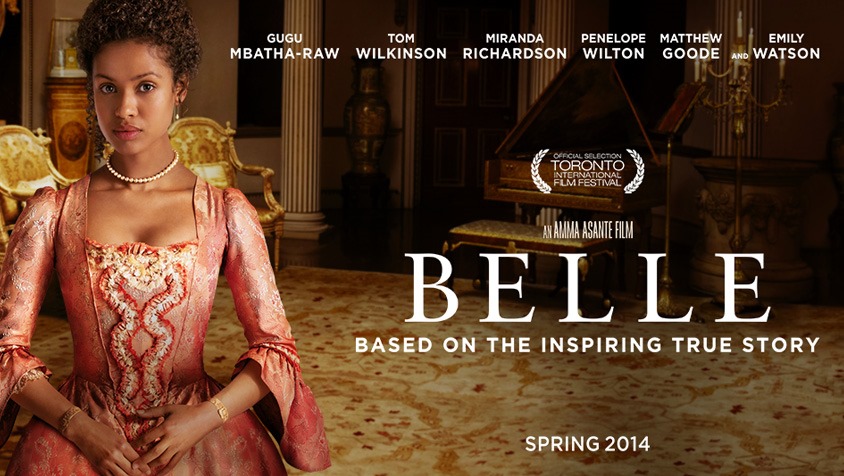
This afternoon I plan to go see Belle with three lady friends.  Even if I wasn’t hanging out with women, I’d want to see this one.  As an old guy, a well done historical film is actually a type of movie that makes me want to go out to the movies.  The older I get the more I like realism.  I prefer documentaries, or very accurate historical dramas.  You’d think it would be the other way around.  That young people would crave realistic movies to learn about life, and old people would want escapist fantasies.  Maybe I’ve given up on escapist fantasies because the older I get the less reason I believe that they will ever come true.  Even if I owned a whole arsenal of weapons and an elegant collection of spandex attire, and even had real bulging muscles to stretch out my costumes, I could never be a superhero.  It’s about as realistic as trying to fantasize that beautiful young women would want to have sex with my ugly old body. 

But I can relate to a clueless dad learning to Twitter from a ten year old.

JWH 5/26/14

Would I Be A Better, Happier, More Productive Person If I Didn’t Use The Internet?

The Internet has consumed our culture.  We are quickly becoming a hive society.  Is that good or bad?  I think it’s good, but like all good things, I think it comes with some bad aspects.  Yesterday I watched the movie Chef, a moving story about  a father getting to know his son, but also a lesson in how Twitter works, for both good and bad.  I also read “How YouTube and Internet Journalism Destroyed Tom Cruise, Our Last Real Movie Star” in the LA Times, about how Internet gossip can create false impressions in the hive mind.

Internet

The Internet is capable of spreading liberal and conservative concepts with equal speed.  It is just as effective at teaching the truth as it is as spreading lies.  The Internet is equally suited to preach Christianity, Islam, Buddhism and Atheism.  Net Neutrality is an ideal in more ways than one.  The Internet can be as addictive as a drug, or as productive as any tool.

The internet is tremendous fun, and I could never give it up, but what if I used it much less?  Most companies consider the Internet a  productivity waster and limit employee access.  Now that I’m retired its very easy to just get seduced into following one link after another, just clicking my way through the day.  I have fiction writing and programming projects I dream of doing, but instead I’m enticed by endless tidbits of fascinating facts.  No wonder George R. R. Martin writes on an ancient DOS machine using WordStar 4.0.

In some ways the Internet, including all the television, movies, music, ebooks, games, comics, news, magazines and audiobooks it delivers, is the ultimate song of the sirens.  Instead of owning a dog, I enjoy photos and videos of dogs on the Internet.  If I was younger and hornier, I’d probably be spending my time with virtual women.  Instead of watching cable TV, I get my shows via the Internet.  Instead of listening to music on CDs I have Spotify.  Instead of reading magazines I read Zite and News360.  When I want to cook something new I watch a how-to on YouTube. 

Everyone sees daily tales about Internet abuse, but who actually walks away?  Would I work on my novel full time if I canceled U-verse and unplugged my TV?  Is the Internet keeping me from being creative, or am I enjoying the Internet while not facing up to the fact that I’m not creative.

Obviously humanity is not going to reject the Internet any more than it’s going to reject fire, farming, writing and science.  The Zen of right living is to use any tool wisely.  The Internet is like a telescope, it allows us to see further, but do we always need to observe reality at an eyepiece?  Most people believe moderation is the key to everything, but I wonder if we don’t get the most from our tools by learning to use them as little as possible.

What inspired this essay was the realization that I was compulsively reading news stories from the Internet because I felt like I was learning so much.  The truth is we forget most everything we read.  Real learning comes from distillation of facts, not the abundance of facts.  It’s better to read one memorable essay than to read a hundred fascinating essays.  Strangely the one essay that stuck with me from yesterday is the one about Tom Cruise, and how the Internet tarnished his reputation.  And I have to admit that I went from liking Tom Cruise as an actor to avoiding his films because of Internet gossip.

I would be a better, happier, more productive person if I used the Internet less, and maybe elements of this essay have some 12-step properties.

JWH – 5/25/14