By James Wallace Harris, Saturday, March 28, 2015
This essay is written for a blogathon hosted by Pre-Code.com and Shadows and Satin.
Who is Kay Francis? She is a long dead movie star who was once famous in the first half of the 1930s. Few remember her today. So, why am I writing about her now? For some reason I love seeing her movies when they come on Turner Classic Movies, even though they’re generally lousy films. Why? Well, I think Kay Francis is the most fascinating and beautiful of all the actresses of the 1930s. Other fans of 1930s films are taking note of her again too. Kay Francis said she wanted to be forgotten, and the men who made her movies never imagined them as lasting works of art, so why are we remembering Kay Francis now? There is two kinds of fame, one is contemporary, and the other is historical. Kay Francis once had fame for a few years, and then was forgotten. Why are we resurrecting Kay Francis now?

Kay Francis is the perfect subject for a study in fame. Back in the 1930s Kay Francis was one of the highest paid actresses in Hollywood, with legions of fans, and her image adorning more magazines covers than anyone but Shirley Temple. Yet, today she is virtual unknown. Why are Bette Davis and Katherine Hepburn from that era remembered as superstars, but not Kay Francis? Many people believe great movie stars make films great, but it’s my theory that’s its great films that make great movie stars. Kay Francis isn’t remembered today because most of her films were forgettable, and that has destroyed her memory in popular culture. Strangely enough, as Warner Brothers attempted to force Kay Francis to break her high salary contract by putting her into forgettable films, Kay Francis refused to give in, took the parts Warner’s pushed on her, collected her huge paychecks and is quoted as saying, “I can’t wait to be forgotten.”
She almost got her wish, if it wasn’t for Turner Classic Movies (TCM) and the growing interest in Pre-Code Hollywood. I don’t think Kay Francis cared for fame, and I doubt any of the filmmakers then thought movies would become a lasting art form. This is before television and DVDs, and maybe even film festivals. It’s only us fans who love the past that want to make sure the objects of our affection aren’t lost forever. What will it take to resurrect Kay Francis?
Biography
Who was Kay Francis? Unless you’re a hardcore TCM addict, it’s doubtful you’ve heard her name. Visit Wikipedia for an excellent concise summary of her life. Kay Francis was known for her striking beauty, and the ability to play daring women. Francis was born in 1905, and started her acting career on Broadway in the Roaring Twenties, just before sound movies came out. Kay was at the right place at the right time, because Hollywood began a massive import of Broadway actors to work in the talkies. Kay Francis made nineteen films at Paramount before going over to Warner Brothers to be the new queen of their production lot. Warner Brothers then proceeded to use her star appeal to sell second rate projects, riding Kay Francis’ fame with fans for all its worth. Eventually the public got tired of seeing mediocre films that didn’t match her talent. Warner didn’t renew her contract, and Francis became a free agent. She continued to make movies, some even decent, but none that would keep her name alive in our new century. Her career peaked in 1932 with three movies, that are only remembered today by connoisseurs of Pre-Code Hollywood. She died in 1968, at age 63, which is how old I am now.
Pre-Code Kay Francis
The appeal to Pre-Code films is hard to explain. Simply, they are sound films made before July 1, 1934 when a national censorship code began to be rigorously enforced. Only in recent decades has Pre-Code become a distinctive sub-genre of 1930s films. When the public remembers films from the 1930s today, then tend to remember those made in 1939 – Gone With the Wind and The Wizard of Oz. The early sound era, before the production code took affect, was a primitive time for “the talkies.” As actors and technicians worked out their techniques for the new art form, pictures improved dramatically as the thirties progressed, and by 1939 they were stunning. The few pop culture favorites today from the early 1930s tend to be films that appeal to young people, like Tarzan of the Apes, King Kong, Frankenstein, Dracula, The Mummy, The Thin Man, Little Caesar, Public Enemy, etc. Only hard-core old movie fans remember the dramas, melodramas, literary and historical films of the 1930s.
Pre-Code films are now remembered for pushing the limits of the state censors. Pre-Code films explored the reality of sex and violence in contemporary culture that both shocked and titillated Great Depression audiences. Some films made serious social statements and others exploited sensational subjects. It’s hard to say why some Pre-Code film buffs love those films when 21st century flicks are far more daring in their explorations. What’s the appeal of skimpy dressed actresses in crudely made old black and white movies, when modern actresses show far more flesh in brilliant high definition?
I can explain why I love those films. I imprinted on 1930s black and white films by watching television in the 1960s. Everyone acquires their pop culture tastes in early adolescence when books, television, movies and music brand on their formative minds. In the early sixties, I imprinted on 1960s rock and roll music, 1960s television, 1950s science fiction and 1930s movies. I love being up late at night in a darkened room lit only by the flickering light of old black and white movies.
When I talk to young people today, most of them claim they can’t stand black and white movies, and hate movies from the 1930s because the acting seems funny to them. They see a film like Grand Hotel as silly, not stylish like I do. To me old films are an alternate reality, one that glitters in infinite shades of gray, exuding style and glamour. Yet, this can’t explain why Pre-Code films deserve their attention. It’s definitely an acquired taste, like learning to watch silent films. I long ago gave up expecting any of my friends to share my enjoyment of 1930s movies. I do spot fellow fans on the net writing about TCM or in the comment sections for the DVDs on sale at Amazon.com. I suppose we’re like fans of other older dying art forms, like pulp magazines or 78 jazz records.
Kay Francis’ real life was more Pre-Code than her Pre-Code films. She was a predatory divorcee years before Norma Shearer made them famous. She was involved in three way love affairs long before making Trouble in Paradise. Kay Francis had a huge sexual appetite, consuming men and women in far greater numbers than all her film lovers combined. All her reel-life roles as cutting edge women were merely cleaned up versions of her real-life experiences. Pre-Code Hollywood films explored the lives of women with bad reputations, not as sinners, but as daring explorers on the social frontiers. Kay Francis grew up living those lives, first traveling with her mother a stage actress, and then later on her own, in New York and Europe. By the time she went to Hollywood in 1929, she had lived most of the roles she played in the 1930s.
Kay Frances was recreating her own experiences onscreen, in glamorous costumes she changed dozens of times a picture. In her most famous films, she was a sexy goddess of sophistication, looking great even when she was down and out, or even dying. For a few years in the 1930s, Kay Francis was so alluring that moviegoers fell in love with her, but in the second half of the decade her fans moved on.
To understand why people in the 1930s fell for Kay you have to watch her films. But which ones? What I’ve done is identify her five best films through the film ratings at IMDb. Then I list her next twelve highest rated films, but these are harder to find, and probably will offer little appeal to most modern movie watchers. I’m hoping the top five films transcend their times and appeal to audiences of any time. If Kay is to be remembered, it will have to be through films that are remembered. I’m encouraged that Trouble in Paradise has enchanted some of my younger friends. That gives me hope. I am always delighted to see Jewel Robbery over and over again, and wonder if it will appeal to 21st century television watchers. I know One Way Passage is a quaint melodrama, but I still love it. I’m not sure modern audiences can handle it’s over-the-top sentimentality.
Kay Francis would still be famous today if she had gotten to work on a great film. If Kay had starred in one of the AFI’1 100 Greatest American Films of All Time, I suppose I wouldn’t be writing this essay. Would The Philadelphia Story been that different with Kay Francis instead of Katherine Hepburn? Hepburn is considered a much better actress than Kay Francis, but who knows. Kay always seemed up to the roles she was offered. Her weakness was she didn’t fight for them, choosing instead to do what Warner Brother’s asked – until it was too late. Obviously actors are not interchangeable – I certainly wouldn’t want anyone else doing Blonde Venus but Marlene Dietrich, or Jean Harlow starring in Red Dust. But Katherine Hepburn and Bette Davis had so many great stories, it’s a shame that Kay Francis couldn’t have had one or two of them. I fantasize that MGM would have found better vehicles for Kay Francis.
Sadly, we have what we have, and some of Kay’s best films are magical if you are the right person for them. Luckily, I am.
Kay’s Top Five Films
There’s no absolute way to judge something like a film, so these top five pictures come from a voting system at IMDb. There is some validation to this list from reading about Kay Francis, from the All Movie Guide, from comments at Amazon for those films on sale, and from my own experience watching them. Kay Francis was known more for her typecasting rather than her acting range. She did have a speech impediment that writers had to work around, and her fans demanded to see her in expensive gowns rather than character costumes, so there is a certain unreality to her stories. In her most popular films, Kay played rich beautiful women in designer gowns framed by Art Deco sets, but in some of her less famous movies, she played business women, doctors, nurses, gold-diggers, and women down on their luck.
Only three of these five films are available on DVD: Trouble in Paradise, One Way Passage and Jewel Robbery, so you will have to haunt the TCM Schedule each month in hopes of catching the other two. Nor will I recommend you rush out and buy them on my recommendation. Catch them on cable first. There’s a good chance you won’t like them. Only a small percentage of avid movie watchers like movies this old.
The decimal number with the title is their current IMDb rating.
Trouble in Paradise (1932) – 8.2

Kay plays Madame Mariette Colet, a rich and beautiful owner of a French perfume company, who is targeted by jewel thieves Gaston, Herbert Marshall, and Lily, Miriam Hopkins. Directed by Ernst Lubitsch, Trouble in Paradise is the one Kay Francis film that often shows up on lists of the best films of the 1930s, and it was an early film added to the United States Film Registry by the Library of Congress. Trouble in Paradise was considered one of the top ten films of 1932, and Roger Ebert included it in his Great Movies collection. This one film is Kay’s best hope for being remembered by 21st century movie fans.
The plot of Trouble in Paradise involves Herbert Marshall choosing between two beautiful women, his equal-in-crime partner, Miriam Hopkins, or the wealthy woman with all the jewels he falls for while trying to rob her, Kay Francis. The plot is light and slippery, and the banter airy and breezy. Sadly, even the best of prints are not pristine, giving the impression that the film is very old indeed, showing its age at 83. It’s a damn shame that Fox Grandeur 70mm widescreen filming didn’t become standard in 1930. I would never dream of wishing 1930s movies had been in color, but I sure wish the prints had been super high resolution and widescreen. I wonder if modern film fans would be more accepting of old films if they didn’t look so old.
One Way Passage (1932) – 8.2
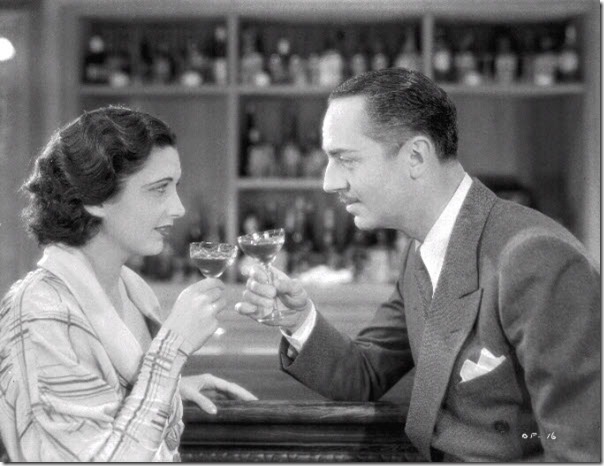
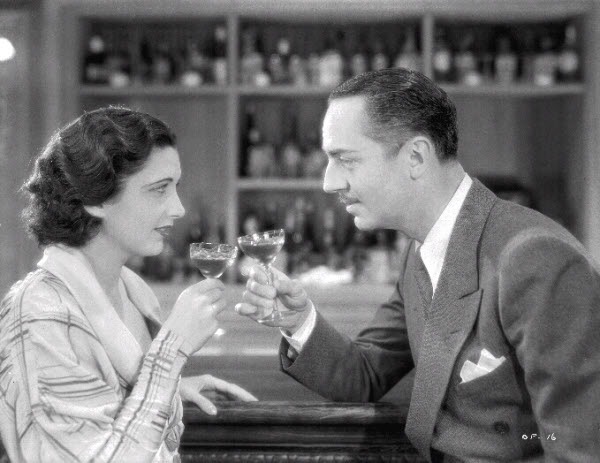
I’ve seen One Way Passage many times – it’s all style and little substance, a stateroom melodrama set on a ship crossing the Pacific. Both characters are destined to die at the end of a long voyage, one for his crimes, the other for her weak heart. Both keep their fatal destinies from each other, promising a lifetime of devotion.
Like many 1930s melodramatic films, One Way Passage has a second string of characters providing comic contrast. Frank McHugh plays Skippy, Dan’s sidekick, who meets Aline MacMahon in the backstory, playing Barrel House Betty, a fake countess con woman. Frank McHugh uses Aline MacMahon to run interference for his buddy, with Steve, the cop that’s guarding Dan, played by Warren Hymer. The entire show is just 68 minutes, so while the action is very slow, the story moves very fast.
Many of my favorite movies from the early 1930s run under 90 minutes. The studios cranked out the content, with actors often doing four to eight films a year. The quality of the storytelling is often less complicated than an hour of modern TV. William Powell gets a fair amount of character development, but not Kay, who is defined by her limits of physical exertion. I have to wonder if One Way Passage was longer, say the 104 minutes of Dark Victory, and given more rewrites, if it wouldn’t have been a much more popular film today. I think it’s a lovely romantic idea that needs fleshing out.
Often these movies made for depression era shop girls had little in the way of real characterization. The men were painted quickly as suave and debonair, and the women sketched even faster by the fashions they wore. The lovers would drink and smoke, and banter innuendoes to each other. Part of this staginess was due to back lot sets and primitive microphone techniques of the early sound years. Yet, I believe One Way Passage generates maximum charm with such little effort by Powell and Francis, as if they were impressionistic actors. If you have the 1930s movie gene, this film is enchanting.
I imagine, when I get very old and bedridden, I’ll prefer the elegant simplicity of 1930s storytelling on my deathbed to the long complicated films of today. The ending of One Way Passage, or On Borrowed Time, offer death fantasies that would be very pleasant to die by.
Pre-Code films were made during the heart of the depression. They offered both silly escapism and gritty realism. They were made for my parents’ generation, who were teens when these films came out. It’s almost impossible to comprehend the life back then, when people didn’t have television, computers, cellphones and the internet. I don’t think most citizens of our technological century can tune into this 1930s version of dream time. I can because some of my earliest memories are waking up to watch the all-night movies with my father. Philosophically, I’m light years away from the common mindset of 1930s moviegoers. Yet, emotionally I resonate with these stories.
One Way Passage works so well for me because William Powell and Kay Francis are my favorite actors from this period. Understanding why is harder to explain. Maybe the stars we admire are the ones we wished we could be or be with.
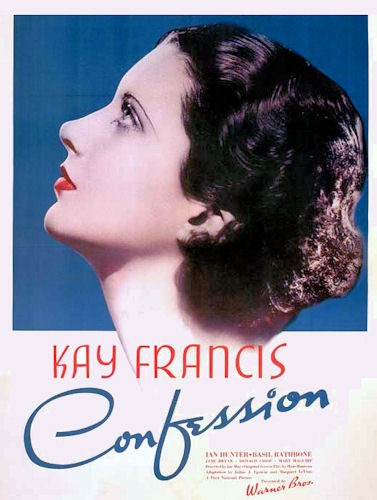
Confession (1937) – 8.2

Confession is a film that I only vaguely remember seeing. Like most of the films of Kay Francis, I caught them on television, usually TCM, and their details are in the jumbled mess of my memories. I remember the basic plot and mostly the ending. I was surprised this film was so highly rated on IMDb and I’m looking forward to catching it again on TCM, or buying it if it ever comes out on DVD.
Even though Kay Francis is only 32 years old when this film was made, she plays a mother, Vera, of a 17-year old girl, Lisa, played by Jane Bryan. The story centers on an older man, played by Basil Rathbone, chasing Kay’s daughter. Since this story has a surprise ending and is more complicated than most of Kay’s usually films, I won’t go into the plot. And that might be one reason why it’s remembered so well, even though the story was only complicated enough to require 87 minutes to tell. The reason why we remember actors and actresses of Gone With the Wind and The Wizard of Oz is because they got to play meaty distinctive characters. If Kay Francis ever had a chance to play more characters like Scarlett O’Hara, she would have have been remembered today.
If Kay Francis had shot Basil Rathbone as viciously as Bette Davis shoots her object of hate in The Letter, then Confession might be more remembered. Bette Davis became the box office queen for Warner’s after Kay Francis fell from grace. And the truth is, Bette Davis was a much better actress because she had such killer instincts in real life. Kay never fought Warner Brothers like Bette did. Kay was a lover, not a fighter, and she got dumped.
Girls About Town (1931) – 8.1

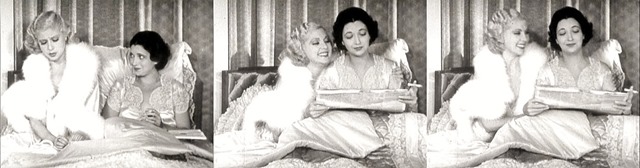
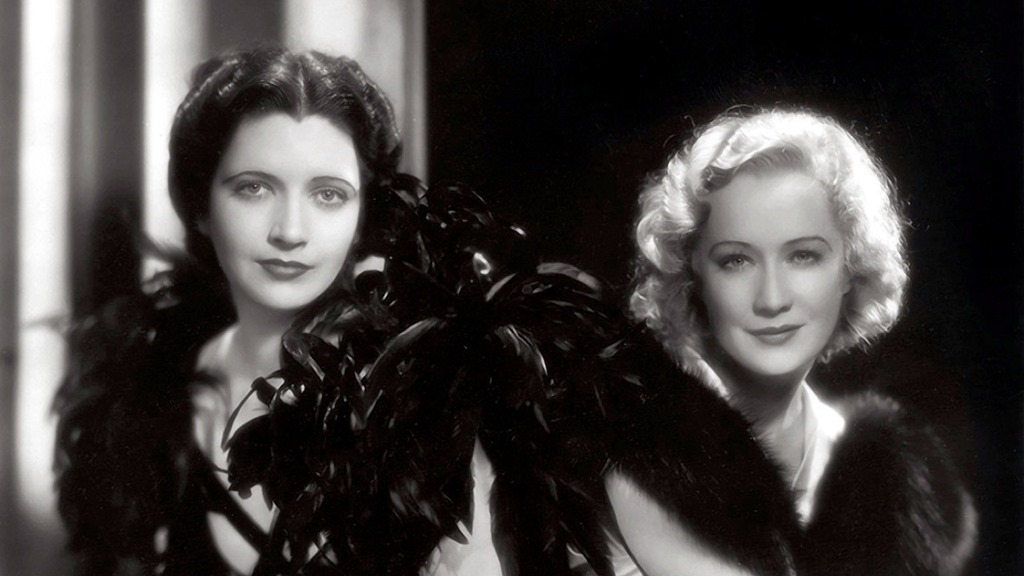
Girls About Town is the kind of picture that typifies Pre-Code films – you get to see Kay in her underwear, and’s she’s a slutty gold-digger. I’m surprised by it’s 8.1 rating at IMDb. The film’s popularity might be due to Joe McCrea growing stardom. However, the interplay between Francis and Lilyan Tashman, friends in real life, make the movie even more suggestive. Kay was just 26 for this picture, but she looked older. Depending on her hairstyle, wardrobe, and how the cameraman filmed her, Kay could look round faced and older, or thin faced and younger. This made her look old fashioned and at other times modern. Seeing her in this earlier picture probably captures more of what she looked like in real life. Her Warner Brother pictures featured a far more crafted look. It’s a shame she didn’t get to play more physically active characters, because her slinky manikin posing was great for Hollywood glamour, but poor for demonstrating acting ability. Look how animated Tashman is below while Kay plays it coolly. Kay’s directors should have pushed her to be more kinetic.
Jewel Robbery (1932) – 7.5

Kay plays a flibbertigibbet who seems to have only one thing on the brain: JEWELS! Kay is married to a dull older man, Henry Kolker, who works hard to feed her gem habit to keep his beautiful young wife from running wild. We know Kay isn’t faithful right from the start, but when her rich husband takes her diamond shopping and the store is robbed by a gang of jewel robbers bossed by the magnificently charming William Powell, Kay stops thinking JEWELS and starts thinking MAN!
This is the fifth of seven times Powell and Francis would act together. They play off each other wonderfully. It’s a shame Kay didn’t get to play Nora Charles, because she’d definitely be remembered today. Kay certainly had real life drinking practice down for the role.
Jewel Robbery is another film that fits into the Pre-Code appeal for its adultery, sexiness, innuendo and even drug use, but it’s all done with such a light touch that I can’t even imagine Will Hays himself being bothered by the film.
The Best of the Rest
Using the ratings at IMDb, I picked the next dozen highest rated Kay Francis films. None of these films are going to be remembered by the public at large today, but they aren’t bad if you like old movies from the 1930s, especially Pre-Code films.
- The House on 56th Street (1933) – 7.4
- Mandalay (1934) – 7.3
- Guilty Hands (1931) – 7.3
- Secrets of an Actress (1938) – 7.3
- In Name Only (1939) – 7.3
- 24 Hours (1931) – 7.2
- The Vice Squad (1931) – 7.2
- Cynara (1932) – 7.2
- Strangers in Love (1932) – 7.2
- Stranded (1935) – 7.2
- First Lady (1937) – 7.2
- Divorce (1945) – 7.2

Most of us will die and be forgotten, but sometimes the accomplished among us will live on in history, maybe not forever, but longer than they ever imagined. Kay Francis is fading fast in pop culture immortality. It’s strange that I know about Kay Francis. Why did I bond with the movies of the 1930s when I was growing up in the 1960s? The simple answer is television. 1960s music and television imprinted on me because that’s what I heard and watched as a teenager. As a kid I seldom went to new movies, and never bought the latest bestsellers. Old movies and books are what I was exposed to first. That’s how I got out-of-sync with my pop culture times. The art forms you’re exposed to in your formative years are the ones you live with for the rest of your life.
What draws us back to these old films time and again? What makes us scrutinize the TCM schedule every month looking for that rare film we haven’t seen? What makes us frequently search Amazon hoping to find a new DVD of a very old film we’ve been waiting years to be released.
There is the real world out there, with terrorist bombings, climate change, drunk and texting drivers, mad shooters, a world filled with hating and conflict. Sure, our alternate celluloid reality is also filled with killing, hate and conflict, but it’s not real, and the good guys triumph. We love Pre-Code Hollywood for its grittiness, the exact same thing we’re trying to escape.
Box Office Poison
In the May 3rd, 1938 issue of Independent Film Journal, Harry Brandt, of the Independent Theater Owners of America, published an article called “Dead Cats” where he listed the actors and actresses his group felt were no longer making his group money, claiming the movie studies were overpaying them, and they were box office poison. Among those he listed were Garbo, Dietrich, Mae West, Joan Crawford, Katharine Hepburn, Fred Astaire, John Barrymore, and Kay Francis. Garbo famously walked away from Hollywood in 1941. John Barrymore died in 1942. All the others continued to make films, including Kay. She made 16 films after 1938. Yet, Brandt was right, and Kay Francis was no longer the star she had been.
Why Isn’t Kay Francis Famous Today?
Kay Francis said time and again she wanted to be forgotten, yet she relished the limelight as long as she could. Near the end of her life, Francis got drunk and passed out at a New York restaurant. While her friends were carrying her out to a cab, a young man walked by and asked, “Is that Kay Francis?” Kay opened one eye and said, “It used to be.”
We like to believe the star system that emerged in Hollywood during the 1920s and 1930s defined a kind of pop culture immortality, yet that fame was temporary for all but a few legendary actors and actresses. Long term fame isn’t determined by publicity and box office. When we’re looking at decades and generations of memories, what lasts are the great films, not the stars. Sure, the stars in those films are remembered, but they are remembered for the films. I search the TCM schedule every month for Kay Francis movies and watch whatever’s available, knowing the odds of enjoying a good story is small.
I remember Kay Francis for her beauty but beauty offers no lasting fame. And if you’re an actor seeking historic fame, you need to play an immortal character. Rhett Butler and Scarlett O’Hara make us remember Clark Gable and Vivian Leigh. We would never remember Johnny Weissmuller if not for Tarzan.
We don’t remember Kay Francis because we don’t remember Mariette Colet, Joan Ames, or Baroness Teri von Horhenfels. And that’s the ultimate lesson of this essay. Great characters and story are everything. If we can’t remember the character, we won’t remember the actor. The legacy of Kay Francis will never be resurrected like her fans hope. Kay Francis had a tremendous life as a real person, just read her biographies to be dazzled, but the characters she played were never real enough, not like the woman who played them.
References

Table of Contents




 Auxiliary Memory