My Favorite Angels and Ghosts

by James Wallace Harris, Tuesday, May 30, 2017

Have you ever wondered why you watch TV? It’s kind of weird to think about how much we stare at screens. Have you ever analyzed what actually entertains you? Last night I had a friend over to start watching season 5 of House of Cards. I had watched season 1 with her but she leaped ahead through seasons 2-4 without me. As we watched Frank and Claire Underwood I was horrified by the show. Those characters were as depressing as Donald Trump, and I’m definitely not entertained by him. Our current prez has turned me off to all politicians both real and imagined. Then I remembered the movie I had watched the previous night, about angels. Now that was entertaining. And, I don’t even believe in angels.
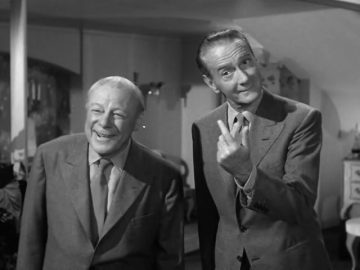
For-Heavens-Sake-1950-1I suppose it’s rather odd for an atheist to enjoy movies about angels, but I do. I had watched For Heaven’s Sake (1950) with a couple of friends. My friends weren’t aficionados of old movies, so it was kind of them to hang out with me while I had such a good time. I had first seen For Heaven’s Sake decades ago and remembered it mainly for one scene and concept. Back in 2008 when I wrote “Angels in the Movies” I remembered that unique take on angels and wanted to see it again. It wasn’t available. Years later I saw it was out on DVD but the price was too steep. I didn’t buy it, but the urge to see it lingered. The other day I was in the mood for an old movie and saw For Heaven’s Sake was two dollars off, and clicked the order button. It really wasn’t worth $18, but it was cheaper than three people going to the movies. And I laughed out loud a great deal during its 87 minutes, so it was entertaining.

Angel-aThe reason why I remembered For Heaven’s Sake all these years is its unique take on angels. (Of course, the most unique is Angel-A (2005).) For Heaven’s Sake is about a little girl (Gigi Pereau) and boy (Tommy Rettig) waiting to be born, and two angels (Clifton Webb and Edmund Gwenn) trying to assist them. Every movie about heaven, angels, and ghosts have a different theory about how the afterlife works. In this one, kids exist in heaven as angels or angel-like beings before they are born on earth. I thought that a neat idea. Sort of a version of reincarnation. However, seeing the film again last night I heard a line that suggests a problem. Evidently, little angels are created in heaven and begin aging before they are reborn in our realm. If they have to wait too long to make it to Earth they mentally develop in heaven. Clifton Webb tells the little girl she doesn’t want to become a child prodigy and compose music at age four as if that was something nasty.

Many anti-abortionists believe souls are conceived when human eggs and sperm hook up. This movie, as does the theory of reincarnation, suggests that souls exist before birth. Most scientists and philosophers have abandoned the concept of the soul. I like to use the word soul as a label of our sentient/self-aware mind, which I believe develops well after birth. Sentience is a difficult concept, especially if you think about animal rights and artificial intelligence. Stories about angels and ghosts are really speculation about non-human beings, souls, immortality, reincarnation, mind transfers, multiple dimensions, and other philosophical questions. They explore some of the same concepts that science fiction explores.

However, most movies about angels are light-hearted and fun, and this one was too. I tend to over psychoanalyze everything, but then that’s entertaining to me.

the-bishops-wifeThere’s a problem with angel movies. Originally, as told in The Bible, angels were another species of beings that existed with God before creation. Often angels are God’s henchmen, doing his dirty work – his enforcers.  In modern times people believe when you die you become an angel. I don’t know when that idea got started. Two movie classics, It’s A Wonderful Life (1946) and The Bishop’s Wife (1947) seem to be in between on this idea. Clarence has to earn his wings, but he remembers Mark Twain.  Dudley remembers a lot of human history, but I’m not sure if it was from human experience.
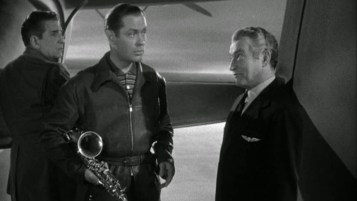
Here Comes Mr JordonIn Here Comes Mr. Jordan (1941), are we dealing with angels, ghosts, or former humans now residents of heaven? The film has a hierarchy of bureaucratic workers who manage heaven and its potential residents. Are they angels? Maybe our culture has repurposed any occupant of heaven to be angels. Me, I prefer angels to be different from humans. Movies like Wings of Desire (1987) (remade in 1993 as City of Angels) have angels envying humans because we can experience things they can’t. Isn’t it ironic that we want to go to heaven, but angels want to come to Earth and live like us? I’ve always loved the title of this book PKD interviews, What If Our World Is Their Heaven. Even though there is great suffering on our planet, what if Earth is the hot destination for the advanced soul?

Mr. BrinkAnd what is Mr. Brink in On Borrowed Time (1939)? Is he death? Or an angel of death? Is he related to the specter of death in The Seventh Seal (1957)? I like Mr. Brink far better. He’s far more philosophical and worldly, and not a strange biblical creature that tags us out when our time is up. Death is played even more suavely by Fredric March in Death Takes a Holiday (1934). In it, Death envies us and tries out being human for a while. In For Heaven’s Sake, Clifton Webb the angel is corrupted by taking human form. Dudley, in The Bishop’s Wife, is also tempted to become human because of Loretta Young.

TopperIn the world of Topper (1937) Cary Grant gets to play a ghost. Strangely, he has some of the same powers as Dudley, the angel he played in The Bishop’s Wife. I think that might be why people are confused by ghosts and angels, they often have similar magical abilities in stories to teleport, appear and disappear, and watch people while invisible. Most of the time angels in movies don’t have wings, at least not like John Travolta in the 1996 film Michael. My favorite fun ghosts are Horatio Prim (Lou Costello) and Melody Allen (Marjorie Reynolds) in The Time of Their Lives (1946), where Abbott and Costello are separated by the veil of death. Do Horatio and Melody convert from ghost to angel when released from their curse?

I wonder why I love movies about angels so much? Generally, I’m not fond of fantasies. I prefer science fiction, but as I’ve written elsewhere, science fiction is a modern substitute for religion. When you think about it, religion, fantasy, and science fiction are fun forms of speculation about what’s possible in reality.

Which makes me wonder if House of Cards is too realistic? I loved Breaking Bad, which was also very realistic, and I cared about Walter White, even though he became a monster. Frank and Clarie are monsters I want burned at the stake. We switched from House of Cards to Better Call Saul and I immediately realized why I liked it better. I care about what happens to Jimmy McGill, Kim Wexler, and Mike Erhmantraut. I couldn’t care less about Frank and Claire. In every scene they were loathsome.

Maybe movies about angels are inherently likable because their stories are about caring about people. Angels are usually guardian angels in most stories. Maybe that’s why people like the concept of angels – they love the idea that someone is watching over them. (Of course, if you think about that, that’s an invasion of privacy. The next time you take a moment out for onanism, just think about what beings might be watching. It does help to be an atheist sometimes.)

I still don’t know why I love movies about angels. If you’re a perceptive reader you might have noticed that most of my favorite angel movies are old, and in black and white. If you’ve seen these films you know they have a certain feel. Maybe I just love the vibes of B&W 1930s and 1940s. I’m not sure I find that same vibe with modern shows. When we watched Big Little Lies I was caught up in the mystery and story, but I found the characters revolting, until the very end, when the show provided a feel good ending, and the characters became likable.

I wonder how Big Little Lies would have felt if it had one additional character, Dudley the angel from The Bishop’s Wife to help those women. Were we better people back in the 1940s?

I’m reminded of this quote from Abraham Lincoln:

We are not enemies, but friends. We must not be enemies. Though passion may have strained, it must not break our bonds of affection. The mystic chords of memory will swell when again touched, as surely they will be, by the better angels of our nature.

Maybe just the idea of angels are the better angels of our nature. Frank and Claire Underwood have no better angels in their nature. And do we when we watch them? My wife has always hated many of the modern TV shows and movies I love because I like stories about complex characters which often means unlikable characters. As much as I hate Donald Trump, I’m sure even he has a better angel in him somewhere. However, watching the nightly news I wonder if all our better angels have flown away to another planet.

I recommend watching On Borrowed Time, a richly complex film, showing both our better angels and worse devils of our nature. And then ask yourself, “How much have we changed since 1939?” Maybe not that much. Is Mr. Smith Goes To Washington that much different from House of Cards? Our entertainment is more explicit, violent, and sexual – but have we really changed? Liberal philosophy has made us better people in many ways, more conscious of the diversity and equality of being fully human. And that’s often reflected in our entertainment.

I think something has been lost. I can’t say what. I believe conservatives are looking for it too, but their nasty belief that the end justifies the means suggests they have already lost their souls. What we watch on TV is revealing. Do people love House of Cards because they despise our government? It’s probably Pollyanna of me to suggest that what we watch does affect us.

Even though I’m an atheist maybe I love movies about angels because I believe humans could be more angelic, even without the fear of God.

JWH

Letting Things Slide

by James Wallace Harris, Sunday, May 21, 2017

Recently I told a friend they were letting things slide.

“What a horrible phrase,” they replied, “it sounds like I’m in a death spiral.”

“I didn’t mean you were going down the drain,” I said. “But you do keep pushing deadlines back.”

Psychology Today defines “letting things slide” as procrastination. Dictionary definitions include, “to ignore something, to not pay attention, put aside, write off, negligently allow something to deteriorate, allow something to go without punishment, to not do anything about something or someone when you should try to change or correct that thing or person.” Evidently, it’s a widely used phrase. By the last definition, if I hadn’t said anything to my friend I would have been letting things slide by not telling them they were sliding.

now-later

Often, offering helpful criticism means getting a foot stuck in our mouth. I then pointed out that one of the side-effects of getting older is letting things slide. My friend hates any suggestion that they’re getting older. They got even more annoyed with me. My wife tells me I’m too happy to accept aging. She says if I’m not going to fight getting old, I should at least not admit it.

I started thinking about causes of sliding not related to aging. I remembered that I started letting things slide more after I retired. I assume it was because I was getting older, but what if retirement causes sliding? What if not having a 9 to 5 structure promotes procrastination and delay?

When all your time is free its very easy to reschedule obligations. It’s also easy to choose pleasant activities over annoying tasks. I’ve known this for a couple years since I’ve been retired longer than my friend, so I was trying to pass on that bit of wisdom. Maybe people have to discover it for themselves.

I even wrote an essay, “Overcoming Inertia in Retirement.” I guess my friend didn’t read it. I often study older people when I get a chance to see if I can spot trends I might be following as I get older. And I do think letting things slide is an aging issue. Older folks generally do much less than younger people. We assume that’s because of health and energy, but what if it’s mental too? Life is about making an effort to get what we want.

What if the wisdom of aging is learning that some things aren’t worth the effort? Or is that a cop out? Maybe we just get tired of making an effort. I know I dream of arranging my future life so it requires much less effort. To put a positive spin on things, maybe we just streamline living as we get older.

Unfortunately, I think it’s more insidious than that. As we age our brains shrink, and we lose neurons and neural connectivity. Exercise, especially aerobic exercise can counter that trend. We actually grow new neurons and make more connections with exercise. I do very little aerobic exercise according to my FitBit. And I do feel I’m in a cognitive decline. That’s why I do things like write essays and solve crossword puzzles to keep what little brain matter I have oiled and active.

If we chart our activity levels across our 40s, 50s and 60s, we can probably plot a line that will show our activity levels for our 70s, 80s and 90s. Research shows we can tilt the slope of that line up if we exercise physically and mentally.

If other words, slowing the slide now means we’ll let things slide less in the future.

JWH

Baby Boomer Science Fiction

by James Wallace Harris, Wednesday, May 17, 2017

For a small group of aficionados of old black and white movies, there’s a tiny sub-genre called “Pre-Code Hollywood” that has a passionate following. I’m fond of a certain era of science fiction which I’m currently calling Baby Boomer Science Fiction. I feel it’s slowly being recognized as a distinct sub-genre, but it doesn’t have a name yet. I’m guessing it has about as many fans as Pre-Code Hollywood.

I got hooked on science fiction in the 1950s by watching old science fiction movies on television. I found books to read with similar themes in 1962. Then in 1964, I discovered there was a genre called science fiction. I began pursuing it with a passion. At the time, science fiction was a lonely, but exciting love. It wasn’t until 1967 that I found a friend who read science fiction. I discovered fandom in 1971, thinking I had finally found my tribe. And that’s when I first met women who read science fiction. In 1977 I met my wife and went to work at my last job. My wife had read Dune and loved J. R. R. Tolkien, but wasn’t a fan. Except for couple close friends, science fiction became mostly a solitary pursuit again.

IF - Jan53

In 2002 I joined Audible.com. I discovered I loved listening to the old science fiction I first read during 1962-1975. Because of the internet, I found other people like myself who were nostalgic for science fiction from the 1950s and 1960s. I joined a small online book club at Yahoo Groups, Classic Science Fiction about ten years ago, where many of the members remembered reading the same kind of science fiction I did when they were growing up.

And there were several women in the group. Back in the 1960s, I didn’t think women read science fiction. I used to pray my atheist prayers for a girlfriend who read science fiction. I now realize there were male and female science fiction fans all around me in school and I never knew it.

I figure all across the country there are folks my age, and a few from younger generations, who love a particular kind of science fiction. It’s science fiction that was mostly published in the 1950s and 1960s, but some from the 1970s. I’ve decided to call stories of this kind, Baby Boomer Science Fiction (BB-SF). It’s not a great name like the Lost Generation or the Beats, but it’s a useful enough tag.

There are two ways to explain my label. First, people might think of baby boomers who wrote science fiction, but that’s not where I’m going, although that could be another essay. No, I categorizing these stories by the science fiction old baby boomers are nostalgic for now. I’m wondering if every generation has science fiction fans who love a particular kind of science fiction. Growing up I met older guys who gushed about the science fiction from the 1920s and 1930s, but I found their science fiction distinctively different, even quaint and dated. I wonder if young readers today find my science fiction on the moldy side?

There are no official names or dates for generations, but I like those defined in “The Six Living Generations In America.” Other sources give other date ranges. Wikipedia has even different date ranges and names. I bet there’s science fiction sub-genre for every one of these generations.

  • The Lost Generation (1883-1900)
  • GI Generation/Greatest Generation (1901-1926) (1901-1924)
  • The Silent Generation (1927-1945) (1925-1941)
  • Baby Boomers (1946-1964)
  • Generation X (1965-1980) (1965-1976)
  • Millennials (1981-2000) (1977-1995)
  • Generation Z/Boomlets/Centennials/iGen (2001- ) (1996- )

It has been said that The Golden Age of Science Fiction is 12. (Before that I heard 1939-1949.) For my purposes, I’m looking at baby boomers who turned twelve during 1958-1976 and got hooked on science fiction. I turned twelve three days after Kennedy was assassinated in 1963. 1958-1976 roughly coincides with Sputnik (1957) to Apollo 11 (1969), which also happens to be my 1st-12th-grade years. So Sci-Fi Baby Boomers grew up with NASA and science fiction.

Even is we discount space travel and science fiction, those years were far out times, with memorable concurrent influences that felt just as radical as science fiction, such as classic rock, the Civil Rights movement, second wave feminism, the early Gay Liberation movement, the beginning of the computer age, and the Beats/Hippies/New Age counter-cultures. Really, a lot more. The 1960s would have been science fictional if written in a novel in the 1950s.

On the internet, the kind of “classic science fiction” I’m talking about has almost become a tiny meme. I frequently stumble across websites devoted to BB-SF, but without any consistent label. I used to call it 1950s & 1960s science fiction, but once I applied the Baby Boomer generation label, I realized it stretched a few years earlier and later. I thought of calling it Space Race Science Fiction because its fans grew up with Sputnik, Project Mercury, Project Gemini and Project Apollo. It was also the science fiction that was siblings to rock music, but “Rock and Roll Sci-Fi” doesn’t work. The earlier era of science fiction centered around pulp magazines and the heart of this era’s science fiction were the digest SF magazines. “Digest SF” doesn’t work either. So I’m going with Baby Boomer Science Fiction.

Even though all the members of my science fiction book club have decidedly different personalities, we tend to prefer science fiction published in the 1950s, 1960s, and 1970s. We all dabble in newer SF, but with no consistent preferences showing up for later SF. You can see the club’s reading history here. Nor do we all share the same favorite novels from the Baby Boomer era.

What we do share is a wistful fondness for the Baby Boomer Science Fiction we grew up reading and watching. In that era, Heinlein, Asimov, and Clarke were considered The Big Three of SF. Those guys were from the GI Generation. From the Silent Generation, we got Ursula K. Le Guin, Roger Zelazny, and Samuel R. Delaney. Those writers felt young, fresh, daring, and revolutionary when we first read their stories in the digests.

The BB-SF I’m talking about, the stuff we’re nostalgic for, was first discovered by Baby Boomers in four stages. Old books in libraries, cheap paperbacks, the Science Fiction Book Club, and the science fiction digest magazines.

Hardbacks

Before 1950 there was little science fiction published in hardback. Starting in the late 1940s a few small presses began publishing hardback SF which turned into a boom in the 1950s. These were the old books baby boomers discovered in libraries in the sixties that define science fiction for them for the rest of their lives.

Links are to sources where you can see titles and covers, and hopefully, trigger your nostalgia. The main publishers I remember were:

Paperbacks

Almost concurrent with the hardback boom, was a boom in paperback science fiction. Great reads could be bought with lunch money. I remember living in small towns in the 1960s, with a wire rack in a drugstore my only source of science fiction. Many baby boomers love to collect these paperbacks today. Others nostalgically remember their covers. The main publishers I remember were:

Science Fiction Book Club

The Science Fiction Book Club began in 1953. I joined it in 1967. That’s when I started reading new SF books the year they came out. The SFBC editions were not as well made as the publisher’s editions, but they still felt like owning a hardback. Looking at their publications schedules (Doubleday, Putnam) is a trip down memory lane, and probably a fairly accurate key to when I first read many BB-SF books.

I don’t think most fans of BB-SF books today were members of the SFBC. I don’t often read nostalgic blog essays about being in the club. I think most people who love BB-SF do so because of the books they found in libraries or the paperbacks they bought.

Digest Magazines

I discovered the digest magazines around 1965 and immediately began searching for back issues in used bookstores. I think very few BB-SF readers today got into the digests. They’ve never had a huge circulation, although for a while Publishers Clearing House pushed Analog, and I believe Asimov’s to over 100,000. I think their current circulations run 10-23k. If the digests even had that circulation in the 1960s, then the current population who might be nostalgic for BB-SF could potentially be around that size. I tend to think it’s in the hundreds, not thousands. But I’m not sure.

Another indicator of interest is websites devoted to pulp scans. IF Magazine was recently reprinted on Internet Archives. The most popular issues have had a few thousand people look at them.

I believe the definitive digest SF magazines for Baby Boomers were:

There were dozens of other titles, but most were short-lived. I subscribed to all of these at different times. Letters in Ted White’s Amazing got me into fandom. I collected F&SF, which was my favorite. I enjoyed Galaxy and IF a lot more than Analog.

Are You a Fan of BB-SF?

I believe younger science fiction readers prefer newer books. Science fiction should be cutting edge and old science fiction often feels dated, and sadly, alarmingly sexist. But science fiction from the Baby Boomer years does feel original in a way modern science fiction can’t. That’s because contemporary science fiction often feels like rewritten BB-SF. Newer SF stories are often better told, longer, and sometimes feel Baroque with details. At the online book club, many agree that we loved science fiction novels when they were around 200 pages long, and new science fiction runs several times that length, and usually the books are part of an endless series.

Plus with newer books, you seldom see little gems of weird speculation like Brainwave by Poul Anderson,  The Last Starship From Earth by John Boyd, Space Chantey by R. A. Lafferty,  or Mindswap by Robert Sheckley.

Here are the books I remember:

p.s.

If you got a better name, propose it in the comments.

p.s.s.

I wanted to use this photo from Getty Images, but it costs money. But isn’t it perfect?

JWH

Waiting for Heinlein

by James Wallace Harris, Sunday, May 14, 2017

Are you disappointed your life hasn’t turned out like the stories you love? Would I feel this way now if I had loved literary fiction instead of science fiction? In the last third of my life, I’m cherishing nineteenth-century English novels and early twentieth-century American novels, realizing they would have been better preparation for my life – the life I got instead of the one I wanted. Science fiction is as wondrous as any religion but as frustrating as a Samuel Beckett play. Of course, doesn’t religion and science fiction promise futures that will never arrive?

Robert Heinlein

I’ve been waiting a long time for the future to get here – sixty years by one reckoning. And I must admit, sometimes I feel the fringes of Tomorrowland when I use my smartphone, but for the most part, I’m still waiting for Heinlein to show up. Other writers have complained about not getting their jetpack, but they had such foolish gadgets back in the sixties.

I’m waiting for interplanetary rocketships with long sleek hulls, that land on four fins with thrusters, or interstellar spaceships like the U.S.S. Enterprise. Reading about extrasolar planets is encouraging, but it ain’t what Heinlein/Asimov/Clarke promised with tales of visiting them.

I’m also waiting for robots like Asimov and Simak promised. I do talk to Alexa, but she has no soul. And I enjoy seeing the little robots DIY people make with a Raspberry Pi board, but I think we should have robots well beyond the ones we saw in Forbidden Planet and Lost in Space.

Do we screw up kids by letting them read science fiction and fantasy? Even before I discovered Robert A. Heinlein at age 12 in 1964, I had absorbed a great deal of science fiction via an old black and white television my family bought in 1955. Should we judge reality by our dreams? Would we have invented everything that makes us human by accepting reality as it is?

Maybe fantasies are fine except we should be more discerning when creating them.

I don’t know if this is too sick to admit, but as a kid, I was disappointed that WWIII didn’t happen. All those 1950s movies about mutants and last people on Earth had its allure. Living like Harry Belafonte in The World, The Flesh and the Devil seemed great, especially after Inger Stevens arrives. (Like Harry’s character, I could have done without the Mel Ferrer’s character.)

And even though the robots in Target Earth were scary, I liked them, although I didn’t love them like I loved Gort in The Day the Earth Stood Still. It was a shame learning in the 1960s that our 1950s flying saucers dreams were flaky and fake. It was somewhat redeeming when we got to see Closer Encounters of the Third Kind in the 1970s, but it really was too late, at least for believing in Have Space Suit-Will Travel adventures.

It was crushing in 1972 when we stopped going to the Moon. From reading Heinlein I was positive humans would reach the red planet by the end of that decade and build colonies there in the 1980s. I thought before I died (which I imagined being around the mid-21st century), I’d leave life knowing that interstellar travel was in the preparation phase.

I’ve written this essay before. I’ll probably write it again many times before I die. The feelings that inspire these thoughts come out again and again. I wanted more science fictional dreams to come true in my lifetime. Of course, I also expected more of my liberal dreams to unfold before I died too, but Donald Trump has crushed them. Books, especially those we read when we’re young give us a kind of hope that never goes away. I know the hopes I got from science fiction are no more practical than the hopes the faithful get from reading The Bible. Does needing the impossible mean we’re stupid? Or do those desires shape our souls?

The thing that distinguishes science fiction from religion is the belief that humans can build rockets that will take us to the stars. The faithful believe God will take them to heaven. Maybe my frustration with the future is it takes longer than a lifetime to get where I dream of going.

I still embrace three science fictional hopes that could come true before I die. The first is SETI. I’m not sure humans will ever travel to other star systems, but we might get messages from beings living light years away. Second, even if we don’t get a message from ET, I hope astronomy will eventually detect atmospheres with spectrographic evidence of advanced life on extrasolar planets. Finally, I hope AI minds arrive. Many people fear artificial intelligence will wipe out humans, but I hope they will help us evolve. Our species is smart, but I don’t think we’re smart enough to survive self-extinction. AI minds could save us from our own stupidity.

I’ve been waiting my whole life to live my favorite stories of Robert A. Heinlein. That’s quite childish of me. On the other hand, I could have followed in my father’s footsteps. He died an alcoholic at age 49. I always assumed he drank because he couldn’t achieve his childhood aspirations. I’ve often wondered if science fiction was my alcohol. At least science fiction has kept me alive longer.

Like Vladimir and Estragon, my old friend Connell and I have been arguing about the future since 1967, waiting for Heinlein, Clarke, and Asimov to arrive.

JWH

Don’t Hate Me Because I Look Like Them

by James Wallace Harris, Wednesday, May 10, 2017

I’m a liberal atheist who’s always voted Democratic – but I look like a Republican – an old white guy. That’s getting to be a problem. Women and people of color are being political disenfranchised by the current political regime. I don’t think I’m being paranoid when I think they’re starting to hate old white guys. I don’t even blame them. Not only that, I’m getting tired of old white guys coming up and immediately telling me their weird-ass political ideas assuming I’m a member of their secret fraternity. I’m totally freaked out people will think I’m a Trump supporter because of my looks.

13 white guys

It’s a good thing I don’t want to be a politician because this country doesn’t need any more old white guys wanting to run the joint. I do want to be a writer, and unfortunately, there’s a long legacy of wordy old white bastards hogging the literary canon. I write for a site that works very hard to promote diversity in reading. I feel guilty even submitting essays. Yet, I’m very thankful to be their token old white guy. I’ve always been for diversity but I’m learning even more by hanging out at Book Riot.

The trouble is there’s a large segment of our country that wishes we all looked alike. Yesterday, The Atlantic reported “It Was Cultural Anxiety That Drove White, Working-Class Voters to Trump” and not economic anxiety. These people want to return to a paternalistic white past where women and people of color don’t disturb their vision of a homogeneous America. Recently, I’ve heard second-hand personal stories and read many reports in the news about people going up to Hispanic folks and telling them they should go home. That’s incredibly shameful. Knowing the president and leaders in Congress inspires such horrendous behavior makes watching shows like The Handmaid’s Tale unnerving. I thought climate change was dooming our future, but alt-right politics is going to destroy us first.

Not only do the Republicans not see anything wrong in having all old white guy committees, they take pride in claiming they don’t play identity politics. They even jockey with each other to out-do their denials claiming nothing is wrong. But it’s very wrong! The fact they can’t see their evilness is equal to Trump’s own anosognosia. Their blind spots are so huge it’s surprising they can see at all.

What really bothers me is their claim to be Christians, a religion based on teaching compassion. If these old Republican white guys are really going to church every Sunday they should stop. If they haven’t gotten the message after all these years then they are wasting their time. I’m an atheist that quit the church when I was twelve, but I did learn this in Sunday school at age five:

Jesus loves the little children,
All the children of the world.
Red and yellow, black and white,
All are precious in His sight,
Jesus loves the little children of the world.

Obviously, they didn’t. Women are half the world, and the whole world is diverse. Why can’t they see that? I think I know why, but it’s a terrible thing to think about another human being. Women, minorities, and immigrants tend to vote Democratic. Republican’s in their single-mindedness to lower their taxes will do anything, and I mean anything, to achieve that goal. In other words, greed has driven them blind, even to the point of abandoning their faith and becoming hateful.

They have sold their souls to lower their taxes.

I just want people to know that I might look like those zombies, but I ain’t one of them.

JWH