Is Heinlein’s Have Space Suit-Will Travel Satire?

Over at Locus Online, Gary Westfahl has proposed a new theory about Robert A. Heinlein in his essay “The Joke Is on Us:  The Two Careers of Robert A. Heinlein.”  Westfahl proposes:

Thus, I wish to argue instead that there were, in fact, only two periods in Heinlein’s career: from 1939 to 1957, Heinlein wrote science fiction, and from 1958 until his death in 1988, Heinlein wrote satires of science fiction. Or, if that language seems too strong, say that from 1939 to 1957, Heinlein took his science fiction very seriously, and after that, he no longer took his science fiction seriously.

Now Westfahl didn’t say Heinlien wrote satires, but satires on science fiction, and even makes a case that Heinlein is parodying his own earlier work.  Westfal starts his essay by claiming Heinlein is a golden age science fiction writer that still has impact:

Still, there is at least one classic writer that every science fiction reader must come to terms with; for when you visit a bookstore today, the science fiction section may have only a few books by Jules Verne and H. G. Wells, or even Isaac Asimov and Arthur C. Clarke, and there may be few signs of their influence on other writers. But the works of Robert A. Heinlein are still occupying a considerable amount of shelf space, and the evidence of his broad impact on the genre is undeniable.

I don’t agree.  Heinlein has always been my favorite SF writer, but I’ve watched his reputation’s slow decline in recent decades.  I am totally open to reevaluating Heinlein’s work like Gary Westfahl has done, but not to explain Heinlein’s continued success, but to rescue Heinlein’s work for contemporary readers.  I think we need to find and recognize Heinlein’s best work that will appeal to new readers.  In our Classics of Science Fiction Book Club we have many Heinlein fans but far from most, and his popularity is on the wane, especially with younger readers.

I don’t think repackaging Heinlein as a satirist will sell or fly.
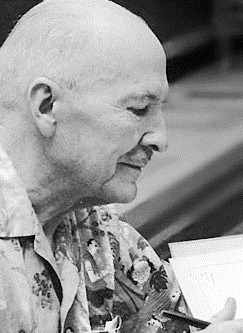
Heinleinface

Claiming Heinlein’s later work is satire is not new, William H. Patterson Jr. was the first one I remember proposing this idea in his book The Martian Named Smith back in 2001.  But I’m sorry, I just don’t buy the satire theory of Heinlein.  To me Heinlein was always as serious as a rattlesnake, and even when he was being light hearted, as he was in Have Space Suit-Will Travel, a book for children, he was dealing with kidnapping, murder, torture, genocide and destroying planets.  Heinlein worked awful hard to make that book realistic, even though it had a silly title.

Westfahl believes Citizen of the Galaxy, the 11th juvenile was the culmination of Heinlein’s expansion of stories moving away from Earth starting with Rocket Ship Galileo.  However,  Have Space Suit-Will Travel went further than Citizen of the Galaxy, by leaving the Milky Way.  Have Space Suit-Will Travel is the logical conclusion of the series.  Starship Troopers is the first retreat.   Starship Troopers is the first of the preachy Heinlein novels.  Starship Troopers it the first of Heinlein’s books where Heinlein is flat out on his soap box arguing his philosophy and politics to the reader.  Starship Troopers is Heinlein’s first Putnam novel.

And that preaching has always been in Heinlein’s work, but I believe editors always reined Heinlein in until he went to Putnam.  Once Heinlein moved to G. P. Putnam, we finally get to see the naked Heinlein.  I don’t think he wanted to wear court jester attire, he was a nudist.  When Heinlein’s characters propose killing people for being rude I don’t think Heinlein was trying to be funny or satirical.  I think he really meant we should shoot rude people.  And this horrifies me.

Even at the end of Have Space Suit-Will Travel, when Kip is before the galactic tribunal and Earth is being judged, Kip gets mad and tells them, “All right, take away our star–  You will if you can and I guess you can.  Go ahead!  We’ll make a star!  Then, someday, we’ll come back and hunt you down—all of you!”

That wasn’t satire.  Heinlein meant it.  Heinlein has always believed that homo sapiens are the most dangerous creature in the galaxy.

The Daily Show is satire.  Saturday Night Live is satire.  Satire is something liberals do.  I don’t think deadly serious conservatives do satire.  When Heinlein was younger he had some liberal in him, but I’m pretty sure most of it was gone by 1958.

If you read Heinlein from beginning to end, over and over again, you’ll see he had certain pet ideas that were always present in his stories.  I believe Heinlein changed his writing style to fit his publisher.  In the early days those were pulp magazine editors.  Then he started writing for the slicks after the war, and finally snagged a lucrative deal at Charles Scribner’s Sons in 1947 and wrote twelve amazing juvenile novels.  Heinlein’s writing was confined by Alice Dalgliesh, his editor while at Charles Scribner’s Sons.  In the 1950s he also wrote a handful of adult books for Doubleday, and they were different from the Scribner titles.  Finally he went to Putnam, and his writing changed again.  I think Putnam let Heinlein be Heinlein.

Heinlein always claimed his number one reason for writing was money.  But after he got money, I think he wanted to express his own ideas.  As he got older, I believe Heinlein started expressing his personal fantasies.  I think all his later books are his own personal power and sex daydreams.  I don’t think Jubal Harshaw was Heinlein, but I believe Heinlein wanted to be Jubal Harshaw.

I believe Heinlein changed after Sputnik too, like Gary Westfahl suggests, but for different reasons.  Heinlein was savvy enough to realize that NASA was going to invalidate much of science fiction before the 1960s.  Heinlein knew space science was going to change science fiction and he wanted to be ahead of the curve, so he started writing social science fiction, political science fiction, sexual science fiction, fantasy science fiction, and got away from writing space travel science fiction.

Personally, I believe Heinlein’s writing got sloppy as he got old, and lost his ability to write structured novels.  He never was great at the structure of fiction, but the editors at Putnam let him run wild.  I don’t think Heinlein ever wanted to be Jonathan Swift but Patrick Henry.  Later in life Heinlein claimed his essential books were Starship Troopers, Stranger in a Strange Land and A Moon is a Harsh Mistress.  Oh, I agree some of Stranger does seem satirical, like the scenes with the angels, but I believe that was Heinlein being sentimental, more like A Wonderful Life for grownups.  Most of Heinlein’s political drama is simplistic, like out of a 1930s Frank Capra flick.

I believe all the scenes with Harshaw are Heinlein talking straight.  I believe the scenes with Mike are Heinlein’s power and sex fantasies.  The Fosterite Church scenes could be labeled satire on 1950s television preachers, but what is he satirizing?  One of Heinlein’s pet ideas was proving that the soul existed after death.  Do people attack beliefs they want to be true?  Mike, Foster and Digby become archangels in the end.  Is this satire or sentimentality?

Is Heinlein attacking “Thou art God” philosophy or proposing it?

Satirical writers have a target in mind for their writing.  They want to destroy people and ideas with humor.  Heinlein was cynical and angry, and didn’t think much of the average man, but I don’t think he was trying to kill people with humor, if Heinlein wanted to kill people he’d use a gun.  Heinlein was as funny as William F. Buckley, Jr.  Heinlein never struck me as a George Carlin, Jon Stewart, Stephen Colbert, or even a Mark Twain.

Although Heinlein is my favorite writer, I’ve always felt he went downhill after he went to Putnam.  None of the Putnam books strike me as funny or satirical.  Heinlein is attacking people, ideas, customs and society, but I don’t believe its with humor.  Humor is a funny thing in that what I might not laugh at someone else will.  Maybe I’m just missing the satire.  Heinlein always seemed to be about getting what he wanted.  He was bad about developing conflict, and generally created faceless straw men to knock over.  Satire is all about the details of the enemy, and Heinlein was always about the details of people who got ahead and took what they wanted.
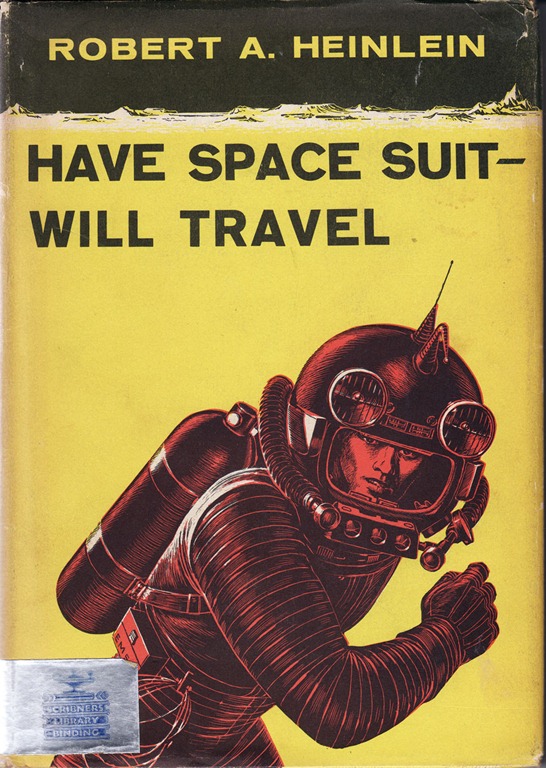
have-space-suit---will-travel

Have Space Suit-Will Travel has always been my favorite book because its about the overwhelming desire to go into space.  It’s about a boy wanting to go to the Moon, and I grew up wanting to go into space myself.  I took this novel seriously, even though it had a funny title.  Have Gun-Will Travel was a favorite show as a kid, and it wasn’t funny either.  Much of Have Space Suit-Will Travel is about space suits.  I loved those details.  Have Space Suit-Will Travel was a power fantasy for me at 13.  It was a story I wanted to live.

It never occurred to me to think Have Space Suit-Will Travel is satire.  What I worry about now is modern minds looking back on those old books and thinking them silly, and concluding the author must have written them for laughs.   And I can even see why Gary Westfahl claims Have Space Suit-Will Travel is poking fun at science fiction because in modern eyes the story might seem quaint, goofy and naïve, but back in 1964 it was my Bible, my dream, my fantasy for the future.  I would have exchanged places with Kip in a heartbeat.

I don’t consider Have Space Suit-Will Travel poking fun at science fiction, I consider it the ideal expression of science fiction.

JWH – 11/30/12

Why Do I Read Science Fiction?

My friend Laurie called me today to ask, “Why do you read science fiction?”  Laurie is a professor of reading education at the university where I work and she’s writing an article on book clubs and reading.  She told me about an essay she read on why women read romance novels and she thought about me and my love of science fiction.

american-science-fiction2

That’s a good question I told her.  Why do any of us do the things we do?  If you’re a college football fanatic can you explain why?  If you’re a CPA, can you tell us about the path you took to get into that profession?

I am a lifelong science fiction fan.  I don’t like mysteries.  I don’t like thrillers.  I don’t like romance novels.  I love movie westerns but seldom read western novels.  I like science fiction movies, but they aren’t my favorite movies.  I think literary novels are the most rewarding books to read, yet I still spend most of my reading time consuming science fiction novels.  Why?

Discovering the Science Fiction Genre

I assume, as a professor that specializes in reading, Laurie wants to know how to get kids and adults involved with reading.  Maybe she assumes if she knew why bookworms want to read she could help non-readers find the books they will like.  There is some truth to this.  When I was in the third grade my teacher and parents sent me to summer school because they claimed I couldn’t read well.  My problem wasn’t reading, but what to read.

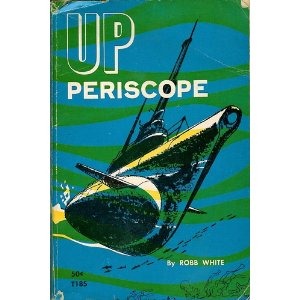
I remember going to my first summer school reading class.  It was cramped wedge shaped room, that was really a storage closet for books.  There were few places to sit.  The teacher told me to pick out a book from a twirling rack of paperbacks.  I took my time and carefully selected Up Periscope that, if I remember right, was a Scholastic paperback for kids, meaning it was probably abridged.  I started reading it.  I got into it.  As far as I can remember, the summer school teacher never gave me any lessons in reading – he just provided fun books to read.  Hell, I knew how to read.  Up till then I didn’t have anything worth reading.

up-periscope

So, starting in the fourth grade I began prowling the school library at Lake Forest Elementary in Hollywood, Florida for interesting books.  Then we moved to Homestead Air Force Base in 1961, while I was in middle of 5th grade, and my dad took me to the base library.  That’s where I discovered proto science fiction books.  During these years Alan Shepard and John Glenn made their historic flights into space.

At this time I didn’t know there was a category of books called science fiction.  As a kid growing up with television in the 1950s I saw a lot of science fiction movies and television shows.  I’d watch The Wizard of Oz every year on television.  I watched Topper and other fantasy and SF shows.  They weren’t a special genre yet.  I also loved cartoons, westerns, sitcoms and everything on TV pretty much.

patchwork girl of oz

The first books I remember discovering at the Air Force Base Library were the Oz books, and one of my favorites was The Patchwork Girl of Oz.  I read all the Baum titles, but didn’t like the Thompson books that were written after Baum died.  I then switched to Danny Dunn, Tom Swift, Tom Swift, Jr. and Hardy Boys books.  I still didn’t know there was a genre called science fiction.  My reading was unguided, but it was shaped by the books in the library.  I guess access to books is a big factor.

dannydunn

In the sixth grade, my teacher Mrs. Saunders read us books after lunch, and she got me hooked on A Wrinkle in Time by Madeleine L’Engle.  I think that got me to realize that there were far out books that weren’t part of a children’s book series.  I remember going up and down the shelves at school looking for books that had space ships on the cover.  There weren’t that many.  I found Jules Verne and H. G. Wells this way though, but still didn’t realize there was a category of books called science fiction.

I suppose if Laurie knew exactly what book to give a potential reader she could capture them for life.  But how does she know what book?  Maybe that’s what her article will be about.

a-wrinkle-in-time

When I wasn’t reading I was watching TV shows like The Twilight Zone.  It was wonderful.  Beginning in the fall of 1963, when I was starting the 7th grade, and still only 12, The Outer Limits came on.  I was addicted to it right from the start.  We moved temporarily back to Hollywood, Florida, right around the time JFK was killed, and then to rural South Carolina, where we lived out in the country and I had a 35 mile school bus trip twice a day.  During this time I got out of the reading habit.  Playing in the woods every day was more exciting, but I still discovered Journey to the Center of the Earth, The Time Machine and Dolphin Island by Arthur C. Clarke that year.

This is another clue.  I’ve always read less when I had more exciting things to do.  If you want to hook people on books, get them to read when there’s not much to do.

Then in the second half of 1964 we returned to Florida, and I started 8th grade at Homestead Junior High where I had a very special English teacher.  I wish I could remember her name, but she had one teaching technique that changed my life.  She offered to raise any student’s grade one letter if they’d read 6 books, 6 magazine articles and 6 newspaper articles each 6 week period and write a report on them.  And she provided a list of approved authors.  On that list was Robert A. Heinlein, so I read The Red Planet for the first of many times.  I wanted more Heinlein and rode my bicycle over to the Air Base Library and asked the librarian about Heinlein.  The airman took me to the adult side of the library and showed me the science fiction section, which contained dozens of Heinlein novels.

This is when it all fell into place and I finally discovered a category of novels called science fiction.  I had finally found my genre.  Some people will read anything, and other people like to stick to what they like.  How can you interview a person and quickly determine their genre?

The Importance of Teachers and Libraries

You will notice in the above narrative that three teachers played a very important role in helping me to discover science fiction.  First, the summer school reading teacher, second Mrs. Saunders my 6th grade English teacher, and finally my name forgotten 8th grade English teacher.  Later on my 12th grade English would turn me onto literary books like A Portrait of an Artist as a Young Man, The Stranger, Catcher in the Rye,  etc.  None of these teachers told me to read science fiction.  They just presented a selection of great books and I responded to the ones that resonated with my soul.

Another factor in this narrative is libraries.  I have very fond memories of libraries, especially the Homestead Air Force Base Library – it’s legendary in my memories.  I needed libraries until I could earn my own money and go to bookstores.  When I got my first punch the clock job at 16, I bought the 12 Heinlein juveniles directly from the publishers with my first paycheck.  I was so hooked on reading at a young age that books were my primary form of entertainment.  I’m not sure that can be quickly instilled in a grown person.

But Does This Answer Laurie’s Question?

My history so far explains how I discovered certain books, but it doesn’t explain why I wanted to read them in the first place.  I loved my childhood, and I’m very nostalgic about growing up, but I had alcoholic parents and we moved around an awful lot.  I went to a lot of different schools.  If we play the home shrink self-examination game I have to figure I read books to escape a stressful environment.   So why science fiction?

I was born in 1951, and Sputnik was launched when I was in 1st grade.  We landed on the Moon the summer I finished the 12th grade.  Alan Shepard took his 15 minute flight into history when I was in the 4th grade.  I grew up with NASA and my formative school years covered Project Mercury, Gemini and Apollo.  I was influenced by NASA, rock and roll, television and movies.  The undercurrent of the 1960s was all about the future and revolutionary social change.  How science fiction is that?

As a little kid I couldn’t buy into religion.  I didn’t believe in heaven, but wished to go to outer space.  I didn’t believe in God, but thought wise aliens might come down from the skies.  I didn’t believe in life after death, but life extension might be possible.  Science fiction promised a future reality that seemed far more real than the religion of the older generations.

Making Friends with Other Science Fiction Fans

Because my family moved around so much I got good at making friends, and I always found a best friend quickly.  The quality I looked for most in a friend was the love of science fiction.  I told Laurie if she wanted to understand this aspect of becoming a science fiction bookworm then all she needed to do was read Among Others by Jo Walton.  There’s a reason why Among Others has won all the science fiction and fantasy awards – it speaks to my kind.  Laurie, maybe you can hook people on books if you can find what books friends will read together?

among others

Why Do I Continue to Read Science Fiction?

To be honest, I can easily find books I like better than science fiction, but I often stick to the genre because growing up programmed me to love science fiction.  I keep reading science fiction hoping to find books that have the same sense of wonder I discovered in childhood.  I don’t often find it, but sometimes I do, like with Ready Player One by Ernest Cline or Spin by Robert Charles Wilson.

Laurie, among science fiction fans we talk about a quality that makes science fiction great:  sense of wonder.  I grew up in an age of wonders, and science fiction just happened to have more wonder than any other form of literature.  But I think science fiction represents a deeper desire.  At least for me, science fiction promised travel to far out places, to greener pastures.  It hasn’t delivered though.

To understand this very deep driving force Laurie, you’ll have to read a novella, “The Star Pit” by Samuel R. Delany.  Follow the link to my review.  It’s a story about people facing limitations.  We’re all fish in an aquarium, poking our heads into a glass wall hoping to swim further.   It was written by a young black gay man in the middle of the 1960s and he knew about limitations and used science fiction as a metaphor to explain the crush of living with barriers.

I think “The Star Pit” is the key to understanding how to find books that people will love – it requires finding stories people will identify with at a deep emotional level.  “The Star Pit” is about a father who lost contact with his children due to alcoholism and wild living.  Years of regret later, the man hires an older teenager who is wild and unmanageable, and tries to be his mentor.  That kid is envious of an even younger teenager who is wilder still.  All three characters are tortured by what they can’t have in life.  I read this story when I was 16 and wanted far more from life than I could ever have, and “The Star Pit” made a lasting impression.

“The Star Pit” meant so much to me because I had an alcoholic father who couldn’t communicate with me, and I was a teenager who did drugs to go to far out places.  I imagined my dad as a boy wanting to be a pilot, and I was a son that wanted to go into space, and neither one of us could ever get off the ground.

What readers want is emotional, intellectual and psychological resonance.

Starting with my earliest books I picked out stories about characters going on amazing fantastic adventures.  Oz and Outer Space are otherworldly destinations that I can never reach.  The reason why I loved “The Star Pit” at 16 is it helped me realize I’ll never get where I want to go and I have to learn to accept that.  I knew my father, because of his drinking, failed to learn that.

Science fiction is a substitute for all the places I’ll never reach in this life.

JWH – 11/13/12

Defining Science Fiction by Analyzing NBC’s New Show Revolution

It’s very hard to define the term “science fiction,” a topic often discussed in my science fiction book club.  Searching the web reveals endless essays on the topic.  It’s not possible to come up with a one-size-fits all definition for science fiction.  I’m going to take another approach.  I’m going to analyze the new show Revolution point by point, and say which parts I think are science fiction and which I think are fantasy.

revolution

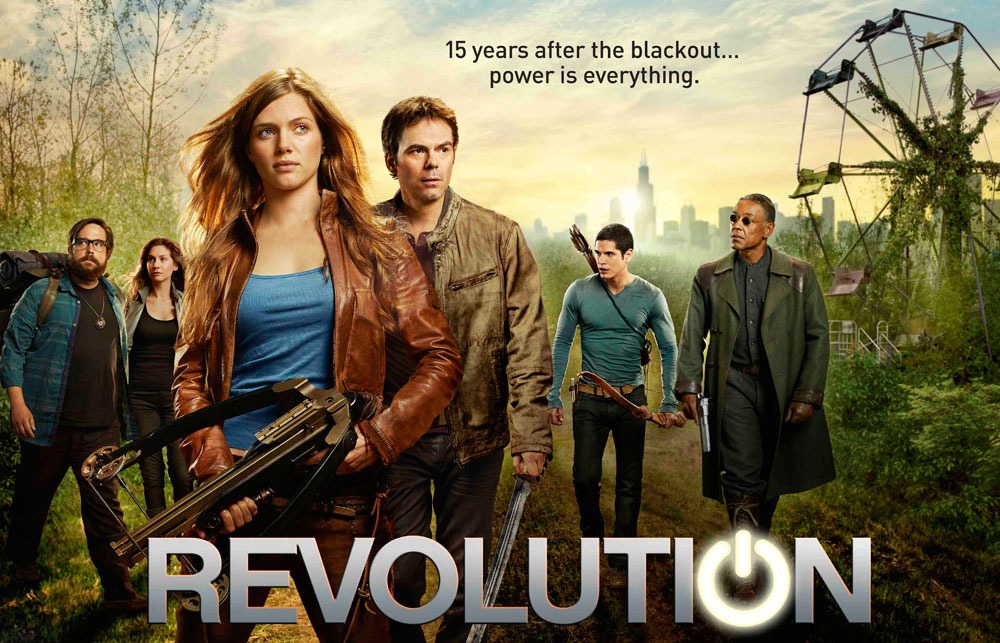
Revolution is about a family thrown into a dark world of a collapsed civilization.  The show begins 15 years after a worldwide blackout with a father dying, a son being kidnapped and the daughter seeking her long lost uncle Miles to help her rescue her brother.  The daughter, Charlie Matheson, played by Tracy Spiridakos is a kind of less hard, less savvy, Katniss Everdeen, so the story carries on the current vogue of girl action heroes.  Miles Matheson is played by Billy Burke and he’s your standard action guy.  This is why I loved Breaking Bad so much, none of the characters were cookie cutter clichés.

Strangely enough, the medium level bad guy in Revolution is Giancarlo Espositio playing Tom Neville, a ruthless, but sometimes coldly kind, captain of a militia, who previously played a ground breaking character in Breaking Bad, Gustavo “Gus” Fring, who was also ruthless with a strange tinge of cold kindness.  You’d think Espositio would have tipped the Revolution writers not to go for the obvious, and make him different.  I fear such a wonderful actor will get typecast.

Premise

Revolution pictures our world without electrical power or electronic gadgets – a powerful “What if…” scenario.  We’re all so depended on computers and electricity that it’s an intellectual adventure to pretend to live in a time of 18th century technology.   Revolution hints that some kind of force field is capable of dampening all electronics, and even electricity production.  Science knows solid state electronics are vulnerable to electromagnetic pulses (EMP) that are generated as a byproduct of nuclear explosions.  However, mechanical turbines should continue to work, and even old fashioned tube electronics might continue to work with EMP fields.

There is no science to suggest that such a energy dampening force field is possible.  It’s just a writer’s gimmick to advance the story.  Does that make Revolution a fantasy?  It’s a damn cool idea, but so is a school for wizards.  In other words, I have to say the premise of Revolution is fantasy.

In Revolution, there is a reason why and how the power got turned off. Revolution’s creators are holding that back as a mystery, like the mystery of the island in Lost. Mystery is one of the prime movers of fiction, so you can’t blame them for holding back, but I’m worried I’m going to be disappointed, like I did with Lost. Unless they come up with other mysteries, I doubt I’ll keep watching.  Bad Robot Productions, the company that made Lost, and produces Revolution, does have a track record for upping the mystery ante every week.

The mystery of who has killed off the power isn’t very science fictional to me. For it to be really science fictional, it has to be plausible, so we think, “Could this really happen?” When Jules Verne and H. G. Wells wrote stories about men traveling to the Moon, people did think, “Hey, that might be possible, what will it be like, and how will they do it?” That’s science fiction.

Contrast Revolution with The Windup Girl by Paolo Bacigalupi which is set in the 22nd century after fossil fuels have been used up, after global warming has changed every thing, and after crop monoculture and genetically modified agriculture has failed.  In The Windup Girl Bacigalupi develops kinetic energy machines using springs.  This same technology would work in the world of Revolution, but so far we haven’t seen any ideas like this, and I’m not sure the Bad Robot people think this way.

If the Bad Robot Production people had been truly creative, they would have taken the same scenario and come up with a totally new post apocalyptic society – one without electricity, but very creative.  They would have envisioned new forms of mechanical power, the return of sailing ships and dirigibles, funky new bicycles, rocket powered airships, and new forms of animal power.  They could have had computers like Babbage dreamed about, and new art forms not depended on digital media.  That’s what science fiction is about.  What they gave us is Mad Max Lite.

Post Apocalyptic World

Post apocalyptic fiction is one of my favorite sub-genres of science fiction, and for two reasons.  First, I love how an author imagines people surviving the collapse of civilization.  Second, thinking about how to rebuild civilization offers countless intellectual puzzles for my mind.  Now that’s some good clean science fictional fun.

Revolution is just a post apocalyptic fantasy that allows guys to fight with swords.  At least so far.  Why are guns rare but swords plentiful?  How did they gear up for sword production so fast?  I know I’ve only seen two episodes and the science fiction world building has been slight – mostly using stock after-the-collapse imagery.  In fact, they seem to have gotten most of their imagery from Life Without People.

Apocalyptic and post-apocalyptic fiction has a very long history which Revolution must be judged against.  When I saw the show announced this summer I had hoped for a television version of Earth Abides or The Day of the Triffids, or the British TV series SurvivorsRevolution is closer to The Postman by David Brin, more about adventure and less about the details of survival, or efforts to rebuild civilization.  Both feature a ruthless militia leader trying to start a post-civilization empire.

Now, this political subject is a honest science fictional topic.  Rebuilding our society after we’ve mined all the easily available resources is a scientific challenge worthy of much speculation.  However, in the first two episodes, Revolution hasn’t dealt with scarcity.  At one point Charlie’s Uncle Miles, tries to bribe someone with a small chunk of metal, which I assume we’re to think of as gold.  Gold nuggets are very rare, what gold we mine nowadays is molecules of gold processed from tons of ore.

What people use for money in Revolution’s apocalyptic world is a fascinating idea to explore, but so far the show ignores the issue, other than this one transaction with a tiny lump of yellow metal.  Good science fiction will explore all aspects of a possible future.  Revolution takes a Indiana Jones approach to the story, using slight of hand on facts, and diverting viewer’s mind with action and violence.

We have to ask ourselves:  Is a story science fiction if it’s set in a science fictional setting?  I don’t think so.  We are told Miles Matheson is a man who is good at killing people.  Miles’ abilities to fight are so unbelievable that they remind me of the recent Sylvester Stallone action flick, The Expendables 2.  That makes me think Revolution is more inspired by video games than science fiction books.  It’s appeal is to would-be first person shooters than folks who like to read speculative fiction about possible futures.

I wish Revolution’s level of violence was more like Breaking Bad’s, and it focused more on clever plots with interesting science fiction speculation.

Population Dying Off

If the power went off all over our world, how long could we support 7 billion people?  Revolution doesn’t even try to answer that question.  It skips 15 years immediately.  There’s some flashbacks, but no explanations.  The starting point of most collapse of civilization stories are a plague that kills off most of the population, or nuclear war that kills off most of the population, or aliens from space that kill off most of the people, or some kind of natural or cosmic calamity that kills off most everyone.  Revolution looks like the population took a major beating, but we’re not shown how.

I’m currently reading The Dog Stars by Peter Heller, another literary look at the end of the world, much like The Road by Cormac McCarthy.  Now this is real science fiction in my mind.  The Dog Stars is serious, philosophical, speculative, and worthy to be called science fiction in my book.  Revolution is decent fun without any real thinking involved.  That’s a shame.  For a story to kill off billions of people there should be more details.

In Revolution most of the population has disappeared and we don’t know why.  The writers obviously wanted a low population Earth for the story but hasn’t explained how everyone died.  In other words, after the collapse stories are so common in the mundane world that the producers don’t even feel the need to explain.  They are using a post apocalyptic world as a setting, just like Star Wars used a galactic empire as a setting.  There’s no science fiction speculation in either, so just accept the premise.  Revolution is an action adventure story set in a realistic but unscientific world.

Surviving the Collapse

I’m disappointed with Revolution because it makes no effort to show people surviving.  Everyone has plenty to eat, clean clothes without having to wash them, there’s no worry about diseases or bad water.  After 15 years, how good will clothes look?  There’s no effort to show how people make new clothes.  I don’t expect Mad Max fashions, but the show should speculate some, at least.

The plot is driven by Danny Matheson’s kidnapping.  Our characters don’t seemed challenged by any other problem.  The two episodes involved plots to set the stage so Miles can kill a bunch of people, and convince Charlie that killing is the way to operate.  The only survival going on is whether the audience won’t be killed off watching Billy Burke kill a dozen tough guys every episode.

Cliché Science Fiction

Whenever I read a new science fiction novel, or watch a new science fiction show I hope to discover a new idea or perspective. It’s hard to come up with a totally original idea nowadays. There just are too many fiction factories out there.  Barring originality I look for creative style – if you can’t deliver a new idea, at least present a mash-up old ideas in a new way.

Science fiction has become as formulaic as a murder mystery. I believe most SF fans find comfort by embracing their favorite sub-genres so writers cater to ever more baroque presentations of the same old ideas, creating Über-clichés. Revolution is merely the current incarnation of a long line of stories about the breakdown of civilization. Some reviewers call it dystopian, but I disagree. The original meaning of dystopia was an anti-utopia. In modern parlance dystopian has come to mean any unpleasant future. That’s a corruption of the original intent of the world. Nineteen Eighty-Four was a dystopian novel because the government of Big Brother was suppose to represent a view of communism, which before Stalin was seen by many intellectuals as a utopian ideal, but Orwell speculated communism would be hell instead of heaven.

Nineteen Eighty-Four was dystopian because it was anti-utopian. Revolution isn’t anti anything. Revolution uses a cliché science fictional setting to create an action adventure story. Collapsed civilizations are a good way to create a setting for rationalized violence, like westerns.  Post apocalyptic stories are good for creating situations where your character can kill a lot of people.  Audiences can’t seem to get enough of that kind of violence.

The proper categorization of Revolution is post-apocalyptic science fiction, which covers stories about the aftermath of collapse of our current civilization.  A common cliché within apocalyptic fiction is freemen versus brutal militias.   So Revolution is a sub-sub-genre.

To further complicate the problem all new fictional creations must compete with the most creative works at the moment. Taking on a new TV show for me, means finding something to watch that competes with my recent favorites, Breaking Bad, Friday Night Lights and Glee.

Watching the first episode of Revolution was a big letdown for me. Oh, it still has possibilities. But most great shows have fantastic first episodes, and Revolution’s was just ho-hum.  I did watch the 2nd episode and will watch the 3rd.  I have hope.  Revolution does have possibilities.

On the big screen they usually go for bigger and bigger action, usually involving saving the world. That’s an expensive proposition for a TV show, but Revolution has a very large scope.  There’s room for lots of action and speculation.  Let’s hope there is less of the former and more of the latter.

JWH – 9/25/12

Robot and Frank–The Best Science Fiction Film Since Gattaca

When I was growing up in the 1950s I was sure flying in a spaceship would be in my future.

Now that I’m getting old, I wondering if a robot will be my companion for my waning days of life.

Robot and Frank is a little movie about a man coming undone.  That’s what getting old and dying is all about, coming undone.  Whether we spend our last days in dementia is a matter of luck.  Frank, an ex-con and jewel thief, played by Frank Langella, is not so lucky.  His mind is unraveling too.  Frank lives alone and barely makes do.  Frank’s son, played by James Marsden, must drive ten hours to check up on Frank every weekend, neglecting his own family.  His solution?  Give Frank a robot.

robot-and-frank-poster001f-730x365

Most science fiction fans will not think Robot and Frank much of a science fiction movie, there are no explosions, chases, superheroes or saving the world.  No one even saves Frank from dementia.  So why do I claim this is the best science fiction film since Gattaca?  This is a story Isaac Asimov could have written for Astounding Science Fiction in the 1940s.  As far as I can tell, this little robot, which is never given a name other than robot, follows all the three laws of robotics.

But Robot and Frank is more than a modern day Asimovian tale.  The film explores what it means to be a human losing his intelligence while a robot is gaining its awareness.  Robot and Frank is not sentimental, or even particularly cute.  This is an adult story.  I wonder if anyone under 50 will even understand it.  Unless you’ve experienced memory loss, unless you’ve cared for a dying parent, unless you have first hand experience of becoming helpless,  I doubt you’ll empathize much with Frank.  Robot and Frank is for an audience that has often said, “I’m having a senior moment.”

Oh, don’t worry, there’s enough of a story for a person of any age to enjoy this delightful movie, but I tend to think, only those of a certain age will feel deeply moved.  Middle age viewers might be horrified by the fear they will one day have to care for their aging parents, and I bet some of them might watch the film and think about opening a savings account to start collecting money to buy a robot.  I know I wondered if saving for a robot might be a better use of money than paying into nursing home insurance.  The Japanese are working full steam ahead on developing androids.

Robot and Frank is set only slightly in the future.  The closing credits shows clips of real robots being tested.  However, the mind of the robot in this film is very far from what we can create now.  That’s why the film is science fiction.  The robot is halfway to Data from Star Trek.  Somewhere between R2D2 and 3CPO.  I don’t know if we need to reach the Singularity to get this kind of intelligence in a helper bot, but I don’t think it’s in the near near future.  Maybe 2025?  I’ll turn 74 that year.

When you watch Robot and Frank, you’ll have to ask yourself, “Will I be happier with a robot or human caretaker?”  At first you think the son and daughter are shirking their duty but by the end of the film, you might change your mind.  Frank gets quite attached to robot, and spends a lot of time talking to it.  But who or what is he talking to?  But who or what is Frank talking to when his son or daughter is with him?  What is consciousness?  When we’re alone, and our days are dwindling, what kind of companion do we really want?  Are we wanting to listen, or are we wanting to be listened to?

Yes, what we want is a spouse we’ve spent our whole life with.  After that we want our children.  But what if we don’t have children, or a spouse?  Is a personal robot better than an impersonal nurse?  Robot is able to observe and understand Frank.  And isn’t that what we’ll want?  Someone to know where we’re at, no matter how Swiss cheesy our memory becomes?

I found Robot and Frank tremendously uplifting.  I left the theater feeling mentally accelerated and physically better than when I walked in.   We will all come undone.  We will all have to deal with it.  Suicide is one way to avoid the issue, but this movie doesn’t consider that path.  Frank’s mind keeps unraveling, but he lives for moments of being himself.  The movie suggests a robot might help find those moments.

JWH – 9/17/12

What 12 Lessons About Life Would You Teach Your Younger Self If You Had A Time Machine?

Nobody likes taking advice from other people. 

What if you could get advice from an older, wiser version of yourself?  Would you take it?  What if you had a time machine and could travel back to visit your younger self and spend one day to help him or her prepare for the future?  Would your younger self listen and learn?

What advice would you give you?  How would you be convincing.  What proof could you bring?

There are two ways to approach this problem.  First, you could teach yourself how to get more of what you wanted in this life with hindsight, or you could convince yourself that you should be a totally different person, a better person.  If you collected rare baseball cards you could tell yourself how to get the rarest ones for your future self.  Or, you could tell your younger self, don’t waste a lifetime on collecting baseball cards, just play a lot of baseball.

As much as I’ve enjoyed my life, as much as I love my wife and friends, I have never been the person I wanted to be because of introverted habits and laziness.  I would go back and try to convince my younger self to become a different person knowing full well it would erase me and my current life.

If you had a time machine and could spend a day with a younger self, what age would you target?  Why?  What would you say?

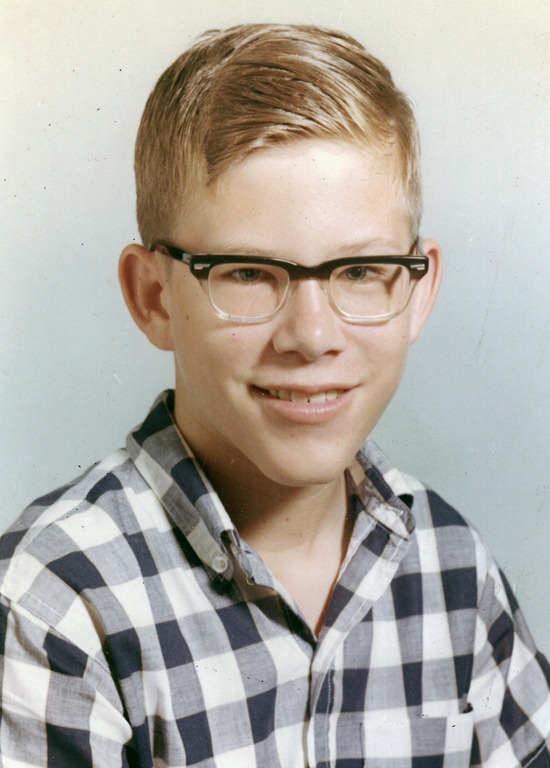
I’d go back to 1964 when I turned 13, when I understood science fiction.  I think Jim-13 could understand Jim-60 and time travel.

jim-001

Here’s what I’d try to teach Jim-13.

  1. Give up my addiction to science fiction.  I have a life-long addiction to fantasy that I overindulge with books, television and movies.  I’d work very hard to convince my younger self to never look at television again, and to promise to read no more than one novel a month.  I’d try to convince him to read more non-fiction and classics.  I’d tell him when he did read SF, to find and read the very best science fiction, but no more than four SF books a year.  I’d try to convince him to seek out SF books that taught him more about reality and not use science fiction to escape reality.
  2. Study science and mathematics.  I wouldn’t try to help my younger self get rich by telling him to buy key stocks, or which horses or football teams to bet on.   I’d try to teach him that the key to a good life is working hard at something you love and that being a scientist is probably the best way to spend a lifetime.
  3. Give up junk food, eat healthy, and exercise.   I was an active kid, and skinny until after I got married, but I have an addictive personality and I ate lots of junk food.  Seeing Jim-60 weighing 234 pounds would probably be pretty convincing evidence.
  4. Don’t get involved with drugs.  Hey, I grew up in the 1960s, so that will be a hard lesson to teach.  I might tell him to experiment under certain social conditions, but convince Jim-13 that drugs will waste a lot of time and money.
  5. Pay more attention to other people.  I’ve always been introverted, self-centered and egocentric.   I’d try to convince Jim-13 that getting out of his head and focusing on what’s going on in other people’s heads will lead to more social success and a richer life.
  6. Warn him about sex.  Hey, he’s 13.  I’d try to convince him that all those gazillion hours of sex fantasies won’t get him laid.  I’d try to teach him not to think about what he wanted but learn to observe women and study what they wanted.  I’d tell him, yes, all the girls have pussies, but the organ you really want to lust after is brains.  I’d tell him to learn to dance.
  7. Take good notes.  I’d try very hard to teach Jim-13 to keep a journal, studying the art of writing as deeply as possible, learn to draw and sketch, and take one photo a day.
  8. Find ways to make money and save it.  I’d teach him working provides social contacts and access to mentors, and that saving money will mean freedom to do more.  I tell him that easy money from time travel tips is wrong and a waste of time.
  9. Finish school as fast as possible and get into college as soon as you can.  I’d convince Jim-13 that it’s very important to become independent as soon as possible and college is one way to do that.   Try to get in by 16.
  10. Move in with your grandmother.  My parents were alcoholics and at age 13 I was about to go through some very bad years.  If I could have gotten away from them it really would have helped me tremendously.  And my grandmother managed an apartment building in her old age, and could have used the help.  If I could have grown up living in one place and had a stable life for junior high and high school I would have been a much different person.  I’d tell my younger self to not leave Miami until after college – to even get into the University of Miami for college.  Maybe even study marine biology.  I’d also advise him to leave for grad school and to study physics or astronomy then.
  11. Find mentors.  I think the key to success is to start work young and find mentors that can help you understand the game in any situation.
  12. Learn to focus and work hard.   I’d tell Jim-13 to push himself to work a little harder at his favorite projects each day.  To learned to focus his concentration a little harder on every task each day.   If you can spend 30 minutes focused on learning calculus one day, try for 31 the next.  If you can grind on a telescope mirror for 2 hours on one day, try for 2 hours and 5 minutes the next.  If you can run four miles one day, try for 4.1 the next.  Just keep pushing your body and mind to go further.

I know this is a fantasy and time travel isn’t possible. But playing this little thought experiment is very educational. I can always pretend its advice for Jim-13 from Jim-60, but it could be advice for Jim-80 to me at this moment.

But if this little fantasy was possible it would have played out different than what I wanted.

Convincing my younger self of all of this would be hard.  If I could print out all my blog posts into a book, I give him that.  I might bring an iPad to show him how far out technology gets.  I might bring him the book Replay by Ken Grimwood.  I might bring him a photo album of my life. 

I was a bullheaded kid, so I’m not sure I could have convinced him of anything.

I’m pretty sure he would have demanded that Jim-60 stay in 1964 so he, Jim-13 could return in the time machine to 2012.

I would have agreed.

JWH – 8/4/12