Poor Man’s Time Machine

by James Wallace Harris, Monday, February 12, 2018

Some days you just want to live in another era. Statistically, we live in the best of times. If you’ve read The Better Angels of Our Nature: Why Violence Has Declined by Steven Pinker, you should feel safer about war, crime, and violence. Pinker’s new book, Enlightenment Now: The Case for Reason, Science, Humanism, and Progress promises to make us feel better about everything. Bill Gates is calling it his all-time favorite book. Yet, 2017 was a very depressing year for me because of Donald Trump. 2018 should be even more depressing because there’s no sign that Trump will be impeached or quit.

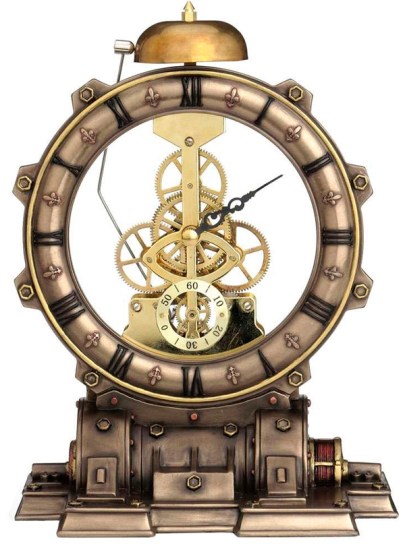
time-machine-steampunk-clock

Whenever I watch the NBC Nightly News it makes me wish I had a time machine. Sadly, I can’t afford one. When I read Global Citizen I feel like I should be doing something to help the world because that site shows how people can make a big difference. But to be honest, I’m old, set in my ways, and don’t want to get out in the world anymore. When I look at Congress I see a rabid pack of old white guys snarling and snapping at each other to shape America with their narrowminded beliefs. It’s time for women, youth, and diversity to take the reins.

I don’t think the world needs input from another old white dude, so I’m retreating from the rat race by reading books. What’s hilarious, those books are mostly by old dead white guys. Maybe it’s like the old Tarzan movies, and we’re like a dying elephant knowing where to go to our secret graveyard.

I’ve been time traveling back to the late 16th-century by listening to The Complete Essays of Montaigne translated by Donald M. Frame. When Montaigne was still in his thirties he retired by retreating to a tower in his castle, bringing a desk, chair, and a thousand books. There Montaigne contemplated reality by comparing his personal experiences to what he read. Along the way, he invented the personal essay, which is why I consider Montaigne the Patron Saint of Bloggers.

Montaigne remains essential reading for jaded bookworms because he explains the usefulness of all those dead white writers of history, the ones remembered in The Western Canon by Harold Bloom. Listening to Montaigne makes me understand why 19th-century intellectuals were so big on classical studies. By the way, if you have a detailed scholarly bent, love annotations, and notes on textual variations, you might prefer the M. A. Screech translation. Listening to the Frame translation makes me feel like Montaigne is talking at me. It’s very smooth.

And I highly recommend you listen to Montaigne on audio because he’s a rambler, and rambles on for over a thousand pages. But, if you prefer to hold a book in your hands, I recommend the Everyman’s Library edition of The Complete Works, also translated by Frame. It’s easier to hold and has a nifty ribbon bookmark. However, you’re still holding a 1,336-page book. Because there’s no ebook edition with a Frame translation, I’d recommending getting older Cotton/Hazlitt translation from the public domain for your carry around everywhere on your phone edition. Amazon has many 99 cent Kindle editions, but I picked this edition because the text reformats nicely on my phone.

(By the way, I got turned onto Montaigne from reading How to Live: Or A Life of Montaigne in One Question and Twenty Attempts at an Answer by Sarah Bakewell.)

When I’m not back in the 16th-century I spend a lot of time in the 1920s, 1930s, 1940s, 1950s, and 1960s, either by watching old television shows and movies, or reading old books, or listening to old music. Recently I’ve been listening to a playlist of music from the 1920s and 1930s created from ten volumes in a series called The Big Broadcast.

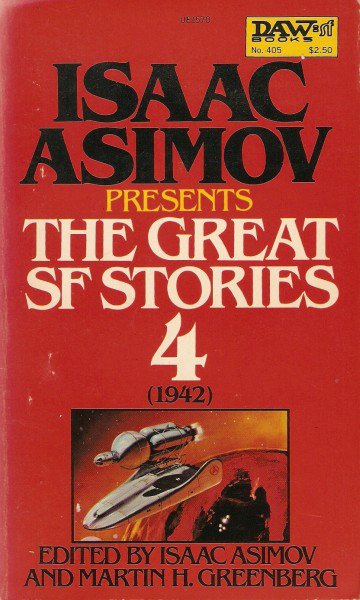
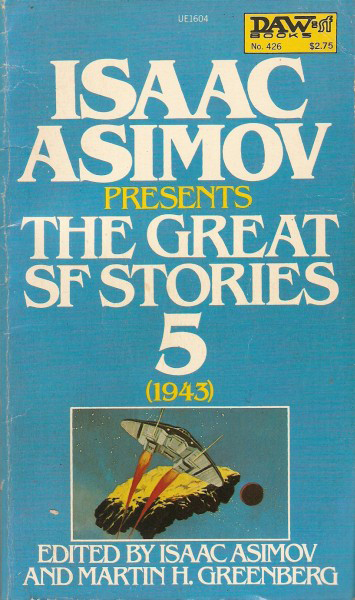
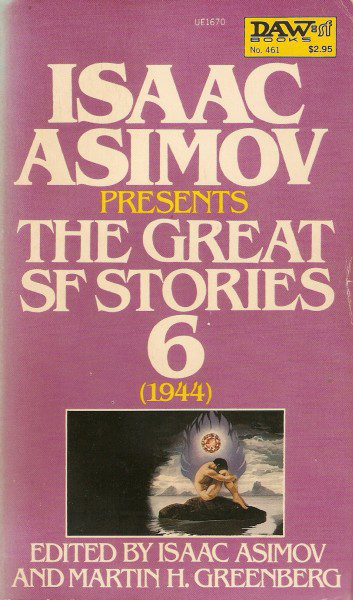
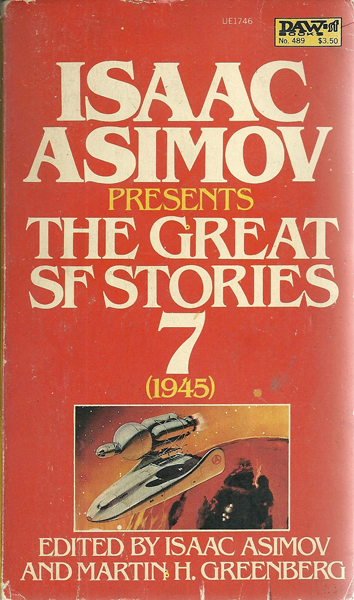
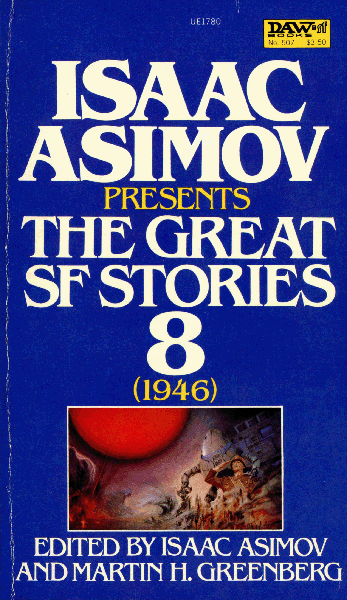
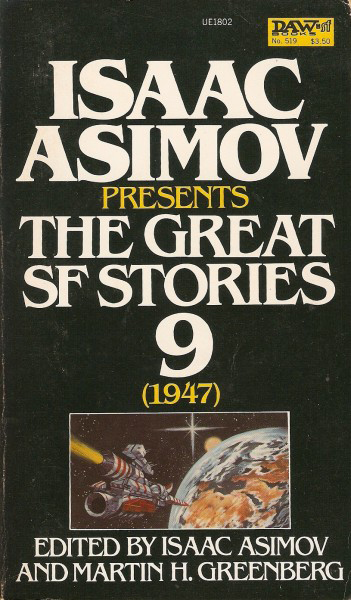
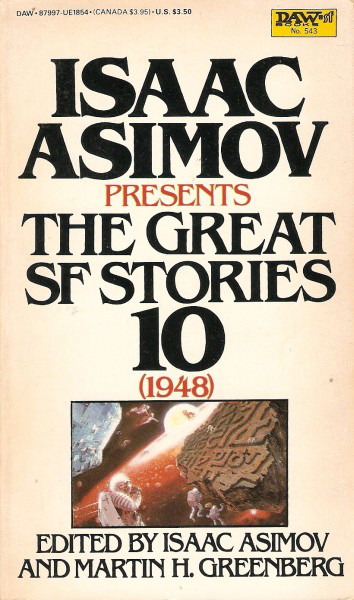
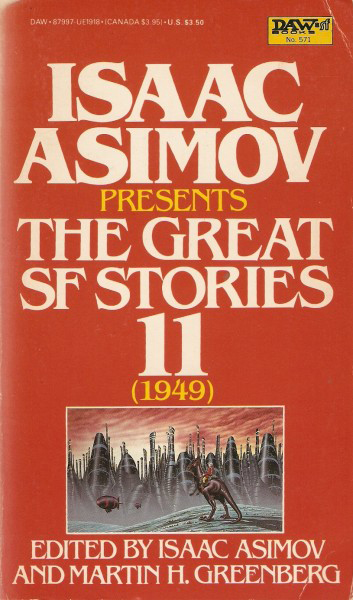
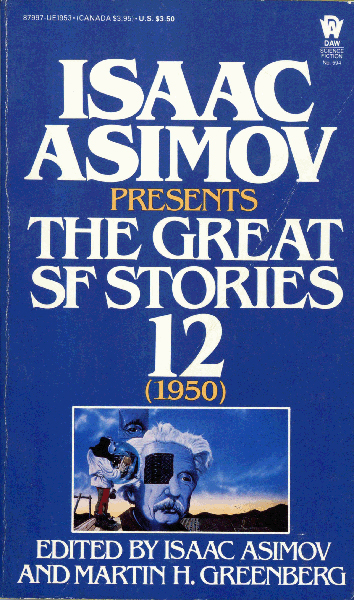
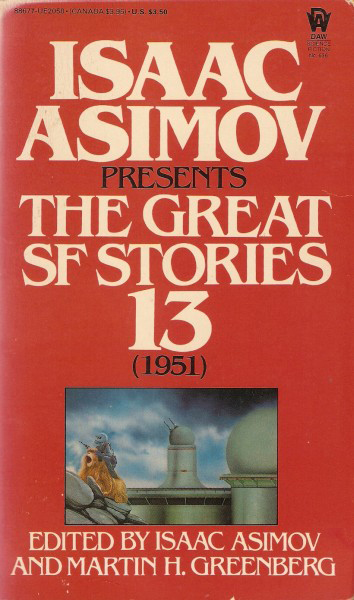
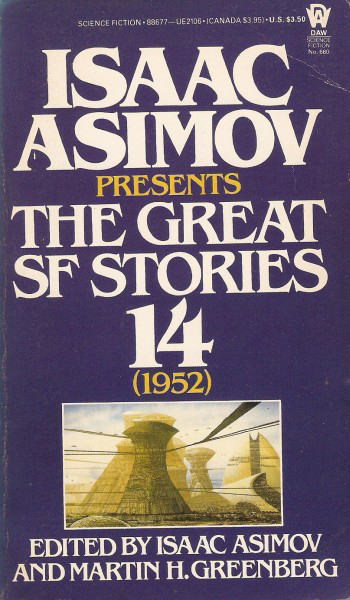
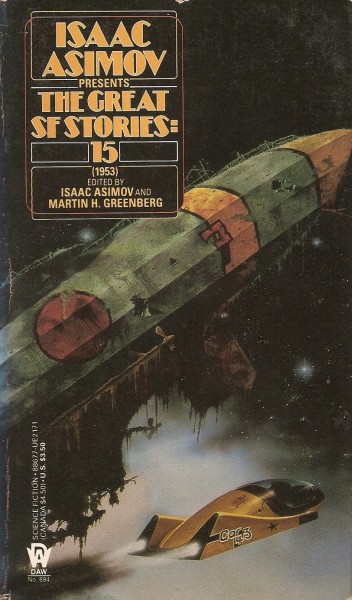
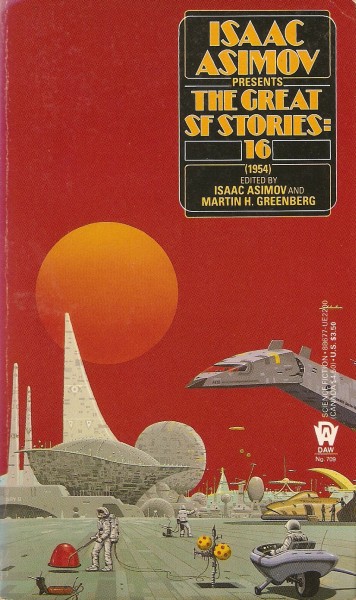
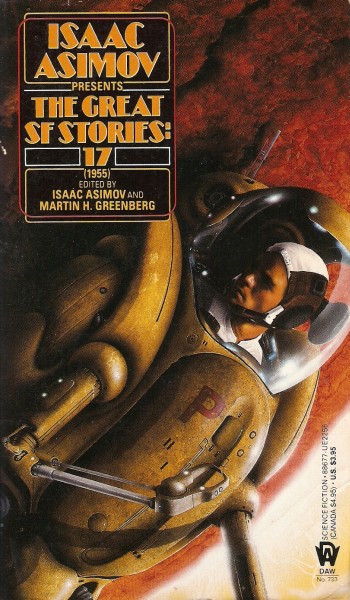
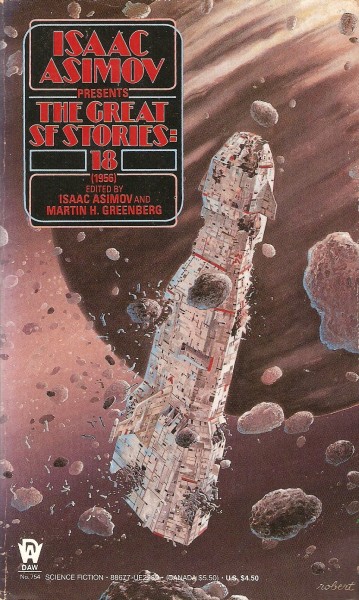
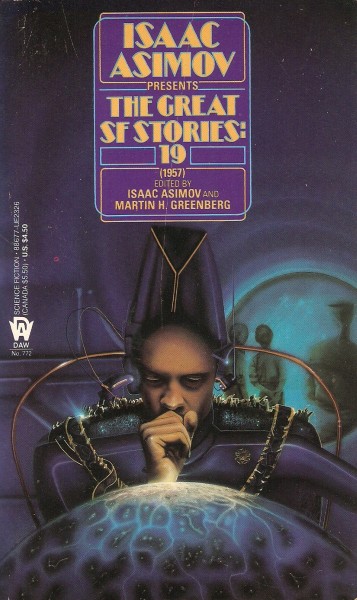
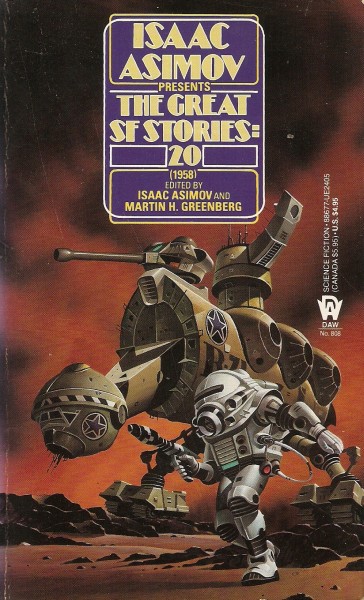
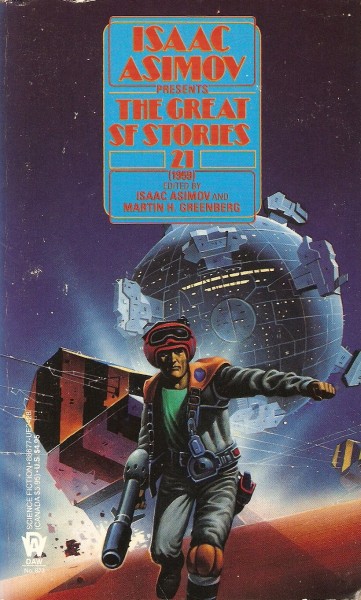
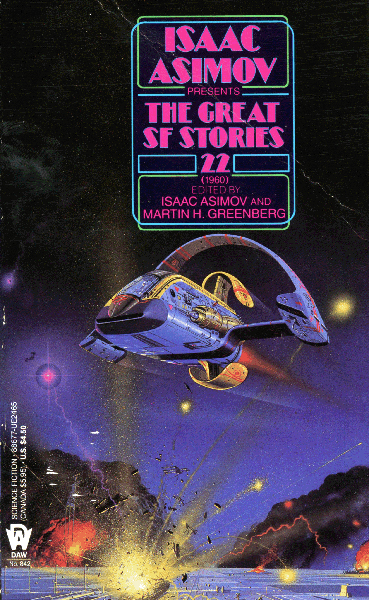
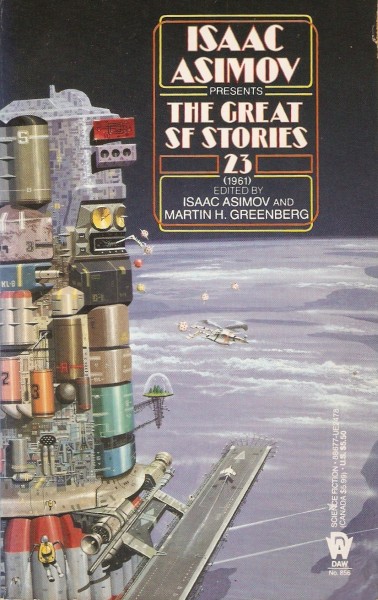
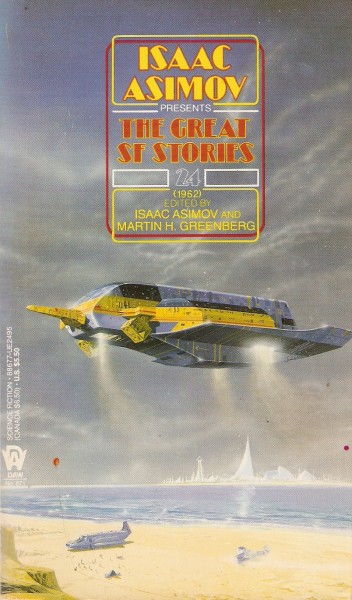
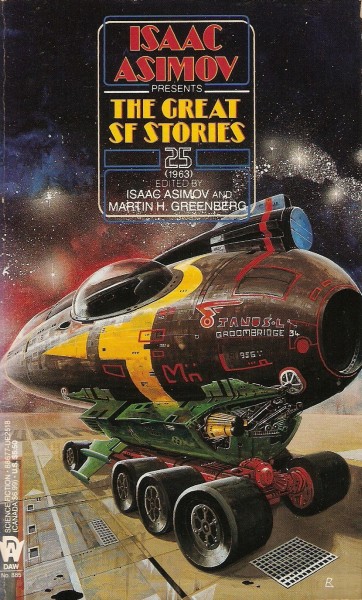
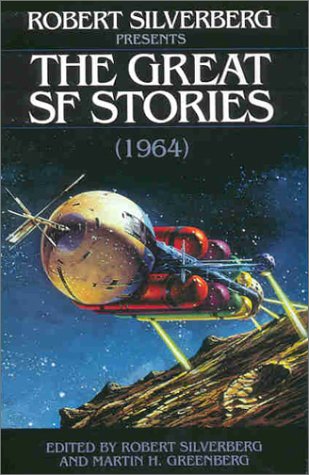
I’m still having big fun reading through The Great SF Stories #1-25 (1939-1963) edited by Isaac Asimov and Martin H. Greenberg. These stories were from the great science fiction pulp magazines. It almost feels like I’m living in 1940 when I read the stories and play music from that year, especially when I get so deep into a tale that I forget it’s 2018, and a maniac runs the country.

I’ve fantasized about redecorating my living room so it only contains furniture and objects that could have existed before WWII. We bought the house my wife grew up in after her parents died, and left the living room unchanged with the old furniture, lamps, and pictures on the wall. I imagine smoking a pipe wearing a smoking jacket while sitting in one of the blue chairs reading a July 1939 issue of Astounding Stories.

Susan did add an antique floor standing radio she bought at an estate sale. We gutted the old equipment from it that didn’t work, but left the knobs and the frequency scale. I could build a computer to hide inside it that played pre-war radio shows and music. I could put mint copies of old books, slick and pulp magazines on the coffee table. Then play Billie Holiday and Louis Armstrong while reading and imagine I’m back in the past.

I’d have to concentrate hard not to remember Donald Trump. Actually living in the 1930s would be horrible compared to today. I’m just nostalgic for its pop culture, well some of it. For example, I’d have to make sure I played “All of Me” instead of “Strange Fruit” when listening to Billie Holiday.

Sadly, there is no utopia to escape to. Steven Pinker is right, now is the best of time for humanity. The future is unknown. I hope trends continue and things continue to get better. But as long as Donald Trump is in the news I just can’t imagine it.

JWH

The Great SF Stories #1-25 (1939-1963)

by James Wallace Harris, Wednesday, February 7, 2018

I’m not the only one having BIG fun reading The Great SF Stories #1-25 (1939-1963), so I’ve created an online discussion group for us. So far seven of us have joined. If you’re interested go here. You’ll have to join Groups.io first, but it’s free and easy to do so.

I’m constantly using Internet Science Fiction Database (ISFDB) to look up these stories to see where they have been anthologized and first appeared in magazines. So I thought I’d copy their table of content links to one page. If you click on a story title it will take you to ISFDB’s page showing it’s publication history. If you click on an author it will take you to the author’s bibliography. ISFDB is a wonderful site!

I’ve annotated this list with some links to other annual best-SF-of-the-year anthologies. The easiest way to compare two Table of Contents is to right-click on the other anthology link and select “Open in New Window.”

This will be our reading list.

1

2

The Retro Hugo Awards 1941 (for 1940 stories)

The voting statistics and nominations for the 1941 Retro Hugo

3

4

5

6

Retro Hugo Awards 1946 (for 1945 stories)

7

8

9

10

Compare to: The Best Science Fiction Stories 1949 edited by Everett F. Bleiler and T. E. Dikty

11

Compare to: The Best Science Fiction Stories 1950 edited by Everett F. Bleiler and T. E. Dikty

12

Compare to: The Best Science Fiction Stories 1951 edited by Everett F. Bleiler and T. E. Dikty

1951 Retro Hugo Award (for 1950 stories)

13

Compare to: The Best Science Fiction Stories 1952 edited by Everett F. Bleiler and T. E. Dikty

14

Compare to: The Best Science Fiction Stories 1953 edited by Everett F. Bleiler and T. E. Dikty

15

Compare to: The Best Science Fiction Stories 1954 edited by Everett F. Bleiler and T. E. Dikty

1954 Retro Hugo Awards (for 1953 stories)

16

Compare to: The Best Science Fiction Stories and Novels edited by T. E. Dikty

17

Compare to: The Best Science Fiction Stories and Novels 1956 edited by T. E. Dikty and S-F: The Year’s Greatest Science-Fiction and Fantasy edited by Judith Merril

1956 Hugo Awards (for 1955 stories)

18

Compare to: SF: The Year’s Greatest Science-Fiction and Fantasy Second Annual Volume edited by Judith Merril

19

Compare to: The Best Science Fiction Stories and Novels Ninth Series edited by T. E. Dikty and SF:58: The Year’s Greatest Science Fiction and Fantasy edited by Judith Merril

20

Compare to: SF:59: The Year’s Greatest Science Fiction and Fantasy edited by Judith Merril

1959 Hugo Awards (for 1958 stories)

21

Compare to: Fifth Annual of The Year’s Best SF edited by Judith Merril

1960 Hugo Awards (for 1959 stories)

22

Compare to: The Sixth Annual of The Year’s Best SF edited by Judith Merril

1961 Hugo Awards (for 1960 stories)

23

Compare to: The 7th Annual of The Year’s Best SF edited by Judith Merril

1962 Hugo Awards (for 1961 stories)

24

Compare to: The 8th Annual of the Year’s Best SF edited by Judith Merril

1963 Hugo Awards (for 1962 stories)

25

Compare to: The 9th Annual Year’s Best SF edited by Judith Merril

1964 Hugo Awards (for 1963 stories)

26

Compare to: 10th Annual Edition: The Year’s Best SF edited by Judith Merril

1965 Hugo Awards (for 1964 stories)

Statistics on Popular Stories in Anthologies

JWH


The Great SF Stories 1 (1939)

by James Wallace Harris, Monday, February 5, 2018

I’m having BIG fun reading old science fiction short stories. However, are there valid justifications for spending so much time reading old science fiction when I could be reading shiny new stories instead?  Or even spend that time reading high-quality literary works or vastly more informative nonfiction? I have to confess a sense of guilt. I worry I’m wasting my time slumming in a pulp fiction past.

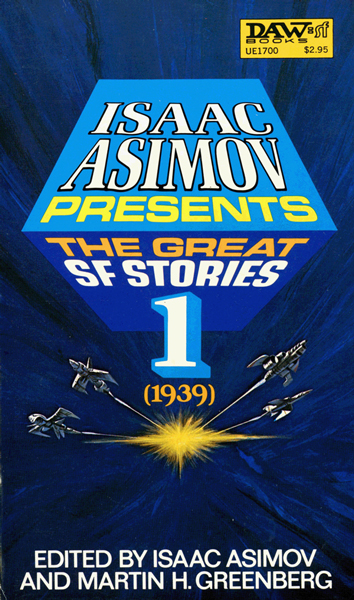
The-Great-SF-Stories-1-1939


For some reason, I’m being drawn into a self-imposed project of sequentially reading annual anthologies of the best science fiction short stories starting with 1939. I picked that year because The Great SF Stories #1 (1939) is the earliest annual anthology series I could find. I’ve been soul-searching trying to understand why I want to do this, but so far my psyche hasn’t provided any conclusive insight. I have made these rationalizations:

  • I’ve been reading science fiction for over a half-century and want to make sense of that obsession.
  • I’m fascinated by the evolution of science fiction and its themes.
  • I think I actually get more science fictional bang for my buck out of short stories.
  • I’m trying to decide what’s unique about science fiction literature.
  • I’m trying to decide if science fiction has any value other than entertainment.
  • I’m wondering which stories are truly worth preserving.
  • As I progress through the years I want to see how cultural change is reflected in science fiction.
  • I wonder if old science fiction is worth preserving.
  • Finally, I wonder if this is a form of exorcism, where I’m trying to wrap up my relationship with science fiction. I assume if I study it thoroughly enough I’ll learn how all the magic tricks are accomplished.

Because the web now provides access to old pulp magazines I wish I had the time and patience to just read everything from each year — but I can’t. Most of those old stories are just crap. And even the best stories aren’t really that good by modern literary standards. I figure I have the time and patience to read one or two annual anthologies per month, covering 12-24 years a year. This means that I might have a pretty good knowledge of short science fiction by the time I’m 70.

The Great SF Stories series were edited by Isaac Asimov and Martin H. Greenberg. They began in 1979 with #1 (1939) and ended in 1992 with #25 (1963). I assumed Greenberg did all the work and Asimov added a bit of pithy memory under Greenberg’s short introduction to each story. These old DAW paperbacks generally run $10-60 on eBay. I got volumes 1-12 in a reprint hardback edition that collected two years for each volume. Those 6 volumes were renamed the Golden Years of SF. I think I was able to get all six for less than $40 including shipping. I’m working on buying #13-25. There is a certain symmetry of using this series because they cover science fiction 12 years before the year I was born and continue for 12 years after. They end just about the time I started reading the then current annuals edited by Judith Merril.

Here is the table of contents of #1 from ISFDB. The story link will take you back to ISFDB where you can see where the story has been anthologized over the years. That’s a good indication of its lasting value. Many were well anthologized in the 1950s and 1960s, and have since disappeared from cultural memory.

Were these the best science fiction short stories of 1939? Did Asimov and Greenberg leave out any better SF because they couldn’t obtain the reprint rights or weren’t to their tastes? I’m mostly going to talk about the stories I liked most, and if I can find some other stories from 1939 that I liked that Asimov/Greenberg didn’t collect.

My current favorite science fiction short stories for 1939 are:

  1. “Living Fossil” by L. Sprague de Camp (not in GreatSF#1)
  2. “The Day is Done” by Lester del Rey
  3. “Rust” by Joseph E. Kelleam
  4. “Black Destroyer” by A. E. van Vogt
  5. “The Gnarly Man” by L. Sprague de Camp
  6. “I, Robot” by Eando Binder
  7. “Misfit” by Robert A. Heinlein
  8. “The Four-Side Triangle” by William F. Temple
  9. “Greater Than Gods” by C. L. Moore
  10. “Life-Line” by Robert A. Heinlein
  11. “Pilgrimage” by Nelson S. Bond
  12. “Heavy Planet” by Milton A. Rothman

Jamie Todd Rubin discovered a letter in an April 1940 issue of Astounding by Isaac Asimov where 20-year-old Asimov listed his Top 10 stories of 1939. (Be sure to read Rubin’s “Vacation in the Golden Age of Science Fiction” if you love old SF short stories. I guess I’m not vacationing in the golden age of SF.)

Notice the overlap and difference between what was decided by Asimov/Greenberg in 1979 and the 1940 letter to the editor.

  1. One Against the Legion by Jack Williamson (serial novel)
  2. Lifeline by Robert Heinlein (in GreatSF#1)
  3. Gray Lensman by E. E. Smith (serial novel)
  4. Cosmic Engineers by Clifford D. Simak (serial novel)
  5. The Day Is Done by Lester del Rey (in GreatSF#1)
  6. Rope Trick by Eando Binder
  7. Nothing Happens on the Moon by Paul Ernst
  8. General Swamp, C.I.C. by Frederick Engelhardt
  9. Rust by Joseph E. Kelleam (in GreatSF#1)
  10. Smallest God by Lester del Rey

Back to The Great Short SF Stories 1, I wished Greenberg had not included the obvious fantasy stories. They could have included three more SF stories for 1939. “The Trouble with Water,” “The Misguided Halo,” and “Star Bright” just don’t belong in a collection called Great SF Stories.

Greenberg also included a second story by L. Sprague de Camp, “The Blue Giraffe” that had a nice science-fictional idea, but it paled in comparison to his standout story, “The Gnarly Man.” I would have used de Camp’s “Living Fossil” instead of “The Blue Giraffe” because it’s another standout story. “Living Fossil” had a much bigger SF idea — essentially prefiguring Planet of the Apes (1963). The idea was expanded by de Camp and P. Schuyler Miller in the novel Genus Homo that came out in 1941 in magazine form and 1950 in book form.

What if The Great SF Stories #1 (1939) could have included all the better SF stories from 1939 worth preserving? How many would that be? Asimov and Greenberg mainly focused on Astounding.

How is preserving worthiness decided? That’s hard to say. There are stories like “The Cloak of Aesir” by John W. Campbell that just didn’t turn me on at all. Should the personal tastes of the anthologist be the deciding factor? If we go by literary quality I’m not sure any of these stories are worth remembering.

Even though these stories entertained me I’m not sure I would recommend them to my friends my age, or younger readers. Science fiction from 1939 represents such a unique perspective on reality that I’m not sure they will be meaningful to many readers. I expect only old hardcore SF fans like myself who grew up reading these stories in the 1950s and 1960s will actually enjoy reading The Great SF Stories #1.

The only reason I can find for reading these stories is for understanding their influence on science fiction’s evolution. In terms of entertainment value, they can’t compete with modern science fiction found on Netflix or Amazon Prime. To a young person watching TV science fiction, 2018 science fiction is like shooting fentanyl and 1939 stories are like a watery Coors.

Ultimately, I decided the value of reading old science fiction comes from the pleasure of being an archeologist of science fictional ideas and themes. Think about it this way. There was a time in your life before you knew the concept of time travel. Can you remember when you first encountered it? The first time you conceive of traveling in time is mind-blowing. Of course, science fiction is so pervasive in our society that most children encounter all the classic ideas of science fiction before they go to school. They probably can’t remember the first time.

When I read these old stories I pay attention to the idea put across, and the historical context in which it was first created. I’m hoping by reading all these years of science fiction short stories will help me compile a list of themes and cite the progression of ideas through the years in the stories.

Here are briefly some of the themes I noticed from 1939. Over time I wish to expand them into full essays. I’ll try to avoid story specifics in case there are people who actually want to still read these stories. Even if you can’t find a copy of The Great SF Stories #1, most of the original magazines are available online for free. I read them with my iPad Mini by loading them in Dropbox.

Robots

There are two robot stories in this collection. The subject of “I, Robot” by Eando Binder is the first intelligent machine. “Rust” by Joseph E. Kelleam is about the last three robots on Earth. Both stories use robots for their POV, with Adam Link in “I, Robot” even using the first-person. I previously wrote, “I, Robot” by Eando Binder” to explain why I thought it a standout story in the history of fictional robots. In 1939 few people knew about computers. In fact, the term computer was a job classification for humans. I also like that Adam Link tells us his limitations.

“Rust” combines several SF themes, including the extinction of humanity, the extinction of robots, the creation of artificial intelligence, and programmed behavior. The robots in the story wonder why humans couldn’t overcome their instincts and they regret that their programming makes them kill. This is an early story of fearing the consequences of military robots.

“Rust” is a wistful story about the last three intelligent robots after man has become extinct, reminding me of Clifford Simak’s stories about robots telling each other tales of mythical mankind. I assume Simak read Astounding Science Fiction since his serial novel Cosmic Engineers ran in the magazine during 1939, so he probably read “Rust.”

“I, Robot” and “Rust” make bookend robot stories to include in this anthology of 1939. “I, Robot” is about the first intelligent robot, and “Rust” is about the last. Men want to kill Adam Link, but X-120 regrets exterminating humanity but blames humans for designing him to be a weapon. At one point X-120 obliterates a poor rabbit only to feel terrible remorse.  Unlike Asimov’s robots, the robot X-120 was programmed to kill.

Neanderthals

There are two stories in The Great SF Stories #1 about Neanderthals: “The Gnarly Man” by L. Sprague de Camp and “The Day is Done” by Lester del Rey. Both are about the last Neanderthal, however “The Gnarly Man” develops another science fiction theme, immortality. So in one story, the last Neanderthal was in the distant past, and the second he’s still living with us today. This idea has been bouncing around ever SF ever since, including “The Alley Man” by Philip Jose Farmer in a 1959 issue of F&SF, and recently in the 2007 film, The Man from Earth.

“The Day is Done” by Lester del Rey really grabbed me emotionally and is about the passing of a Neanderthal man who was living on Cro-Magnon charity. “The Day is Done” suggests Neanderthals interbred with modern man, which wasn’t a common belief back in 1939, but is considered fact today. It’s a lovely story that’s been often reprinted. You’d think stories Neanderthal life would be filed under historical fiction, but for some reason, science fiction has claimed them. See “5 SF/F Novels About Neanderthals That Aren’t The Clan of the Cave Bear” that barely mentions a few of them. I think the first story I remember reading on this theme was Mists of Dawn by Chad Oliver from the old Winston Science Fiction series. Asimov and Greenberg even did a whole anthology of such stories called Neanderthals.

Dangerous Aliens

This is one of the wonderful benefits of reading old science fiction is discovering the origin of popular modern SF stories. Ideas in new stories we read today are often old ideas being recycled. Anyone who knows “Black Destroyer” by A. E. van Vogt assumes the film Alien (1979) is its descendant — and Van Vogt shows us Coeurl’s POV, which is missing from H. R. Giger’s horrifying being.

“Black Destroyer” is a wonderful story on many levels. It feels like an episode of Star Trek, and this 1939 novelette includes many ideas that the 1960s TV show would explore in multiple episodes. The crew doesn’t include women, but it did have an important Japanese member.

“Cloak of Aesir” by John W. Campbell is another kind of alien invasion story, where superior beings take over the Earth and enslave humans.  It also involves the SF themes of Far Futures, Super Science, Psychic Powers, and Matriarchial Societies.

Prejudice Against Science

Both “Life-Line” by Robert A. Heinlein and “Trends” by Isaac Asimov are about anti-science prejudice. Of course, Heinlein’s idea was nutty, but he gave a decent enough explanation. I wondered if Heinlein and Asimov were reflecting anti-SF bias they felt from 1939 society. Science fiction and pulp magazines were considered trashy. Good parents didn’t let their kids reach such crap. SF fans often had to hide what they read, even though they thought of themselves as Slans (superior beings).

Both of these stories were about something else, predicting death and rocket travel, but I felt ultimately they were about prejudice to new ideas. When I was young I didn’t like “Life-Line” even though Heinlein was my favorite writer. But over the years, each time I reread “Life-Line” it gets better. For a first story, Heinlein was fairly savvy about storytelling, especially for writing for the pulps.

Mankind’s Extinction

Both “Rust” and “Living Fossil” a favorite story from 1939 not in this collection were about a time after humans went extinct. H. G. Wells started that idea I think in The Time Machine when he imagined the Eloi and Morlocks replacing us. Science fiction has often contemplated the end of humans, and well as our replacements.

“Living Fossil” did quite a lot for such a short story. De Camp nicely imagines monkeys from South America evolving our level of development millions of years after humans have disappeared. Even the interior illustration makes me wonder if Pierre Boulle ripped this story off for his novel Planet of the Apes. Evidently, L. Sprague de Camp isn’t as litigious as Harlan Ellison.
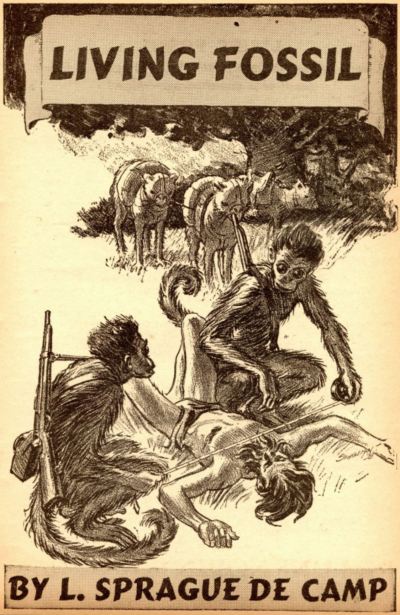
Living Fossil by L. Sprague de Camp - Astounding 1939 Feb

Matriarchial Societies

In “Pilgrimage” by Nelson Bond, we visit a far distant future after our society has long disappeared from the scene. Women rule. All the myths are about women gods. In “Cloak of Aesir” the alien invaders are ruled by the female of the species. I first encountered this idea in Herland by Charlotte Perkins Gilman from 1915. Goodreads lists 115 such books. Wikipedia has an article on “Single Gender Worlds.”

Psychic Powers

I thought psychic powers was an obsession of 1950s Astounding Science Fiction, but evidently, John W. Campbell had been thinking about it at least as early as “Cloak of Aesir” in 1939. “Star Bright” by Jack Williamson is a fantasy story about a man getting magical abilities from a meteorite piercing his skull and lodging in his brain.

“Greater Than Gods” by C. L. Moore is a powerful story about people in the far future projecting their thoughts to a man in our near future. Moore’s story is really about two roads the people of Earth could take in 1939. She just used psychic powers to show us two possible far-future outcomes–one a world united by power driven men (think Hitler), and the other a decadent world of peace and pleasure. Moore doesn’t want either, but she shows how both entice us.

Hard Science

There were two hard science stories in The Great SF Stories #1. The first was “Heavy Planet” by Milton A. Rothman that anticipates Hal Clement’s Mission of Gravity. The second is Heinlein’s “Misfit” about a spaced based future CCC unit moving a small asteroid out of the asteroid belt into an orbit closer to Mars, making it into a long-term space station. Heinlein promotes the use of mathematics, discipline, and hard work. This could be his first juvenile SF story.

Conclusion

I really enjoyed these old stories, but I’m not sure younger people will. The storytelling is often crude. Modern science fiction on Netflix is far more sophisticated, colorful, exciting, and dynamic. I am constantly pleased while reading these old stories to unearth ideas we still use today. I feel like a science fiction archeologist piecing together the evolution of science fictional ideas. That’s very rewarding to me. Throughout this collection of 1939 stories, I found ideas that first amazed me in the 1960s when reading 1950s and 1960s science fiction. I thought those ideas were original back then. Evidently not. But were they original in 1939?

I assume if you live long enough you start thinking like the person who wrote the Book of Ecclesiastes. I also assume if I could time travel back to 450 BCE I’d find people telling stories that contained the seeds of all the stories in The Great SF Stories #1 (1939).

Jim
1939 – “I, Robot” by Eando Binder

by James Wallace Harris, Wednesday, January 24, 2018

When I reread “I, Robot” by Eando Binder today, a science fiction story from 1939, I wondered just how much Earl and Otto knew about robots, where did they get their knowledge, how much of their speculation was original with them, and how much did they borrow from earlier writers. I also wondered how wide-spread the concept of robots was in 1939, a term only coined in 1920. The concept of what would eventually be called a digital computer was first described by Alan Turing in a 1936 paper. I doubt the Binders had read it. Artificial intelligence wouldn’t become a concept until the 1950s. What kind of imaginative feat had these two brothers achieved writing a short story for a lowly pulp magazine?

Here is a nice graph from Google that shows how often the word robot was used over time. I wish I could track down all the science fiction stories that used it from 1923 when the English translation first appeared until “I, Robot” in 1939.

robot - eytomology

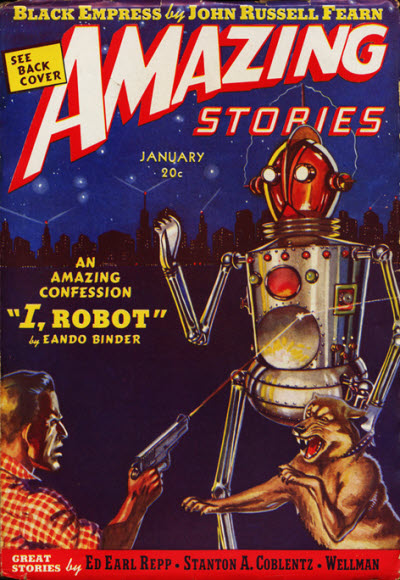
Eleven years before Isaac Asimov’s famous collection of robot stories, I, Robot, a short story appeared in the January 1939 issue of Amazing Stories called “I, Robot” by Eando Binder. Asimov admits his later robot stories were inspired by this one, and he had protested his editors naming his collection with the same name.

“I, Robot” is the first person narrative of a robot named Adam Link, and Amazing Stories would eventually run ten of his tales between 1939-1942. In 1965 Paperback Library came out with a fix-up novel based on many of these stories called Adam Link – Robot. Currently, this novel version is available from Wildside Press on Amazon as an ebook. However, if you’d like to read these stories as Amazing Stories presented them, they are available online as digital .pdf scans:

Amazing Stories 1939-01

The first two stories were combined and altered for a 1964 episode of The Outer Limits, and later that episode was remade for a 1995 episode of a revival series of The Outer Limits. Both shows featured Leonard Nemoy. In the 21st-century we’re becoming robot crazy, so it’s very hard to imagine a time when people didn’t know about the concept of robots. This 1939 story is a far cry from Ex Machina (2014) and Humans (2015- ) yet it dealt with the same themes those shows do. Until humanity has real self-aware robots to coexist with we really won’t know how we will react.

I’ve read “I, Robot” by Earl and Otto Binder (Eando) a couple times over the last century, and today, when I started Isaac Asimov Presents The Golden Years of Science Fiction (combining Isaac Asimov Presents the Great SF Stories 1 (1939) and Isaac Asimov Presents the Great SF Stories 2 (1940)) I wasn’t in the mood to read it again. Boy, am I glad I did. As my recent posts attest, I’ve been in the mood to read old science fiction short stories and I had bought all six of the Golden Years of SF series which contain the first 12 of the 25 of The Great SF Stories series (1939-1963).

[These six anthologies collect the twelve years of science fiction before I was born. I bought the combined double-deckers reprints because I can’t afford to collect the original 25 paperbacks edited by Isaac Asimov and Martin H Greenberg because they generally run $10-60 on ABEbooks and eBay. (Ouch!)]

Now that I’m rereading science fiction with a deconstructive mindset I realized immediately that “I, Robot” was a goldmine of a historical SF story. The Binders imagined a mechanical man with an electronic mind that could learn and was mentally much like a human. This was 1939 before the world knew about computing machines (the word computer back then meant a human job classification). Adam Link has television like eyes that see in shades of blue (like early TVs, well before color TV), and microphones for ears. The Binders imagine an artificial brain that has a perfect memory. Not only that, the Binders imagine a kind of machine learning phase for Adam Link. The bulk of the story worries about how humans will act when meeting a conscious, self-aware artificial being. “I, Robot” is modeled on Frankenstein, which is quite satisfying because Adam Link is a fictional descendant of Mary Shelley’s monster.

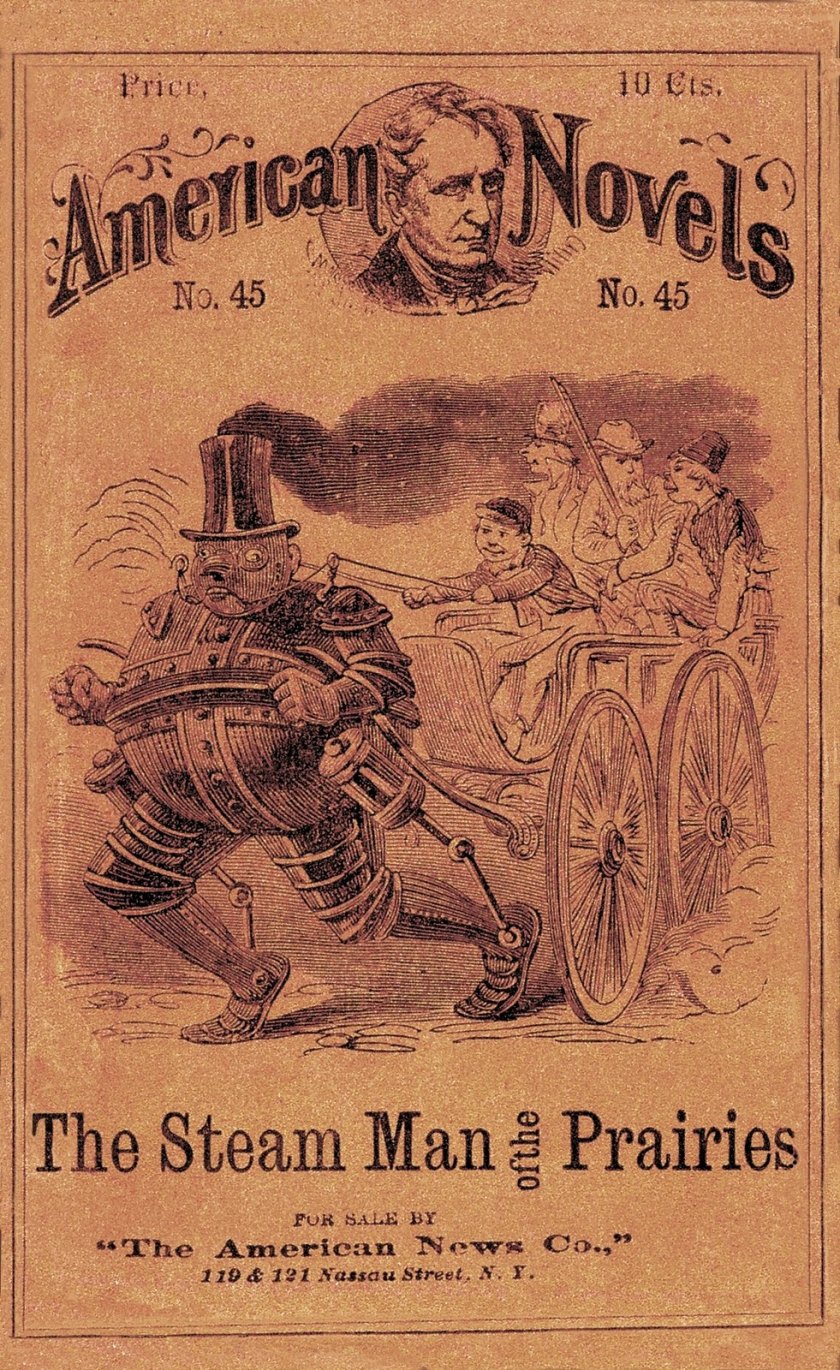
The term “robot” was first coined in the 1920 Czech play R.U.R. (Rossum’s Universal Robots), but the artificial creatures in that story were made from synthetic organic matter, more like replicants in Blade Runner. The history of robots is ancient, but they have mostly been magical automata and mechanical. In the 19th-century we had The Steam Man of the Prairies, which some say was the first science fiction dime novel in 1868.

The_steam_man_of_the_prairies_(1868)_big

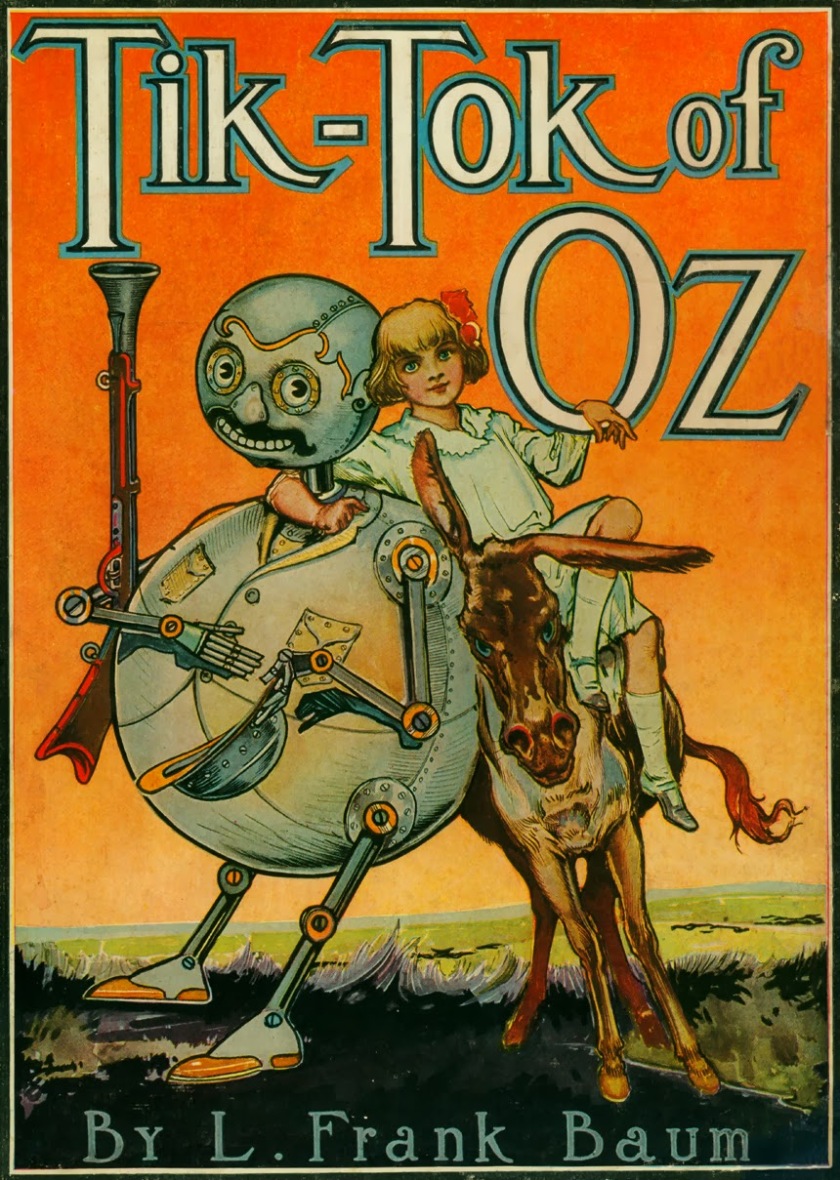
The steam man was just an all-purpose versatile machine. I never read it, but my earliest memories as a kid include a robot, the Tin Woodman of Oz, that first appeared in the book The Wizard of Oz in 1900. I first encountered this robot-like-man in the 1939 film in the 1950s. The Tin Man was originally a human named Nick Chopper who kept losing body parts to an enchanted ax and having them replaced by a tinsmith.

TikTokofOz_BookCover_lores

The next proto-robot I remember encountering was Tik-Tok, after discovering that The Wizard of Oz movie was based on a series of books. The Tik-Tok of Oz by L. Frank Baum was eighth in the series coming out in 1914, but I didn’t discover it until 1962 while in elementary school. Tik-Tok was a wind-up machine that could talk, but little was made of describing how he actually worked. Like talking animals in fantasy stories, talking machines were for fun and not genuine speculation about creating artificial intelligence.

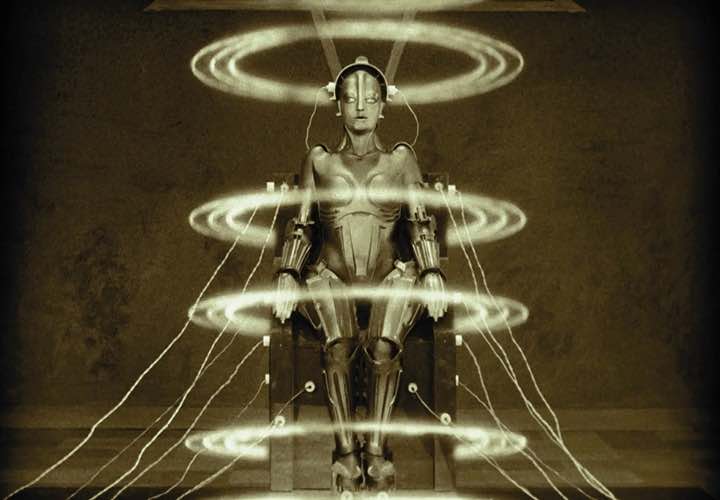
Metropolis

The next robot I know about that existed before “I, Robot” was from the 1927 German film Metropolis.  Like R.U.R., Metropolis is a social commentary on the working classes. I’m not sure Thea von Harbou was concerned philosophically with artificial intelligence, and I’m not sure where I can find out. Evidently, the concept of a robot was easily embraced by our society, even ones that could act human, but when did folks begin to think seriously how to create an artificial mind? (I’ve since found out the word robot isn’t used in the film, but the 1927 placards did list some actors as robots.

That’s what’s so fun about “I, Robot.” The Binders were putting everything into place. They theorized a metallic brain of “iridium-sponge” cells, not as fancy sounding as Asimov’s positronic brain but they did assume it would need to store information. The Binders made no hint of computer programming. I guess they assumed a being with senses would program itself through learning. The artificial thinking was still relegated to the magic happens kind of hand waving.

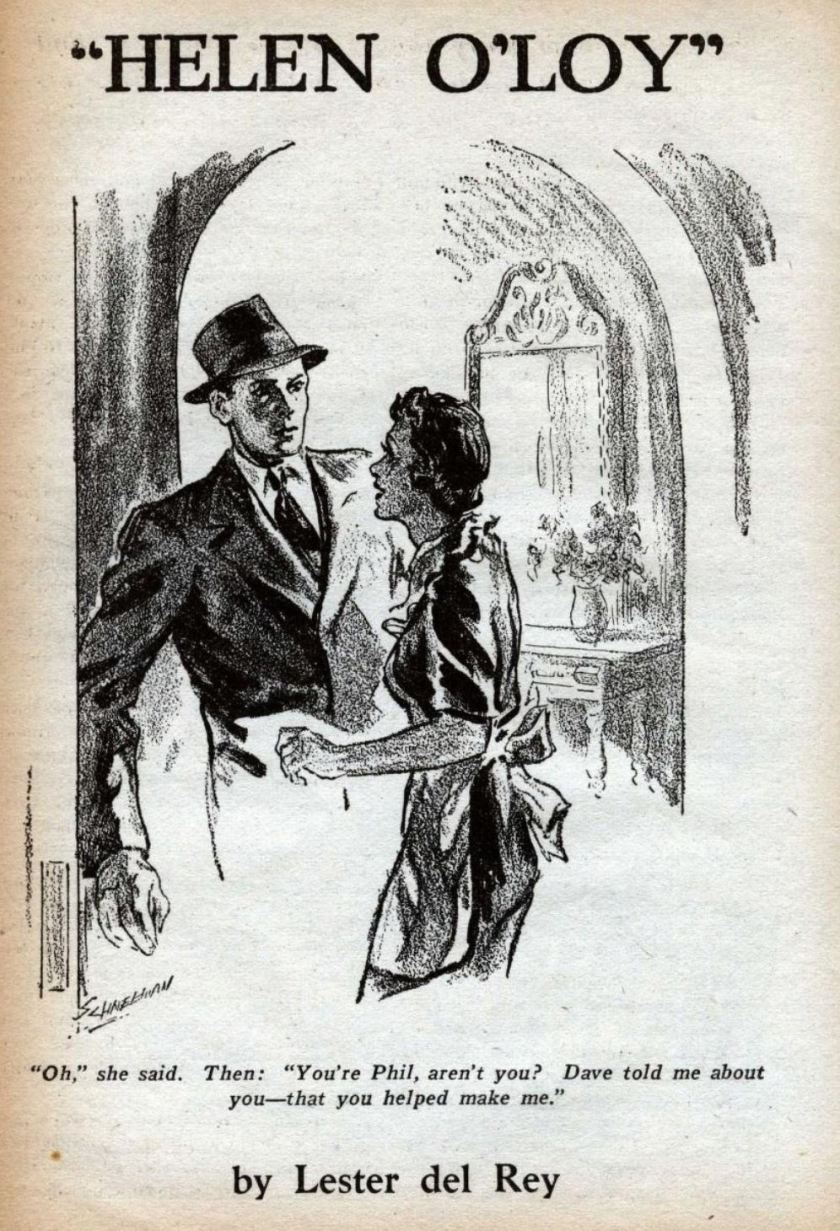
Helen O Loy by Lester del Rey

In 1938, “Helen O’Loy” by Lester del Rey came out in Astounding Science Fiction. I’m pretty sure the Binders could have read that one. I recently listened to that story, and it is another proto-AI tale. Two men who own a robot repair shop put together a robot woman they both fall in love with. Again, where did they get the word robot? How quickly did a Czech word from 1920 spread to America? Did Lester del Rey know of the story, “A Wife Manufactured to Order” from 1895? How do ideas spread? And is inventing an artificial wife something that just comes to guys. What story lays claim to inventing the sexbot?

Wikipedia has a wonderful list of fictional robots. It gives me several stories I need to track down to read. I’ve already read some of the Professor Jameson stories by Neil R. Jones from the early 1930s. His aliens had their minds transferred to mechanical bodies — not AI robots. I need to read The Metal Giants (1926) by Edmond Hamilton and Automata (1929) by S. Fowler Wright, both science fiction writers.

I’m going to assume the Binders were inspired by science fiction. Could there have been nonfiction books theorizing about robots before 1939? When does science fiction precede science and when does it follow? I’ve always assumed rockets for space travel and mechanical robots for artificial minds preceded science, but I could be wrong.

I did find An Anthropology of Robots and AI: Annihilation Anxiety and Machines by Kathleen Richardson that has a chapter on robots in fiction. It looks promising but is too expensive. Even the Kindle edition is $35.99.

Someone needs to write a book about robots like James Gleick did for time travel in his book Time Travel: A History. “I, Robot” is an amazing story in the evolution of ideas about robots. The Binders suggested an iridium-sponge for a brain. I suppose we can think of our current computers with a silicon sponge. They didn’t have enough information to guess about computers. Earlier stories only imagined robots having clockwork brains. The Binders speculations about a robot having to learn are also insightful.

Human-constructed creatures have been around a long time in our thoughts, and we’re getting very close to creating them. I think it’s fascinating to see how the idea evolved.

Recommended Reading


Updates

I’ve found some earlier citations in science fiction from The Encylopedia of Science Fiction.

JWH

When Sense of Wonder Wanes

by James Wallace Harris, Monday, January 22, 2018

The essential goal of science fiction is to inspire a sense of wonder. Science fiction is most powerful to young readers. Many hardcore science fiction addicts spend the rest of their lives strung out trying to recapture that sense of wonder they found in youth. Sadly, sense of wonder fades in two ways. We become jaded as we age, and science fiction becomes dated.

Amazing-Stories-1928-Nov-small

The dynamics of this loss of wonder came to me as I listened to the new audiobook edition of The Science Fiction Hall of Fame Volume One, edited by Robert Silverberg that was first published in 1970. I enjoyed listening to these old science fiction stories tremendously, but that joy was fueled by nostalgia for my lost sense of wonder. I’ve been recommending this audiobook widely because I want science fiction anthologies to succeed in the audiobook marketplace. However, I got an email from my friend Mike that makes me want to write a warning to go along with my recommendation.

Mike was enjoying the stories until he got to “The Roads Must Roll” by Robert A. Heinlein, a story that first appeared in 1940. I told Mike this was the weakest story in the book for me. I’ve read it many times, and have heard two audio versions. All the stories in The Science Fiction Hall of Fame were voted into the collection by the newly formed Science Fiction Writers of America after 1965. Each included author could only have one story. I never could understand why they picked “The Roads Must Roll” for Heinlein. I would have picked “The Menace from Earth.” But evidently, this story still had a sense of wonder to the SFWA members when they voted for it. But I first read “The Roads Must Roll” just before they voted when I was a young teen, and the idea of rolling roads seemed stupid to me even then. They were older and voting their nostalgia.

Then Mike sent me this email about “Microcosmic God” by Theodore Sturgeon from 1941:

I think “Microcosmic God” is a terrible story. It makes the plot of “The Roads Must Roll” seem intelligent and elegant.

The two main characters are dreadful. Kidder is a cold-blooded killer who happily massacres the Neoterics whenever they have not followed orders to his satisfaction. Conant is a silly Saturday afternoon matinee villain who wants to take over the world. Oh, brother! Conant reminds me of Snidely Whiplash. How do you take a story seriously with flat characters like Kidder and Conant?

The Neoterics are a clumsy deus ex machina. You might as well give Kidder a magic wand and a book of spells. This is one of the most preposterous plot devices ever devised. It takes stupid to a new level.

There is no character development. The plot is stale nonsense, complete with bad guys spinning their revolvers on their trigger fingers. I’ve seen better plots in Charlie Chan movies.

I don’t know how or why this is considered a good story by the science fiction community. It’s awful.

Mike is completely right in his criticism, but I still enjoyed the story because I could imagine the sense of wonder it created in 1941. Even though it depicts cruel events, they are widely imaginative. I even gave it an A when I sent Mike my grading of the stories:

  • A+ “A Martian Odyssey”
  • A- “Twilight”
  • B- “Helen O’Loy”
  • C “The Roads Must Roll”
  • A “Microscopic God”
  • A- “Nightfall”
  • C “The Weapon Shop”
  • A+ “Mimsy Were the Borogoves”
  • A++ “Huddling Place”
  • A- “Arena”
  • A “First Contact”
  • B- “That Only a Mother”
  • A “Scanners Live in Vain”
  • A+ “Mars is Heaven”
  • A “The Little Black Bag”
  • B “Born of Man and Woman”
  • B+ “Coming Attractions”
  • A “The Quest for Saint Aquin”
  • A+ “Surface Tension”
  • B+ “Nine Billion Names of God”
  • B “It’s a Good Life”
  • A+ “The Cold Equations”
  • A “Fondly Fahrenheit”
  • B+ “The Country of the Kind”
  • A+++ “Flowers for Algernon”
  • A+++ “A Rose for Ecclesiastes”

Jupiter-red-spot

I’ve wondered for decades if 21st-century young people reading 20th-century science fiction stories would find a sense of wonder in them. The golden age of science fiction is supposed to be twelve, but would a 12-year-old today still find a sense of wonder in The Science Fiction Hall of Fame? Has its sense of wonder faded?

I know my own sense of wonder is in decline, but then so is my heart and mind. As we get old we wear out. My sense of wonder isn’t what it used to be. For example, I just read Ocean of Storms (2016) by Christopher Mari and Jeremy K. Brown. If I had been twelve when I read it, I believe my sense of wonder would have been wowed. It essentially recycles 2001: A Space Odyssey (1968) and Rendezvous with Rama (1973) with the movie Apollo 13 (1995) and adds modern thriller clichés, evil conspirators, contemporary politics, genetic manipulations, and a bunch of hard to believe details. If I hadn’t already encountered all those classic science fiction ideas I would have loved this book. Because I was jaded by a lifetime of science fiction thrills, this book was only ho-hum. It offered me nothing new.

Ocean of Storms was our modern selection for my science fiction book club this month, the classic selection was A Journey to the Center of the Earth by Jules Verne (1864). The Verne book was more fun to read, but it offered no sense of wonder either. Its science is completely dated. However, it was fun trying to imagine how 19th-century readers had their sense of wonder blown away. Was science fiction in the 1800s more mind-blowing to its readers because they knew far less than we do today?

As an older science fiction fan, it’s extremely rare for me to encounter a new science fictional idea. In fact, I can’t come up with a recent example. Maybe Spin (2005) by Robert Charles Wilson or Quarantine (1992) by Greg Egan. Most of my enjoyment of science fiction comes from understanding the history of science fiction and working to comprehend the classic stories in the context of their times. I admire current novels like Aurora (2015) by Kim Stanley Robinson for using science fiction to speculate about the limits of space travel, but I generally don’t find much sense of wonder anymore.

Science fiction has become adventure stories set into older science fiction speculative ideas. It’s retreads of retreads. Modern science fiction is often far better written than older science fiction, and modern science fiction writers have superior storytelling skills. But the sense of wonder I found in my teens is gone.

Don’t feel too sad for me. I now find a sense of wonder in studying science fiction. Science fiction used to provide me a sense of wonder about the future, now it provides a sense of wonder about the past. There are two types of science fiction. The common form is entertainment, but the form I like are those stories that explore the event horizon between what science knows and what science might discover. I believe the stories included in The Science Fiction Hall of Fame were selected because at one time they all speculated on possibilities existing on that event horizon. Just because science has advanced, destroying most of that speculation doesn’t mean their feats of imagination are diminished.

JWH