Why We Need To Share

by James Wallace Harris, Thursday, December 7, 2017

This morning while I was eating my breakfast I played “Your Top Songs 2017.” This is a playlist Spotify generated for me by collecting the songs I listened to most this year. If you subscribe to Spotify you can play the songs with this embedded player immediately below. For those who don’t, I’m going to embed some YouTube videos to try.

I played this music very loud while I ate and because it’s the music I love the most. It moves me in ways I can’t describe. And while this music pushed my emotional buttons I wished I had someone here to share it with. My friend Mike was my last pal who would listen to music with me, but his hearing has gone downhill so he no longer likes to share music. Getting old is sad. I worry that my hearing is going too.

The past year, more than ever, I realized that friendships are based on what we share. I think this is why Facebook is so popular. We post something we like and then see who else likes it. It’s always fun to find a video or cartoon that many friends love too. I guess it’s a kind of validation of our tastes. But I think it also allows us to feel we’re existing close to someone.

We all live in our heads, and no matter how physically close we get to another person we don’t feel that closeness unless we psychologically resonate. The easiest way to achieve this is to do something together with another person that shares our interests. For example, it’s far more enjoyable to go to a movie and both people love it than to go and only one person love the show.

I love the Bette Midler song above. I will relate to you more if you love it too. Now “Do You Want To Dance” is an easy song to like so I should find plenty of friends to share it. And “The Other Side” by Michael Nyman easily admired by most folks because it’s so pretty. But what about “Moanin'” by Charles Mingus. Mike and I connected on this song, but I don’t think I have another friend that shares this particular love.

Probably somewhere in the middle, I can find more people who will share “I’ll Play the Blues for You (Pts. 1 & 2)” by Albert King. Bette Midler’s song was pop music, so duh, that stands for popular music. Jazz is esoteric for most music fans, but blues has a decent following. I share a love of the blues with my sister Becky. I almost can’t play this Albert King song too loud.

Susan, my wife have a lot of songs we love together, but our playlists of favorite songs are very different. When we’re in the car we have to choose who’s songs get played. When a song she’s crazy about comes on and I don’t love it back Susan’s disappointed. The same is true when one of my favorites is playing and she finds it annoying.

Susan works out of town, so in the evenings I have different friends over to watch TV in the evening. Each friendship is a Venn diagram where we find what to watch in the intersection of interests. What’s really difficult is to have 3-4 people all trying to agree on a film to watch. It’s a very satisfying feeling when the pick makes four people happy.

However, there’s a range of television shows and movies I want to see that I can’t find a friend to share. This makes me feel lonelier. Even Janis, my main TV buddy goes to sleep on a many of the shows I’m most anxious to see. Generally, I have to watch westerns, documentaries, and old black and white movies from the 1930s and 1940s by myself.

Some of my most intense feelings come from songs, books, movies, and television shows. Often these deeply aesthetic pleasures come late at night when I’m alone. Listening to these songs this morning is generating intense emotions that I wish I could describe, but can’t. And I think that’s the key to why we want to share. We can’t describe what we feel so we at least hope to find someone to experience the same thing with us. Unfortunately, we can click the Like icon but we have no way of knowing if what our friends are feeling is the same thing we’re feeling.

Do any of these songs resonate with you?

JWH

Best Music of the 1950s

by James Wallace Harris, Thursday, June 22, 2017

If you use a subscription music service like Spotify you have access to tens of millions of songs, but there’s a Catch-22 to that wealth of music. You need to know what to try. I have tracked down a number of sites that use different methodologies to recognize the best music from each year, and below is a grid for the 1950s.

1950s-600px

To use this table effectively, pick a year, right-click on it, select “Open in new window.” That way you won’t lose this page, and you can have multiple windows open to compare each site. Those sites have their own methods of ranking the top album and songs for each year. Each site has different extras and unique values. For example, Discogs is best for record collectors. I like Best Albums for just finding albums to try. Tsort is great for its massive collection of hit music charts.

If you have a subscription music service start playing some of these albums. It’s like traveling back in time. When I was young, 1950s music was my parent’s music, the music I rebelled against. Now that I’ve gotten older, I’m starting to like what they liked, and like well beyond their limited musical tastes.

If you don’t have a subscription music service, click on Play Now which will take you to the Tropical Glen site. It’s a radio station based on years.

Discogs 50 51 52 53 54 55 56 57 58 59
Best Albums 50 51 52 53 54 55 56 57 58 59
Top Songs 50 51 52 53 54 55 56 57 58 59
Challenges 50 51 52 53
Rate Music 50 51 52 53 54 55 56 57 58 59
Play Now 50 51 52 53 54 55 56 57 58 59
Tsort 50 51 52 53 54 55 56 57 58 59
Wikipedia 50 51 52 53 54 55 56 57 58 59

This is the second version of this post. I worked on it for days and the WordPress system swallowed it without a burp. I’ve done a quick recreation without all my extra commentary. I’m going to publish it out in stages because I fear losing it again.

For those of your with Spotify, here are some albums I’ve been trying. Leave a comment about whether or not you can play them. I’ve yet to determine if providing these links are worthwhile. It takes a fair amount of work to create them, but if no one is using them I’ll stop providing them when I write about music.

1950

1951

1952

1953

1954

1955

1956

1957

1958

1959

JWH

Aging, Changing, Technology, and Music

by James Wallace Harris, Wednesday, May 3, 2017

For someone whose childhood began in 1951, the year 2017 is the far fucking future. Sorry about the inappropriate word, but hey, that’s part of the relentless pace of change. We’re now allowed to use “bad words” in print.

I don’t think young people today can even imagine what a horrendous social offense it was to say fuck in the 1950s, much less write it down. If you could understand you might know what this essay is all about.

It Happened One Night

Last night I watch It Happened One Night with my friend Annie. I told her this 1934 picture was considered very risqué when it came out in 1934. After watching a while she asked why? By modern standards its so squeaky-clean it’s hard to spot the naughty bits. Even as a kid seeing it for the first time in the early 1960s, that old film still had its titillating parts. That changed after Midnight Cowboy.

I started listening to music in the 1950s on my father’s car radio when me and my sister could still stand in the front seat. This was before seat belts. It was his car and his music, but that’s how the times were back then.

For Christmas 1962 I got a AM clock radio. I played my music on that radio from 1962-1968. I turned it on when I got home from school and turned it off each morning when I left for school. I listened rock and roll while I slept, burning songs like “Rhythm of the Rain” into my unconscious mind. I grew up in Miami and loved WQAM and WFUN – the two competing AM Top 40 stations that played rock and roll.

My father had a second job bartending and would bring me and my sister 45rpm records that were pulled from the jukeboxes. In 1962 when I got the clock radio my sister had gotten a portable record player. I envied her that. (I might have stolen it.)

In 1963 an airman left his console stereo and LPs with my father was he was stationed overseas. That was my first introduction to LP albums. The airman left mostly folk music.

Our Man Flint soundtrack 

Eventually I got a little transistor radio to carry around. Then I got my own portable stereo record player when I started buying LPs in 1966. My first LP was the soundtrack to Our Man Flint. I would join the Columbia and Capital music clubs to mass collect albums. Joining, completing my fulfillments, quitting, and rejoining to keep getting those intro bundles.

When I started driving in 1967 I had a car radio. In 1968 I bought a console stereo system. It was my first use of credit, and I was only 16. The console introduced me to FM radio.

Just in the 1960s I went from AM to FM, and from mono to stereo. From tubes to solid state. In the 1970s I got a much larger console, started seriously collecting records, stopped listening to commercial radio, and eventually got into component stereo systems.

In the 1980s I switched to compact discs. I also tried different tape systems. As the decades past I used MP3 players and iPods, and even got into SACD audio for a while. For the last decade I’ve mostly been listening to subscription streaming music. I never got into Napster thievery. I guess I was too old fashioned to steal.

So in the course of half a century I went from listening to music on various physical media to listening to invisible streams of ones and zeros. In 1970 we were warned about Future Shock. Reading about what the future will do to us and living into the future are two different things. The future is both dazzling and tiring.

My point is the technology keeps changing. So does the music. So do the genres of music. I’ve bought some of my favorite albums many times, on LP, CD, cassette, SACD, and digital file (I was briefly into 24bit lossless).

The long playing (LP) record album came out in 1948, but it took a while to catch on. Because of streaming music, the concept of an album is fading. Not only have I outlived many technological changes, I’ve outlived an artistic concept.

And you know what? I’m tired. I’m fucking tired of change. I’m weary of the constant barrage of new technology. And I was a computer geek starting in 1971. Just read all those changes in computer tools I’ve used.

I’m happy with streaming music. Can’t we stick with it for a while? At least a quarter century, I hope. Give me 25 years and I’ll die on you, and the world can change as much and as fast as it wants after that.

ItsAMadPoster

JWH

Spotify, You’re Killing Me!!!!

by James Wallace Harris, Saturday, April 1, 2017

If you don’t use streaming music, this essay might be meaningless. But if you love music you should be into streaming music. The trouble is streaming music is in its infancy and is going through some annoying growing pains. For most people spending $9.99 a month for a massive library of music is the best bargain on planet Earth. And even with all its faults I gladly pay for streaming music. Right now I’m subscribing to two services (I’ll explain why later).

Spotify Logo

Once you start using streaming music, you realize it has the tremendous potential for being a music listening utopia. Anything that keeps your music listening experience from being perfect is as annoying as a skip while playing your favorite song on an LP.

Right now it’s possible to think of a song and play it within moments. This is where the problems arise.

  • How quickly can you play a song – once you find the song playing is almost instant.
  • The music you want isn’t available – right now I’m 95% happy. This is the best part of streaming music and why it’s worth $9.99/month.
  • Finding the music you want – menu navigation depends on the device you use.
  • How the music is organized – also varies from device to device
  • Creating and organizing playlists – again device dependent
  • Menu consistency between devices – see last three items
  • Managing your virtual library – needs work
  • Meta-data about the music – I want much more

I’ve been through several streaming music services, but for the last few years, I’ve used Spotify. I was euphoric with Spotify on the Roku, which is connected to by big TV, receiver, and floor standing speakers. It’s a fantastic way to listen to streaming music. Spotify on the Roku was the best system I could find for playing what I wanted with the least fuss.

Then months ago Spotify started acting up on the Roku. The problem was playlists. Other people also complained about the problem on the Spotify Community forums. I kept hoping they’d fix the problems. When they didn’t, I bought an Amazon Fire TV hoping Spotify worked better on it. It didn’t. It worked very different but had some plus features. Overall it was a step down from my streaming music nirvana on the Roku.

This week playlists just disappeared from the Roku app. On the forums, Spotify claimed they were working with Roku. Damn, damn, damn. Spotify on the Roku was a killer app for me.

Now I have some theories. If you look at my list of aggravations above you might notice a consistent issue. It’s the menu for Spotify working differently on different devices. Basically, the problem is you have millions of songs at your fingertips but picking them out is problematic, especially when the method is different on each device.

My guess is Spotify has put most of its programming dollars into creating great apps for iOS and Android smartphones. That’s how most people listen to music today. Thus writing programs for the Roku, Fire TV, Apple TV, WebOS, and other streaming TV boxes is a pain in the ass, plus costly. At their forum, Spotify pushes using smartphones as controllers for playing Spotify on TV/stereo systems via Fire TV and Chromecast. And this could be the direction other device makers are heading too. Roku lets you use your smartphone as a smart remote. But I’m not sure I like this direction, but I might.

Smartphones have way more programming potential than streaming TV boxes. Plus the high-resolution touchscreen with a virtual keyboard is faster for looking up songs. Phasing out the playlist feature on Roku might be Spotify’s way of pushing users to use their smartphones. One advantage of using the smartphone for a controller is I can access my den stereo from any room in the house.

I can accept this in the long run as long as the music streams through my Ethernet to a TV streaming box that’s connected to my receiver by an HDMI cable. I hope it is not playing on the phone and being redirected to the Fire TV box. I want maximum fidelity.

One reason why I never tried Tidal music is that it didn’t have a Roku app. This makes me wonder if the Tidal app for iOS will stream to my Fire TV or AirPlay to my receiver, and would I hear the higher fidelity of their CD quality streams? To complicate matters, Spotify has reported it’s considering a CD quality streaming tier.

Because of my problems with Spotify on Roku I bought a Fire TV and signed up for Amazon Music. I wrote about that at “Spotify vs. Amazon Music” where I explained the advantages of Amazon music. But switching streaming music services is a pain. I’ve done it many times. The more you commit to playlists the harder it gets.

Using the Spotify app for Fire TV is very different from the Roku app. It’s far more visual, which has its appeals, but lacks many of the detail features the Roku app. Like being able to add songs to a playlist. Those features are on the Spotify for iOS app. The iOS app also has more features that are not on the Roku app. This leads me to believe the Fire TV app is actually a visual supplement to the Spotify smartphone app.

Spotify, if you want us to move to our smartphones as the standard interface for controlling your music library, you should just tell us straight out. I’m currently pissed at you because you’ve ruined the Spotify for Roku app, something I’ve used for years. You should have put explanations in the Roku app, so we knew right away what’s going on.

Even without the playlist feature looking up albums is much nicer on the Roku than the Fire TV. But finding albums is even nicer on my phone. If that’s where you’re going just tell us. Come out and say the iOS/Android apps will be the standard UI for playing Spotify. If you can’t create the standard UI for Roku or Fire TV just say so. Don’t let us think its broke and you can’t fix it, or even appear to blame Roku.

Update: 4/2/17

Spotify is my current winner because the iOS Spotify app streams through my Fire TV box and I much prefer its UI. Amazon Music app on iOS downloads files to the phone and then streams it to my Denon receiver. That means playing songs aren’t instant because of the download time. It’s a shame that Amazon Music doesn’t remotely control the Amazon Music app on the Amazon Fire TV like Spotify. That has worked out very well. The phone UI is far superior to using a TV remote.

Also, Spotify wins on the UI front because it lists albums by reverse release year order. I wish they would list by both release year and recorded year because most albums get released over and over again. Spotify lists by the latest release date. I would prefer the recorded year because a 1970 album rereleased in 2009 will be much higher on the list making it appear like a newer album if you didn’t know its history. And that’s what happens when I’m trying out artists I don’t know. I’m currently checking out jazz guys who started in the 1950s. Most of their old albums are rereleases or compilations, so it’s hard to know their time order of creation. I usually go to Wikipedia to check on original release dates.

JWH

Spotify vs. Amazon Music

by James Wallace Harris, Sunday, February 12, 2017

Update: June 29, 2017. I now consider Spotify/Fire TV/iPhone combo the best way to play music through my main stereo system using my iPhone as the remote control.

I love music. I love technology. And I love music technology.

Decades ago I daydreamed the perfect music delivery technology would be one where I could say out loud the name of the song I wanted to hear and it would instantly play. I even pictured myself taking walks with a cloud of music following me like the dirt cloud following Pigpen, the Peanuts character. The iPhone and ear buds almost creates such magic. Now that I have an Amazon Echo, I feel like a Jetson when I declare to the air I want to hear a song and Alexa plays it. However, I’ve since revised my dream music delivery system. I no longer can remember all my favorite songs or their titles, so the “open sesame” bit isn’t as fantastic as I once imagined. Now I dream about having instant access to all music using a savvy streaming music database that knows everything about the history of music.

I’ve subscribed to many subscription music services over the years, starting with Rhapsody. I’ve hopped from one to the next trying to find the perfect blend of technology, user interface, and music catalog. Spotify is my current favorite. It has 98% of the music I want. It’s very close to a perfect streaming music service. However, in recent months it crashes on my Roku 3, my primary device for listening to music through big speakers. Before Spotify I used Rdio and loved it. But then I tried Spotify on the Roku and it’s user interface blew away Rdio’s. Plus, Spotify would play songs nearly instantaneously, which wasn’t true of Rdio. So I switched. I’ve been mostly content with Spotify, until it started loading slower on the Roku, even freezing up quite often. Spotify is still instant on my computer, tablet and phone, so I assume the problem is with the Roku.

I love my Roku 3, and thought maybe buying the latest Roku model could fix this problem. But what if it didn’t? Since I’m an Amazon Prime customer, I thought of giving the Fire TV a try. But spending $89 to fix the problem via hardware might not be the only solution. I wondered if subscribing to Amazon Music would allow me to keep my Roku 3. So I signed up.
In every way I prefer Spotify except one – but that one feature might make me switch. However, Amazon’s user interface is so clunky that I don’t know if I can. Oh, that one feature? Well it’s going to be hard to explain if you don’t use streaming music. But I will try.

Streaming music services have vast catalogs of music – not everything ever recorded, but it almost feels that way. Once you start using streaming music it’s just too inconvenient playing LPs, CDs or MP3s. They’ve become a damn bother. I stopped listening to The Beatles for years even though I bought their remastered CDs. I was just too lazy to play them. Spotify is that convenient. (The Beatles are now on Spotify.) But every once in a while I really want to hear songs not on Spotify. I have to get out my CDs or play the MP3 from my Amazon cloud player. Not a lot of work, but not my idea of my perfect music system.

For background listening I use playlists, especially one playlist, the “Top 1000” list I’m building. I HATE that I own songs I can’t put on Spotify playlists. Well, that’s the great feature of Amazon. It allows Amazon Music subscribers to play songs from their personal cloud collection. I have 1700 ripped CDs, and some LPs converted to MP3 on my Amazon cloud storage. Making playlists using songs from both pools of music is a snap.

Once in a very blue moon - Nanci GriffithThis means I can create playlists that contain 100% of the songs I want to hear. 98% from streaming and 2% from my personal collection. Now, that’s an over-the-top feature! Maybe it’s a time to switch feature. Of course I’ll have to recreate my Spotify playlists on Amazon. That’s will take some work. Mainly because looking up songs on Amazon Music isn’t as quick and easy as Spotify. Not that Amazon doesn’t have some nifty UI tricks that Spotify doesn’t, but Spotify is what I know, and it’s much more refined.

I could switch to Amazon Music with the hopes that Amazon will perfect its user interface over time. I’ve written a number of essays begging music services for features I want. Being able to upload my music was the major wish. There are many features I want that could get me to switch services again, though. The next biggest feature I want, is for streaming music to incorporate more song/album metadata information. That way I could search for “Jazz albums of the 1950s” or play songs that came out in July, 1965. I want streaming music to have the kind of information that record collectors use. There’s no reason why streaming music couldn’t catalog every album/single ever recorded. But that’s for the far future, maybe 2019 or 2021. Here’s some of the sites I use for music information:

GypsyThere are many different companies offering streaming music. Competition isn’t about price, since $9.99/month is standard, so user features will be everything. For years I’ve been jumping from service to service looking for my music streaming utopia. But as I build longer playlists switching services is getting harder. I thought I was committed to Spotify, but Amazon’s feature of mixing their collection with mine is tempting. However, if a streaming service offered the data services from the above sites, it would make me want to switch again.

To be honest, since streaming music is about convenience, Spotify is more convenient than Amazon Music right now, so I’m sticking with Spotify. What I might use is Amazon Music’s $3.99 a month subscription for Echo owners, and create playlists for Alexa to play me when I want to hear missing music from my collection. However, if Amazon improves their software I would switch. If you’re an Amazon Prime user and are a casual music listener, it’s $7.99 Unlimited plan might be the best deal.

Another feature that would be handy, is a universal file standard for playlists, so we could easily import and export them.

Update: I’ve since discovered that the Amazon Music app on the Roku does not play or show music from Amazon Music – just my music in the cloud. I hope they fix this. I can play music from the blended libraries on my iPhone and send it to my receiver via AirPlay, and that works much better than the Roku App.

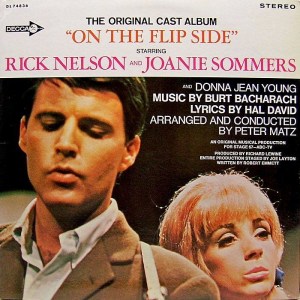
[By the way, the album covers I’ve added here are albums not available on streaming.]

JWH