My 2023 Interpretation of Hitchcock’s 1946 Film Notorious

by James Wallace Harris, 9/7/23

Alfred Hitchcock often talked about using the concept of the MacGuffin in his films. The MacGuffin distracts the audience into thinking the movie is about one thing when it’s really about something else. In Notorious (1946) we think the movie is about Nazis in South America acquiring uranium just after WWII. Instead, it’s about fucking. I hate to use the F-word here, but it’s the most exact terminology to make my point.

Back in 1946 movies couldn’t deal directly with sex, especially intercourse. Movies had to follow certain censorship guidelines, and so did books. It wasn’t until 1959 when the laws began to change, allowing art to become more explicit. What that meant was Hitchcock couldn’t directly focus on his theme. The MacGuffin suggested that Notorious was about war criminals and Nazis and that help Hitchcock hide his intended topic from censors.

People under seventy have only vague ideas about what people from the 1940s were like. We get our ideas about life in the 1940s from movies; in the same way we get ideas about American society of the 1950s from old television shows. However, Americans weren’t like the people we saw in movies, or read about in books. 1940s Americans were quite different from 2020s Americans. When we watch old movies from the 1940s, we must remember the censors wanted us to think one thing, the filmmakers another, and the actual reality of American lives were quite different still. There was far more sex going on, of all kinds, and persuasions.

Alfred Hitchcock uses Notorious to observe a very particular thing about Americans in 1946. Alicia Huberman (Ingrid Bergman) is the daughter of a Nazi war criminal who has just been sentence to twenty years in jail. A government agent, T. R. Devlin (Cary Grant) wants to use Alicia to infiltrate a Nazi plot in Rio de Janeiro. The government knows two things about Alicia. Because they bugged her conversations with her father, they know she’s pro-American and against the Nazis. Because they also know she regularly sleeps around and is alcoholic that she might be willing to do anything they ask. This is where the film title comes from, her notorious reputation.

Devlin contacts Alicia and Alicia falls in love with him because he appears to accept her as she is. She cuts back on her drinking and stops her cynical jaded sniping. Then Devlin tells her why they met and introduces her to his boss. This is when Alicia finds out that the American government wants her to seduce Alex Sebastin (Claude Rains) and get inside the Nazi organization.

This 1946 movie can’t have the feds saying, “we need you to fuck Alex Sebastin,” but the audience can read between the lines. Alicia is hurt. She can’t believe Devlin is asking this of her — doesn’t he love her? Alicia waits for him to tell her not to take the job. But Devlin wants her to say no on her own – – to prove she’s not a loose woman. Because Alicia is hurt that Devlin doesn’t stop her, she agrees to become a spy.

Throughout the rest of the movie, until near the very end, there is tension between Devlin and Alicia over her screwing Sebastian. The more Devlin becomes surlier and snarkier in his jealousy, the more Alicia applies herself to becoming the perfect Mata Hari. It’s never stated, but Hitchcock shows us the double-standard of the time. Not only are women not supposed to be sexually active outside of marriage, but they are also judged differently from men regarding what they choose to do. Audiences then, and now, would consider it nothing if a male secret agent seduced a woman spy for his country, but not for a female spy to make the same patriotic sacrifice.

Alicia rather quickly seduces Sebastian and lets Devlin know. He puts her down by suggesting a woman of her type would get the job done quickly. Eventually, Alicia marries Sebastian and goes on a honeymoon. She becomes part of his life.

I thought this part was interesting. Sebastian, the bad guy, is overjoyed to catch a woman like Alecia. He assumes she’s upright and moral. She’s younger, and quite beautiful. He is rich, suave, and sophisticated, but also shorter and much older. Sebastian and his mother totally accept Allecia into the family. On the surface, this is the path that 1940s (and 2020s) moral Americans wanted from women. The evil Nazi is proper family man, while the spies Alicia and Devlin are amoral and dishonest. What exactly is Hitchcock saying here?

At one point Sebastian sees Devlin and Alicia kissing and he’s tremendously hurt. But he doesn’t turn against her until he discovers she’s a spy. That mistake means he and his mother will be eliminated by his Nazi associates.

All through the Notorious, I wondered how Hitchcock was going to resolve his story. Not the spy story, that never mattered. It was the MacGuffin, and I knew it right from the start. If Devlin resented Alicia for fucking Sebastian and Alicia resented Devlin for arranging it, how would they ever come together?

I really didn’t want a happy conclusion to Notorious, but I knew one was coming. I wanted a 2020s realistic ending where Alicia wouldn’t forgive Devlin and tell him to fuck off in the end. However, I knew Hitchcock wouldn’t defy 1940s romantic convention in this film. He had to get Alicia and Devlin together.

In the end, Devlin admits he was wrong, and Alicia immediately forgives him. It wasn’t said directly, but I interpreted the scene to mean that Devlin apologizing for assuming Alicia would sleep with anyone because she had an active sex life. Of course, that ignores that Alicia did sleep with Sebastian, a man she previously rejected, because the American government asked. But is that the real story?

Like I said, sleeping with spies is something James Bond does all the time. I wondered if Hitchcock was also saying we should accept it when Jane Bond does it too? I doubt Hitchcock was concerned with this issue, but it’s there to consider. It’s possible that Devlin’s judging Alicia by a double standard was another MacGuffin, and Hitchcock’s real theme was about judging spies and their gender roles.

I do have another theory. Hitchcock might not care about anything we could put into words about in his films, but merely loves to create scenes with various kinds of emotional tensions to see how his audiences react to them emotionally. His films are often episodic, and he constantly plays with our reactions. Maybe the plots and themes are MacGuffins too?

JWH

Are Women Wanting the Dirty Jobs Men Don’t Want?

by James Wallace Harris, 8/17/23

[This is a repost after WordPress deleted the original.]

Yesterday YouTube offered me a video of two young women milling a 24′ rough log with a Wood-Mizer LT15 portable sawmill. It was fascinating. Yet, I wondered why two beautiful young women were milling a log. I figured these were just unique young women. Then YouTube offered me two more videos of women milling logs. Is this a new trend? I love watching videos of people making things and using machinery. And even though I’m 71 I still love looking at pretty women, so I’m not complaining about anything, especially not gender roles. (Although, don’t tell my wife, she might laugh at me watching pretty girls mill lumber.) I try not to be sexist but was I sexist because I assumed that some jobs were only going to appeal to men and was surprised at seeing these videos? Obviously, the videos showed me I was wrong — once again. Are you surprised?

I’m reminded of two sociological trends in the news over the past couple of years. One, is a lot of dirty jobs once done by men are going unfulfilled. Two, men are rejecting the job market in general, and some say it’s because of competition from women. One report says six million men between the ages of 25 and 54 are choosing to stay out of the work market.

I find YouTube to be a fun way of sampling what’s going on around the world. I’m seeing a lot of videos showing women doing things that once only men like doing. I think that’s great. However, I don’t know if YouTube is an accurate way to gather statistics or not. It could be women like to make videos more than men, or they feel doing something different will get more viewers. What percentage of women want to go into physically demanding jobs once considered only for males?

There seems to be millions of people, especially young people hoping to make a living producing videos. I know they must churn out content at a furious pace and do everything they can to do to get people to watch them. One thing that gets clicks is thumbnails pictures with pictures of pretty girls and clickbait titles.

At Lumber Capital Log Yard, Emerald and Jade are daughters in a family lumber business and milling lumber is something they like doing and are good at it. My guess is Emerald is the one who wanted a video channel, and she had an obvious interesting subject to film. That she and her sister are pretty enough to get into the movies is beside the point. The real interest of the videos is milling logs. But how many of their 150,000 subscribers are women, and how many of them will be inspired to go into the lumber industry?

I do worry about their attire for another reason. Men would be wearing protective clothing, hardhats, gloves, and goggles. And if male workers had beautiful long hair like the sisters, they’d tie it up while working around whirling industrial equipment. I assume the girls could be dressed differently for video days than when they aren’t on camera doing their work. But I could also be wrong here too, and women just want to wear whatever they like. I wonder what OSHA would say? If women take over dirty jobs, will how they do those jobs be different from how men did them?

This does make me wonder about gender roles. Men have always focused on their masculine attributes and hid their feminine side. And it used to be women did the opposite. Now women are displaying both openly and it’s upsetting some men. Several current studies are claiming women aren’t interested in men that can’t compete or keep up with them, and this is upsetting a percentage of men. Other studies are showing that some men don’t even want to try to compete in the workforce anymore. While other studies are showing women starting to dominate certain professions and men have stopped going into them. Those were mostly professional jobs. It was assumed that heavy manual labor would be the last bastion of male workers. That might not be true. Are there women wanting to work in mines, sewers, foundries, construction sites, etc.? I’m fine with that, but will society be fine with it? Politically, things are getting very weird.

And these changes aren’t just happening in the U.S. I’m seeing videos from around the world where women are doing all kinds of jobs or getting into extreme sports which used to only involve men. I’m reminded of a book I read years ago, When Everything Changed: The Amazing Journey of American Women From 1960 to the Present by Gail Collins. Back in 1960, people looked for jobs in the newspaper, and openings were listed in two sections: Men Wanted and Women Wanted — jobs were mostly divided by gender. I’ve seen a lot of change in the last sixty years, and Collins chronicles those work changes in detail. We might be getting close to the end of any gender division of labor.

Since I’m a science fiction fan, I like to extrapolate trends. What will things be like in twenty years? We’re obviously undergoing major social/gender transformation. Where will it take us? I’m all for women doing whatever they want, but it worries me that men can’t seem to handle this transition. What kind of backlash will they cause? The current political pendulum swinging to the right will get involved in this issue. How will it play out?

I’m quite envious of the young women who mill the lumber. I’m 71 and can’t lift shit anymore. I had hernia surgery last year, and I feel downright wimpy and weak. I’m overly impressed with the woman in the third video who is building a cabin on a cliff all by herself. I’m jealous of the young of any gender who have the stamina to do arduous work. I would never say someone should be restricted to the kind of work they do, but weird things are happening in society, and I wonder if some will.

I’m surprised by all the changes I’ve seen in my lifetime and will continue to see. Start watching YouTube, you might be surprised by what you find.

JWH

“Why Are All Your Friends Women?”

by James Wallace Harris, 11/17/22

While my sister was visiting last week we socialized with five of my friends. At one point, Becky asked, “Why are all your friends women?” I answered defensively, “I have male friends too,” but actually not that many. Well, two, if you don’t count several guys I interact with on the internet.

I’m writing this essay because this morning I was reading Flipboard and saw another article about how modern men don’t have friends. That made me think about Becky’s question and wondered if I had more female friends than male friends because guys don’t make many friends with other guys. I thought of bull elephants and male orangutans that spend most of their time alone in the jungle. Is it just natural for males to lead lonely lives?

One reason I don’t see more guys I know is that I don’t like leaving home, and neither do my male friends. My longest-running friendship is with a guy named Connell. We met in March of 1967 when we were in the 10th grade at Coral Gables High School in Miami Florida. We struck up a conversation over science fiction and astronomy. I moved away from Miami in 1970 but have remained friends with Connell ever since. But we’ve both stopped traveling and haven’t seen each other in more than twenty years. However, we do talk on the phone a couple times a week.

I met my other close male friend, Mike, in 1980 at work. He lives in Memphis. Susan and I are friends with Mike and his wife Betsy ever since then. We used to socialize more with them, and even travel together, but both Mike and I have become homebodies, especially after Covid, but also because we’re getting old and our health is in decline. Only my wife Susan still likes to go out or travel. I’m quite impressed with her for that.

I had many more male friends, but they have died, moved away, or I just lost contact with them.

Somehow I’ve been lucky to make several female friends which I’ve known for over twenty years. I see and talk to them all fairly regularly. Counting Susan my wife, and Becky my sister, I think the number of my women friends is eleven. Becky got to meet five of them, not counting Susan. I guess that’s why she asked her question.

Several of my women friends I met through Susan. Susan was and is much more social than I am. She has run around with several social groups over the course of our marriage. For a decade Susan took a job out of town and only came home for the weekends, and sometimes not even that. This forced me into socializing again. I started going to the movies with some of her friends or having them over to watch TV, and they became my friends. Two of my women friends were ones I made at work before I retired. And two were ones I made on my own. Our shared friendships were mainly based on movies, TV shows, books, and liberal politics.

If Susan had never worked out of town, I don’t know if I would have made all those women friends. I guess loneliness is the mother of socializing. I do wonder now that I’m in my seventies and want to socialize even less if my women friends will still want to stay friends. When Covid hit we all stopped going to the movies and eating out, and that put a big dent in what socializing I had left in me. By then Susan was back home and we hunkered down keeping each other company for those social distancing years.

If I had never gotten married I would probably be an old guy like those in all the articles. I think some of my women friends were friends with me because they considered me safe because I was married and unthreatening. I think women also like me because I’m willing to listen, and I have a high tolerance for lady chatter. I know that comment will irk some, but I’ve known a lot of guys who told me they broke up with women because they talked too much.

I would like more male friends. Actually, I would like more friends of any kind who share my interests, but that tends to be old guys. Before I retired I thought I had several male friends at work that I would stay in touch with after retiring. But it didn’t work out that way. Some of those guys were just too busy with their families, or they lived too far away in the suburbs. And a couple of them I just stopped seeing when politics got too polarized. Guys love their hobbies, and unless you’re friends share your hobbies, we seldom make the effort to meet up. Many men are just not that social.

When I was young I joined clubs, like the astronomy club, science fiction club, or computer club, and I made casual friends. But I’m just not a hobby club kind of guy and dropped out of all of them. I might have stayed in them if the internet hadn’t happened. The internet is probably the biggest reason why so many guys don’t have friends today.

And when men are social, the driving force behind it is to get laid. Once I got married I began losing interest in going out, especially to parties. And I have to admit that I made friends with so many women because I was also attracted to them. Nothing happened in that regard, but I believe I enjoy the company of women because I’m programmed to chase after women and to consider them pleasant company. I’ve wondered if I would keep up female friendships if that programming had been turned off.

Unless we have a shared interest I’m not sure guys have a reason to get together. I’m not sure we crave each other’s company. We like to compete with each other, and we like to work together on a project, build something, be on a team, work towards a goal, or fix something together. Women seem to have the ability to just be friends without a purpose. To just hang out. All those lonely guys in the articles seem to be both unlucky in love and without a purpose.

I do have shared interests with all my female friends, but it’s at a smaller percentage than I have with Mike and Connell. Actually, many of my interests and all my hobbies bore my women friends. I wish my female friends had more male-like qualities. Probably all of them would call me sexist if I said why. But then I’m often called sexist by my women friends because I like to make generalizations about males and females.

I do wonder about all the men in these articles who can’t make any friends. Maybe they never leave their apartment. You have to leave the house to make friends. That’s probably why I haven’t made any new friends in the last decade. And I have to wonder why men don’t make more female friends. Guys who are married probably are like me and gave up socializing after getting married. But unmarried guys should be out there socializing – especially if they are under fifty and still want to find a wife. However, I’ve known a lot of guys who told me they don’t like being friends with women, and once they gave up on getting married or getting laid, just gave up on women.

The internet has allowed me to make a lot of online male friends. But that’s because I get to meet people who are interested in my exact interests without leaving home. For example, I like science fiction magazines that were published from 1939-1975. I and two online friends, one from Great Britain and the other from South Africa, created a Facebook group devoted to science fiction short stories and it now has 642 members. Many of them love the same old science fiction magazines that I do. I used to have two friends that loved those magazines that lived in town. One died, and the other moved away. Sometimes it’s hard to find friends with the same exact interest.

JWH

When Will Women Have a Constitutional Right to an Abortion?

by James Wallace Harris, 6/25/22

Predicting the future is impossible, but we can speculate. The Supreme Court just changed its mind about how it interprets the Constitution regarding a woman’s right to an abortion, so can we expect it will change its mind again? Congress could pass a law giving women a right to an abortion but the Supreme Court could knock it down. The most lasting solution would be ratifying an amendment to the Constitution. That probably won’t happen anytime soon. But when might it be possible?

Anti-abortionists fought to reverse Roe v. Wade for half a century, will it take that long for the political pendulum to swing back? Polls show that a majority of Americans want abortion to be a legal right for women, so how did anti-abortion voters win? The common answer is they joined forces with the conservatives. The conservatives have also worked for decades to get what they want, and are succeeding because they have formed a tight coalition among several special interest groups.

I would assume feminists would have to join several other special interest groups and work with the Democrats to get what they want. Is that possible? What alignment of special interests would beat the alignment of specialist interests the Republicans have formed?

We must admire the conservatives for their dedication, focus, and work to get what they want. Are liberals willing to make an equal effort? Will liberals make a more significant effort to join school boards, get elected in city and state governments, work to influence law school curriculums, and do everything else the conservatives have done since the 1970s?

I have read many books about how conservatives have achieved their political goals over the last fifty years. Many of their tactics have not been honest or ethical. Will liberals go to such extremes? We are currently watching the conservatives subvert democracy to game the system. They have been sowing doubt on all the tools liberals would use to get what they want, especially science, education, medicine, journalism, and common sense.

Liberals have always relied on intellectual proof to fight for what they want, and conservatives have completely undermined intellectualism. Liberals can’t rely on logic to get what they want. They will need to build a coalition of passionate wants. Conservatives have won what they wanted with well-managed minority interests. Can liberals find enough minority interest groups to create a larger coalition than the conservative groups? They have the feminists, LGBTQ+, some minorities, environmentalists, and anti-gun, but who else? They used to have labor, but that’s not so anymore.

It would be great if the liberals could claim the scientists, but scientists are often people first and scientists second. The Republicans have done well with certain religious groups, are there other believers that would passionately support the liberals?

Are there interests that liberals could take back from the conservatives? The core driving force of conservatives has been anti-taxes. Greed is the most powerful political interest of all. If the Democrats could find ways to solve social problems by spending less money it would be a huge factor. If Democrats could find ways to improve the financial health of families and individuals without increasing taxes it would also help. Voters want security, stability, and law and order. Republicans have always been able to capitalize on that more than Democrats. If liberals want to swing the pendulum back their way, they need to change that.

I doubt I’ll live long enough to see the political pendulum swing back to the liberal side. The conservatives are still gaining momentum. I’ve seen a lot of change in my life, and if I live another ten or twenty years I expect to see a lot more. I never imagined that Roe v. Wade would be overturned. But then, the future has always been everything I never imagined.

JWH

Women of Wonder in Hiding: What Can Classic Science Fiction Offer Young Women?

by James Wallace Harris, Tuesday, June 12, 2018

Does classic science fiction have anything to offer to young readers, especially young women? In recent years I’ve read reviewers providing trigger warnings about older SF having no women writers, almost no female characters, claiming stories were rife with sexism and misogyny. How true are those charges?

I just finished listening to the new audiobook editions of The Science Fiction Hall of Fame Volume One edited by Robert Silverberg and The Science Fiction Hall of Fame Volume 2A and The Science Fiction Hall of Fame Volume 2B edited by Ben Bova. When the Science Fiction Writers of America (SFWA) formed in 1965 they began giving out annual awards called Nebulas. Members decided to vote for their favorite stories to create a series of anthologies that recognize the classic works of older science fiction published before the award era.

Out of 48 stories in the first three volumes, only three women writers—C.L. Moore, Judith Merril, and Wilmar H. Shiras—were included. C.L. Moore’s stories were as a coauthor with her husband Henry Kuttner, so only two stories were just by women. Until recently, I thought only one, but then I learned that Shiras was a woman. Is this evidence that women were excluded from science fiction?

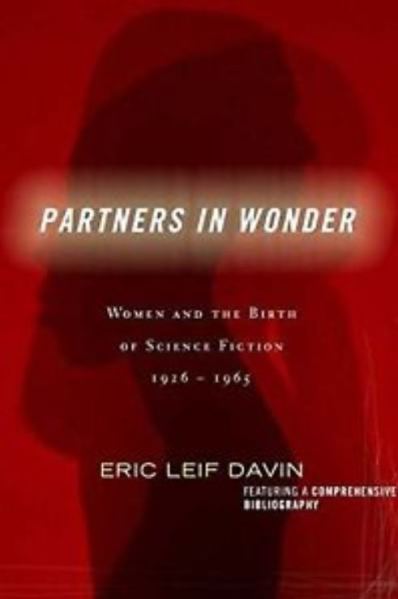
Partners-in-Wonder-Women-and-the-Birth-of-Science-Fiction-1926-1965-by-Eric-Leif-DavinEric Leif Davin in his 2006 book, Partners in Wonder: Women and the Birth of Science Fiction 1926–1965, makes a well-documented case that women were not excluded as writers, editors, artists, in fandom, or as readers, and in most cases were welcomed. Davin carefully examined science fiction magazines from 1926–1965, finding 203 women writers who had published almost a thousand stories. It’s far from equality but showed more women participating than anyone previously thought. He also studied editorials, letters to the editors, book reviews, biographies, fanzines, con programs, histories, looking for clues to how women were accepted. Davin says there were a few men who personally opposed women coming into the genre, but for the most part, they were shouted down by other males. He also found women writers that couldn’t break into writing until they tried science fiction. Overall, Davin was convinced the genre was open to women professionally and as fans, and that women slowly entered the field well before the 1960s, a time many readers felt was the opening decade for women writers.

Decade Women Writers Stories
1920s 6 17
1930s 25 62
1940s 47 209
1950s 154 634

Partners in Wonder is a fascinating history. Unfortunately, it’s a shame it’s so damn expensive: almost $50 for the paperback, and just a few dollars cheaper for the Kindle edition. Evidently, it’s meant for the academic market, so it should be available at most university libraries. I wish that the Kindle edition was priced like a novel because it’s a readable history that corrects many myths and misconceptions about women in the genre. (A significant portion of this book can be read at Google Books.)

Children-of-the-Atom-by-Wilmar-H.-ShirasWhile reading Davin’s history I also read “In Hiding” by Wilmar H. Shiras, which first appeared in the November 1948 issue of Astounding Science-Fiction. John W. Campbell, the conservative editor of Astounding, said this when “In Hiding” was voted 1st Place in the readers poll, “Wilmar H. Shiras sent in her first science fiction story, ‘In Hiding.’ I liked it and bought it at once. Evidently, I was not alone in liking it: it has made an exceptional showing in the Lab here—the sort of showing, in fact, that Bob Heinlein, A. E. van Vogt and Lewis Padgett made with their first yarns. I have reason to believe we’ve found a new front-rank author.” Shiras wrote four more stories in the series to create a fix-up novel, Children of the Atom (1953 Gnome Press). Many older fans fondly remember that novel, even if they didn’t know Shiras was a woman. (I thought Wilmar was the male version of Wilma.) Shiras only wrote a handful of stories after that, and then disappeared. Why?

In Hiding” is about a school psychologist discovering a brilliant boy named Tim who hid behind his B-average grades. Thirteen-year-old Tim eventually reveals in confidence to the psychologist he has several secret identities, even making money publishing stories and essays, as well as completing several college correspondence degrees. Tim hid his intelligence because at three he learned that other people, young and old, resented people smarter than themselves. I wondered while reading this story if Wilmar Shiras was using her story as a metaphor for how women hid their intelligence from men. The second story, “Opening Doors,” features a young girl. She had to hide her intelligence by pretending to be insane.

Partners in Wonder convinced me that women writers were welcomed by the science fiction community. Most women were not interested in science fiction. But back then, most people weren’t interested in science fiction. It was not socially acceptable to read science fiction before Star Trek (1966) and Star Wars (1977). It was a shunned subculture, considered geeky,  nerdy, uncool, and only pursued by social zeroes.

Which brings me back to my original question: What does classic science fiction have to offer young readers today, especially young women? Most bookworms prefer new stories and books. Classic science fiction is no more popular than classic literature with young readers. But classics have always appealed to some readers? Why?

In a popular Facebook group devoted to science fiction, I’ve read several accounts by young women listing their favorite books, and sometimes they are classic science fiction, even titles by authors who get trigger warnings about being sexist or misogynistic. I’ve asked them if they don’t have gender concerns, and some of them have told me not everything is about gender. And it is true, much of classic science fiction is about ideas, ignoring gender, sex, and romance. Modern science fiction stories by men and women writers can deal with gender and readily present female characters, but then gender is a popular subtext to all kinds of fiction today. Is it fair to single out SF’s past when other genres were just as sexist in their past? We’ve all changed, and we will all continue to change.

Astounding-Science-Fiction-March-1950-with-Shiras-getting-the-coverI believe one reason young people read old science fiction is to study those changes, and study how people in the past looked at their future, our present. It’s quite revealing to learn what doesn’t change and what does, and why. Another reason to read classic SF is to search for all those pioneer women writers who were hiding in plain sight. In a recent Book Riot essay, “Women Who Imagined the Future: Science Fiction Anthologies by Women” I listed six new and seven out-of-print books that collected stories by women writing science fiction. I don’t believe any of those anthologists discovered Wilmar H. Shiras, and I wonder just how many of Davin’s 203 women writers are yet to be rediscovered? Reading their stories will tell us how women of wonder imagined us, their future. Have we failed them, or lived up to their hopes?

Listening to all three volumes of The Science Fiction Hall of Fame showed me not all science fiction stories considered classic by science fiction writers in the 1960s are still classic today. I wonder if the SFWA voted today would they pick an entirely different lineup of the best SF stories of 1926–1964, and maybe include far more women writers. “In Hiding” was my favorite story from volume 2B, and I wrote about why at Worlds Without End. I hope it gets included in some future feminist SF anthology, and I hope Children of the Atom gets reprinted.

We should not ignore the past, even if it’s offensive, but study older pop culture to see how we’ve grown. We should continually search the past for the pioneers whose anticipated who we’d become, the one that resonates with our best humanistic beliefs. A great example of this is “The Machine Stops” by E.M. Forster. Not by a woman writer, or even a science fiction writer. But this 1909 story, featuring a woman protagonist who lives a life much like ours, living alone, but participating in a worldwide social network. She is essentially a blogger. Science fiction has never been about predicting the future, but about speculating about the fears we want to avoid, and the dreams we want to create in reality.

I wonder if the members of SFWA held a vote on classic stories in 2018 would any of the stories from the first three volumes of The Science Fiction Hall of Fame be selected? Time changes our view of what’s great about the past. What has fifty years taught us? Surely, we must see different classics today.

What we need are Hindsight Hugo and Nebula awards, where we give awards to stories that have stood the test of time. We could even have 100, 75, 50, 25-year trails, so in 2018 we’d reevaluate stories for 1918, 1943, 1968, 1993. If we had a 200-year trail, we could award a Hugo to Mary Shelley for Frankenstein.

Then every 25 years, the years would be reevaluated and we’d see what stories last, or which are rediscovered.

JWH