An Alternative to Obamacare

In physics scientists seek to solve the mysteries of reality through mathematics, but if a solution involves a complicated convoluted mathematical equation, it’s generally assumed to be wrong.  Often the right solution involves a simple elegant equation.

Healthcare in America is complicated, bureaucratic and expensive.  I’m wondering if there’s a simpler solution to Obamacare.  To be upfront, I’m a liberal and believe all people have a right to quality healthcare.

To simplify the problem to its most elegant equation I’ve wondered if we shouldn’t take a totally different approach to subsidized healthcare.  I think the federal government should just build and run free hospitals and clinics.  Instead of creating a complex reimbursement system, they should just hire doctors and nurses and provide absolutely free healthcare to those who don’t have insurance.

Today, most hospitals ask if you have insurance, and if you don’t, they send you away.  These free hospitals would ask, and if you do, they’ll send you away.

The federal government should build a free HMO type system that works to bring down the cost of healthcare.  It should use every trick in the book to save on costs, while maximizing preventive heath measures.  Employ no remedies that aren’t effective.  Tell all patients that their information will be used for statistical and scientific studies.  This system size should give it clout to get cheaper drugs and equipment.

Much of the cost of healthcare is the bureaucracy to maintain it.  If the government learned to build efficient hospitals and clinics, that hired medical professionals at salaries scaled to reward cost effective productivity, this system could compete with the commercial healthcare systems and help bring down the overall costs of healthcare.

We could keep all existing healthcare systems and just phase in this idea as an experiment.  The new system should not contract with private contractors to do the job.  The new system should aim to be minimalistic as an experiment in efficiency.  The idea could be started by finding locations in the country with extremely high uninsured population and opening a hospital to test its impact.  Be scientific.  Don’t build the second hospital until the lessons are learned from the first.

Innovate with technology.  Instead of having people wait in waiting rooms, use texting or phone messages.  Develop online prescreening questioning.  Push the concept of home medical monitoring.  Create convenience shops for collecting blood, doing x-rays and other simply diagnostic procedures.  Use computers like IBM’s Watson to analyze medical charts and test results, or even prescreen patients.  Develop a universal healthcare record system that allows patients to record health diaries and drug use, along with any daily home monitoring, and their diet and exercise habits.  Test the theory that diet can improve many medical conditions.

This concept should be an experiment in lowering healthcare costs.  Do everything possible so that all money spent goes directly to actual healthcare and as little as possible to administrative costs.  Start small and build on success.

JWH – 9/8/13

The Heart (Disease) of the Matter

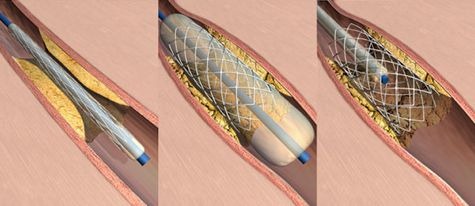
On May 9th, I had a stent put in my coronary artery.  For months I’ve been having out-of-breath episodes, but I thought it was just because I was getting older, and not getting enough exercise.  In the last few weeks it got worse so I went to see my doctor and she sent me for a bunch of tests that ended up with a heart cath and getting a stent.  It’s been an extremely educational month with lots of philosophical implications.

coronary-stent

Our hearts are just pumps, and our veins and arteries just hoses, but when they stop functioning, it feels very metaphysical.  To actually feel them failing is quite revealing about existence and non-existence.  I’m sure the faithful would feel heart disease as a spiritual turning point, a time to communicate with God, and contemplate life after death.  Since I’m an atheist, I contemplated non-existence and thought about physics, chemistry and biology.  The heart and circulatory system is a machine that follows the laws of physics, much like the water pump in your car.  I had a rather fundamental plumbing problem:  a blocked hose.

The first diagnostic test I had was a calcium CT scan.  I got a score of 451, which my doctor didn’t like at all.  My second test was a Thallium treadmill test, which I passed, but the photographs suggested problems.  She sent me to a cardiologist.  It took a couple of weeks to get to see a cardiologist, and that was stressful in itself.  I went to a cardiology center with 32 cardiologists and the earliest appointment I could get was two weeks.  Lots of people with heart problems out there!  Time and again I was told if I needed immediate attention to go to an emergency room.  Fixing hearts is a factory-like affair.  Don’t expect a lot of personal attention.

My advice to the young:  Eat healthy now!  Don’t break your own heart. 

My clogged arteries were my fault.   Yes, the doctors can often fix your heart problems, but if you’ve ever had to deal with an old machine with breaking parts, you know one fix is just temporary before another part will go.  A stent only squishes the plaque up against the artery wall, making more room for blood flow, it’s not a form of healing.  And you don’t get plaque in just one place, it’s all over.  I just had a blockage in two high traffic area, with one bad enough for a stent.

The stent is only part of the solution.  I now have to take a bunch of drugs.  I’ve always been horrified at the sight of elderly people worrying over their prescription medicines.  I’ve always thought being over the hill as living with lots of orange plastic bottles, and now I’m part of that demographic.  Here’s where chemistry and biology comes into this story.  Modern day medicine men are scientists.  Our bodies are biological machines they study.  Millions of chemical reactions go on within our body all the time.  Doctors work by statistical studies, and the numbers tell them that my odds of living longer are improved if I consume certain chemicals.  I can’t argue with them.  I take the drugs.

These are cold equations, indifferent to how we feel philosophical about our health situation.  I hate taking drugs!  I fear drug side effects.  I hate being depended on drugs, even though I’m am quite thankful that science created them.  I’m very lucky to have good health insurance and live in a country where these kinds of problems can routinely be fixed – if they are found in time.  A fellow computer guy died at work from a heart attack recently.

My father died at 49 on his third heart attack.  He also survived a stroke.  He chained smoked Camels, drank a lot of Seagram 7, and his standard chow was steak and potatoes.  I’ve always wondered why he didn’t try to change his lifestyle, and now I know why.  I’ve been overweight for decades.  I didn’t listen to all the warnings.  In the last few years I’ve tried to eat healthier but it’s hard.  Is comes down to this:  Do I do what I like?  Or, do I do what’s good for me?  Even when I was having trouble breathing I’d often be thinking about how I wanted junk food.  I’m pretty sure my father thought “I’d rather die than change.”  Me, I picked change – but at the last minute.  Not very wise.

Since New Year’s I’ve been reading books by Dr. Dean Ornish and Dr. Joel Fuhrman about using diet to reverse heart disease, and watching documentaries on Netflix about reversing chronic disease through proper eating.  Ornish’s book Program for Reversing Heart Disease came out in 1990, and Fuhrman’s Eat to Live came out in 2003.  I even read parts of Eat to Live ten years ago.  But the nightly news programs have been warning about the evils obesity for decades.  Until your heart actually sucker-punches you a good one, it’s hard to take such warnings seriously.  I should have.

My friend Mike asked me if I thought about God in the hospital.  I did, but not in the way he intended.  Feeling the closeness of mortality showed me why people pray.  The gut instinct is to think “Get me out of this!”  You want magic to work.  It doesn’t.  Thinking that an all-powerful being could rescue you is an obvious wish.  I wish there was such a personal savior, but I didn’t find one.  I knew there was a blockage in the artery going to the heart.  I hoped diet would clear it, but my doctor said he doubted it, and I knew I had spent decades building the blockage, so I knew he was probably right.  I knew my only hope was his skill and the scientific knowledge he possessed.  Medicine is collective knowledge that works.  It’s not magic, and it doesn’t always work, but it’s the only real game in town.

We’d like to believe we’re the master of our own fate, or that a magical being cares for us.  But neither positive thinking or spiritual belief affects reality.  My chance of using the power of self-control had long passed.  If I wanted control of my fate, I should have lost weight thirty years ago.  The reality is death comes to us all.  We can extend our lifetimes and improve our health if we work at it, but we have to put in the effort.

I do believe we have the power to affect our health, just watch this video.

I cannot do anything about not starting sooner.  I couldn’t avoid that first stent at the last moment.  I’ve already lost 15 pounds.  Maybe I can avoid the next stent.  I don’t know if a plant based diet can reverse heart disease, but it’s the hypothesis that I’m using  for now.

My final lesson was about dying.  When you think time might be up you learn what you really want:  more time!

Getting close to the end only reinforces the awareness that time comes to an end.

The funny thing was I learned I didn’t want to do big bucket list things, but to have more time for all the little things I do now, and to keep seeing everyone I know now.

JWH –5/12/13
Paradigm Shifts in Medicine–Can Lifestyle Change Cure?

Modern medicine is scientific, evidence based, and very conservative.  Doctors like to treat patients with medicine and procedures that offer the best known odds for success.  No doctor wants to try out something new only to discover it kills their patients.

Patients on the other hand are fearful folk.  They usually know little of their newly diagnosed conditions and they are afraid of suffering or dying.  They are quick to take any cure they are offered.  If they have faith in their doctor and she says  take these pills and have this surgery, they will comply.  However, many people are afraid of pills and surgery.  They hate to suffer, but they are afraid of the cures offered them.  If they hear about alternative medical treatments that are less scary they will chase after them.

I’ve recently discovered I have clogged arteries, but won’t know how bad until next Thursday when I get a heart catheterization.  This is the kind of personal experience where I get to explore very concrete details of reality.  I have choices to make.  If I decide wrong I could die.  If I decide right I get restored health.

The conservative medical solution is to put in a stint and have me take Plavix for a year.

The alternative is a proposed paradigm shift that claims if I eat a radically different diet, I can reverse the buildup in my arteries.  My doctor says there’s not enough research to support this conclusion.  Books by Dr. Ornish and Dr. Fuhrman claim otherwise.  My doctor replies that those doctor’s claims are meant to sell books, and are unproven.

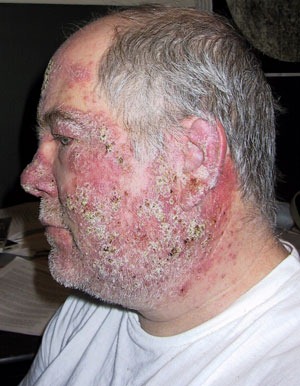
Here’s my problem.  I can’t handle drugs.  My doctors usually pooh-pooh my fear of drugs.  But here’s what topical steroids did to me.

steroid-reaction

And that photo was after I healed considerably.  It took a year for my face to clear up.

I’ve taken other medicines that filled my mouth and throat with sores.  I often take medicine that tears up my stomach.  I’ve taken medicine that gave me sores under my eyelids.  I’ve taken medicines that gave me pains in my intestines.  I’ve taken medicines that distorted my sense of time.  Taking penicillin once sent me to the emergency room.  And statins really did a number on my body.  I have a hard time taking a 81mg “baby aspirin.”  I even had to give up caffeine.

So the idea of getting a stint and then having to take a powerful drug for a year is pretty scary.  If it was just a stint, I’d say great.  When I had a heart arrhythmia they eventually fixed it by zapping something inside my heart.  That was after years of torturing myself with various heart drugs.  They had offered me the ablation when they offered me the drugs, but I believed I could control my heart arrhythmia with beta blockers, diet and exercise.  I did for years, but ultimately I couldn’t.  Letting them zap my heart was great.

Once again, I’m back toying with the idea of curing myself by diet and exercise.  However, this time, there’s more evidence, supported by real doctors, to suggest that the lifestyle change is a possible cure.

I’ve already shifted towards the new diet, but it’s hard.  Even though I’ve been a vegetarian since 1969, I’m a very poor eater who is addicted to junk food.  Food I found comfortable for my stomach was slowly attacking my heart.  Now switching to healthy food sometimes tears up my stomach like some medicines.  Yet, I do feel better, and I believe if I learn to eat the healthy, and especially if I learn to cook it and make it an easy routine, I could switch my lifestyle.

I do have a proven record of changing.  I did go vegetarian at 16.  And in recent years I’ve control my back and leg pain with physical therapy exercises.  I gave up pain pills and anti-inflammatory meds.

One reason I think conservative doctors are against lifestyle cures is they know few people can change their way of living.  My dad died at 49 after three heart attacks and a stroke.  He never gave up his Camels, Seagram 7, or steaks.  Nor did he try to exercise.  I was in my teens at the time, and I wondered why he wouldn’t change.  Now I know how hard it is to change.  Sometimes I think I’ve lived 12 years longer than my dad because I became a vegetarian.  It also helps that I didn’t follow in his footsteps of smoking and drinking.  What choices can I make to live another 12 years, and maybe 12 more after that?

One reason I believe lifestyle change might work is because bad lifestyle habits clogged my arteries in the first place.  The other bit of logic is if I got a stint and continued to eat and live like I did, wouldn’t I just clog up other arteries?  Isn’t clogged arteries a sign that I’m doing something wrong and should stop?

Such logic can be deceptive.  I’m reading Thinking Fast and Slow by Daniel Kahneman who details all the ways our own brain tricks us.  He chronicles a long list of deceptive psychological mechanisms our brains use to convince us that wrong things are right.  So, how do I know if my cardiologist is right, or Dr. Ornish and Dr. Fuhrman?  Decades ago some researchers suggested that stomach ulcers might be caused by the helicobacter pylori bacteria.  Most doctors said that was insane.  But over time there’s been a paradigm shift.

Are we at the beginning of a paradigm shift with chronic diseases and diet?  We know that the western diet has led to the increase in various chronic diseases, so logically it would seem if we gave up that diet, we might reverse course?

It doesn’t matter what I think.  I know my brain tricks me.  What’s important is what science learns.  My doctor is right to be skeptical of any idea that’s not well backed by lots of scientific studies with huge numbers of participants.  Ornish and Fehrman claim the science is there.  I need to find it.

JWH – 5/3/12

If Science Definitively Proved Junk Food Was Worse Than Heroin Would You Give It Up?

Last night I watched Fat, Sick and Nearly Dead, a film about an overweight Australian, Joe Cross, going on a 60 day juice fast while traveling across America meeting fat people proclaiming their love of junk and fast food.  You can watch Fat, Sick and Nearly Dead right now on Hulu online, or its available for streaming at Netflix, iTunes and Amazon Prime.  Fat, Sick and Nearly Dead is about an obese man, with a rare disease, who had to take a lot of prescription drugs just to survive each day, and during the course of the documentary loses over 100 pounds, gets down to normal weight, and is able to give up all his pills, with doctor approval.

And the documentary goes beyond Joe’s success, because we see other people inspired by Joe.

fat-sick-and-nearly-daed

When Joe first arrives in America, he sees Dr. Joel Fuhrman, of Eat to Live fame, who gives him a medical check up and approves his fast. During the course of his travels across the United States, Joe reports his vital statistics back to Dr. Fuhrman. It’s dramatic. Finally we see Joe back in Australia. reborn as a new man. I’m not giving anything away, because you need to watch the film for yourself to believe.

To me, even more moving than Joe’s story, is Phil’s story, a truck driver Joe meets on his journey across America.  They each have the same rare disease.  Joe gives Phil his number and tells him to call when he gets ready to save himself.  Eventually, Phil does call, and his story is the second half of the documentary.  Joe flies back to America to get Phil started.

Phil dramatically transforms himself losing over two hundred pounds and he also gets off all his meds.  Phil’s success is so striking that he inspires other obese people in his community , becoming a juice faster evangelist.  Even Phil’s brother Bear, who refused to try the diet, gives in after he has a heart attack.

Joe interviews dozens of Americans, mostly fat, but all addicted to fast food and junk food.  Many said they never ate any fruits and vegetables at all, and a number of them said they expected to die by the time they were 55.  We see Joe sitting in diners talking to monstrously big men shoveling down giant portions of artery clogging food.  Most are friendly, and are willing to talk to Joe about juice fasting, some even willing to try a taste of juiced veggies and politely say, “Not bad.”  But none volunteer to give up the junk food.  Phil doesn’t even call Joe, until after Joe has finished his fast and gone back to Australia.

Two sick fat men transformed into healthy go-getters don’t make scientific certainty, but it is very compelling evidence.  I’m working up my nerve to try juice fasting and Dr. Fuhrman’s Eat to Live diet afterwards.  Like most of the people in the film, I just can’t imagine giving up all my fun foods, but like Joe and Phil, I’m overweight, not as much as they are, and I’m not feeling that good overall.  The idea of being more energetic and healthy is very appealing.  This documentary is very convincing.

The real question that this documentary asks indirectly:  If junk food is so poisonous, why do people keep eating it?  I’ve been reading a lot of medical news the past couple years and it’s pretty conclusive that a diet based mainly on fruits and vegetables is not only healthy, but cures many of our modern ailments like diabetes and heart disease.  We literally are poisoning ourselves to death.  Junk food probably is more dangerous than heroin or cigarettes.  We make fun of New Yorkers banning Big Gulps, but what if junk food should be banned?

I suppose we should all be free to kill ourselves any way we wanted, but should junk food come with warning labels like smokes?  What if fast food joints made you sign a waiver every time you ordered a meal?   Would you give it up?  How bad do we have to feel, how strung out on junk food do we have to get, before we really believe its poison?

I’ve known health food nuts all my life.  I’m going to feel very foolish if I start eating healthy at 61 and feel rejuvenated and remember I could have started back in the 1960s.  How much life do we have to waste before we learn what we’ve wasted?

[Thanks Annie for nagging me to watch Fat, Sick and Nearly Dead.]

JWH – 3/20/13

Maybe Howard Hughes Wasn’t So Crazy After All!

At the end of his life, Howard Hughes was the butt of numerous jokes over his germaphobia.  Hughes became a recluse who went to extremes to avoid people and germs.  The past three days I’ve been sick with either the flu or food poisoning.  While laying around waiting for my fever to burn off and bowels to producing something solid, I began imagining how I could avoid this fate in the future.  I thought of Howard Hughes, and his techniques for hiding from unseen foes.

If only I was rich and could afford to buy hotels and occupy their top floors.

mask

I seem to catch something once a year, usually a cold.  I do get the flu shots.  And this bout of whatever only knocked me back for three days.  They say the flu vaccine isn’t perfect but it at least could shorten the duration of the flu.  However my symptoms were more like food poisoning.  I’ve read a lot about what folks call “stomach flu” which more often than not is food poisoning.  But that’s just another way for germs to hitch a ride inside you.  Do such details matter?  Well, yes, it does.  Especially when you learn how some of the bad germs got on the bad foods.  Yuck.  Now I’m paranoid about restaurants and grocery stores.

Is the isolation from humanity worth the cost of avoiding occasional sickness?  Probably not, but then I thought of a novel by Isaac Asimov called The Naked Sun.  It’s a murder mystery set on a planet of agoraphobic inhabitants.  These people are so afraid of other people they never leave their homes, and only socialize via view screens.  Even married couples get queasy over getting physical.  Robots do most of the real work.  It’s a world that Howard Hughes would have loved.  I doubt this planet had many communicable diseases.

Since the news in the past 24 hours has been about the CDC’s report on superbugs, living as a recluse isolated from everyone might become the vogue.  Nor does it help that I’ve recently read a number of history books, covering times when simple fevers and chills killed.  If the age of antibiotics is coming to an end, and we have to return to a time when the little guys are winning again, how will our social lives change?  This time around we know the little critters are culprits.  Would Victorians have lived like they did if they were certain of germ theory?

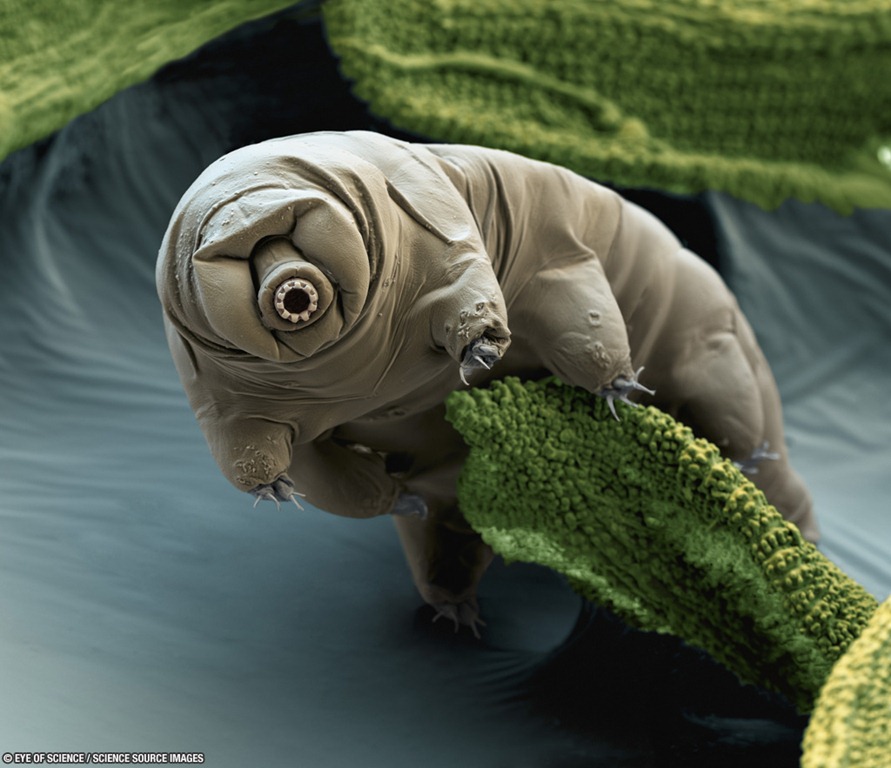
BS8236

[This guy is not a bacteria or virus, but a tardigrade – I couldn’t resist copying the photo from NASA.  Pretty scary, huh?]

I doubt we’ll all become as nutty as Howard Hughes, but then maybe we will.   What if germs get the upper hand again?  What if life becomes more like 1813, when the germs were regularly winning their war on humans.  What extremes will we go through to stay well?

I do wish that sick people would stay at home.  I hate meeting coughing, sneezing, hacking, nose-snotty people at work.  And isn’t it a wonderful feeling to have an obvious germ factory sit behind you at the theater?  One thing we could do at least, is all wear a face mask when we’re sick, like the Japanese.  However, that’s got to become a fashion first, and who is going to become the bellwether in your office?   

I think, instead everyone isolating themselves from the sick, the sick should isolate themselves. 

That old belief that no fever equals not contagious isn’t true.  Germs don’t immediately disappear when you get back to 98.6.

I’m also betting on vaccines.  Logic dictates that fewer hosts to infect, means less infectious.  But that only works if everyone gets their shots.

The way hospitals fight outbreaks of infections is by conscious systematic efforts.  Even if germs become immune to our meds, we can still fight them.  That involves killing them outside our bodies and interrupting their vectors of infections.

I’ve got to admit that maybe I’m being more paranoid about germs because I’m getting older.  When you’re young, getting a cold or the flu is no big deal.  When you’re older, it is.  The other night at 3am, when my fever was high, I thought, one of these days I’m going to get sick and not get well.  That was something to think about.  That’s the sucky thing about dying, you have to leave this wonderful world feeling bad.  I want a pill, that no matter how bad I feel, no matter how much pain or nausea I have, that when I know it’s time to go, I can pop that pill and feel good for the last ten minutes of life.  Is there such a pill?  I don’t need euphoria.  Just pain free and clear thoughts will be plenty, so I can think thankful thoughts about my life.

I can coexist with good germs.  I don’t even mind sharing my body with them.  And I don’t resent the bad germs digesting me in the end.  I just wished they didn’t make me feel so bad doing it.

JWH – 3/7/13