What it Takes Personally to Write My Novel

I woke up early this morning and started fantasizing scenes from the story I hope to make into a novel.  I’ve been writing novels in my head for most of my life, but except for when I’m taking writing courses (with deadlines), I just don’t write fiction.  I should be honest with myself and admit I’m never going to write that novel.

But I can’t.

pugs-00015

All my work life I dreamed of having time to work on my novel, and now that I’m retired and have that time, I don’t.  That should emphatically tell me something too.

But I’m not listening.  I keep thinking I’ll change.  And herein lies the rub.  I need to change!  But can I change?  It will require a metamorphosis not as extreme as Kafka’s Gregor Samsa, but pretty close.  I don’t need to become a six foot bug, but I do need to become something that’s not like me at all.

And the willpower for this change will be greater than even losing the weight to have a healthy body mass index – and I’ve never been able to lose weight either.

I know, I’ve whined about this many times before.  I’m sure I’m boring what few regular readers I have for this blog.  But I keep thinking, this time will be different.  This time I can write something that will convince myself to change.

Do you believe me?  I wouldn’t either.  But should I give up?

After breakfast I sat on my couch and thought about this.  What would it take for me to change?  Without being drastic, without going overboard, I figured all I need to do is alter some of my habits but keep most of them so I won’t freak out.   Currently, I like to write a blog post every morning, and that averages about a 1,000 words.  I’m usually through by noon.

Step one.  From now on I can only write fiction before noon.  I can do anything I want after noon, even write blogs, but before noon, I can only write fiction.  That should give me plenty of time to pursue all my favorite time-wasting activities, so I won’t feel deprived, but enough time to get some novel writing done.

Step two.  I spend most of my reading time reading off the web with Zite, News360 and Flipboard, or reading nonfiction books, or nonfiction from magazines.  All of this nonfiction inspires me to write nonfiction blogs.  I need to read more short stories and novels.  I don’t think I can kick this nonfiction reading habit, but I’ll try to never read nonfiction before 3pm, and spend time after lunch reading and studying fiction.

Step three.  I should only read fiction that I wished I had written.  I need both inspiration and models.  I need to study what I like and figure out how it works.

Step four.  Let’s see if I can stick to these three baby steps until June 1st and see what happens.

p.s.  This means I might be posting fewer blogs.

JWH – 4/26/14

Aren’t Television Shows Just Short Stories for People Who Don’t Want to Read?

Many of my bookworm friends tell me they dislike reading short stories.  They claim short stories are too slight, not enough plot and character, to waste their reading time on.  Okay, I can buy that.  But isn’t a 22 minute episode of The Big Bang Theory just a short story?  Isn’t a 47 minute episode of Nashville, merely a novelette?  I’m currently listening to The Portrait of a Lady by Henry James that runs 24 hours.  Most current TV shows have a season of 24 episodes.  So if they were collected as an audiobook, the entire season of 30 and 60 minute shows would still be shorter than one literary novel.  Doesn’t that sound like an anthology of stories?

In other words, don’t people still really love the short story?  Some people like to read, others to listen, but most love to watch!  Don’t most of us crave two or three stories a day?

playhouse-90-2

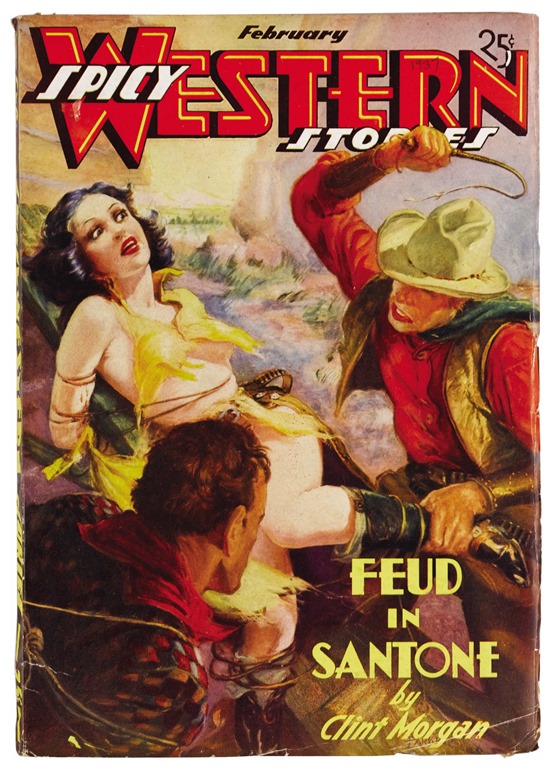
At one time the short story was very popular in America.  There were hundreds of short story only magazines for sale at newsstands, and some writers like F. Scott Fitzgerald were paid big bucks for a single story.  Even when I was growing up in the 1950s and 1960s, most women’s and men’s magazines would contain at least couple short stories. 

Why did people stop reading short stories?  Why did they fall out of favor?  The obvious answer is they haven’t.  Pulp magazines just mutated into television shows.

How long have humans needed a daily diet of fiction?  Aren’t short stories just oral story telling in mass production?

It seems pretty logical to think folks just switched from reading a thirty minute story to watching one.  It’s also easy to assume that the half hour show is the short story, the hour show the novelette, and the movie is the novella.  But if we look deeper, I think there are some other concepts to consider, most notably the continuing character, the series, and the genre subject focus.

spicy-western-stories

At the beginning of the 20th century most magazines, even pulp magazines, were general purpose magazines for readers of all ages of both sexes.  But as the century progressed publishers created specialty subject magazines, some devoted to single characters, that catered to particularly reading tastes, and demographics.

If you read the latest volume of Best American Short Stories 2013, the annual anthology that collects the best of literary short fiction, you don’t see stories involving a continuing character, a series, or can easily be pigeon-holed into a micro-genre.  Now there are plenty of genre magazines devoted to the short story that do regularly publish this type of story, but their content seldom gets picked for the annual Best American Short Story collection.  For the last 50-75 years, publishers seem to be zeroing in on the continuing character novel, so that most mystery novels, and many science fiction and fantasy books, are now about popular characters involved in a series of adventures.  Doesn’t that sound like television?

doc savage

Television supplanted the pulp magazine, and is now inspiring how many writers write their books.  What happened to the slice of life short story, and the great American novel?  Writers prefer to develop a character and setting they stick to, like those in television shows.  It’s easier to sell, and sells better.

The best literary short stories are tiny slices of life, unique views of humanity.  Most novels from the early history of book publishing were always stand-alone tales, just longer slices of life, with highly detailed unique views.  In the early days of television there were many drama shows that featured a different story and cast of characters each week, the most famous at the time was Playhouse 90, but probably the most famous still somewhat seen via streaming, is The Twilight Zone.

The unique slice of life story was quickly supplanted by the continuing character show.  But that had already started in pulp magazines before the age of television.  I’m curious who the first continuing character was?  Sir John Falstaff appeared in three plays by Shakespeare.  And how many stories did Sherlock Holmes appear in?  Huck Finn and Tom Sawyer appeared in several books, and readers wouldn’t let Louisa May Alcott stop writing about Jo March.  If Louisa was alive and writing today, the March sisters would be a television series.

It seems most people love short stories, about favorite characters, in a setting and subject of particular interest to them.  Other people like stories stretched into novels.  While I love continuing character stories on TV, I avoid them in novels.  But I still love short, unique, slice-of-life stories, either written or dramatized.  I wonder why most people don’t.  I’ve been re-watching old episodes of The Twilight Zone, and some of them are very powerful.

Burgess-Meredith-Time-Enough-at-Last 

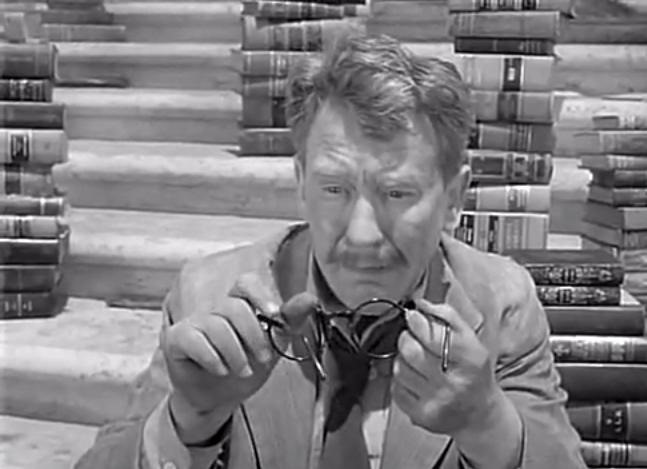
However, my brain quickly forgets them, or most of them.  In over fifty years I’ve never forgotten Henry Bemis, or the pig nose people.  If I had only seen one episode of The Big Bang Theory in my life, would I still remember it?  Maybe it’s memorable because I’ve stuck with it for seven years.  Apparently we crave long term relationships with our fictional friends.

Memorable novels are like short intense love affairs we never forget.  By that standard, it seems most people would rather have long term friendships.

JWH – 1/17/14

Why Were The Two Most Famous Science Fiction Novels of the 20th Century Not Written By Science Fiction Authors?

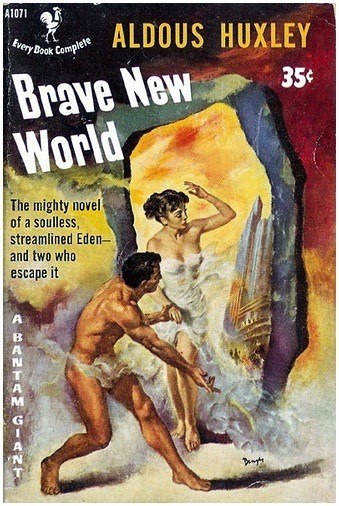
The two most famous science fiction novels of last century were Brave New World by Aldous Huxley and Nineteen Eighty-Four by George Orwell.  Now I didn’t write that to generate a flame war among science fiction fans, or as a slight to genre writers, but because I believe it’s true, especially if you ask people who don’t normally read science fiction.  I’m actually wondering why the two biggest successes using science fiction as a writing technique weren’t penned by writers who specialized in writing science fiction?  Huxley and Orwell were straight ahead literary guys – total amateurs at speculative fiction.  They probably never heard of Hugo Gernsback or John W. Campbell.

And, the two most famous science fiction novels of the 19th century, The Time Machine and The War of the Worlds, were not written by a genre writer either.  H. G. Wells existed before the science fiction genre was established.  Nor were his books written for the genre reader of his day, which did have a lot of science fiction, even though it lacked the label.  In the 21st century, when science fiction is a well established, and a well loved genre, it bizarrely seems that the people who aren’t science fiction writers have the biggest successes with the technique.  Cormac McCarthy and Margaret Atwood are two good recent examples.

What are these non-SF writers doing that SF genre writers aren’t?  I just got through rereading Nineteen Eighty-Four and I thought about this the whole time I was thoroughly enjoying the book.  Nineteen Eighty-Four is so different from the genre science fiction books I normally read that I’m tempted to say it’s not science fiction.  Many literary writers and English profs claim just that, but they would be wrong.  Insanely wrong.  George Orwell might not have written for Campbell’s Astounding, and probably never even read the famous pulp, but Nineteen Eighty-Four would have fit comfortably in that magazine as a serial.  No Astounding reader would have made one objection as to it not being science fiction.  And I’m quite sure readers would have voted it the best story of the issue, even if Heinlein had had a story in that issue too. 

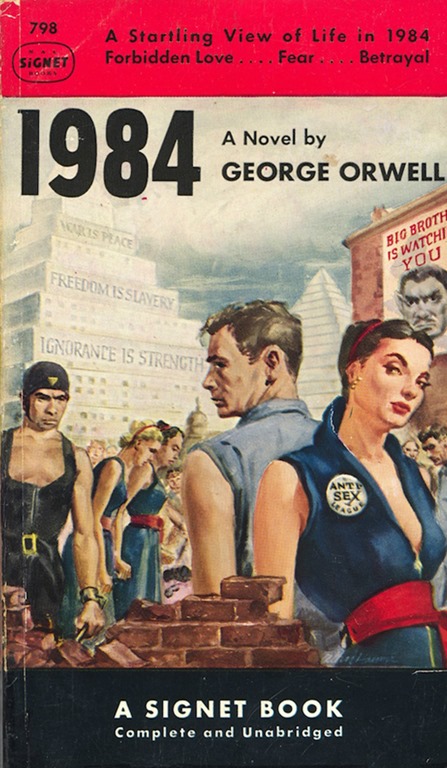
Not long ago I reread Beyond This Horizon by Heinlein and I felt pretty sure that Heinlein wrote it hoping it would be another Brave New World.  Heinlein was savvy enough to know that Huxley’s book sold far more than pulp fiction, and at the time, very little science fiction was even being published in hardback, or that new format, the paperback.  Here’s an early paperback cover for Nineteen Eighty-Four – looks just like a science fiction novel, doesn’t it?

1984_pulp3

While reading Nineteen Eighty-Four this time I was blown-away by Orwell’s world building genius.  World building is an essential feature of SF/F, which books like Dune and The Lord of the Ring illustrate.  J. K. Rowling is a billionaire for her world building, and deservedly so.  Does that mean Cormac McCarthy’s post-apocalyptic world is just better painted than all the other genre stories working with the same idea?  Does The Handmaid’s Tale just out dystopian run of the mill SF writers?  Maybe so, but why?

It’s pretty obvious that more people on Earth can understand what the implications of Big Brother are over philosophical implications of Arrakis.  Too many hundreds of millions of people in the 20th century encountered a totalitarian state first hand, or fought against them in wars, or spent years hearing about them in the news, not to understand the brilliant portrayal of Big Brother and the savage criticism of them with the creation of Newspeak.

The reason why Nineteen Eighty-Four and Brave New World are so well known in the 20th century is they describe so clearly the quintessential fears of the 20th century.  All stories set in the future are about the present, and I guess the better they are about exploring the present, the more copies they will sell, and the better chance they will be part of the curricula in high schools and colleges.

The entire time I spent reading Nineteen Eighty-Four off my Kindle I was amazed by how relevant this book written in 1948 was to 2013.  To write that Orwell was brilliant is an undeserving understatement.  We live in a society that worships freedom, yet we live with constant NSA surveillance, continuous war, Homeland Security, and the sun never sets on our drone airspace.  Our paranoia knows knows no bounds.  In terms of political psychology and insight into the human heart, Orwell runs away with the prize for applying science fiction techniques for writing about the future to say so much about now.  Nor has any science fiction writer ever attempted to explore the linguistic territory of Newspeak, which is the real science that makes Nineteen Eighty-Four great science fiction.

brave-new-world1

I haven’t reread Brave New World recently, but I plan to.  Brave New World was written in 1931 and I just finished a book,  One Summer: American 1927 by Bill Bryson that is the perfect companion to the Huxley book, because it explained the world Huxley was living in when he wrote his classic.  It’s a time when many U.S. governors and mayors belonged to the Ku Klux Klan, where many prominent Americans publically espoused beliefs in eugenics and extreme racism, where many states had passed eugenic laws, and racism was the law of the land.  The twenties was the decade that mass production and mass communication really got massive.  It was a decade where America began the Americanization of the world.  That scared Huxley.  Huxley was afraid of America in 1930, and Orwell was afraid of Russia in 1948.

Brave New World and Nineteen Eighty-Four are true dystopian novels – they are anti utopian, written in response to intellectuals promoting utopian solutions to world problems.  Huxley and Orwell understood the world in which they lived, and wrote books that showed off that knowledge in deeply insightful ways.  They both used science fiction as a literary device to philosophize about ideas if written as nonfiction would have been entertaining to few, and boring to many, but because of those techniques, wowed millions.  Readers still study and reference their work.  And those novels would not have had the impact they did without the science fiction. 

Huxley and Orwell, and other literary writers, use science fiction to bring political, ethical and scientific ideas to the masses.  Why don’t more genre writers attempt this?  Heinlein tried, especially with Stranger in a Strange Land, his most ambitious novel.  So, why did he fail?  I think for two reasons.  First, it included ESP, or PSI powers, that aren’t scientific or believable, and second, it promoted his personal ideas about freedom, especially sexual freedom, nudity, and group sex, which few people beside the hippies of the 1960s shared.

Ray Bradbury hit one out of the park with Fahrenheit 451, but it’s never achieved the popular acclaim that Brave New World or Nineteen Eighty-Four has.  Maybe because it wasn’t nearly as ambitious as those two.  And dare I say it, maybe the target, those people who would give up reading for mindless television, were insulted rather than inspired to canonize literacy?

John Brunner also tried several novels of this type, using science fiction to make political statements, especially Stand on Zanzibar.  Zanzibar was an experimental tour de force that was hard to comprehend or read by the general reader, but dazzled the exceptional reader.  It should have been a contender.  It should be better remembered.  Both Fahrenheit 451  and Stand on Zanzibar are shining examples of what pulp writers can do when they aim high.

I think the genre writer that comes closest in writing ambitious science fiction for the non science fiction reading masses was Orson Scott Card and his book Ender’s Game.  It was obvious targeted at genre readers, but it was widely read outside of the genre.  It was never as sophisticated as Huxley and Orwell’s books, and didn’t deal with broad contemporary issues, but it dealt with xenocide in a way that made it relevant to the average reader who could translate it into commentary on genocide, or commentary on science fiction.  Unfortunately, the recent movie version of the story targets Ender’s Game at the lowest common denominator video game player, whose kill anything that moves instinct means they have deaf ears for the ethical insights.

The 2014 Earth is just as fucked up as the 1948 Earth, even more so, so why aren’t we reading novels that targets our political, social and ethical failures like modern science fictional smart bombs that are literary descendants of Huxley and Orwell?  Is it because serious thinkers no longer believe that science fiction is the proper tool?  Has decades of fun science fiction dulled the edge of sharp science fiction?  Or maybe we don’t have political and social thinkers like Orwell or Huxley anymore, because those writers work for the New York Times or Fox News.  Let’s hope it’s not that times aren’t bad enough yet to be muses for such writers.

JWH – 12/31/13

The Addiction to Fiction

Have you ever wondered about the nature of fiction?

Reality is what we see with our eyes, hear with our ears, feel with our hands, taste with our mouth and smell with our nose.  Fiction is the way we fool our senses into thinking we’re perceiving another reality, one that isn’t there, but one we want to temporarily inhabit.  Fiction is our effort to create virtual realities without computers, using just the power of our minds, or the illusion of television/movie screens.

From amoebas to chimpanzees, we’re probably the only creature on Earth that spend so much time rejecting reality.  Why?  Have we evolve more brain power than we need to live, so we use the excess to imagine?  Or is sitting around in trees eating grubs just not enough to keep our brains busy?  We created civilization after civilization trying to find the right alternative to nature, but we’re never happy.  We always want more.

Or did our addiction to fiction start with “Once upon a time” when were were so very little?

I have met people who lived their lives without fiction, but they were usually graduate students from Asian countries whose ambitions didn’t allow for them to waste time on books, movies, television, comics and video games.  Busy people, especially those who go on to make billions, usually don’t waste time with fiction.  Which makes me wonder if I hadn’t had my lifelong addiction to fiction if I would have been busier, more creative and productive?  Or is it, if we don’t find exciting lives to live, we read about them instead?

Don’t get me wrong, I’m not regretting my addiction.  I am not trying to talk myself into going cold turkey.  I am too far gone to ever contemplate giving up my addiction.

I want to understand the nature of fiction so I can seek more powerful fictional highs. 

Most bookworms are beer drinkers and marijuana tokers, merely satisfied with using one genre their entire life.  I’m not sure any mystery or science fiction novel ever gets beyond the buzz of beer or the high of grass – for the real opium and heroin level highs you have to move on to literary writers.  And that’s so hilarious, because the most addictive fiction, the hardest of the hard stuff, are those books that get the closest to writing about reality.

Television and movies are more like crack highs that become all consuming.  Which makes video games the crystal meth of fiction.

I like to rationalize that fiction represents the greatest form of communication.  In real life we can listen to each other chatter on for minutes at a time at most, but when we read a book, some of those communiqués last for thirty or forty hours.  How many people would listen to their friends if they talked as long as Tolstoy, Proust or even Stephen King?  And is Anna Karenina or War and Peace escapism, or capsule summaries of 19th century life?

JWH – 11/18/13 

Gravity–Riveting Story Set In Space

[Don’t read this review if you haven’t seen Gravity.  But when you have, because you should, come back here and let’s talk.]

Television watchers are experiencing a renaissance in storytelling.  Shows like Breaking Bad, Downton Abbey, Shameless, Friday Night Lights, Dexter, The Newsroom, have taken the art of storytelling to new heights.  By carefully focusing on character, writers have developed new techniques to create highly addictive forms of fiction.  This has revolutionized television.  Character driven storytelling has always been preeminent in novels, and prominent in movies, but television was always seen as a vast wasteland of lowbrow entertainment.  Now I like television better than movies, or even books.

So what is television doing that movies aren’t?  Movies often seem like a vast wasteland of teenage schlock.  CGI unreality, over the top action, Three Stooges type violence, and silly premises that should insult grade school kids.   But most of all, the characters are unbelievable.  Movies aren’t about things I could actually experience.  I don’t relate to their stories.  Maybe kids can love superhero characters because they haven’t yet learned there aren’t any superheroes.

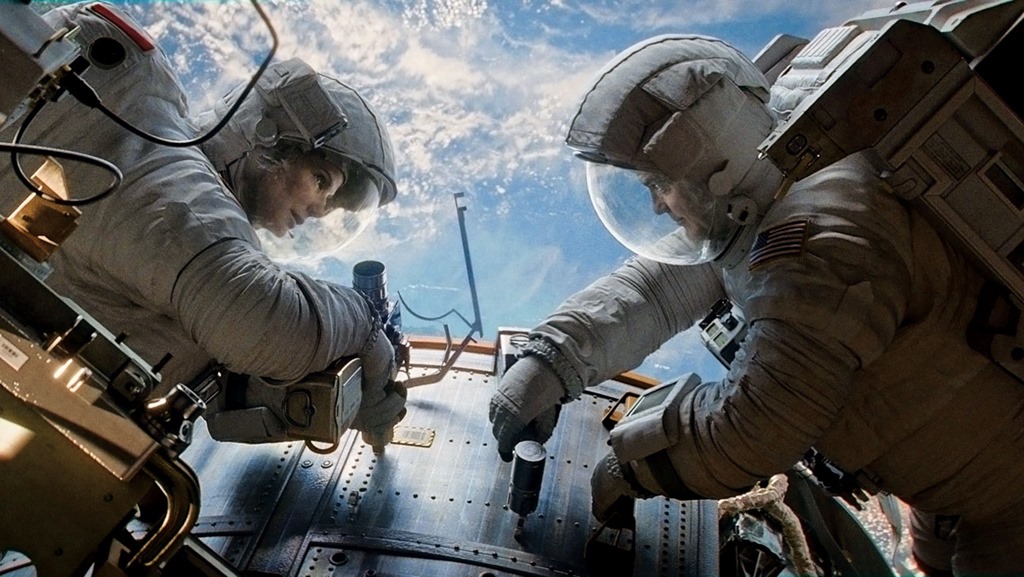
A week ago when watching the final episode of Breaking Bad I wondered what I would have to watch next Sunday.  I remember mentally wishing I could find something that surpassed Breaking Bad in storytelling intensity.  Well, I got my wish, because on Sunday night I saw Gravity, the new film starring Sandra Bullock and George Clooney, and directed by Alfonso Cuarón.   The previews brought me to the theater with great expectations, but I wasn’t prepared by how blown away I would be by the film.  While the credits were rolling I thought how Gravity set a new standard for science fiction movies.

This space story seem real.  The characters felt like they could be real people.  The special effects were wonderful, but not the story.  This movie had the attributes of what make the current great television so much better than the movies.  But what are those attributes? For one thing, there’s not a superhero in sight.  Nobody is saving the world.  Even though the characters are involved with extraordinary situations, they are ordinary people.  Maybe we aren’t rooting for the little guy, but we are resonating with characters that are closer to ourselves.
GRAVITY

Don’t get me wrong, Gravity isn’t literary or deep.  And although Bullock and Clooney give amazing performances, their characters were almost clichés.  How Gravity amazes is through simply gripping storytelling.  It is a story of survival, beating tremendous odds in a harsh environment.  And although Gravity wasn’t very scientific, Gravity felt very realistic.  Gravity was brilliantly science fiction in the same way Gattaca had been years ago, it was about a individual overcoming tremendous adversity in a science related setting.

Although in the last couple of decades we have had more and more female action heroes, I felt while watching Sandra Bullock that Gravity represented a paradigm shift, transforming story hero from male to female.  It didn’t feel like a gimmick that Ryan was a woman.

For the first hundred years of of filmmaking Ryan Stone would have been played by a male actor.  Ripley set the precedent, but when Ryan pulls herself out of the muck and stands, with the camera angle from the ground looking up at her towering figure, it felt that women had finally surpassed men at their own game.    It was much like Vincent beating the genetically enhanced humans when he took off into space at the end of Gattaca.

George Clooney plays the ultra-cocky space jock to a tee.  Matt Kowalski is perfectly at home in a vacuum.  Kowalski has the science down cold.  But more than that, he is mature way beyond his boyish antics.  He is an alpha male passing the baton to a female saying with total confidence, you can do this.  I know most viewers won’t see this film as a feminist statement.  Most girls won’t think twice about Sandra Bullock being the lead character.  But in real life and in movie life, things have changed a lot in my lifetime, but not nearly enough.

The message is clear, women can fly the fighters, drive the tanks, pilot the spacecraft, command the ships, shoot the M-16s, control the telescopes, construct the skyscrapers, etc., but it’s sad that so many women have MTV ambitions, like Miley Cyrus, to wear skimpy outfits and twerk.  Movies and television, the most heavy-duty of pop cultural social programming, sends the message that women can now do anything.  But will they?  And will we accept it?

If you think I’m making a pointless issue, then think about this.  What if our two actors were cast against type.  Would you have liked Sandra Bullock as the veteran space jock, and George Clooney as the mission specialist rookie?  We’re still brainwashed to think George Clooney should have played Matt.

Yes, we have made women into action heroes that can shoot and kill, but action heroes aren’t believable characters, they are cartoon characters.  How often are complex male roles given to female actors?  Would you have believed Sandra Bullock as Matt Kowalski?

Let’s put it another way.  I work at a university and the majority of the engineering and computer science students are male, and the majority of the teacher education and nursing students are female.

The role of Ryan Stone calls for a rookie, and most rookie astronauts are still male.  Picking a female to play Ryan is an intentional decision to make the character to appear more helpless because we’re still conditioned to think of women as helpless, or of needing help.  Gravity shows us we’re wrong. But being helpless is good in this movie, because good storytelling is about getting the audience to identify with the main character, and we’d all be essentially helpless in space.

Picking the name Ryan is an intentional choice too – Sandra Bullock is to stand in for a man.  I think that was a perfect choice by the writers of Gravity.  We’re cheering the stand-in for everyman who also happens to be everywoman.  Not only that, we’re all identifying with her, guys and gals.  While watching the movie I totally identified with Ryan Stone and not Matt Kowalski.  I never had the Right Stuff, but I might could have been Ryan Stone.

Maybe next time when they make a film like Gravity, the veteran space jock will be a woman, and it will be as natural as our need for air, but for now Sandra Bullock was perfect in this role.  Whatever is the magic formula for modern storytelling, Breaking Bad and Gravity have it down as well as Walter White cooks meth.

– – –

By the way, many people are nitpicking Gravity for scientific issues.  That’s cool.  But don’t let it keep you from seeing and enjoying an amazing film.  I was really disappointed with Neil DeGrasse Tyson because his complaints were rather lame compared to the problem of orbital mechanics.  Here are some things to read, but don’t get too hung up about them.  Gravity is a triumph of storytelling.  Like preconceived gender roles, we still want fiction with far more excitement than actual reality.  It’s hard to embrace perfect realism.

I expect gender roles to continue to evolve, and I expect incorporating realism into popular fiction to evolve too.  Breaking Bad was far more realistic than such a show would have been ten years ago, but in ten years, writers who will surpass the talents of the Breaking Bad team, will create a series about cooking meth that is far more realistic.  Gravity could have been just as exciting if it had been 100% scientifically accurate.  And I’m not dinging it for its scientific faults.  I’m just pointing out that we’re moving towards a kind of absolute realism in fiction, and that includes gender roles too.

Fact Checking Gravity

JWH  – 10/11/13