Ken Burns Chronologically – The History of the United States

by James Wallace Harris, Tuesday, September 24, 2019

While watching the new Ken Burns documentary, Country Music, I realized that his documentaries often cover the same time periods but through different subjects. For example, in this new series, I was enamored with how country music was spread in the early days of the radio in the 1920s and 1930s. Burns had also covered radio tangentially in his series Jazz, specifically in the film Empire of the Air, and to a lesser extent in such series as The Dust Bowl, Baseball, The Roosevelts, and other shows. We forget, and I guess for the young, they never imagined, that radio had the society changing impact of the smartphone.

This got me to thinking. Instead of watching Ken Burns films by subject, what if I watched them by time periods? I then made a Google Spreadsheet of all of Ken Burns’ films and sorted the episodes by date. (This is a crude start I hope to refine over time. I “borrowed” the descriptions from Wikipedia and Ken Burn’s websites.)

Let’s say I wanted to focus on the 1920s and get a multi-dimensional view of that decade, I could watch these episodes and films:

  • Empire of the Air
  • Jazz – “The Gift” – episode 2
  • Country Music – “The Rub” – episode 1
  • The Roosevelts – “The Storm” – episode 4
  • Baseball – “4th Inning: A National Heirloom” – episode 4
  • The National Parks – “Going Home” – episode 4
  • Jazz – “Our Language” – episode 3
  • Jazz – “The True Welcome” – episode 4 (first part)
  • The Dust Bowl – “The Great Plow-Up” – episode 1 (second part)

And then supplement those with parts of:

  • Frank Lloyd Wright
  • The Rise and Fall of Jack Johnson
  • The Mayo Clinic
  • Jackie Robinson
  • Thomas Hart Benton

Now I’m thinking about all the everyday history Burns hasn’t covered. I wish he would do documentary series on:

  • Feminism – especially the first and second-wave feminists. He’s got a start with Not For Ourselves Alone about Elizabeth Cady Stanton and Susan B. Anthony. I wish Burns would film the book Other Powers by Barbara Goldsmith which is about the rise of feminism, abolitionists, the temperance movement, and spiritualism in America from 1848-1900. Goldsmith also covered Stanton and Anthony.
  • Science Fiction in America – how did the genre evolve. Nathaniel Hawthorne, Edgar Allan Poe, and Mark Twain wrote science fiction, as did many other Americans in the 19th century. Did cowboys discuss Frankenstein and Jules Verne out on the prairie? Show how science fiction developed in the dime novel, pulp magazines, on the radio, in movie serials, newspaper comic strips,  comic books, hardbacks, paperbacks, movies, television, and video games.
  • Books, Magazines, Newspapers, and Bookstores in America. How did we become a nation of readers?
  • Rock and roll – give it the same treatment as country music and jazz.
  • The History of High Fidelity in America. About how recorded music technologically evolved.
  • The Transcendentalists. Include Eden’s Outcasts by John Matteson.

There’s an unlimited supply of everyday history I’d love to see. That’s what I love most about Ken Burns’ films, they are so visual.

JWH


What’s the Legacy of the 1960s Counterculture Revolution?

by James Wallace Harris, Tuesday, August 20, 2019

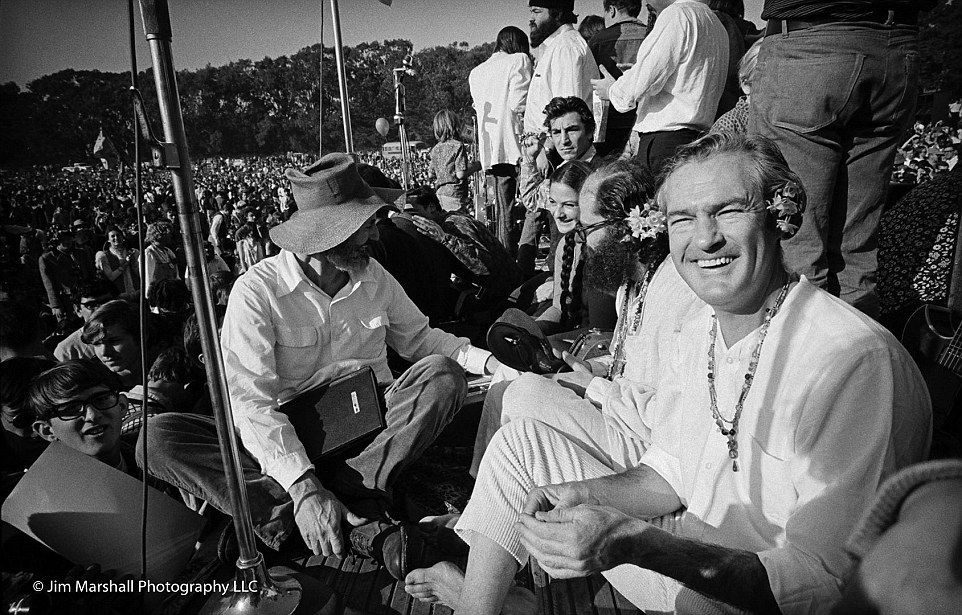
Last night I watched “Summer of Love” on PBS’s American Experience. If you have a login for PBS you can follow the link and watch it. Or try your Roku PBS app. I’ve seen this documentary before, it originally appeared in 2007, but I guess PBS wanted to capitalize on the Woodstock 50th anniversary.

Watching “Summer of Love” was a bummer, a bad trip this time around. I remember back in the 1960s how badly I wanted to run away to San Francisco and become part of the counterculture. I thought a revolution was going on and I was missing out.

Over the years when I’d watch these remembrances of 1960s counterculture it would be with nostalgia. This time around I realized my nostalgia was all gone. At 15 it would have been fun for a while, but you have to watch between-the-scenes. There’s only so much prancing in the park you can do before it gets boring, and you can’t stay high forever. And I’ve lived in communal situations a number of times in the 1970s and it wasn’t all peace and love.

This past week I also watched documentaries on Woodstock and Altamont. Between Monterey Pop Festival on June 16, 1967, and Altamont Speedway Free Festival on December 6, 1969, the 1960s counterculture reached adolescence and then died a tragically early death. However, the dreams of what people wanted from the counterculture still persist. They have haunted us for fifty years.

We kept the long hair, beards, colorful clothes, free love, music, and dope, but we never found peace and harmony, we never freed ourselves from the 9-to-5 grind, we never escaped capitalism. We foolishly believed utopia was possible. We tried very hard to integrate and free ourselves of racism but we’ve never really succeeded. Both women and minorities have made great strides in society but we haven’t reached equality. In the 1960s the counterculture believed we could all transform ourselves. We thought we could clean up the environment, treat all life on Earth with love, and redesign capitalism to be kind and just.

It just didn’t work out. We can see the counterculture legacy in the 2020 candidates for the Democratic Party. We’ve convinced half the world to care about the environment but even the most idealistic of us can’t stop using plastics. Burger King might sell veggie burgers but we still have massive factory farms of animal torture. We know the use of fossil fuels will destroy us yet we still drive cars and electrify our homes with coal.

I think there have always been hippies with dreams of living kinder lives. Jesus and his disciples are one example of keeping a counterculture dream alive for two thousand years. Yesterday I listened to “Episode 38: The new anti-capitalist science fiction” of the podcast Our Opinions Are Correct by Annalee Newitz and Charlie Jane Anders. They just won the Hugo award for Best Fancast. Both are science fiction writers that are leaders in one of the many new countercultures. They assume, they dream a revolution will take place. It’s really the same revolution of 1967. They are full of hope. I still hope, but how much hope do I really have left?

For the 1960s legacy counterculture revolutionaries to succeed capitalism must be transformed. The extreme idealists have always wanted to do away with capitalism but I don’t think that’s possible. Capitalism is too basic to human nature, buying and selling are as natural as eating, even chimpanzees barter and trade. But can capitalism be tamed and civilized? Or will it always be Darwinian, the vicious survival of the fittest?

There is no doubt that society has drastically transformed since the Summer of Love in 1967. That’s proof we can change, but can we change everything about ourselves? If you study history change is constant. We never stay the same. We will never build a society or economic system and then rest with the satisfaction of achieving our goal. Human society is always boiling over with more wants.

The real question we must ask ourselves is: Can we stop being self-destructive? Conservatives want to cling to a dream of a stable past that never existed, while liberals dream of a stable future that’s a fantasy. There’s a type of insanity that grips us all — one where we believe if we all believed the same thing it will solve all our problems. In other words, we’re all revolutionaries. Christians think if everyone was Christian the world would be perfect. Conservatives think if everyone voted their party line we’d solve all our social problems. Counterculture thinkers believe we need to throw out the old for the new. The trouble is there are many counterculture revolutionaries out there now, some quite evil and nasty, and few revolutionaries share the same revolution. It’s chaos, but then isn’t it always chaos?

Read LikeWar: The Weaponization of Social Media by P. W. Singer and Emerson T. Brooking. It chronicles all the revolutions that are going on right now on the internet. The amount of information in this book is staggering. It has 107 pages of notes on sources. I expect the Summer of 2020 to be more heated and dramatic than the Summers of 1967 and 1968 (and if you don’t remember, 1968 was nasty). The hippies of San Francisco were kids at play and even the fiery student activists in Chicago of 1968 were babes in the woods compared to the radical revolutionaries online today.

The real legacy of the 1960s counterculture is more counterculture. It was easy to spot the hippies on Haight-Ashbury, or Yippies of Chicago, or the Black Panthers, or the SDS, or the Weather Underground. The new countercultures are as visible as electricity in the wires of your home. Read LikeWar. Don’t wait 50 years to watch the historical documentary.

What Dylan said back then is still valid, “‘Cause something is happening and you don’t know what it is, Do you, Mr. Jones?”

JWH


Corrupt Biblical Archaeology

by James Wallace Harris, Saturday, August 17, 2019

Yesterday I encountered two reports of Biblical scholarship that depressed the hell out of me. I’m an atheist, but I find historical biblical research fascinating. The first encounter was with the new issue of Harper’s Magazine and its story “Common Ground: The politics of archaeology in Jerusalem” by Rachel Poser, a senior editor for the magazine. (Harper’s offers one free article a month to read behind its paywall, so if you click the link it will count.) Poser’s report is about how right-wing activists have coopted archeology to justify Israel’s reclaiming land in Jeruselum. It’s a long, but fascinating report about right-wing politicians and zealots corrupting the science of archaeology, and their feuds with secular scholars who are seeking an unbiased understanding of the past.

My second encounter was last night on Netflix with the third episode of The Bible’s Buried Secrets entitled “The Real Garden of Eden.” Host Francesca Stavrakopoulou, Professor at the University of Exeter makes a rather strained case that a garden in a palace of ancient Jeruselum was the Garden of Eden, and Adam was their king. Stavrakopoulou uses almost no quotes from Genesis and builds her argument with an hour’s worth of archaeological evidence that seems flimsy at best. I can’t prove she’s wrong, but I’ve heard much better theories.

In both of these encounters with Biblical archaeology, it was obvious that science was being corrupted by shoehorning evidence to fit a cherished hypothesis. Of course, for thousands of years, humans have used ancient scripture as a kind of legal precedent to justify their claims. In both the article and documentary, archaeologists cherry-picked their findings and didn’t offer opposing evidence, either from valid scientists or their counterpart ax-grinders.

If you read the articles returned in this Google search, you’ll see many challenges to Stravrakopoulou’s hypothesis. Everyone has an opinion, everyone has a theory, everyone has their evidence. There are scholars who pursue rigorous biblical scholarship and biblical archaeology, but how do we tell the cranks from honest academics?

Actually, a good place to start is Wikipedia’s entry on The Garden of Eden. At least it summarizes the complexity of the problem. Rachel Poser’s description of Elad’s effort to prove the biblical David existed and the sites Elad’s archaeologists were excavating belong to David’s kingdom are simplistic in their logic and evidence. Stavrakopoulou case for Eden is also simplistic. And if you pay attention to any of the popular documentaries about biblical history and archaeology, they’re often simplistic too. Everyone seems to be trying to deceive other people into accepting their pet theories. Is there any way of not being conned?

First of all, does the Garden of Eden or King David really matter to the modern world? I would distrust anyone who uses any biblical history as validation for any present-day disputes over morality, ethics, land, laws, etc. They are only academic issues. Researching history, and evaluating it with archaeological evidence is a fun intellectual pursuit. But if you use it for any kind of justification of action, then it’s a complete fallacy.

I find it insane that modern minds use ancient thoughts to rationalize how we should live today. We should have laws against using old beliefs for legal precedent. Read Poser’s article. It’s horrifying how we’re using three-thousand-year-old fables to kill each other.

To Christians and Jews, the world began four thousand years ago, and they struggle to overlay that fantasy onto reality. They ignore the fact that more ancient civilizations surrounded the Levant even at the time of Genesis. Even when Adam and Eve were supposed to be walking in the Garden of Eden humans had been around for hundreds of thousands of years, or that David’s Kingdom was an itty-bitty bump in the road between two vast empires.

I don’t know why western civilization is so focused on the tiny Holy Lands of the Bible when Earth is thousands of times bigger. It’s as if we all have a kind of history myopia that fails to see the planet and its history as a whole. I think the main problem is we’re raised with only one set of myths. Would we be more rational if our parents sent us to a different church/temple/synagogue/mosque/shrine every week as a child? Our insanity seems to come from trying to rationalize one viewpoint at the exclusion of all others.

The story of the Garden of Eden in the Book of Genesis is a wonderful work of literature from pre-history. It’s a fascinating challenge to try to understand why it was written, by who, and when. But imagine if three thousands years from now, people revered a copy of Gone with the Wind as their only source of American history.

One solution might be to invite Asian archaeologists to dig up the Holy Lands, ones who had never been exposed to The Bible.

JWH


Retelling Space History in 1080i

by James Wallace Harris, Tuesday, July 9, 2019

50th anniversaries are big deals. This month is the 50th anniversary of Apollo 11’s trip to the Moon. I started following NASA’s space program on May 5, 1961, when my 4th-grade class listened to Alan Shepard’s suborbital flight broadcast over the classroom speaker. I was living Hollywood, Florida, just down the coast from Cape Canaveral. After that, I convinced my parents to let me stay home from school whenever there was a space launch so I could watch it on TV. I watched all the Project Mercury, Gemini, and Apollo launches with Walter Cronkite – except for Apollo 8. That I got to see live.

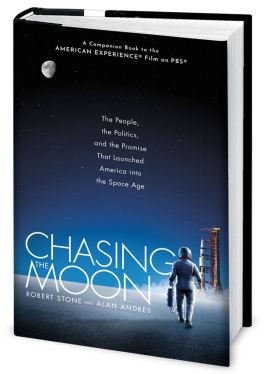
Over the years and decades, I have read countless books and watched countless documentaries about the space program, and the history of rocketry. Last night, PBS began a 3-part series commemorating the first moon landing called Chasing the Moon. I almost didn’t watch it because I figured I had seen and heard everything. But, boy am I glad I did tune in.

PBS has dug up films and facts I hadn’t seen or heard. And it was spectacular seeing these old film clips on my 65″ Sony high definition TV. I know the Apollo 11 event was filmed by dozens of news outlets, so why shouldn’t they have different films to show? But I could swear the take-off of Apollo 11 from the NASA’s cameras seemed new to me. I’m sure they had cameras from every angle possible, so why shouldn’t there be a unique one for the 50th anniversary? However, I wondered if the launch shot was from a later Saturn 5.

Chasing the Book - bookI also wonder if after 50 years I’ve just forgotten most of what I once saw? And maybe seeing the launch sequence in 1080i on a 65″ HDTV made it look different from all the small CRT screens I used over most of those years.

There were also some facts presented that I don’t remember ever knowing before either. For instance, NASA had trained a black astronaut, Ed Dwight Jr. at the request of the JFK White House, but for political reasons was left out of the second cohort of astronauts, the one that included Neil Armstrong. Dwight was sent to be trained by Chuck Yeager as a test pilot, but Yaeger told all the other pilots to give him the cold shoulder.

Another surprising story was the JFK tried twice to get Nikita Khrushchev to make the space race a joint expedition to the Moon. I knew that Kennedy wasn’t interested in space and only promoted the idea to compete with the Russians, but I don’t remember ever reading about him trying to reduce the cost of the mission by co-opting the Russians. Wouldn’t history have been amazingly different if Nikita had agreed?

Chasing the Moon covers all the history I remember, but with slightly different details and film clips. It starts with Werner von Braun and Sputnik. However, the book that goes with the documentary starts back in 1903 and covers earlier rocket pioneers and the influence of science fiction. I wished the documentary had started there too.

Be sure and tune in tonight for part two. Many stations will be repeating part one, so fire up your DVRs. And the PBS streaming app should have it too. Wednesday, NOVA will be about the future of Moon exploration and colonization.

There is another reason to watch these 50th-anniversary celebrations. I’m starting to see the shaping of history. Sure it was great to be a 17-year-old kid watching the first Moon landing, but it’s also been great to see its history unfold over fifty years. I realize so much has been left out of the story. We always get the gung-ho glamor version, but the PBS documentary hints at much more. Besides covering the lost story of a black astronaut, they show clips of African Americans at the launch protesting. They came there on a mule-drawn wagon. The documentary also hints at the dirty pork-barrelling politics behind the scenes or how hard we worked to cover up the fact that our space program originated with Nazis. I didn’t know this, but the Russians eventually sent all their captured Nazis back to Germany. Of course, I knew about von Braun, since I have read biographies about him, but even those I expect were cleaned up.

There are still two parts to go and I wonder if they will try to answer the really big question that we always avoid. If going to the Moon was so great, why didn’t we keep going, why didn’t we go to Mars? We went to the Moon in nine years, but we haven’t gone beyond low Earth’s orbit since 1972. That 50th anniversary is only three years away. Was the final frontier just a cold-war political stunt? Are the plans to return to the Moon just another political keeping up with the Jones?

JWH

Echo in the Canyon – Nostalgia Denied

by James Wallace Harris, Saturday, July 6, 2019

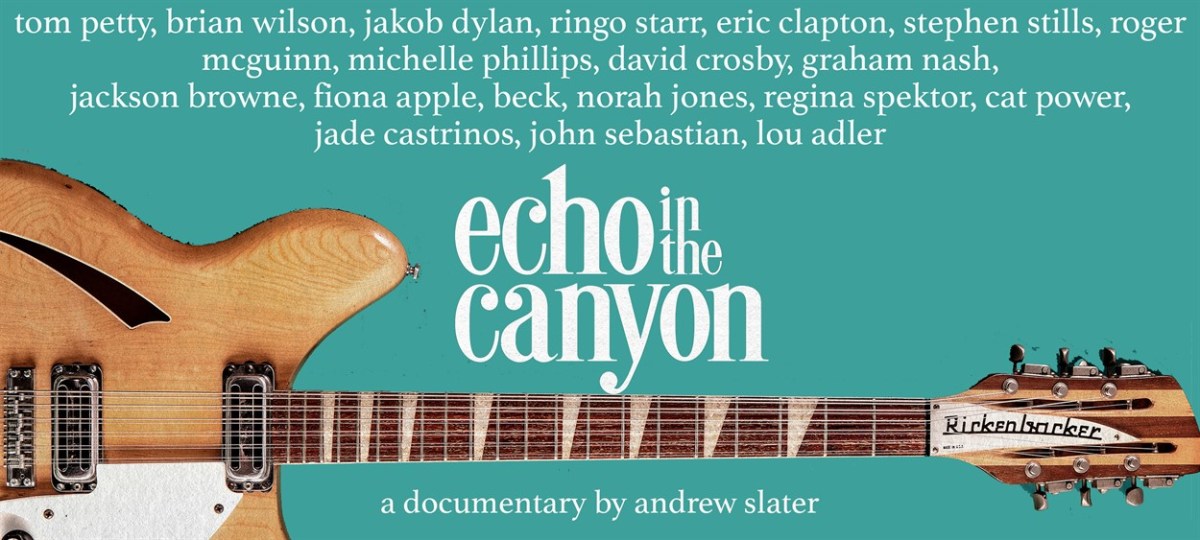
I went to Echo in the Canyon expecting it to be a documentary about 1960s musicians who lived in Laurel Canyon. Instead, I got Jakob Dylan Sings the Oldies. Now there is nothing wrong with that, except I never got that impression when I saw the trailer at the theater last week.

Evidently, Jakob Dylan and friends Beck, Fiona Apple, Cat Powers, Norah Jones, and Regina Spektor decided to put on a concert singing old songs that came from the artists living in Laurel Canyon back when and then turned it into a film project. We see them discussing the songs over a coffee table of old albums, rehearsing the songs in the studio and then playing them live. In between this, we see Jakob Dylan driving around L.A. talking to all the old musicians that are still living and giving us some clips from the past. And for some strange reason, they kept showing clips from a 1969 film called Model Shop. Echo in the Canyon is a bit about the past, but mostly it’s about the present looking back.

Now, this is cool. Younger generations of musicians often love to pay tribute to the past by creating albums of oldies. Bob Dylan recently produced Shadows in the Night where he sings Frank Sinatra songs. Or when Natalie Cole did Unforgettable… with Love, singing her dad’s songs. Or when John Lennon did Rock ‘n’ Roll singing his favorites hits from the 1950s. I actually like covers. I loved when Bruce Springsteen would sing covers at the end of his concerts in the 1970s. And I really enjoy picking a favorite song and listening to all the covers of it on Spotify. I’ve heard about a hundred versions of “All Along the Watchtower” that way.

The trouble is, the covers for Echo in the Canyon are bland and over-produced. The whole time while watching this film I ached to hear the originals. Now that might just be me, the film is highly rated on Rotten Tomatoes and two of my younger friends have seen it and loved it.

I admire cover tunes that take an old song and redo it in a very original way, such as when Jimi Hendrix sang “All Along the Watchtower” or when Lili Haydn redid “Maggot Brains.” Jakob Dyan and friends did fairly straight covers. These are very talented artists but they don’t shine on these old songs. Part of the problem is the original songs were more delicately produced with fewer instruments, and these modern versions have too many musicians playing on them. They have a modern Americana big group sound, which I think distracts from the lyrics.

For the most part, Echo in the Canyon doesn’t cover the biggest hits but picks album cuts instead. I thought that was an excellent approach but it means they also picked songs fewer people liked. I loved all of these songs back in the day. However, many of these songs were originally idiosyncratically produced, giving them highly distinctive performances. Jakob Dylan and friends reproduce them all in the same kind of jangling-guitar stereotype of folk-rock.

I’m not sure how much these younger musicians really liked these old songs. Watching them discuss the tunes while flipping through old LPs didn’t reveal much passion. Their body language didn’t quite show enthusiasm. What I read was, “OMG, school report” as if this project was something they had to endure. They give a respectful history report on our generation but I never believed they play these albums at home.

Echo in the Canyon is worth seeing, but if you’re a Baby Boomer, don’t expect a lot of reliving the past. It’s fun to see a younger generation examine our times, but it’s also kind of disappointing. I often see young people with T-shirts celebrating musicians from the 1960s, but 95% of the time it’s The Beatles. I loved that The Byrds got a lot of recognition in this film. They were my favorite group in the 1960s, and Buffalo Springfield was second. The Beatles only came in third with me.

Echo in the Canyon has even made an official Spotify playlist with songs from the movie and soundtrack mixed in with the originals. It’s a great way to compare the two. I hope you have Spotify and can play it. By the way, everyone should have Spotify, at least the free version. It’s becoming the Adobe Acrobat of playing music on the web.

Actually, I prefer all these artists doing their own original work. That’s where they are exceptional, and one day even younger artists will be covering their tunes. And probably fans growing up with their generation will grumble about those covers too.

JWH