Earth Abides by George R. Stewart

For the last several years I’ve been rereading the science fiction books that I fondly remember as being great when I first read them back in the 1960s and 1970s.  I’m looking for the books that have a lifetime of meaning, that hold up to a second reading after I’ve acquired an additional 30-40 years of wisdom.  It’s easy to find a mind blowing book at 13, it’s much harder at 58.  I’m also trying to find out why science fiction has been important to me my whole life.

Earth Abides is a novel I’d rank right up there in science fictional vision with The Time Machine.  Unfortunately, it is not as famous.  Earth Abides succeeds magnificently at storytelling and philosophy, the two most important ingredients that I’ve come to admire the most.  Science fiction, like mystery and romance novels, are generally seen as an escapist literatures, but great storytelling combined with deep philosophical insight often produces the classics of each genre, like The Maltese Falcon and Pride and Prejudice.
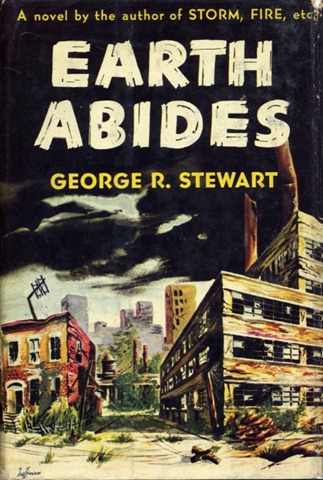
Earth_Abides_1949_small

Most bookworms classify genre books by general topics, so if it’s about a murder, its a mystery, if its about love, its a romance, if its about alien invasions its science fiction.  I think that’s too crude to define the soul of science fiction.  At its core, a classic science fiction novel needs to have a unique philosophical vision about reality that speculates on the future.  Science fiction is never about predicting the future, but exploring all the possible futures. 

All during my life Earth Abides has reminded of the crucial nature of civilization, and I’ve worried more about its death than my own.  Most people are concerned with the birth of civilization, and learning such history is well and good, but knowing that it can be taken away is more important.  Earth Abides belongs to a sub-genre of science fiction that teaches about the end of mankind.

By reexamining the science fiction books I loved in youth, I’ve sought their secrets by seeking out the very best examples.  From this I’ve learned that certain storytelling techniques combined with the right philosophical explorations produce classic science fiction novels.  Science used to be called natural philosophy, and the best science fiction is written by natural philosophers and not scientists. 

George R. Stewart explores dozens of philosophical issues in Earth Abides, first published in 1949.  Many of the questions he asks his readers to ponder didn’t become common ideas until the 1960s or 1970s.   Stewart creates a plot that takes the reader through many scenes where I can’t help but believe they will stop their reading and start fantasizing about what they would do in the same situation.  That’s a great storytelling technique if you can pull it off.  One of the many reasons why The Time Machine is so great is because readers will ponder where they would go in time.  Earth Abides gets its readers to think about being the last person on Earth, and then when a few more people are found, how would they rebuild civilization.

I first read Earth Abides over thirty years ago, and it’s always stuck in my mind, a very memorable story that I’ve told people about again and again.  This month I returned to that novel by listening to a recent audiobook edition that commemorated it’s 60th anniversary.  

Remember the 2007 book The World Without Us or the TV shows Life After People and Aftermath: Population Zero?  These nonfiction works asks what the world would be like if people suddenly disappeared.  Earth Abides used the same concept in a novel back in 1949, but in George R. Stewart’s story, a handful of people do survive to chronicle the decay of civilization.  I’ve always loved stories like Mysterious Island, Robinson Crusoe and Swiss Family Robinson, about people stranded on a deserted island.  Earth Abides is about one man, Isherwood Williams, who survives an airborne plague that kills off almost the entire world population, leaving only a few survivors in each city.

Isherwood, who goes by Ish, wants to rebuild civilization but can’t.  Ish is an intellectual who understands science and fascinatingly observes nature’s quick reclamation of  civilization.  Stewart was very aware of ecology and Earth Abides explores ecology in a way that was visionary for its time.  Ish hopes he can preserve knowledge and pass it on to future generations, but the book is relentlessly realistic.

I’ve read a lot of science fiction books, and I put Earth Abides on the same level as The Time Machine by H. G. Wells.  This is science fiction at its best.  I love science fiction because it shows the possibilities for mankind’s futures.  I love to think we’ll always march onward and upward, but what if AIDS had spread like a cold and killed like the Ebola virus?

Fundamentally we like to believe this universe follows the anthropic principle.  Because of this we don’t think our species will die out – we’re destined for greatness, aren’t we?   But what if that’s an illusion?  What if intelligent life in the universe is routinely snuffed out, even after the universe has gone to great lengths to create it?  George R. Stewart claims Earth abides, that Earth will go on fine without people, but he really should have said the multiverse abides.  We know the Earth has its own lifespan and future death.

If a Tree Falls in a Forest…

“If a tree falls in a forest and no one is around to hear it, does it make a sound?” is an old philosophical Kōan.  Without man, who is here to perceive reality?  Life on Earth existed for billions of years before mankind, and might just as well exist for billions of years without us.  Our egos don’t like that idea for a number of reasons.  Theists want to believe reality was created for mankind by God, and atheists like to think reality is ours to understand.  The novel Earth Abides reminds us the reality is indifferent to us, and we have no special place in it.  We are equal to all things that come and go.  Mankind is one gamma ray burst from non-existence. 

In the book The World Without Us there is no man or woman to chronicle the fate of the Earth.  Stewart was writing fiction, so he needed a narrator to hear the tree fall in the forest, and that is Isherwood Williams.  Through Isherwood Williams we feel what life on Earth without humans feels like.  At first Ish is totally alone, but then he meets a few other survivors.  There are so few people left that we’re not sure if humans won’t die out.  Many readers consider this bleak, although Stewart wants us to think humanity will make it, he’s less sure we will recreate technological civilization.

Are We Our Machines?

By the end of the novel, the descendents of Isherwood Williams are simple hunting and gathering tribe.  They have no idea what technology, literature, medicine, history and all our other forms of knowledge are, and even though they know they live in the ruins of a dead civilization, they can only think of the makers of that collapse society as the mythical Americans.  They even wonder if the Americans made the hills and land.  We live with computers, smart phones, cars, televisions, electricity, and so much other technology that we are defined by it.  Earth Abides shows us what it would be like to exist without machines.  Can you imagine such a life?

The great thing about being stranded on an island stories is we get to imagine ourselves in the same situation and wonder what we’d do.  It’s like the TV show Survivor.  Would you be one of the people who build the huts, finds the food and tends the fire, or would you just mooch off the people who do?  How much do you contribute to civilization now and how much are you a parasite of it?  Are you and I even adding to our own destruction of civilization?

What Kind of Survival Person Are You?

George R. Stewart ends up subtly judging people in Earth Abides which turns out to be one of the more revealing aspects of the novel.  Ish is a thinking man who seldom acts, and he knows it.  He is constantly tortured by picturing what might happen and agonizes that he can’t convince the others to prepare for the future.  Isherwood Williams is probably like most bookworms who will embrace this book.  I know I identify with him completely.

I can’t tell you about the other people without ruining the story, but each represents a type of person you already know – so imagine how your friends would survive and what kind of new civilization they would build.  Heinlein’s Tunnel in the Sky features the same problem.  If you’re a lawyer you’ll want to make rules.  If you are a carpenter, you’ll want to build houses.  I’m a computer programmer – a skill of little use when there’s no electricity.

In Earth Abides, the first post collapse generation lives off of canned, preserved and dried foods, and by scavenging.  If I had been thrown into this world I think I would have started gardening right away, even though I’m not a gardening person now.  Stewart predicts people won’t show initiative and just adapt to the environment, and he might be right.  But I’d like to believe, like Ish, that everyone should take up a skill to preserve, like the characters in Fahrenheit 451, who memorize books to preserve.

How Many People Does It Take To Maintain Civilization?

In Earth Abides, Ish’s little tribe doesn’t have enough people to rebuild electrical generating stations, or even maintaining water pipes.  If half the population dies I imagine we’d have enough people to rebuild civilization.  But if ninety percent perish, it would be hard.  In Earth Abides only about 1 in 100,000 live, so you can imagine no one wants to  work in factories or coal mines.

If you were in this situation and came across a pig and was hungry, could you kill and butcher it?  Would you know how to gather two pigs and start a pig farm?  Would you start a pig farm as long as you could easily find canned hams and spam?  Stewart explores so many fascinating issues in this book that I think reading it would be mesmerizing to most readers.

I’m Not a Back to Nature Person

Whenever I read a book like Earth Abides, or even just watch an episode of Survivor, I realize that I’m not a back-to-nature kind of guy.  Many people believe that living like the Amish might be spiritually better than living in sin city civilization.  Conservatives believe that progress has gone well beyond usefulness.  I on the other hand, think iPads and space telescopes makes us better people.  But the real philosophical question is:  Is the meaning of life more than just surviving?

The documentaries Life After People and Aftermath: Population Zero (both available at Netflix) illustrate beautifully that nature will recycle most signs of civilization within a couple hundred years, but eventually even the pyramids and Hoover damn will disappear.  I love nature shows, and I don’t mind seeing the Earth taken over by nature again, but I wouldn’t want to live there as the last man on Earth.  I find meaning in progress, not survival.

After the Collapse as a Genre

Mary Shelley wrote The Last Man (1826) about a world-wide plague, and Jack London wrote The Scarlet Plague (1912) about another plague, so apocalyptic and post-apocalyptic fiction has been around awhile.  Actually, The Time Machine (1895) deals with this topic too.  We have to assume the black death gave lots of people the idea, but the end of mankind might go well back into prehistory.  Since Stewart, numerous science fiction novels have dealt with the subject, especially during the cold war years.  But out of all the after the collapse stories I’ve read, Earth Abides is my favorite, and probably for three reasons.

First, the storytelling is wonderful.  Second, Stewart provides so many vivid details that I embrace his well thought-out ideas as completely realistic.  And third, and probably the most important, I really identify with Isherwood Williams.  The whole last hour I was so choked up I couldn’t see – good thing I was listening and not reading.

Quite by accident I started reading A Canticle for Leibowitz by Walter M. Miller, Jr., which could be a practical sequel to Earth Abides.  It’s books like these that define science fiction.  Anyone wanting to write a science fiction classic needs to study them.

JWH – 4/21/10
Safari Books Online

Safari Books Online is a subscription library for computer books and tech training videos, with some additional subjects that also appeal to computer book readers, like digital photography.  They offer individual and corporate subscriptions, and many libraries are subscribers too, so you might check your library first.  Safari Books Online has a 10-day free trial if you just want to get the feel of how it works.  Right now they are offering a 5-Slot Bookshelf for $9.99/month, a 10-Slot Bookshelf for $22.99/month and the unlimited Safari Library for $42.99/month.  You only have access to Video Training and the Rough Cuts (prerelease books) titles with the Safari Library.

I got an offer for the 5-Slot Bookshelf when I registered one of my O’Reilly books to get a 45 day free access to the online edition.  For $10, I figured I’d try it out.  It’s a bit confusing how they work things.  With the 5 and 10 Slot Bookshelves, you can only read the full text of 5 or 10 books at a time, and you must keep your picks on your Bookshelf for at least 30 days.  You can preview all the books, but they only show the top third of each page.

At first I was cautious about filling up my 5 slots, but as I spent time actually studying books, time passed quickly and I usually seem to have 1-2 books ready to be checked back in so I could pick new ones.  I felt for $10 a month, this was a real bargain, but I was disappointed I couldn’t see the Video Training and Rough Cut titles.  Then one day Safari sent me an email offering a 20% discount to the Safari Library subscription, or just $34.99 a month for up to 12 months.  I figured, what the hell, and switched.  I can go back any time to my 5-Slot sub if I want to.

What a Bargain!

One reason Safari Books Online appealed to me was because I was having to switch my entire programming paradigm at work form ASP to PHP and I was about to go out and buy a bunch of new computer books for PHP, jQuery, CSS 2, XHTML 1.1, CodeIgniter and Eclipse.  I tend to buy computer books, use them for awhile, let them sit on the shelf for five years, and then put them out on the free book table at work.  Spending $120 a year and having access up to 60 titles seemed like a real deal.  More than likely I’d probably only read 10-20 books for real, but even that is a huge bargain over buying the books.

Reading Online

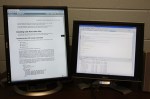
Most people don’t like reading books at their computer screen, but if you’re reading computer programming books while programming, ebooks work out great.  At work I have a dual monitor setup and I even turned my left monitor to portrait mode so I can enlarge a full page of a Safari book so I see the entire page at once with about a 50% magnification.  Of course this now makes me want to have a triple monitor setup, with Safari book on left, Eclipse IDE in the middle, and browsers on the right.  But don’t get me wrong. reading a Safari book on the same screen as the editor isn’t bad either.

Books can be viewed in two modes:  page mode and HTML.  I prefer looking at the page mode because it’s just like the printed book, but cutting and pasting is easier from the HTML mode.  However, reading is less pleasant from the HTML model unless I up the browser magnification and narrow the window so the scan line width is reasonable.  In page mode you have nice big margins and the print and fonts are the same as the printed book.  If the original book was hard to read, then page mode is also hard to read.

Slowly I’m learning that hanging on to page mode is limiting.  Once books are freed from the confines of pages, content can be presented in new ways.  I expect Safari to discover this in the future and invent new ways of looking at the material.  Books like the Head First series beg for this kind of treatment.  I also expect in the future there won’t be a division between printed books and video training titles.  If authors start writing titles specifically for Safari Online Books they could teach in new ways.

Selection

As of today, I can select from 9,902 books and 631 videos.  Plus lots of great computer book publishers are a part of Safari Online Books:

  • O’Reilly (Head First, Missing Manual)
  • Sams (Teach Yourself)
  • Packt Publishing
  • Addison-Wesley Professional
  • New Riders
  • Microsoft Press
  • Peachpit Press
  • Manning Publications
  • Adobe
  • Que
  • Apress
  • Sitepoint
  • Sybex
  • John Wiley & Sons
  • Prentice Hall

Most of the titles relate to computers in some way, but there’s lots of books on photography, and occasionally there’s a book that relates to investment or retiring.  I have 80 books flagged that I want to read.

The Future of Books

For special purposes, like these technical books, a subscription library really makes sense, and I’m perfectly happy to do without the printed edition.  I expect publishers to even do away with the page mode and eventually optimize everything for HTML mode which also works with mobile devices and ebook readers.  I would even buy a subscription to a science and history book library if I owned something like an iPad.  For fiction I prefer audio books or a device like a Kindle.  I wonder if subscription libraries for other subjects will catch on.

I think the future of books is paperless publishing, and Safari Online Books even hints that rental libraries might become an alternative to owning books.  However, rental libraries are rather specialized.  I’d be interested in a science and history rental library if its selection was as broad as the Safari Books Online is for computer books.  Also, I imagine that a rental library for school textbooks would be appealing to kids if durable iPad like devices caught on.

In my quest to give up paper, I’ve stopped getting magazines and newspapers, and now I have an alternative for technical books.  For fiction I prefer audiobooks.  Before now, I would have said art/photography books could never be replaced by ebooks, but while my second monitor was in portrait mode, my desktop background cycled through some art pieces, and they were very impressive magnified that way.  Freed of the confines of the printed page, art might do very well in ebook editions.  I saw a comic book on the iPad which had a mode of showing the page panel by panel and it was obvious the iPad is now the best way to look at a comic.

JWH – 4/25/10

The Edge of Physics by Anil Ananthaswamy

If you are the kind of person who believes that science explores reality and would love to catch up on  the latest explorations in cosmology and subatomic particles, then The Edge of Physics (2010) by Anil Anathaswamy is the book for you.  For years I’ve wanted to know where the big experiments are taking place, and even daydreamed of being a science journalist whose nine-to-five job would be to visit them, well Anil Ananthaswamy has my dream job.

The Edge of Physics is mostly a travel book, and Ananthaswamy even has photos for each of the sites he visited at his web site, collected chapter by chapter.  What Anil has done, and I hope he pardons my familiarity, because typing his last name is work, is weave science history in with his travelogue and then explain what each experimental site he visits hopes to achieve. 

To enjoy this book does not require a deep understanding of experimental physics or math, just a sense of wonder.  I’m praying to Einstein that  PBS’s NOVA makes a multipart series based on this book.  The average person is afraid of science, and Anil really goes a long way to making it accessible.  Anyone who hates that we’re spending billions on theoretical science needs to read this book too, because it makes you wish they’d spend billions more, because in the end, Anil helps us understand the mysteries that are remaining to be discovered.  And I hope I live long enough to hear those results reported too.

On the day I started this book I experienced a bit of serendipity.  The first chapter is about Mount Wilson and why the work it did back in the 1910s and 1920s is so important to the work being done today.  While listening to the book on audio I wished I could see pictures of what Anil was writing about.  Well, my wished was grant that very day, because that night NOVA started a two part Hunting the Edge of Space that featured photos and films from the early days of the Mount Wilson Observatory.  This documentary overlapped wonderfully with The Edge of Physics

Now, if NOVA would only film the other chapters.  Most people are familiar with visual telescopes but how many have heard of a neutrino telescope?  One of the more adventuresome trips Anil makes is to Lake Baikal, to where scientists brave the Siberian winter to build an underwater telescope beneath the ice of a large freshwater lake.  Anil also visits two sites in Antarctica, Chile, Hawaii, South Africa, deep underground in Northern Minnesota, India, and of course Switzerland where the LHC is located.

I read Sky and Telescope every month but I never knew there was so many big telescopes around the world.  I wish someone would build a web site for telescopes like they have for the Top 500 Supercomputer Sites.  And I also wish someone would build the Top 500 largest science research sites.  And reading The Edge of Physics I could imagine a new tourist industry based on visiting scientific research.  I don’t have the money to take up that hobby right now, but I’m inspired to see if I can find web sites for all the places Anil visited in his book:

All this travel is glamorous but the real value of The Edge of Physics is what Anil reports about the status of all these experiments.  He really is trying to show his readers where the edge of physics lies, and what that means.  I can’t summarize that, you need to read the book, but if you haven’t read any science books in a few years, you’ll be surprised by how far science has gotten to explaining all of reality.  We are far from finished, but wow, scientists are hot on the trail of explaining almost everything.  Research in particle physics, dark matter, dark energy, cosmic background radiation, string theory, multiverses, radio astronomy, neutrino astronomy, are converging towards filling in missing puzzle pieces. 

It’s like doing a Sudoku puzzle.  Finding any one number can solve problems in all nine quadrants.  Breakthroughs at any one of these sites Anil visits means more evidence for the other sites.  Everything is interrelated.  I’d love to be able to list all the areas of research covered in this book with hyperlinks and explanations, but I’d have to write a book and Anil Ananthaswamy has already done that for us.  Be sure an visit Anil’s blog for newer reports.

JWH – 4/24/10

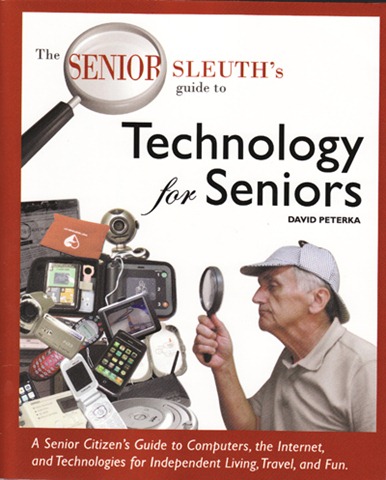
The Senior Sleuth’s Guide to Technology for Seniors by David Peterka

The common joke is if you need help with technology, find a kid.  Well, David Peterka wants us older folk to be our own tech gurus with his book The Senior Sleuth’s Guide to Technology for Seniors.  His book covers a spectrum of technology, not just computers, like robotic lawn mowers, cell phones, iPod, GPSes, remote controls, medical alert necklaces, home entertainment systems, pill reminders, medical monitoring and so on.  Peterka also covers social networking, texting and all the trendy communication systems kids embrace.  You don’t have to be a senior to find this book useful.

senior-sleuth

I help older people with their computers all the time and I know they often get stressed by technology.  Some just flatly refused to embrace it.  And that’s too bad because technology is enabling by its very nature.  This book is a quick overview for people new to gadgets and computers. 

Recently I help a woman about to retire who likes to do oral history interviews.  For years she had been relying on a cassette recorder and just typing up transcripts, but she wanted to be able to give people MP3s and CDs of edited and cleaned up copies of the original recordings.  For awhile she relied on the kindness of tech strangers to help her, but I’m the kind of person who likes to teach people to fish rather than just giving them away.

So I showed this lady how to install, configure and use Audacity.  At first she was hesitant and afraid to try stuff, but since I wasn’t offering to do the job for her, she stuck with it.  I’d come back every week to see how she was doing.  At one point she explained her interviewee cough frequently.  I showed her how to remove the coughs.  She mentioned some of the tapes had hiss.  I told her Audacity had a noise-reduction feature and sent her a link with instructions.  She figured it out.  She’s learned a lot, and now she’s confidently producing digital recordings of her interviews.

I’m in an online book club for audio books and one of the members is a guy who lives in a retirement home but he has become an Internet expert on MP3 players, helping hordes of online users to play digital audio books, collect music and old time radio, converting and watching movies, and other handy tasks for small players.  He’s in several online groups, include some for the blind.  His knowledge and willingness to help other people, many seniors, is a tremendous resource.  He proves that if you gain a skill, pass it on, and he also proves you don’t need to be a youngster to be a tech whiz.

I’m not sure how big the market is for Mr. Peterka’s book because old people are jumping online fast.  Ronni Bennett after she retired started Times Goes By, a web site for elder bloggers that is a wonderful resource for wise people wanting to share their experiences online.  I wished David Peterka had a supporting website to help his readers once they get beyond the book.  This 2009 book is still current, but technology books age fast, so Mr. Peterka will need to keep coming out with new editions until everyone is up to speed.

The advice in David Peterka book for seniors is quite broad and a good place to start if you’re nervous about gadgets and electronic doodads.  He provides a wealth of URLs to find additional knowledge, plus he teaches about how to find your own solutions online.  The print in the book is nice and large, easy to read. 

At work people are amazed I know so much about technology, but often when I meet a new tech problem, I just search on Google.  So this Senior Sleuth volume will be best for complete newbie’s who haven’t learn that trick.  It nicely distills lots of information in one handbook, and is a good volume for older children helping their aging parents.

It’s a Catch-22 situation.  If you had more knowledge, you’d use it to find the same information online.  So David Peterka book is a stepping stone.  Like I said, I wished he had an web site devoted to the same subject because having all of this information in one convenient location would make a very useful web site.

I’m hoping, as I get older there will be more and more technology solutions for aging.  In fact, I hope by the time I get frail there will be robotic caretakers.

JWH – 4/22/10

R. Daneel Olivaw and Lady Constance Chatterley

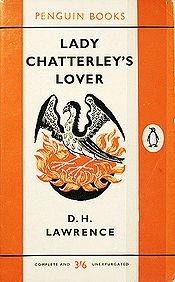
Who are these people?  They are two characters from classic novels, one from the genre of science fiction and the other from English literature.  R. Daneel Olivaw is a humanoid robot from The Caves of Steel by Isaac Asimov, and Lady Constance Chatterley is the heroine of the infamous banned book, Lady Chatterley’s Lover by D. H. Lawrence.  Why in the hell would I link two such very different characters?  I thought you’d never ask.

I wish to answer two questions:

  1. Why isn’t science fiction considered literary?
  2. What will motivate robots?

I won’t hold the best for last.  The reason why Connie Chatterley is a great literary character and why people continue to read Lady Chatterley’s Lover is because we get inside her brain and hear her thoughts.  Lady Chatterley’s Lover foreshadows everything that made the 1960s famous: feminism, sexual revolution, environmentalism, personal freedom, war, class struggle, artistic expression, and the seven deadly words you can’t say on TV, but at the time D. H. Lawrence wrote Lady Chatterley’s Lover, you couldn’t say them in books either.

Isaac Asimov also deals with weighty subjects and imagines a future where people must deal with artificial intelligence, but there is a big difference in how he tells his story.  We don’t know what R. Daneel Olivaw thinks.  We don’t see R. Daneel struggle to understand the people around him.  We don’t know what motivates and drives him forward in his life.

Wouldn’t you love to read The Caves of Steel written by D. H. Lawrence?  Will we have to wait for an AI author to tell that tale?  Or can a human writer think like a machine?  For the science fiction writer who wants to attempt this near impossible task I recommend they use Lady Chatterley’s Lover for their model.  Not that I’m suggesting anything as crude as Lady’s Chatterley’s Android Lover (which I’m afraid many hack writers would attempt).

What makes a great literary novel is a well defined character set in a well defined time and place.  Science fiction is hurt by our vague knowledge of future details, but that doesn’t mean science fiction writers can’t succeed with rich imagined details.  I believe Clifford “Kip” Russell in Robert A. Heinlein’s Have Space Suit-Will Travel is a great example of a well defined character in a well defined place and time in the future.  Few science fiction novels come this close to explaining the motivations of its character, and oddly this was for a book aimed at children and marketed with a silly title to ride on the coattails of a popular TV show of the time.

Robots, androids and AI minds have always been up to now either anthropomorphic characters or intelligent sounding mechanical parrots echoing their programming.  We see their bodies, either metal, artificial flesh or computer housing, and we hear their words, but we don’t know what they feel, see, hear, smell, taste, and especially we don’t know what they think.  Read Lady Chatterley’s Lover and you will be shown what Constance Chatterley senses and what she thinks and we get to understand her emotionally, which few people imagine robots having, but will they?

Most science fiction readers love action and ideas and don’t want their SF novels cluttered up with such slow details.  And that’s cool.  If you love comic book realism.  The reason why Kim Stanley Robinson’s Mars series feels far more realistic than most science fiction novels is because he has more of these slow details for his characters.  He doesn’t come close to the real time realism of D. H. Lawrence, but Robinson’s story is far less sketchy than most SF. 

It doesn’t take much inner landscape description to make an effective science fiction story.  For example “Bridesicle” by Will McIntosh.  (And I beg you to try the wonderful audio version that is so beautifully read by Amy H. Sturgis at StarShipSofa at the 1:00:00 hour mark.  “Bridesicle” is nominated for the Nebula this year.)   “Bridesicle” packs an emotional wallop because of the inner dialog, and because it expresses identifiable emotion, it makes a rather silly idea far more realistic.

If Isaac Asimov could have written The Caves of Steel with R. Daneel and Elijah Baley’s inner thoughts and motivations it would have been a tremendously powerful novel of the future.  It’s still a wonderfully fun read.  And I think it’s sequel, The Naked Sun, is even better because Asimov worked harder to incorporate human emotions into the story.

200px-The-caves-of-steel-doubleday-cover   200px-The-naked-sun-doubleday-cover 175px-Lady_Chatterleys_Lover

JWH – 3/21/10