Nonfiction, Fiction, History, Myth and States of Consciousness

Have you ever read a book about a real life event and then watched a documentary about the same subject?  The contrast of what we can learn from words and what we can learn from film is often jarring and sometimes shocking.  One of my favorite books from youth is The Electric Kool-Aid Acid Test by Tom Wolfe.  Wolfe made literary fame by pioneering “new journalism” which is now called creative nonfictionThe Electric Kool-Aid Acid Test was considered the book that defined the hippies and their philosophy.  I read this book back in 1969, and now 42 years later I got to watch Magic Trip, a documentary that used actual film footage of Ken Kesey and the Merry Pranksters.   Wolfe interviewed all the principal people right after the events, and he also must have seen the original 30 hours of film, and I was blown away by the difference between the two ways of telling the same story.
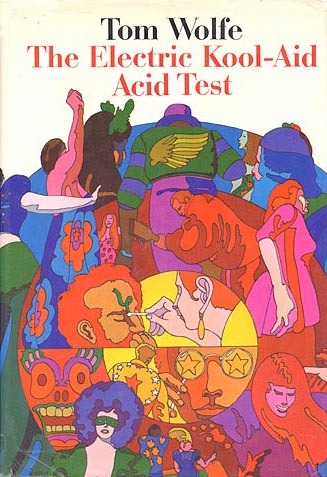
KoolAid_1stUSEd_front

Truth is the actual events.  How close can we ever come to reconstructing the truth?  What is the best evidence for the truth?  When Farmer Ted bets his geeky friends he’ll hook up with Samantha in Sixteen Candles and his friends demand proof, he asks them what kind, and they say in unison, “Video!”   As far as I can imagine, video comes closest to the truth as any evidence we can find – but even then it’s far from perfect.  For centuries, before the advent of video, our knowledge of past events was based on writing.

How much can we know from reading?  Before writing was invented our worldview was limited to the here and now.  We had oral storytellers that conveyed news from distant lands and remembered events and people from the past, but it was very limited.  Most of the time people’s consciousness was focused on the present and the immediate world around them.  Then reading and writing was invented and information about endless places and countless past moments could be recorded so people could conjure up in their minds things that weren’t here and now.  But how effective is reading at reproducing the past?  How accurate can reading describe distant places and events?

All my life I’ve been a bookworm, spending hours a day with my head in a book.  When young I most read fiction, and felt that time away from reality was just escapist entertainment, but over the decades I’ve shifted to reading more nonfiction, and felt I was learning stuff about other places, people and the past.  But am I?

Lately I’ve been reading nonfiction books and then seeking out documentaries and photographs to supplement my reading, and in every case I’m shocked by how different my mental image from reading is from the photograph or film.  Words are black marks on white paper, but they attempt to encode information that comes through our five senses.  How well does any word for a color convey the actual color? Does the word blue suggest any particular shade of blue?  Picture the wall of paint sample colors at your local Home Depot.  Which of the thousands of blues are the one we call blue?  Now think about the other four senses and words for sounds, textures, tastes and smells.  How close do words come to the infinite varieties of sensual details?

Last night I watched a documentary Magic Trip about Ken Kesey and his band of Merry Pranksters taking a bus from the west coast to visit New York City for the 1964 Worlds Fair.  In 1969 when I read “The Electric Kool-Aid Acid Test” by Tom Wolfe it blew me away by how exciting his non-fiction writing was at vividly conveying the story of these freaks on acid traveling across the country.  Over the years I’ve read more books and articles about this event, and the people involved.  To me this cross country trip was the legendary beginning of the hippies.  Of course I was wrong.   Kesey and his Merry Pranksters met the real hippies, like the Grateful Dead, when they got back from the trip and started promoting their acid test events.  Hippies already existed in 1964.

The documentary Magic Trip was created around the actual film the Pranksters took while on the trip and it blew my mind again.  It was absolutely nothing like I pictured from the Tom Wolfe book.  First off, Kesey and the Pranksters didn’t look like hippies – only the women had long hair.  And they all looked ordinary – I wouldn’t have named them the Merry Pranksters – that moniker seems way to grand for them.  The people in the film looked like college kids from the late 1950s or early 1960s acting really silly.  They looked more like early Beach Boys wearing stripe shirts.  Their antics looked as sophisticated as old episodes of The Monkees.

In some of the film clips Kesey and the Pranksters are on heavy doses of acid but you couldn’t tell that from what you see.  Now I know what they were feeling, I can remember that from those days.  Acid is like having a hurricane in your head, but you don’t see that from the outside.  What you see is kids being goofy and stupid.  Now in the book, Tom Wolfe tries to convey the epic psychological discoveries they were making – things going on in their heads, and the Magic Trip film tries to suggest that too, but the physical evidence of visuals from the film and sound recordings from tape just don’t back it up.  Wolfe wrote about what was going on in their heads and we can’t see that in the film.

As evidence of what actually happened I credit the film over Wolfe.  But is that fair or even accurate?  How much can we judge the truth of an event from what we can see and hear?  As counter evidence, how much do people know you from seeing you and hearing you talk?  See what I mean?  Reality and truth is deceptive.

It’s impossible to convey a psychedelic trip in words – and the clips of the trip festivals at the end of the movie don’t even come close.  What you see is kids dancing and acting weird and idiotic – no wonder the silent-majority Americans were freaked out by the freaks.  Back then the claim was drugs took you to a state of higher consciousness, but I always felt like they took me to a state of animal consciousness – a lowering.  Don’t get me wrong, it’s quite revealing, and you can learn a lot about how the mind functions, but all that talk about higher states was bullshit.  But then I value the verbal mind over the nonverbal mind.

In one part of the film, the west coast Merry Pranksters, along with their legendary bus driver Neal Cassidy, famed beat character Dean Moriarty from On the Road, meet up with his fellow real life On the Road beat characters Jack Kerouac and Allen Ginsberg.  Hippies meet their beatnik idols.  But things don’t go off well.  Jack is morose and turned off by the silly pranksters.  Then the west coast psychedelic legends go and meet the east coast prophets of LSD, Timothy Leary and Richard Alpert.  Leary is so turned off by them that he runs away and hides and leaves the future Ram Das to deal with them.  Leary and Alpert were trying to make LSD a serious tool for studying consciousness and these proto-hippies were abusing acid like teenagers breaking into their parents liquor cabinet.  In 1964 most people did not know what to make of these crazy kids.

Seeing Magic Trip was shocking to me.  Imagine how disturbing it would be to discover films of Jesus and his merry band of disciples.  Christianity has created thousands of different interpretations of the history of Jesus – so imagine if we got to see what Jesus really said and did?   Video can be so shocking to see after studying words.  We have no idea what Jesus was like or what he said.  Everything he supposedly said was recreated decades after the fact.  In The Electric Kool-Aid Acid Test, Tom Wolfe is deifying Kesey and his disciples just three years after the real event, and it’s impossible to know how much of the legend is Wolfe and how much is Kesey?

Tom Wolfe had used words to make this trip into an epic adventure, a transcendental experience of the first order.  He totally mythologized the people involved – of course the Pranksters were trying to do that themselves even while they were on the trip.  They gave each other funny names making themselves into characters on an epic adventure traveling in their legendary bus Further.

Now I don’t mean to suggest that these folks weren’t experiencing eye opening philosophical experiences.  They were exploring a new consciousness, breaking out of the rigid 1950s stereotypes, and exploring new experiences that would come to be known as the psychedelic sixties – but it wasn’t new consciousness.   Throughout history groups of people have rediscovered the Dionysian joys of intoxication and ecstasy – and wanting to escape from the rigid confines of society.  Even in the film Kesey says they were too young to be beatniks and too old to be hippies.

I remember my psychedelic days from over forty years ago, and it pretty much followed the Pranksters.  Me and my friends did a lot of silly and stupid things while exploring the doors of perception.  I had been inspired by Timothy Leary and Aldous Huxley and wanted my trips to be scientific experiments into the mind, but they weren’t.  It was just me and my friends doing many of the same exact things the Pranksters did in Magic Trip – going group swimming, driving around in funny vehicles that got a lot of attention, trying to play musical instruments when we had no ability, getting zonked out by nature, admiring the beats, upsetting the older people.  Oh, I learned a lot, but I can safely say to kids today, don’t bother, there are much better ways to explore the mind.  Read Steven Pinker, Edge.org and learn how to achieve Zen mindfulness.

But does any of this answer the question about how much truth we can attain from words?  In terms of acquiring knowledge, words can get you far higher than any amount of acid.  Truth and experience are wordless – ineffable.  I’ve experienced wordless states of consciousness through drugs and a mini-stroke, and that’s not a normal human state of consciousness.  As humans, like it or not, our consciousness minds are based on words and language – and language and words do not mirror reality perfectly.  Or even closely.  I know there are non-verbal conscious states of mind but the past and future don’t exist in those states.  The mere act of trying to recreate the past is a verbal state of consciousness.

The real question is:  How close does the nonverbal reality match our verbal reality?  I don’t think very much at all.  My proof is the fact that we all live in different verbal realities, and even when several people experience the same event they seldom recreate the shared reality with the same words.

A good lesson in understanding this is to study writing creative nonfiction.  I took two MFA writing courses with Kristen Iversen dealing with Creative Nonfiction and I learned quite a lot about “telling the truth” with words.  It’s actually very hard, if not impossible.  One of the first writing lessons she gave our class was to take a memory from when we were young and put it into words.   Even here I’m being misleading.  I can’t remember the exact assignment.  I think she might have told us to pick a memory from when we were twelve, but I’m not sure.  What immediately occurred to me to write about was a memory of me staying with my grandmother who maintained an old apartment building on Biscayne Bay in Miami, and the night she gave me an old fishing tackle box left in one of the apartments, and how I went out alone to fish off the concrete wall by the bay.  The more I thought about the memory the more details I could dredge up, but eventually I realized I couldn’t be sure of any of the exact details.  Memory is so faulty, but they’re also tricky.  It’s easy to create false memories. But my final essay was praised in class for its vivid details.

Was the essay absolutely true?  No, it wasn’t.  But I didn’t feel I was lying either.  I had recreated in words what were vague impressions and memories in my mind.  Mining those memories took work.  There’s a quality of effort in recreating memories that is very enlightening.  But still this brings us no closer to explaining the difference between nonfiction, fiction, history and myth.

I have read many nonfiction books on Wyatt Earp.  I have seen many documentaries on Wyatt Earp.  I have read many fictional stories about Wyatt Earp.  I have seen many fictional movies about Wyatt Earp.  I have heard many people discuss Wyatt Earp as a legendary mythic character of the old west.  Which of these various modes of learning about Wyatt Earp are the best for knowing who the real Wyatt Earp was like?  Is Tombstone the movie better than The Last Gunfight the nonfiction book, or Doc, a fictional novel where Wyatt is a prominent character?  Or the  PBS American Experience episode about Wyatt Earp?

Here’s what I can tell you.  It’s only based on personal feelings.  Wyatt Earp the man who lived in the nonverbal reality of the 19th century is long gone and unknowable.  That kind of reality is unknowable.  That’s why it’s called ineffable.  I can say some fictional versions of Wyatt Earp vary far from the actual reality of the nonfictional evidence, but can we say the Wyatt we create with historical evidence is actually close the to real flesh and blood Wyatt?  Yes, I think we can, even though there are many nonfictional Wyatt Earps to consider.  Every account, whether fiction or nonfiction creates a new edition of Wyatt Earp.  But I actually doubt we really get that close to the real man – some accounts are just more factual than others.

Scientists like to entertain the idea of multiple universes because there should be an infinity of these other universes allowing endless versions of our own world, many just slightly different.  That’s how verbally reconstructed Wyatt Earps exists.  There’s an infinity of them.  Some of them are close to the real world that did exist, but it’s very hard to judge which are the closest.  We can spot the absurd examples easy enough like all the Wyatt Earps in science fiction stories, but we can’t say which historical Wyatt is actually the best.

I think we’re getting closer to understand nonfiction, fiction, history and myth, but we’re not there yet.  I am reminded of a book called The Origins of Consciousness in the Breakdown of the Bicameral Mind by Julian Jaynes.  What Jaynes suggested was for early humanity they had a different state of mind than we do now, which he called the bicameral mind.  I don’t want to go into the details of his theory other than to say that in the past we shifted from one kind of consciousness to another.  I just want to suggest that as our verbal consciousness evolved, we’re now shifting into a third state of consciousness.  This new consciousness is based on sharing facts and building a consensus model of reality based on science.

We’re not that good at it yet – the proof can be seen by how Democrats and Republicans model our political reality.  And even conservatives and liberals seldom share the same ideas.  But in theory we believe through science and other forms of knowledge, that we can model our complex social reality in political and economic laws, as well as nonfiction, history and even fiction.

In other words, many of us believe given enough facts we could prove to each other the validity of a model of reality.  Science has gone the furthest by explaining the physical world.  The consensus is very strong with that – there’s very little fiction or myth in science.  All other areas of knowledge, like politics, ethics, law, economics are a long way from matching reality with any kind of common agreement.  In other words, they are mostly built on fiction and myths.

What I’m saying finally is, we all like to believe that we can separate nonfiction and history from fiction and myths.  Whether that’s true or even possible, is still open for scientific evaluation.  In other words, if you hold any beliefs other than those covered by a narrow range of scientific study, you can’t be sure if there is any difference between nonfiction, fiction, history and myth.

There is no way to know who Ken Kesey or Wyatt Earp was scientifically, but is there any emerging discipline that could use consensus like science, to measure the accuracy between nonfiction and fiction?  Is the scholarship of History rigorous enough to make that claim?  Or will all areas of knowledge outside of science always by undermined by subjectivity?

JWH – 12/30/11
The eBook Price War!

When the Kindle first came out a lot of people bought one thinking the price of books would go down.  Amazon advertised that most ebooks would be $9.99 or less.  When the average price of a hardback was inching closer to the $25-30 range, and mass market paperbacks disappearing in favor of $12.95-14.95 trade paperbacks this seemed like a wonderful gadget for bookworms.

Then Apple entered the ebook business with the iPad and iBooks, and the prices of ebooks shot up.  Now at Amazon I can sometimes get physical books cheaper than the ethereal ebook, and often get physical books within a couple dollars of the ebook price.  Following that, publishers started making plans to reprint their backlist titles, books you used to buy as cheap paperbacks, for $9.99.  It started looking like the book industry was going to put the squeeze on all us folks buying ebook readers figuring it was a fad that was going to lead to a new gold rush in publishing.

Now all of this is cool – I want the book publishing business to thrive.  But for hardcore bookworms, who consume books, rising prices have always been a problem.  We tend to get books from the library or used bookstores to help us keep the cost of our word habit within reason.

But another trend developed concurrently with ebooks – new authors are seeing ebooks as a way to break into publishing by side-stepping the traditional route of finding an agent and selling their book to traditional publishers.  To grab the attention of readers they started selling their ebooks cheaper and cheaper, with prices like $2.99, $1,99, 99 cents and even free.  Then established writers started jumping ship from their regular publishers to go the ebook route thinking that getting 70% of a smaller list price with more sales was better than getting 12% of $25.95 and smaller sales.  Even big name authors started using free ebooks as promotions.  All of this is pushing the average price of an ebook down again.

To further complicate the issue of calculating the average price of an ebook is the fact that there are thousands, if not millions of free ebooks.  It used to be just old classics, but look at this 1966 Doubleday edition of John W. Campbell’s Collected Editorials from Analog.  It’s elegantly reproduced for reading on the web, or available for download in a variety of formats.  Not only does the Internet offer more and more free books, becoming the Library of the World, but old fashion local libraries are offering free ebooks through OverDrive and NetLibrary, and Amazon, being the pesky disruptive influence that it is, is offering to lend ebooks to its Amazon Prime members.

Bookworms are taking notice.  Look at this discussion thread over at Amazon called “What are you willing to pay for an eBook?”  The consensus seems to be people are willing to pay a fair amount $9.99-$14.99 for a new ebook if they are really anxious to read it, but for the average backlist title they want it to be as cheap as possible, and $2.99-4.99 seems to be a commonly mentioned price range. 

Many people leaving comments state they can’t afford to buy many books so they go after the cheap ebooks, or free ones, but a common response is 99 cents is too expensive for a crappy book.  So they want good books priced low.  They expect old books like Agatha Christie and Rex Stout reprints to be cheap – but understands why the latest John Grisham is $12.99.

I discovered this thread while reading Amazon’s 100 Kindle Books for $3.99 or Less ad.  Nothing struck me as something I had to buy, but the prices were very tempting.  But my Kindle is already jammed with more unread books than I can read in years – some I paid top prices for and others I got for low prices or free.  Writer’s Digest gave away 7 books about writing novels during NaNoWriMo – a very kindly gesture I thought.  Over at SFSignal I often find free SF/F novels to add to my collection because authors are using them as promotions.  Getting the new Greg Egan was impressive.  I’ve bought several of his books in hardback.  What I’d like is some of his out-of-print titles reprinted as reasonably priced ebooks.  I assume his publisher is trying to get more SF fans to become Greg Egan fans, and I hope they succeed.

If you look at Amazon’s Best Sellers in the Kindle Store you’ll see a dual column of the two top 100 book lists, on the left, the most popular Kindle ebooks people buy versus on the free ones on right.  You can see 99 cent bestsellers competing with the full price books, such as Stephen King’s new 11/22/63 for $14.99.

Over at Ebook Friendly I found “Kindle Ebooks by Price: More than 100,000 Cost $0.99” which shows a pie chart that says 30.9% of Kindle ebooks sell for $0-0.99.

On my daily reading of Zite on my iPad I constantly read essays and blogs that mention free ebooks.  There are even blogs now that track ebook deals.  If you have a book-a-day reading habit, it’s gotten a whole lot cheaper to be a book addict.

This does not mean I’ve stopped buying paper editions of books.  Eva over at A Striped Armchair reviewed The Long Ships by Frans Bengtsson so positively that I had go out and buy it.  My choice was $9.87 for the Kindle edition or $12.20 for the trade paper, so I picked the paper edition.  I figured the deluxe New York Review Books Classics trade edition was worth $2.43 more.  If the Kindle edition had been $4.99 – $5.99, I would have picked it.

What this means, and I have no idea if I’m typical, is when I spend more than $9.99 I’m more likely to buy the hardback or trade edition.  And to be honest, I’d rather buy a $4-8 used hardback than pay $7.99-8.99 for an ebook.  Some people on the forum also mentioned that.  Like I said, I don’t know if I’m typical, but that means I’m most likely to buy an ebook is it’s $0.00 – $4.99.  So in the war for ebook pricing, I tend to think the average price will be coming down.

The question is, how many people aren’t like me?  How many bookworms would rather buy a slightly cheaper ebook than the hardback?  If there are lots of those people, it will push the average price of an ebook up.  And how many people will pay $9.99 for a reprint of an old book as an ebook edition, books that people used to get as a mass market paperback?

I don’t think ebooks will kill off the book, at least not the hardback, and probably not the trade paper, but I bet it kills off the mass market paperback, which is averaging about $7.99 now.  I don’t like saving paperbacks, and the convenience of an ebook outweighs the value of a mass market paperback.

So in the ebook price war, I would guess ebooks are the new mass market paperback and have to be cheap.  For a certain percentage of readers they will pay $9.99-$14.99 for an ebook edition if it’s a hot new bestseller.  I predict lots of free ebooks, especially older out of copyright books naturally, but also new books being given away for promotional reasons, and older midlist books that help promote authors newer books, like those found at the Baen free library, or books that have little chance of making sales, but would be valuable to rare readers, like the John W. Campbell book I mention above.

There’s no reason why any book should be out of print anymore.  As books lose their popularity they can be priced lower and lower, even priced free.  What will be really fascinating is forgotten classics that start regaining popularity and maybe even reigniting sales.

Guides to Free Kindle Books

JWH – 12/11/12

In Other Worlds by Margaret Atwood – Is Science Fiction Fantasy?

Is it time that we became atheists to the final frontier?

Tom Murphy at Do the Math has written “Why Not Space?”  His math is very convincing, because of the fantastic distances involved, the likelihood of space travel beyond the Moon is tiny.  We haven’t been beyond low Earth orbit since 1972 and there appears to be little public support or political will to do so again.

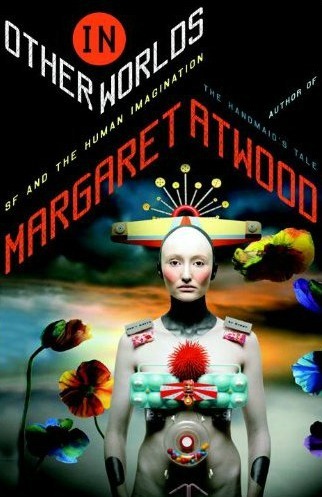
But it’s more than that.  I’ve just read In Other Worlds: SF and the Human Imagination by Margaret Atwood where she psychoanalyzes literature for the origins of science fiction.  The roots of literature are in the earliest of myths, but then so are the roots of science fiction.  The core of the book is about what is science fiction.  Atwood doesn’t like calling her science fiction like novels science fiction because she thinks they are realistic speculation about possible futures.  She feels science fiction is about far out stuff that can’t happen. Now hard core science fiction fans like me want to believe that science fiction is realistic speculation about possible futures, but I have to admit few other people think that way.  The public lumps any weird-ass story into the science fiction genre category and so it’s gotten the reputation for unbelievable stories.

atwood-in-other-worlds

Margaret Atwood says what she written is like what Jules Verne wrote, stuff that could happen, and that it was H. G. Wells who wrote stuff that couldn’t happen, citing The War of the Worlds as her prime example – and that’s what she calls science fiction.  Of course, there are those of us who believe Wells was speculating about something that could have happened, but his conjectures have been disproven by later science.

What Tom Murphy is saying, and there are many like him in recent years, is that human exploration of space might not happen, that it’s not practical, or even wise.  And wouldn’t that make Margaret Atwood right?  That science fiction is about stuff that can’t happen.  Which means science fiction is fantasy.

Normally, I would argue against that, because I still think we have a chance with space exploration.  Of course, I will admit that 99.999% of science fiction about space travel is patently bogus speculation and thus fantasy.  But I still hold out the possibility that humans will go into space, maybe even to the stars.  It just won’t be like what science fiction has predicted so far.

However, reading In Other Worlds made me think differently – not about space travel, but science fiction.  I’ve read other books linking science fiction to its origins in myths before, but this book is making me think about it in new ways.  Atwood links myths, religions, literature, comic books, science fiction and fantasy all into one human tendency to make up far out shit.  As a species one of our defining characteristics is we dream up fantastic concepts to think about, and its when you start studying this tendency as a whole, from the earliest times that we have records of human thought to the latest, that we see it’s all of one cloth.

I’m becoming an atheist to my own religion – science fiction.

Science fiction fans believe their stories are better than myths and fantasies because of the science and technology, and they believe their fantastic stories represented something new and different – and possible!  After reading In Other Worlds, I think we’re all smoking the same opium.  Science fiction, fantasy and comic books fuel the same need in modern minds that myths and religions feed to primitive minds.

What we need is a label that encompasses the whole kit and caboodle, that defines and explains our craving for the fantastic.  Until someone comes up with a definitive term, I’m going to call it all fantasy.  Evidently humans need air, water, food, friendship and fantasy to survive.

Now what’s fascinating about In Other Worlds, and why I encourage you to read it, is Atwood’s writing about her love of science fiction, especially the chapter on Ursula K. LeGuin.  Atwood loves both science fiction as she defines it and speculative fiction.  Her hunger for reading and fantasy as a child, adolescent and adult knows no bounds.  And as an academic, writer and savvy reader she traces our love of the fantastic back as far as history and anthropology can take us.

JWH – 10/23/11

Aegean Dream by Dario Ciriello

Aegean Dream by Dario Ciriello is a memoir about Dario and his wife Linda giving up their good life in California and moving to the Greek island of Skópelos.  I bought this book because I met Dario back in 2002 at the Clarion West writer’s workshop.  We were part of a class of 17 wannabe writers that lived together on a 12th floor dorm near downtown Seattle while taking daily classes with science fiction writers and editors.  Most of the people were young, but Dario, Doug Sharp and I were all 50 that year.  I think we wanted to reinvent ourselves.  Dario, from Italian heritage but born in London emigrated to America in 1989, was one hell of a charming guy.  I envied his energy, grace and social skills.  He was an artist, craftsman and musician that wanted to be a writer too.  I wasn’t surprised when a few years later he and Linda moved to Greece because of his adventurous nature.  Years later, when I heard he wrote a book about living abroad I was anxious to read it.  Dario lives the way I dream of living, and since I’ve always fantasized about living in another country, this book was a riveting read for me.

Dario and Linda had visited Skópelos on vacation after Clarion West and had fallen in love with it.  Dario then convinced Linda they should move there, and they carefully planned, work to save money, got rid of possessions, and most of all, studied Greek to prepare for their trip.  I’m going to try and not tell too much of their story because I don’t want to spoil the book’s narrative as it unfolds, but I will say learning the language before moving to a foreign land paid off a 1000% dividend.

That’s lesson one for me.  I’m terrible with languages.  I got through high school German and college Spanish, but it’s all forgotten.  My friend Janis spends all her extra time learning Spanish to make her many south of the border vacations special, and so I constantly see how hard that is.  I tried studying classical Greek one semester and couldn’t handle the strange alphabet, so I’m very impressed with Dario and Linda learning Greek.  They met other British and Americans living on Skópelos that hadn’t learned Greek and making the effort to learn the language, no matter how comical the results were sometimes, allowed Dario and Linda to break the cultural barrier and make hordes of friends.

Lesson two is don’t move to another country with a shipping container full of belongings.  Dario evidently is a packrat, to Linda’s great distress, and has been moving from country to country his whole life with his family’s belongings on his back, so to say.

Lesson three is harder to explain.  It’s about being a craftsman and artist.   Linda went from being a highly paid office manager to wanting to make natural soap for tourists.  Even when you can make something beautiful that many people admire, it’s really hard to make money at it.  We live in a world where everyone wants everything to be cheap, and it’s hard to make a living making something beautiful that takes a lot of time to make.  There were many stories of small business failures in Aegean Dreams, and that’s a story in itself.

Lessons four and five are about marriage and friendships.  Dario and Linda have a wonderful relationship and it comes out in their story, and they both have the knack for making friends, even in a foreign land with people that don’t speak their language.

I recommend this book because I learned so much from it.  On one hand living in another country is like living here.  You have to shop for food, work, clean house, deal with leaky toilets, buy furniture, go to parties, the list of similarities is long.  What’s different is how people act, think and talk – all the cultural stuff.  And there’s a huge difference between the US and Greece.  And you wouldn’t know that unless you lived there, or the next best thing, read a memoir from someone who had.  Being a tourist in no way lets you learn what its like to live in another country, and this book illustrates that perfectly.

Aegean Dream is a memoir about how hard it is to be a stranger in a strange land and live by different rules.  Dario and Linda make amazing successes integrating into their new life, but had to swim upstream against a vicious current of bureaucracy.  Aegean Dream is great background reading why Greece is doing so bad now on the world’s economic stage.  Dario and Linda came to Greece just at the time when its citizens went wild with credit.  About a third of Greece’s citizens work for the government, and all have become addicted to governmental generosity.  Corruption and a snake pit of regulations make living in Greece impossible for outsiders and cruel for its own folk.

After reading Aegean Dream  I doubt I could live in another country.  The story completely convinced me what a wimp I am.  I could never have done what Dario and Linda did.  It would have crushed me.  And to be completely honest, I wouldn’t even have the balls to try.  I really admire Dario and Linda for their great adventure.  I wish my wife Susan and I could do something like that.  Aegean Dream also showed what it takes for two people to live closely together in their life, and I really admired that too.

The book describes Skópelos as a paradise of natural beauty, and parts of the movie Momma Mia was filmed near where Dario and Linda lived.  So if you got Greek island fever after watching that show, read Aegean Dream.  The movie will make you want to visit, but read the book before you plan to move there.

[You can read about Dario and Linda’s adventures and see photos at the blog he kept. But get the book for the whole story.]

JWH – 10/20/11

The Information: A History, A Theory, a Flood by James Gleick

If you read only one science book in a decade The Information by James Gleick should be it.  I’m not saying The Information is the best science book in a decade, but if you don’t read much about science then this book is for you.  It’s not an easy read, but if you’ve ever felt information overload this book will help explain how and why it’s happening.

We live in accelerating times that are hard to comprehend – the flow of information is like a category 5 hurricane that has stationed itself permanently over our lives, never leaving, and only intensifying.  Unless you have a fairly good education it’s doubtful you’ll truly comprehend this book, but there’s plenty of easy to understand history for the non-scientific minded to get the gist of things. 

Here’s one anecdote from the book that might help.  When the telegraph was first developed, people would go to the telegraph office and write down a message and give it to the operator who would key it in and then act finished.  Many people expected to see their message to go off, leave the building.  They couldn’t comprehend how information could be translated from words on the paper, to electrical pulses of dots and dashes that would travel along a wire.  Now this is hard for us to comprehend because we’re used to the world wide web, but the history of our species is a history of conceptual breakthroughs dealing with information.  But more than that, our minds, bodies and reality are information.

When my mother and father were children growing up in the 1920s all they had for news was the radio and newspaper.  My mother grew up in the country and didn’t even have the radio right away.  My father grew up in Miami, so he was closer to the cutting edge of communication technology.  My mother’s mother, born in 1881, and grew up in rural Mississippi probably didn’t even see a newspaper that often.  Most of the information in her world came from the Bible, static news that has been lingering around for 2,000-3,000 years.

James Gleick hooks us into his story by starting with African talking drums.  European explorers were blown away by African tribes communicating across great distances with drums, and sending rather complex messages.  The best the Europeans could do were things like signal lights, one if by land, two if by sea, or blow the bugle for retreat.  It’s very hard for us modern people to understand how talking drums worked because we no longer live in an oral culture.  Before writing people memorized everything, and often would know very long poems or songs they would memorize and pass on.  Drum talking is based on knowing the sound patterns of common phrases, with the drums having enough pitch to “talk” or mimic the phrase.  Basically the African drummers would imitate a line of a song and the receiver would interpret the phrase.  What would you think to do if you were in a sticky situation and your buddy started humming “Born to Run?” Gleick gives this example:

Make your feet come back the way they went,

Make your legs come back the way they went,

plant your feet and your legs below,

in the village which belongs to us.

If the African drummer created a pattern that sounded like that song, people were supposed to interpret as, “Come back home.”  It’s a rather neat trick when you think about it.

When humans lived like animals, communication and information was very immediate – “I found some grapes.”  But as we organized and formed permanent tribes, information became more complex and abstract, for example, the ten commandments.  Before the invention of writing there was a limit to how much and how far humans could communicate.

Writing was a real breakthrough because it conquered space and time.  A message could be copied and sent in many directions at once, and it would last as long as the medium it was written on.  There was a time when writing was even mistrusted.  Socrates felt writing was bad for memory.  He was right, but writing became a new form of memory. 

Early writing was still limited.  It was very hard to copy, few people could write and few could read.  From Bart Ehrman’s Forged, I learned something very interesting.  In ancient times reading and writing didn’t always go together.  Some people could read but not write, others would write by not read.  It took centuries to get from writing to printing, but after Guttenberg literacy took off, changing our world.  Computers have again transformed how we process information, but it’s a quantum leap over the printing press.  Quantum leaps were also made by the telegraph, the photograph, the radio and the television.

Each time, people protested.  Not long after the invention of the printing press people started complaining there were too many books – meaning there was too much to know.  Here is a quote I love from 1621, given in the final chapter of The Information.  It reminds me how I feel watching the NBC Nightly News every evening.  It is from Robert Burton’s The Anatomy of Melancholy.

I hear new news every day, and those ordinary rumours of war, plagues, fires, inundations, thefts, murders, massacres, meteors, comets, spectrums, prodigies, apparitions, of towns taken, cities besieged in France, Germany, Turkey, Persia, Poland, &c., daily musters and preparations, and such like, which these tempestuous times afford, battles fought, so many men slain, monomachies, shipwrecks, piracies and sea-fights; peace, leagues, stratagems, and fresh alarms. A vast confusion of vows, wishes, actions, edicts, petitions, lawsuits, pleas, laws, proclamations, complaints, grievances are daily brought to our ears. New books every day, pamphlets, corantoes, stories, whole catalogues of volumes of all sorts, new paradoxes, opinions, schisms, heresies, controversies in philosophy, religion, &c. Now come tidings of weddings, maskings, mummeries, entertainments, jubilees, embassies, tilts and tournaments, trophies, triumphs, revels, sports, plays: then again, as in a new shifted scene, treasons, cheating tricks, robberies, enormous villainies in all kinds, funerals, burials, deaths of princes, new discoveries, expeditions, now comical, then tragical matters. Today we hear of new lords and officers created, tomorrow of some great men deposed, and then again of fresh honours conferred; one is let loose, another imprisoned; one purchaseth, another breaketh: he thrives, his neighbour turns bankrupt; now plenty, then again dearth and famine; one runs, another rides, wrangles, laughs, weeps, &c. This I daily hear, and such like, both private and public news, amidst the gallantry and misery of the world; jollity, pride, perplexities and cares, simplicity and villainy; subtlety, knavery, candour and integrity, mutually mixed and offering themselves; I rub on privus privatus; as I have still lived, so I now continue, statu quo prius, left to a solitary life, and mine own domestic discontents: saving that sometimes, ne quid mentiar, as Diogenes went into the city, and Democritus to the haven to see fashions, I did for my recreation now and then walk abroad, look into the world, and could not choose but make some little observation, non tam sagax observator ac simplex recitator, [45] not as they did, to scoff or laugh at all, but with a mixed passion.

I’m jumping to the end of The Information, the part about the information flood because I think that’s how most people will relate to this book.  The subtitle, “a history, a theory, a flood” is very apt.  For about half the book Gleick gives us a history of how we got here, reading, printing, computing – inventing the telegraph, radio, television, internet, etc.  Then he gets into Claude Shannon and information theory, and finally ends up with information overload.  That’s a very quick summary that does the book a disservice, but I’m trying to get you to read it, and if I started talking about Norbert Weiner and Cybernetics I’d probably scare you off.  (By the way, this book is very popular at my online book club, impressing a variety of different reading tastes.)

James Gleick covers a lot of fascinating history, like that of Charles Babbage and Ada Lovelace developing computer programming in the 19th century, or how Morse code was developed, which created a 19th century form of geek culture that inspired developments in cryptography and information compression.  Did you know that Edgar Allan Poe was obsessed with cryptography?  I find the 19th century tremendously exciting, and Gleick spends a lot of time there.  But it’s when Gleick gets to the 20th century that book becomes important.  Most people’s knowledge of 20th century science is of the flashy stuff, like Einstein’s theory of relativity, or NASA’s explorations, or the dazzling development of medical science.  Some people are familiar with Crick and Watson’s DNA and maybe even gene sequencing.  Particle physics is often written about, and all kids love dinosaurs and a bit of astronomy.  But few people want to go deeper.

Gleick gives us a geekier history of 20th century science, almost a secret history not because it was hidden, but because it’s closer to math than pure science like physics, chemistry and biology.  This scares away the average pop science reader, but don’t let it.  Gleick wants to tell us how we are information, our minds, our bodies, our society, our reality, and it requires understanding some mathematical concepts.  But we live in a digital age and really need to understand communication theory.  Why?  That’s harder to explain, but I shall try.

Remember recently when Michele Bachmann was in the news with the story about her comment on the HPV Vaccine and it causing mental retardation?  This incident demonstrated many dimensions of her ignorance which gets into all kinds of ways we communicate and process information.  First off, notice that her information came to her verbally, in person.  She proudly cited it as such.  Before the scientific era, the eye witness was the highest forms of information validation.  We now know that first person accounts are among the least valid, but back then it was considered the gold standard of proof.  If someone claimed to have seen a mermaid then they existed.  Bachmann was merely acting like a 17th century person, or even a 4th century BCE person.  Not only did she collect her facts in a poor manner, she spread them by 21st century technology, and thus became a dangerous carrier of misinformation.  She may have created a meme and become a viral vector spreading unhealthy information.  Here reaction was based on previous memes.

But it is much more complicated than that.  How do we know if the HPV Vaccine is good or bad, or even how it works?  Your answer will place you along a history of information understanding time line.  Sadly, most conservative people are going to place somewhere before the 19th century.  But even well educated liberals might only peg in at early 20th century.  The Information, and many books like it that have come out in the last few years are trying to catch people up with things we’ve learned from the 1940s on.  There is an exciting synergy going on among the sciences and it’s a tragedy that most of the people living in these early 21st century times are missing it.

It’s very hard to explain this.  Physics was the first science to explain reality.  Then chemistry.  For a long time biology and botany was divorced from pure science of physics.  But in our lifetimes biology has reached the level of chemistry and physics, moving ever closer to the quantum level of reality, and this brings us to communication theory and mathematics.  19th century evolution is being validated by 20th century discoveries in genetics and DNA, which are now being connected to the subatomic world, which leads us to the world of probability and pure information.  It’s all coming together.  The Information: a History, a Theory, a Flood by James Gleick is your introduction.

Normally, this is where I would stop my book reviewing process, but this book makes me want to write more.  I listened to The Information, but I now plan to read and study it carefully.  This book is a gold mine of learning, and I’ve just barely taken away some quick riches, but there are billions to be learned in it still.  While researching this review I discovered that several other books essentially covering the same topic, or extensions of it.  I’m going to have to buy and study them too.  Read the reviews and comments on them here:

But returning to The Information, I’d also like to outline the essential topics that Gleick covers.  I want to list them to help people decide about reading the book, and to make a handy-dandy reference for myself to the subjects I want to further study.  Wikipedia covers these topics wonderfully, probably because if you’re geeky enough to work on Wikipedia you are also probably interested in these topics.  Plus Wikipedia was an important topic in The Information.  Furthermore, many of these Wikipedia articles cover the topics in more detail than Gleick does in book.

Other Reviews


JWH – 9/24/11