The Very First Light by John C. Mather

I just finished a revised and updated version The Very First Light by John C. Mather (and John Boslough), subtitled: The True Inside Story of the Scientific Journey Back to the Dawn of the Universe.  This makes a great book to read during the International Year of Astronomy 2009 because it shows how modern day Galileos do their work, not with handmade telescopes, but with space probes that look backwards in time, capable of finding direct evidence to when the universe was just 300,000 years old.  I intentionally selected this book to be a sequel to my reading The First Three Minutes by Steven Weinberg.  Both Mather and Weinberg won Nobel Prizes in Physics.

The Very First Light is the story of Mather’s development as a scientist, from graduate student to becoming the one of the lead scientists on the team that built the Cosmic Background Explorer (COBE) spacecraft, which collected data that validated basic ideas about the Big Bang theory origin of the universe.  The book chronicles how Mather got involved with doing experiments with balloon launched scientific instruments, that led to proposals for NASA to launch better instruments on sounding rockets, to designing a mission for the space shuttle that had to be redesigned after the Challenger disaster, to succeeding with a vast team of scientists that successfully orbited the COBE satellite with a Delta rocket that was so old and rusty that it had patches, but in the end the COBE team made discoveries that astounded the scientific world and proved what space based astronomy laboratories can do for the field of cosmology. 

In the revised edition of this book, Mather adds new information about his work on the James Webb Space Telescope, a telescope that could be more exciting than the Hubble Space Telescope.  (Follow the links to official NASA sites for each telescopes.)

I found The Very First Light to be a richly rewarding read into how scientists work and think.  Mather, along with his co-writer Boslough, make the story into a first person account, that quickly sketches pre-thesis discovery of the cosmic background radiation problem, to how a young scientist gets involved with NASA’s bureacacy and eventually goes to work on one of the most exciting scientific teams of the 20th century.  The book was too short for me, it could have been three times as long, and still I would have hungered for more details.

I’ve always wondered how those densely packed satellite probes are designed and built, and this book only roughly describes the process.  The book covers the three sensors of the COBE probe with NOVA science show level of details, but I ended up wanting a 13 part Ken Burns miniseries, the topic was so fascinating.   NASA does offer Legacy Archive for Microwave Background Data Analysis that has great detailed information on the COBE mission, as well as related probes that’s covered in The Very First Light for those people who want to know more.

When researching this review on the web, I noticed a lack of reviews for this book.  It first came out in the early days of the web, and the version I read is a revised edition published 9/29/08.  This book deserves more attention.  George Smoot, Mather’s co-winner of the Pulitzer, wrote his account of the COBE story in Wrinkles in Time, which appears to be out of print, but readily available used on Amazon and ABE.

JWH – 8/2/9

How to Introduce Physics to Your Friends?

My friends know I’m a bookworm and often greet me with, “What are you reading?”  This past week I’ve been causally replying, “A book on physics.”   To which all my friends give me a strange look that asks, “Why the f#@* would you want to do that?”  Last night, when Janis asked, and gave me the same facial response, I felt compelled to try and explain myself, but I came up short.  How do you quickly sum up the beauty of physics in a few sentences?

Later, while driving home, I wondered if there were any books to give my friends that would introduce them to physics.  Is there any physics book that the average person would be willing to try?  I flipped through some popular titles and textbooks on my bookshelves and immediately knew they wouldn’t do.  I went to the bookstore and looked at intro books like Physics for Dummies, Physics Demystified and Head First Physics.  The answer was still a big “No Way!”

Is there a way to introduce physics in a short blog essay?  Physics is a very big subject, beginning with the smallest objects in reality and ranging up to the very largest.  This made me think of the videos Powers of Ten by Charles and Ray Eames and Cosmic Voyage, the Imax movie narrated by Morgan Freeman.  If my friends could watch those videos on a big screen television and study them I think it would be a fantastic start.  They are easy to understand but have a huge sense of wonder impact.  However, I’m not sure if the crude versions found on the Internet will be that inspiring.  I did find a DVD copy Cosmic Voyage at Amazon for $8.99.

Thinking about these impressive films got me to wondering if it might be possible to introduce physics by showing DVDs that illustrate the most exciting aspects of physics.  Are any physics documentaries good enough that if I lent them to my friends they’d come back and ask if I had any more great DVDs like that one?  I’ll order Cosmic Voyage and give it a try.

How Big is the Universe?

I do believe understanding the Powers of Ten is a key starting place.  I have the original Powers of Ten book by Charles and Ray Eames and studying it really helps to grasp the scope of the world of physics.  It’s very important to teach people the size of the universe, from the very smallest to the largest and get a feel for scientific notation.  Recently The National Geographic Channel showed the documentary, “Journey to the Edge of the Universe.”  This beautiful film uses state of the art computer animation to survey the macroverse from Earth to the edge of the Universe.

The value of the visuals is diminished by not knowing the numbers behind glorious images, so that’s why I think a good understanding of the Powers of Ten video should come first.

Time

Physicists now think in terms of trillions of years.  Right now, I can’t think of any documentaries to teach about time.  I love all those analogies about the history of the universe and life on Earth, comparing time since the Big Bang to one year, and then explaining that human civilization is just the last couple of seconds of that year.  I need to track down a great documentary on time.

Motion

Classical physics is about motion.  Knowing about distance and time prepares us for studying movement.  Again I can’t think of any standout documentaries.  DVD courses like “The Great Ideas of Classical Physics” from The Teaching Company come to mind, but I don’t think I’ll get my friends to sit through its 24 lectures.

If only the series The Mechanical Universe were easily available.  If you follow the link you can register and watch small Windows Media coded versions online for free, but it costs $450 for a set of 52 thirty minute episodes on 12 DVDs.  Again, not something my friends are likely to pursue.  The great thing about The Mechanical Universe, the 1985 PBS television series, is its an introductory course to physics from California Institute of Technology.  What made the show really stand out was the mathematical animation by Jim Blinn – if only all math courses included such animation.  It’s sad that the tiny free Internet versions also have tiny impact.

Electromagnetism

You’d think I wouldn’t have to promote the teaching of electromagnetism because our society depends so much this technology that was first discovered in the 18th and 19th century and turned into tech magic in the 20th.  But how many people know that magnets are used to generate electricity?  Or that electricity can be used to turn a piece of iron into a magnet?  I think when Arthur C. Clarke said his famous phrase, “Any sufficiently advanced technology is indistinguishable from magic,” he was referring to far future technology, but for the average person, all modern technology is magical.  Does the public even understand the relationship between quantum physics and televisions?

Weak and Strong Forces

Exploring the world of the very tiny means understanding the building blocks of nature.  It also brings us closer to understanding how something came out of nothing.  And isn’t it strange that the only science that fundamentalist terrorists pursue is the one that leads to atomic bombs?  Again, I can’t think of a good film to illustrate this area of physics, although quantum physics is often covered in documentaries.  I’m hoping the Large Hadron Collider (LHC) will generate tons of news and documentaries in the coming years so maybe my physics pooh-poohing friends will even remember its name.

Gravity

Probably most people have seen documentaries about gravity.  All kids are taught about Galileo and Newton, but I doubt people know that NASA is planning a series of gravity probes like LISA and Big Bang Observer.  These deep space instruments will study colliding stars, ripples in space-time, and echoes of the early universe.  There is no way to explain the magnitude of this research.  The only analogy I can think of is if Christians built a time machine and went back to the Garden of Eden to interview God.  The more science studies the Big Bang the closer we come to understanding the Genesis of our physical reality.  How can my friends think this is boring?

How Limited is Your View of Reality?

An earlier draft of this essay pursued the idea that people who ignored physics chose to have a small view of reality.  I referenced my earlier blog post, “What Shape is the Universe?” where I was going to chide my friends for living in a small dinky universe of only a few magnitudes of dimension.  I can’t help think that many of the failings of our societies on Earth are due to only reacting to nearby reality without trying to see the big picture.  Would Israelis and Palestinians be killing each other if they all understood how big reality is and how small their feud?  Shouldn’t the whole Arab-Jew conflict resolve when they see their religions disappear in the light of science?  Israel and Gaza are probably less than two electrons in comparative size if we relate the size of our world to the Universe.

On the other hand, if humans are the crown of creation, the pinnacle of 13.7 billion years of evolution, then we are big things indeed.  But if we kill each other like viruses are we really all that evolved or intelligent?  As long as our guiding knowledge comes from speculation about reality derived three thousand years ago by nomadic people closer to cave men than to us, is there any wonder why science is ignored?  Most of my friends are well educated, with very few even concerned with religion, but people who base their knowledge on the humanities and literature are still stuck in the past.  Most of our social customs and beliefs developed during the Middle Ages.  Science is the only systematic pursuit of knowledge that consistently succeeds in explaining reality, but it’s a relatively recent development and hasn’t fully integrated into human behavior and thought.

We build our society on the handmaiden of science, technology, but we ignore the wisdom of science.  I’m intrigued by the idea of The Third Culture proposed by John Brockman.  Brockman gets his idea from C. P. Snow who wrote a book called The Two Cultures, comparing literary intellectuals and scientists, and suggests that a third culture would form when the two merged.

This makes me think of flipping through a university catalog of courses.  You can divide them into science base courses and all others, usually what we might call the humanities, or practical courses like business and law.  What Brockman seems to be saying, until the humanities and the rest of university courses are based on science, even with areas like the study of English literature, we won’t begin to see the true value of science pervade society.  Now the idea that science might infuse with all areas of knowledge could be a science fictional dream, but it is something I hope for, because until then the average person will think physics is boring.

JWH 1/11/9
Hubble Telescope at 10x or 100x or 1000x

The other night I caught a new documentary, “Hubble’s Amazing Universe” on the National Geographic Channel that in high definition wonder showed how the Hubble Space Telescope revolutionized astronomy since 1993.  Sadly, I can’t find a link to an online version.  I hope they repeat this HD documentary often because seeing the spectacular Hubble images on a 52″ inch screen was beyond beautiful.  Using technology that I can’t name, they made the images look three dimensional, and the stories that went with them explained why Hubble was well worth it’s price tag of billions.

Now, I’ve got to wonder, what will a telescope that is 10 times more powerful than the Hubble will see and discover?  What about one 100 times more powerful, or even a 1,000 times more powerful?  We really won’t know what such futuristic telescopes will discover, because like the Hubble’s discoveries, they will be unexpected.  In my mind, the most exciting thing these future space telescopes could discover are Earth-like planets orbiting around nearby stars that show indications of life or technology.

image

Pillars of Creation

Ever since our cave dwelling days, humans have been asking how we got here in this unbelievable reality.  Well, the Hubble telescope has shown us how big here really is, both in dimension and composition.  Hubble has revealed stellar nurseries and black hole graves.  It has helped scientists make discoveries about dark matter and energy, and revealed the largest structures in the universe discovered to date.

Most people never ponder the size of reality.  They never grasp that we live in space-time.  Hell, few people even look at up at the lights in the sky at night.  If Genesis had to encompass the scope of Hubble’s vision, imagine how different God and the Bible would have been.  Is there any analogy that I can give that can convey the scope of how far Hubble can see?  If you were the smallest sub-atomic particle in an carbon atom that’s part of a molecule in a one cell of your heart, would any scientific instrument you build show you how big your body would be?  Imagine being one grain of sand and trying to count all the others on a beach?  In the photo above, our solar system is so small it wouldn’t be seen in those dust pillars that are light years high.  But look at the picture below.  The above scene is smaller than you in relation to the solar system compared to the objects in the photo below.

image

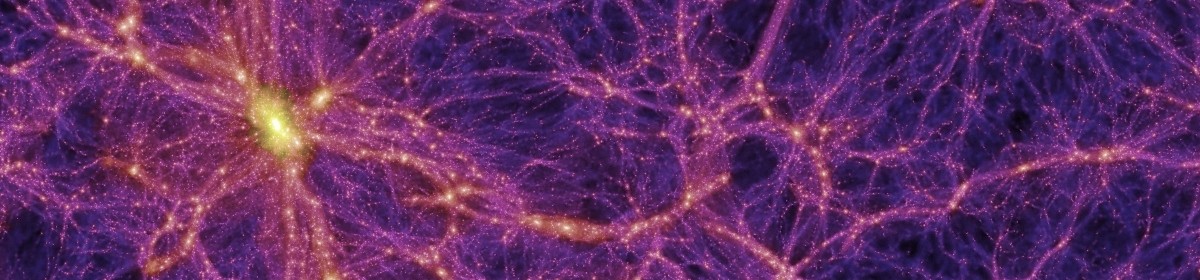
This is the famous Hubble ultra deep field photo, where scientists tried to photograph an empty patch of sky.  Each speck of light is a galaxy containing billions of stars.  Now imagine a more powerful space telescope picking a black patch in this photo and zooming in on it.  What would it see?

We know the universe is big.  Back to that analogy of being a sub-atomic particle in your heart, now imagine trying to figure out that you are part of a body of organs, each with its purpose, could you ever imagine what the brain does from just looking at its parts from your tiny vantage point?  It’s no wonder that so many want to embrace the Biblical view of creation, because the scientific view is too much work to grasp by us little fellas.  Individually we are tiny, but scientists stand on each other’s shoulders to get the bigger view.  Now imagine future space telescopes spying on nearby stellar systems and seeing other Earth-like worlds, worlds where we analyze the chemicals in their atmospheres.  What if we discovered what we call man-made chemicals?

Now imagine, if we could get our giant artificial brains to communicate with the distant giant AIs of their world.  How far can two species see standing on each other’s shoulders?

Think of it another way.  If we consider every human as a cell in the body of a single being called humanity, a space telescope could be its eyes, and all our computers and knowledge, its brain.  The mirror lens of the Hubble telescope was slightly wider than a very tall man.  Now imagine building a pair of eyes in space where the pupils were the size of a football stadium?  How far could our new body see?  Then hook them up to immense armies of computers and swarms of natural philosophers and you might begin to imagine what I’m asking.  And, I’m only wondering, “what might we see?”  We won’t know until we build these new eyes.

The primary question we’ve always asked is, “Where do we come from?”  The next important question is, “Are we alone?”  We hoped that SETI would answer that question, but it might be astronomy and space telescopes that will actually answer it.  The manned Apollo missions to the Moon answered a lot of scientific questions, but the Hubble Space Telescope has answered an immense amount more in comparison.  Some people are now asking, what if we went back to the Moon and built truly giant telescopes on its far side, how far could we see?

The James Webb Space Telescope is schedule to fly to L2 orbit in several years, and it’s eye is 6.5 meters in diameter, compared to Hubble’s 2.4.  The JWST is designed to see in the infrared, and not the visible spectrum like Hubble, but then the visible spectrum is such a tiny fragment of the total spectrum to be explored.

What if Congress had said no to the financial bailout, and given the $700 billion to astronomers, how much more would we have gotten for our money?  Just try and speculate what life on Earth would be like if we found out we weren’t alone in the Universe, and had nearby neighbors.  The Hubble Space Telescope gave us a quantum leap in knowledge about the universe, so think about a Hubble telescope at 10x, or 100x or 1000x.

JWH 11-18-08

Happy 400th Birthday to the Telescope

Hans Lippershey announced his telescope on October 2, 1608.  Quite a few sites around the web are celebrating that fact with fascinating histories, while other sites look to the future describing colossus telescopes to see first light in the next decade.  Astronomy is truly going through a renaissance right now, and it’s a very exciting time to study it.

A cool virtual way to play with a telescope is to download the free World Wide Telescope from Microsoft.  It allows you to learn the sky and see collections of astronomical photographs at the same time.

Finally, as a way to show your appreciation to astronomy and help bring back the sense of wonder of the night sky, take a look at the International Dark-Sky Association.  One reason why you may never have wanted to use a telescope is because most people never see the stars anymore.  Treat yourself someday.  Take a vacation where you can find natural dark skies.  Look up.  You will be amazed.

JWH – 9-5-8

Neil deGrasse Tyson

I became a big fan of Neil deGrasse Tyson when he came to Memphis to give a talk last April, where his comedic side had a chance to run wild.  I’ve been noticing him showing up all over the TV spectrum for years, mainly on NOVA scienceNOW and The Universe on the History Channel.  I bet he gets tired of the comparison, but Tyson has taken on Carl Sagan’s role as cheerleader for science.

Friday night at the Memphis Astronomy club we watched an online video of his Harvard-Smithsonian Center for Astrophysics Colloquium Spring 2008 speech called “Delusions of Space Enthusiasts.”  If you have any interest whatsoever about space exploration this is one hour and twenty-five minutes excellently spent.

One reason why I love this speech by Tyson is he covers many topics I’ve explored too and come to the same conclusion.  In one segment he attempts to calculate the number of space enthusiasts in the U.S., something that I’ve also attempted.  I think I got 300,000 and he got 400,000, but he counted employees working at various aerospace plants that I didn’t count because they should have also been members of the various space enthusiast groups like The Planetary Society, The National Space Society and The Mars Society.  Anyway, we both got a small number.  Tyson goes a step further and lists many organizations with more than 400,000 members, like the NRA with 4.3 million and the Hanna Montana fan club, with a membership I’ve forgotten, but which dwarfs the total size of all the space groups combined.

First off, Tyson explains that the early days of the space race was political, and that the cold war sent us to the moon and not science or the quest for exploration.  He shows how President Kennedy didn’t care for space exploration at all, but wanted us to beat the Russians.  Tyson jokes, if you want America to go to Mars, convince the Chinese to say they are going first, even if they have no real intentions.

Tyson spends a great deal of the talk explaining the battle for funding between advocates of robotic and manned missions at NASA.  He makes a great case that without manned missions there would be no scientific missions by showing graphs that reveal that the percentage of spending for science missions has always been a fraction of the total NASA budget that directly related to the manned mission budget.  He says you can’t sell science to Congress.  He says NASA needs more exciting manned missions of exploration to keep NASA moving forward.

However, Tyson doesn’t believe that grand missions to Mars with $400 billion dollar price tags will ever fly.  His graphs reveal that NASA has always had about the same amount of effective budget dollars, even compared to the Apollo years, so any new missions beyond LEO will need to fit into those annual budgets.  Evidently Tyson was on the brainstorming team that imagined the new Constellation Program and the Orion Crew Vehicle.  This back to the future vision is very Apollo like.

One thing Tyson doesn’t cover is whether or not science missions will get the same level of funding once the Constellation Program ramps up.  I would think you’d get a lot more astrophysics bang for the buck with robots, but it appears to be Tyson’s belief that manned missions excite the public to carry science along on its coattails.

I highly recommend you download this talk, and also suggest you get the latest version of RealPlayer.  Friday night I saw the talk on an older version of the player and it had a lot of bad spots.  My version plays the film very smoothly.  It’s a shame they didn’t use built in Flash movie technology because video players like Real and Quicktime aren’t universally installed like Flash and discourage people from viewing the video.

For more Neil deGrasse Tyson science lectures with sparkling humor, just search on his name at YouTube.

Jim