Photographs I Wished I Had Taken

By James Wallace Harris, Tuesday, January 5, 2016

With smartphones, we always have a camera ready to snap a pic. Growing up my parents would only splurge for a roll of film on special occasions, like a cross-country vacation, or a big Christmas. Even after I moved out on my own, I seldom bought film. So I don’t have many photos from my first fifty years of life. Now that I’m getting older and my memory is going, I wish that I had pictures of people, places and pets that I never took.

For example, the other day I struggled to remember what the old Periodicals Department looked like back in the early 1980s, when I worked at the Memphis State University Library (now University of Memphis). I don’t know why I started thinking about this large room where I lived 8:00-4:30 with fourteen other people for six years. We had 15 desks crammed together. It was during my early thirties. We each had to work one night during the week and about every fifth weekend. I volunteered for Fridays since I was married. There was always a regular crowd of lonely folks hanging out at the library on Friday nights. Like the English professor who would visit for an hour ever Friday and tell me about his rare Bible collection or the rug factory his Lebanese immigrant family owned, or the hipster dude who came in like clockwork to read the Playboys, and called the Commercial Appeal the “commercial appall” – a joke I heard hundreds of times.

My memory has no images for their faces. Nor can I really see that workroom I spent so many years toiling away, typing up missing serial orders on a manual typewriter. I’ve search Google images in vain to find a photo of that Periodicals Department. One of the few times Google has let me down. I have fleeting mental fragments that I can’t put together into a whole scene. Like the rickety wood cart we kept the Commercial Appeal and Wall Street Journal on until we got them on microfilmed. They were the two most requested items at the desk, so we’d roll that cart up close to our stools. I also remember the two blond wooden tables that were shoved together to make one long work area for sorting the mail. We checked in hundreds of magazines and newspapers every day. I try to imagine, Rita, Jane, Mike, Barbara, Kitty, Pam, Floyd, Jack, Delores, Robert, Margaret, Carol, Susan and Mary at their desks.

I don’t know why I’ve been thinking about that room and those people. I left it thirty years ago and seldom thought about it since. But my mind wanders and memory fragments stab me, and the black holes trouble me. I guess that’s part of getting older.

I fantasize about a different life, an alternate history, of living with digital cameras since I was born back in 1951. I wish I had taken a photograph of every house I lived in, from all angles, and showing each room. I wish I had taken a photograph of every vacant lot and patch of woods I played in. I wish I had a photograph of every pet I own, and every friend I had, and every pet they owned. I wish I had photographs of every school I attended, with all my teachers, classmates and classrooms. I wish I had a photograph of every library, bookstore and record store I’ve visited. I wish I had pictures of every place I worked and everyone I worked with.

My father was in the Air Force and we moved around even more often than normal servicemen. My dad was a restless guy who volunteered to be relocated. We’d move to a new city, rent a house, start at a school, then buy a house, and switch to another school. I’ve lived in dozens of houses, and attended at least 15 schools before I got out of high school. I worked at a lot of different jobs starting as a paperboy at 12, and until I got married. But once I got married, I stayed at the same job for almost forty years, although I worked at a bunch of different departments, offices and buildings. Because I was the web photographer for our college in later years, I collected those pictures into a folder before I left. When I look into that folder so many memories are unleashed. I wish I had folders for every place I lived, studied and worked. I wonder what memories are buried in my head that would be released with the right photo to trigger them?

I’ve written about the ache for photos to help remember before, see “Homestead AFB Library 1962-1963.”

Generally, when we take pictures, we usually take pictures of people, or our pets. I have a fair number of those to comfort me. What I miss, are pictures of buildings, rooms, computers, radios, baseball gloves, stereos, cars, television sets, bicycles—all missing objects that now haunt me in their absence. I miss things. I miss places. I miss roads and paths. I miss trees and shrubs. I miss bookcases, books, record cases and records. My mind longs to see how things were shaped and laid out. I miss seeing down long tree lined streets or sandy paths through woods, that I walked and hiked.

I wonder how many visual vistas my brain has recorded. They pop up in dreams and sometimes when I’m awake. Could I learn to recall them? Our brains seem to have a compression algorithm that is very lossy. Or is that just a faulty recall mechanism. My dreams often seem of much higher resolution than my recalled memories during conscious moments.

If I had the photographs I wanted, would looking at them burn their limited views over my natural memories? This makes me wonder if I did have photographs of all these things, how would I organize them? How often would I look at them. Would they boost my ability to remember or make my memory processor weaker?

Young people growing up today with smartphones that can take pictures, videos and sound recordings. Will having huge libraries of external memories alter their souls? What will their nostalgia be like in 50 years? Will having so much external evidence make them into different people than we are now? Aren’t we different people from those who lived before photography?

1958 Jimmy-Patty-Becky-Jody-Christmas-1958

I can remember the Christmas above. It was one of the big ones. I don’t remember being so small though, nor my sister and her friends being so tiny either. We were giants back then. We were the King and Queen of our street. I led the Eagle Club, and my sister had her Please and Thank You Club. My sister Becky is the redhead, and that’s Patty Paquette flashing her underwear, and Jody playing with a flower pot. I wish Michael Kevin Ralph was in this photo. You can’t see the details in the grass, but that yard is full of stickers. This was Hollywood, Florida, 1959, and stickers were a big problem for us kids who loved to go barefoot. I had just turned eight. This was a new subdivision called Lake Forest, and only half the block was built. The sidewalk actually ended halfway round the block. We’d roller skate to one end of the sidewalk, and then skate back to the other end. It was wonderful when the built the other half and we could skate the whole block. Down the street was an empty lot, where Mike and I built a fort. It was a pit covered over with old branches, brown Christmas trees and abandoned boards. Later the Catholic Church conquered our fort. We should have fought harder.

If I kept looking at this photo I could write a hundred thousand words. A thousand is too few.

JWH – Essay #994
Smoking Dried Badger Balls

By James Wallace Harris, December 20, 2015

If you were told smoking dried badger balls would restore your lost youth, vitality and stamina, would you? In some countries traditional medicine claims potions made from endangered animals will let you feel young again. We scoff at such ancient folk wisdom. Yet, in our modern culture we embrace mega-vitamins and esoteric supplements to turn back the years, even though scientific research warns us we’re just pissing those expensive chemicals away. If you’re young and reading this you won’t know what I’m writing about. But if you’re old, you do know. You know that feeling of dwindling vitality. You also know that feeling you’d grasp any straw you could, even smoking powered badger balls, to get back that energy you had.

crack pipe

Feeling old? Feeling old and tired? Feeling old, tired, depleted much quicker than you used to? Join the club. Are you retired and sensing that life is on one long slow decline? I just searched Google on how to gain energy and stamina after 60. Most of the answers I got were about exercise. A few were about weird diets, strange herbal remedies or special vitamins. I’m hardly alone in this quest. I already exercise three times a day, take supplements my doctor recommends, and I eat a natural plant-based died. I feel ten years young than I did before I retired, but I still feel like I’m on the downward slope side of the graph. I’m doing just about everything that’s recommended. Other than looking for the Fountain of Youth, consuming endangered animal parts, or seeking out a witchdoctor, I’m not sure what to do. Now I understand why people hope for magic. Why they pray. Why they take drugs.

I’ve been wondering about artificial stimulants for old folks, but I’m not sure I could handle cocaine or crystal meth. Hell, I don’t even tolerate caffeine and sugar anymore. Currently my best antidote for fatigue is a nap. Then I started thinking about things I do during the day that do give me a physical and mental boost. Could there be mental stimulants that don’t degrade the body? Last night I played my favorite Van Morrison tunes for a half-hour,  very loud, that really pumped me up. My normal volume setting is 74 on my Denon receiver. Usually my company complains at 66. Last night I dialed it up to 80. It felt great! Watching an innovative TV series can bring back thrills. Reading an outstanding novel makes my neurons boogie. Playing with a new tech toy brings back a bit of that excitement I felt as a kid at Christmas.

I get up at 6am, and 18 hours later head to dreamland, but I do need three naps during the day to recharge my battery. I no longer have the energy to be physically active for a whole day. I can write for 2-3 hours, an activity that eventually fogs my mind. I need food and a nap to recover, but I don’t recover enough to go back to writing, or anything else constructive during the day. I’m left to socializing, reading, watching television or listening to music. I’d like to have the stamina to write longer, or get in two writing sessions. My old workday was four hours, lunch and then three and a half hours of more work. I can’t tell if retirement or age has ruined my stamina.

If I believed it was anything but age I could find a way back to when I felt younger. If I believe it’s age, do I just fatalistically accept more and more napping? All those vampire stories make sense to me now. Bite someone on the neck and suck out their vitality. It’s like Willie Sutton’s logic, “I rob banks because that’s where the money is.” It also explains why some of my peers aren’t acting their age. They believe if you act young, you’ll feel young. Or why people get plastic surgery, if you look young, you’ll feel young.

Friends tout that 60 is the new 40, but I don’t believe that bullshit. Looking around me, I see my fellow baby-boomers doing everything they can to stay active. Many have returned to the pleasures and pursuits they loved in their teens. I often see people in their 70s acting young. But why don’t I see people in their 80s doing the same? There’s a few outliers, but not many. What magic does it take to keep hanging on? At some point I know I’m going to be doing far more napping than doing. And after that it’s the big dirt nap.

I’ve already given up all my favorite fun foods to feel better. And I do. I exercise to feel better, and that works too. But I can feel those remedies have their limitations. What’s next? Mega-vitamins and smoking badger balls? I wonder at what straws I will grasp.

Essay #990 – Table of Contents

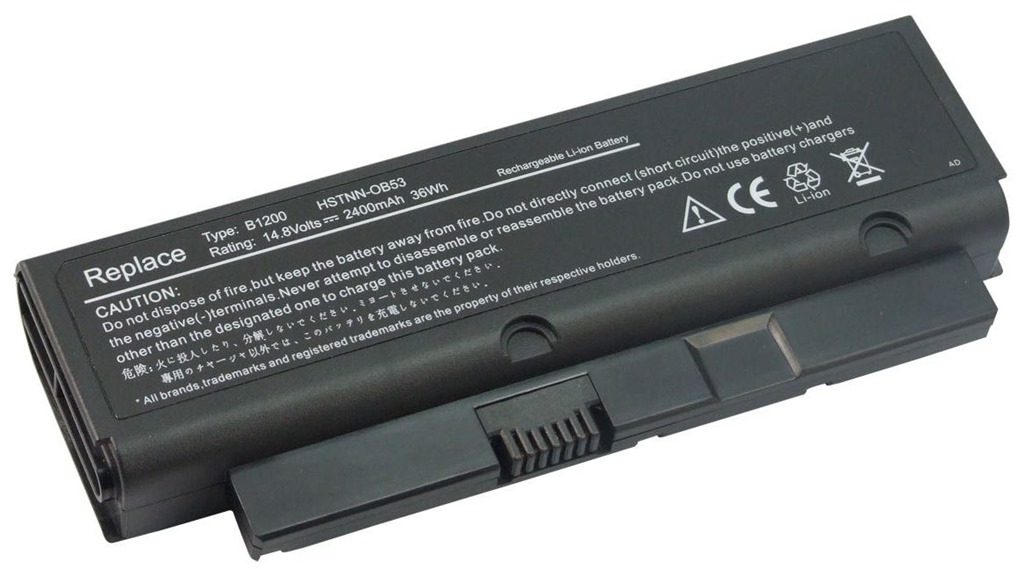
Health is Like a Laptop Battery

By James Wallace Harris, Monday, November 30, 2015

Health has to be more than the absence of disease. I sometimes hear the phrase “optimal health” or “maximum health” as if health is a fuel tank and we can fill her up. We often think of health as giving us vitality, but what then, is vitality? Our bodies and brains are the most complex “mechanism” we know of, but we can’t actually fathom how they work. Not without analogies. Our body is dead when we come to the end of health, and run out of vitality.

The ancient Greeks used the concept of the soul to explain how the body was animated. They claimed the soul made our limbs move, but that was long before science knew about different forms of energy. Getting old feels like we’re running down, running out of energy, or our mainspring needs rewinding. I shall make my philosophical analogy for health be the laptop battery. Before batteries, philosophers used the mechanical clock as a model. In the future, some future blogger will have a new technology to use in her essay.

laptop battery

I went to my annual physical today, and told my doctor she made me nervous every time I visited her because it felt like I was up for an important examination. I worried I’d flunk. At the end of our visit, she laughed and told me I passed. But even though I passed, I don’t feel very healthy, or more precisely said, I don’t feel very energetic, not like when I was younger. At 64, I am not old, but I am not young either. I know my body and mind are in decline, and I wished I could recharge my battery to its maximum capacity again.

On my birthday, I went for a long walk in the botanic gardens with my friend Anne, and then she helped me change out a pole for my outdoor TV antenna. While I had the ladder out, I raked some leaves and limbs off the roof (I’m too old to be climbing on the roof). I probably spent two hours walking and climbing, and that exhausted me. It felt like all the cells in my body were screaming for glucose. When I was younger I could work ten hours at manual labor before I felt that way. Why does my battery run out of juice sooner now that I’m older? Health appears related to stamina, and stamina feels like energy. Does our battery for health shrink as we age? Does it become more inefficient?

If health is a full charge, then shouldn’t eating recharge our battery? Eating too much can make me lethargic. Eating the wrong foods can make me feel unhealthy. But it does feel if I eat the right foods, in the right amount, that I feel healthier. That I have more energy. When I was exhausted after my birthday efforts, I ate lunch, took a nap, and I felt better. But I didn’t feel back to normal until the next day, after two more meals and a good night’s sleep. Food and sleep can recharge my health battery, but only slowly, like how old laptops need longer hours plugged in to recharge.

Getting old feel exactly like an old computer battery that won’t hold a charge as long as it did when it was new. I think one reason why I don’t exert myself like I did when I was young is because I need to conserve my battery. Unfortunately, we can’t buy a new battery like we can for a laptop. Human bodies don’t have user replaceable batteries. Image if they did. I’d buy a high capacity one that recharges quickly.

Is it possible to recondition our built-in battery? When I was a kid, I could eat junk food all day long, and my battery didn’t wear down until the end of the day, often late into the night. Now I can burn up a full charge in a couple of hours. That sucks.

Getting old means learning how to nurse my battery to last out the day. I eat better to make my health recharging more efficient. I exercise to regain a bit of a charge, and keep my contacts from corroding. And sleep cleans out all the bad chemicals that using up a healthy charge creates in byproducts. We often euphemize sexual attraction as chemistry, but it seems everything about our body can be explained in terms of chemistry. Batteries are a chemical process.

Getting old means learning to be efficient. Getting old means learning to conserve energy wherever I can. It’s like being a hybrid car that does everything not to drain the battery, or even recharge on the go. Maybe I should use an electric car as my model of health. Then I could describe exercise as  regenerative charging.

No model is perfect. What I really want to know is exactly what to eat and when, that would optimize the functionality of my aging battery. How much exercise will recharge the system, and when does exercise deplete the daily charge I get from sleep? Sometimes naps are better for recharging than walks. Why? The new health mantra is “Sitting is the new smoking” but getting old seems to require more sitting. Hell, I could claim, “Napping is the new jogging.”

I just wished I knew how I worked. Reading about health, diet and exercise is very confusing. There’s no simple model to understand. I know my health is not an old laptop battery, but it certainly feels like one.

Essay #983 – Table of Contents

Treating Back Pain Without Drugs 2.0

By James Wallace Harris, Tuesday, November 10, 2015

Three years ago I wrote Treating Back Pain Without Drugs. Since that essay keeps getting hits and I’ve learned a few more things about dealing with pain without using drugs, I thought I’d write an update. I’ve had chronic back problems for years, but I’ve been mostly pain free without using drugs. I have spinal stenosis, which keeps me from laying flat or standing for long periods. If I aggravate the spinal stenosis it tends to spread to the muscles that causes back pain.

I have three kinds of symptoms which I control without drugs:

  • inflammation – tends to magnify other symptoms
  • neuropathy – feet, legs, mostly on right side
  • muscle pain – lower back, hips, sometimes legs

fountain

I went through years of trying to deal with back pain using drugs. They’d cover up symptoms, but I never could escape the pains entirely. I kept trying other ways to fight pain. I’d tried different sleep positions, a better bed, and using pillows between my legs or under my knees to align myself symmetrically while I slept. Nothing helped for long. I’d always wake up feeling worse. I finally concluded it was lying in bed that was causing the problem, so I started sleeping in a recliner. That made a huge difference! I still took pain pills and anti-inflammatory drugs, but sleeping in the chair seemed to fix most of my problem. It was around this time I began going to a back specialist. I thought I was having hip problems, because most of my pain was in my hips, with numbness down my legs. They did a MRI and said my hip was fine, but I had spinal stenosis due to arthritis and some bad discs. I was sent to a pain management specialist; he prescribed physical therapy. That was the second major remedy I found!

I’ve since learned that if I do my physical therapy exercises daily I can keep the pain down to almost nothing without drugs. Mostly I’d have numbness in my feet. If I skipped a day of exercising I could feel the muscles tightening up in my lower back. If I skipped another day or two, I start having a fair amount of lower back pain, spreading into my right hip. If I allow the pain to gain a foothold,  I’m back on drugs, and I’ll have a hard time moving around, especially getting up and down from a chair.

One of the annoying things about the spinal stenosis is I could no longer walk for exercise. I eventually found Z-Coil shoes, which have big ugly springs in the heel that act like a shock-absorber for my spine. Without the Z-Coil shoes, I’d frequently feel like I was stepping in a hole or slipping on ice, which I think was caused by pinching my nerve stepping too hard. With the Z-Coil shoes I could walk about a mile without causing too much numbness. But, the more I walked, the fatter my feet felt. If I keep pushing it, the numbness would work up my right leg. If things got really bad, I’d have numbness in my left leg.

Between sleeping in a chair, doing physical therapy exercises and wearing the Z-Coil shoes, I felt pretty good most of the time as long as I didn’t stand or walk too long. My feet remained somewhat numb all the time.

Unfortunately, the anti-inflammatory pills I was prescribed started bothering my stomach, so I stopped taking them. It was then I started reading about anti-inflammatory diets. This really helped with the numbness. Last summer, I started on a plant based diet to lower my cholesterol. I lost 25 pounds. I don’t know if it was losing the weight or the anti-inflammatory properties of the diet, but I was able to increase my walking to 2 miles at a stretch, and the numbness in my feet practically disappeared. This made me very happy. Later on, I was feeling so good that I started cheating on my diet, having some fun foods again, and on some days skipped my physical therapy. I didn’t gain weight, but I started having trouble walking again. The numbness returned. I had to stop walking for exercise for a couple weeks. I then went back to faithfully doing my physical therapy and sticking to the plant based diet,  and I’m now able to walk two miles in the morning again, and the numbness is almost gone.

I’m amazed by how much the plant based diet helps. It drastically lowered my bad cholesterol, let me lose 25 pounds in three months, and significantly reduced inflammation. It’s hard to believe some food can be so inflammatory, but going on and off the plant based diet has let me feel the inflammation come and go. I think the anti-inflammatory aspects of the diet were more important than losing the weight in helping with my back.

Along the way, I’ve discovered the B12 helps neuropathy. I take either sublingual tablets or get shots.

I’ve also had a few incidents of my upper back going out, giving me neck pain, with the pain running down my left arm. I’ve also discovered upper-body exercises will solve this problem too.

In all cases I’d recommend anyone wanting to exercise instead of using drugs see their doctor about which exercises are appropriate and safe for their condition. My spinal stenosis isn’t cured. I’ve just figured out how not to aggravate it. I feel like I’ve learned to walk a razor’s edge, and if I’m careful, I can avoid pain and drugs.

I’ve been catching episodes of Classical Stretch on PBS with Miranda Esmonde-White. I believe her philosophy and exercises might be an appropriate tool too. Miranda’s stretches are like my physical therapy exercises, but she has vastly more kinds of stretches, which would systematically work the entire body.

Essay 981 – Table of Contents

Why We Draw, Paint and Photograph

By James Wallace Harris, Monday, October 26, 2015

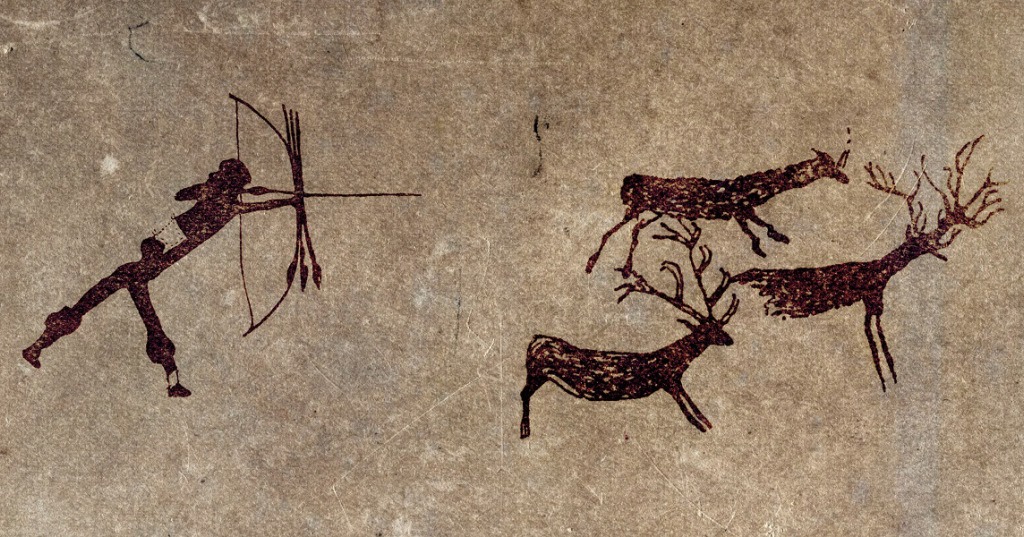
I’m taking a community education course in beginning drawing and it’s making me think about why we draw, paint and photograph. I took the course to do something with a friend and learn a few drawing skills, but the class is making me contemplate the nature of art. Most people now carry a camera with them at all times because of smartphones. Why learn to sketch, when a click of the camera can capture any image far easier? Yet, before cameras, why did we want to draw what we saw? The urge goes back to our earliest days as cave dwellers. Did drawing skills precede language skills? Often, whenever we want to explain something complicated to another person, we draw a picture. The hot new trend in journalism is infographics. And, there’s that old saying, “A picture is worth a thousand words.”

cave art

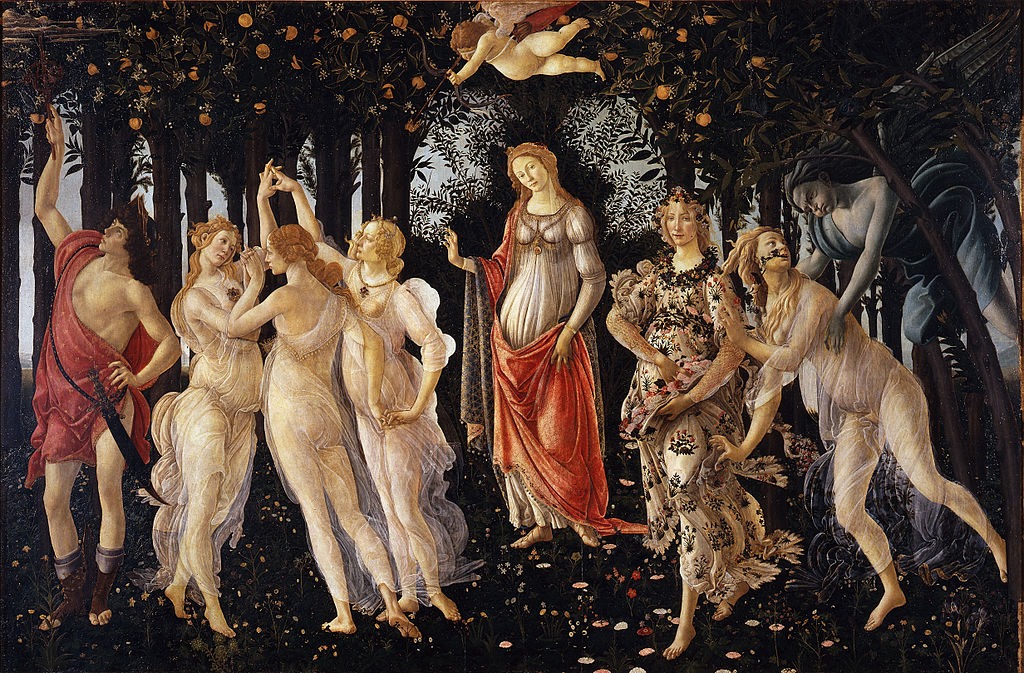
My efforts to draw what I see has been extremely frustrating so far. I can draw a table that allows someone else to say, “Hey, that’s a table.” What frustrates me is I can’t accurately draw the table I see. I know I can’t become a human camera, but I do want to sketch with a level of accuracy that teaches me to see the abundance of details I’m currently ignoring. When I think about art, I wonder if I’m missing the point. Until we had cameras, artists strove to accurately record reality. Paintings were physical memories of what they saw. Artists also did more. They tell stories and create beauty. And, of course, they wanted to make a living, and maybe even become famous. Since I don’t need to earn money from drawing, nor do I care about fame, that leaves me with beauty, story and memory.

1024px-Botticelli-primavera

Right now I’m struggling to make smudges on paper that capture what I see. I’m picking objects that look easy to draw. But eventually I’ll want to record something I really want to remember, and something that I’m seeing in a more powerful way than how I look at things now. Ultimately though, I want to create something that’s beautiful. That’s the special quality of art. Art creates something that doesn’t exist in nature but competes with nature for beauty.

Right now I have absolutely no idea of how to create something new and beautiful, but I get the feeling that’s where this path leads. My teacher seems to know that’s where we need to go, but also knows we’re going to quickly get lost, and give up. Most people are artists when they are kids, but they lose their way. Maybe when we get old, we try to return to that way of looking at the world, like when we were young.

Gustave_Caillebotte_-_Paris_Street;_Rainy_Day_-_Google_Art_Project

I doubt I’ll ever become an artist, or even create something beautiful, but that doesn’t matter. Trying teaches me about the nature of art more than just admiring works in a gallery or studying art history courses. It’s like programming computers, there’s lots of procedures, subroutines and techniques to learn. There are tools to master, and coding languages to memorize. I’m surprised by how many technical tricks are involved in drawing. Talent might be involved, and it might not either. My guess is it’s mostly practice and work, and picking up skills and tricks from other artists.

Anyone can draw a picture or snap a photograph. It’s the why that matters. What do we want to remember, what story do we have to tell, can we capture beauty we discover in reality, or can we add something beauty to reality? I hope I can develop a daily habit of drawing, and it become a routine like exercising. It’s really hard to start doing something totally new late in life, but I think it will be good for me. Just the little effort I’ve put out for this class hurts my brain in a way that lets me know how artistically out of shape I am, and how artistically fit some of my friends are in comparison.

modern_art_by_dorianoart-d483eet

I use John’s Background Switcher to display random photography as wallpaper on my desktop. Every ten minutes I get a new scene capturing a beautiful instant from somewhere in the world. These photos are memories, stories and beauty. I’m astounded by the artistic visions that photographers find, often in locations other people would call ugly. Other times I have John’s Background Switcher randomly go through famous paintings. Every ten minutes I’m reminded of the amazing diversity of what’s possible to imagine that’s not in reality. These paintings and photos transcend time and space, and they tell a relentless story.

Table of Contents