Christmas 2017 – Still Stuck in the 1960s

by James Wallace Harris, Monday, December 25, 2017

Much can be revealed about myself from examining my Christmas presents this year.

  • The Man Who Shot Liberty Valance (1962) – Blu-ray
  • Sgt. Pepper’s Lonely Hearts Club Band (1967) – 2-CD 50th Anniversary edition
  • The Complete Monterey Pop (1967) – 3-disc Blu-ray edition
  • Trouble No More by Bob Dylan – live recordings 1979-1981

I already own various versions of these works. This is the fourth time I’ve acquired Sgt. Peppers (LP, CD, remastered CD, and now remastered again 2-CD).

beatles-sgt-pepper-50th-anniversary-2xcd_01

I wish I could say my wife knew me well enough to have picked these out, but they were all put on my Xmas-2017 wishlist at Amazon by me. Susan actually knows what I like, she just can’t keep up with what I buy. All the other items on my wishlist, except the Arduino starter kit, were pop culture items from the 1950s, 1960s, and 1970s.

Is being stuck in the past a sad state of psychology, or just normal for a 66-year-old guy? One reason why I keep rebuying the past is to get higher resolution recreations of art  I resonated with from my teen years. I generally never got to experience the Sixties directly except for a few exceptions. For example, I got to see Cream live on their Farewell Tour in 1968 in Miami. I never got to see The Beatles, The Byrds, or The Beach Boys in the 1960s. I didn’t attend Monterey Pop or Woodstock. I got to see a lot of legendary bands in the 1970s and later, even ones who got their start in the 1960s, but that’s not the same.

Until I started getting Rolling Stone Magazine in 1968, most of my news of rock and roll pop culture was highly delayed. It was mostly gossip told by DJs or news items in Life, Time, or on television. The Beatles were always in the news. Most of my favorite bands didn’t make it to television except for cheesy fake performances on The Ed Sullivan Show (1948-1971), American Bandstand (1952-1989), Shindig! (1964-1966), Hullabaloo (1965-66), The Smothers Brothers Comedy Hour (1967-1969). I remember one time catching a great segment on Jefferson Airplane on the Today Show, where they demonstrated the liquid light show. Made me want to run away to San Francisco.

In a way, buying these old recordings is like trying to return to the past. I know that’s impossible. Maybe a better way of looking at it is to say I admire artwork from a particular era. That too is revealing. I feel closest to all forms of pop culture from the 1950s, 1960s, and 1970s. I also love work from the 1920s, 1930s, 1940s, and stuff from the 1980s through today, but there’s a powerful affinity for art created for us Baby Boomers. I’m in-sync with modern television and movies but completely out-of-sync with the contemporary music scene. (Maybe I’ll catch up one day before I die.)

It’s interesting that one of my Christmas gifts is from the 1979-1981 era when Bob Dylan was going through his Christian phase. Back then I bought Slow Train Coming (1979), Saved (1980) and Shot of Love (1981) as they came out. I even saw Dylan live during this time period. But I didn’t feel for this era Dylan like I did for 1964-66 Dylan or 1961-1963 Dylan. Listening to this new bootleg series of 1979-1981 performances I realized I had missed out on something great. Dylan had left me behind, and now I’m catching up.

Am I really hearing the 1960s again? This time when I played the new version of Sgt. Peppers it was both the same and subtly different. In 1967 when I first heard the album, I played the LP on my little console stereo. That technology defined the sound for back then. Today I played it on a Denon AV receiver through four floor standing Infinity speakers. The sound filled the room and Susan and I felt like we were in the middle of the soundstage.

I’ve always admired Sgt. Peppers as a concept album, and loved many of its songs, but I’ve never played them heavily in repeat fashion like I do all my favorite tunes. Sgt. Peppers feels like a music hall performance that needs to be listened to from start to finish. It never sounded better than it did today. This remastered edition felt airier than the last remastered edition, and I thought in a few places I heard things that weren’t there before. Of course, that’s probably tricks of memory. I rediscovered once again what a wonderful work of art this album represents for The Beatles and the 1960s. Just buying Sgt. Peppers again and taking the time to listen to it intently with no interruptions makes it worth the dollars.

Merry Christmas! What did Santa bring Y’all?

JWH

Science Fiction in the 22nd Century

by James Wallace Harris

I’ve been wondering if most science fictional concepts were invented in the 19th and 20th centuries and if we’ll just be reprocessing old speculative ideas during the 21st century?

Just now I was flipping through the listings of all the forthcoming and recently published science fiction on Audible.com. Most of the titles and authors were ones I had never heard of before. There’s tons of science fiction coming out, but after reading their blurbs I’m not sure if any of them offer new SF inventions. Well, if you’re young and haven’t read tons of science fiction, then there are lots of new ideas to encounter. But if you’re old and have been reading science fiction for decades it seems like all the ideas have been used before. Is it possible we’ve already explored the limits of science fiction?

RingworldFiction has been around for thousands of years and most plots are retreads. Quite often scholars of fiction try to consolidate plots into a limited standard number. When I first started reading science fiction in the 1960s it felt like an author would come up with a new SF idea, and then spin an old plot around it. For example, Ringworld, very neat idea, but the plot reminded me of Oz books. Regular folks go on an adventure, meet lots of strange folks, see lots of weird sights, then travel together until the story ends.

I’m not sure if Larry Niven invented the concept of a ringworld, but Wikipedia credits Olaf Stapledon for imagining the first solar megastructure which we now call a Dyson sphere. I’d think a ringworld would be a creative variation. Just in terms of solar megastructures how many original structures could be imagined and how many creative variations? I’m sure there are limits.

I thought the 1938 story “Helen O’Loy” by Lester del Rey was the first story of a man marrying a robot, but then this year I read “A Wife Manufactured to Order” by Alice W. Fuller from 1895, and I wondered just how old is the idea of building spouses to order? The second half of the 20th century has countless romantic stories between humans and robots. The idea is well-liked now, but when will it be too known to entertain?

A twelve-year-old kid could read a new story today about a love affair between a machine and homo sapien and think it a fresh concept. I guess that means science fiction in the 22nd century will still provide a sense of wonder even if the ideas it presents are actually very old. Of course, by then people might actually be marrying robots. Who writes about first trips to the Moon anymore? Will science eventually ruin all the practical science fictional ideas by actually constructing them?

Arcadia by Iain PearsYet, I wonder, even worry, that science fiction has run out of good ideas. I don’t mean good ideas for plots, which are endless, but good ideas like space travel, time travel, dimensional travel, intelligent life besides us, creating intelligent life, creating artificial life, digital realities, etc. I’m currently reading Arcadia by Iain Pears which blends fantasy, science fiction, philosophy, myth, and religion into one clever story. If feels very original because of its complexity of plot, but is it original in ideas? Arcadia is great fun, but I keep hoping Pears will surprise me with an original SF concept. Pears constantly delights me with creative twists and turns of his story though, and maybe that’s good enough for an old jaded reader.
Biology is more complex than the chemistry of cosmology and seems to offer unlimited permutations here on Earth. But still, I imagine there’s a limit to what biology can produce. Writing science fiction is a spin-off of biology, but ultimately, won’t it have limits?

Maybe artificial intelligence will surpass what biology can produce, but AI will exist in a reality of physics, chemistry, and biology and may develop a greater degree of complexity than we’ve seen in biology. If atoms and molecules had been intelligent could they have foreseen the creative complexity of biology? I doubt we can imagine what AI minds will create, maybe their own version of science fiction. But I’m wondering if we intelligent biological creatures have limits and if our science fiction also has limits.

If we evolve Homo Sapiens 2.0 and they are much smarter than us, will they find more to occupy themselves in this solar system and galaxy than we could? More intelligence might actually produce interstellar drives but isn’t colonizing another planet still just colonizing another planet? Is building a galactic empire the most complex thing we can imagine doing?

Olaf Stapledon back in the 1930s imagined some very far out SF ideas, many of which were recycled in Star Trek and Star Wars. Aliens with psychic powers is a very tired concept though. It’s closer to the magical hopes of religion than science. One problem with being an older science fiction fan is we eventually feel all the ideas we encounter in science fiction are old.

The result of this jadedness is a sense of confinement. The perfect story to illustrate how I feel is “The Star Pit” by Samuel R. Delany. I call it the aquarium effect. We pity poor fish that live in an aquarium because they have a barrier they can’t cross. We all live in an aquarium, but we don’t all know where the glass is.

I wonder if science fiction hasn’t already found all the aquarium walls that confine us but we can’t know it because of the limitations of our minds. One of our major flaws is we imagine more is possible then is possible. Religion blinds people to our real limits, and so does science fiction.

JWH


How Could I Miss “Maggot Brain” for 46 Years?

by James Wallace Harris, Thursday, December 14, 2017

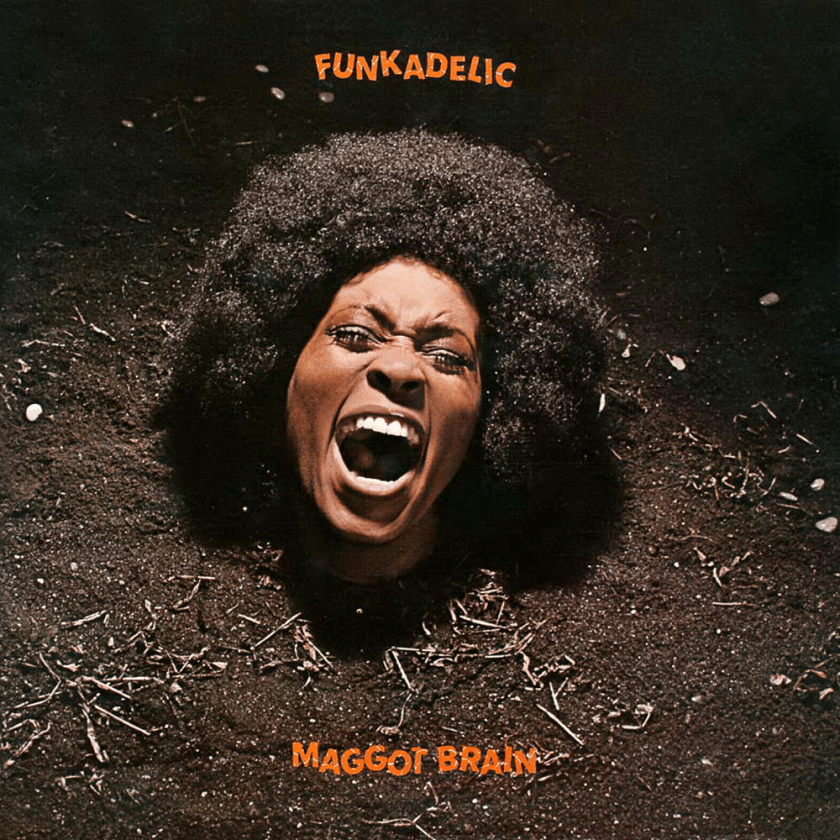
This morning my friends Mike and Betsy came by and Mike had me play “Maggot Brain” from Funkadelic’s 1971 album of the same name. The song is mainly a beautiful guitar solo by Eddie Hazel that covers most of its 10 minutes and 20 seconds. I was blown away. How could I have missed such a fantastic song for 46 years? It was a new discovery for Mike too, and he said he played it and covers versions over and over yesterday. I’m doing the same thing today.

I’ve known about Funkadelic and Parliament since the 1970s, but I was never into them. I should have been. “Maggot Brain” is often covered, and sometimes remembered on lists of top guitar solos, so why didn’t I encounter it before now? That’s one of the fun things about getting old and being retired, I have the time to revisit the past to look for wonders I missed.

I remember going to record stores two or three times a week flipping through the bins of albums and wanting to buy way more than I can afford. Even back then I bought two to four albums a week, but that was nothing to how many came out each week. Now with Spotify, I can go back and search for all those albums I flipped by but couldn’t buy.

Here’s is one of my favorite covers by violinist Lili Haydn where her scorching performance is mirrored by her facial expressions.

Of course, this begs the question: how many other great songs have I missed? Mike has challenged me to find another great song we’ve missed during our lifetime. It’s going to be hard to find something that tops “Maggot Brain.”

If y’all have any suggestions let me know.

Maggot Brain by Funkadelic

JWH

Remembering When I Forget

by James Wallace Harris, Thursday, November 16, 2017

One tragic aspect of aging is memory loss – however, I’m trying to laugh off these incidents before they become painful. For example, I planned on calling this essay “Fun with Memory Loss” until I discovered I had already blogged that same idea two years ago. Then I thought about calling it “More Fun with Memory Loss.” I wonder how many times I’ll come up with the idea of writing about memory lapses and calling it “Fun With  Memory Loss?” The original essay included a list of 43 scenes remembered from a movie, Seven Men from Now, a western starring Randolph Scott to prove what I could remember overnight. The previous day I had been startled to discover partway into the film I had seen Seven Men from Now just months before and it took me half a movie to remember.

Shedding-memories

The goal of the original essay was to come back and check to see how much I could remember after intentionally trying to remember. I forgot the experiment, I didn’t go back to check myself. Seeing the title again didn’t recall any of those 43 scenes I wrote down. Yet, while I read each today I did remember them. That’s weird. Is recalling the real problem? When I watch a film again, one I can’t describe before watching, it seems like as I rewatch each scene I do feel like I’ve seen them before. Wouldn’t that scene have to be in memory to feel that? Maybe we record a coded impression rather than the details and rewatching resonates with that recorded impression?

The reason why I wanted to write another essay called “Fun with Memory Loss” is because of two incidents. The first involved my wife Susan and my movie buddy Janis. Susan wanted Janis and I to watch Bad Moms with her because she wanted to rewatch the original before going to see the sequel.  Susan told us all about the film, and how funny it was, giving us many details. I rented it from Amazon. The first clue to something wrong was when the film started at the end where the credits were rolling. I restarted it at the beginning. After a while, Janis and I both realized we had seen it before. Then we figured out what had happened. Susan had talked the two of us into watching Bad Moms before, just like she had the second time. We had rented a movie we had already rented before. None of us remember the first time. It’s amazing that all three of us forgot.

Then yesterday my old friend Connell recommended a movie called The Discovery. He described the movie in detail and it sounded intriguing. The story involves a scientist, played by Robert Redford, scientifically proving life after death existed. He didn’t claim it was heaven but claimed he could observe souls leaving their bodies for another dimension after death. This caused a rash of suicides around the world. I got on Netflix and started watching. You guessed it, I had seen it before. I called Connell and we eventually figured out that he had recommended it before, I had watched it, and I had even called him before and discussed the film. We both had forgotten completely the whole first cycle.

I’m starting feeling like Bill Murray in Groundhog Day, trapped in a loop. Connell says he can re-watch his favorite binge-worthy shows and not remember whole episodes. I’m beginning to worry when my friends will start rewatching our old favorite shows time and again and never know we’re replaying them.

The other night I had my friends Mike and Betsy over to see Auntie Mame. We loved it. Before the movie I was positive I had never seen it. During the movie, I sometimes had slight flashes of déjà vu. I suppose I could have seen Auntie Mame decades ago and only the faintest of memory residue remained in my brain.

To me, one of the absolute best books on memory is Jesus Before the Gospels by Bart D. Ehrman. Sure, it sounds like a book on religion (and it is), but Ehrman uses how people remembered Jesus to explore the limits of memory. Humans have a terrible memory. First person witnesses are totally unreliable. My memory lapses in my sixties might not even be a sign of aging. I wrote a whole essay about memories we cherish from youth becoming corrupted or illusionary, see “The Fiction at the Bottom of Our Souls.”

I hate that I can’t retain what I read, especially regarding non-fiction, but there’s nothing I can do. Our brains aren’t hard drives. Two years ago I wrote, “Why Read What We Can’t Remember?” because it depressed me that I spent so much time learning new facts and concepts from books and documentaries only to have them leak away. I decided that we read for the moment for the joy of learning in that moment. We generally don’t know what we forget until its tested. Back in my school days testing showed I forgot a lot back then too.

Some people have remarkable abilities to remember. I envy them. As long as I know I’m forgetting I’m okay. It’s when I don’t that I’m in trouble, but then I won’t remember that.

I wonder if I’ve written this essay before?

JWH


Consciousness and Aging

by James Wallace Harris, Monday, November 13, 2017

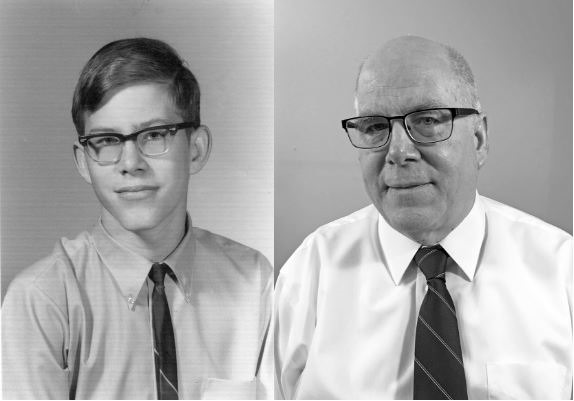
If you’re in your social security years, how do you tell the difference between an episode of poor health and getting old? What does getting old feel like? At what decade do we lose our vitality? Since I have no previous experience of being old it’s all guesswork on my part. Whenever I get sick now, I feel like I’ve gotten old because my drive disappears, but when I feel better, I think, “Oh, I was just sick.” When I was younger and got sick, I just felt possessed by ill health — it didn’t affect my mental attitude. Now it does.

There’s an old saying, “You’re only as old as you feel.” My doctors have been pushing statins on me for years, but I always have to quit them after several months because of the side-effects. After I quit and get them out of my system, I feel ten years younger. That’s an amazing sensation. Of course, my doctors insist I go back on the statins by taking a smaller dose. I’ve tried 40mg, 20mg, 10mg, and I’m now on 10mg twice a week, but three times I’ve experienced that premature aging affect. My conscious outlook on life is dramatically different when I’m off the statins. Unfortunately, many factors statistically demand I need to take them.

1966-2016-Jim-Harris.jpg

For several weeks now I’ve been having trouble with my stomach. It leaves me feeling yucky, old feeling, and indifferent to doing the things I love. I’ve been experimenting to see which foods are upsetting my stomach, but some sixth sense tells me my gut bacteria are out of whack. There’s tons of promotional literature about the miracle of probiotics but I’m afraid of taking supplements since they are unregulated. I did find “11 Probiotic Foods That Are Super Healthy” and I started eating some of them. If anyone has experience with probiotics, let me know. But my gut is telling me I’ll feel much younger if I could get my bacterial house in order.

All this getting sick and getting better is teaching me something about consciousness. My various perceptions about living and doing are directly linked to physical well-being. But I’m feeling a distinct difference over time that might be aging. I’ve been retired four years now, and it seems like I’ve already gone through a number of psychological phases. They are subtle, and all of them are related to ambitions.

At my age, I no longer have big ambitions. I turn 66 this month, so I don’t have to worry about what I’m going to be when I grow up. My goals are about what I can do in a day. For example, writing this essay is typical of my ambitions. I have little projects and hobbies I want to do, and on average, each ambition takes hours of work and concentration. I no longer think about projects that take days.

When I’m feeling “old” I don’t even want to do something that takes hours to complete. If I’m feeling older, I tend to want to do things that are in the moment, like hanging out with friends, watching television, listening to music, or reading.

This makes me theorize that aging is related to the scope of our ambitions. It’s not a perfect idea. Some young people can dedicate themselves to a decade of work, like getting a Ph.D. or learning to play a musical instrument professionally. While others might only commit to months or weeks. I’ve never been able to commit myself to really big projects.

Last year my friend Mike and I spent months creating version 4.0 of the Classics of Science Fiction. That felt really good. I’ve wanted to find another project that size because it feels rewarding, and healthy, to get up every day and get a little more accomplished on a long-term project. However, I think I’ve aged because I don’t have what it takes to mentally do that now.

I keep thinking if I could get healthier I might. I try hard to eat right and exercise, but those old standbys aren’t paying off dividends like they used to. That’s why I’m starting to think aging is related to ambition. Health problems come and go, and if I could filter out their up and down effects, what’s left could be attributed to aging.

Knowing this makes me think I can apply mind over matter to counter aging. Mentally, I keep blowing a bugle sounding “Charge!” assuming I’ll jump to my feet and dash up some hill. But I don’t. I rationalize how comfy my chair is, how alluring the dark jazz I’m hearing on the stereo, how I’d rather just stay read or daydream instead.

Is aging the state of consciousness that compels us to do less?

I’ve always paid attention to old people because they are the trailblazers exploring a future I might see someday. Most of them are doing less. Sure, there are outliers who are more active in their eighties than I was in my twenties, but mostly I see them giving up their hobbies one by one. I’m evening seeing my friends who are in their sixties starting to give up some of their once cherished activities. Sometimes it’s just practical sanity, like giving up mountain biking. Other times it’s because of failing body parts, like giving up music because of growing deafness. And a lot of it is downsizing because of money, time, or jadedness.

For decades I was a programmer. I thought I’d continue to program in retirement, but I haven’t. I still think of myself as a “programmer” even though I haven’t programmed in four years. It’s a kind of letting go. I haven’t let go, but I should. I still want to program. I still read about programming. I still think of programming projects. I just don’t program.

Is aging the chasm that widens between doing and not doing?

JWH