
Prioritizing My Ambitions

by James Wallace Harris, Tuesday, June 19, 2018

Being 66 and retired gives me a lot of free time, yet at the end of every day, I always wish I had more. My lifelong, no-so-secret ambition has been to write a book. I’ve had plenty of ideas, and I could have found the time, even during my nine-to-five years. Yet, I haven’t. Why? Because I fritter away my goddamn time. I have a personality that loves to do what I want when I want. Some people call that laziness, but it’s essentially poor time management. Somehow I need to learn how to prioritize my time to succeed.

Most people must achieve their ambitions before forty. Most big ambitions required the peak performance of youth. Generally, writers must also succeed in bloom, but there are a few outliers that give me hope. Writing is one endeavor where late bloomers have an outside chance. So, if I don’t want to go to my grave still fantasizing about the books I want to write, I need to conquer time management.

All that’s required is focusing, working diligently, and ignoring all the distractions. Of course, that’s easier declared than lived. I’ve mind mapped how I spend my time. What I need to, is Marie Kondo its branches.

Time Mind Map

I write best in the mornings, but to maintain my health I must exercise. My self-control wanes quickly during the day, so if I don’t do my exercises in the morning, there’s little chance I’ll do them at all. In fact, I’m skipping my morning bike ride to write this. That bike ride gives me vitality, something in short supply. And if I don’t do my physical therapy and Miranda Esmonde-White exercises, my back will go out. Maybe one reason people don’t succeed after forty is that we have to spend too much time on body maintenance.

I need to completely get over this ingrained habit. I need to write in the mornings and exercise later in the day. I doubt I have the mental and physical energy to write more than four hours a day, maybe only two, even if I give it my best hours. Somehow I need to make those writing hours the #1 activity in my day. After that, I have to make exercise #2.

I have a friend whose life-long ambition is to live abroad. She’s finally getting to do that because she’s getting rid of everything she owns here. Part of my time management problem is possession management. According to minimalists, owning less is more freeing. That’s true, For example, I’ve been spending a lot of time and mental energy researching buying a new television and computer, or what books and magazines to collect. I need to stop that. It would also help to get rid of all the stuff I must spend time maintaining.

If you study that mind map, you’ll notice I consume a great deal of fiction. Generally, I rationalize television and reading by claiming I only do it when I’m too tired to do anything else. I need to make sure that’s true.

Looking closer, I also realize I spend a great deal of time socializing. I’m not sure I can give friends up, but I need to make being with them more efficient. People are just as essential as food, but some of my social activities are junk food.

Many of the activities listed above are mostly ambitions I just piddle around with at best. Maybe it’s time I give up thinking I’m a programmer. I spent my work years programming, and I think of myself as a programmer, but I really don’t program anymore. I want to. If I gave up writing I’d want to program. But I can’t have two ambitions. There’s not enough time.

If I’m really serious about writing a book then I need to prune the crap out of that mind map above. Meditating on it is very revealing. I should print it out and study it first thing every morning when I wake up. I should reread this essay every morning to remind myself of the lessons I’ve learned writing it.

I find it most rewarding on waking up if I make two goals for the day. It used to be five, then three, and now two. They can’t be too big either. And sometimes I have to waste one on things like grocery shopping or seeing a movie.

If my mind map was smaller, with fewer branches, it would be easier to be ambitious with my limited resources. It’s going to be painful to give up so many possessions and activities. But if I really want to succeed with my goal, I can see from studying the mind map, that’s the price.

Afterward:

The two goals that came to mind this morning, were to write a new blog, and finish a scanning project and submit it to Internet Archive. This accomplishes one of them. I think of blogging as writing. I’ve always said blogging was piano practice for writers. Yet, I see it’s not working on a book. I’ve got to start blogging outside my morning writing hours. Blogging is essential to my my mental agility. It has to be #3 after morning writing and exercise. But I positively have to stop blogging in the morning.

If I can’t make writing in the morning my #1 activity every day, I should Marie Kondo my ambition to write a book. To be honest, I must prune my ambitions too.

Maybe I’m really doing what I want, and the desire to write is what I should give up.

Not yet.

JWH


When I Can’t Edit My Brain Farts

by James Wallace Harris, Tuesday, June 5, 2018

I’ve never been good at grammar or spelling, especially in early drafts. So when I say I’m experiencing new glitches in my writing, I don’t mean the common mistakes I’ve made all my life. I’d be quite embarrassed if folks read the first drafts of this blog. I rewrite many times before I click Publish, constantly repairing and tweaking words and structure. And even then, I still spot mistakes and wince.

However, in the last few months, I’ve been noticing holes in my sentences where I’ve left out words or tangled them up. They’re a new kind of textual brain farts. For several years I’ve struggled with verbal brain farts, failing to remember names and nouns when talking to my friends. I don’t believe what I’m experiencing is early signs of dementia, but thought glitches caused by slow neuron access times. All my friends my age have similar hiccups with their comm skills. I assume these new mistakes are just more of the same, all part of a slow decline in brain cell efficiency due to normal aging.

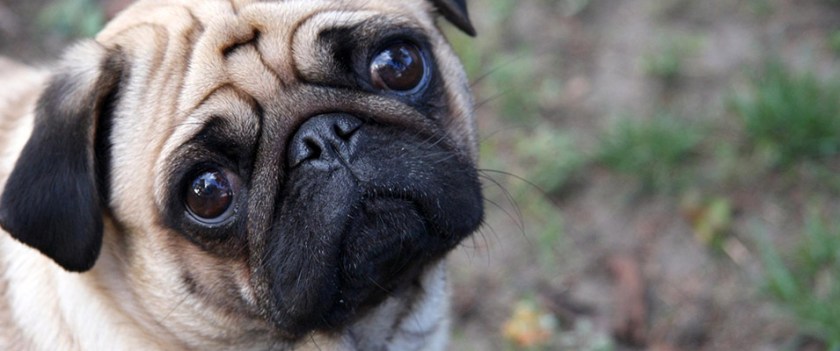
Pug

The great thing about writing over talking is I have plenty of time to shape what I say. Writing is like make-up, I can make myself look much better than I really am. What troubles me is when I send an email, or post a comment on a website, and then see a blooper I can’t reshoot. That hurts. Especially when they aren’t grammar/spelling mistakes, but garbled sentences that sound like Yogi Berra imitating Donald Duck.

For me, it’s much more embarrassing when people see snaggled-tooth thoughts than to make a “their, they’re, there” mistake. Blogging is exercising to think clearly. Revising my paragraphs sculpts my thoughts. So reading something I wrote that’s wonky makes me feel I’m losing it. Of course, other people might skip right past my potholes without making judgments. But I’m horrified when I’m reading along and bounce jarringly over a big one.

It doesn’t take a Nostradamus to see aging will bring additional quirks in my quarks, and at some point, I’ll stop making sense. But here’s the Catch-22. If I stop writing my mind will only get worse sooner. Writing is the cure for poor thinking or thinking poorly, even when the brain is turning to mush. I can’t give up.

I’m going to be in real trouble when I stop seeing mistakes. I hate when I can’t edit my brain farts now, but the real horror movie begins when I stop discovering those mistakes.

JWH

Am I Ill, Or Just Getting Old?

by James Wallace Harris, Sunday, May 6, 2018

When I was young I thought growing old meant going bald and getting wrinkles. That didn’t seem too bad. I assumed I would stay the same mentally. When I was young I felt great most of the time, hardly ever got sick, and I wasn’t bothered by heat or cold. We didn’t have air conditioning until I was a senior in high school. At sixty-six I go years without getting a cold or the flu, but I do have chronic heart, stomach and back problems, and cold and heat annoys the crap out of me. I keep my chronic conditions in check with diet and exercise.

The trouble is, I don’t feel like I used to. Is that illness, or oldness.

Getting old

In recent years I’ve felt my vitality run down. I can’t decide if something is wrong with me, or this is what it feels like to get old. And I’m only young old. What will it feel like to be really old?

At my last physical my doctor said all my blood work looked good. My testosterone was at a proper level, various vitamins were on the mark, my protein level was fine, and a bunch of other numbers I didn’t understand were where they were supposed to be. She said I was doing pretty good. I needed to lose weight and lower my cholesterol, but she’s been saying that for decades. For years I’ve been eating healthier, lost some weight, and lowered my cholesterol. The only time she praised me for my cholesterol and weight were the periods I went vegan. However, I can’t keep that up.

The thing is I feel best when I’m eating sweets. Ice cream makes me feel younger. Junk food gives me mental energy, but it eventually makes me feel sick too. I constantly struggle with my diet to find the right mixture of healthy eating that gives me the most vitality, yet doesn’t lead to feeling bad.

Recently I started wondering if my problem wasn’t disease or diet, but I’m just aging. At my last physical, I asked my doctor, “How do you tell the difference between feeling old and feeling sick?” She laughed at me and gave me some sympathetic words I’ve forgotten. Besides feeling rundown, I can’t remember shit. And I was told that is normal too.

My wife thinks I’m a hypochondriac. I used to feel normal all the time, now normal is a rare few hours in the week. Is this the real reason why people hate getting old so much? Not for the decline in appearance, but the decline in feeling good?

I constantly read books about diet, health, and exercise. Many authors promise renewed vitality if I’d only do what they say. The problem is I don’t have the discipline or the vitality to consistently follow their advice. I was able to stick with a plant-based diet for several months. I lost thirty pounds, and my LDL went to 90. However, my energy levels dwindled away. I’ve since added yogurt, kefir, and eggs back into my diet and mental energy has returned, but not like it was. I’ve been a vegetarian since the 1960s, but always ate a lot of junk food. I’ve never been a high-energy person, but I was fine for a bookworm.

In my sixties, I’m feeling the creep of decay. I’ve fought it believing it could be cured. Now I’m wondering if it’s actually normal. Now I know why Ponce de Leon searched for the fountain of youth. Now I know why old people in my youth swilled Geritol. Now I understand my mother’s addiction to pain pills in her later life. Now I know why people hope B12 shots will give them a boost. It’s a shame that snorting cocaine is self-destructive because it sounds like a perfect drug for the Social Security years.

JWH

Should I Delete Facebook?

by James Wallace Harris, Friday, March 23, 2018

Cambridge AnalyticaI’ve seen at least a dozen stories about people deleting their Facebook account because of the Cambridge Analytica scandal. Just now I read two news stories about Elon Musk deleting Space-X and Tesla pages from Facebook even though they had millions of followers. There’s lots of anti-Facebook sentiment percolating on the web right now with many users jumping ship.

But how many? Facebook has two billion users. Even if a hundred million people quit in protest will it matter? There have always been folks who grumped about Facebook. They are much like snobs who sneer at watching television. I look at TV and Facebook every day. Not much, in either case, but they both provide their little pleasures. And, little pleasures count for a lot in our social security years.

People fear Facebook because of identity theft or invasion of their privacy. But is any place safe on the internet? And if you read about Cambridge Analytica you’ll see that people happily filled out forms and shared them with friends. You’d have to be an idiot to not know that everything you do on the internet is monitored. No one pays to use Facebook. Have you ever wondered how Facebook makes its money? Our habits and opinions are valuable. Keeping America supplied with cat videos is expensive, so Facebook has to make its money someway.

When I’m on the internet I assume Big Brother and all his brothers and sisters are watching. I don’t care that they know I love cat videos and scans of old science fiction magazine covers. I have no idea what that information reveals about me politically or fiscally.

Before people rush to delete their Facebook account out of some kind of misguided protest, I think they should analyze what they get out of the service. Facebook keeps me in contact with relatives and friends I seldom or never see anymore. Facebook keeps in contact with people around the world that have the same esoteric interests as I do. And I enjoy seeing a half-dozen funny videos every day. They’re as good as a dose of Geritol.

For example, I’ve been reading old science fiction stories from the pulp magazines. I’ve made three online friends in South Africa, England, and here in the U.S. that also like to read such stories. I don’t know how many people left on this planet still love to read science fiction short stories in old pulp magazines, but Facebook has helped me find them. Facebook also keeps me in contact me with relatives I haven’t seen in fifty years.

Besides, Facebook helps me keep tabs on my wife. She always checks in wherever she goes.

I also find it very pleasant to share cartoons, videos, songs, beautiful photos, sayings, etc. with other people. For example, here’s one called Millennial Job Interview that has a passing dig at Facebook. I thought pretty damn funny and very revealing about modern times. Evidently, the young consider Facebook a hangout for older people. That might be true because most of my Facebook friends are older. And most of the people who write about deleting their Facebook accounts are younger. Should we consider this anti-Facebook movement an ageist attack on Baby Boomers?

I wonder if Big Brother finds what we share more revealing about our personalities than the facts typed into queries like Cambridge Analytica’s? For many people I know, what they share on Facebook reveals more about themselves than they reveal in person.

I share a lot on Facebook. My friends and family must think I’m odd from some of the content I post. However, I use both Facebook and Twitter as external memory banks. My biological memory is beginning to fail. I wish Facebook existed when I was young so I could scroll back into the past. When I scan through my timeline it’s like a stream-of-consciousness of what tickled my fancy. I’m sure if Big Brother applied a powerful artificial intelligence program to my timeline it could psychoanalyze my posts and provide me with the ads customized for my personality.

But you want to know something funny? If you asked me if there were ads on Facebook I’d tell you no. My mind is so good a tuning out ads that I don’t see them on web pages anymore. I do use an ad blocker, but they aren’t completely effective. I do know there are ads because I see them when I consciously go looking for them. But psychologically I don’t remember ads on Facebook. That might hurt them more than deleting my account. Sorry, Mark.

I suppose I could quit Facebook. Many who have quit Facebook claim their lives are so much better for it. Maybe mine would be better too, but I sure would miss those cat videos.

JWH


Writing Goals at Age 66

by James Wallace Harris, Wednesday, February 21, 2018

Writing is focusing thoughts. Herding your thoughts into an essay reveals the chaos of thinking. When I was young I wanted to be a science fiction writer but that was not meant to be. Now that I’m retired writing is the hobby that keeps me sane. It’s vitally important to have at least one hobby when retired because the purposelessness of waiting to die can get existentially challenging.

fountain pen

Having goals in the last third of life can be tricky. The primary goal when aging is staying healthy. Working at maintaining health can be both time-consuming and energy draining. Any other ambitions depend on mental and physical vitality. Some days my batteries are so low all I can do is daydream and listen to music. But when I do have extra energy I want to make the most of it, and that means writing.

When I first retired in 2013 I had a long list of hobbies I wanted to pursue. I’ve since learned I can only get better at one skill. I can piddle around with many interests, but if I want to see actual progress requires focusing on what I know best. Because I’ve stuck with it, that’s writing. However, at 66 my writing ambitions are tiny compared to what huge dreams I had in my twenties. Anyone young reading this essay should heed this advice: Do it now.

I’ve written over 1,500 essays in the last ten years, and most of that was piano practice. I’ve improved but my progress has been slow. Theoretically, there are magnitudes of possible improvements left to achieve, but it all depends on my health. Realistically, I know I’m not going to start pounding out bestselling novels. I have to match my goals to my vitality.

For years, I’ve been content with blogging and writing for a few other websites. I’ve recently started a new series, “Reading the Pulps” at Worlds Without End that’s got me excited. On the other hand, my efforts for Book Riot have declined as I’ve realized my perspectives might not be suited for a site where the readers are so young and mostly female. For the last few months, I’ve struggled to find something to say that would appeal to that audience. That struggle has led me once again to think about my writing goals.

Writing for this blog is easy, maybe too easy, and not challenging enough. Writing for another site requires thinking about the audience. This blog allows me to write anything I want. I write to please myself. I’m happy if others want to read it, and I try hard to make it read-worthy, but its primary purpose is to let me think out loud while practicing my writing skills. My goal has always been to write at least two essays a week for this site.

When I write for another site I realize I have to write content that helps that site achieve its goals. Other websites build audiences to make money. Their readers want reading satisfaction or they won’t return. My job as a content provider is to be so useful that readers will remember and keep coming back.

Book Riot makes money by showing ads or getting readers to buy books from an Amazon affiliate link. It takes a lot of page hits to make money from ad views. It’s faster to make money from link sales. Thus, my essays need to be either very positive about books or about something that inspires many page views. I know how well I’m doing because I’m paid a portion of what the page makes. I’m not making that much, so Book Riot isn’t making that much off of me. One writing goal I’m considering is to write something more appealing to their audience. This has become hard, but I haven’t given up completely. I love the challenge. I contracted to write two essays a month for Book Riot but I’m not sure I can keep that up for a third year. It would help if I could find an ongoing gimmick or angle.

Worlds Without End is slightly different. Right now it’s mostly a database system for readers of science fiction, fantasy, and horror to find new books to read. WWEnd’s appeal is seeing how many books you’ve read on over fifty notable lists. It’s quite fun to use but users tend to come use the database for a while and not come back. The creators of WWEnd want to attract a community of fans that routinely participate in a growing list of new features. They want content contributors like me to help attract science fiction fans to that community. Like Book Riot, WWEnd’s audience is hardcore bookworms, but the age and gender demographics are wider. They do narrow reader interest to the science fiction, fantasy, and horror genres, and science fiction is my main interest.

Most people who write about books write about new books. I’m more interested in old books. That limits the appeal of my essays. Currently, I’m having a lot of fun writing about stories that came out of the pulp magazines in the 1930s and 1940s. I have no idea how many readers are interested in that topic. (It’s pretty damn narrow, don’t you think?) However, one of my sub-goals is to get better at writing about the details of history, even if its a very tiny slice of history. That involves a lot more research. Lucky for me, that research coincides with what I love reading at the moment. I’m actually quite anxious to write two essays a week for this project.

If you’ve mentally kept a tally, you know I’m committing myself to 4.5 essays a week. I can actually do that if my health holds up. On bad weeks I’ll be behind 4.5 essays. However, I have two more goals. I want to try writing fiction again. Just short stories, but even that is probably way too ambitious. I have thousands of hours of momentum behind essay writing, but except for thirty unpublished short stories and two novel attempts from about twenty years ago, I have little experience writing fiction.

Writing fiction might always be a pipedream for me. However, I’m mostly reading short stories these days and that’s making me want to try writing one too. I think this goal goes beyond the limits of health. I’m finding it extremely difficult to start a new discipline as I get older. I feel like a fish in an aquarium. I’m reminded of my all-time favorite short work of science fiction, “The Star Pit” by Samuel R. Delany. It’s a story about limitations. Delany was a young black man becoming a writer in the 1960s, so he knew all about overcoming limitations. You can read it here.

My last goal, and probably the least obtainable of all is to write a book about science fiction. There are countless books about science fiction and few people read them. I believe I have a unique slant on the subject. Mentally, I can’t imagine working on a project as large as a book, but I can imagine writing fifty blog essays. Each essay could be a chapter in a book. If I added one more essay to my weekly goal I could finish a book size project in one year.

There is a reality to making plans in the last third of life. We’re on a downward slope, and it’s hard to plan for erratic ever-shrinking vitality. In the first third of life, it feels like we have unlimited potential. Even in our middle work years we still feel we could do more if we could only find the free time. But now that I have all my time free I’ve discovered it’s not all useful time. Sixteen hours a day does not equal sixteen hours I can apply myself.

There’s one last factor. I think it’s age-related. The desire to make an effort. That desire fades more and more as I get older. Often now I tell myself I should be doing something and I mentally reply that I don’t want to. It’s so pleasant to just sit and daydream, or hang with friends, or read a book, or watch television, or listen to music.

The sirens of small pleasures are more alluring than ever.

JWH