Back to Normal?

by James Wallace Harris, 2/7/22

Every time we live through an extended power outage I learn something new about myself. Our power is back on. Our electricity was restored on the fourth day after the ice storm. There are still over 61,000 people without power in Memphis on the fifth day. I feel very bad for those people because I know their misery. I know some of their thoughts and anxieties, their inner pleas, and prayers for utility restoration.

We are back to normal, but this time I’m questioning my normalcy.

We lose electricity once a year or more, sometimes for 2-3 days. Last year I wrote “Cracks in My Comfort Zone” about the 2021 ice storm. I wrote “Thrown Off the Grid Kicking and Streaming” in 2017. In 2011 I wrote “Blogging by Candlelight and Paper” and in 2008, wrote “Living Like Jane Austen.” There were many outages in between those years, but not long ones. Sometimes it’s in the heat of summer, like Hurricane Elvis, when we went 13 days without power. But more often, it’s in winter, after an ice storm, or in the spring or fall from weather fronts colliding.

Each time I learn something philosophical while living without electricity. This ice storm wasn’t as bad because we never approached zero degrees like last year. The worst was 17 degrees. In both situations, my biggest fear was bursting pipes. This year my friend Leigh Ann had a supply shelf, a color laser printer, and her studio floor ruined by two burst pipes. Last year Mike and Betsy had a flooded bathroom from one burst pipe. Laurie told me about a neighbor that once had a tree fall on her house and do $200,000 worth of damage. But then I think about those people in Kentucky hit by a tornado. We’re all lucky.

After last year’s ice storm, I made several preparations. I had the gas fireplace I was too afraid to use last year cleaned and checked for safety. I had the pipes in my crawlspace insulated. I bought a Jackery to recharge the cell phones. That was a tremendous purchase. As were two battery-powered LED lanterns Susan and I carried with us at all times. I also had our trees thinned of dead branches, but it wasn’t enough. During the ice storm, we kept hearing the crack and crash of falling limbs. It felt like it was raining limbs on our roof. One huge limb came down in front of our house and our neighbor called and said we should rush to the casinos with that luck.

Being without heat and hot food is miserable, but what we suffered mostly from was boredom. That’s a pitiful problem of privilege that I hate to admit. The only time I’m bored is in a power outage. Ditto for Susan. That shows just how pathetically addicted we are to our TVs and computers. These power outages reveal our dependency on screens. I know that’s not good, but I don’t know if I’m going to change either.

We hunkered down and endured. While some of our friends got out and still did fun things. But those friends aren’t as addicted to screens as we are. This year I tried to get up and do more things around the house, like wash dishes by hand, clean out closets, fold clothes, even vacuumed with my battery vacuum. One day I went out and filled our tires with the proper amount of air pressure. That made this outage much better than last year.

However, one thing that made last year very miserable was my prostate problems. This year I had two temporary crowns the cold annoyed but that wasn’t so bad. Obviously, health and vitality are a factor in enduring power outages. It must be torture for people with acute and chronic health problems to go without power.

Last year our phones ran down quickly. We charged them a tiny bit in the car, but it wasn’t a practical solution. This year, we charged both phones with the Jackery several times, and the Jackery still had enough juice left for several more charging. Also, we have new iPhones with 5G and we were able to play Google TV on them – that lessened our boredom. I also listened to audiobooks and read using the Kindle app on my iPhone.

The small iPhone screens gave us most of what our big TV and computer screens give us in our normal lives. That was interesting. I’m thinking an iPad with a keyboard could do everything we wanted if it had broadband access. For next year, I want to check into getting a broadband hotspot that would work with our existing tablets and Susan’s laptop.

I often read fiction and nonfiction about life in the 19th century. Those people had to live with the cold all the time and didn’t have electricity. In adapting to future power outages I need to plan for ways to follow our normal routines and be just as active.

Susan and I wore lots of layers and snuggled under three Afghans each in our recliners. That essentially solved the cold problem. The gas fireplace helped some too, but not as much as I had hoped. The temperature in the house was 50 degrees. It was 44 degrees last year and falling. It was 57 degrees in the living room near the fireplace. That made a difference. Three days living at 50 degrees wasn’t horrible, but 44 degrees was just miserable last year. Overall, we handled the cold well. I have a few tweaks to try for next year. I’m assuming that bad weather will become more common.

We were better prepared for food this year. I had bagels and cream cheese, cheese sandwiches, and protein bars. Susan had tuna fish and peanut butter and jelly. We ordered pizza one night and got Burger King one lunch. I’m a vegetarian, so I had their Beyond Burger. It was good but cold. I heated it up on the gas fireplace.

Next year I know to get a healthier supply of food that can be eaten cold. I’ll investigate camping food. Also, if I know a storm is coming I should wash all the dirty clothes and dishes ahead of time. Slowly we’re getting better at adapting to short periods of living without power.

Susan’s folks went ten days without power in this house after the 1994 ice storm. I was afraid we might have to go that long again. Some people in Shelby county might have to go that long now. Being prepared for 1-2 weeks is important.

Susan wants to get a gas stove and maybe a gas oven. Eating hot food would have helped, especially for a longer outage. I could have heated up soup on the gas fireplace but just didn’t. If the outage had lasted longer I would have.

I want to buy a generator. Last year I pondered getting a generator but decided I didn’t want to mess with a portable gasoline generator and thought a permanent fall-over natural gas generator was too expensive for outages that only happen a couple times a decade. Now that it’s two years running I’m rethinking that.

The main lesson I learned this time is I need to become more active in my retirement life and less dependent on screens. The key is to be prepared for outages, but try and live as normal as possible while the electricity is gone. We tend to just sit and wait for the power to come back, and that’s not good.

I need to work on a new normal.

JWH

2022 Book #3 – The Great SF Stories 25 (1963) ed. by Asimov & Greenberg

by James Wallace Harris, 1/22/22

Normally, I write about science fiction over at my blog that’s devoted to science fiction, but I’m reviewing every book I read in 2022 for this blog. To make it more interesting for my friends who don’t care about science fiction, I thought I’d explain why I’m still reading science fiction in old age even though I believe science fiction is really meant for young people. (For an actual discussion of the stories, I reviewed them here.)

There are thirteen short stories in The Great SF Stories 25 (1963). If I had read those stories at 11 or 12 in 1963, they would have meant something entirely different than how I perceived them at age 70 in 2022. Now that I’m seventy and examining my life with a more critical eye, I realize that my sixty years of reading science fiction is a kind of delusion. I’ve been thinking about delusional thinking since the Trump years. I don’t believe Q-Anon followers, anti-vaxxers, climate change deniers, etc., are the only folks who see the world through their delusions. I think we all do.

Generally, we think of science fiction as a specific subject of entertainment, but I also believe science fiction fans believe in certain concepts because of their love of the genre. Science fiction works best when we’re young, giving us a sense of wonder. Like religion, it introduces certain beliefs that most fans keep their whole life.

Science fiction is immensely popular, at least at the movies and on television, but also as a reading category too. There are certain beliefs about the future that science fiction fans embrace. Some of those beliefs are even shared by people who don’t like science fiction, but they’ve come to accept them because science fiction is so pervasive in pop culture. If you examine your own beliefs carefully, you might spot some that come from science fiction.

What’s interesting about these beliefs, and I’ll get to the specifics soon, is they’ve been around a long time, some are even older than science fiction. I’ve been reading science fiction for six decades, and the genre has undergone many changes over those decades. A few ago I started a reading project to read all the science fiction anthologies that collected the best-of-the-year short stories. I started with The Great SF Stories 1 (1939). I’m up to volume 18 (1958) but a year ago I joined a Facebook group that reads SF anthologies, and it voted to group read volume 25 (1963). 1963 is an interesting year, it was the year after I started reading science fiction.

This anthology is a blast from the past in several ways. I have read some of these 1963 stories before, but not when they came out. When I started reading science fiction, I was discovering books from the 1950s and earlier. I didn’t discover “A Rose for Ecclesiastes” until years later. It’s the most important story to me in the anthology and the best science fiction story of 1963. I first read it in Judith Merril’s 10th Annual which I owned in paperback in the late 1960s or The Science Fiction Hall of Fame volume one which I got from the Science Fiction Book Club in 1970. I’ve read it many times over the years, and I still love “A Rose for Ecclesiastes.” It’s a fantasy about science fiction that I wish was my reality.

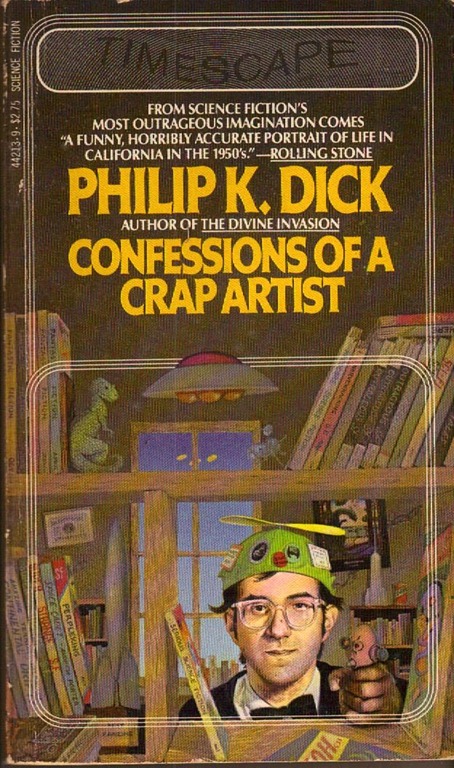
I mention these details partly out of nostalgia, partly to stress-test my memory, but mainly because “A Rose for Ecclesiastes” is a significant story. Roger Zelazny paid homage to the kind of science fiction I grew up loving as a kid. Back then I wanted Martians to exist. I wanted to believe intelligent life was everywhere in the solar system and beyond. As a kid in the 1950s and 1960s, I was a believer in a lot of crappy ideas. Philip K. Dick wrote a wonderful novel about such believers called Confessions of a Crap Artist. See my review.

Over the decades, in mainstream magazines, science fiction would be criticized by modern literary writers as fiction for adolescents. This always made science fiction fans furious, but I believe it’s true. Most of us just don’t want to grow up. I know I never did. Such criticism was like telling one of the faithful their beliefs were programmed into them as children but aren’t real. Most religious folks cling to their beliefs no matter how convincing the arguments are against them. I’ve gotten some older science fiction fans mad at me for saying atheistic things about our faith, science fiction.

Now that I’m looking back I see how science fiction is something I wanted to believe in, even though it’s mostly just fun make-believe stories. I could say it’s a cognitive perspective that I use to view reality. Unfortunately, I’ve reached an age where I have doubts about any realistic uses of science fiction.

I am like a preacher who has a good job as a paster who has lost his faith but is too old to get work at anything else. I’ve got to keep working, to still be good at my job, but without having faith. I still love science fiction, and I’ve come to admire it in new ways. Instead of a religion or philosophy, I think of it as an art form. I might not believe humanity will ever have interstellar travel, but stories about it can be quite creative.

Each of the stories in The Great SF Stories 25 (1963) worked in a new way for me in 2022. For example, as I read the Jewish science fiction humor of “Bernie the Faust” by William Tenn, originally published in the November 1963 Playboy. I wondered if Tenn was making fun of science fiction fans. In the story, a tough New Yorker businessman thinks he’s taking a rube to the cleaners by selling him the planet Earth, but then fears he’s sold out the human race to an alien. As a kid, I would have wanted to believe aliens were visiting us. Now, I wonder if Bernie was just delusional in thinking the rube was from outer space, and he’s a stand-in for science fiction fans, and Tenn was making fun of us.

In “Turn Off the Sky” originally appearing in the August 1963 issue of The Magazine of Fantasy and Science Fiction (F&SF), Ray Nelson fears a future utopian liberal America. The main character is a Beatnik anarchist who finds purpose in preaching anarchy but falls in love with a prostitute who still believes in capitalism and making money. In 1963, the only Beatnik I knew was Maynard G. Krebs. I didn’t discover the Beats until 1968, and now in 2022, I admire the story for its grittily realistic aspects, but as a kid in 1963, I would have been all caught up in the utopian counter-culture. “Turn Off the Sky” was probably written in 1959, and Nelson predicts many things that didn’t happen until the later 1960s, and explored ideas still relevant today. Many SF writers were very conservative, and even though Nelson was a childhood friend of the hippies’ favorite science fiction writer, Philip K. Dick, I could sense his conservative’s fear of socialism way back in 1959.

Regarding conservative philosophy, I could also see that in “No Truce With Kings” by Poul Anderson, first published in the June 1963 F&SF. As a kid, I wouldn’t have liked this story. As an old man, and lifelong liberal, I still didn’t like this story, but it’s actually interesting in 2022. Anderson imagines a Post-America that’s trying to rebuild. One group wants to recreate the U.S. federal government, but others want to maintain feudal states. Anderson proposes that people are only capable of managing small-scale governments, and the feudal system was the best size for human communities. You see this belief today, especially out in Idaho right now. This story won a Hugo award back then.

The value of reading these old science fiction stories isn’t that they were about the future, but they were about 1963, and reading them today shows how things don’t change.

Philip K. Dick’s story in this anthology, “If There Were No Benny Cemoli” also imagines a Post-America after WWIII, but further in the future. As a kid, I would never imagine a Post-America. I figured the United States would exist into the far future and dominate interplanetary and interstellar exploration. But reading these old science fiction stories I realize that many writers weren’t as confident. In 2022 I’m not confident about our future anymore too. In the story, humans who had colonized Mars return to Earth and the U.S. to rebuild, but they are soon in conflict with humans who had colonized the Proxima Centaurus system and have also returned to Earth to rebuild it too. PKD imagined quite a neat invention in this story. The New York Times was preserved by moving underground, and when it was liberated, turned out to be an AI that presented very accurate news, even becoming an oracle. Again, I see a political savviness that I wouldn’t have perceived as a kid but recognize now. The story isn’t about the future, but 1963. And like the other stories, things haven’t changed.

A more personally relevant story was by Clifford Simak, “New Folks’ Home,” about a seventy-year-old man retiring. Since I recently turned 70, this meant more to me now than it would have back at age 12. Lawyer Frederick Gray takes one last fishing trip into an isolated wilderness before moving into his retirement home. He injures himself and breaks into a remote cabin to save his life. There he finds a completely automated home that takes care of him. The home is an alien outpost on Earth, and it offers him meaningful work and longevity. The work is done by remote access like we do in our current pandemic, but with aliens in other star systems. I’ve always loved Simak stories for their gentle hopeful view of life. Simak wrote a huge number of stories and novels, many of which were about aliens among us, and intelligent robots. Like I’ve mentioned above, as a kid, I wanted to believe aliens could visit Earth, and we’d eventually visit them someday. I no longer believe interstellar travel will be possible. But I do think intelligent machines will emerge eventually – but that might be a delusion too.

One last story I want to mention is “They Don’t Make Life Like They Use To” by Alfred Bester. (F&SF October 1963). Linda Nielsen thinks she’s the last person on Earth. Like Ralph Burton, played by Harry Belafonte in the 1959 film The World, The Flesh, and The Devil, Linda is fixing up her apartment by taking whatever she wants from a deserted New York City. I mention this movie because it’s a favorite movie and I pictured it as I read “They Don’t Make Life Like They Use To.” I love the last person on Earth stories. My all-time favorite novel is this type is Earth Abides by George R. Stewart. As a kid, I wanted to be the last person on Earth, sometimes I still do. Isn’t that a weird desire? But it’s a popular theme in science fiction.

However, I’ve always thought it would be neat if the last person on Earth was actually the last person, but in these stories, someone else always shows up. In the movie, it was Sarah Crandall, played by Inger Stevens. Since Bester describes Linda as Nordic, I wondered if he saw the movie with the Nordic Stevens and decided to just start with a blonde. Also, in the last people on Earth stories, the second person is generally of the opposite sex, so the plot develops sexual tension. In a number of these stories, a third person shows up. Usually, it’s two males fighting over one female. Another movie example of this is The Quiet Earth (1985).

Bester brings about an interesting twist in the end that finally convinces Jim Mayo and Linda Nielsen to get it on. This satisfies us readers who have been waiting for that action, but it wraps up the story too quickly, at least for me. However, the ending reminds me of another last Adam and Eve story, “Quietus” by Ross Rocklynne.

This story combines several themes I loved as a kid. Being the last person on Earth. Rebuilding society the way I think it should be built. Aliens visiting Earth. Aliens discovering the last people on Earth. I have to admit in 2022 I don’t see civilization surviving for many more decades. But then, evidently neither did many science fiction writers back in the 1950s and 1960s. Most people feel we’ll muddle along, like always.

However, in 1963 I really didn’t believe civilization would collapse, or WWIII would happen. As a young person, I had faith in the future. I had faith in a lot of things that science fiction promised. I no longer believe in many of those promises. And for some reason, I think civilization will collapse sometimes this century. (I’m also reading a lot of archeology, and civilization collapse is the norm.)

Reading old science fiction is no longer about believing in the future. Reading old science fiction is about how much we got right and how much we got wrong. It’s probably because I’m old and turning cynical, but I feel the worse thing we got wrong was optimism about human potential. I think technology, society, culture, knowledge, etc. progresses, but not humans. We don’t change.

Science fiction also progresses and evolves. One concept that has emerged since 1963 is the idea of downloading human minds/personalities and uploading them into robots, clones, or virtual worlds. Essentially, the is a new version of immortality, and even heaven. I’ve never believed in this concept, and I have argued with many science fiction fans that do. Some passionately believe it, maybe as strong as the faithful believe they will be reborn in heaven.

We should be careful of the ideas we embrace. It’s so hard to tell if they are delusions.

JWH

2022 Book #2 – Bewilderment by Richard Powers

by James Wallace Harris, 1/16/21

I often wonder how young people today feel about the future. The only way to have hope is through massive acts of denial. Susan and I never had children, so I don’t know what it’s like to answer their questions as they grow up. Do you lie? Do you hide the news? What do you tell them about the metal detectors in the schools? How do you explain our handling of pandemics or climate change? What do you teach your kids about race relations and the politics of hate? What do you tell your kids about the thousands of failures we are facing as a society?

This is the core of the new novel by Richard Powers. Bewilderment is about raising a nine-year-old kid with emotional problems. He’s probably on the autism spectrum but is very high functioning. He probably has other learning disorders, but nothing is definite. He has trouble in school and his teachers want to medicate him with powerful psychoactive drugs. He has hair-trigger tantrums. His mother has died. How would you cope with such a kid? To make matters worse, the setting is the near future where things have gotten even worse than today. Imagine what the U.S. would be like if Trump was on his third term.

Bewilderment is not marketed as science fiction, but it’s set slightly into the future and talks about technology that might be possible soon. The story often references science fiction and uses its techniques, so I do consider it a science fiction novel. It’s the most gut-wrenching science fiction novel since Flowers for Algernon. If that novel wrecked you emotionally, you might not want to read this one. I found this one even more emotionally devastating.

Theo Byrne is the widower father of Robin (Robbie), a nine-year-old boy who is smart enough to know that humanity is on an insane self-destructive path and he can’t stop asking why. Robbie relentlessly wonders why his father, his teachers, or any of the adults he meets don’t act rationally. Robbie acts out, sometimes violently, sometimes in tantrums, demanding truth and honesty. Robbie is the one sighted person in the land of the blind. Robbie is the person we should all be. And Theo is constantly at his wit’s end trying to help his son.

Teachers want to control Robbie with psychoactive meds, and Theo is looking for any solution but that. Theo is a great dad. He constantly tries to engage Robin in insightful learning. Theo has two tools for calming Robbie. One, he calls on his memory of reading 2,000 paperback science fiction novels for engaging stories to divert Robbie from his meltdowns. Second, Theo is a scientist developing simulations of exoplanets for the day a new space telescope will be launched. He gets Robbie involved in these possible worlds that could be discovered soon. The basis of Theo’s work is to develop as many simulations as he can, so when the telescope detects certain conditions with an exoplanet they can match it to the simulations and quickly understand what we might be seeing.

Theo uses his simulations to visualize being on other planets to engage Robbie’s attention. This works at times, but often it only fuels Robbie’s awareness of what we’re doing to the planet Earth. For a nine-year-old, Robin can extrapolate brilliantly. His bullshit detector never fails.

Bewilderment progresses through one year of Theo’s and Robin’s life. Robbie is obsessed with memories of his dead mother, who was a lawyer for all the save-the-world causes. It’s through learning about his mother that Robbie finds some hope of controlling his emotions.

Like I said, most people will not consider Bewilderment a real science fiction novel. Bewilderment doesn’t have spaceships, galactic empires, time travel, robots, or dystopias — well, other than our own. The reason I like to think of Bewilderment as a science fiction novel is it uses all the sense of wonder I grew up with to give us hope for the real future we’re about to enter.

Unfortunately, Bewilderment shows our science fiction dreams are going to fail us. Or more exactly, we are going to fail them. The rap sheet for our species is long. The list of what we’re destroying grows every day. One of the things Richard Powers believes we’re destroying is our positive science fiction dreams. That like me, he worries about what hopes young people can still find in science fiction.

Science fiction has always been about hopes and fears regarding the future. What happens when science fiction only has fears to work with?

JWH

Why It’s So Important to Remember What I Read in 2021

by James Wallace Harris, 12/30/21

Reading is my sixth sense, how I explore the larger reality I can’t observe with my classic five senses. Every year I can only read so many books, making it important to wisely select the novels, nonfiction books, short stories, and articles I do read. Reading changes me. I shape myself by what I read. Each year I work to become more conscious by what I select to read. However, this self-improvement effort is very much like my efforts to eat healthily and avoid junk food. I’m never a saint.

At seventy, my mind is becoming like an old suit with moth holes. Words and thoughts leak out of my consciousness through little missing places eaten away by the moths of time. Remembering is something that’s become very important to me, as much as sex was on my adolescent mind.

The Reading List by Sara Nisha Adams is the 52nd and last book I read in 2021. It’s an accomplishment to read so many books in one year. And 52 is a good number. It means I averaged one book a week, and that’s a nice reading pace.

I’ve always wanted to be one of those superbookworms who could read 100 or 200 books a year, but my mind and memory can’t handle that much new content. I like to think one book a week is what my mind can handle, but I’m probably fooling myself.

52 is probably too many but I’d hate to read less. I feel I did a pretty good job of picking worthwhile reads, ones I still remember reading at the end of the year, but I have to admit, some of them were not necessarily the best books I could have picked. I will try harder next year. The problem is the conflict between reading books that expand my awareness, and books that soothe my soul.

One way to remember the books I read in 2021 is to remember my favorites, the ones I’d recommend. Links are to essays I wrote during the year.

New Fiction

New Nonfiction

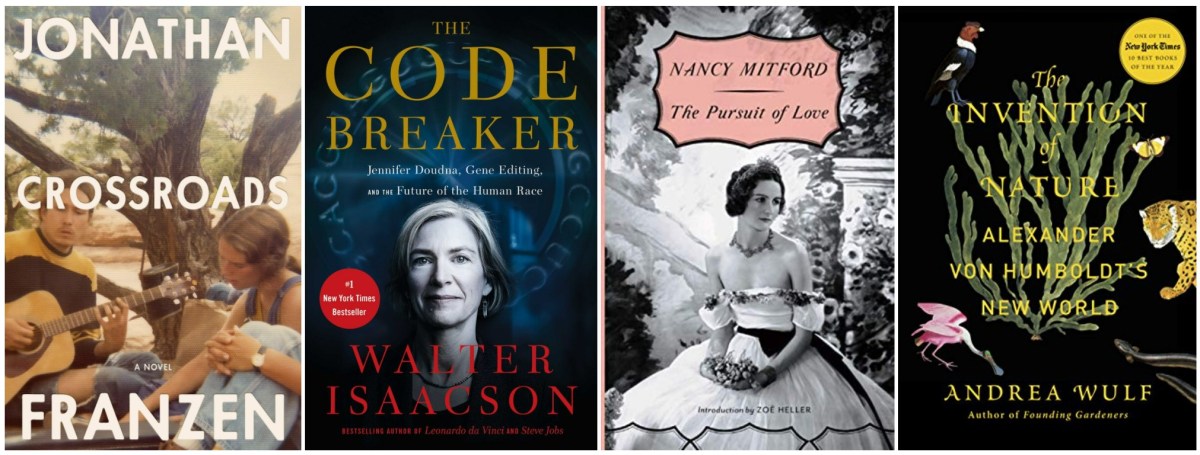
  • The Code Breaker – Walter Isaacson
  • Robert E. Lee and Me: A Southerner’s Reckoning with the Myth of the Lost Cause – Ty Seidule
  • Last Best Hope: America in Crisis and Renewal – George Packer
  • The Premonition: A Pandemic Story – Michael Lewis
  • Under a White Sky – Elizabeth Kolbert

Old Fiction

Old Nonfiction

  • The Invention of Nature – Andrea Wulf
  • Evil Geniuses – Kurt Andersen
  • The Art of Dying Well – Katy Butler
  • Hackers – Steven Levy
  • The Sisters – Mary S. Lovell
  • LikeWar: The Weaponization of Social Media by P. W. Singer

Another way to remember is to recall why I read certain books. I’m in a two-person book club with my friend Linda, I’m also a member of an online nonfiction book club, I’m in a Facebook group that reads science fiction anthologies, I have a personal reading goal to read all 25 volumes of The Great SF Stories edited by Isaac Asimov and Martin H. Greenberg, I like to read science fiction novels, I love to read popular science books, and I enjoy reading some contemporary and classic fiction.

Two-Person Book Club With Linda

  • Evil Geniuses: The Unmaking of America – Kurt Andersen
  • Horseman, Pass By – Larry McMurtry
  • 21 Lessons for the 21st Century – Yuval Noah Harari
  • Leaving Cheyenne – Larry McMurtry
  • The Art of Dying Well – Katy Butler
  • Robert E. Lee and Me – Ty Seidule
  • The Code Breaker – Walter Isaacson
  • Elderhood – Louise Aronson
  • Last Best Hope: America in Crisis and Renewal – George Packer
  • Crossroads – Jonathan Franzen
  • The Premonition: A Pandemic Story – Michael Lewis

Linda went on to read several more Larry McMurtry books, but I just couldn’t keep up with her.

Online Nonfiction Book Club

  • Underland: A Deep Time Journey – Robert MacFarlane
  • The Sisters – Mary S. Lovell
  • Robert E. Lee and Me – Ty Seidule
  • The Invention of Nature – Andrea Wulf
  • Noise (didn’t finish) –
  • Uncanny Valley (read in 2020) – Anna Weiner
  • Ten Lessons for a Post-Pandemic World –  Fareed Zakariia (didn’t finish)
  • Fermat’s Enigma – Simon Singh (didn’t finish)

I had read The Sisters, Uncanny Valley, and The Invention of Nature on my own and nominated those books. I skipped four books this year: Entangled Life by Merlin Sheldrake, Forgetting by Scott A. Small, Kindred by Rebecca Waggs Sykes, A Promised Land by Barack Obama.

Nonfiction I Picked

  • Hackers – Steven Levy (reread)
  • Yesterday’s Tomorrows – Mike Ashley
  • LikeWar: The Weaponization of Social Media – P. W. Singer
  • A People’s History of Computing in the United States – Joy Lis Rankin
  • Fifth Avenue, 5 A.M. – Sam Wasson

I love reading about the history of computers, and the history of science fiction. Fifth Avenue, 5 A.M. is about the making of Breakfast at Tiffany’s. I also love reading about pop culture history.

Facebook Group – Best Science Fiction and Fantasy Short Fiction

  • Year’s Best SF 1 – ed. David Hartwell
  • Orbit 1 – ed. Damon Knight
  • The Very Best of the Best ed. Gardner Dozois
  • The Year’s Best S-F, 5th Annual Edition – Judith Merril
  • The Dark Side – ed. Damon Knight
  • World’s Best Science Fiction 1968 – ed. Donald Wollheim
  • The New Space Opera ed. Gardner Dozois
  • The Year’s Best Science Fiction 3rd Annual – ed. Gardner Dozois
  • The Big Book of Science Fiction – ed. Ann and Jeff VanderMeer (58% finished)

This group gets me to read a great deal of science fiction short stories. We discuss one short story a day, but I don’t read every day’s story. Still, probably over 200 stories. I really enjoy this group, and I’m learning a tremendous lot about the history of short science fiction. I’ve probably read over 400 short stories this year because of other SF anthologies and magazines I read on my own.

The Great SF Stories

  • The Great SF Stories 16 (1954) – ed. Asimov/Greenberg
  • The Great SF Stories 17 (1955) – ed. Asimov/Greenberg
  • The Great SF Stories 18 (1965) – ed. Asimov/Greenberg

I’ve been working through this 25-volume series since 2018. I’ve become immensely fond of this series. It’s a shame they are out of print. I own all twenty-five in paperback, but I read them on my iPad from pdf copies found on the internet. I keep hoping the Facebook group to vote to read the entire run. We do start volume 25 on the 29th of this month. I’d love to finish off the series in 2022, but that would be reading 7 more volumes in 2022 and that probably won’t happen.

Science Fiction

  • The Ministry of the Future – Kim Stanley Robinson
  • The Man Who Fell to Earth – Walter Tevis
  • Klara and the Sun – Kazuo Ishiguro
  • Children of Ruin – Adrian Tchaikovsky
  • The Clockwork Man – E. V. Odle
  • Past Master – R. A. Lafferty
  • Of Men and Monsters – William Tenn
  • Lords of the Psychon – Daniel F. Galouye
  • The Dying Earth – Jack Vance
  • The War of the Worlds – H. G. Wells
  • Danny Dunn and the Anti-Gravity Paint – Abrashkin & Williams
  • A Gift of Time – Jerry Merritt
  • The Best of Walter M. Miller, Jr. – Walter M. Miller, Jr.
  • To Say Nothing of the Dog – Connie Willis

That’s a total of 26 science fiction books. Far more science fiction than I believe I should be reading. Each year I tell myself I should read less science fiction and more other kinds of books, but I can’t seem to break my life-long science fiction addiction.

General Fiction

  • Horseman, Pass By – Larry McMurtry
  • Leaving Cheyenne – Larry McMurtry
  • The Girl on the Boat – P. G. Wodehouse
  • The Pursuit of Love – Nancy Mitford
  • Love in a Cold Climate – Nancy Mitford
  • Don’t Tell Alfred – Nancy Mitford
  • Crossroads – Jonathan Franzen
  • The Corrections – Jonathan Franzen
  • The Reading List – Sara Nisha Adams

I’m disappointed that I didn’t read a new 19th-century classic. Last year I read War and Peace. I did read The War of the Worlds, but I’ve read it a couple of times before. I had planned to read Madame Bovery.

2021 Books

  • Klara and the Sun – Kazuo Ishiguro
  • Yesterday’s Tomorrows – Mike Ashley
  • Robert E. Lee and Me – Ty Seidule
  • The Code Breaker – Walter Isaacson
  • Last Best Hope – George Packer
  • Crossroads – Jonathan Franzen
  • The Premonition – Michael Lewis
  • Under a White Sky – Elizabeth Kolbert
  • The Reading List – Sara Nisha Adams

Each year I aim to read a certain number of books that come out during the year. Nine is pretty good for 2021, but I’m going to aim for 12 in 2022.

JWH

Can We Build Tornado-Proof Houses?

by James Wallace Harris, 12/15/21

The recent tornado in Mayfield, Kentucky has me worried. I’m old, retired, and have health issues, so having my home destroyed would be immensely stressful. I feel so sorry for people in disasters like this, but especially when I see old people having to be helped because they are so helpless. I fear being helpless.

One thing I noticed in the pictures from Mayfield is some buildings survived the devastation. My friend Connell told me after Hurricane Andrew hit Miami they realized how houses were poorly constructed and made changes to the building codes. The newer homes are much more hurricane-resistant. I’m wondering if the same kind of codes can be applied to protect homes from tornadoes.

However, I don’t want to wait for new building codes or move to a new house. I doubt there are practical retrofit possibilities. One of the things that trouble me about tornadoes and other forms of weather damage is having to leave my home. If the house is a complete loss, there’s no choice, but what if there’s only some damage? Say a tree crushes one side of the house. I’d want to rebuild, and I wouldn’t want to leave my partially good house either.

So I’ve been thinking of something else. People use to have storm cellars. What if I could have a tiny home or a mother-in-law wing addition to my house that was built to strict specifications, could it survive a tornado? Something that Susan, the cats, and I could live in while our house was being rebuilt, or when storms are about to happen. Would this be practical? And how much would such a building cost?

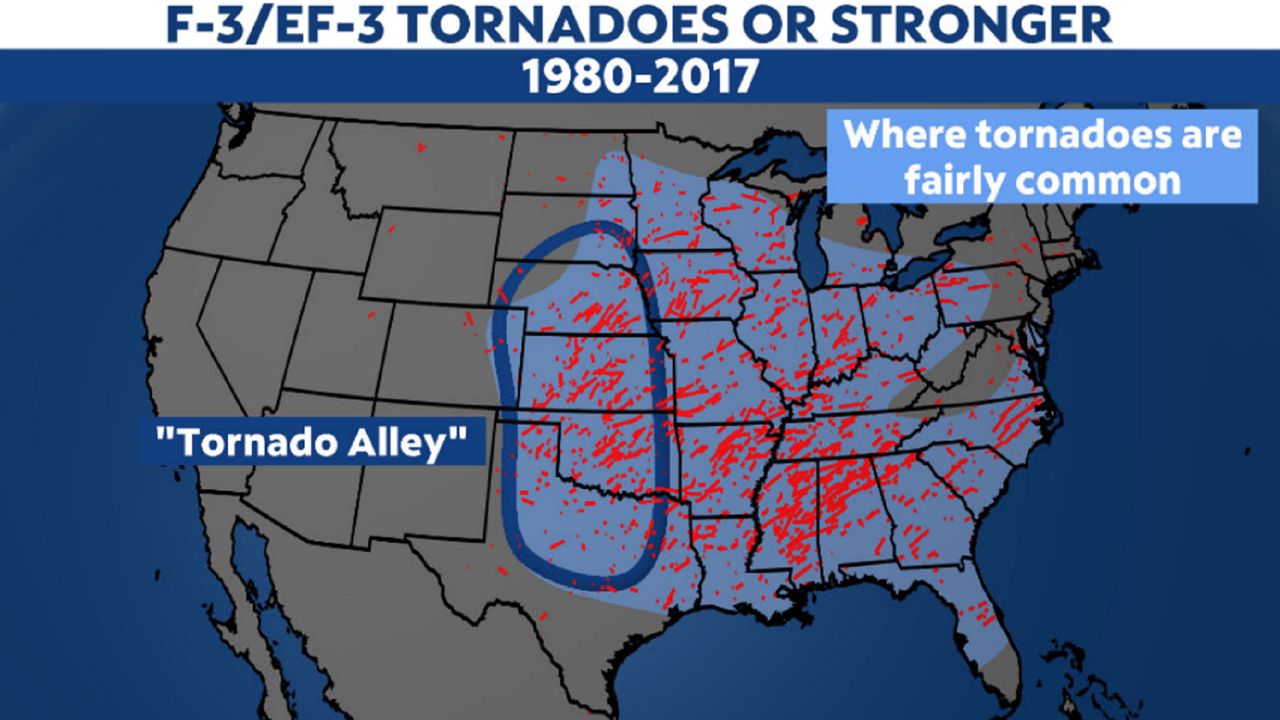
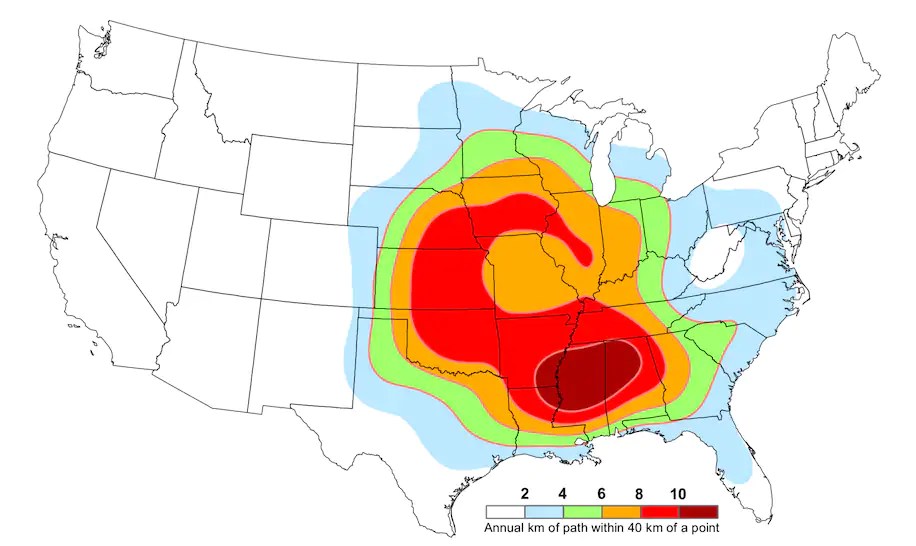
Is Tornado Alley Shifting to the Southeast?

I’m starting to see reports that Tornado Alley is shifting to the east, with some maps putting it where I live in Memphis, Tennessee. Other people are saying it’s not shifting with widening.

This article says tornado alley is an outdated concept and suggests a new shape.

Then I saw this article about high winds. Now that’s pretty scary.

How big would a lifeboat house or addition have to be? Should it be partially underground? Or could it be built with concrete blocks and a steel frame to withstand most weather-related disasters? It would need to have a bathroom and shower, but otherwise, everything could be in one room, including a kitchenette. Should we assume water and sewer systems survive most disasters? What about gas lines? Or should it be totally self-sufficient?

This is something to think about. Maybe it’s a business opportunity for a new industry. Could a prebuilt pod be designed and mass-produced to reduce the cost of such a need? Basically, a tank-like RV or small house trailer that could be partially buried might be a good design.

Remember the bomb shelter craze of the 1950s and 1960s? Maybe we’ll have a new climate change shelter craze?

JWH