When Does Abnormal Become the New Normal?

There’s two films showing at Sundance this week about web addiction.  Web Junkie from China is about teens going through rehab for internet addiction, a condition that China deems a psychological category for severe treatment.  Then there is Love Child, about a Korean couple who let their real baby starved to death while obsessively caring for a virtual baby.  A while back there was a spate of articles stating that 45% of Japanese women 16-24 were not interested in sex.  Then there are all those stories about Japanese children never leaving their bedroom – it even has a name, Hikikomori.  And the long term trend in America is to live alone.  Any many young women today claim their boyfriends would rather play video games than have sex.

Now I imagine there are parents in America who would love to send their kids to camps to get them away from their computers, but I’m not sure we think of compulsive internet use as an addiction.  When everyone is a pod person, it’s hard to know there’s another way of life.

How much is too much of anything?  When does something become an addiction?  Are bookworms who read all day book addicts?  Lots of retired people spend their entire days watching television.  Are they TV addicts?  Of course, people who work 60 hours a week are sometimes said to be addicted to their jobs, and called workaholics.

Evidently, there’s an assume dichotomy:  normal life and escapism, so if we spend too much time away from normal, we’re addicted.  But what if living in front of a computer becomes normal.  I was a computer programmer, and often spent my entire work day in front of a monitor.  And, then I came home and spent my evening in front of a computer writing.  Was I addicted?  Or was that just life?

I spend a lot of time at my computer desk.  I don’t play games, and I don’t stream TV and movies.  I do write, listen to music and read news stories, all of which I did before computers and the Internet, and what I would do if I didn’t have the Internet.  A couple years ago I lived three days without power and in the evening I’d write by pen on a yellow pad, listened to books and music on my iPod touch, and played old radio show tapes on an ancient Sony Walkman, all by flickering candlelight.

web-junkie

I know what they mean about addiction.  Younger people do spend a lot of time on the net.  But women my age spend a lot of time on their smartphones, and panic when they don’t have them.  And more people than ever seem to love living alone, often with their TV, computer, and game console.

Is the real problem video games?  Is the main worry that video are games more appealing than day-to-day living?  In the film clip above one young guy says he played World of Warcraft for 15 days straight.  Now, maybe that is an addiction.  However, if you have lots of free time, isn’t a computer game a higher form of stimulation?  It’s certainly more engaging than reading or watching television.  We live in a world of growing unemployment.  A good portion of our population is without engaging work, so why not turn to the Internet.  It’s better than drugs – where the original meaning of addiction comes from.  And what does it say when video games are more appealing than sex?

And there’s one more thing to consider.  Humans are self-aware beings living inside a skull of an animal.  We have five senses bringing data in from the reality outside of our body.  Could the Internet be our sixth sense?  Or an extension to our sight and hearing?  Doesn’t the Internet just extend the range of our body’s normal senses?  Can living alone on the Internet be considered the beginning of a hive mind?

Is hearing a real tree fall in the forest different from hearing a virtual tree fall in the forest?

JWH 1/22/14

How Many Days Can We Remember? How Man Days Should We Remember?

If we all lived to be a century old, we’d have 36,524.2 days to remember.  If you sat down with a pack of 3×5 index cards and wrote about one memorable day on each card, how many days do you think you could remember?  How many of those memories can you attached to a specific date?  Most of our life is quickly forgotten, but technology arising in the 20th and 21st century is letting us document our days.  So it might be possible to record our entire life.  What will that mean?

For the past week I’ve been scanning in old pictures Susan and I have inherited after the deaths of our parents.  Each photo documents a moment in time in our family and friends lives.  It’s a lot of work just to organize a couple thousand pictures, imagine if you had lifetimes of 24×7 video of all your ancestors to archive?  This Google Glass video will give you an idea of what that would be like

Google Glass will be more of a game changer than the smartphone, we just don’t know it yet.  I have almost a century of family photos, and each picture is just one frame, without sound, a visual instant in person’s life.  I look at my photographs and wonder about each, trying to imagine what my parents, grandparents, aunts and uncles, great aunts and great uncles, and countless cousins lives were like.  For most scenes I can only fantasize what they were.  How would it be different if I had 60 frames a second, times 60 seconds, times 60 minutes, times 24 hours, times 365 days, times 100 years?  3,156,000,000 images.  And that’s with sound and words and voiced emotion to explain everything.  I’d really know all about my mysterious ancestors rather than just guessing at what their lives were like.  I actually know what they thought about how they lived.

My parents, grandparents, and great grandparents all had photography and writing, but they left me very little evidence to explain their lives.  I wished they had left more.  I doubt they spent much time thinking about what they’d say to the future and spent all their conscious moments living in the present.  But we have another choice.  We can talk to the future, in high definition video no less.  What will we say?  What should we say?

Google Glass is the ultimate selfie.  Will it make terrible narcissists out of us all?  The philosophers tell us the unexamined life is not worth living, but can we take that too far?  Or will this technology make us humble and objectively self-aware?

Even the video above is telling – will we all try to experience as many film worthy events as possible, to validate our existence?

People put photos and write about their experiences now on Facebook, but how often do we do something worth remembering?  Facebook has become a public diary and most people chronicle their days documenting the most mundane of events.  Do all my family and friends need to know I went to a movie or ate out at a popular chain restaurant?  Do I need to remember that a year from now? Will anyone after I’m dead want to know about it either?  If I went on a hot air balloon ride or sky diving, then yes.  But what normal activities should we record for ourselves, our friends, and for our descendants who wonder about the lives of their ancestors?  I’m sure we don’t want to just remember birthdays, Christmases, graduations and weddings.

What moments in your life express and define who you are more than other moments?

How often have you experienced something that you said at the time, “I want to remember this moment forever!”

What days are really are worth remembering?

What if we imposed a limit?  Let’s say good manners and practical time limits will determine how narcissistic we can be, but I also think who our intended audience will determine the amount of information we should save.  Now that I’m getting older, I wish I had vast amounts of documentation about my life simply because I can’t remember most of it.  My father died when I was 18, and my grandfathers died before I could remember them at all.  My grandmothers died when I was about 20.  So I never really knew any of them.  I wish I had a book length autobiography from each, with plenty of photos and a DVD of videos.  And even though my mother lived to be 91, and I got to hear her side of things, I would like to know what she would have chosen to say about herself in such a summary.

Facebook and Google Glass will gather a lot of raw material for own autobiographies, if we decide to write them, and we probably should.  Such a memorial would be much more informative than merely having a gravestone.  Facebook, Google Glass, and smartphones with cameras and video cameras, are letting us to collect vast amounts of data about ourselves.  What we need now is software to help us organize it all.  And we need models to emerge on how best to summarize our lives, and rules of etiquette for how narcissistic we should be.

JWH – 1/20/14

Hey, Rdio, Rhapsody, Google, Spotify–Add These New Features, Please

I’ve been a streaming music subscriber for years.  First with Rhapsody, now with Rdio, but I’ve also subscribed to Lala, MOG and Spotify.  Each service takes a different approach to the best way of listening to music from a gigantic online library.  All provide the basics, search on artist, album and song, play album in order, random, repeat and repeat one, and create playlists.

New reports claim that music publishers now feel they are making more money per user from subscription services than by selling songs.  This implies that subscription services are succeeding – let’s hope.  I think there are many features that subscription services could add to their product that would make them stand out from each other, and maybe completely kill off the idea of owning music.

However, there’s far more potential benefits from subscription music than just playing music from a rented library.  One recent article claims that most artists will make more money in the long run from subscription music than from selling hit records, but it involves a new paradigm of promoting songs.  The old paradigm was to promote a hit, get as many people to buy it as possible, and then move on to creating the next hit.  The new paradigm is to create a portfolio of songs that are played forever by lifelong fans.  The old paradigm is based on selling the song once, and the new one is based on getting it played the most over time, year after year, decade after decade.

This makes techniques used to find songs and albums from almost a century of music, and adding tunes to personal playlists, the most important marketing tool for bands.  Theoretically, songs from the 1940s could becoming bigger hits than songs from the 2010s, if the right discovery tools were created.

It would be great if Rdio/Spotify/Rhapsody had an AI (artificial intelligent) program that could look at a person’s playlist and then guarantee them a list of songs from the past will be much loved.  Unfortunately, such computer magic doesn’t exist yet.  If there’s a Miles Davis track out there that you’ll play for hours on end in Repeat 1 mode, you’re going to have to find it yourself.

Some recording artists might be protesting streaming music for low royalty rates, and that might be true too, but streaming music is probably the best long term solution for helping new artists be discovered.  Digital Music News reported that 90.7 percent of all artists are essentially undiscovered.

With both Spotify and Rdio now offering completely free ad-supported subscriptions there is no reason not to try them.

So what features could the subscription music services offer to help fans find more songs to love?  Here what I want.

Top 100 Songs/Album/Artists By Year

Streaming music services need to quickly add Year to their search feature.  Having the New Releases, Current Hit Album/Song pages is just too damn limiting.  I need to be able to saying, “Show me what you got 1957!”  What would be even more fun would be to ask Rdio to play me the hit songs from the week I was born.  Or if I felt like returning to the summer when I was 14, tell Spotify to play music from the summer of 1965.

Who were the hit artists for 1938?  What labels were big in 1947?

I would also like to be able to play songs by release dates, and all songs from specific hit charts from a particularly week.

We might also need a composed year field, so I can ask for the music of the 1850s.

Far More Record Charts

Right now it’s possible to know which songs and albums are popular by everyone using the service, but that’s so limiting.  What I like to see is a chart of top songs being played by 62 year old guys who were computer programmers and who love science fiction.  Or if I wanted to sample another demographic, what songs are being played by college freshmen at the moment, what classical music symphonies are being made hits at the moment from Julliard graduates playing them, or what country tunes are being played the most in Nashville versus Austin or Denver, or what songs are loved by retired DJs who worked in the 1960s, or what songs are played the most by people over 90.  See what I mean?

Search by Catalog Number and Label

Now that subscription music services are vast libraries of songs that span decades, and record collectors have probably squirreled away all the great platters, it would be fun to play music historian on the cheap, and listen to music by label, especially all those rare labels put out by extreme music aficionados.

Years ago when I bought LPs, record companies would advertise other LPs on the inner sleeves of albums.  I especially loved the ones by ATCO and Warner Music.  For example, I’d love to be able to call up ATCO albums from 1970s, and just see what Rdio has.

Here’s a screenshot from MusicMatch for a search of Verve, showing a portion of the results near Janis Ian.  As subscription services grow, they will become closer to complete libraries of music history, and searching by label and catalog number will be more important.  Instead of collecting music from the past, it will be all about playing the music of the past.

verve

Browse by Genres and Subgenres

Sometimes I want to play music by genre, especially genres I’m not familiar with, but most streaming services have very limited ways of doing this.  Rdio is pretty nice for genre browsing.  I can browse by “Stations” and pick Jazz, and then have the choice of 10 sub-genre stations, and then a 5 position control that ranges from Popular to Adventurous.  But what if I wanted smooth piano jazz from the late 1950s?  Or to hear the musical heirs of Charlie Parker?  Right now this kind of feature is one of the best ways to discover new old music on Rdio, but it could be infinitely refined.

jazz

Better Playlists and Collections

Right now I can have playlists and a collection to organize my musical favorites on Rdio.  Playlists are just lists of songs.  I’d love to have Album Playlists, to group albums I’d like to play together.  I’d also like to have multiple collections, so I can keep my jazz albums separate from my rock albums.  I was keeping my Collection on Rdio limited to albums I liked a lot, but when I downloaded the local client, it looked at the albums I owned on my computer, and added all of them to my collection, which is now one big mess.

Playlists and the Collection is how I get to remember what I liked on Rdio.  Without them I’d forget tons of music.  When using a subscription music library it’s very hard not to be overwhelmed by the sheer amount of music I can play.  20 million songs, which is probably a million albums.  I’m lucky if I could sit down and write a list of my 100 favorite albums from memory.

When playing subscription music I mainly listen to what I already love.  But I, and new artists, want me to try new stuff.  Often I go through the weekly releases of new albums and try as many of them as I can.  There’s always more than I can try.  And if I find a song I like I can at it to a playlist, or add the album to a collection.  What I’d like to have is a personal library, which has unlimited collections.  Now some collections I want to name myself, but others I want Rdio to auto-generate.  So if I add Born to Run by Bruce Springsteen to my Rock Collection, it would automatically add it to a 1975 Collection, and a Columbia Record Collection, because there will be times when I’d love just to play my favorite albums from 1975, or even December, 1975.

Collections and Playlists are the way I distinguish my music from the background library of everything.  I want more tools for organizing my music, and even browsing it visually.

Higher Fidelity

Over time, as technology changes, I want streaming music to offer better fidelity.  It’s wonderful now, but I don’t want to be tempted by any new technology to come along that would make me want to start buying individual songs and albums again, either as digital files or on physical medium.  I’m over owning music.  Renting is so much more convenient.  I’m happy to let Rdio do all the library scut work.  Nor do I want to hop from one service to the next, as new companies promise features old ones don’t.  I’m currently thinking of subscribing to another service, adding Rhapsody or Spotify, for a while, just to see if they offer more.  But I’d rather they didn’t.  I invested a lot of love into Lala, only to have Apple ruin it.  Now that I’ve spent so much time with Rdio I want it to both succeed and keep competitive.

Export and List Features

A lot of work goes into discovering new music and creating playlists and collections, so if Rdio went out of business I’d loose a lot of knowledge I’ve put into their system.  I want to be able to export that knowledge to another streaming service.  Or if I subscribed to two streaming services, I’d like to sync that knowledge.  I’d also love some database tools to just study big data views of my music, or make printouts, like for putting on this blog.

Conclusion

The phrase “You ain’t seen nothing yet!” is an apt one for music streaming technology.  I’ve lived through so much technological change in my life, even just in the music industry, that I know nothing stays the same.  If I live another ten or twenty years I expect amazing things, and since I’m running out of time, I’d rather have them now.

Music Technology News

If you’re interested in reading more about subscription music, try these sites.

JWH – 1/19/14     
Aren’t Television Shows Just Short Stories for People Who Don’t Want to Read?

Many of my bookworm friends tell me they dislike reading short stories.  They claim short stories are too slight, not enough plot and character, to waste their reading time on.  Okay, I can buy that.  But isn’t a 22 minute episode of The Big Bang Theory just a short story?  Isn’t a 47 minute episode of Nashville, merely a novelette?  I’m currently listening to The Portrait of a Lady by Henry James that runs 24 hours.  Most current TV shows have a season of 24 episodes.  So if they were collected as an audiobook, the entire season of 30 and 60 minute shows would still be shorter than one literary novel.  Doesn’t that sound like an anthology of stories?

In other words, don’t people still really love the short story?  Some people like to read, others to listen, but most love to watch!  Don’t most of us crave two or three stories a day?

playhouse-90-2

At one time the short story was very popular in America.  There were hundreds of short story only magazines for sale at newsstands, and some writers like F. Scott Fitzgerald were paid big bucks for a single story.  Even when I was growing up in the 1950s and 1960s, most women’s and men’s magazines would contain at least couple short stories. 

Why did people stop reading short stories?  Why did they fall out of favor?  The obvious answer is they haven’t.  Pulp magazines just mutated into television shows.

How long have humans needed a daily diet of fiction?  Aren’t short stories just oral story telling in mass production?

It seems pretty logical to think folks just switched from reading a thirty minute story to watching one.  It’s also easy to assume that the half hour show is the short story, the hour show the novelette, and the movie is the novella.  But if we look deeper, I think there are some other concepts to consider, most notably the continuing character, the series, and the genre subject focus.

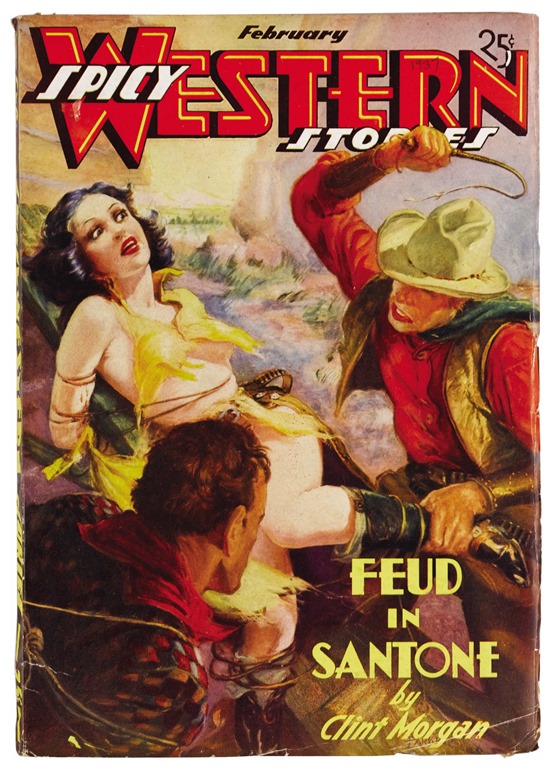
spicy-western-stories

At the beginning of the 20th century most magazines, even pulp magazines, were general purpose magazines for readers of all ages of both sexes.  But as the century progressed publishers created specialty subject magazines, some devoted to single characters, that catered to particularly reading tastes, and demographics.

If you read the latest volume of Best American Short Stories 2013, the annual anthology that collects the best of literary short fiction, you don’t see stories involving a continuing character, a series, or can easily be pigeon-holed into a micro-genre.  Now there are plenty of genre magazines devoted to the short story that do regularly publish this type of story, but their content seldom gets picked for the annual Best American Short Story collection.  For the last 50-75 years, publishers seem to be zeroing in on the continuing character novel, so that most mystery novels, and many science fiction and fantasy books, are now about popular characters involved in a series of adventures.  Doesn’t that sound like television?

doc savage

Television supplanted the pulp magazine, and is now inspiring how many writers write their books.  What happened to the slice of life short story, and the great American novel?  Writers prefer to develop a character and setting they stick to, like those in television shows.  It’s easier to sell, and sells better.

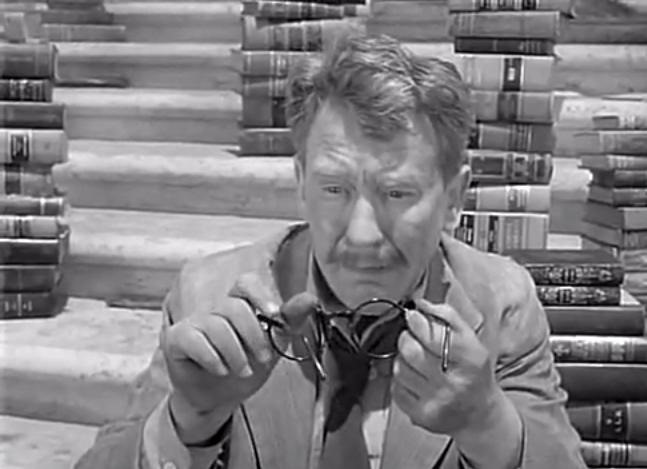
The best literary short stories are tiny slices of life, unique views of humanity.  Most novels from the early history of book publishing were always stand-alone tales, just longer slices of life, with highly detailed unique views.  In the early days of television there were many drama shows that featured a different story and cast of characters each week, the most famous at the time was Playhouse 90, but probably the most famous still somewhat seen via streaming, is The Twilight Zone.

The unique slice of life story was quickly supplanted by the continuing character show.  But that had already started in pulp magazines before the age of television.  I’m curious who the first continuing character was?  Sir John Falstaff appeared in three plays by Shakespeare.  And how many stories did Sherlock Holmes appear in?  Huck Finn and Tom Sawyer appeared in several books, and readers wouldn’t let Louisa May Alcott stop writing about Jo March.  If Louisa was alive and writing today, the March sisters would be a television series.

It seems most people love short stories, about favorite characters, in a setting and subject of particular interest to them.  Other people like stories stretched into novels.  While I love continuing character stories on TV, I avoid them in novels.  But I still love short, unique, slice-of-life stories, either written or dramatized.  I wonder why most people don’t.  I’ve been re-watching old episodes of The Twilight Zone, and some of them are very powerful.

Burgess-Meredith-Time-Enough-at-Last 

However, my brain quickly forgets them, or most of them.  In over fifty years I’ve never forgotten Henry Bemis, or the pig nose people.  If I had only seen one episode of The Big Bang Theory in my life, would I still remember it?  Maybe it’s memorable because I’ve stuck with it for seven years.  Apparently we crave long term relationships with our fictional friends.

Memorable novels are like short intense love affairs we never forget.  By that standard, it seems most people would rather have long term friendships.

JWH – 1/17/14

2014–The Year of the Short Story

Now that I’m retired, I have time to do everything I dreamed of doing, like writing a novel.  Well, novel writing hasn’t worked out like I fantasized.  I keep cranking out thousands of words that go nowhere.  My problem, is I’m building a crappy home before acquiring the skills to even build a good dog house. 

I need to become talented at constructing 1,000 word stories before engineering  a 100,000 word story.

w11_regisboi

The trouble is short stories are a dying art.  Few people read them.  If it wasn’t for would-be writers, I doubt if they’d exist at all.  That’s a shame because short stories are a wonderful art form.

My Zen Habits guru recommends focusing on one goal, and learning how to jettison all the extra weight that keeps my rocket from gaining orbital velocity.  Writing short stories will become my Walden Pond of fiction.

This morning, waking before dawn, I grabbed my Nexus 7 and read “The Ghosts of Christmas” by Paul Cornell, from Year’s Best SF 18, edited by David Hartwell, and was inspired by this science fictional retelling of Dickens’ classic tale.  In ancient days, mystical monks were known for finding revelation in the wee hours studying sacred scrolls.  Reading in the dark by the glow of my Android tablet, I realized I wanted to immerse myself into short stories, and put my mind into a 10,000 word reality.

Goal for 2014:  Develop the habit of reading and writing short stories every day.

JWH – 1/16/14