What Happens When Humans Aren’t the Smartest Beings on Earth?

What if people weren’t the crown of creation?  What if we had to play second banana to Humans 2.0, AI machines, visiting aliens, cyborgs or other potentially smarter beings?  I think our fear is they would treat us like we have treated chimpanzees.  What if intelligent machines emerge, homo sapiens superior evolve and we make SETI contact, and suddenly we’re number four on the totem pole of intelligence?
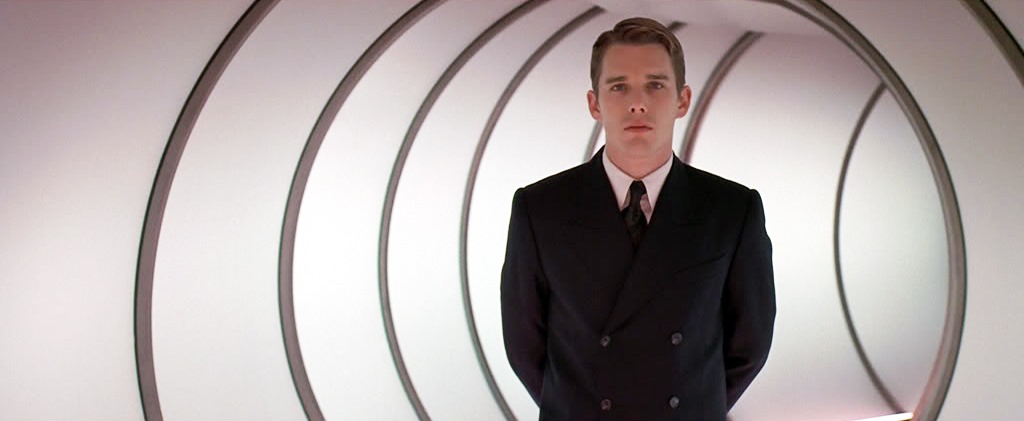
gattaca

Unless we destroy the planet and make ourselves extinct, sooner or later we’re going to be replaced at the top of the smart chart.   How will that effect us personally, our society, and how we think about our future?  Most primitive cultures when contacted by modern humans haven’t fared well.  Science fiction has been preparing us for centuries, but I’m not sure if science fiction has done a good enough job covering all the possibilities.

Possible Replacements

It doesn’t take a lot of time to think up possible replacements who could claim our throne as being the smartest beings on the planet.

  • Genetically enhanced humans
  • Naturally evolved humans
  • Artificial beings
  • Cyborgs
  • Uploaded humans
  • AI super computers
  • Robots
  • Androids
  • Alien visitors
  • SETI contact

I’m not sure if we’re not already seeing a natural selection in our species.  Our severely polarized society, divided between liberals and conservatives, between the scientific and the religious, between the secular and the sacred, might already be moving us towards separate species.  The conservative fraction that clings to the past is becoming anti-intellectual and anti-education.  If the scientific minded only breed with the scientific, won’t they produce a line of smarter humans?  Of course natural selection doesn’t always produce successful adaptations.  Some people have suggested the rise of autism comes from overly smart people mating with other overly smart people.  It might turn out that intelligence isn’t an important trait, or one vital for survival.

Then there is genetic engineering.  Think of the movie Gattaca, the old classic Brave New World, or Beggars in Spain by Nancy Kress.  We’re getting very close to making customized homo sapiens sapiens.  In just a few generations we could have a new species that make us look outdated.  Gattaca was a salute to the natural human, but was it realistic?  We loved Vincent for competing and winning, but can humans really compete with super humans?  Again, we’re assuming that intelligence is trait that wants to win out.

We might even be doing something now that will lead to a more naturally evolved humans.  As more women select Caesarian sections for childbirth, we’re changing an important factor that might lead to change.  Our brain size has always been limited to the size of the birth canal – now its not.  Over time we might see new adaptations.  Read Greg Bear’s Darwin’s Radio.

Work with our genome has shown that DNA is an erector set for building biological machines.  How soon before we start creating new recipes?  Whole new artificial beings could be created, or animals could be uplifted to human intelligence and beyond.  Think about the science fiction of Cordwainer Smith and H. G. Wells The Island of Dr. Moreau?

Google Glass might be our first step toward becoming cyborgs with auxiliary brain power.  Wearable computers, artificial limbs and senses could lead to supercharged brains and all those science fiction scenarios where people jacked into machines.

I’m not a big believer in uploading brains into computers, but a lot of people are.  Now that my body is getting old and failing, the idea is becoming more appealing.  People like Ray Kurzweil hope to find immortality this way, and such ideas have been the theme of many SF stories.  Sometimes those stories are wished for fantasies, and sometimes they are feared nightmares.

What I’m waiting for is the technological singularity.  AI super computers should be just around the corner if I can live long enough.  Many people fear AI minds with stories ranging from “Press Enter _” by John Varley to the latest movie Transcendence, but I’m hoping machine minds will be benign, or even indifferent to humans and animal life.

Who Do You Want To Do Your Brain Surgery?

If after we get bump down the intelligence list, how is that going to change society?  If you need brain surgery would you want a human or post-human holding the scalpel?  Or would you prefer an AI mind that is 16 times smarter than a person?  If a human and a robot were running for President, who would you vote for?  Liberals like smart dudes, but conservatives don’t.  They like old friendly duffers like Ronald Reagan.  But what if the robot had the combined intelligence of all of Congress, the Supreme Court and every CEO in America?

We’re already designing smart cars to drive us because it will be safer, and we already have planes with automatic pilots, how long before we have machines doing everything else for us?  Will we just sit around and eat bon-bons?

If we share Earth with beings more intelligent than us, won’t we ultimately let them run things?  What if they were smart enough to tell us how to handle global warming so we suffered the least, paid the least, but got the maximum benefits from changing our lives, thus making the Earth’s biosphere more stable?  What if they gave us wealth and security, and protected all the other species on the planet as well?  Would we say, hell no!  Would we say we prefer to take our chances with failure just so we could make our own decisions?

Democracy v. Plutocracy v. Oligarchy  v. Cyberocracy

We like to think we currently rule ourselves through collective decision making, but more than likely, we could already be an oligarchy or plutocracy, ruled by a limited number of rich people.  What if we could create powerful super computers that ruled us politically and ran the economy?  Would you prefer to be ruled by a handful of rich people, or a handful of smart machines?  Remember who flies your 787 now.  This idea scares the hell out of most people, but just how smart was George Bush at running the country, or how much better is Barack Obama, who most people would say is brainer?   What if decisions about taxes weren’t made by people filled with emotions?  What if we told the machines to maximize freedom, minimize taxation, maximize security, health and wealth, minimize pollution and environmental impact, and so on, and then just let them figure out the best way.

What If Post-Humans and Robots Are Atheists?

How will ordinary humans feel if their replacements reject God?  What if massive AI brains see nothing in reality to validate religion?  What if SETI aliens, say “What is a God?”  One of the common traits of western civilization impacting newly discovered primitive people is their demoralization of losing their gods.  Look what Europeans did to the Native Americans.  How are we going to feel when we’re invaded by post-humans and intelligent machines?  Will they make us move onto reservations?

The Art and Science We Can’t Imagine

What if our minds cannot feel the art and understand the science of our intellectual descendants?  We can look back over thousands of years, to what our ancestors have imagined, built and perfected, and understand what they created.  We know them because we’re an extension of who they were.  When greater minds come after us, they will understand us, but will we know them?  At what point will we no longer be able to follow in their footsteps?  Whether we like it our not, our brains have limits. We’ve always been used to exploring at the edge of reality, so what happens when we become aborigines to beings who see us as the first beings, and they are the later ones?  The ones who leave us behind.

Getting a PhD

Of course, being a scientist might not be as much fun if you had to compete with Human 2.0 folk, or AI minds.  Vincent in Gattaca pushed himself to inhuman efforts to compete against gene enhanced humans, but I’m not sure most people would do that.  AI minds could do a literature search for a PhD and distill the results in no time.  They would probably inherently know how to create and test a hypothesis, set up the experiments and research, and since they’d have math coprocessors in their brains, instantly do all the statistics.  Could any Human 2.0 or 3.0 individual compete with AI minds that are 16 or 64 times as smart as a Human 1.0 is now?

pug in lap

Life as a Lap Dog

If we couldn’t be the top dog, would we want to be a lap dog?  Or would we want to live like the Amish and exclude ourselves from the future modern world?  Can you imagine a mixed society of Humans 1.0, Humans 2.0, AI minds, robots, cyborgs, androids, uplifted animals and artificial beings all coexisting happily, or even roughly happy?  We don’t get along well with each other now, and we haven’t been too kind to our fellow animal citizens on this planet.  But then, maybe we’re the problem.

I already know I’m not the smartest geek in the group now.  I know I’m well down on the list of GRE scores.  I’m not a boss or a leader.  I’m not on the cutting edge of anything.  And most people are like me.  I putter around in my small land, ignoring most of the world.  Maybe that’s why I’m not scared of being replaced at the top, because I’m nowhere near the top.

You know, here’s a funny thing.  If an AI robot walked up to you at a party, one that has the brain power of 64 humans, what would you ask it?  What are you dying to know?  Is there anything the robot could tell you that would drastically change your life?  I’d probably say to it, “You read any good books lately?”

JWH – 4/23/14
Michael Bishop

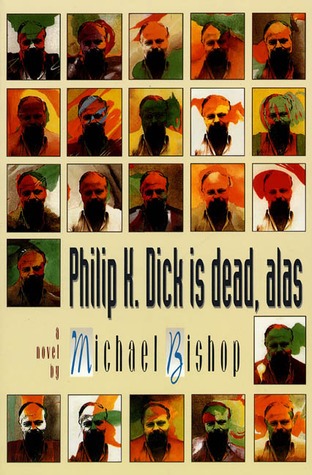
Joachim Boaz over at Science Fiction and Other Suspect Ruminations has asked several of his blogging friends to review the books of Michael Bishop.  Joachim explores the 1960s and 1970s looking for intellectual and philosophical science fiction books to review.  He especially loves their covers – that’s how I got hooked on his site – and collects them into visual themes.

Joachim invited me to contribute to his Michael Bishop reviews and I reviewed Brittle Innings, a rather strange novel about a 1943 minor league baseball team playing in rural Georgia one very hot summer.  The story is a lovely historical novel set during WWII, that shows a love of baseball, a literary feel for the south, and a fondness for Mary Shelley’s Frankenstein.  In Bishop’s literary fantasy, the monster lives and ends up as a big ugly slugger playing for the Highbridge Hellbenders as Hank “Jumbo” Clerval, but the story is really about a seventeen-year-old boy from Oklahoma, Danny “Dumbo” Boles, that gets a chance to play semi-pro ball because he’s too young for the draft.  Hank plays first base, and Danny plays short stop, and together they achieve minor fame as Dumbo and Jumbo.

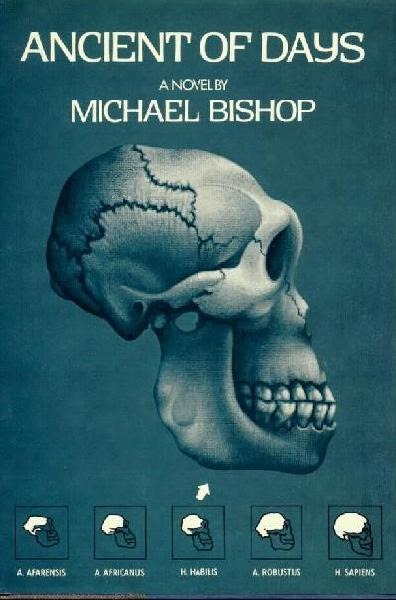
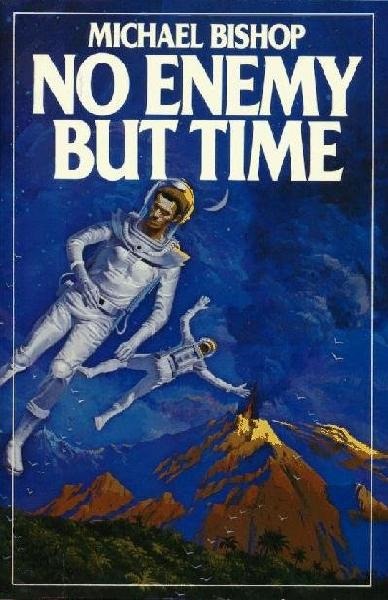
Michael Bishop wrote over a dozen novels from 1975-1994 that got a good deal of attention in the science fiction and fantasy genre, including winning a Nebula for No Enemy But Time (1982) and a Locus Award for Brittle Innings (1994).  No Enemy But Time was chosen for the book Science Fiction: The 100 Best Novels by David Pringle.  It also made my Classics of Science Fiction list.

Joachim feels younger readers need to be introduced to Bishop’s work, and thus the series of guest reviews.  I’m very glad I read and reviewed Brittle Innings because it makes me want to go read more Michael Bishop.

no enemy but time

ancient

Philip K. Dick is Dead

transfig

brittle

JWH – 4/23/14

Transcendence–Why Is This Film Only Getting 19% at Rotten Tomatoes?

I went to Transcendence thinking I’d hate this film because of all the bad reviews it’s getting, but to my surprised I ended up enjoying it way more than I imagined.  I went with two friends – Laurie walked out, and Ann said she liked it so much she wanted to see it again.  I thought Transcendence had some big problems, but overall it was a nice exploration of the idea of brain uploading.  Coincidentally, I’m listening to Accelerando by Charles Stross this week, and the science fictional ideas in the book overlapped nicely with those of the film.  Maybe I enjoyed the film merely because it was more fuel for the ideas I’m entertaining at the moment.

If you read the reviews I do concur that the film is lackluster in action, that most of the acting was subdued, and the plotting is clunky, but it just didn’t seem that bad, not a 19% rating at Rotten Tomatoes.  If you compare Transcendence to the dazzling Her, another movie about evolving computer intelligence, yes, this film is slight, but is it that bad?   I’ve seen films I thought were much worse get much higher scores at RT.

I have a hypothesis to test.  Does the acceptance or rejection of science fictional ideas in movies prejudice critics and fans opinions of a science fiction movie?  So if a movie explores an idea you hate, you reject the whole movie?

I wondered, if Transcendence presents ideas that people don’t like?  To talk about those ideas, I’m probably going to reveal some plot points, but many of these are in the previews.  The movie is about three AI scientists, one of which, the husband of the couple played by Johnny Depp, is shot by anti-AI terrorists and his wife saves him by uploading his mind into a computer.  Uploading also happens in Accelerando, and like that book, they also cover super technology brought about by post-human minds.  The book covers vast stretches of time, but in the film, all the advance technology comes out in two years.  This scares the regular folk in the flick, who feel they must destroy the Frankenstein AI.

Are movie goers tired of films about sentient computers?  Do they find post-human life offensive?  Are the networked humans too much like zombies to them?  Is nanotechnology just too scary to think about?  Or, was the ideas in the story fine, and they just didn’t like the writing, presentation, acting or settings?

TRANSCENDENCE

Science fiction books and movies have a long heritage of tales about intelligent computers.  Sometimes they are evil (Colossus), and sometimes they are fun (Short Circuit).  In Transcendence, it’s ambiguous.  Is that the problem?  Uploading minds is not as common, but there’s plenty of precedent (The Matrix).

I’m a little tired of science fiction being about saving the world.  Why does science fiction always have to involve a big threat to all of humanity?  There was no need to involve guns or violence in this story.  Gattaca was the perfect science fiction movie to me.  It was a personal story.  Ditto for Her and Robot and Frank.  Can’t we have a story about a super intelligent being without involve armies and terrorists?  Or maybe critics and audiences didn’t like this movie because there wasn’t enough action and explosions.

Or was the film disliked because it suggests that ordinary people will be obsolete?  What’s weird is movie goers love mutants in superhero comic book stories, but they don’t seem to like post-humans.  A human that can fly is fine, but one that makes us look past our due date is not?

Audiences are more forgiving than the critics at Rotten Tomatoes, and the audience response at RT was 47% for Transcendence.   That’s pretty low for audiences.  Maybe I should just accept that this film was a dog, and maybe I liked it because it was about some of my pet topics.  That does fit in with my hypothesis – I liked it for its ideas, and others hated it for the same ideas.   I really hated Marvel’s The Avengers, which got a 92% critics/91% audience rating at RT, and I disliked the movie intensely because of its ideas.

I wonder if movie makers could save a lot of money on special effects if they merely created science fiction movies with extremely popular science fictional ideas?

JWH – 4/22/14

Do They Love Old Vinyl or Do They Love the Old Music?

Check out Audiophile Records – What Are They? over at RareRecords.net for the latest on audiophile vinyl.

This morning at The Huffington Post, Peter Dreier describes how his daughter Amelia has discovered his old vinyl record collection.  Last night at the movie Transcendence, the future tech scientists played their music on ancient tech vinyl – it made the couple seem hip in their uber-geekness.  All over the world, young people are rediscovering record players and LPs.  I have to wonder though, are they embracing the quaint technology, or the old music?

record_player

When I was young and discovered 1930s big band music in the 1970s, it wasn’t by playing old 78s.  All the old music Peter Dreier’s daughter discovered is available on Rdio, Pandora or iTunes.  Why did it take finding dad’s old LPs to get his twins interested?

Year before last, I got back into vinyl LPs again because of nostalgia, but I’m giving them up again.  I love holding records and their covers, but I hate playing them.  Yes, their sound is retro-warm, but it’s like going back to VHS video.  I just got sick of the skips, pops and skates.  Even though I still call our refrigerator the ice box, I wouldn’t want one that actually required blocks of ice.  I’m an old fart, but I love convenient technology.

Can’t young people discover old songs without rediscovering old LP albums?  Or have they discovered they love holding music after growing up with invisible files?  They should rediscover CDs.  They sound better, are easier to play, and you can hold them too.  Will young people go and buy all those old albums at $25 a pop as FLAC files for the Pono when it comes out?  They are used to free music on the internet, and free LPs from their parent’s attics.

I’m actually ditching my LPs again so I can discover new music.  The time I spent shopping for records and monkeying with getting them to play is better spent on actually listening to music.  Rdio and Spotify give me access to millions of albums – I just need to find clues for what to try.  I do this through reading.

Whenever I read a story or article and someone mentions loving a particular song or album, I go play it.  Rdio makes it that easy!  I just read The Mayor of MacDougal Street by Dave Van Ronk which inspired me play many forgotten late 1950s early 1960s Greenwich Village folk artists, and make a new playlist.   I watched 20 Feet From Stardom and played the solo albums by these great backup singers.  I read The Wrecking Crew by Kent Hartman about 1960s studio musicians and played many Phil Spector Wall of Sound hits.  And I’m trying all the 1940s and 1950s jazz greats because of reading Jack Kerouac.  If I had waited to find all these artists in old record bins I might not never have discover them.

Discovering great music takes study.

I think it’s great that kids are discovering records and record players.  I think it’s great that they are discovering our generation’s music.   Vinyl collecting makes a nice hobby.  But don’t let be your only path to old music.   Would Peter Dreier’s girls have tried old music if their dad hadn’t spent so much time talking about the concerts he went to as a kid?

Talk to your parents and grandparents.  Go through their music.  If you discover you love the Beatles, read books about the Beatles and the songs and bands they grew up loving.  Ditto for any other artist you find you love.  It’s been long enough for these bands to have become history.

I’m exploring classical music on Rdio through listening to “How to Listen to Great Music” by Professor Robert Greenberg for 1 credit at Audible.com.  I also bought a paperback book he wrote on the same subject from Amazon.  (If you want the video from The Great Courses, wait until it’s on sale.)  I also bought 1001 Classical Recordings You Music Hear Before You Die on a remaindered shelf.  Keep an eye at Barnes & Noble’s remaindered books, music history books are very common.

When you play old albums, look at the inner sleeves.  They often have ads for other albums on them.  Call them up on Rdio or Spotify.  Go to audiophile sites like HDtracks or audiophile USA to see what’s being reprinted and look them up on streaming services, or even try to find the original albums used.  If you really get into vinyl, the real fun starts when you hear about a rare album that you’ve just got to hear, and tracking it down becomes a quest.

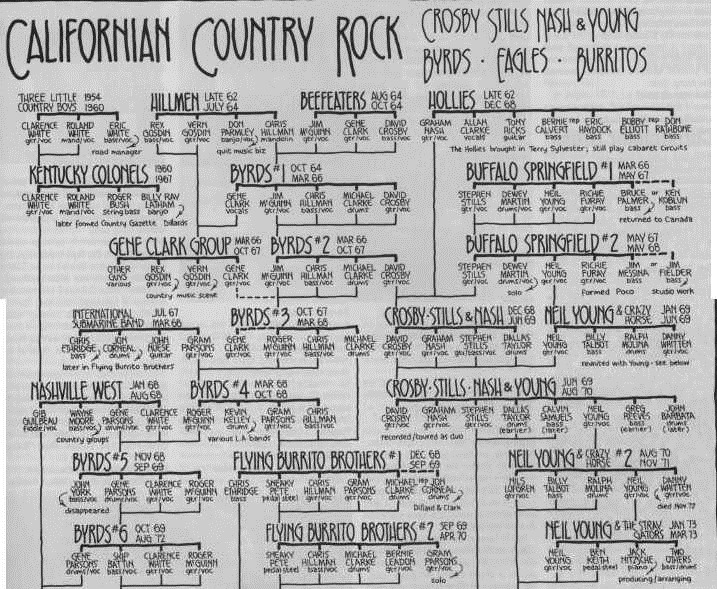
A lot of kids are discovering The Beatles, but I’ve yet to hear any of them talk about The Byrds, or Buffalo Springfield.  Just study this chart and try to track down all the albums on the Californian Country Rock chart that shows a musicians family tree showing the children groups formed from the breakup of the bands The Bryds and Buffalo Springfield.  Most of these albums are available on Rdio and Spotify.  Click for larger image.

byrdstree

If you end up loving 1960s and 1970s rock music you discovered through your parent’s old albums, a cool way to time travel to the past is subscribe to The Rolling Stone, and then sign up to use their free archives to reread old issues and their album reviews.

There are many record collecting and music review magazines in print and on the net.  Once you get out of the trap of only listening to current hits, and start time traveling through the past, discovering new old music becomes an addiction.

Just for fun, here’s an old favorite of mine that you might not have found in grandpop’s old records.

http://rd.io/x/QJhDPkcodw/

JWH – 4/21/14

How Many Topics Do You Love To Talk About?

When you’re at a party and you hear other people talking, what topics draw you into their conversations?  If you use Flipboard, Zite or News360, what subjects do you follow?  If you use Google Alerts, what news do you want to keep up with?  If you want to be a know-it-all, what areas of knowledge do you want to master?  If you were a contestant on Jeopardy! what categories would you hope would show up?  If you want to get a Ph.D. what would you want to write your thesis on?

zen1

I think we all have pet topics we like to think, talk and even write about, but how many can we realistically keep up with?  Yesterday I was reading this fantastic article about  clean coal at Wired and realized that its topic is one that will impact all of us for the rest of our lives.  Carbon sequestration, or carbon capture and storage (CCS) is not the sexy topic that will impress your friends or cause people to gather around you at a party.  [Idea:  Should we all take on a few important topics to collective worry about?]

That makes me think not only do we have a number of topics that always attract our attention, but we have different kinds.  Some are fun, some are serious, some are just obsessive.  We’ve all have friends we avoid certain subjects because once they start talking they won’t shut up.  Just mention Obama to a Fox News junky to know what I mean.  Yet, isn’t that fanatical focusing the thing that defines us?  Isn’t one way we define ourselves, or our friends, is by the topics they love?  If we use the label jock, geek, hipster, Republican, liberal, artist, don’t we paint a topical picture of how those folks think?

Are the aspects of reality we dwell on the genes of our personality?

When we promote ourselves on dating sites, don’t we paint ourselves by our interests?

This got me to thinking about my own interests.  How many do I have?  How much time do I spend keeping up with each subject?  How much do I enjoy it when I meet other people interested in the same subject?  Is the closeness of friendship related to how many topics we share in common?  How many of my favorite topics are serious subjects, and how many are just for fun?  How consumed am I by each?  Could I rate them 1 – 10 on how important they are to me?  If I had a Billboard Top 100 of Jim Harris topics, could I rank them, plus code them with symbols that showed a growing interest, or waning?

Right now, I couldn’t be that specific with a list of my interests, but it might be rewarding to try make such a list.  Programming an app that track interests, their intensity and their waxing and waning might be a fun project.  I wonder if other people find this idea interesting?  I might start with a spreadsheet and see what happens.  The new “in” topic I often see on the web is decluttering.  People want to get organized, simplify their lives and their possessions.  I wonder if they’d like to organize their interests?

Recently I decided to get rid of LPs again.  For a while I was caught up in the vinyl retro movement, but I discovered there’s a reason why I gave up vinyl when CDs came out.  Now that I’m retired and have all the time in the world to do all the things I dreamed of doing I realized that a whole bunch of things just ain’t going to happen.  In other words I think I have a whole list of topics I’ve lost interest in.  And there’s some new topics that are popping up that I need to pursue.  For instance, I need to sod my yard, but I thought, what would be the best carbon footprint yard to help fight global warming?   So if I had an app that tracked my interests, I’d delete LPs/vinyl and add environmental friendly landscaping.  I wonder how many friends I have that might want to talk to me about carbon friend weeds?

It would have been interesting to have this interest tracking app starting when I was a little kid, if it had some kind of historical record of my interests over my lifetime.  I believe some topics would be life long, and others fleeting, and others would come and go.  Books, music, television and movies would stay constant, but vary in their details.  Science and history topics would wax and wane.  I got interested in computers in the 1960s, and started tech school in 1971, and became obsessed in 1978 when I decided to buy my own microcomputer.  My last three computers I built myself.  Of course, it seems our whole society has a passion for technology now.

I have a growing interest in the 19th century, especially for literature, science and history, but also music, math and philosophy.  I wonder how many of my friends think about the Victorian era?  If I was at a party and heard people talk about Anthony Trollope or Charles Babbage I’d be overjoyed and overcome my shyness to talk to them.  The last party I attended I found a friend for the night by striking up on conversation on popular science books about physics.  And I’d really like to meet some people who are interested in 24 bit FLAC music files.

“One of Us Must Know (Sooner or Later)” just came on the Rdio playlist.  One entry to add:

  • Bob Dylan (1965 – present)

http://rd.io/x/QJhDK3aErw/

JWH – 4/20/14