A New Look

path-through-trees

If you are a regular reader of Auxiliary Memory you’ve notice that things look different.  The URL has been changed to be easier to remember – http://auxiliarymemory.com.  The purpose of the new layout is to make online reading more pleasant, and to simplify the look on smartphones or tablets.  There is one simple menu at the top of the page under the three horizontal line symbol.

My new goal is to write more enjoyable essays to read.  Essays with more content and structure.  This will involve more research and study.  Most readers come to this site because Google directs them here, but I do have a few friends who are regular readers.  Readers from Google are researching a topic.  Now that I’m retired I have more time to study, and this gives me an opportunity prowl the web for fascinating subjects to write about.  This exercises my aging mind and improves my writing skills.  Writing has become my main retirement hobby.

I’ll continue to write biographical pieces, but I want to write less about me.  As I’ve worked to research new subjects I’ve learned that journalism is  stimulating and challenging.  My hit statistics show certain kinds of essays get no hits.  There are many reasons for this.  First, the essay is blather about nothing, so there is nothing for Google to index.  Second, many other people have written about the topic better and Google points to their essays.  Or third, I’ve written about something that no one even bothers to query Google.

Yes, I do have friends and a few subscribers that read whatever I write, and I’m grateful for their encouragement.  To replay their kindness I feel inspired to work harder.  I must write about things that interest me, but the challenge of being a writer requires I be more interesting to others.  The simplicity of my new layout is intended to keep my focus on words and sentences worth reading.

JWH – 9/20/14  

Is There A Tech Solution To Solving All Crime?

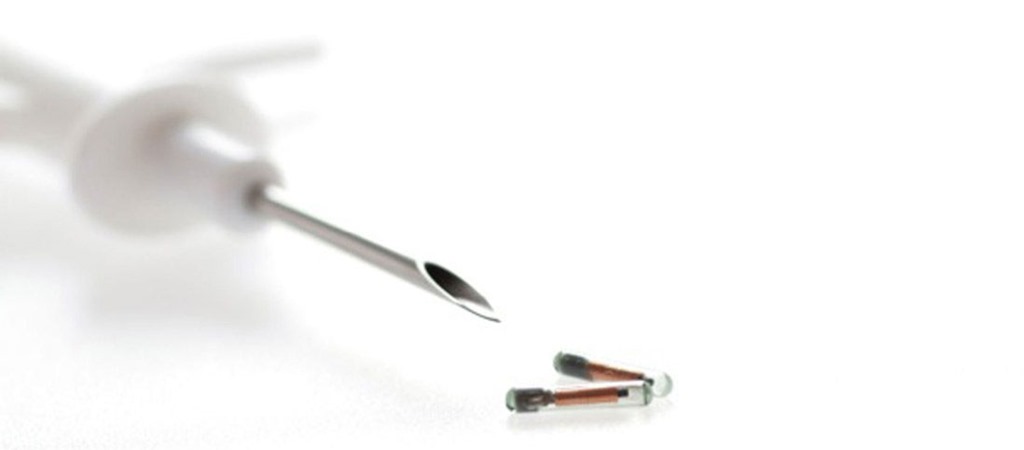
Imagine if a tiny device was implanted in every human at birth that reported its identity and location to a central network.  How could criminals get away with crime if we knew who was near anyone when they were assaulted, kidnapped, raped or murdered?  If you wanted to snuff out your mortal enemy you’d have to wait until many people were near your victim and then hope to prove it wasn’t you, or kill at a distance.  Such a device would aid law enforcement to solve most crimes, probably deter most criminals, and make mystery novels very hard to write.  It would also make it hard to rob banks, burglarize houses, commit arson, steal cars, etc.

embedded-chips

And what if everyone also had an embedded device, like a tiny third eye, that videotaped everything they did – so we’d have almost perfect evidence of people’s actions and who was doing what to them.  All crime would have to be committed by drones and robots.  Any science fiction writers reading this? Here’s a free idea for a futuristic whodunit.

I’m not sure if we’d ever accept such technology.  We abhor crime, but crave privacy.  Yet, as more people fear crime, it pushes them to embrace more technology to fight crime.  The gun has always been the great equalizer, allowing the meek to fight the mighty.  Surveillance cameras now spy on the sneaky.  Alarm systems warn us of home invasions.  We’re constantly applying technology to solving crime.  Would people vote for universal system of identity and location?  I’m sure parents would consider it essential to track their kids – probably there’s nothing more gut wrenching than missing children.  But would you give up your privacy to deter violent crime?

I’m sure we could come up with controls so adults could still sneak around on their spouses, and kids could have some freedom to do things without their parents knowing.  We could make laws so the device couldn’t be used unless their was a crime.  I think many people would love such technology, but I can’t help feeling that it would terrorize a large segment of the population.  It smacks too much of Big Brother and 666.

JWH – 9/19/14

Raspberry Pi—Can An Old Dog Learn New Tricks?

My friends keep asking me:  “What do you all day now that your retired?”  “Puttering around in my small world,” might be one answer, but it’s not very specific.  One thing I’m actually doing, is playing with the Raspberry Pi, a gadget designed to teach kids about technology.  In some sub-cultures of the Geek world, the Raspberry Pi is a very popular little device.  It’s one of those toys that many grown-up kids love too!  I’ve always felt guilty for giving up on math when I was young, so I’m using my Raspberry Pi in an attempt to relearn math.  Maybe even go further than I did the first time around—but that might be Pi in the sky.  I’m just starting, and won’t know for months or years.  I’m not sure if it’s even possible for an old dog like me to learn something that hard and abstract.  I piddle at it a little bit at a time, whenever I feel like it.  I hope I can push myself to learn new things, even things that were hard for me to learn when I was young.  It’s an experiment, and the Raspberry Pi is a cool tool to conduct that experiment.

The Raspberry Pi is a small, single circuit board, that is a complete computer for $39 at Amazon.  It’s used to teach programming, mathematics, automation, robotics and embedded systems.  I had three reasons for buying the Raspberry Pi.  First, I read that it came with a free version of Mathematica.  Second, I wanted to learn Python.  Third, I wanted feel the same kind of fun I had in the 1970s and 1980s, with old 8-bit computers like the Atari 400 and Commodore 64.

The Raspberry Pi has been a success at teaching kids, so what about adults?

I bought the Model B a couple months ago, before the Model B+ came out.  Be sure and get the B+ now.

The Raspberry Pi mainly appeals to Do-It-Yourselfers and Makers.  It’s not a turn-key product.  You can buy just the B+ board if you have lot of computer junk sitting around the house to make it work, and get off with just spending $39.  You’ll need a USB keyboard and mouse, and if you want Wi-Fi, a Wi-Fi adapter.  I bought my Raspberry Pi as a little kit off Amazon ($62) that included the SD card already preformatted and loaded with  NOOBS, a power supply, HDMI cable, plastic case and WiFi adaptor.  If you want to save money and have a SD (microSD for B+) card lying around, it’s possible to format one yourself with a free download.  At first, I hooked it up to the Ethernet wire, and used the two USB ports for keyboard and mouse, but later moved the whole setup to another room, so I had to add an old USB hub to the first USB connector and the Wi-Fi USB to the second.

I bought the Amazon Basics keyboard and mouse for another $15.  But I now wish I had spent $9 more for a wireless keyboard so I could skip the USB hub.  My Raspberry Pi seems to be a growing octopus of wires.  If you start with the B+ model, it has 4 USB ports, removing the need for a USB hub.   Remember, the B+ model requires a microSD card.

I should mention right up front that the Raspberry Pi is not a fast machine.  If you lack patience or do not like to tinker, then the Raspberry Pi will only confuse and annoy you.  To be honest, I bought this $39 computer to get a free copy of Mathematica.  The cheapest other way to get Mathematica is to buy the home edition, which is $300 – or the new $150 a year online version.  Mathematica recently updated their Raspberry Pi edition to v. 10, their latest.  Wolfram is being very generous.

I’m hoping that Mathematica will give me a leg up on relearning math by making math more visually fun.  Python is also used by mathematicians, scientists, statisticians and big data miners.  Even though the Raspberry Pi is promoted as an educational tool the the young, it has tools suitable for grade school through graduate school.

If you want just want to learn Python and Linux, I’d recommend putting Ubuntu on any old machine you have – it will run much fastest than a Raspberry Pi.  Buying a faster SD card could speed up your system.  Check for compatible cards here.  It’s also possible to have different versions of Linux to boot up on different SD cards, and even other OSes. Even Raspian might be upgraded to run faster.  Having the Pi is essential for the free copy of Mathematica, and a fun gadget electronic and robotic projects, but most of the programming features can be installed on your existing computer.

I hooked my Raspberry Pi to an old HDTV via the HDMI cable, although you can hook it to your existing monitor if you have an extra HDMI port and just switch sources.  And I did that to begin with, but having two keyboards and mice on the desk is a pain.  I moved my whole setup to another room and think of my Raspberry Pi as my math studying computer.  It’s also possible to have a headless system, where the Raspberry Pi runs without being connected to a monitor or keyboard/mouse, and you remote into it from your main computer.  I might ultimately do that.

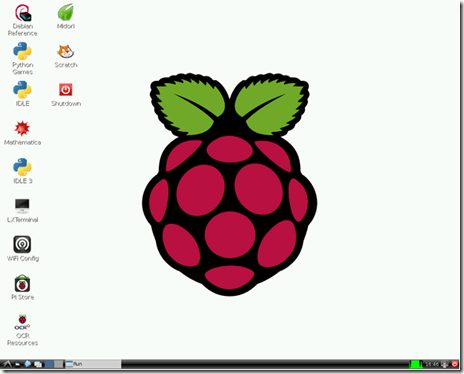
I lucked out and did everything without referring to any instructions.  And I was lucky.  When you first boot up you see a text-based configuration menu which OS did you want to install.  I guessed that I wanted Raspbian – which turned out to be right, because Raspian comes with the free version Mathematica and setups to program in Python, the reason why I bought the Raspberry Pi in the first place.

Installing Raspian takes a while, but after that you’re shown another text based menu – raspi-config.  If you live in the United States use the config_keyboard option, the default is for Great Britain.  If you get funny things from your keyboard, this is the problem.  I then told it I want to boot up in the GUI and restarted.  Now my machine boots into Raspian.
Raspian

I then ran WiFi Config (wsa_gui) to configure the Wi-Fi, and put in my password.  Again I guessed and lucked out at what to do.  If you have no Linux experience, you will need to find instructions for all of these steps.  Because people set up their Raspberry Pi machines with surplus parts it doesn’t always work.  That’s why I went ahead and bought the $62 kit from Amazon – and even still I was lucky that everything I added worked well with the Pi.

Now, I must reiterate  my first impression.  The Raspberry Pi is slow.  The Midori browser works, but is very slow, especially under my Wi-Fi.  Luckily Midori was recently replaced (9/15/14) with Epiphany browser, which runs much, much faster.   Using Raspian is slow too.  Not horrible, but running GUI apps takes much patience.  So much so, I’m not sure I want to run them.  Internet speed is also improved by being wired with Ethernet.

Python runs in text mode, so speed isn’t a factor.  The Wolfram Language also runs in text mode.  Mathematical has a graphical UI which takes a very long time to load, but once you’re in the notebook it’s fast enough crunching normal math problems.  Using the system to program electronic projects won’t require speed either.  The Raspberry Pi is not a desktop replacement computer, although if you’re patient it can do most things.  If you go to Google or YouTube you’ll find a endless examples of what people do with their Raspberry Pi.  I have mine set up on a table with a bunch of math, Python and statistics books.

I might discover that I can’t break through the math-barrier and switch to learning robotics.  Or I might really get into math and decide spending $300 for a Windows copy of Mathematica, but until then using the free version is a great bargain.  I like playing with the Raspberry Pi because it reminds me of the days when I loved reading Byte, Creative Computing and Compute!.

p.s.  If you don’t want to use Mathematica, but still want to study math and Python, I also recommend Sage, a free alternative to Mathematica that runs on Linux.  And it’s possible to run Linux within Windows, or run Sage as a binary on the Mac.  That way you need to buy nothing extra, or mess with new gadgets.

JWH – 9/18/14

If We Don’t Need Newspapers, Do We Need the Network Nightly News?

To stay informed I watch NBC Nightly News, catch a documentary now and then, read several magazine articles each week, and surf the web daily.  This is fairly time consuming, but I like to keep up on what’s going down.  Some of my friends use other sources, like radio, newspapers and podcasts, which I don’t.  None of us want to be considered ignorant, ill-informed or out-of-the-loop.  With so many news sources, what’s the best method to track reality, and become well informed citizens?

nightly_news

For months I’ve been hearing reports on NBC Nightly News about the Ebola outbreak in Africa.  NBC gave me a few minutes here and there.  The other night PBS Frontline presented “Ebola Outbreak” that in 27 minutes was many times more informative than anything NBC had presented all summer.  Then I read this piece in Vanity Fair, “Hell in the Hot Zone” that  concisely summed up the history of the recent outbreak in about 15 minutes of reading.  NBC spent most of its Ebola reporting time in the last few weeks on the plight of American doctors who had been infected with Ebola, which actually told me little about Ebola and the outbreak.

In terms of massive impact on my brain, the PBS Frontline piece made the deepest emotional impression, and probably a lasting impression.  However, the Vanity Fair piece was more informative and educational.  Why were these two sources better than the NBC Nightly News?

The network  nightly news – ABC, CBS, NBC – has always been a convenient way to stay inform in thirty minutes.  If you remove the commercials, that’s really 20 minutes of content.  Most stories are just sound bites, and often viewers spend more time looking at the reporters than we do at film clips.  If you watch the film clip I linked above, and read the article link, you’ll notice no commercials or reporters.  By far, the Vanity Fair piece is the most information dense of each kind of reporting, but the documentary, with its shocking video is more impactful.  We tend to be addicted to nightly news because we love to see things happening.  The real appeal of TV news are the visuals.  These shows are good for rubbernecking at reality.  It’s fun, but is it educational?

In the course of a month I might see 300 news stories by watching the nightly news, and I might remember some of them to talk about with friends in the next twenty-four hours.  After a day I tend to forget what I’ve seen.  Generally, I only remember stuff long term when I’ve seen a longer news story, for example, like something on 60 Minutes or Frontline.  When is news empty calories, and when is news something that’s mentally nutritious and healthy?  I believe the real goal of staying informed is to become better educated about the world at large.  A diet of mesmerizing videos and sound bites might be informative but not educational.  News needs to be more than talking heads and film clips.  As an older person I’ve stuck with television news, but I think younger people have already moved on.

I’m not advocating giving up watching network news shows, or even predicting their extinction.  What I’m asking is if there’s a more efficient ways to stay informed?  I’m also asking why those ways might be more effective and educational.  One theory I have is network news stories are too short.  That we don’t get enough data about any one subject to make it memorable.  I’m wondering if we read or watch more focused and longer pieces if we’re actually learn and remember more?

I think my habit of watching television news, and a similar habit of grazing the web for news, is wasting my time.  By exploring the same news through different news sources I’m discovering a difference in how I learn and remember.

longform

Reading long essays versus short news items is showing me something important.  There is a movement called long form journalism.  Does spending twenty minutes reading one essay make you more informed than spending the same time on 10-20 smaller pieces?  I read Zite and News360 every day, and most links take me to very short news items.  Like watching the network news, I forget 99.9% of everything I read by the next day or two.  I don’t think I’ll be able to recall the exact facts from the Vanity Fair piece on Ebola, but I think I’ll know a year from now how it started, spread, and is usually contained. (It might not this time.)

There are several web sites devoted to promoting long form journalism.  These curated sites link to the best long form essays on the web and I’m wondering if they might be a replacement for the network news show.  On the other hand, there are many who attack the concept.  I think you’ll have to create your own tests to see which kind of news is the most valuable to you.  Personally, my tests favor long form.  I believe we’re addicted to short news stories because it takes less work and we’re lazy.  Read an annual volume of Best American Essays or Best American Science and Nature Writing and tell me you don’t feel more enlightened than watching a whole year of television news.

It’s interesting that long form reading seems to have coincided with the development of the tablet computer.  Fans like to create their own customize magazines with Twitter and RSS feeds.  Mobile devices allow users to read anywhere, and more comfortably, and that might explain why more people are willing to read longer essays. 

Some people will claim today’s citizens don’t have the attention span for longer articles, or that our fast pace world demands quick reading, or that the busy productive person needs to get to the facts fast.  But I’m asking:  Is quickly gobbled down data worth much?  I’m considering switching from reading Zite and News360 and just browsing several of the long form curated sites.  Will reading longer articles actually tell me about everything that was in the shorter pieces?

I wished that Google would tell us how many words are in the articles they cite in a search result.  I waste a lot of time going to articles that have little value, and all too often the pages seem full of click-bait traps.  But will I miss all the glitz, gossip and sexiness of news grazing?  Reading only long articles ignores all the filler.  Maybe filler has it’s own value, and I’ll learn that too? 

Long Form Curated Sites:

Essays about Long Form Content:

JWH – 9/12/14

What You REALLY Need To Know About Ebola

The good news first.  Even though Ebola is a highly infectious, deadly disease, one that we have no cure or vaccine, it can be controlled through containment.  In the United States we have a powerful healthcare infrastructure and the massive police, national guard and military services to deal with the social consequences of containing such a disease.  As long as the public cooperates we shouldn’t have a hot zone nightmare.  Odds are very high that any outbreaks of Ebola in America will be quickly contained.

The bad news we must understand.  In Africa where the outbreaks of Ebola are occurring they don’t have the infrastructure to contain this new plague.  Right now the difference between total chaos and containment are volunteer doctors and staff from agencies like Doctors Without Borders, and the local people who support them.  These healthcare angels are more brave than any soldiers going into combat, because Ebola kills and wounds medical volunteers at an alarming rate.  Part of the containment problem is not enough medical troops at the front, and the war is being lost.  Local governments don’t know how to deal with this problem, and their populations are panicking.

What we need to do now.   Last night’s headline news stories were the NFL scandal over domestic violence and the growing war on ISIS.  These are very important stories, but Ebola needs to gain the public’s attention if there’s any hope of containing it in Africa.  Our leaders don’t act unless they feel we’re concerned.  Ebola is going to quickly spread through other countries in Africa and then to any country that has poor healthcare, and a weak police and military.  Until a vaccine or cure is found, Ebola will spread from people panicking and not following isolation procedures.  Ebola kills so fast that it usually dies out before it can spread far.  Past outbreaks were always contained quickly.  This time is different.

Ebola is spread via physical contact. Touching any kind of bodily fluid coming from an infected person is all it takes.  If their sweaty hand touched a handle just before you do, you’re in danger.  Just think of your favorite zombie movie – how quickly could zombies take over if they only had to just touch another person?  If you’ve haven’t read The Hot Zone, you might.

This week PBS Frontline brings us to the front lines of Ebola.  Watch the full story here, but see the preview below.  It premiered last night, and will be repeated on your PBS stations this week, and Roku users can catch it on their PBS channel.

This is an extremely hard 27 minutes to watch.  There are far more reporters brave enough to go into a war zone than a hot zone, so we seldom see such reporting from the front lines.  This is what it’s like to see Ebola at ground zero.  Most people will avoid watching this kind of documentary because it’s scarier than any Hollywood horror film.  But if we want to stop Ebola and other horrible diseases from coming here, then it’s important that we care enough to fight these diseases wherever they break out and fast.  Doctors Without Borders needs to publicity campaign like the Ice Bucket Challenge that helped ALS.  Here’s just a piece of a story that will give you an idea of what these humanitarians are doing for us.

The minimum you can do to help is to learn about Ebola.  What we learn now will help us for any future plague.  We live in a world where airline travel can spread diseases around the world in a day.  Ebola is actually a pretty rare disease, and in the past has been contained quickly.  It usually breaks out near human contact with infected animals.   These have been in isolated areas, and we’ve always depended on Ebola being contained.  This time might be different.  It’s hard to say if the current outbreak come to a stop, or if this will be the time when it gets out of control.  The Washington Post ran a story yesterday that predicts 15 more nations will be infected.  The day before that, the Washington Post ran “20,000 cases or 100,000?”

If you search Google there’s plenty of news reporting to read.  And you don’t have to be a math wiz to plot the numbers from June, July and August against what we’re hearing today to see the graph is getting scary.   We shouldn’t panic, but we should study and donate money.  This is going to be a huge humanitarian crisis in many parts of the world that the develop world will avoid, but it was be horrible to watch.  And if it spreads across the world, it will come here.

Like I said, this is news we need to really know.

JWH – 9/10/14