Do We Become More Sensitive to Weirdness as We Get Older?

by James Wallace Harris, 7/25/24

I had a very weird day yesterday. It made me feel weird. Nothing truly bad happened to me, but it felt like I was coming down with something. It’s hard to describe. A touch of anxiety, a tiny bit of dread, and a pinch of paranoia. Today that feeling is gone. Now that I’m getting older, I feel like I’m more susceptible to disease and unwanted emotions. I worry that they will get more intense as I get older.

It started when I drove to the library and discovered it was closed. The hand lettered signs on the doors said the library would be closed until next Monday. This was Wednesday, so that was odd. When I got home and told Susan she said she knew why. She had read that someone committed suicide inside the library on Monday. That generated a feeling I can’t describe.

Later, I drove off to meet a friend for lunch, and got pulled over by a policeman. It sent a rush of adrenalin through me. I was in the middle lane, and he pulled up behind me at a traffic light. I had seen him a few blocks earlier sitting on a side street, and I didn’t see him come up behind me until he blared his siren and flashed his blue lights. I thought maybe he had seen me while I was trying to swat a mosquito and I looked suspicious.

I maneuvered across the right lane and into a drop-off zone for a school. The officer was genuinely nice. He gave a rather long prologue apologizing for pulling me over, but said they were out in force looking for cars with defects. My right taillight was out. Our city stopped doing car inspections years ago to save money, so those kinds of violations are a problem. I was glad to learn about my problem and thanked him. He thanked me for being nice about it. Made me wonder how many people got angry with him.

However, the incident left me feeling hyper. Even though I got to lunch on time, I couldn’t relax. And my food tasted odd. I’m a vegetarian and I worried my cheese enchilada might have meat in it. I couldn’t see any, but it just added to the weirdness.

After lunch, while still in the parking lot, I got out my toolbox. I had a spare lightbulb, but I couldn’t undo the bolt holding in the light fixture with the plyers I had. That produced a bit annoyance.

I drove home worried I’d be pulled over again, but I got back without incidence. I quickly replaced the light bulb and thought things would be okay. I went in to pay my ticket online, but the online form wouldn’t work. Another bit of frustration.

Then I heard a big noise that I knew was a tree limb crashing down. That happens a lot around here because of all the trees. I went outside and a limb had fallen across the back end of my truck, along the ridge of the tailgate, where I had been working on the light. If I had been out there then, it would have conked me on the head. Now I was starting to feel paranoid.

Some days things just go wrong. When I was younger, I could work eight hours dealing with problem after problem and constant frustration, and it wouldn’t bother me. Why, now that I’m living the life of Riley in retirement, do tiny little disruptions in my routine gnaw at me? Is it aging?

I’ve noticed that some older people get agitated and flustered when trivial things go wrong. Is that my future? What will I be like at eighty? And ninety must be surreal.

I’ve always been laid back. And on most days, I still feel laid back. But some days, I’m a few percent off being at ease. I wonder if that’s going to get worse. Is it age, or is being retired, while developing an almost rigid routine of doing exactly what I wanted, ruined me for interruptions? It’s gotten so any day that I must do something out of the ordinary annoys me. That’s a wimpy way to be, and I don’t like it.

I’m reminded of a story a standup comic told decades ago. I forgot who it was, maybe George Carlin or Woody Allen. It was about a New Yorker who was terrified of getting mugged. The advice he got was to get up every morning and pistol whip himself. I thought it absurdly funny back then, but there might be a bit of valid advice in it today.

After a good night’s sleep, I feel normal again today. I was able to pay my ticket online, and I’ve been able to follow my rut routinely. However, I’m not ready to leave the house looking for trouble. I guess I’m chicken.

JWH

I’m Finally Happy with Hi-Res Audio

by James Wallace Harris, 7/20/24

Ever since I learned about Super Audio CDs decades ago, I’ve been on a quest to hear high resolution music. I bought a Pioneer SACD player to go with a 5.1 AV receiver, but I wasn’t satisfied with what I heard. If I listened intently, I thought I heard more details, but only if I really concentrated. Later, when they started selling hi resolution music files, I spent $25 on a 24bit Van Morrison album. It sounded good, but not dramatically better. I also tried Tidal, Amazon Music HD, and Apple Music hoping to hear more. Even after getting MQA set up, it just didn’t wow me. I was never sure if my equipment was completely compatible.

I then bought a Fiio K5 Pro ESS headphone amplifier and Beyerdynamic DT 990 Pro 250-ohm, open back, headphones and resubscribed to Tidal Music. This finally impressed me. I was easily hearing far more detail in the music, and it was very enjoyable. I’ve never really liked listening to music on headphones or IEMs, but this sound was different.

However, reviews of the DT 990 Pro were not completely positive, and I was impressed by several reviews of the Sennheiser 560S, which claimed these headphones were great for hearing hi-resolution clarity.

Not every song was a night and day difference, but some songs were. I thought “Whipping Post” by the Allman Brothers was a different recording. Ditto for “I Feel Free” by Cream. And my favorite new group that I’ve been playing for months, Prefab Sprout, also sounded far more detailed and much more appealing. When listening to oldies from the 1960s I felt like I was hearing them better than anytime in my life.

I think these songs were dramatically different because I heard a lot of separation between the instruments. It felt like I could hear each individual instrument clearly, and I heard instruments I hadn’t noticed before. Plus, vocals seemed different too, more textured.

I don’t necessarily recommend chasing after hi-resolution audio unless you’re already anxious to hear more from your favorite music. And I can’t guarantee that any equipment will get you there. Or if you can hear a night and day difference. I’ve been long frustrated in trying to find a system to play hi-resolution audio.

Now that streaming services like Tidal, Apple, and Amazon HD are offering files in hi-res formats for the same price as a normal subscription, it’s kind of obvious to want to hear that hi-res sound. But a lot of equipment can’t play hi-res files, or if they do, they down sample the music. Even Apple which makes a big deal out of offering hi-res music, doesn’t play it on all its devices. You even need to go into the settings on your iPhone to turn on hi-res music. And then it’s Bluetooth headphones and Air Pods won’t play it.

Wired headphones can produce a wider range of music resolution, even more than speakers, even speakers with subwoofers. And if your ears are old like mine, you’ll have hearing loss in some sonic ranges.

I’m happy with the Fiio K5 Pro ESS and Sennheiser 560s. I hear a lot more, and it’s very enjoyable. And my setup is very modest, only about $375, not counting the Tidal subscription. I have no idea how much of its potential range of sound I’m hearing, but it’s more than I was hearing before. Even with CD quality or Spotify compressed music, the combination of the Fiio and Sennheiser made the music sound better. But I now hear a difference with Tidal, and I’m going to switch to it since Spotify is dragging its feet with offering hi-res music.

Eventually, I’ll crave better headphones (Focal Clear?) and a better headphone amp (WA7 Fireflies?). I’m already looking forward to the Fiio K11 R2R because I’ve always wanted to hear a R2R DAC. However, I’m happy enough for now, and maybe for years. I love playing whole albums and listening intently. I’ve done that with my floor standing speakers, but I feel like I’m getting a new experience with the headphones.

I don’t know why hearing more details is so enjoyable to me. I especially like the separation of instruments because I can concentrate on individual performances. It’s like hearing music new again.

If you only listen to music casually or play music in the background while you do other things, hi-res audio isn’t important. You must focus on music like being at the theater watching a movie for hi-res to matter.

JWH

Leave It to Beaver (1957-1963)

by James Wallace Harris, 7/17/24

Susan and I are watching the entire run of Leave It to Beaver. We’re currently in the sixth and final season, about to finish all 234 episodes. We watch two episodes a night, so that means we’ll complete six years of the original broadcast in 117 days. Back then they had thirty-nine episodes per season.

We’ve watched Jerry Mathers (Beaver) and Tony Dow (Wally) grow up. When the series begun in 1957, Beaver was seven and in second grade. Wally was thirteen in the eighth grade. Six years apart, but six years later, Beaver was in the eighth, but Wally was in the twelfth, four years apart. Evidently, the producers didn’t want Wally going off to college. Mathers and Dow were only three years apart in age in real life. Dow was born in 1945, and Mathers in 1948.

Leave It to Beaver premiered on October 4, 1957, the same day that Sputnik I went into orbit. I had just entered first grade and was five. I don’t remember seeing Leave It to Beaver as a kid in the 1950s. It wasn’t until sometime in the 1960s that I saw an episode, and I didn’t see it often. Susan didn’t watch it as a kid either.

In other words, we’re not watching Leave It to Beaver for nostalgic reasons. I’m not sure why we got hooked on it. We were just looking around for something to watch, and I suggested the show as something pleasant we both might like. Susan doesn’t like shows with violence (although I’ve got her to watch the Fargo series recently). I think I picked Beaver because Susan loved watching Andy Griffith so much.

I do have nostalgic memories of family shows like Make Room for Daddy, Father Knows Best, The Donna Reed Show, The Adventures of Ozzie and Harriet, and My Three Sons from the late 1950s and early 1960s, so it’s odd we picked Leave It to Beaver. We even signed up for Peacock with no ads so we could watch it without ads.

I can’t promise that Leave It to Beaver is one of the greatest TV shows ever. It’s pleasant. We like the actors and characters. The stories are quite simple, very pro-family, very didactic. The stories are also repetitive. For example, there are several episodes about Beaver getting a pet he can’t keep, including an alligator, rat, donkey, and a very ugly monkey. There were many shows where Beaver friends convince him they should all go to school wearing something weird, like a sweatshirt with a horrible monster on it, or show up for a special event not wearing a coat and tie, and Beaver shows up as the gang planned but the others don’t, making him look stupid. Another common plot was for Beaver’s friends to talk him into doing something he shouldn’t.

Most of the episodes had a message. Often it was: When your parents tell you something it is for your own good. But fairly frequently, there were shows about how parents should listen to their kids sometimes, because sometimes their kids knew better.

I remember Leave It to Beaver being about only the kids, sort of like Peanuts. But half the show is about Ward and June. I guess as a kid I just didn’t pay attention to adults, either in real life or on TV.

One of my favorite episodes has Beaver getting in an argument with a bigger kid and uses a cuss word. Of course, the school bell rings when Beaver says the word, but his teacher, Miss Landers, heard what he said. Miss Landers is shocked and sternly informs Beaver he’s in big trouble. Miss Landers tells Beaver to bring a guardian to school to meet with her. Ward is off on a business trip, and Beaver can’t bring himself to tell June what he said, so he convinces Wally to come to school as his guardian. Miss Landers accepts Wally because she doesn’t want Beaver to tell June what he said either.

Even though we time travel back to the 1950s and early 1960s when we watch Leave It to Beaver, it doesn’t feel nostalgic. It feels more archeological. The show just reminds me of how things were so different back then.

I thought I’d find episodes I would remember but I haven’t. The closest any episode felt like I had seen it before was the one when Beaver and Wally play the stock market. I do remember as a kid watching a TV show where the kids learn about the stock market, but I can’t swear it was on Leave It to Beaver. Maybe it was, maybe it wasn’t.

Quite often while watching other old TV shows I’ll tell Susan, “Oh, I’ve seen this one.” But that’s never happened with Beaver. But the intros and closing credit scenes to all six seasons seem burned into my memory, but not the stories themselves. I guess I remember the visuals and not the plots.

It’s weird to watch a show from the first to the last episode. I’ve done that several times now. It’s also kind of painful. Older TV shows depended on every episode being entirely self-contained. This approach leant itself to formulaic scripts, which was true with Leave It to Beaver. I’ve read that Beaver was the first show to have a finale, which was a unique episode. But for the most part, there was a commonality to every other episode.

As far as I can remember every episode featured the staircase. Most featured front or back door meetings, breakfast table meetings, dinner table meetings, doing the dishes together, sitting around the bedroom, living room, or den. For most seasons we saw Ward and June kiss in each episode. That seemed to fall off in the last couple of seasons. All four of the main actors had standard facial expressions and used specific body language in every show.

One thing I remembered wrong was the Eddie Haskell (Ken Osmond) character. I remember him as a juvenile delinquent, the bad boy. But the show portrays him as a sympathetic loser, on the pathetic side, one who tries too hard, has too much ego, and probably has bad parents.

Beaver had very few guest stars, which was what I enjoyed when watching the entire nine years of Perry Mason. However, a few of the actors, like Miss Landers (Sue Randall) I’ve seen on other shows. I saw her on Perry Mason. Of course, Fred Rutherford (Richard Deacon) went on to be Mel on The Dick Van Dyke Show.

Watching old TV shows from the 1950s and 1960s reveals an alternate reality that we all observed back then. The Beaver often mentioned the TV shows that were on when Leave It to Beaver was on the air, even making inside jokes about the competition. And to a degree it makes fun of other pop culture of the 1950s and 1960s. But it was very gentle. I even saw a science fiction magazine a couple of times. I’ve often wondered when science fiction was first mentioned in pop culture.

The show covered the phases of childhood and adolescence that kids were going through back in the 1950s and early 1960s. Leave It to Beaver went off the air in 1963, before the famous Sixties began. This photo meme on Facebook conveys that stark change perfectly.

Watching Leave It to Beaver explores the times before that cultural shift.

JWH

What Makes a Great Book Great?

by James Wallace Harris, 7/13/24

The New York Times has made quite a splash with its interactive feature 100 Best Books of the 21st Century. The list was created by polling 503 writers, critics, and other book lovers to vote for their top ten books of the 21st century. The final one hundred were the most popular books among all the 503 voters. The NY Times site allowed their readers to mark which books they’ve read from the one hundred, and which books they wanted to read. Here’s my tally:

But I must ask the question: What makes a great book great? Were these just the most popular books read by writers and critics? Does that make them great? Dozens of nominators allowed the NY Times to publish their ballot, which lets us readers understand what kind of books everyone liked in general. You can read their ballots here. This also reveals books that didn’t make it to the final one hundred list, and I’ve read many of them too.

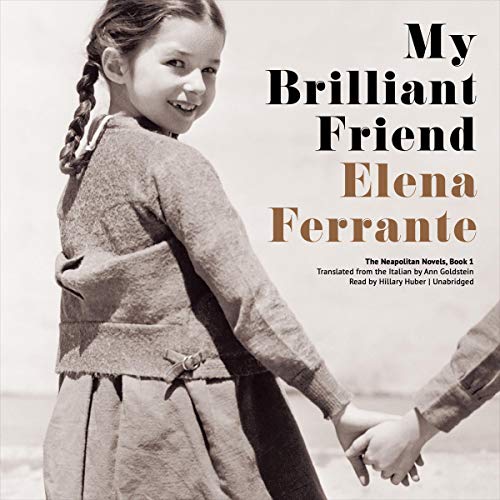
The #1 most voted for book is My Brilliant Friend by Elena Ferrante. I’ve tried reading it, and I’ve tried listening to it, and even tried watching the miniseries based on it, and never finished any attempt. I’m not saying it was bad, but it just didn’t hook me.

The #2 most voted for book is The Warmth of Other Suns by Isabel Wilkerson, which I have read and consider one of the best books I’ve ever read. It’s a monumental nonfiction book that took Wilkerson a decade to write. It’s a history of the migration of African Americans from the South to the North between 1915 and 1970.

The Warmth of Other Suns would be the archetype of a great book in my mind. From it, can I define what qualities go into a great book? Well, first, a great book must cover a great subject. I would say, a great work of nonfiction needs to leave me feeling like I’ve learned something profound about reality. By that measure, I can quickly fill up my top ten great books of the 20th century with these titles leaving no room for fiction:

  1. The Warmth of Other Suns by Isabel Wilkerson
  2. The Information by James Geick
  3. Jesus Before the Gospels by Bart D. Ehrman
  4. An Immense World by Ed Yong
  5. The Invention of Nature by Andrea Wulf
  6. Behind the Beautiful Forevers by Katherine Boo
  7. The Order of Time by Carlo Rovelli
  8. Fantasyland by Kurt Andersen
  9. Dark Money by Jane Mayer
  10. The Code Breaker by Walter Isaacson

And this is just from a quick look at my bookshelves. If I studied my reading log of books read published after 1/1/2000 I’d probably find plenty more to compete for the top ten spots.

All ten books above have the qualities I’d consider needed to make a great book, but the reality is that’s because they’re nonfiction. Fiction often deals with historical, scientific, and philosophical topics, but do they deal with them honestly? Does reading a novel about racism or inequality have the same impact and value as reading a nonfiction book about the subject?

Greatness is much harder to evaluate in fiction. I read a lot of science fiction, but I’d never but consider it great literature. None of the novels I’ve read in the NY Times 100 list are great in my mind. I might call them great reads because they were entertaining and page turners, but I’m not sure I’d reread any of them.

I love the novels by Elizabeth Strout but are they great? Olive Kitteridge made the list, and it’s probably favorite of the novels that did, but is it better than Strout’s other novels? I think I like Olive, Again, and Lucy by the Sea even more. Franzen’s The Corrections got on the list, it’s my least favorite of his books. I’m partial to Crossroads. And as much as I liked Richard Powers’ The Overstory, I much prefer Bewilderment.

I’m not sure if greatness in fiction can be recognized so soon. It might take a century, or at least a half-century. I reread older novels. I’ve read On the Road by Jack Kerouac and The Sun Also Rises by Ernest Hemingway three times each. They go in and out of fashion. I’m not even sure if I think they’re great, but I keep reading them and reading about them. Is that the mark of greatness in fiction?

I wish the Times had three different Top 100 lists for the 21st century. Novels, Nonfiction, and Memoirs/Biographies. Memoirs like In the Darkroom by Susan Faludi, The Year of Magical Thinking by Joan Didion, Between the World and Me by Ta-Nehisi Coates, and Educated by Tara Westover are far more powerful to me than any of the novels.

For me, major nonfiction works trump memoirs in the greatness impact. But then memoirs are far more impactful to me than novels. I don’t know why novels get all the fame. However, nonfiction works seldom stay in print. As great as The Warmth of Other Suns might be, will it be read often fifty years from now? And that’s also true for memoirs. Biographies tend to last a bit longer, until someone writes a new definitive biography on the subject.

Most books are forgotten. Of all the novels listed in the final list and from the nomination lists, how many will be read after 2050? I was blown away by Middlesex when it came out, but I just don’t feel like rereading it. I’m looking forward to rereading Olive Kitteridge (and the other Strout books). And I’m looking forward to rereading a few other novels from 2000-2024 someday, probably Lessons in Chemistry, A Gentleman in Moscow, and Bewilderment. Is that a factor that designates them as great? I don’t know.

I also think age is a factor when considering novels great. When we’re young, any novel that’s exciting to read is great. I don’t know if that’s true now that I’m in my social security years. In the last third of life, greatness in books seems to equate with resonating with what I’ve learned throughout my lifetime. Whether with fiction or nonfiction, it must reveal something that makes me think, “Oh wow, that’s so damn insightful.” Entertaining is a big plus, but it doesn’t count for much in judging a book great.

Nonfiction must be great in terms of understanding reality, while fiction must be great in terms of understanding being human. Now that I’m getting old, I think the tide is turning against fiction, which might be why I’m so hard on it now.

JWH

When Tsundoku Meets Döstädning

by James Wallace Harris, 7/9/24

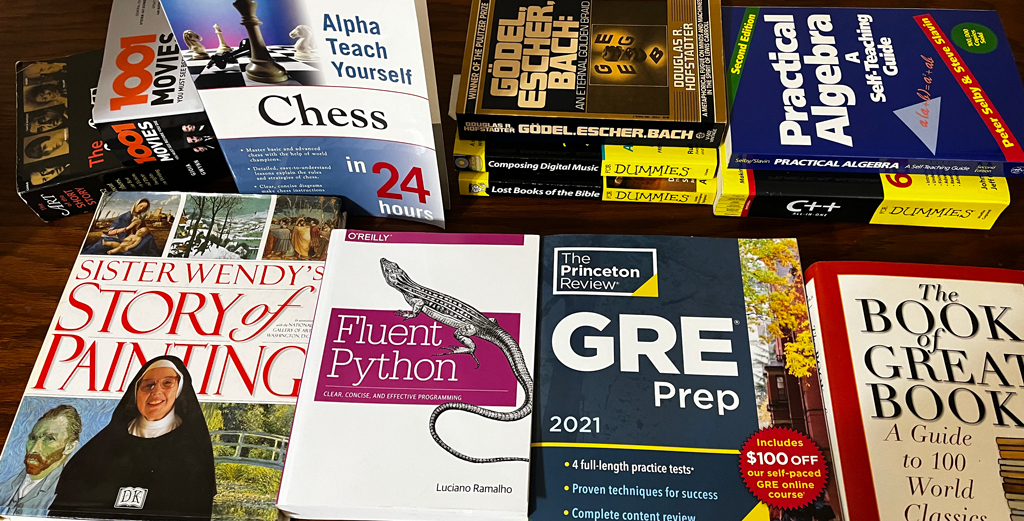
Tsundoku is a Japanese term for buying books and magazines far faster than you can read them. Döstädning is a concept from Sweden that translates into death cleaning, advice for how to get rid of your stuff before making other people do it after you die.

At 72, I figure it’s my time to turn the tide of tsundoku into a wave of döstädning. Last year I took many shopping bags of books to give to the Friends of the Library so I could shelve every book in my house. I had finally reached the equilibrium of perfectly filled bookshelves with no books lying on desks, tables, nightstands, or floors. It felt so good.

Today I gathered all the books lying on desks, tables, nightstands, and floors and had to stack them on top of my bookshelves again. I’m losing the battle with tsundoku again.

I don’t get out much anymore. I take my turn going to the grocery store every other week, and I go to the Friends of the Library Bookstore once a week. I buy books I think I want to read before I die, but I’ve already own enough books to last me until the middle of the twenty-second century.

Instead of coming home with two or three books every week from the Friends of the Library Bookstore I need to take two or three books to donate. That would still give me an outing every week. I guess I could continue to buy books so long as I always donated more books than I purchase.

If I knew some Japanese and Swedish people, I’d ask them to produce a phrase that means “döstädning my tsundoku.”

I need to develop a system for death cleansing my bookshelves. One idea came to me while reading A Gentleman in Moscow by Amor Towles. The story is about a Russian aristocrat, Count Alexander Rostov, who is sentenced to life imprisonment in the Metropol hotel after the Russian revolution. But instead of remaining in his luxury suite, Count Rostov is forced to live in a tiny garret once used by the servants of the aristocracy. He keeps one book with him to read, Michel de Montaigne’s Essays. What a wonderful book to read in that situation.

That reminded me I needed to finish my copy of Montaigne’s complete essays.

And it gave me another idea too. I need to read books that are most suited for an aging guy waiting for the guy with the scythe to show up. Books that make me feel philosophical positive about my life and help me understand the decline of civilization. I feel A Gentleman in Moscow is most suited. I would call it a fairytale for old folks, something Charles Dicken, Robert Louis Stevenson, and Tolstoy might have collaborated on if they were living in our century. It is a delightful yarn about a man growing old imprisoned in a hotel while the twentieth century changed outside his window.

I need to start thinning my book collection of books aimed at young people, unless they are books I read when I was young and want to remember them from an aged vantage point.

I need to read books that make me feel good about getting older. I need to jettison books that don’t deserve to be among the last books I read. Even if I live another couple of decades, I doubt I can squeeze in more than a thousand books, and that leaves me a couple thousand to abandon. If I live only another five years, I might finish 250 reading at my peak pace when I was younger, but more than likely, less than two hundred, since I’m now reading less every year.

Some days I don’t feel like I’ll make it to eighty, and on other days feel, gee, I might make it to ninety. I need to save those books suitable for someone in their 70s or 80s, and thin out the others.

It would be fun to see my library shrink over time, each year further distilled into a smaller collection of greater books, so in my last year I read only classics that fully reveal their depths to readers about to depart this planet.

Now, I think I have a system I can work with. It sounds logical and doable. I’ll have to report back in the future if it works. When I get in there pulling out books one by one, and asking myself if they are worthy of reading in my elder years, I might think every volume I already own is perfectly suited.

JWH