Where to Read the 1943 Retro Hugo Short Fiction Nominees?

by James Wallace Harris, Sunday, April 1, 2018

Worldcon 76 just announced the 1943 Retrospective Hugo Award finalists, which selects works published in 1942. Because I’ve been systematically reading old science fiction short stories I thought it would be fun to see where and how often these stories have been reprinted. In the list below, I’m linking each story to its Internet Science Fiction Database (ISFDB) entry. Following that link will show where the story has been reprinted. If you right-click the link and select open the page in a new window you won’t lose your place here.

Following the list, I’ll discuss which anthologies have best remembered these stories from 1942.

Best Short Story

Etaoin Shrdlu” by Fredric Brown (Unknown Worlds, February 1942)
Mimic” by Martin Pearson (Donald A. Wollheim) (Astonishing Stories, December 1942)
Proof” by Hal Clement (Astounding Science Fiction, June 1942)
Runaround” by Isaac Asimov (Astounding Science Fiction, March 1942)
The Sunken Land” by Fritz Leiber (Unknown Worlds, February 1942)
The Twonky” by C.L. Moore and Henry Kuttner (Astounding Science Fiction, September 1942)

Best Novelette

Bridle and Saddle” by Isaac Asimov (Astounding Science Fiction, June 1942)
Foundation” by Isaac Asimov (Astounding Science Fiction, May 1942)
Goldfish Bowl” by Anson MacDonald (Robert A. Heinlein) (Astounding Science Fiction, March 1942)
The Star Mouse” by Fredric Brown (Planet Stories, Spring 1942)
There Shall Be Darkness” by C.L. Moore (Astounding Science Fiction, February 1942)
The Weapon Shop” by A.E. van Vogt (Astounding Science Fiction, December 1942)

Best Novella

Asylum” by A.E. van Vogt (Astounding Science Fiction, May 1942)
The Compleat Werewolf” by Anthony Boucher (Unknown Worlds, April 1942)
Hell is Forever” by Alfred Bester (Unknown Worlds, August 1942)
Nerves” by Lester del Rey (Astounding Science Fiction, September 1942)
The Unpleasant Profession of Jonathan Hoag” by John Riverside (Robert A. Heinlein) (Unknown Worlds, October 1942)
Waldo” by Anson MacDonald (Robert A. Heinlein) (Astounding Science Fiction, August 1942)

The Great SF Stories 4 (1942) edited by Asimov and Greenberg

Some of these stories have been anthologized extensively, and some very little. That’s kind of surprising since you’d think the most remembered stories would get nominated. If you own a copy of The Great SF Stories 4 (1942) edited by Isaac Asimov and Martin H. Greenberg you’ll already have 7 of 18 of these stories:

  • “Mimic”
  • “Proof”
  • “The Twonky”
  • “Foundation”
  • “The Star Mouse”
  • “The Weapon Shop”
  • “Nerves”

Unfortunately, that anthology is out of print, and used copies can be expensive. It’s actually cheaper to find copies of Isaac Asimov Presents The Golden Years of Science Fiction: 2nd Series in hardback, that reprints both 1941 and 1942.

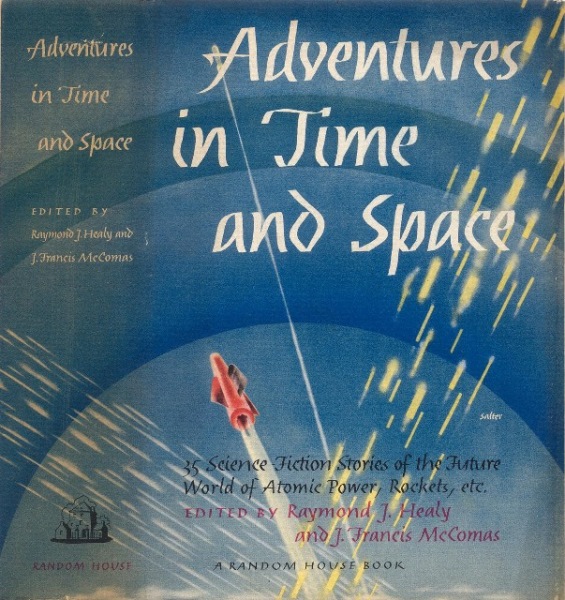
If you own another out-of-print anthology, Adventures in Time and Space edited by Raymond J. Healy and J. Francis McComas you can read five of the stories:

  • “Nerves”
  • “Asylum”
  • “The Twonky”
  •  “The Weapon Shop”
  • “The Star Mouse”

Notice the overlap. I wonder if that’s an indication of which stories will win this summer.

“Runaround” can be found in I, Robot and other repackagings of Asimov’s robot stories, and the “Foundation” and “Bride and Saddle” of course, are part of Foundation (it was a fix-up novel).

“Etaoin Shrdlu” can be read in several Fredric Brown anthologies. Both of his nominated stories can be bought in the 99 cent ebook, The Fredric Brown Megapack.

“The Sunken Land” by Fritz Leiber can be found in the many editions of Swords Against Death, the second volume of Fafhrd and the Gray Mouser series.

The most common way to find Heinlein’s “Goldfish Bowl” is from his collection, The Menace From Earth. The best way to find Heinlein’s other two nominations, “Waldo” and “The Unpleasant Profession of Jonathan Hoag” is in The Fantasies of Robert A. Heinlein. However, it’s out of print. I find it rather annoying how Heinlein’s short stories are constantly being repackaged in new collections.

One of the hardest stories to find will be “There Shall Be Darkness” by C. L. Moore. The latest reprint, which is still in print is Miracle in Three Dimensions, is a collection of her lost pulp stories.  But at $16.95, is kind of steep for reading one story.

Almost as hard to track down will be “Hell is Forever” by Alfred Bester. I’d look for a used copy of Starlight: The Great Short Fiction of Alfred Bester. They’s way you’d get his other great stories.

“The Compleat Werewolf” by Anthony Boucher has been reprinted fairly often, but not in easy to acquire anthologies. Probably the best place to find it is in Boucher’s collection, The Complete Werewolf and Other Stories of Fantasy and Science Fiction.

I’m surprised that many of these stories weren’t anthologized more often. Before I started this research, I thought they’d all be in a handful of famous retrospective anthologies. That wasn’t the case. The stories least anthologized seem to be fantasy stories.

Won’t fans vote for Asimov because his nominees are from his most famous series? And does Heinlein still have enough fans to guarantee him a win? Heinlein was very popular in 1942 among science fiction fans, but what about the fans voting today?

Update:

Just for fun, I decided to try to find some of the other SF stories from 1942 that have been remembered.

My first idea was to check the Groff Conklin anthologies. Conklin assembled a number of retrospective anthologies that are well-remembered by older fans today. I check seven of these and found these 1942 stories:

  • “Goldfish Bowl” by Robert A. Heinlein
  • “Jackdaw” by Ross Rocklynne
  • “With Flaming Swords” by Cleve Cartmill
  • “The Embassy” by Donald Wollheim
  • “Tools” by Clifford Simak
  • “The Wings of Night” by Lester del Rey
  • “Proof” by Hal Clement
  • “Recruitment Station” by A. E. van Vogt
  • “Heritage” by Robert Abernathy
  • “The Flight that Failed” by Hull/van Vogt
  • “To Follow Knowledge” by Frank Belnap Long

I’m guessing Conklin didn’t use any stories that Healy & McComas used in Adventures in Time and Space. I also assumed Conklin didn’t get to use the Asimov and Heinlein stories because they weren’t available, or were used elsewhere, or were already too famous.

Besides the five stories picked by Healy & McComas that got nominated, they had one other 1942 story, “The Link” by Cleve Cartmill.

The other stories in the Asimov/Greenberg anthology that weren’t nominated for retro Hugos were:

  • “The Wings of Night” by Lester del Rey
  • “Barrier” by Anthony Boucher
  • “QRM-Interplanetary” by George O. Smith

If I get time, I’m going to check other anthologies.

JWH

Should I Delete Facebook?

by James Wallace Harris, Friday, March 23, 2018

Cambridge AnalyticaI’ve seen at least a dozen stories about people deleting their Facebook account because of the Cambridge Analytica scandal. Just now I read two news stories about Elon Musk deleting Space-X and Tesla pages from Facebook even though they had millions of followers. There’s lots of anti-Facebook sentiment percolating on the web right now with many users jumping ship.

But how many? Facebook has two billion users. Even if a hundred million people quit in protest will it matter? There have always been folks who grumped about Facebook. They are much like snobs who sneer at watching television. I look at TV and Facebook every day. Not much, in either case, but they both provide their little pleasures. And, little pleasures count for a lot in our social security years.

People fear Facebook because of identity theft or invasion of their privacy. But is any place safe on the internet? And if you read about Cambridge Analytica you’ll see that people happily filled out forms and shared them with friends. You’d have to be an idiot to not know that everything you do on the internet is monitored. No one pays to use Facebook. Have you ever wondered how Facebook makes its money? Our habits and opinions are valuable. Keeping America supplied with cat videos is expensive, so Facebook has to make its money someway.

When I’m on the internet I assume Big Brother and all his brothers and sisters are watching. I don’t care that they know I love cat videos and scans of old science fiction magazine covers. I have no idea what that information reveals about me politically or fiscally.

Before people rush to delete their Facebook account out of some kind of misguided protest, I think they should analyze what they get out of the service. Facebook keeps me in contact with relatives and friends I seldom or never see anymore. Facebook keeps in contact with people around the world that have the same esoteric interests as I do. And I enjoy seeing a half-dozen funny videos every day. They’re as good as a dose of Geritol.

For example, I’ve been reading old science fiction stories from the pulp magazines. I’ve made three online friends in South Africa, England, and here in the U.S. that also like to read such stories. I don’t know how many people left on this planet still love to read science fiction short stories in old pulp magazines, but Facebook has helped me find them. Facebook also keeps me in contact me with relatives I haven’t seen in fifty years.

Besides, Facebook helps me keep tabs on my wife. She always checks in wherever she goes.

I also find it very pleasant to share cartoons, videos, songs, beautiful photos, sayings, etc. with other people. For example, here’s one called Millennial Job Interview that has a passing dig at Facebook. I thought pretty damn funny and very revealing about modern times. Evidently, the young consider Facebook a hangout for older people. That might be true because most of my Facebook friends are older. And most of the people who write about deleting their Facebook accounts are younger. Should we consider this anti-Facebook movement an ageist attack on Baby Boomers?

I wonder if Big Brother finds what we share more revealing about our personalities than the facts typed into queries like Cambridge Analytica’s? For many people I know, what they share on Facebook reveals more about themselves than they reveal in person.

I share a lot on Facebook. My friends and family must think I’m odd from some of the content I post. However, I use both Facebook and Twitter as external memory banks. My biological memory is beginning to fail. I wish Facebook existed when I was young so I could scroll back into the past. When I scan through my timeline it’s like a stream-of-consciousness of what tickled my fancy. I’m sure if Big Brother applied a powerful artificial intelligence program to my timeline it could psychoanalyze my posts and provide me with the ads customized for my personality.

But you want to know something funny? If you asked me if there were ads on Facebook I’d tell you no. My mind is so good a tuning out ads that I don’t see them on web pages anymore. I do use an ad blocker, but they aren’t completely effective. I do know there are ads because I see them when I consciously go looking for them. But psychologically I don’t remember ads on Facebook. That might hurt them more than deleting my account. Sorry, Mark.

I suppose I could quit Facebook. Many who have quit Facebook claim their lives are so much better for it. Maybe mine would be better too, but I sure would miss those cat videos.

JWH


Why Wasn’t Philip K. Dick in the Science Fiction Hall of Fame Anthologies?

by James Wallace Harris, Wednesday, March 14, 2018

Philip K. DickI’ve been listening to the new audiobook editions of The Science Fiction Hall of Fame Volume One and Volume 2A. Volume 2B is due out in April. Today, my friend Mike asked me why there were no stories by Philip K. Dick in these anthologies. I had not noticed that before, and now I’m wondering, “Why the hell not?” Mike and I are big PKD fans.

Read “SFWA and the ‘Science Fiction Hall of Fame’ Anthologies” by Andrew Liptak for a history of these books and a listing of the stories included. The first three volumes collected stories voted on by the Science Fiction Writers of America (SFWA) for works that were published before the Nebula Awards were created. The final two volumes collected stories that won the award. Since PKD never won a Nebula it’s understandable he wasn’t included in those volumes. So we’re really talking about missing in action from v. 1, 2A and 2B.

Was Philip K. Dick unpopular with SFWA members? 132 stories by 76 authors were nominated for the first volume which was limited to stories under 15,000 words published before 1965. PKD had dozens and dozens of stories that met that requirement, many of which were exceptional, and several of which have inspired movies and television shows. I would love to see that list of total nominated stories but I can’t find it on the web. I have to assume PKD had a few stories on it.

The Internet Science Fiction Database (ISFDB) has a listing “Most Viewed Stories Since 2005.” PKD has 5 in the Top 20, and many more in the overall list.

  • “We Can Remember It for You Wholesale” (1966)
  • “Adjustment Team” (1954)
  • “The Minority Report” (1956)
  • “Imposter” (1953)
  • “The Golden Man” (1954)

Of course, this list has been heavily influenced by fans of the television shows and movies looking up the stories. Strangely, there are no PKD stories in ISFDB’s older “Top 100 Short Stories – Balanced List.” Does this mean PKD has only recently gained popularity as a science fiction writer?

Dick only has two stories on the “Top 100 SF Short Stories” at Sci-Fi Lists (“We Can Remember It for You Wholesale” and “Second Variety” (1953)). This list is based on internet voters, from recent years.

He does have two stories (“Faith of Our Fathers” (1967) and “We Can Remember It for You Wholesale”) at the Anthology & Collect References list that tells which stories have been most anthologized in these anthologies. These are older works.

Evidently, Philip K. Dick’s most popular story, “We Can Remember It for You Wholesale” which came out in 1966 didn’t qualify. Neither does “Faith in Our Fathers.”  But the others do. Mike and I wondered why “Survey Team” (1954) didn’t make it since we like it better than many of the stories that did get into the original Science Fiction Hall of Fame Volume One.

Dick’s stories were often published in less famous science fiction magazines of the day. Reading them in his five-volume collected stories, I’m often very impressed. I wonder if there were other writers who appeared in the lesser mags that also wrote good stories that need to be remembered.

This also makes me ask, “What other great SF authors and stories were left out of The Science Fiction Hall of Fame books?” The obvious next question is where are the women writers? And when I think about it, there were many popular writers from the 1930s and 1940s that would have been included twenty-five years earlier. Time is not kind to science fiction.

Update 3/17/18:

What about Robert Sheckley?

JWH


Social Media Science Fiction

by James Wallace Harris, Friday, March 9, 2018

AFF_MarApr2018_400x570I’ve been reading the new March/April 2018 issue of Analog Science Fiction and Fact. I’ve found two stories we could call social media science fiction. I’ve read many other examples of this emerging sub-genre but can’t recall them at the moment. But I smell a trend.

Since I’ve been reading stories from Astounding Science Fiction, Analog’s previous title, from 50-80 years ago I can’t help but imagine what readers 50-80 years from now will think about these two stories.

The first story, “The Streaming Man” by Suzanne Palmer is about a fellow named Rohn who is an inventor of implantable medical monitors. For fun, Rohn programs these monitors to also play different musical instruments based on data from his body, so his body generates music and he puts that feed online. His unique compositions gather a large following of online listeners who become addicted to the music of his body. Rohn likes to interact with his followers via something like Twitter. His followers try to guess what Rohn is doing based on the music he makes. The story itself has other characters and complications but for us readers, this story tells us how creative the internet is and will be.

The second story, “Razzibot” by Rich Larson is about a fourteen-year-old girl, Marisol, receiving a Razzibot for her birthday. This device is a small AI driven drone that flies around Marisol filming her life for a live feed to the internet. Between Marisol’s need for followers, and the AI’s ability to always seek shots that flattery Marisol’s looks and appeal to the viewers’ voyeurism, the number of her followers grow and grow. Through the story, Marisol knows when she’s playing up to the camera, but also knows when she’s revealing too much of her personal life. The tale is about ego and technology.

These two stories are very engaging. Besides good writing, I assume their relevant topics would make them appealing reads to most people. Both of these stories feel very possible. In fact, the science might already exist to allow them to happen. The stories are so close to now I have to wonder if we should even call them science fiction. They could be considered contemporary social commentary. If a reader in 2068 reads them what will they think? I can easily imagine future readers believing these stories were realistic fiction about 2018.

That’s the thing. When I read technology and science news I often feel that I’m already living in a science fictional future. I also find it really hard to imagine the next fifty years experiencing as much change as I have in the last fifty years. It’s one thing for Dick Tracy comics to imagine a wrist phone back in 1946 that’s a lot like an Apple smartwatch, but it’s a whole other thing for us to imagine what people will be using in 2090. All the easy to imagine inventions have been fictionally invented.

That makes it hard for science fiction writers. Coming up with the idea of making music from monitoring bodily functions is clever. Thinking up an always-on selfie robot is good too, but less original. They already have drone selfie cams on the market. Building in the AI to make users internet interesting is not such a stretch. SF writers probably have a hard time keeping up with real science and technology.

Dick Tracy’s two-way wrist radios go back 72 years. It wasn’t called a phone. His creator didn’t imagine cell phones. Portable two-radios were already getting smaller back then, so it wasn’t a big leap to imagine one on the wrist. We’d be far more impressed if Chester Gould had imagined a cellular phone system or a computer network.

Science fiction often imagines too much, thinking up magical inventions, like teleporters, brain downloading, holodecks, or spaceships that can make interstellar flights in a few hours. We know computer chips are getting smaller, but should we expect smartphones to get smaller too? They were, but then they got larger. There’s a practical limit to what’s useful to hold. I figure most people want to over-imagine things and suggest people in 2090 will have smartphones built into their heads, and thus providing techno-telepathy.

I find Blu-tooth headsets annoying to wear and use, and I don’t see many people sporting them like years ago. And if you’ve ever talked to Alexa or Siri you know that there are limitations in doing things verbally. I suppose we could wear necklaces that are phones which operate by voice commands and have auxiliary tablet screens for reading. But I find hearing people talk on their cellphones annoying, so picturing a world where everyone looks like they are talking to themselves and not holding anything will be even more aggravating. The other day I saw a man walking down the street shouting angrily. I told myself, “I hope he’s on a phone.”

There are countless implications to everyone having a smartphone, especially one tied to our physiology. What happens to privacy? What happens to crime when everyone’s location can be tracked in great detail? There are endless stories there, but what happens to the old-fashioned mystery novel? We’d always know who-did-it. Have you ever noticed how many classic movies would have had their plots invalidated if the characters had cell phones?

Both “The Streaming Man” and “Razzibot” assume technology will make certain individuals more interesting than others. But if everyone has the same technology will that be true? Marisol is interesting because her friends don’t have a Razzibot. Rohn is interesting because he’s the only person making music with his body.

I’m wondering if technology will eventually even out and a return to privacy will become compelling. Today I read “For Two Months, I Got My News From Print Newspapers. Here’s What I Learned” by Farhad Manjoo in The New York Times. Manjoo got better news by getting his news from slower news sources. I would think some science fiction writers might work on imagining a backlash to more technology.

I know I’m getting irritated by so many people calling me every day. Maybe we’ve become too accessible. Which is the driving force of the plot lines of these two short stories.

JWH

The Hardback Legacy of Astounding Science Fiction

by James Wallace Harris, Thursday, March 1, 2018

For the past few weeks, I’ve been reading and researching stories from the pulp magazine Astounding Science Fiction (1930-1960). I’m slowly learning its history, impact, and legacy. I never bought a new issue of Astounding at the newsstand. I did start buying Analog Science Fiction & Fact in the mid-sixties. That was Astounding’s new name starting in 1960. However, by then I was already reading stories from Astounding reprinted in old books I found in libraries and used bookstores.

From reading blogs and writing people on the internet I’m learning there are different generations of fans. The first generation, the G.I. generation, started reading Astounding in the 1930s and 1940s. This generation has mostly died off. The second generation, the Silent generation, bought Astounding in the 1940s and 1950s and bought the hardback reprints new in bookstores in the 1950s. If they are still alive they are well into their 70s, 80s, and 90s. The third generation, the Baby Boomers, never bought new copies of Astounding or the first edition hardbacks that reprinted Astounding but discovered its stories in anthologies and novels on dusty library shelves.
I’m meeting those Baby Boomers now online at Facebook, Yahoo! Groups, Goodreads, and other websites, who fondly remember discover the legacy of Astounding Science Fiction. As youngsters we grew up reading science fiction books for young adults by Robert A. Heinlein, Andre Norton, and those published in the Winston Science Fiction series and then stumbled onto the classic anthologies by Healy & McComas, Groff Conklin, Martin Greenberg, John W. Campbell, and then finding the novels from Gnome Press, Fantasy Press, Doubleday, Simon & Shuster, and Prime Press that reprinted the legendary serials from Astounding.

This all happened in the 1960s. I sometimes call it Baby Boomer science fiction, but that describes the readers and not what was read. The stories we loved originally appeared in Astounding Science Fiction in the 1930s, 1940s, and 1950s. The best its content was reprinted in hardback in the 1950s. By the time we found those volumes in the 1960s they were well read and worn. Some still had the classic dust jackets that make them expensive collector items today, but others were already rebound in hideous orange, tan, brown, and aqua colors that libraries used back then.

For the nostalgic thrill of it, I’ve decided to recall those first edition hardbacks. If I was rich and reckless with owning things, I’d collect them. However, I’m quite happy when I can find beautiful hi-resolution scans of the dust jackets just to trigger those remaining synapses that remember seeing them in my favorite libraries of childhood.

Links are to Wikipedia or whatever has the most useful and descriptive content about the book. Most of the dust jacket scans were nicked from the Internet Science Fiction Database, and I did almost all of my research at that invaluable site. I’m trying to find the highest resolution scans possible. If you know of better copies let me know. Of the anthologies and fix-up novels, I’ve worked to only remember volumes that mostly used content from Astounding Science Fiction.

I put in parenthesis the dates the tale originally ran in Astounding and the publisher. I’ve probably left out many famous titles, just let me know.

1946

Adventures in Time and Space ed. Healy and McComas 1946 Random House

Adventures in Time and Space edited by Raymond J. Healy and J. Francis McComas

Slan by A. E. van Vog 1946 Arkham House

Slan by A. E. van Vogt – (Sep-Dec40) Arkham House

1947

The Legion of Space by Jack Williamson 1947 Fantasy Press

The Legon of Space by Jack Williamson – (Apr-Jul34) Fantasy Press

The Mightiest Machine by John W. Campbell 1947 Hadley

The Mightiest Machine by John W. Campbell (Dec34-Apr35) Hadley Publishing Co.

Venus Equilateral by George O. Smith 1947 Prime Press


Venus Equilateral by George O. Smith – (collection) Prime Press

The Weapon Makers by A. E. van Vogt 1947 Hadley Publishers

The Weapon Makers by A. E. van Vogt – (Feb-Apr43) Hadley Publishing

1948

... And Some Were Human by Lester del Rey 1948 Prime Press

… And Some Were Human by Lester del Rey – (collection) Prime Press

beyond-this-horizon

Beyond This Horizon by Robert A. Heinlein – (Apr-May42) Fantasy Press

Divide and Rule by L. Sprague de Camp 1948 Fantasy Press

Divide and Rule L. Sprage de Camp – (1939, 1941) Fantasy Press

Final Blackout by L. Ron Hubbard 1948 Hadley Publishing

Final Blackout by L. Ron Hubbard – (Apr-Jun40) Hadley Publishing

A Treasury of Science Fiction ed. Groff Conklin 1948 Crown

A Treasury of Science Fiction ed. Groff Conklin – (collection) Crown

Who Goes There by John W. Campbell 1948 Shasta. Campbell 1948 Shasta

Who Goes There? by John W. Campbell – (collection) Shasta

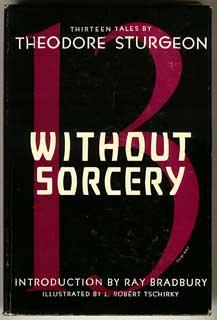
Without Sorcery by Theodore Sturgeon 1948 Prime Press

Without Sorcery by Theodore Sturgeon – (collection) Prime Press

The World of Null A by A. E. van Vogt 1948 Simon and Schuster

The World of Ā by A. E. van Vogt – (Aug-Oct45) Simon & Schuster

1949

The Humanoids by Jack Williamson 1948 Simon and Schuster

The Humanoids by Jack Williams – (Mar-May48) Simon & Schuster

Pattern of Conquest by George O. Smith

Pattern for Conquest by George O. Smith – (Mar-May46) Gnome Press

Sixth Column by Robert A. Heinlein 1949 Gnome Press

Sixth Column by Robert A. Heinlein – (Jan-Mar41) Gnome Press

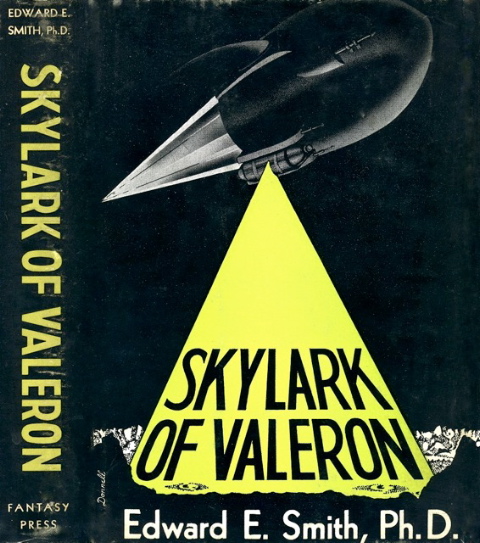
The Skylark of Valeron by Edward E. Smith 1949 Fantasy Press

The Skylark of Valeron by Edward E. Smith – (Aug34-Feb35) Fantasy Press

1950

The Cometeers by Jack Williams 1950 Fantasy Press

The Cometeers by Jack Williamson – (May-July36, Apr-Jun39) Fantasy Press

Cosmic Engineers by Clifford D. Simak 1950 Gnome

Cosmic Engineers by Clifford Simak – (Feb-Apr39) Gnome Press

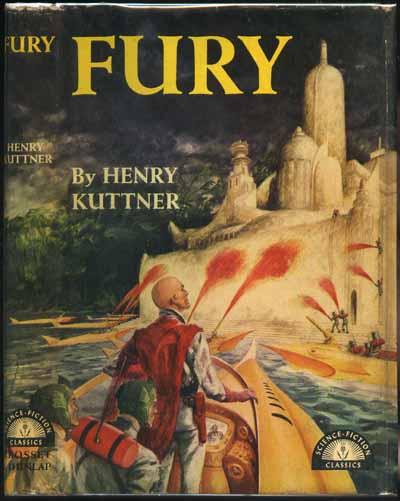
Fury by Henry Kuttner 1950 Grosset and Dunlap

Fury by Henry Kuttner and C. L. Moore – (May-Jul47) Grosset & Dunlap

Gather, Darkness! by Fritz Leiber 1950 Pellegrini and Cudahy

Gather, Darkness! by Fritz Leiber – (May-Jul43)

I Robot by Isaac Asimov 1950 Gnome Press

I, Robot by Isaac Asimov – (collection) Gnome Press

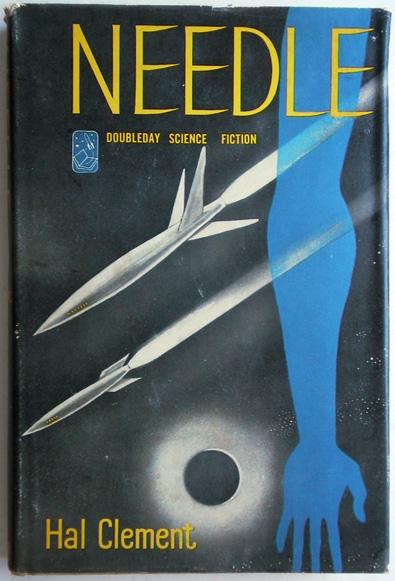
Needle by Hall Clement 1950 Doubleday

Needle by Hall Clement – (May-Jun50) Doubleday

Masters of Time by A. E. van Vogt 1950 Fantasy Press

Masters of Time by A. E. van Vogt – (fix-up) Fantasy Press

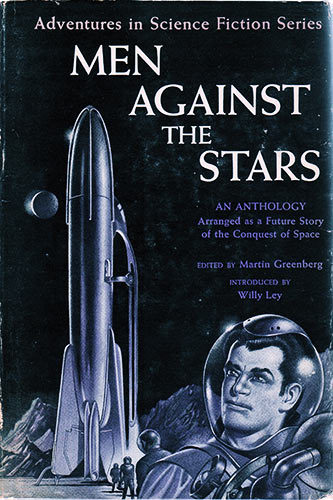
Men Against the Stars ed. Martin Greenberg 1950 Gnome Press

Men Against the Stars ed. Martin Greenberg – (anthology) Gnome Press

Nomad by George O. Smith 1950 Prime Press

Nomad by George O. Smith – (Dec44-Feb45) Prime Press

Seetee Shock by Jack Williamson 1950 Simon and Schuster

Seetee Shock by Jack Williamson – (Feb49-Apr49) Simon & Schuster

The Voyage of the Space Beagle by Jack Williamson 1950 Simon & Schuster

The Voyage of the Space Beagle by A. E. van Vogt – (fix-up) Simon & Schuster

Waldo and Magic Inc by Robert A. Heinlein 1950 Doubleday

Waldo and Magic, Inc. by Robert A. Heinlein (collection) Doubleday

1951

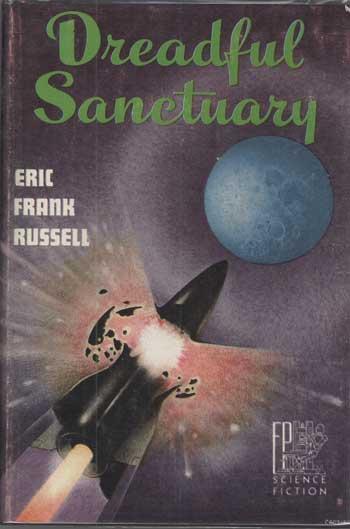
Dreadful Sanctuary by Eric Frank Russell Fantasy Press

Dreadful Sanctuary by Eric Frank Russell – (Jun-Aug48) Fantasy Press

Foundation by Isaac Asimov 1951 Fantasy Press

Foundation by Isaac Asimov – (fix-up) Gnome Press

Gray Lensman by Edward E. Smith 1951 Fantasy Press

Gray Lensman by Edward E. Smith – (Nov39-Jan40) Fantasy Press

Journey to Infinity ed. Martin Greenberg 1951 Gnome Press

Journey to Infinity ed. Martin Greenberg – (collection) Gnome Press

Renaissance by Raymond F. Jones 1951 Gnome Press

Renaissance by Raymond F. Jones – (Jul-Sep44) Gnome Press

SeeTee Ship by Jack Williamson 1951 Gnome Press

SeeTee Ship by Jack Williamson – (Jan-Feb43) Gnome Press

Tomorrow and Tomorrow and The Fairy Chessmen by L. Sprague de Camp 1951 Gnome Lewis Padgett

Tomorrow and Tomorrow and The Fairy Chessmen by Henry Kuttner and C. L. Moore (1946, 1947)

1952

The Astounding Science Fiction Anthology ed. John W. Campbell 1952 Simon & Schuster

The Astounding Science Fiction Anthology ed. John W. Campbell – (collection) Simon & Schuster

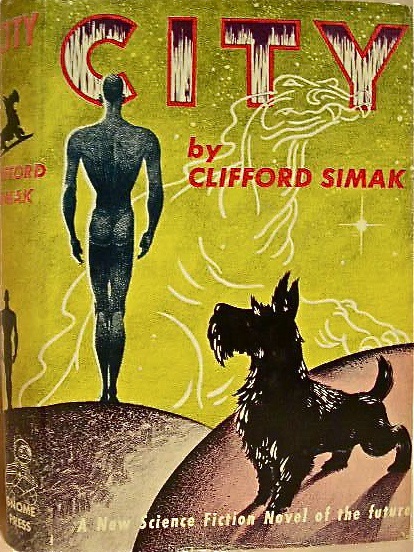
City by Clifford Simak 1952 Gnome Press

City by Clifford Simak – (fix-up) Gnome Press

Cloak of Aesir by John W. Campbell 1952 Shasta

Cloak of Aesir by John W. Campbell, Jr. – (collection) Shasta

The Current of Space by Isaac Asimov 1952 Doubleday

The Currents of Space by Isaac Asimov – (Oct-Dec52) Doubleday

Foundation and Empire by Isaac Asimov 1952 Gnome Press

Foundation and Empire by Isaac Asimov – (fix-up) Gnome Press

Judgment Night by C. L. Moore 1952 Gnome Press

Judgement Night by C. L. Moore – (collection) Gnome Press

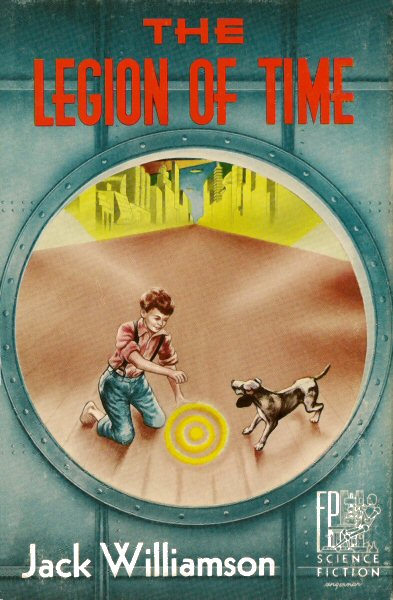
The Legion of Time by Jack Williams 1952 Fantasy Press

The Legion of Time by Jack Williamson – (May-Jul38) Fantasy Press

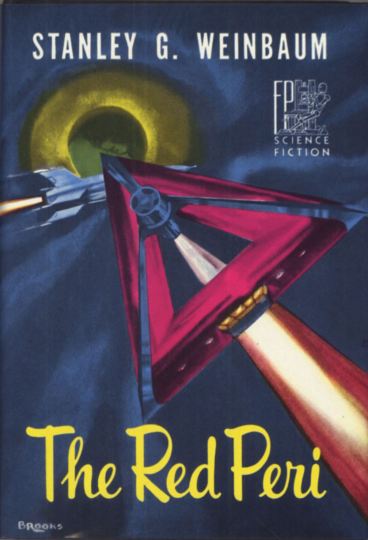
The Red Peri by Stanley G. Weinbaum 1952 Fantasy Press

The Red Peri by Stanley G. Weinbaum – (collection) Fantasy Press

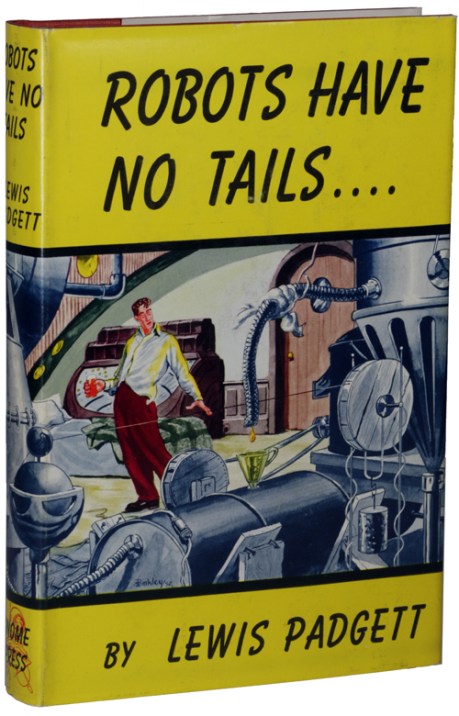
Robots Have No Tails by Lewis Padgett 1952 Gnome Press


Robots Have No Tails by Henry Kuttner – (fix-up) Gnome Press

1953

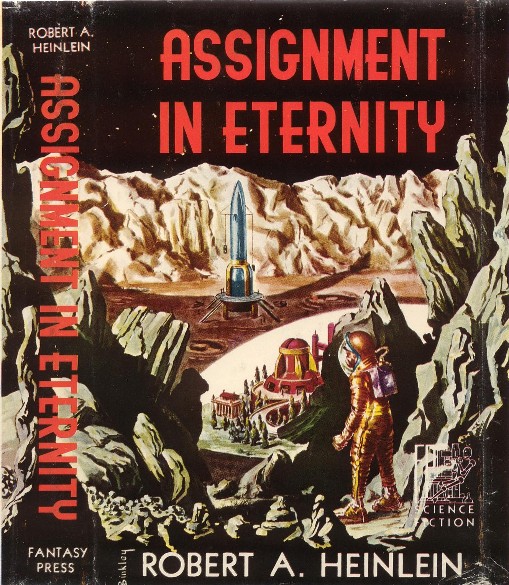
Assignment in Eternity by Robert A. Heinlein 1953 Fantasy Press

Assignment in Eternity by Robert A. Heinlein – (collection) Fantasy Press

Children of the Atom by Wilmar Shiras 1953 Gnome Press

Children of the Atom by Wilmar H. Shiras – (fix-up) Gnome Press

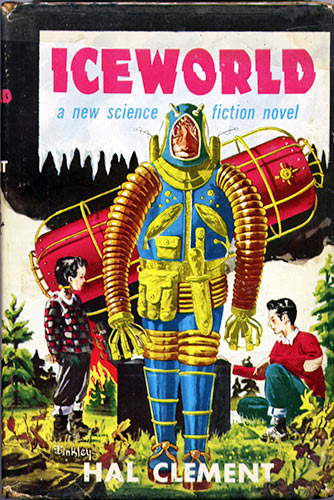
Iceworld by Hal Clement 1953 Gnome Press

Iceworld by Hal Clement – (Oct-Dec51) Gnome Press

Mutant by Lewis Padgett 1953 Gnome Press

Mutant by Henry Kuttner and C. L. Moore – (fix-up) Gnome Press

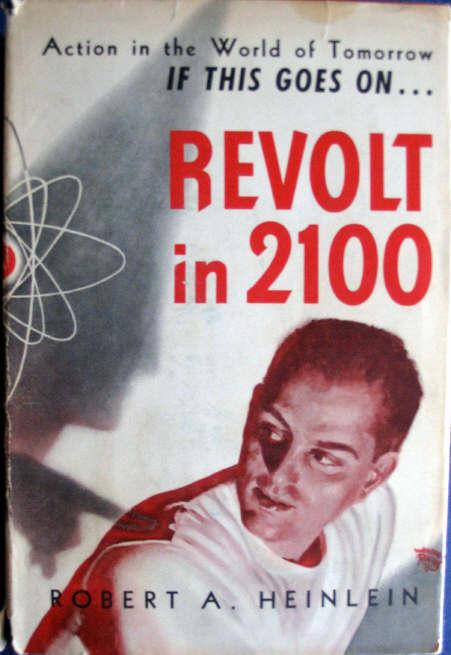
Revolt in 2100 by Robert A. Heinlein 1953 Shasta

Revolt in 2100 by Robert A. Heinlein – (Feb-Mar40) Shasta

Second Foundation by Isaac Asimov 1953 Gnome Press

Second Foundation by Isaac Asimov – (fix-up) Gnome Press

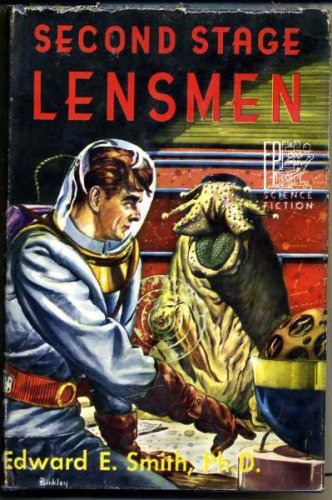
Second Stage Lensmen by Edward E. Smith 1953 Fantasy Press

Second Stage Lensman by Edward E. Smith – (Nov41-Feb42) Fantasy Press

1954

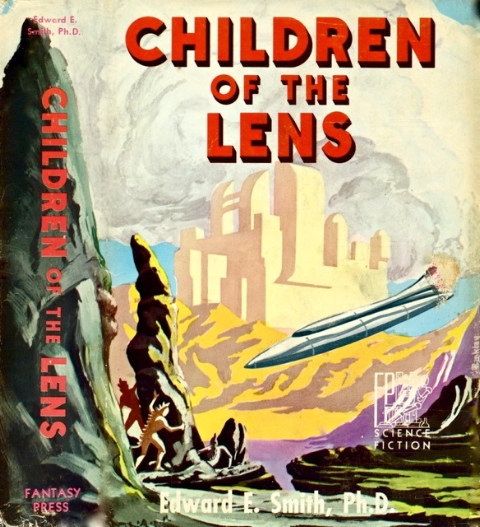
Children of the Lens by Edward E. Smith 1954 Fantasy Press

Children of the Lens by Edward E. Smith – (Nov47-Feb48) Fantasy Press

Three Thousand Years by Thomas Calvert McClary 1954 Fantasy Press

Three Thousand Years by Thomas Calvert McClary – (Apr38-Jun38) Fantasy Press

1956

Double Star by Robert A. Heinlein 1956 Doubleday

Double Star by Robert A. Heinlein – (Feb-Apr56) Doubleday

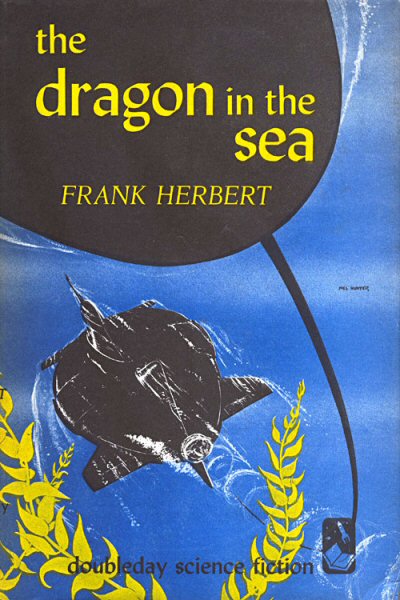
The Dragon in the Sea by Frank Herbert 1956 Doubleday

The Dragon in the Sea by Frank Herbert – (Under Pressure Nov55-Jan66) Doubleday

1957

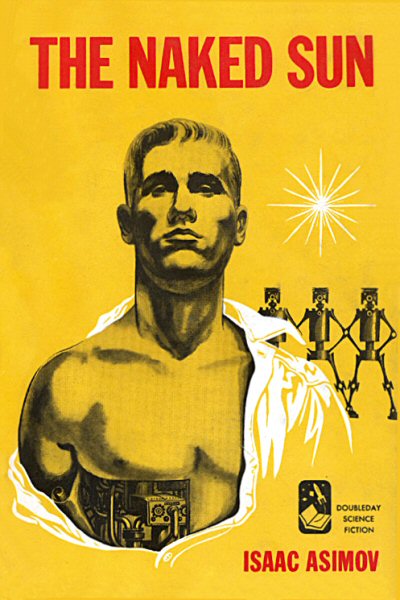
The Naked Sun by Isaac Asimov 1957 Doubleday

The Naked Sun by Isaac Asimov – (Oct-Dec56) Doubleday

They'd Rather be Right by Clifton and Riley 1957 Gnome Press

They’d Rather Be Right by Mark Clifton and Frank Riley – (Aug-Nov54) Gnome Press

1958

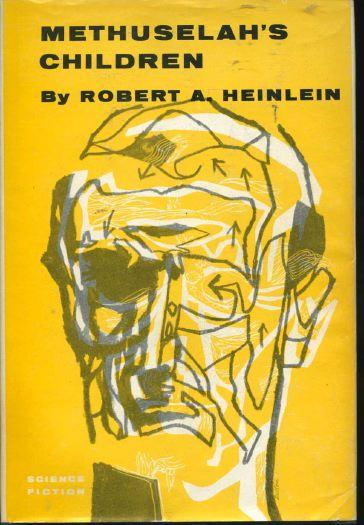
Methuselah's Children by Robert A. Heinlein 1958 Gnome Press

Methuselah’s Children by Robert A. Heinlein – (Jul-Sep41) Gnome Press

1960

Agent of Vega by James H. Schmitz 1960 Gnome Press

Agent of Vega by James H. Schmitz – (fix-up) Gnome Press

1963

Orphans of the Sky by Robert A. Heinlein 1963 Putnum

Orphans of the Sky by Robert A. Heinlein – (fix-up from 1941) Putnam

1966

The Winged Man by A. E. van Vogt and E. Mayne Hull 1966 Doubleday

The Winged Man by A. E. van Vogt and E. Mayne Hull – (May-Jun44) Doubleday

JWH