What I Loved and Hated About Lost in Space (2018)

by James Wallace Harris, Friday, April 20, 2018

I remember watching the first episode of the original Lost in Space when it premiered back in September of 1965. I was thirteen and hooked on reading Heinlein juveniles. Science fiction was my religion. Even as a kid, I thought Lost in Space rather cheesy, but I watched it every week for a few months. I have fond memories of the 1965-66 television season. My favorite show of that season was I, Spy, but I also loved Twelve O’Clock High. I was embarrassed to admit I watched Lost in Space to my friends because I didn’t have any that were into science fiction, and they made fun of it as a kid’s show — but hell, we were kids. I loved the robot and thought Penny (Angela Cartwright) awful cute (hey, I was her age at the time).
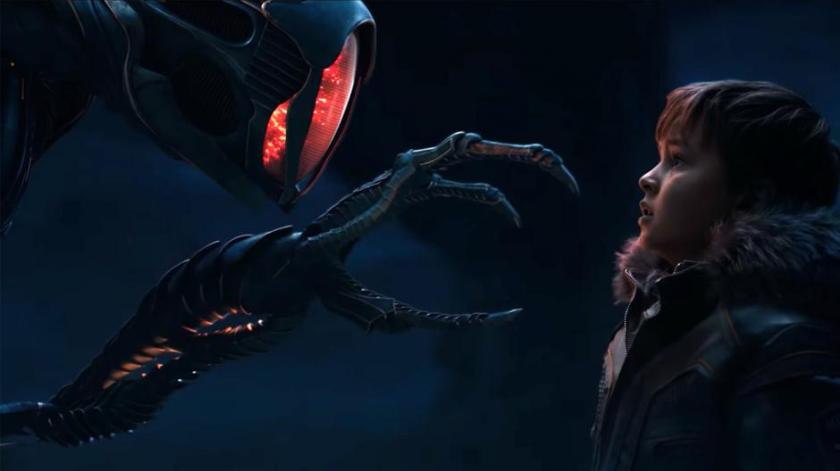
Lost in Space - Robot and Will

I was a little apprehensive about giving Lost in Space (2018) a try. I was afraid they’d make it into a campy joke like before. I was wrong. It was ten episodes of action-oriented science fiction, visually pleasing, with engaging characters who were complex. This time around I still liked the robot best, but found Maureen (Molly Parker), the mom, the most attractive female, even though I’m way too old for her. It’s a weird headspace to remember a show that I watched as a kid being remade when I was older than any of the characters.

The Robinsons of Lost in Space is inspired by Swiss Family Robinson which was inspired by Robinson Crusoe.  The Robinsonade is a very old literary type and has always been one of my favorites. I highly recommend In Search of Robinson Crusoe by Tim Severin (currently $3.99 for the Kindle) if you want to read a fascinating history of lost on deserted island stories. In the original series the Robinsons were alone in space, but in the reboot, they have some company.
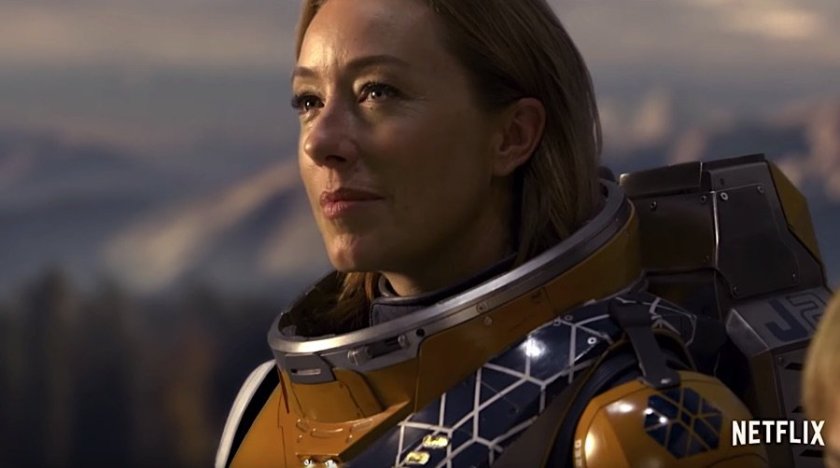
Lost in Space - Mauren

This time around the female characters get a lot more screen time, and Dr. Smith is played by a woman, Parker Posey. In fact, I would call Maureen Robinson the main protagonist, with Penny (Mina Sundwall) and Judy (Taylor Russell) getting as much or more story time as Will (Maxwell Jenkins), John (Toby Stephens), and Don West (Ignacio Serricchio). Even though the characters have the same names as before, their backstory and present stories are much different. Sure, everyone is super-smart, but each has a flawed history, which the show presents in flashbacks.

Lost in Space (2018) is mostly about family dynamics, and that’s what makes the series compelling this time. Each episode has lots of science fiction action, usually with one or more Robinsons escaping death in the last few seconds. Now that’s copied from the original. Interestingly, the cliffhangers in the new series don’t fall between episodes. The original series ended each episode with a new cliffhanger, which added to its cheesiness, demanding viewers to tune in next week. 2018 episodes have a nice closure to each.

21st-century television shows, especially those with limited seasons and high production values like Westworld, The Man in the High Castle, and The Handmaids Tale, are light years ahead of 1960s television productions. Back then TV was considered crap, and movies were art. Now movies are comic books and TV is art. Lost in Space isn’t at the level of Breaking Bad or The Sopranos, but I think it’s as good as Stranger Things.

However, I do have some disappointments to register. But they aren’t unique to Lost in Space, but to current science fiction in general. Lost in Space (2018) looks very realistic. The sets, props and special effects are excellent. However, the science behind the story is rather lame. They practically don’t try. The Jupiter class spaceships are fueled by liquid methane. That’s just silly. Even sillier is when they find a substitute in high-grade alien-bat guano. Plus the apparent amount of fuel that each Jupiter holds is only a couple hundred gallons. I won’t give away the story secrets of the interstellar travel methods, but it’s closer to comic book terminology.

What disappoints me about modern science fiction is the total lack of realism regarding space travel. We’ve just given up and turned outer space into fantasyland. Spaceships are now equal to flying dragons or magical portals. Writers, if they make any effort at all to explain how we can travel in space, throw out a few gobbledygook words. The word wormhole is the new abracadabra. Man is that depressing.

I grew up reading science fiction believing that some stories were serious speculation about how humans might one day travel into space. I doubt 1-in-100 SF stories today even try to imagine something real.

Lost in Space (2018) has become a 1965 kids story for 2018 adults. Science fiction now lives on nostalgia. Hell, most visual science fiction today are remakes of films, shows, and comics from the 1960s and 1970s.  I read “What’s Going Wrong With Sci-Fi?” this morning from Esquire, which the essay opens with:

“One of the problems with science fiction,” said Ridley Scott back in 2012 ahead of the release of Prometheus, “is the fact that everything is used up. Every type of spacesuit, every type of spacecraft is vaguely familiar. The corridors are similar, the planets are similar. So what you try to do is lean more heavily on the story and the characters.”

And Scott is only complaining from a filmmaker’s perspective. I’m complaining that science fiction has practically given up on any kind of basis in science. Readers and watchers only want escapism. Lost in Space (2018) is good escapism but bad science fiction.

Half a century ago, NASA gave us Project Gemini and Project Apollo. Being a science fiction fan in the 1960s meant believing that humans would make it to Mars and beyond in our lifetimes. Well, our lifetimes are almost over and we’re still orbiting the Earth dreaming of beyond.

The new Lost in Space imagines life on Earth getting bad enough that people would want move to Alpha Centauri to start over. Suggesting that idea is wrong on so many different philosophical and scientific levels. It’s a fantasy on the level of Superman comics. A few hundred humans might one day colonize the Moon and Mars, but they won’t be places for pioneers seeking escape dismal lives on Earth. And travel to the stars is completely impossible by the science we know today. And I hate when true believers answer that with, “But we don’t know what science will discover in the future.” Study the problem. Wormholes and warp drives are only slightly more realistic for space travel than magical wardrobes in the Narnia books. Star Wars is no more science fictional than Lord of the Rings.

Lost in Space (2018) is fun television, but its science is no more advanced than Lost in Space (1965). Writers use scientific terms like magical spells in Harry Potter movies. Of course, this is the norm. I shouldn’t complain. Movies like Gattaca and Her which are at least philosophically realistic about the impact of science aren’t blockbusters. The reality is we live in a small world, orbiting an average star, in a nothing special galaxy, and the likelihood of going anywhere else is almost zero. So, is fantasizing about space travel really that bad? It is if we think we can escape Earth once we’ve trashed it.

I found a lot of pleasure watching the new Lost in Space, but I’m also depressed that after 57 years of traveling in space, spacefaring humans only live the distance from Memphis and Nashville above the Earth. I thought humans would be dwelling much further away by now. Instead, we’re still just watching unrealistic science fiction dreaming we had.

JWH
 

“Painted Ocean” by Lynette Aspey

by James Wallace Harris, Friday, April 13, 2018

Have you ever wanted to write science fiction? I have. It was always a kind of dream ambition — like other kids wanting to be rock stars, actresses, or football players. I took a creative writing course in high school, and another in college. I never really work hard at writing though. That’s what it takes, hard work. Like I said, the ambition was more of a daydream fantasy. Then in my fifties, I got serious and started an MFA degree, eventually producing about thirty short stories, and two novel drafts. I even got into Clarion West, an intensive six-weeks writing workshop for would-be science fiction writers. I had to save my vacation for years to take off that much from work.

After Clarion I went back to work and eventually stopped writing fiction. Without a class requiring me to write stories, I just didn’t. I discovered I loved writing essays. Yet, I still yearn to write fiction. It’s damn easy to write crappy fiction, and damn hard to write good fiction. Also, there is something psychological to fiction writing that I haven’t worked out yet.

Clarion West was a significant experience. Going to Seattle for Clarion West was especially interesting because I got to meet sixteen other people with that same daydream. Most of my classmates were young, in their twenties, a few in their thirties, and three of us old guys who were just into our fifties. I guess some dreams never die, no matter how old you get.

Writing fiction is hard because good fiction blends real-life experiences into made-up stories. And with science fiction, you have to speculate about possibilities that could exist, but don’t. The best fiction mixes in philosophical insight with artistic creativity. And like they taught us at Clarion West, good writing is the accumulation of significant details.

Lynette AspeyLynette Aspey was one of my classmates at Clarion West in 2002. I just read her new story “Painted Ocean” and started thinking about Clarion again, my time in Seattle, and what it means to write fiction. Her story is an excellent example of all the elements of why I wanted to write fiction.

Sixteen years ago, seventeen of us hope-to-be SF writers moved into a twelveth floor dorm for those six-weeks, attending writing lectures and critiques Monday through Friday. Our teachers changed every week. They were Kathleen Alcalá, Pat Cadigan, John Crowley, Gardner Dozois, Joe and Gay Halderman, and Paul Park. We also had special guest authors visit us on the weekends (Octavia Butler, China Miéville, Lucius Shepard) and we attended local science fiction parties getting to meet even more writers. It was an immersive experience.

We asked Gardner Dozois how many Clarion West students went on to publish science fiction. Gardner told us he expected a few of us to get published in a couple years and a few more five to ten years after that. That scared some of us. Lyn got a story, “Sleeping Dragons” accepted by Asimov’s Science Fiction and published in September 2004. I thought for sure I’d be reading a lot of her work soon. That didn’t happen. Several of my classmates went on to publish stories and novels. I didn’t. Gardner was right.

Lyn, her husband, and the daughter she was pregnant with at Clarion West became world travelers, lived in the Carribean for years, did a lot of sailing on a 43-foot ketch, including crossing the Atlantic. Lyn lived the adventures most people just read about. I was always envious of her because I love to read about people sailing around the world. I hoped she’d eventually write a nonfiction memoir about her life on the ocean. “Painted Ocean” is fiction, but does contain a lot sailing images and details.

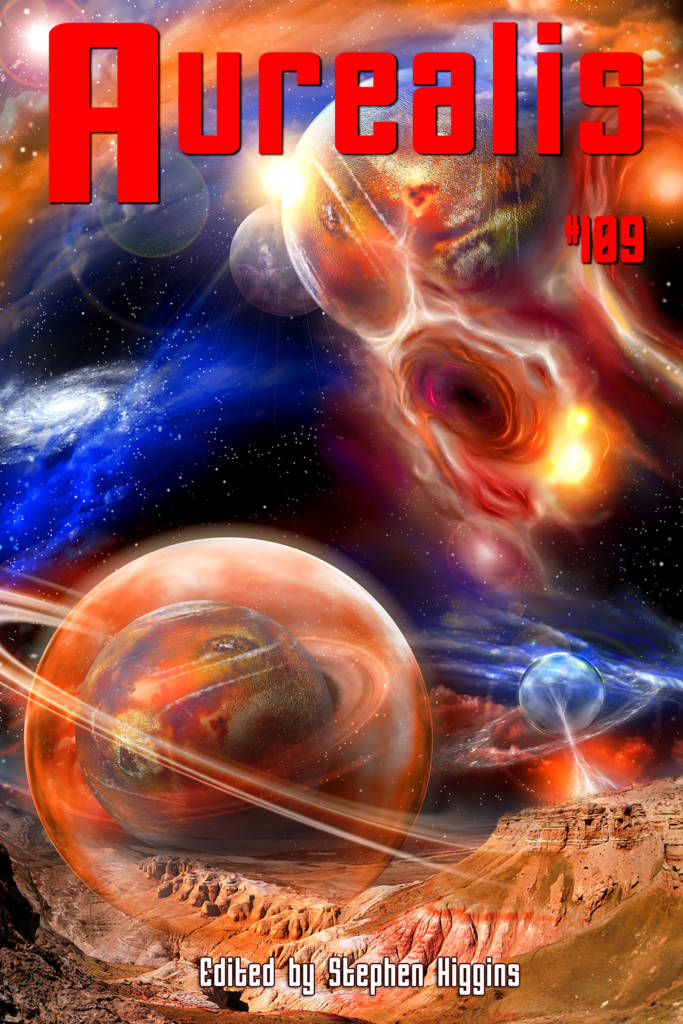
Aurealis-109-cover-Space-landscape-683x1024

Recently, I’ve been hearing from Lyn on Facebook, where some of our 2002 alumni occasional post. She’s back living on land, in Australia, and writing stories again. Her new story “Painted Ocean” was published in Aurealis #109, a science fiction magazine from down under. Unfortunately, I can’t give you a link to read it online. I bought a copy of Aurealis #109 for $2.99 through Smashwords. I wished it had been on sale at Amazon for the Kindle because that’s the ebook platform I’m locked into. However, this situation has taught me how to deal with non-Kindle ebooks. Smashwords offers its downloads in several ebook formats, and I put a pdf copy on my Dropbox to read with my iPad. In the last couple of months, I’ve bought three books from non-Amazon sources. I think it’s important we support these alternative publishing platforms.

As I read “Painted Ocean” I was amazed by how good a writer Lyn has become, even after laying off for all those years. On her blog, she wrote, “A long time in the making …” about the writing of “Painted Ocean.” Go read it, especially if you want to become a writer. She says this story was started the Joe Haldeman week at Clarion West, but I did not remember it. To be honest, I don’t even remember my six stories. Each week we read and critiqued 17 stories. Lyn says Haldeman told us to write something hard.

“Painted Ocean” is an ambitious story. It blends AI, simulated reality, sailing, climate change, betrayal, and the love story of two older people. There is also a lot of allusions to the “Rime of the Ancient Mariner” by Samuel Taylor Coleridge, evidently a favorite poet of Lyn’s.

As I read about Annie Janssen, a woman with her gray hair in a bun and a brilliant hacker, I wondered if Lyn had created Annie by projecting her own self into the future. Reading her blog after finishing the story, it let me know she had read there weren’t many older female protagonists, so that challenge inspired her. Theodore Janssen is based on Lyn’s father, who had died seven years before Lyn attended Clarion West. Theo is trapped in an artificial reality on a sailboat name SaltTrader:

As Storm lashed out in fury, Theo’s yacht coalesced; broken pieces fitting together like a movie played backwards. The cockpit rebuilt itself around him, the decks with their fittings, the mast, boom and shrouds. Theo heard the rapid ching-ching of halyards hitting steel and, finally, her tattered sails came together like a soul re-knit.

SaltTreader heeled violently as the wind snagged her sails: a call to action.
Jumping forward, Theo released the mainsheet, spilling the wind in the mainsail. The sudden release of pressure brought SaltTreader upright. Her unrestrained boom swung dangerously but Theo was already at the mast, releasing the mainsail’s uphaul and letting the heavy layers of canvas drop to the deck where the wind clawed at but couldn’t fill them.

The foresail backed, bringing SaltTreader’s bow about. Just as she pointed into the wind, Theo released the foresail’s uphaul so that the sail could drop down the forestay, and raced to the bow.

He wrestled the heavy, flapping canvas as if it were a beast until it finally fell, defeated, to the deck. The well-worn ties that Theo always left in position on the guardrail for just this purpose re-materialised. He quickly secured the big foresail before scrambling back to the mast to begin tying down the mainsail.

SaltTreader wallowed dangerously.

Without the time to go below and find the tiny scrap of sail he used as a stormsail, Theo thought it on.

Storm howled. A powerful gust pinned him to the deck.

Using that power, Theo realised, was the equivalent of leaving an error message in the code.

But that little scrap of sail made all the difference. SaltTreader heeled and the wind drew her up the waves.

With the canvas secure, the banging and flogging abruptly disappeared. Now he could hear the hiss of breaking seas and the whine as wind whipped through his rigging, but she crested another mountainous wave. Theo became the master of his vessel once again.

The action of the story switches from the real world to the artificial world. “Storm” is the rogue AI which has gained control of a vast system of weather monitoring and controlling computers. Annie is on the outside, and what’s left of Theo’s personality is on the inside. Annie communicates with Theo with Coleridge like imagery.

Throughout the story, I wonder what is personal to Lyn’s life, what is science fiction, what is remembered from her sailing experiences, and what comes from her fears of the future. All of this wondering, and thinking about story construction makes me think about trying to write fiction again. So, Lyn, thanks for reminding me of old desires.

I really enjoyed reading Lyn’s story and her essay about writing it. Essay writing is all about describing real events, thoughts, concepts, and capturing them honestly as possible. Fiction goes into another realm. I’ve been thinking more about that realm again. I wonder how many of the Clarion West classmates still think about it too.

JWH

A History of the Annual Science Fiction Best-of-the-Year Anthology

by James Wallace Harris, Wednesday, April 11, 2018

Best_science_fiction_stories_1949Back in 1949 editors Everett F. Bleiler and T. E. Dikty came out with The Best Science Fiction Stories: 1949 from Fredrick Fell publishers that collected the best science fiction stories that appeared in magazines during 1948. They were following the tradition of The Best American Short Stories anthology that first appeared in 1915. Science fiction has had one or more annual best-of-the-year anthologies ever since. I’ve counted 9 scheduled for 2018, with two already released (The Best Science Fiction of the Year Volume 3 edited by Neil Clarke and The Best Science Fiction and Fantasy of the Year, Volume Twelve edited by Jonathan Strahan). By the way, The Best Science Fiction and Fantasy of the Year, Volume Eleven is currently available for the Kindle for 99 cents. It has two of my favorite recent reads:  “Touring with the Alien” by Carolyn Ives Gilman (try the audio) and “Mika Model” by Paolo Bacigalupi (author of The Windup Girl.)

Few people read short stories. The audience for them is greater than poetry readers, but probably not by much. The three top print magazines, Analog, Asimov’s SF, and The Magazine of Fantasy & Science Fiction all have roughly 10,000-20,000 buyers each. There’s no telling how many readers there are for the many online magazines. 1% of the U.S. population would be 3.257 million people, so even if there were 50,000 science fiction short story fans, that would only be less than 1/65th of 1% of the population. If you’re a fan of SF short stories, the odds of knowing someone else who is also a fan is very small indeed.

However, I would claim the science fiction short story has always been the heart and soul of the genre. Even before Amazing Stories in April 1926, the first pulp magazine devoted to science fiction, short science fiction appeared regularly in periodicals decades before that. Most science fiction writers, especially the Golden Age writers, got their start writing short stories. And if you love to read science fiction for the far-out ideas, the magazines are the place to go.

In an age where most novels are part of trilogies or never-ending series, a short work of fiction that jumps in, gets the job done and wraps up satisfyingly is to be highly prized. I get more science fictional bangs for my galactic credit by reading one annual anthology than I do reading a dozen SF novels. That’s why I’ve switched to mostly reading SF short stories.

Bleiler and Dikty might have begun the tradition of best-short-stories-of-the-year anthologies, but Isaac Asimov and Martin H. Greenberg created a series in the late 1970s that jumped back to 1939 and continued for 25 volumes until 1963. Robert Silverberg added one more volume for 1964 after they stopped.

I’ve started a reading project to read all these anthologies from 1939 to the present, assuming the present will be the year I die. That’s about 200 books as of 2018. I’m currently reading stories from 1942, the 1950s, and 2017.

Here are the annual anthologies I know about that ran for at least three years minimum. There have been other editors and publishers starting annual series that didn’t succeed that I’m ignoring in my collecting and reading. Follow the links to ISFDB to read more about each series, their volumes, and their content. I’m using the series title decided on my ISFDB, but individual volume titles will vary.

If you count series with the bolded “present” above, you should tally eleven. Maybe my assumption that few people read short stories is wrong because this seems like a boom time for best-of-the-year anthologies.

Bleiler & Dikty began their series two years before I was born. Evidently, their publisher Frederick Fell didn’t have a wide distribution because I don’t remember seeing any of these volumes at the library when I was growing up. I began reading the annual anthologies in the mid-sixties with Judith Merril and then the Wollheim books from Ace Books. After that, I started reading the Terry Carr collections. I bought every annual from Dozois when he started with Bluejay Books, but I didn’t keep them. Damn!  Today I follow Dozois, Strahan, Horton, Kaster, and Clarke.

My current reading project is The Great SF Stories edited by Asimov/Greenberg. I’m reading them straight through. I’m now in 1942. I seldom read the annual anthologies from cover-to-cover. My goal is to do that this time as I progress through the years. It’s becoming quite an education in the history and evolution of science fiction. I sometimes write about the stories that intrigue me over at Worlds Without End.

If you’re interested in discussing SF short stories I have an online email group, The Great SF Stories at Groups.io. You’re welcome to join.

Update:

A few weeks ago I wrote “9 ‘Best SFF of the Year’ Anthologies” for Book Riot that just got published (4/13/18). At the time I only knew about 9 current best-of-the-year anthologies. Now it’s up to 11. There might be more.

JWH


Say Goodbye to the Internet in Your Will

by James Wallace Harris, Monday, April 9, 2018

I’ve been using the internet long enough to have online friends pass away. I’m in one online book club that has had three members die. I’ve had other internet friends just disappear, and I’ve wondered what has happened to them. Sometimes on Facebook family members will post a goodbye. I greatly appreciate that when it happens.

Quite often I don’t know where my internet friends live. And even when I do, the standard of publishing an obituary in the local paper seems to be fading along with print journalism.

Last Will

There is much anger directed at Facebook in recent weeks. However, Facebook is how many people stay in contact with friends and family. Few reports count all the positive benefits of Facebook. As many as two billion people use the service. In recent years, Facebook is often how I find out internet friends are sick, dying, or have passed away. It’s become the new obituary page.

We all need to leave login credentials to our social media groups in our wills with instructions to contact these sites after our death. And even provide a parting farewell to publish.

Social media is often dismissed as shallow. Maybe it is, maybe it’s not. Maybe we should make it better.

JWH


If I Was Rich I’d Collect Books

by James Wallace Harris, Tuesday, April 3, 2018

I’ve never hankered after riches. Owning fancy cars or mansions seems like too much work. Bookworms don’t need much money, we just need time. Now that I’m retired I’m rich in time. But for some reason, I now want to collect books as beautiful objects. Before, I bought books to read. I gave them away when I finished. Often I bought more books than I could read, and after several years of not reading them, I gave them away too.

For some reason that I don’t understand, I’ve developed an attraction to certain books. But only to editions with covers I like. I’ve made a few indulgent purchases lately of hardbacks with dust jackets I admire. I love getting them in the mail, especially when they are in fine shape, protected by a Brodart mylar jacket. So far my purchases have been few, and always under $20. The books I really want cost a good deal more.

I’ve never really valued paperbacks until recently. When I was young they were all I could afford.  After I went to work I bought hardbacks. I have bad eyes and hardbacks are easier to read. Since the invention of the ebook, I actually prefer to read Kindle books. But for a psychological reason I can’t understand, I now enjoy buying old paperbacks because of their covers. I don’t know why I want to collect them because old paperbacks are fragile and deteriorating. To read one requires great care not to damage them.

I can easily order most paperbacks for under $5 from ABEBooks.com. However, the dealers who sell them for that price are not accurate with their condition descriptions, plus they have a nasty habit of putting barcode labels right on the beautiful covers. Pisses me off no end. It generally requires spending a good deal more to get paperbacks in very good to fine condition. Evidently, dealers who charge more are kinder to what they sell and don’t put barcodes on their merchandise. Quite often they ship paperbacks in protective plastic sleeves.

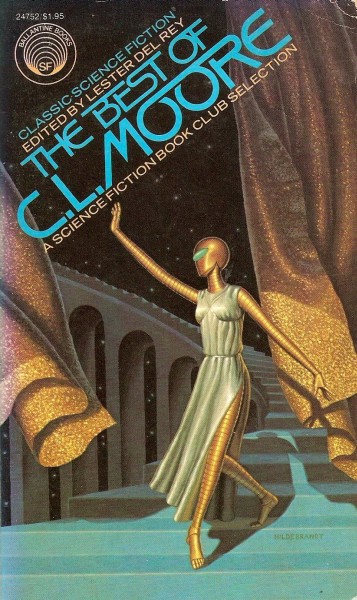
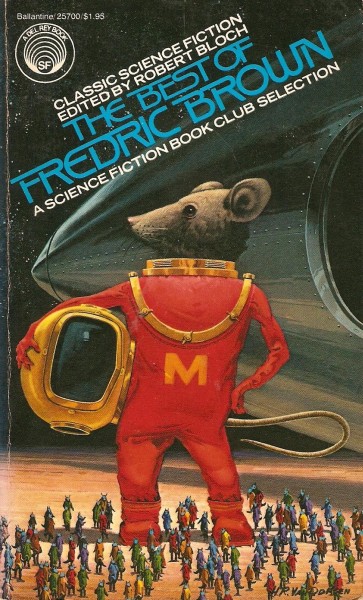
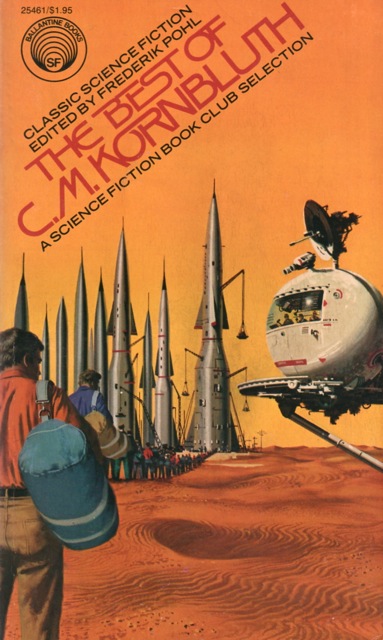
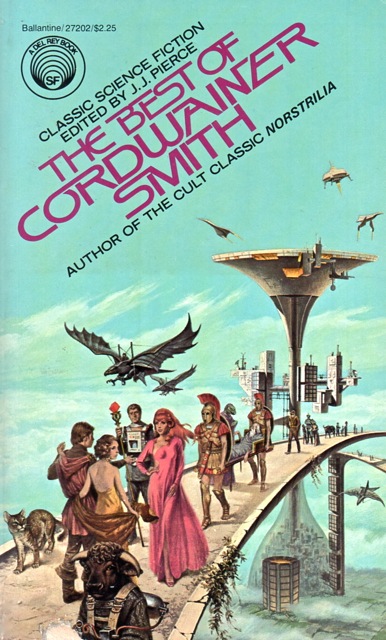
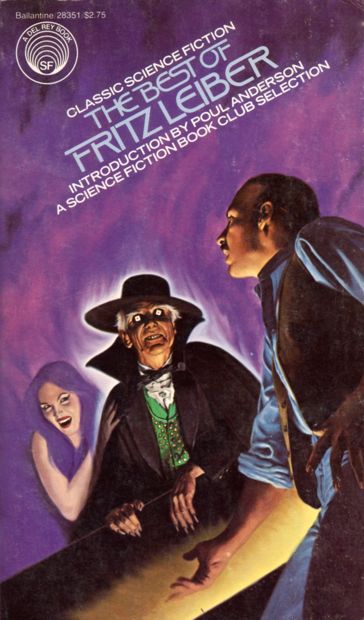
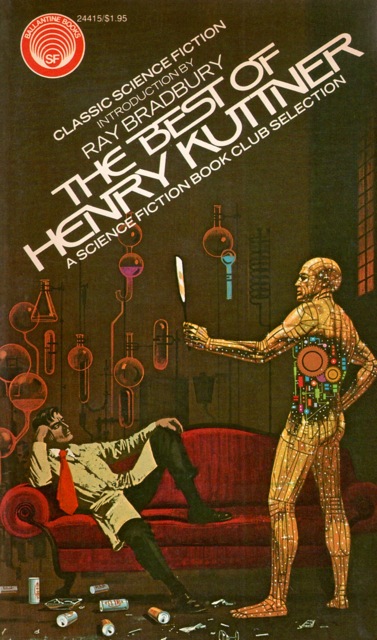
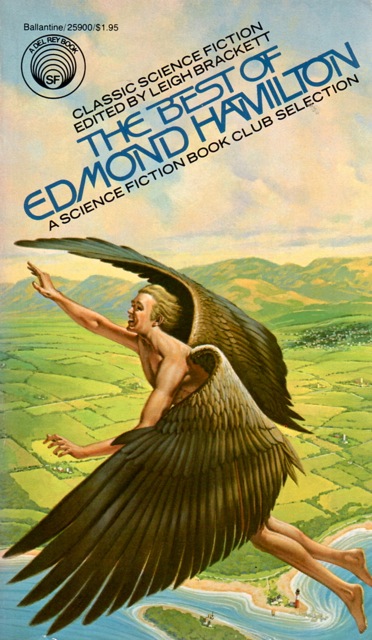
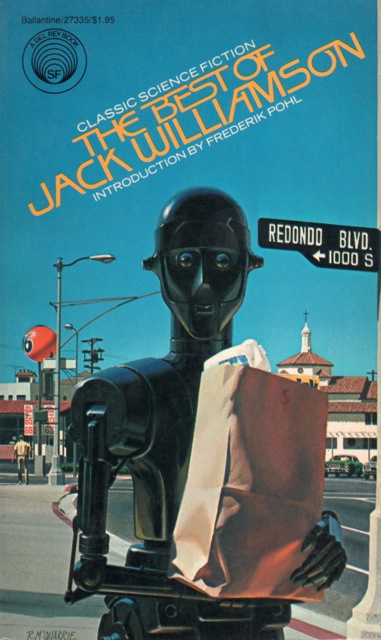
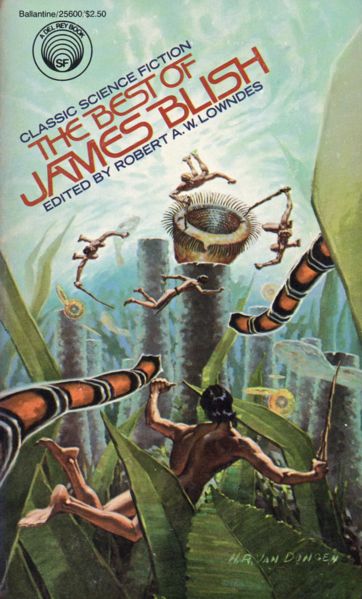
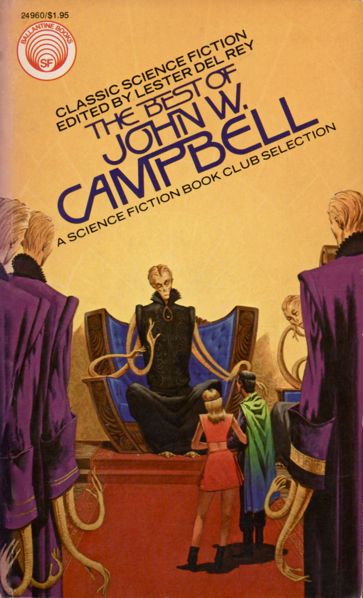
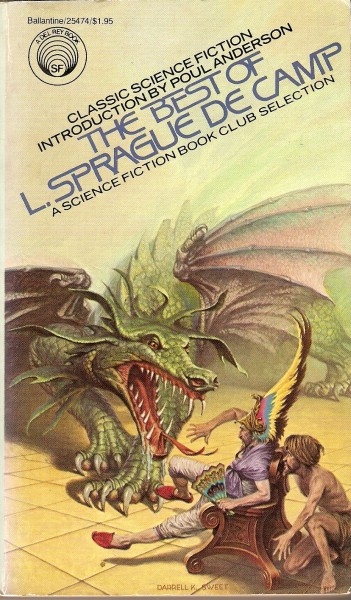
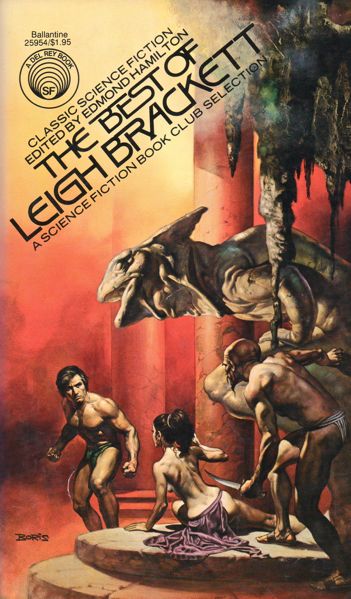
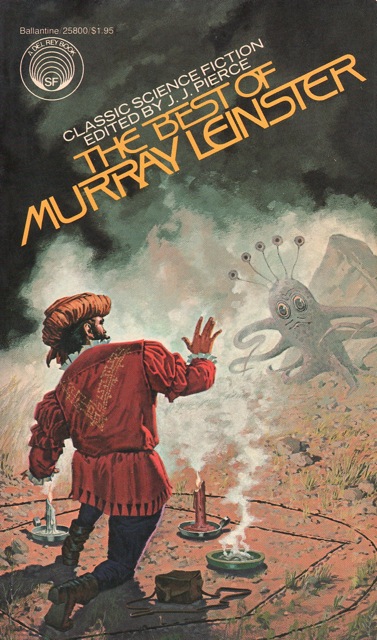
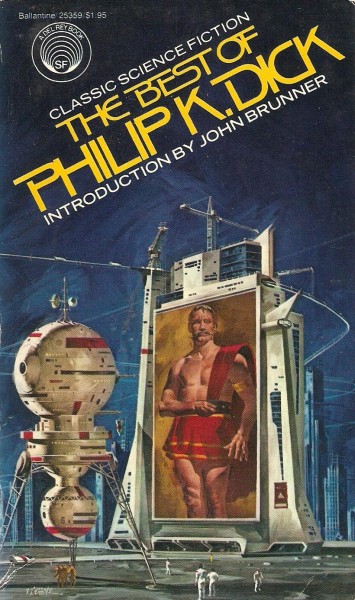
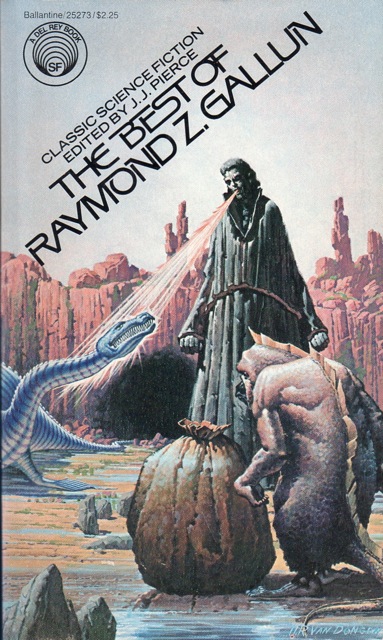
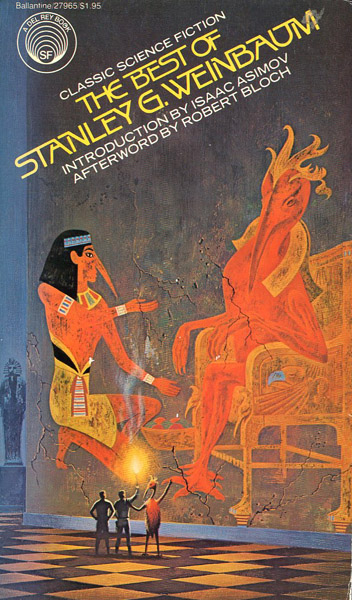
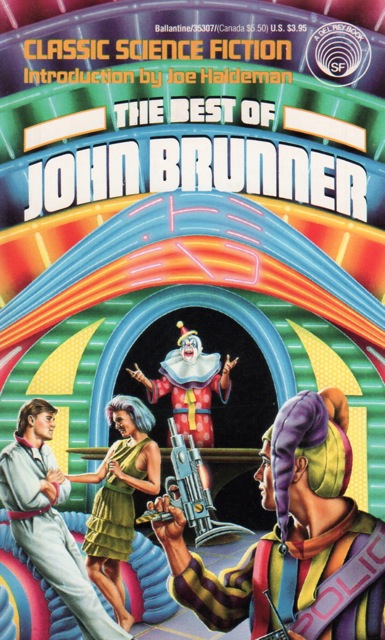
Here are series of books from Ballantine I’d love to collect. I won’t let myself spend the money, so I’ll post the covers here to admire. They’ll look especially great when I view this page on my iPhone. Maybe I like these covers because the artists have illustrated short stories I know. I don’t feel modern cover artists illustrate stories like these old artists did.

The Best of C. L. Moore

The Best of Fredric Brown

The Best of C. M. Kornbluth

The Best of Cordwainer Smith

The Best of Fritz Leiber

The Best of Henry Kuttner

The Best of Edmond Hamilton

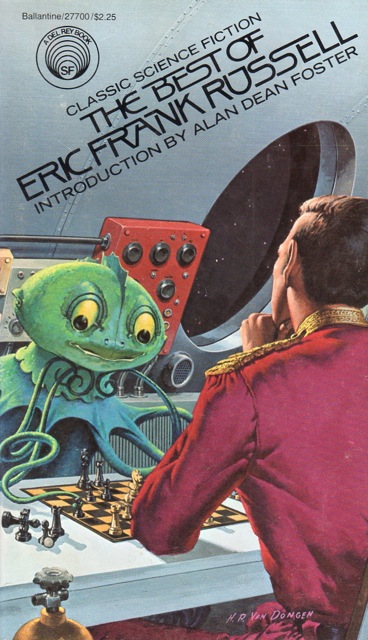
The Best of Eric Frank Russell

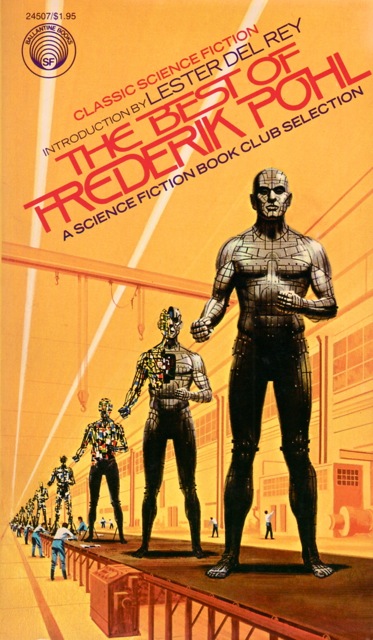
The Best of Frederik Pohl

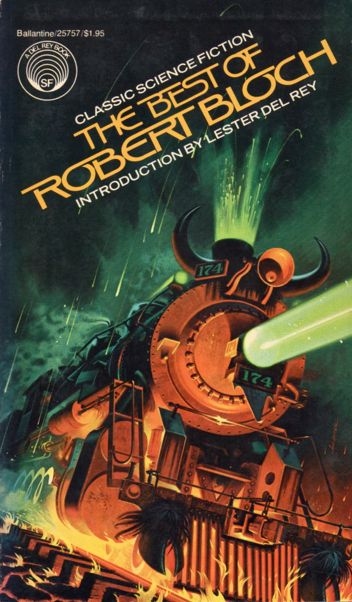
The Best of Robert Bloch

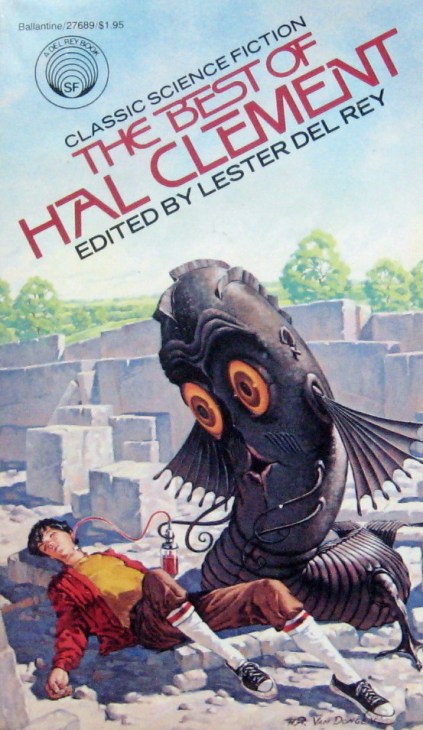
The Best of Hal Clement

The Best of Jack Williamson

The Best of James Blish

The Best of John W. Campbell

The Best of L. Sprague de Camp

The Best of Leigh Brackett

The Best of Murray Leinster

The Best of Philip K. Dick

The Best of Raymond Z. Gallum

The Best of Stanley G. Weinbaum

The Best of John Brunner


JWH