Science Fiction in the 22nd Century

by James Wallace Harris

I’ve been wondering if most science fictional concepts were invented in the 19th and 20th centuries and if we’ll just be reprocessing old speculative ideas during the 21st century?

Just now I was flipping through the listings of all the forthcoming and recently published science fiction on Audible.com. Most of the titles and authors were ones I had never heard of before. There’s tons of science fiction coming out, but after reading their blurbs I’m not sure if any of them offer new SF inventions. Well, if you’re young and haven’t read tons of science fiction, then there are lots of new ideas to encounter. But if you’re old and have been reading science fiction for decades it seems like all the ideas have been used before. Is it possible we’ve already explored the limits of science fiction?

RingworldFiction has been around for thousands of years and most plots are retreads. Quite often scholars of fiction try to consolidate plots into a limited standard number. When I first started reading science fiction in the 1960s it felt like an author would come up with a new SF idea, and then spin an old plot around it. For example, Ringworld, very neat idea, but the plot reminded me of Oz books. Regular folks go on an adventure, meet lots of strange folks, see lots of weird sights, then travel together until the story ends.

I’m not sure if Larry Niven invented the concept of a ringworld, but Wikipedia credits Olaf Stapledon for imagining the first solar megastructure which we now call a Dyson sphere. I’d think a ringworld would be a creative variation. Just in terms of solar megastructures how many original structures could be imagined and how many creative variations? I’m sure there are limits.

I thought the 1938 story “Helen O’Loy” by Lester del Rey was the first story of a man marrying a robot, but then this year I read “A Wife Manufactured to Order” by Alice W. Fuller from 1895, and I wondered just how old is the idea of building spouses to order? The second half of the 20th century has countless romantic stories between humans and robots. The idea is well-liked now, but when will it be too known to entertain?

A twelve-year-old kid could read a new story today about a love affair between a machine and homo sapien and think it a fresh concept. I guess that means science fiction in the 22nd century will still provide a sense of wonder even if the ideas it presents are actually very old. Of course, by then people might actually be marrying robots. Who writes about first trips to the Moon anymore? Will science eventually ruin all the practical science fictional ideas by actually constructing them?

Arcadia by Iain PearsYet, I wonder, even worry, that science fiction has run out of good ideas. I don’t mean good ideas for plots, which are endless, but good ideas like space travel, time travel, dimensional travel, intelligent life besides us, creating intelligent life, creating artificial life, digital realities, etc. I’m currently reading Arcadia by Iain Pears which blends fantasy, science fiction, philosophy, myth, and religion into one clever story. If feels very original because of its complexity of plot, but is it original in ideas? Arcadia is great fun, but I keep hoping Pears will surprise me with an original SF concept. Pears constantly delights me with creative twists and turns of his story though, and maybe that’s good enough for an old jaded reader.

Biology is more complex than the chemistry of cosmology and seems to offer unlimited permutations here on Earth. But still, I imagine there’s a limit to what biology can produce. Writing science fiction is a spin-off of biology, but ultimately, won’t it have limits?

Maybe artificial intelligence will surpass what biology can produce, but AI will exist in a reality of physics, chemistry, and biology and may develop a greater degree of complexity than we’ve seen in biology. If atoms and molecules had been intelligent could they have foreseen the creative complexity of biology? I doubt we can imagine what AI minds will create, maybe their own version of science fiction. But I’m wondering if we intelligent biological creatures have limits and if our science fiction also has limits.

If we evolve Homo Sapiens 2.0 and they are much smarter than us, will they find more to occupy themselves in this solar system and galaxy than we could? More intelligence might actually produce interstellar drives but isn’t colonizing another planet still just colonizing another planet? Is building a galactic empire the most complex thing we can imagine doing?

Olaf Stapledon back in the 1930s imagined some very far out SF ideas, many of which were recycled in Star Trek and Star Wars. Aliens with psychic powers is a very tired concept though. It’s closer to the magical hopes of religion than science. One problem with being an older science fiction fan is we eventually feel all the ideas we encounter in science fiction are old.

The result of this jadedness is a sense of confinement. The perfect story to illustrate how I feel is “The Star Pit” by Samuel R. Delany. I call it the aquarium effect. We pity poor fish that live in an aquarium because they have a barrier they can’t cross. We all live in an aquarium, but we don’t all know where the glass is.

I wonder if science fiction hasn’t already found all the aquarium walls that confine us but we can’t know it because of the limitations of our minds. One of our major flaws is we imagine more is possible then is possible. Religion blinds people to our real limits, and so does science fiction.

JWH


How Could I Miss “Maggot Brain” for 46 Years?

by James Wallace Harris, Thursday, December 14, 2017

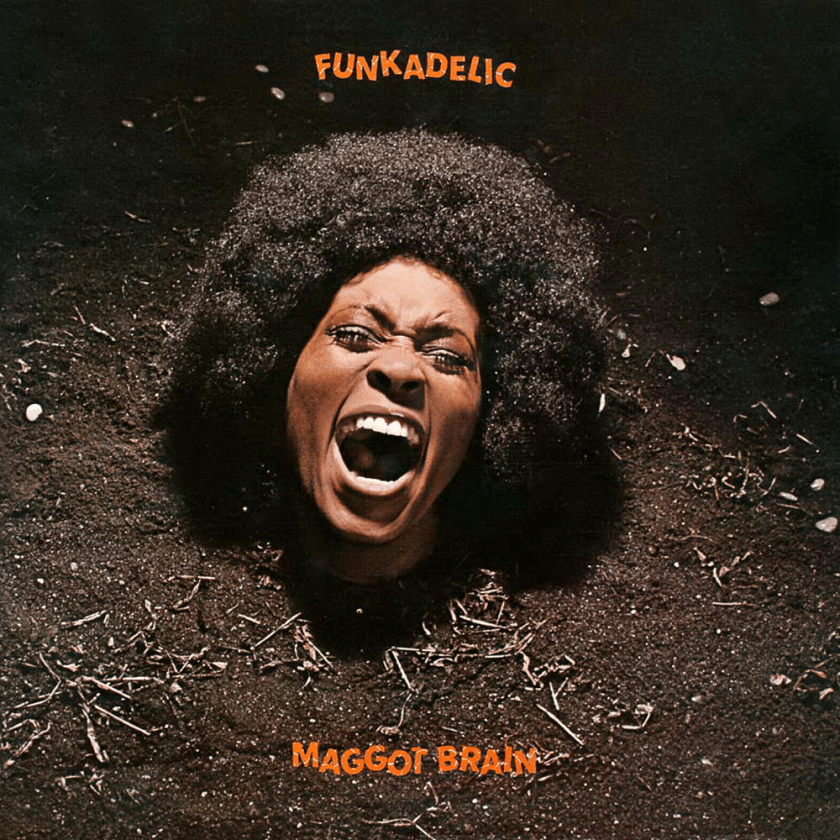
This morning my friends Mike and Betsy came by and Mike had me play “Maggot Brain” from Funkadelic’s 1971 album of the same name. The song is mainly a beautiful guitar solo by Eddie Hazel that covers most of its 10 minutes and 20 seconds. I was blown away. How could I have missed such a fantastic song for 46 years? It was a new discovery for Mike too, and he said he played it and covers versions over and over yesterday. I’m doing the same thing today.

I’ve known about Funkadelic and Parliament since the 1970s, but I was never into them. I should have been. “Maggot Brain” is often covered, and sometimes remembered on lists of top guitar solos, so why didn’t I encounter it before now? That’s one of the fun things about getting old and being retired, I have the time to revisit the past to look for wonders I missed.

I remember going to record stores two or three times a week flipping through the bins of albums and wanting to buy way more than I can afford. Even back then I bought two to four albums a week, but that was nothing to how many came out each week. Now with Spotify, I can go back and search for all those albums I flipped by but couldn’t buy.

Here’s is one of my favorite covers by violinist Lili Haydn where her scorching performance is mirrored by her facial expressions.

Of course, this begs the question: how many other great songs have I missed? Mike has challenged me to find another great song we’ve missed during our lifetime. It’s going to be hard to find something that tops “Maggot Brain.”

If y’all have any suggestions let me know.

Maggot Brain by Funkadelic

JWH

Why We Need To Share

by James Wallace Harris, Thursday, December 7, 2017

This morning while I was eating my breakfast I played “Your Top Songs 2017.” This is a playlist Spotify generated for me by collecting the songs I listened to most this year. If you subscribe to Spotify you can play the songs with this embedded player immediately below. For those who don’t, I’m going to embed some YouTube videos to try.

I played this music very loud while I ate and because it’s the music I love the most. It moves me in ways I can’t describe. And while this music pushed my emotional buttons I wished I had someone here to share it with. My friend Mike was my last pal who would listen to music with me, but his hearing has gone downhill so he no longer likes to share music. Getting old is sad. I worry that my hearing is going too.

The past year, more than ever, I realized that friendships are based on what we share. I think this is why Facebook is so popular. We post something we like and then see who else likes it. It’s always fun to find a video or cartoon that many friends love too. I guess it’s a kind of validation of our tastes. But I think it also allows us to feel we’re existing close to someone.

We all live in our heads, and no matter how physically close we get to another person we don’t feel that closeness unless we psychologically resonate. The easiest way to achieve this is to do something together with another person that shares our interests. For example, it’s far more enjoyable to go to a movie and both people love it than to go and only one person love the show.

I love the Bette Midler song above. I will relate to you more if you love it too. Now “Do You Want To Dance” is an easy song to like so I should find plenty of friends to share it. And “The Other Side” by Michael Nyman easily admired by most folks because it’s so pretty. But what about “Moanin'” by Charles Mingus. Mike and I connected on this song, but I don’t think I have another friend that shares this particular love.

Probably somewhere in the middle, I can find more people who will share “I’ll Play the Blues for You (Pts. 1 & 2)” by Albert King. Bette Midler’s song was pop music, so duh, that stands for popular music. Jazz is esoteric for most music fans, but blues has a decent following. I share a love of the blues with my sister Becky. I almost can’t play this Albert King song too loud.

Susan, my wife have a lot of songs we love together, but our playlists of favorite songs are very different. When we’re in the car we have to choose who’s songs get played. When a song she’s crazy about comes on and I don’t love it back Susan’s disappointed. The same is true when one of my favorites is playing and she finds it annoying.

Susan works out of town, so in the evenings I have different friends over to watch TV in the evening. Each friendship is a Venn diagram where we find what to watch in the intersection of interests. What’s really difficult is to have 3-4 people all trying to agree on a film to watch. It’s a very satisfying feeling when the pick makes four people happy.

However, there’s a range of television shows and movies I want to see that I can’t find a friend to share. This makes me feel lonelier. Even Janis, my main TV buddy goes to sleep on a many of the shows I’m most anxious to see. Generally, I have to watch westerns, documentaries, and old black and white movies from the 1930s and 1940s by myself.

Some of my most intense feelings come from songs, books, movies, and television shows. Often these deeply aesthetic pleasures come late at night when I’m alone. Listening to these songs this morning is generating intense emotions that I wish I could describe, but can’t. And I think that’s the key to why we want to share. We can’t describe what we feel so we at least hope to find someone to experience the same thing with us. Unfortunately, we can click the Like icon but we have no way of knowing if what our friends are feeling is the same thing we’re feeling.

Do any of these songs resonate with you?

JWH

‘Godless’ and the Western Movie Genre

by James Wallace Harris, Tuesday, December 5, 2017

I grew up back in the 1950s watching old westerns on TV. Even though I took up reading science fiction in the 1960s and have always identified myself as science fiction fan, my favorite movie genre is westerns. I’m rather finicky about my westerns too. Although the 1950s and 1960s were the heydays of television cowboy shows, I prefer the cinema westerns from Stagecoach (1939) to Ride the High Country (1962) era. Starting with films like A Fistful of Dollars (1964) and The Wild Bunch (1969) movie makers began to alter the genre. I liked these films, but they weren’t the same as the westerns I loved most and how I define the genre.

Too often today when they do make westerns, the level of violence is off the scale. We still get a quality western every few years. Open Range (2003), Appaloosa (2008), and True Grit (2010) are wonderful examples, even though their style has migrated away from how I define the classic western. But I find westerns like Quentin Tarantino’s two recent films grotesque insults to the genre. All too often, I just can’t watch the films called westerns today.

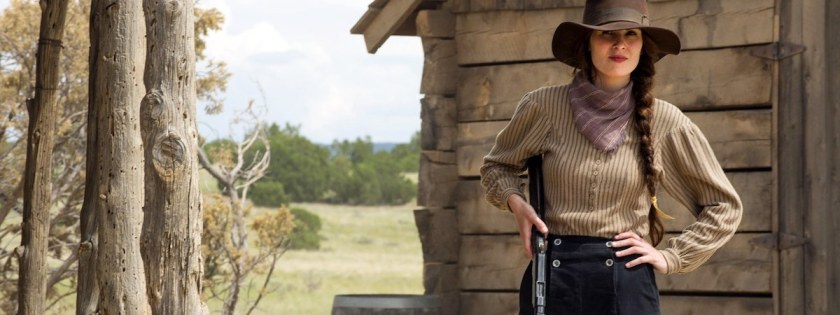
Godless - Alice Fletcher

Thus, I was both excited and a little worried when I first heard about Godless. I must say I enjoyed the series and raced through all seven episodes in days. However, I’m not sure what to make of it artistically, morally, and philosophically.

No work or critic can define a genre, but there are movies called westerns that completely distort what I consider to be the heart of the genre. Even during the 1950s, there were so-called westerns where characters rode horses and carried guns but their story’s soul belong to some other historical psyche.

Goddless Frank Griffin

As a kid, I grew up believing watching westerns taught me about American history. That made my black and white television screen a window to the past. It wasn’t until I got older that I realized that every decade has a different view of the American West. How do you reconcile They Died With Their Boots On (1941) with Little Big Man (1970)? Godless (2017) gives us another view of 1888, but should we consider it insight into 1888 history, or just a thrill ride fantasy like West World (2016)?

Godless is full of horrendous violence with a hard-to-believe ending. I feel any good western should be true to the 19th-century even if it doesn’t chronicle historical events. I judge westerns by these criteria:

  • Do characters talk and act like their 1800s period counterpoints?
  • Do the costumes and sets look like the era they depict?
  • Could the plot have happened in the true west era?
  • Are the guns right for the period?
  • Is the level of violence appropriate for the times?
  • Is the story connected with history?
  • If the characters are based on real people how well are they portrayed?
  • Are there anachronisms in the sets, costumes, dialog, mannerisms, or plots?

Frank Griffin (Jeff Daniels) is an extreme character in Godless, especially since he thunders around the country with over thirty killers on horseback. But was Griffin more violent or crazy than William Quantrill or John Brown? Was the bizarre massacre of Creede, Colorado unrealistic when you think about Lawrence, Kansas of 1863? Also, Frank’s strange adoption by Mormons is based on the real Mountain Meadows massacre. (Although Frank looks too old to have fit the real timeline of history.)

My measuring rod for western violence is the gunfight at the O.K. Corral which took place in 1881. It was probably the most famous gunfight in the old west with nine combatants and three deaths. The most famous killing of the gangster era of the 1920s and 1930s involved seven deaths, and it was an execution and not a shootout. So when movies have their characters racking up huge body counts it moves away from being historical towards gun porn to thrill our prurient bloodlust.

Godless feels both realistic and unrealistic. I found it hard to believe Frank and his band of murderers traveled without pack horses and supplies. They looked kind of silly galloping across the land like a large anti-posse with one-armed Frank in the lead. It reminded me of Forty Guns when Barbara Stanwyck would lead 40 gunfighters on 40 horses faithfully riding behind her wherever she went. In both movies, the mass of riders looked silly, even overly melodramatic. Modern movies are always trying to out-do past movies. I’m surprised Frank did have 80 outriders. Maybe the makers of Godless hadn’t seen Forty Guns. The show would have been more realistic with just a dozen in Frank’s army. It certainly could have made the ending more realistic.

Overall I admired and enjoyed Godless. But the show kept bugging me with small distracting issues. Michelle Dockery had too many outfits for a poor woman living on an 1888 ranch, some of them much too fashionable. And she changed them too often. And even though I liked the idea of a town full of women fighting an army of outlaws, it seemed cartoonish. Their last stand reminded me of The Magnificent Seven, which is a western I love, but one that’s somewhat over-the-top. Godless goes way overboard. There were other small details that bothered me too, but mentioning them might give spoilers.

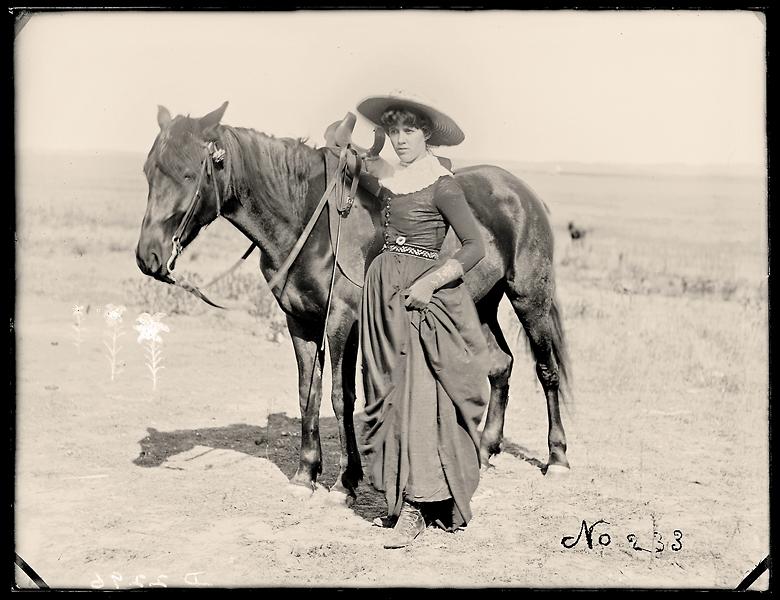
I wasn’t sure about the costumes. They seemed realistic at times, especially for the men. Westerns are always changing how the old west looked. Just compare True Grit (1969) to True Grit (2010). One reason I didn’t like 1960s TV westerns was everyone’s costumes seem too clean and store bought. I’ve always wondered if the wild west fashions of cowboy films of the 1920s and 1930s were more realistic because they were closer in time to the actual historical west. I keep looking for period photos for clues, but they are hard to come by.

1888 woman of the west

[Here is Mattie Lucas 1888 from Custer County, Nebraska.]

Finally, there’s the philosophical interpretation. Westerns are inherently about violence. Guns and gunfights are the solutions to western plot conflicts. I assume Frank and his gang represent evil and the citizens of La Belle represent goodness. But I’m curious how our politically divided country will see things. To liberals, Frank and his gang may remind them of gun nuts and mass shooters. Frank could be a stand-in for Wayne LaPierre and the NRA. To conservatives, Frank is a crazy Islamic fundamentalist with a gang of terrorists. They see La Belle as proof that people need to arm themselves. The film shows women with no gun training effectively using firearms to save themselves.

The love triangle between Roy Goode (Jack O’Connell), Alice Fletcher (Michelle Dockery), and Bill McNue (Scoot McNairy) was unsatisfying to me. But the one between Mary Agnes McNue (Merritt Wever) and Callie Dunne (Tess Frazer) felt logical. So did the one between Whitey Winn (Thomas Brodie-Sangster) and Louise Hobbs (Jessica Sula).

Godless - ranch

Law and the government are shown to be ineffective at protecting citizens in this story, as is in most westerns. Plus, the press is corrupt. A. T. Grigg (Jeremy Bobb) is the editor and reporter for the Santa Fe Daily Review and a publisher of fake news. Grigg reminds me of W. W. Beauchamp, the writer in Unforgiven (1992). I believe this is realistic though because newspapers back then printed pretty much what they felt like, and dime novelists invented the Wild West with tall tales.

Sean T. Collins over at AV Club has an episode-by-episode review of Godless, where he did a fair amount of nitpicking. I could see the faults he saw, but for the most part, they didn’t bother me. Collins gave most of the episodes a B or B-. I think I’d give the show a B+ overall. Godless isn’t Lonesome Dove, but it’s not far behind it as a western mini-series. I’d guess most fans would consider Lonesome Dove (1989) the gold standard of television westerns. I’d agree and also give Deadwood (2004-2006) an A+ too.

Here’s a list of some of my favorite westerns.

Recommended Reading

JWH

How Quickly Do Ideas Spread?

by James Wallace Harris, Saturday, December 2, 2017

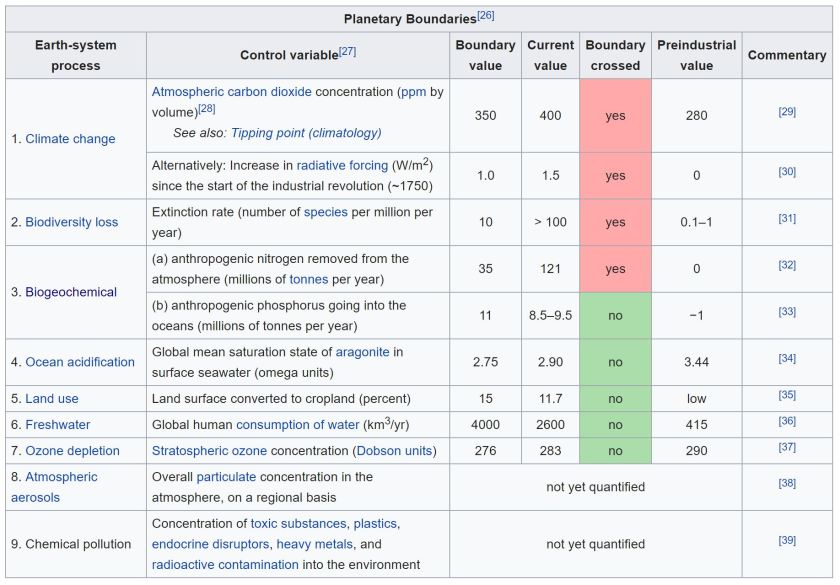
In 2009 group of environmental scientists led by Johan Rockström and Will Steffen proposed the idea of planetary boundaries. They defined nine indicators to monitor Earth’s environmental stability. In 2009 we had not crossed any of the nine boundaries, but by 2017 we had crossed four. Everyone knows about boundary number one – climate change – but do you know the other eight? I may have heard of planetary boundaries before in the popular science books I read, but it feels like I just discovered this concept when I read Thank You For Being Late by Thomas Friedman. So, it took me eight years to encounter this concept since it was first created. That’s not too bad. How long will it take this idea to spread to everyone? Have you heard of planetary boundaries?

book-big-world-small-planet (1)Johan Rockström came out with a textbook, Bankrupting Nature: Denying Our Planetary Boundaries in 2012, but I rarely buy textbooks (the Kindle edition is $45!), but even if I did, I’m not sure I’d find them readable because of my knowledge level. Rockström did come out with a popular science level book, Big World, Small Planet in 2015, which I do wish I had discovered. How often do we buy new books with new ideas when they first come out? (I ordered it today, even though I’m two years late.)

The first laser was built in 1960. I read about it in Popular Science sometime in the mid-60s. I got to see one in 1967 at a science museum in Miami. In the 1980s I finally got to own one when I bought my first CD player. So it took about a quarter century to spread laser technology to the masses.

On the other hand, it took algebra thousands of years to finally get to me in 1963. In fact, most of what I know is pretty damn old. I finally learn about calculus in the early 1970s, when its concepts were only as old as Newton and Leibnitz. I guess astronomy is the science I’m most up-to-date with, and I’m sure I’m years behind and only know its discoveries in the most rudimentary of ways.

The concept of climate change has taken decades to spread through society and it’s often rejected. How long will it take other planetary boundaries to become universally known and affect political action? Even with the speed of the internet we just don’t seem to learn new ideas quickly enough. Most people are stuck on religious ideas proposed thousands of years ago which have been completely invalidated by later knowledge.

And, we forget so much knowledge! My awareness of mathematical concepts has de-evolved to a time before the classical Greeks. To make matters worse, Republicans seem hellbent on rejecting science. Even if knowledge flows freely and fast around the internet there are barriers to absorbing it.

The concept of planetary boundaries is essential to our survival. And I bet there are way more the nine boundaries – that’s just the number scientists are working with now. (Of course, there might already be a new number and I won’t acquire it for a few more years.)

I’m looking for the best popular science books on the nine boundaries. Read about them at Wikipedia but here’s the table they use to define them. (Hope it’s okay to copy.) If you’ve read good popular science books on each that you’d highly recommend, let me know. I consider This Changes Everything by Naomi Klein to be the best book for boundary #1, and The Sixth Extinction by Elizabeth Kolbert for boundary #2. But I’m having trouble finding bestsellers that focus on boundaries 3-9.

9-planetary-boundaries

JWH