Could You Pass 4th Grade Math?

By James Wallace Harris, Tuesday, January 12, 2016

One of my great regrets in life is not trying harder in school when I was young, especially at studying math and science. I did get through Calculus I in college with a B, but I laid out a year and when I returned to take Calculus II, I was lost. I always studied just enough to pass the tests, but never enough to gain a deep understanding. It was complete laziness on my part.

Now that I’m retired, and I sense my mind in decline, I’ve wondered if I could learn in my final third of life what I didn’t in my first third. It’s that age-old question: Can you teach an old dog new tricks? Would it be possible for me to relearn math and then finish Calculus II? I’ve been meaning to get started on this project for two years, but like my younger self, I put it off to play instead.  I don’t know why, but about a week ago I did get started, studying math with a workbook and the Khan Academy.

Khan2

My first impulse was to begin again with Algebra, but I thought I better refresh myself with Arithmetic, and tried some 4th grade math. It’s a good thing I did, because I’ve discovered I’ve forgotten how to do advanced subtraction and division problems. Decades of using a calculator has ruined my basic math skills and I discovered I was completely flummoxed by that whole carry the number thing.

What’s really amazing is how fantastic the Khan Academy is at teaching. At least the new version, with interactive assessments. Ever since personal computers came out in the late 1970s, I thought they should be fantastic teaching tools. And I assumed the best subject computers to tutor would be math. But every time I looked at math teaching programs I was disappointed. The Khan Academy programs have come up with a rather straight forward method that I’m actually finding addictive. They have drills that automatically assess my answers. Each session covers six problems. I work out the problem on paper, and put in the answer on the computer. If it’s right, I get the next problem, if it’s wrong, I’m forced to keep trying. I can ask for hints, or I can watch instructional videos.

Khan Academy

My ego pushes me to get all six problems right in a row. I hate seeing the big X that reminds me I failed. Early on I learned that I’m careless about reading the screen properly, or transferring the problem to the paper, or the answer to the screen. But I quickly began to double check my work. Then I learned that I make casual math mistakes. I used to know my times tables cold, but evidently I’ve got some bugs in my brain. So I do everything twice or thrice. Finally, and this was most enlightening, is I’ve completely forgotten how to do some basic math skills. Which makes me glad I started with arithmetic.

This challenge is demoralizing in a way. I used to believe that with effort I could relearn all my old math and finish Calculus II, but now, I’m not so sure. It’s certainly going to take a lot of time, and hard work. What I’m actually feeling are the limitations of my mind. I’m hoping those limitations are like exercising the body, and that with daily workouts will build my math stamina. I already physically exercise three times a day, and I know my body will never do what it did in my twenties or even forties again. I might be fooling myself that I can mentally turn back the clock, but for some reason I do have hope. I believe my brain is plastic enough to still learn. I’ll learn just how adaptable my 64 year old brain is this year when I get into algebra.

I am reminded of that wonderful novel, Flowers for Algernon, about a guy name Charlie, with an IQ of 68. Charlie volunteered for a medical experiment to boost his intelligence. The procedure worked, and eventually Charlie became a genius, but then the treatment wore off, and tragically Charlie returned to his low IQ existence. Getting old feels like being Charlie after the treatment starts wearing off.

Essay #997

String Theories in Science Fiction

By James Wallace Harris, Friday, January 8, 2016

String theory must be in trouble if Sheldon Cooper, a fictional character from the popular TV series, The Big Bang Theory, decides to give up working on the theory after twenty years of dedicated effort. String theory is an elegant mathematical theory that seeks to explain how the Standard Model unites with the  quantum theory of gravity. In recent years string theory has come under attack because its not falsifiable, implying it’s not scientific. This is quite controversial. But don’t worry, string theorists are far from packing it in, see the new book Why String Theory? by Joseph Conlon.

Why String Theory by Joseph Conlon

I think these science wars defining the scope of science are a good analogy for what’s going on in science fiction. Many, if not most, science fiction fans want to believe the future holds unlimited possibilities, and science and technology will eventually create everything we can imagine. For some deep psychological reason, most science fiction readers do not want to believe our species has limitations. They hate the idea that faster-than-light travel might not be possible. And are horrified at the suggestion that colonizing the galaxy might be an unrealistic pipedream. Let’s face it, true believers of science fiction want Star Wars or Star Trek to become humanity’s future. They passionately cling to Arthur C. Clarke’s First Law: “When a distinguished but elderly scientist states that something is possible, he is almost certainly right. When he states that something is impossible, he is very probably wrong.” In other words, they want to believe nothing is impossible.

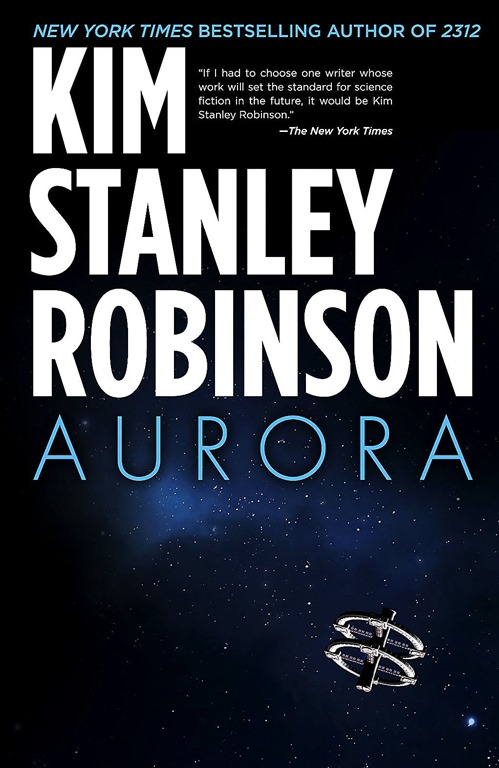
What if science does discover we have limitations? What if we reach the limits of what we can observe or infer by all our extended senses of technology? What if we can’t build machines that can test string theory? Or find clues to prove the existence of the multiverse? As long as we know we can’t go further, we can assume that we can, and science fiction has hope. But what if science conclusively finds the boundaries of our existence? Should science fiction stay within those boundaries? Aren’t stories outside those boundaries called fantasy? I believe Kim Stanley Robinson’s 2015 novel Aurora explores these very questions.

Aurora KSM

Shouldn’t science fiction be about the possibilities of science? Aren’t we really wanting to believe the inverse of Clarke’s Third Law: “Any sufficiently advanced technology is indistinguishable from magic” – that magic is just technology we don’t understand? Isn’t that how God created Earth in The Book of Genesis? I’m afraid most fans of science, even beyond the science fiction fans, are hoping that science will magically make anything we want happen.

Science Wars by Steven L. Goldman

Few people understand the limitations of science. I highly recommend one of The Great Courses from the Teaching Company called, Science Wars: What Scientists Know and How They Know It by Professor Steven L. Goldman. (Just one credit at Audible.com.) Goldman starts with Plato and Aristotle and takes us through the centuries showing how scientific thought emerged in natural philosophy and then science. Science is far more complicated than the Scientific Method. Science cannot state absolute facts in the philosophical sense of explaining the Truth of Reality. Current scientific theories are our best statistical explanations for what we experience. Theories are always supplanted by newer theories. Newtonian physics was excellent at explaining reality in the 17th century, but Einstein explains reality better in the 20th century. Is Newton wrong for not seeing what Einstein did? Will Einstein be wrong when someone comes up with a better theory?

One of our limitations is we never get to know. We only get to know the best explanations we have at the moment, and most people’s working knowledge is based on theories hundreds of years out of date. Any fundamentalist Christian is working with a 2,000 year old model of reality. If you don’t know the new theories, the old ones feel perfectly good. And aren’t most science fiction readers hoping for the future based on theories long out of date?

Basically string theory was getting too far ahead of science. String theory is like the concept of galactic civilizations in science fiction, it just sounds so good, that we insist it must be true.

But here’s the kicker. If we don’t want to live in fantasyland, we have to stick with the current best theories that are falsifiable. Religion and most of philosophy aren’t, and look where they’ve taken us.

I lean towards believing science will eventually show us our limits. One limitation that’s under examination by science philosophers is whether or not we can examine reality without our subjective bias. That understanding is limited to our perceptions and how our brain works, and that will always color what we discover. I wonder, when we invent machines that think, if they will discover aspects of reality that we can’t see because of this limitation? And if they do, can they report it to us. Right now whatever we see with the telescope comes through the limits of our perceptions. What if we invent a telescope that can see for itself. Can we ask it: Are you seeing the same reality we do? Can you see things we don’t?

It might turn out that humans will never discern strings, but our machines will. Can science determine that? Or is even that only possible within the realm of science fiction? If you pay attention to reality, we live with endless limitations now. There is no reason to believe that our species has no limitations. There’s no reason to believe science is unlimited. I think it helps us to know what is falsifiable by science, and even expect science fiction to work with those limitations. Isn’t that what distinguishes it from fantasy?

JWH

All the Time in the World is Still Not Enough

By James Wallace Harris, Thursday, January 7, 2016

All during my work years, while I toiled away at my 8:30-5:00 grind, I endlessly ached to be free. I just wanted time to write. Now that I’m retired, and have all the time in the world, it’s still not enough. I’m writing regularly, devoting hours a day to my task, but I’m not keeping up with all the ideas that beg me to give them birth. Recently I found Big Magic at the library, a lovely new book on creativity by Elizabeth Gilbert. I highly recommend this book to those who struggles to be creative, whether at writing, music, art, dance, acting, or even robot design, while holding down a fulltime job and believing they don’t have enough time. Gilbert provides 276 pages of inspiration and advice that’s backed by the wisdom of her success. I know many people who are prejudiced against Elizabeth Gilbert for that same success, but I’m not one of them. Her advice resonated easily with my experiences.

Big Magic by Elizabeth Gilbert

Gilbert carefully illustrates that we all have enough time to be creative, no matter how busy our life, or how much free time we can find. She goes on to prove it’s the kind of shit sandwich you’re willing to eat that determines creative productivity. Gilbert explains that creativity always comes at a cost. It’s not about finding time, but paying the price. Writing every day is one of the costs. Whatever shit you have to eat to make yourself write is the cost. People give up on their dreams because they won’t suffer the shit that it takes. Her metaphor is crude, but makes a lot of sense if this is your kind of struggle.

I have all the time in the world, and it’s still not enough. What I’ve been learning the hard way, it’s not about time, it’s about work. There will always be an endless list of ideas I can write about. There will always be a limited amount of time. What determines my creative output is effort, not time. Everything Gilbert writes about I’ve been learning since I’ve retired. Time and again as I read this book, her advice clarified what I’ve been learning on my own without conscious clarity.

It really comes down to sticking to a project until it’s finished. It doesn’t matter how important the art, or how ambitious the scope, or whether it will make money or not. All that matters is getting into the zone and working. You work at what you like, and you don’t worry if anyone else will like it, buy it or judge it. Time isn’t an issue. It’s not about what I’ve done, or hope to do, it’s only about the project I’m working on at the moment. And at this moment, I’m reviewing this book.

Essay #995

Photographs I Wished I Had Taken

By James Wallace Harris, Tuesday, January 5, 2016

With smartphones, we always have a camera ready to snap a pic. Growing up my parents would only splurge for a roll of film on special occasions, like a cross-country vacation, or a big Christmas. Even after I moved out on my own, I seldom bought film. So I don’t have many photos from my first fifty years of life. Now that I’m getting older and my memory is going, I wish that I had pictures of people, places and pets that I never took.

For example, the other day I struggled to remember what the old Periodicals Department looked like back in the early 1980s, when I worked at the Memphis State University Library (now University of Memphis). I don’t know why I started thinking about this large room where I lived 8:00-4:30 with fourteen other people for six years. We had 15 desks crammed together. It was during my early thirties. We each had to work one night during the week and about every fifth weekend. I volunteered for Fridays since I was married. There was always a regular crowd of lonely folks hanging out at the library on Friday nights. Like the English professor who would visit for an hour ever Friday and tell me about his rare Bible collection or the rug factory his Lebanese immigrant family owned, or the hipster dude who came in like clockwork to read the Playboys, and called the Commercial Appeal the “commercial appall” – a joke I heard hundreds of times.

My memory has no images for their faces. Nor can I really see that workroom I spent so many years toiling away, typing up missing serial orders on a manual typewriter. I’ve search Google images in vain to find a photo of that Periodicals Department. One of the few times Google has let me down. I have fleeting mental fragments that I can’t put together into a whole scene. Like the rickety wood cart we kept the Commercial Appeal and Wall Street Journal on until we got them on microfilmed. They were the two most requested items at the desk, so we’d roll that cart up close to our stools. I also remember the two blond wooden tables that were shoved together to make one long work area for sorting the mail. We checked in hundreds of magazines and newspapers every day. I try to imagine, Rita, Jane, Mike, Barbara, Kitty, Pam, Floyd, Jack, Delores, Robert, Margaret, Carol, Susan and Mary at their desks.

I don’t know why I’ve been thinking about that room and those people. I left it thirty years ago and seldom thought about it since. But my mind wanders and memory fragments stab me, and the black holes trouble me. I guess that’s part of getting older.

I fantasize about a different life, an alternate history, of living with digital cameras since I was born back in 1951. I wish I had taken a photograph of every house I lived in, from all angles, and showing each room. I wish I had taken a photograph of every vacant lot and patch of woods I played in. I wish I had a photograph of every pet I own, and every friend I had, and every pet they owned. I wish I had photographs of every school I attended, with all my teachers, classmates and classrooms. I wish I had a photograph of every library, bookstore and record store I’ve visited. I wish I had pictures of every place I worked and everyone I worked with.

My father was in the Air Force and we moved around even more often than normal servicemen. My dad was a restless guy who volunteered to be relocated. We’d move to a new city, rent a house, start at a school, then buy a house, and switch to another school. I’ve lived in dozens of houses, and attended at least 15 schools before I got out of high school. I worked at a lot of different jobs starting as a paperboy at 12, and until I got married. But once I got married, I stayed at the same job for almost forty years, although I worked at a bunch of different departments, offices and buildings. Because I was the web photographer for our college in later years, I collected those pictures into a folder before I left. When I look into that folder so many memories are unleashed. I wish I had folders for every place I lived, studied and worked. I wonder what memories are buried in my head that would be released with the right photo to trigger them?

I’ve written about the ache for photos to help remember before, see “Homestead AFB Library 1962-1963.”

Generally, when we take pictures, we usually take pictures of people, or our pets. I have a fair number of those to comfort me. What I miss, are pictures of buildings, rooms, computers, radios, baseball gloves, stereos, cars, television sets, bicycles—all missing objects that now haunt me in their absence. I miss things. I miss places. I miss roads and paths. I miss trees and shrubs. I miss bookcases, books, record cases and records. My mind longs to see how things were shaped and laid out. I miss seeing down long tree lined streets or sandy paths through woods, that I walked and hiked.

I wonder how many visual vistas my brain has recorded. They pop up in dreams and sometimes when I’m awake. Could I learn to recall them? Our brains seem to have a compression algorithm that is very lossy. Or is that just a faulty recall mechanism. My dreams often seem of much higher resolution than my recalled memories during conscious moments.

If I had the photographs I wanted, would looking at them burn their limited views over my natural memories? This makes me wonder if I did have photographs of all these things, how would I organize them? How often would I look at them. Would they boost my ability to remember or make my memory processor weaker?

Young people growing up today with smartphones that can take pictures, videos and sound recordings. Will having huge libraries of external memories alter their souls? What will their nostalgia be like in 50 years? Will having so much external evidence make them into different people than we are now? Aren’t we different people from those who lived before photography?

1958 Jimmy-Patty-Becky-Jody-Christmas-1958

I can remember the Christmas above. It was one of the big ones. I don’t remember being so small though, nor my sister and her friends being so tiny either. We were giants back then. We were the King and Queen of our street. I led the Eagle Club, and my sister had her Please and Thank You Club. My sister Becky is the redhead, and that’s Patty Paquette flashing her underwear, and Jody playing with a flower pot. I wish Michael Kevin Ralph was in this photo. You can’t see the details in the grass, but that yard is full of stickers. This was Hollywood, Florida, 1959, and stickers were a big problem for us kids who loved to go barefoot. I had just turned eight. This was a new subdivision called Lake Forest, and only half the block was built. The sidewalk actually ended halfway round the block. We’d roller skate to one end of the sidewalk, and then skate back to the other end. It was wonderful when the built the other half and we could skate the whole block. Down the street was an empty lot, where Mike and I built a fort. It was a pit covered over with old branches, brown Christmas trees and abandoned boards. Later the Catholic Church conquered our fort. We should have fought harder.

If I kept looking at this photo I could write a hundred thousand words. A thousand is too few.

JWH – Essay #994

Publishing Outside My Blog

By James Wallace Harris, Tuesday, January 5, 2016

I’ve had two essays published at SF Signal that normally I would have published here. I don’t know if my regular readers, all seven of you, will miss these stories or not, but I thought I might mention them. They were “64 Classic Science Fiction Books I Want To Hear” that was written for my 64th birthday, and “The Literary Novels of Philip K. Dick.” SF Signal is a website devoted to tracking anything on the net that deals with science fiction and fantasy. It won a Hugo award in 2012, 2013 and 2014. So it’s ego boosting to get published there. And I want to thank it’s editor John DeNardo for linking to this blog in the past, encouraging me to submit, and accepting these essays.

I’ve been writing Auxiliary Memory since 2007, and this is my 993rd essay. I consider blogging piano practice for writing. Now that I’ve been retired for two years I’ve decided to push my writing ability by submitting to other sites. I’ve gotten comfortable with blogging, and I need to dial up the intensity knob, aim higher and push against my limitations. I’m starting by submitting to non-paid sites for a while, to get used to writing for editors. After that I’ll work up to submitting to paid sites. Writing is a fulfilling hobby to have in retirement—and it helps strengthen flabby memory muscles.

I will keep blogging, hopefully at a regular pace, but I need to spend more time on substantial pieces that I’ll send elsewhere. I need to learn what kind of essays are best suited for this blog, and what kind are best sent elsewhere. I’m also hoping that getting published on other sites will attract readers for this site. WordPress says I have 1,500 followers, but I know most of them are just folks promoting their websites (which is cool by the way). Writing something that another person will take ten minutes of their time to read is a challenge. I’m sure there are tens of thousands of new works to read on the internet every day, maybe even in the millions. Competition is fierce for eyeballs. Deciding on a writing topic that is reading worthy is a difficult task. It’s work that pushes my brain to think harder, and since I’m at a stage in life where my brain cells want to kick back and watch TV, it can feel like walking two miles to school everyday, both ways uphill, in the snow,

JWH