Forgotten Science Fiction: Goslings by J. D. Beresford

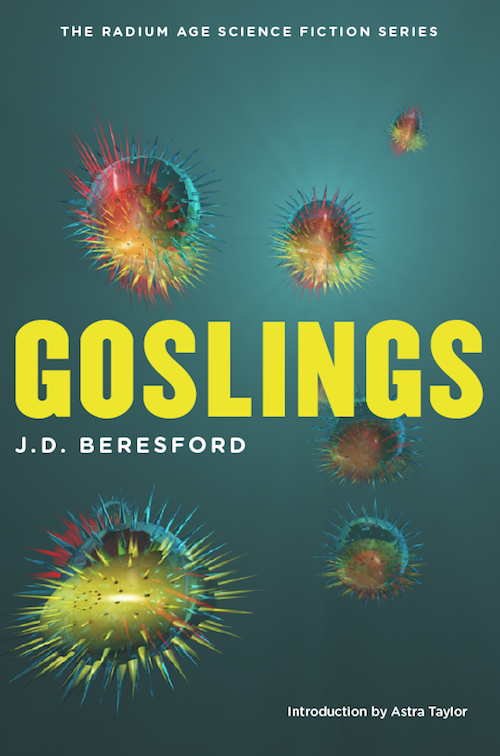
Goslings by J. D. Beresford, is a 1913 post-apocalyptic novel about a plague that sweeps across the world and kills mainly men.  If you follow the link from the book title you can read a 23-part serialization from HiLobrow Books, which is illustrated with period photographs.  HiLobrow also has reprinted the novel as a paperback and ebook as part of their Radium Age Science Fiction Series.  I listened to the Dreamscape edition from Audible.com that was elegantly read by Matthew Brenher who did a bang-up job narrating the British dialect – just look at this reproduction of the English edition to see how hard it would be for a modern American to read.  The book was called A World of Women when first published in America.
goslings-500

Beresford was an admirer of H. G. Wells, and combined fiction with scientific philosophy in Goslings, that is part satire, part adventure, and part speculative science fiction.  I’m a huge fan of post-apocalyptic novels that deal with the collapse of society to where only a few individuals are left to rebuild civilization.  My favorite is Earth Abides by George R. Stewart, and although Goslings is not as fine as that great novel, it does prefigure many of the ideas that Stewart explored in his book.  I was totally absorbed in Goslings, which is just 8 hours and 12 minutes long, and addictively stuck with it two days running to finish because I enjoyed it so much.  However, like I said, I’m a fan of this SF sub-genre, and a fan of old science fiction, so I’m not sure how modern readers will react to this somewhat quaint intellectual story.

Goslings is a science fiction novel before we had the label of science fiction.  There is a long history to post-apocalyptic plague novels, the earliest I know of is Mary Shelley’s The Last Man from 1826.  I wrote extensively about plague novels in my review of Earth Abides, but also in my reviews of the British TV shows Survivors, and the classic SF novel The Day of the Triffids.  As a kid I loved stories about people stranded on a deserted island like Robinson Crusoe, The Swiss Family Robinson and The Mysterious Island.  As I grew older and discovered post-apocalyptic novels where most humans were killed by various catastrophes, I loved the idea of rebuilding society from scratch.

J. D. Beresford wrote during the age of passionate socialists who wanted to rebuild the world into a new order, of ardent feminist writers who wrote about female only utopias, and gloom and doom end-of-the-world prophecies.  Goslings reflects his thoughts about these topics.

I think the key sentence of Beresford’s philosophy is “It is no longer safe to comfort ourselves with the belief—begotten of our vanity—that the world was necessarily made for man.”  Western civilization evolved with the idea that Earth was made by God for humans, but during the Victorian Age, Darwin began teaching a new idea, that humans are animals like all the others, and we have no special place on Earth.  It was quite common in the history of Earth for species to disappear, so why not humans.  Goslings is about a close call.  Like most post-apocalyptic novels, their stories warn us.  Beresford did imagine a world without humans, and how cities and the artifacts of man would erode by the onslaught of nature.  To give his novel an extra twist, and to make a feminist commentary, he has his survivors to consist mainly of women.

Modern readers will see quite a bit of sexism and even a touch of anti-Semitism in the novel, but it’s not enough to warn you away from reading Goslings.  Beresford seems to be saying society has made women more helpless than men, but if given the chance, they will meet the challenges.  Beresford also deals with sex to a minor degree—but not like modern novels.  Some of the male survivors do act like what you’d imagine in a world of one man to hundreds of women.  And some women do attempt to get ahead in such a world by using their bodies instead of their minds.  H. G. Wells was a proponent of free love, and Beresford touches on this popular concept of his day too.

Beresford actual spends more time on the allure of religion than that of sex.  However, this novel is short, and he explores few ideas in depth.  For such an early novel of this type, Beresford touches lightly on many topics that later novels would explore in more detail.  Earth Abides focused on the reeducation of humanity, that Beresford only hinted at.

I thoroughly enjoyed Goslings, and while trying to find copies of the original editions on ABE Books I discovered there are many reprints, so it’s not an entirely forgotten novel.  My guess is there’s quite of few people like myself reading old science fiction, and resurrecting these forgotten classics.  That’s a very limited audience, but it might be growing.  It does fill in a gap between H. G. Wells and Amazing Stories.  I bought an ebook and audiobook of The Last Man by Mary Shelley and hope to read it soon.  I will probably read the other books in the Radium Age Science Fiction series.  The reprinting of Goslings goes to the heart of the matter of my favorite subject—what makes a novel become a classic.  Ultimately, a classic is a book we remember and keep reading after a very long time.  For Goslings, it’s been 101 years.

As to whether Goslings is a successful novel outside the context of its science fictional speculation is hard to say.  Beresford does not follow his characters, the Goslings, a middle-class family of four, to their complete fictional conclusion.  I wished he had added another hundred pages and wrapped up the stories of George and Blanche, but then Beresford seemed more interested in spending his time speculating about the fate of mankind than finishing the personal stories of some of his characters.

My guess is Beresford started out writing about the Goslings, finished his first draft, and then added the story of Jasper Thrale because he decided he needed a man in his story about a world of women to explain things, and ultimately get things done.  I would have found Goslings a more satisfying novel if Blanche had evolved into the Eileen character, and we had followed dad George, and daughter Millie on their individual sexual adventures.

In the end, the reading value of Goslings is for its science fictional speculations.  For a short novel, Beresford did touch on many ideas, and I was impressed by what his 1913 mind produced.  This is worthwhile for two reasons.  It adds to the storehouse of speculation on this subject, and it gives us a view of intellectual discourse of the time, because finally, all speculative science fiction about the future is also an examination of the times it which was written.

JWH – 5/10/14

The Eternal Now and Time Travel

This morning while taking a shower I began thinking about now.  Here I was, a naked 62 year old male, in a 1950s pink tile room, wondering what was going on concurrently in the rest of reality as I soaped up.  My wife would be just getting to work in her office in Birmingham.   1.3 light seconds away, events are happening on the Moon, several light minutes away Mars and the Sun are doing their thing, stuff is also happening around Alpha Centauri, four and half light years away, then 2,538,000 light years away the Andromeda galaxy is speeding towards our galaxy, and who knows how many billions of light years is the edge or the universe, or what’s beyond and how far it extends. 

Everywhere there is something happening, as I take my shower.  We’re all in an eternal now.

I try to imagine Einstein’s space-time concept and how it might affect things.  But to me, it seems logical to think there is a universal now that happens everywhere, even into adjacent universes in the multiverse, or even adjacent multiverses.  Could there ever be two nows?  Or multiple nows?  Isn’t death just losing touch with the now?  And didn’t the eternal now exist even before I existed?  Isn’t consciousness tuning into the now?

As as science fiction fan I love the concept of time travel, but isn’t time travel the attempt to go to another now?  If there is only one eternal now, then that will be impossible.  We see artifacts of the past, and anticipate the future, so we assume both places exist – but do they?  When we see the Andromeda galaxy in the sky, we’re seeing what it looked like 2,538,000 years ago.  It’s actually much closer.

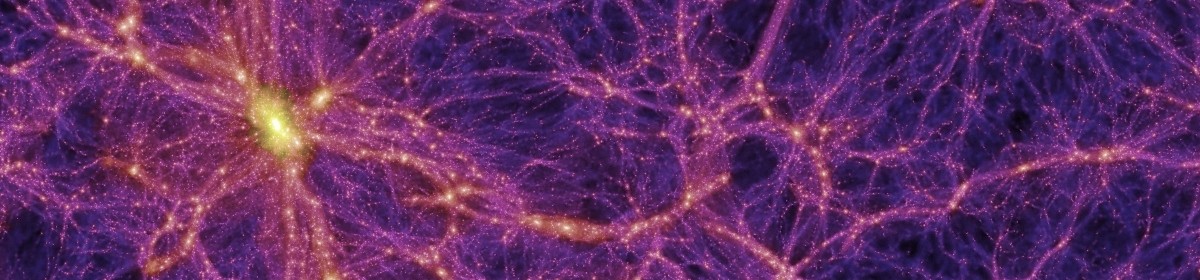
Recently scientists created a computer simulation of the universe.  I wonder if it’s how it looks in the eternal now, or how we see through timed artifacts?  Everything we perceive about reality is time delayed.  We aren’t looking out our eyes, but at reprocessed information, so there’s a slight delay.  If I talk to my friend Connell in Miami, a thousand miles away, there’s a slight delay in the phone signals.  The eternal now is everywhere, but we experience it inside our heads, and all that input about reality is delayed.  The visual field I see in front of me as I type is a tiny fraction of a second late from the eternal now.

The theory of an all powerful, all knowing God is quite interesting to think about regarding the eternal now.  If God is not limited by the speed of light, God would see everything at once in the eternal now.  But would this deity also see the past and future all at once too?  Or does God inhabit the moment like everyone and everything else?  It’s hard for me to believe in God knowing how big reality is, especially if the eternal now has always existed, and will always continue to exist.  Infinity is such a mind-bashing number.

We often ask when did time start, and when does it end.  And we often imagine the beginning of space and matter.  But do we ever wonder about the origin of the eternal now?  If there was only one Big Bang moment, then that was the beginning of time, space and now, but it’s starting to look like there wasn’t just one Big Bang.  No matter how many universes there might be, won’t there only be just one eternal now?  Isn’t it the same now here as it is fifty-five universes over from ours?

I think we’re hung up on birth and death, beginnings and endings, because we have one of each, but maybe reality and the eternal now doesn’t.  As a kid I wondered who made God like other kids, and why wasn’t there nothing.  How could existence start at all.  My conclusion?  That non-existence nothing can’t exist.  That it’s impossible.  If it could, it would have, but since it didn’t, it can’t.  It hurts our heads to comprehend why non-existence isn’t so.  Logic tells us there should have been an origin.  Our minds can’t get beyond cause and effect.  We know nothing lasts forever, but maybe one thing does, the eternal now.

We spend our lives pursuing religion, philosophy and science trying to understand the origins of existence, but in the end the answer is always beyond our small brains to comprehend.  And even if we built an AI Mind the size of Jupiter, would it be large enough to know?  Even if God existed, would God know?  Would not a being that could comprehend all of reality have to ask:  Where did I come from?  How did I get here?  Doesn’t any being asking the ultimate ontological question end up with “It’s turtles all the way down!”

pugs-00121

The Hindu tell us to “Be Here Now” – but where else could we go?

JWH – 5/9/14

The Two Faces of Science Fiction

Science fiction has always had two different faces that confounds efforts to define it in a distinct manner.  Science fiction first evolved as a literary branch of philosophical speculation which produced stories, often crudely told, about possible inventions, speculation about distant worlds and their inhabitants, and extrapolation about the future.  Speculative science fiction is pretty much based on “What if?”  Writers could imagine the impact of change, or wonder about unexplored areas of reality.  Eventually, some of this speculative science fiction produced concepts that became popular, generating global memes, and then other writers wrote adventure science fiction using these concepts as if they were religious icons.  Often adventure science fiction based on original speculative ideas have no new speculation on their own.  A spaceship is just a spaceship, and alien is just an alien.

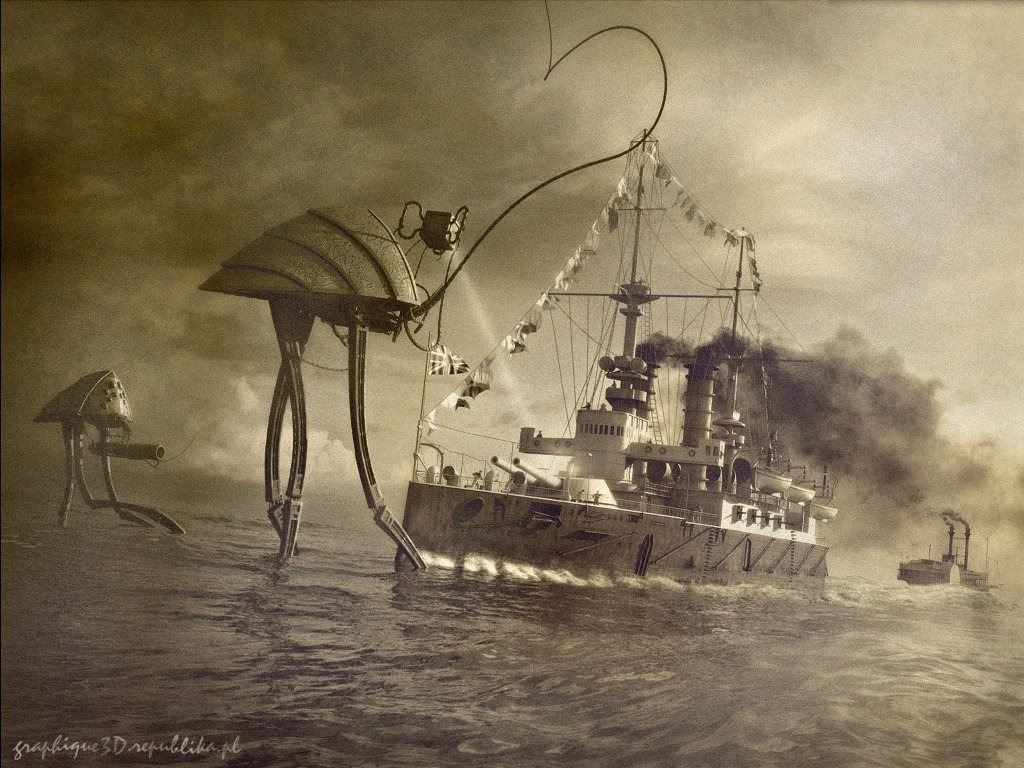
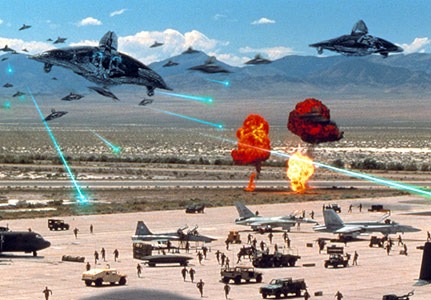
Think of H. G. Wells two most famous stories, The Time Machine, and War of the Worlds.  In the late Victorian age they were both highly philosophical speculations.  Then Edgar Rice Burroughs comes along and turns Mars into a romantic adventure destination that had no relation to reality.  A modern comparison is to The War of the Worlds and the film Independence Day, which has little or no speculation.  It’s all adventurous fun.

war_of_the_worlds_battleship_w1
area51-independence-day-attack

Another good example is Star Trek and Star Wars.  All fiction needs some action, so Star Trek was given a wagon train to the stars framework, but many episodes were built around various kinds of speculation.  Star Wars on the other hand plays homage to the galactic empire of The Foundation series, while cherishing the fun of Saturday afternoon serials inspired by Planet Stories types of adventures.  As hard as I try, I can’t think of one bit of speculative science fiction in all of Star Wars.  That’s not a criticism, but a way of defining Star Wars as the ultimate example of adventure science fiction.

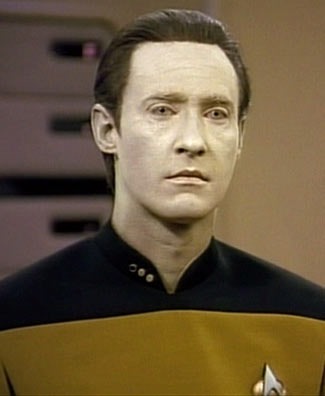
DataTNG
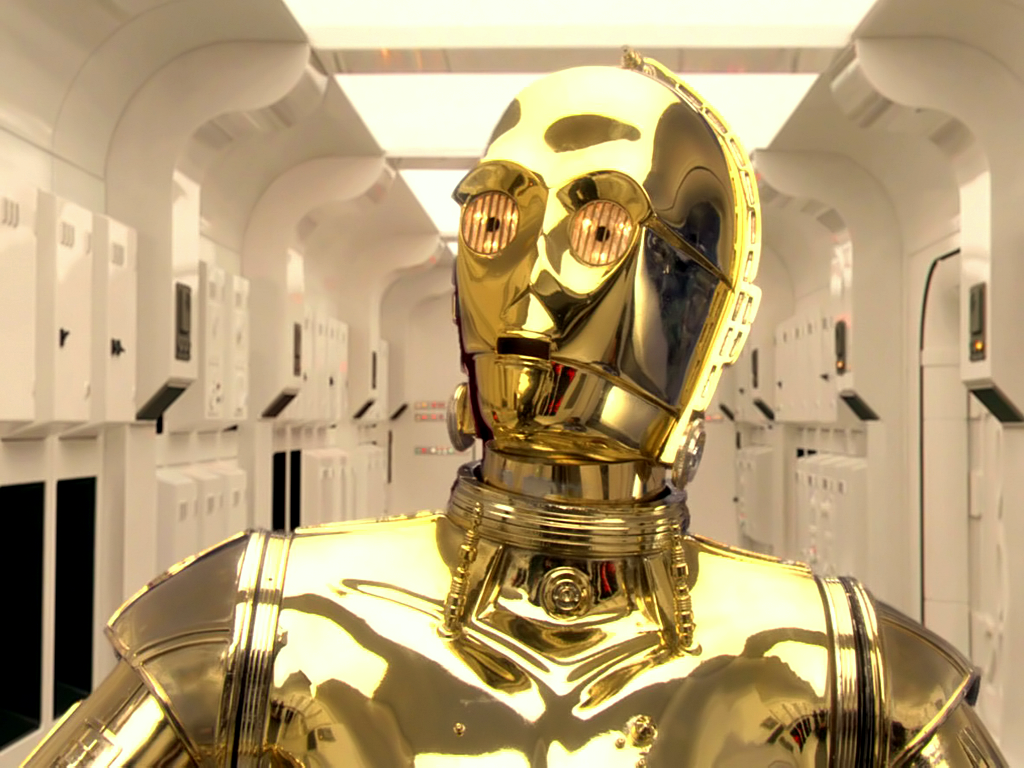
C3P0

Think of how many episodes of ST:TNG where the plot was written around speculation about Data’s body, mind and abilities.  In Star Wars, C-3P0 is a very interesting character, with lots of personality traits, but there’s no speculation about his scientific origins – he’s just a colorful character in an adventure story.  Star Wars offers no lessons in artificial intelligence.  For the most part, Data is mainly used as a stock character for adventures too, but sometimes Star Trek did speculate.  In Isaac Asimov’s early robot stories he spent more time speculating, in his later ones, especially the novels, he spent more time using robots as characters having adventures.

Modern science fiction tends to be mostly adventure based.  When H. G. Wells started writing, few writers had explored many science fictional concepts, so Wells appeared to be a genius inventing science fictional idea after another.  Up until the 1960s, science fiction writers churned out speculative science fiction because there was plenty of undiscovered ideas to imagine.  Now that’s getting harder.  Since the 1960s, science has become an extremely popular entertainment genre, so most writers just take old SF memes, give them a new paint job, maybe even go all Baroque in styling, and create adventure science fiction.

We still get new speculative science fiction, in both books and movies.  My two favorite recent examples are The Windup Girl by Paolo Bacigalupi and the film Gattaca.  Life on Earth is always evolving and changing, so there’s always new content to speculate about, plus science is always advancing, giving new ideas for extrapolation.

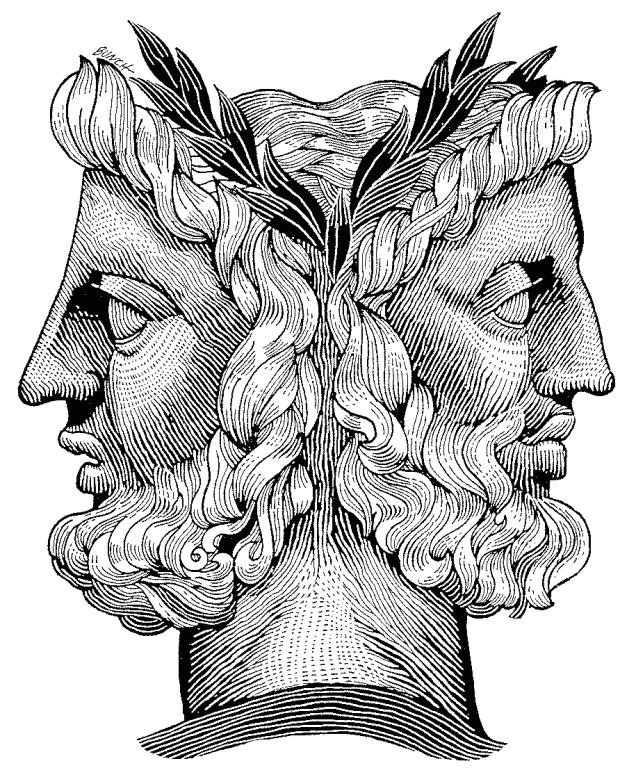
Science fiction has always suffered from a schizophrenic approach to reality though.  Why are post-apocalyptic and dystopian stories so popular with kids today?  They present horrible worlds where the characters have big adventures.  Isn’t that odd?  In the 19th and early 20th century, such novels were warnings about the future and fears about paths society might take.  Now such scenarios are escapist fun!  WTF!?  Science fiction is often like the comedy-tragedy masks, or the Janus god head.  No kid would daydream of living in the world of Nineteen Eight-Four, but I bet a lot of kids picture themselves inside the world of The Hunger Games.

comedy-tragedyjanus1

Serious speculative science fiction tends to illustrate worlds that few would fantasize about living in.  Who would want to live inside The Handmaid’s Tale by Margaret Atwood or The Sparrow by Mary Doria Russell.  But what about Dune by Frank Herbert or Starship Troopers by Robert A. Heinlein, or even Ender’s Game by Orson Scott Card?  Yet, how many adventure books have been written that take worlds similar to the ones these books describe and make them into fun adventure stories?  Like the contrast between education and entertainment, some writers aim for edutainment, but most just give us escapism.

Heinlein was speculating about serious ideas, but most military SF since then have been theme park rides.

Here’s the dilemma for writers.  True speculative science fiction isn’t escapist fun, whereas adventure science fiction is.  So if you want to sell lots of books, and maybe get your story made into a blockbuster movie, you’ll aim for adventure science fiction – but if you want literary recognition, and the chance of creating a classic the survives, you’re better off writing speculative science fiction.  They teach Frankenstein, Brave New World, and Nineteen Eighty-Four in schools, but not adventure science fiction.  Which sold more movie tickets, Spiderman 2 or Transcendence?

When I go to the bookstore, or flip through Locus Magazine, or read about new books at SF Signal, I’m enticed by myriads of thrilling stories, ones that promise epic adventures, with colorful sexy characters, involved in addictive complicated plots, the kind of books that are escapist fun to the hilt.  And I’m not against reading these kinds of books.  But what I miss, are the speculative science fiction books.  They seem few and far between nowadays.  Is that because they don’t sell, or are a bummer to write, or what few people want to read?  To me, speculative science fiction is the real science fiction, and all the other stuff is fantasy fun.

I’m working on a new edition of The Classics of Science Fiction and I’ve always used a statistical method to create the list before.  But this time, I’m thinking about creating it as a history of speculative science fiction.  Yesterday I discovered  Radium Age Science Fiction at HiLo Books, and essays on Pre-Golden Age Science Fiction by Joshua Glenn at io9.com.  Most of these books are now forgotten, but they were at the time, attempts to write serious speculative science fiction.  I wonder if I can create a Classics of Speculative Science Fiction in chronological order starting with Mary Shelly’s Frankenstein, or even earlier books if I can discover ones that fit my concept, and then move towards the present showing an evolution of speculative science fiction?

Instead of creating another list of the most popular books of science fiction, I want to create one that showcases books that introduced the best science fictional ideas.  I think as kids, when we first discover science fiction, we’re hooked on the far out ideas, but later on, we become addicted to the escapism.  When we’re thinking about ideas, we’re exploring reality.  We want to know how reality works, and how we can adapt it to our own needs and desire.  Later on, we read science fiction to escape reality, because we’re disappointed with its limitations.

This provides two faces of our own psychology.  Now that I’m old, I wonder if I sold out sometime in the last fifty years.  That I sold my sense of wonder for a sense of illusion.

JWH – 5/6/14

Carroll Cloar at the Arkansas Arts Museum

The Crossroads of Memory:  Carroll Cloar and the American South
Arkansas Arts Center – 2/28/14 – 6/1/14


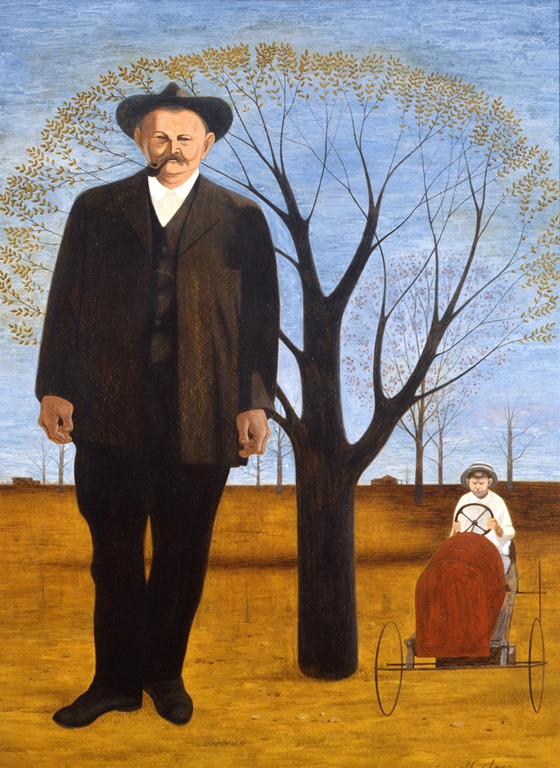
My Father Was Big As A Tree

[My Father Was Big as a Tree, 1955]

My friend Ann convinced me to drive over to Little Rock to see the Carroll Cloar exhibit, and I’m very glad I did.  I don’t like traveling, but when I do, art is often my inspiration to leave home.

Carroll Cloar [1913-1993], a southern painter from Earle, Arkansas explored a variety of realistic, although surreal painting styles.  This exhibit, organized by the Memphis Brooks Museum of Art and the Arkansas Arts Center, is your best chance ever at seeing a significant number of Cloar’s paintings in one place.  I knew little of Cloar beforehand, or his work, and had only accidently seen  a couple of his paintings at the Brooks.   This is a great opportunity to see a huge exhibit of Cloar’s  artwork.  Cloar capture’s memories of a time and place in vivid dreamlike colors, that is both haunting to the soul, yet pleasing to the vision.

The Eyes of an Era

Cloar was born three years before my mother in 1913, so I see his paintings as memorializing her generation.  Even the paintings Cloar painted in the 1980s are memories of life in the 1920s and 1930s, and often they remind me of family photographs I’ve inherited from my mother and her family.  Cloar’s paintings are a unique view of southern life.  One of his paintings, “Where the Southern Cross the Yellow Dog” reminds me when we lived in Marks, Mississippi in 1960.

where_the_southern_cross_the_yellow_dog

[Where The Southern Cross The Yellow Dog, 1965]

Cloar was white, but often painted black people.  It is very hard to separate his paintings from the racism I encountered when I lived in Mississippi in 1960 and 1966.  I grew up in Miami, but sometimes lived in the south, Mississippi, South Carolina, Tennessee, Texas, and other times lived in the north, Ohio, Pennsylvanian and New Jersey.  Living in the south was always a culture shock for me in the 1950s and 1960s.  Cloar is an artist whose work totally fits within my lifetime, even though his inspiration was his youth that coincided with my mother’s growing-up years.  In other words, both my memories, and history of the times, corrupt my ability to see what Cloar shows me in his art.   What he saw and what I remember gets mixed up.  That’s both good, and bad.

I believe Carroll Cloar worked to remember the past without the racism.  What he painted was visual life.  You don’t see the polarized conflict, which is why he seldom painted pictures with both blacks and whites in the same scene.

Cloar captured the beauty he saw, as if it was a timeless memory, but all too often people viewing his paintings will remember the ugliness of the times.  If you are from the South, and of a certain age, experiencing these paintings are going to trigger reactions and emotions different from say seeing 19th century French Impressionistic paintings.  My friend Ann would cry while viewing some of Cloar’s paintings.

It was especially hard emotionally to learn of Cloar’s childhood friend, Charlie Mae, a little black girl.  While kids, they were close, but a dispute over a puppy separated them as friends.  Later in life, Cloar would often paint memories of Charlie Mae, who strangely ended up living near him in Memphis, yet they never met again.

ch_mae_bap

[Charlie Mae Practicing for the Baptism, 1974]

What To Read Before You Go – Or In Case You Can’t

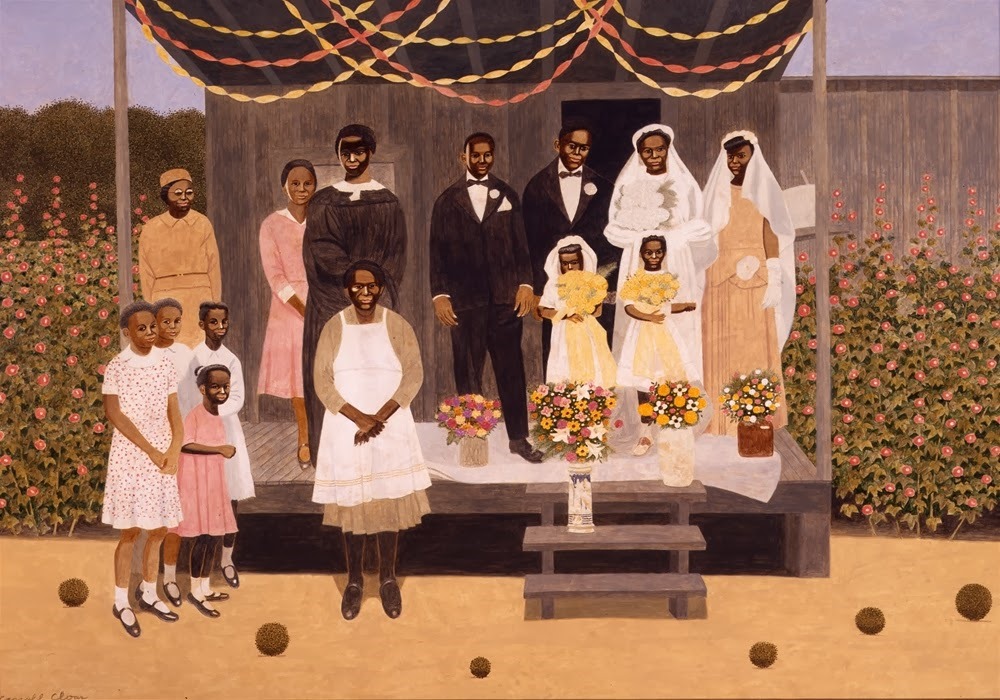
wedding party-1971

[Wedding Party, 1971]

JWH – 5/5/14

Are Our Brains Being Fucked Over by Fantastic Tales?

While watching the previews of the new Spiderman movie I wondered how could Spiderman do all that swinging from building to building?  I don’t read comics, but is there some kind of theory as to why he can leap from location to location?  What propels him?  How does he have the strength to survive the G-forces pulling on his arms, or impacting on his legs?  What generates his webbing?  I know all of this is just for fun, but thinking about how it could ever be real hurts my brain.  It’s just so fucking unbelievable that I have to wonder about its psychological allure.

Why are we so entertained by fantastic tales?  Aren’t superhero movies just fairytales for adults?  And aren’t they getting out of hand?  Action movies are moving further and further from reality.  Is this good for our brains?  There’s a saying by old programmers, “Garbage in, garbage out.”  It meant if you input bad data into the computer, the machine will spit out bad data.  Couldn’t that also be true for our bio-computers?

Why do we so badly want to believe in magic?  From the earliest days as toddlers, we are told fantastic tales.  We watch TV that’s full of bullshit concepts.  We read comic books and real books based on fantastic concepts.  We teach our kids about the tooth fairy, Santa Claus, angels, witches, vampires, gods and God.  As children grow their fantasy inputs becomes more sophisticated, switching to Harry Potter, Star Wars and Spiderman.  They will tell you its not real, but what do they feel in their heart of hearts?

We let them watch old TV shows like I Dream of Jeannie and Bewitched where a crossing of the arms or a twitch of the nose can alter space and time.  Does anyone ever wonder what is the science behind the God of Genesis ability to create?  Is it a magic staff like Moses, or does he twitch his nose like Samantha?  We subtly embed the meme that magic exists, while saying it doesn’t.  Is it any wonder that some kids have a frail grasp on reality?

I’ve spent a lifetime reading science fiction, and bought into all kinds of crap that’s not supported by real science, or I did.  I’ve now become an atheist to my own religion – science fiction.  Once you question one bullshit theory, you question them all.

I know it’s supposed to be in fun, but how many people secretly wish for the fantastic?  Deep down, how many people wish their lives were like the movies?

And haven’t action movies gotten a little embarrassing?  Aren’t they really power porn?  Sex porn is the dream of unlimited sex.  Isn’t action movies and superhero movies just a desire to gorge on unlimited power?  To be able to kill you enemies with enormous force and ability?  Most people would never watch sex porn in public, but why aren’t people embarrassed to watch huge quantities of power porn in large groups?  And isn’t it hilarious that both sex porn and power porn are about carrying different kinds of big sticks?  Talk about your AK-47 envy.  Isn’t this all just power fantasy?

What is the underlying need for binge TV watching?  Is it any different from binge video gaming?

Isn’t it all about escaping reality – becoming one with fantasy?

What’s the exposure limit to fantasy before it becomes harmful?

JWH – 5/2/14