
AirPlay – The Best Way To Listen To An Audio Book

I’ve been an Audible.com user since 2002 and over the last dozen years I’ve learned a lot about listening to audio books.  First off, it actually takes practice to learn how to listen to an audio book well.  Don’t let first impressions about audio books throw you off.   Some people get frustrated because they keep missing stuff and jumping back isn’t as easy as rereading a paragraph.  Luckily good players have a 30 second jump back button.  And don’t worry, the more you listen, the more you learn how to keep you mind focused on the story, even when you’re doing something else.

AirplayIcon

Most people think listening to books is something you do on car trips, and that’s how I got hooked, but there are many times in your day when listening to a book is an added pleasure.  For example, I often eat alone.  So the time I spend cooking, eating and doing the dishes is enhanced by listening to a book.  Listening while doing something is great if you’re a bookworm that wants to finish a lot of books, but it’s not the best way to actually listen to a book.  Even when you’re doing something mindless and think you can devote yourself to a book you can’t completely.

I’ve recently discovered my current best way to listen to a book because I bought a new stereo receiver with AirPlay and my friend Charisse recommended a rather intellectually deep book, Possession by A. S. Byatt.  AirPlay is Apple Computer’s technology, also licensed to third party developers, that allows you to beam content to AirPlay enabled devices.  I use an iPod touch to listen to books, and when I got my new Denon receiver my iPod started showing a little AirPlay symbol automatically.  If I tap this new symbol I’m given the choice of playing the book through the iPod or from the Denon.  If I select the Denon the receiver automatically turns itself on, even when I’m in another room, and starts playing my audio book.

My stereo system is hooked up to large floor standing speakers, so I can play the book loud, and I do.  This has transformed how I listen to my audio books.  Like discovering music sounds best when played loud, so does audio books.  Hearing the narrator speak in a volume similar to a person in the room talking firmly and expressively loud changes how I perceive the book.  It feels like I’m at a play with my eyes closed.  Writing just jumps out when listened to at this volume, especially if I just sit and pay full attention.  Combining a good narrator with a good writer at this volume absolutely showcases literary skills.  Writing, word by word, and line by line, is just so vivid.

When Charisse came over to hear selections from two of her favorite novels, Possession and Great Expectations, she was so impressed that she asked me to help her buy a stereo system like mine.  And that’s the trouble with this new method.  You need a big stereo system.  Really good headphones do work, but there’s something about the sound filling the room  that makes it feel like people are acting out the book.

Sadly, big stereo systems aren’t common anymore, but many people do have surround sound systems for the flat screen TVs.  Check and see if you have AirPlay enabled on your system, or another method to plug in a smart phone or portable player.  Some systems have an input jack that plugs into your headphone jack.  Give it a try.

I don’t always expect to listen to books this way, because it’s not convenient, but more and more, I’m finding time to sit in my easy chair and devote myself to listening to my book played loud.  Over the years I’ve experimented with various ways to take in audio books.  The best way to study a book for research or school is to listen and read at the same time, but to get the fullest dramatic impact of a well written piece of fiction, listening at loud levels really makes the work stand out.  Also, it was interesting to listen with Charisse, like two people watching a TV show together.  It worked.  Most people think of reading as a solitary pursuit, but AirPlay could encourage group listening to books.  I know it sounds strange, but it works.  My wife Susan and I always enjoyed listening to books in a car, which by the way, is another good way to listen to a book played loud, but now that I’m learning to focus so intently, I’m not sure I should be driving and listening.

Audio books taught me I was a poor reader and I should leave the reading to experts.  I also learned that going slowly through a book, at conversational level speed, was more respectful to the writing than my normal eye-ball reading habit of anxiously speed reading through the pages to find out what happens next.  Now I know that the slow pace of audio books combined with good speakers played loud and full attention makes a book come alive in a unique way.

JWH – 5/28/14
Movies for Old Men

I can only remember my father going to one movie, in 1958 when I was six, when the whole family went to see Snowfire.  My wife’s father always bragged the last theater movie he saw was Fiddler on the Roof in 1971.  A neighbor who is one year older than me, claims the last movie he saw at the theater was Animal House in 1978.  My two closest male friends quit going to movies long ago, but I don’t know when.  The only reason I still go out to the movies is because of lady friends.  I do know some males my age that still love getting out to see a movie, but not many.  Yesterday I went with my friend Janis to see Godzilla – her pick – and I was bored the whole time, even though the young people seated around me were cheering.  The most fun I had was looking at all the odd names as the credits rolled by.

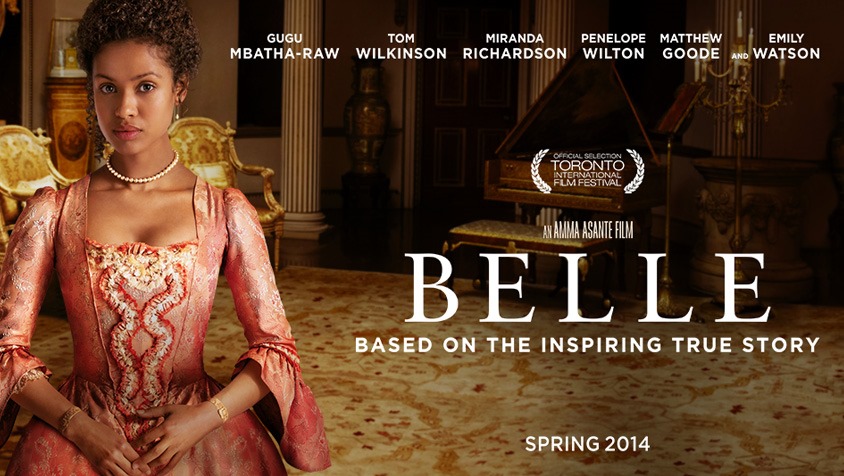
banner-belle-film 

Many of my lady friends love action blockbuster flicks, the kind I used to think were targeted to teenage boys.  The whole world seems to love superhero movies based on comic books.  Maybe I’ve morphed into a curmudgeon, because those movies seem downright stupid to me, with grown men pretending to fight each other with choreographed violence that’s as realistic as a Three Stooges slap fest while wearing embarrassing costumes that only a seven year old kid would wear in real life, and then only on Halloween.  And don’t get me started on the psychological appeal of flicks like The Expendables series.  Our society has gone gonzo for guns.  And it’s not that I’m anti-gun.  My favorite movie genre is the western—a Colt .44 and a Winchester is all the firepower I think anyone should need.  But I get the feeling everyone is scared and paranoid and feed off action pictures because they feel powerless and wish they had super powers, bulging muscles and very large caliber machine guns to protect themselves.

Janis and I also went to see Chef this weekend.  Now that was a good movie for an old man.  It was a touching story about a divorced dad getting to know his young son that he’d been neglecting because of work.  Jon Favreau plays a creative chef, Carl Casper, stuck in job cooking the same menu for ten years.  Carl gets in a internet feud with Oliver Platt, who plays Ramsey Michel, a vicious food critic blogger.  Carl bonds with his son Percy, played by Emjay Anthony, who teaches his dad about Twitter.  Then Carl inspires Percy to learn to cook.  Slowly the film becomes emotional rewarding, and a film worth watching by an old guy.  The theater I saw Chef at was small, but most the seats were filled with older people, and some of them even clapped at the end.  I’m not sure young people would have liked this film, but I doubt we’ll know, because it’s not the kind they’ll go see.  No guns, no car chases, no buff bods, no Wile E. Coyote violence.

This afternoon I plan to go see Belle with three lady friends.  Even if I wasn’t hanging out with women, I’d want to see this one.  As an old guy, a well done historical film is actually a type of movie that makes me want to go out to the movies.  The older I get the more I like realism.  I prefer documentaries, or very accurate historical dramas.  You’d think it would be the other way around.  That young people would crave realistic movies to learn about life, and old people would want escapist fantasies.  Maybe I’ve given up on escapist fantasies because the older I get the less reason I believe that they will ever come true.  Even if I owned a whole arsenal of weapons and an elegant collection of spandex attire, and even had real bulging muscles to stretch out my costumes, I could never be a superhero.  It’s about as realistic as trying to fantasize that beautiful young women would want to have sex with my ugly old body. 

But I can relate to a clueless dad learning to Twitter from a ten year old.

JWH 5/26/14

Would I Be A Better, Happier, More Productive Person If I Didn’t Use The Internet?

The Internet has consumed our culture.  We are quickly becoming a hive society.  Is that good or bad?  I think it’s good, but like all good things, I think it comes with some bad aspects.  Yesterday I watched the movie Chef, a moving story about  a father getting to know his son, but also a lesson in how Twitter works, for both good and bad.  I also read “How YouTube and Internet Journalism Destroyed Tom Cruise, Our Last Real Movie Star” in the LA Times, about how Internet gossip can create false impressions in the hive mind.

Internet

The Internet is capable of spreading liberal and conservative concepts with equal speed.  It is just as effective at teaching the truth as it is as spreading lies.  The Internet is equally suited to preach Christianity, Islam, Buddhism and Atheism.  Net Neutrality is an ideal in more ways than one.  The Internet can be as addictive as a drug, or as productive as any tool.

The internet is tremendous fun, and I could never give it up, but what if I used it much less?  Most companies consider the Internet a  productivity waster and limit employee access.  Now that I’m retired its very easy to just get seduced into following one link after another, just clicking my way through the day.  I have fiction writing and programming projects I dream of doing, but instead I’m enticed by endless tidbits of fascinating facts.  No wonder George R. R. Martin writes on an ancient DOS machine using WordStar 4.0.

In some ways the Internet, including all the television, movies, music, ebooks, games, comics, news, magazines and audiobooks it delivers, is the ultimate song of the sirens.  Instead of owning a dog, I enjoy photos and videos of dogs on the Internet.  If I was younger and hornier, I’d probably be spending my time with virtual women.  Instead of watching cable TV, I get my shows via the Internet.  Instead of listening to music on CDs I have Spotify.  Instead of reading magazines I read Zite and News360.  When I want to cook something new I watch a how-to on YouTube. 

Everyone sees daily tales about Internet abuse, but who actually walks away?  Would I work on my novel full time if I canceled U-verse and unplugged my TV?  Is the Internet keeping me from being creative, or am I enjoying the Internet while not facing up to the fact that I’m not creative.

Obviously humanity is not going to reject the Internet any more than it’s going to reject fire, farming, writing and science.  The Zen of right living is to use any tool wisely.  The Internet is like a telescope, it allows us to see further, but do we always need to observe reality at an eyepiece?  Most people believe moderation is the key to everything, but I wonder if we don’t get the most from our tools by learning to use them as little as possible.

What inspired this essay was the realization that I was compulsively reading news stories from the Internet because I felt like I was learning so much.  The truth is we forget most everything we read.  Real learning comes from distillation of facts, not the abundance of facts.  It’s better to read one memorable essay than to read a hundred fascinating essays.  Strangely the one essay that stuck with me from yesterday is the one about Tom Cruise, and how the Internet tarnished his reputation.  And I have to admit that I went from liking Tom Cruise as an actor to avoiding his films because of Internet gossip.

I would be a better, happier, more productive person if I used the Internet less, and maybe elements of this essay have some 12-step properties.

JWH – 5/25/14

If You Could Time Travel to 1950 Could You Tell People What 2014 Is Like?

Over the the Classic Science Fiction Book Club Dwight proposed the following fascinating question:

If, somehow, you were confronted with a resident of 1950. (USA, large city). He/she would be a college grad working in a mid level management job. He/she would have a layman’s understanding of the state of science in 1950.

You have been given the task of explaining the present to this person. What do you think the hardest thing (Technological, social, political, and or environmental) would be to explain?

Explain, if you would, your assumptions as to the state of knowledge and experience that an adult might have had in 1950. Would you difficult items be different with a man or woman? Would race or religion matter? Would where they lived be an issue? Would their political/religious background be an issue as to what they would find hardest to accept/understand?

I find this to be a very clever question to stir up the book club discussion.  1950 is a very good year to choose too.  It’s before science fiction kicked in big time, but after WWII and the atomic bombs.  It was also after the 1939 World’s Fair where futurism  made a big splash and got people thinking about the world of tomorrow.  Having someone show up from the future would be understandable to them, although I doubt they would believe any time traveler without some substantial proof.

dayearthstillpic

What if Klaatu had landed in Washington in his flying saucer, but it wasn’t from space, but a time machine.  The Day the Earth Stood Still came out 9/28/51, so it’s around Dwight’s target date.  Dwight imagined you or I magically talking to a person from 1950, but I’m not sure he figured out how that might happen.  If you were just dropped into the past, and could only verbally describe the future, I’m not sure anyone would believe you.

Let’s imagine on 1/1/1950 a big flying saucer lands in Washington DC and out pops a 2014 person.  They announce that they’ve come in peace to warn Earth about the future.  That inside the saucer  are twelve theaters, each showing a TV network in sync with one in 2014—CBS, NBC, ABC, PBS, HBO, CNN, FOX News, Discovery Science, MTV, HGTV, MSNBC, and Al Jazeera.  To make this equal to other cultures and languages, other flying saucers show up in their capitals with cable channels from their part of the world.  The time travelers tells each host site that the machine will be there for one year and the government can allow whoever they want to view the screens.  I think this is a sufficient scenario to assure that 1950 people will believe what they see.  Remember Klaatu’s ultimatum?  Our time travelers could give a similar warning.  They could say humans are consuming the Earth, destroying the environment, killing off all the other life forms, and dooming life on Earth.  They can brag that personal freedoms have never been more widespread and many have found material wealth, but we don’t know how live disciplined lives, and we’re breaking down into more and more polarized factions.

Now the big question is:  How will they react?  Will the white people of the United States believe there is a black President in 2014?  What will they think of women’s behavior, gay marriage and legalized drugs?  Could they even comprehend personal computers, the Internet and smart phones?  If they caught episodes of Breaking Bad, Two and a Half Men, The Big Bang Theory, Shameless, etc. could they even understand the shows without freaking out?  What would they think of the nudity, bad language and ultra-violence in entertainment?  What about the music, visual art, computer animation, etc.?  What would they think of the rise of Geek culture?  Or the sexual revolution and The Pill?

Would they hate the future?  Or would they be dazzled.  Would they see the future as an extrapolation of the present, or a total surprise?

And what would they think about global warming?  Or the war on terrorism?  Or the rise of religious right.  The motto “In God We Trust” wasn’t adopted until 1956, and didn’t show up on paper money until 1957, or coins until 1964.  Would they even understand ecology and environmentalism?  Jim Crow and sodomy laws were the norm back then, as were all kinds of censorship.  If they watched Two Broke Girls or The View, or read an issue of Cosmopolitan would they be baffled by the change in women?  Would the women of 1950 cheer?  What would they think of food ads, and news stories about obesity?  Would they admire the science and technology, or fear it?  Would they get excited about all the new kinds of sports?  Would they be outraged by women’s fashions and surprised that men’s suits don’t look that much different?  Would they be amazed by our houses and how big they are compared to 1950’s houses.

Would they take notes about the destruction of the environment and enact laws to avert global warming?  Would they stop the invention of junk food?  Would they reign in the misuse of antibiotics?  2014 TV shows should show them how we evolved, but also show all the mistakes and suffering we went through to gain whatever wisdom we do have.  Could people from 1950 absorb the wisdom without paying the price of suffering?

This is a fascinating idea.  But it’s a fantasy.  What if we could see 64 years into the future, what would we do?  How many science fiction stories written before 1950 prepared the world of 1950 for our times?  Is there a chance that modern science fiction writers can prepare us for the year 2078?  Is that expecting too much?

JWH – 5/22/14

Does An Organized Desk Mean An Organized Mind?

Recently I read “10 Things Organized People Do Every Day” by Jordana Jaffe at MindBodyGreen.  Jaffe is the founder of Embarkability, and her ten simple habits about being organized seem very practical and real.  I hope she doesn’t mind that I quote the ten for those people too lazy to go read her article with explanations.   They are:

  1. They plan each day the night before.
  2. They have and keep only one to-do list.
  3. They spend at least 30 minutes going through and addressing emails in their email inbox.
  4. They clear their desk of paper piles.
  5. They have a morning routine and an evening ritual.
  6. They spend 10 minutes at the end of each day tidying up.
  7. They put their clothing in the laundry bin.
  8. They never leave dishes in the sink.
  9. They carve out time for lunch.
  10. They open up their mail.

JordanaJaffe

The ten truly resonates with my cluttered lifestyle, so I feel maybe she’s right.

I guess this is why I’m not a successful entrepreneur.  I do eat lunch every day, mainly because going without would be painful.  And I’m pretty good about putting my dirty clothes in the proper bins.  But I’m pretty bad about the rest, especially opening mail, processing email, and leaving piles of paper on my desks.  To pat myself on the back a little, some days, not most, but some, I put the dishes right into the dish washer after eating.  I keep trying to-do lists and failing, and I’ve often tried to develop morning and before bed planning times.  Unfortunately, I always drift back into unorganized chaos.

My scientific question is:  If I faithfully make these ten routines into regular habits will it change my brain so I’m an organized person?  People seeing the way I work and live will not believe this, but for my whole life, I’ve wished I could have an organized person with an orderly desk.  Jaffe tells us organized people follow these habits, but I’m not sure if changing my bad habits into good ones would transform my brain and make me into an organized person.  It’s an interesting experiment to consider.

However, looking at the piles of unopened mail, magazines, forms, warranties, etc. sitting on my desk, and checking that my email inbox has 2,054 messages, makes me think it might take a while to get my neurons to dance a different jig.  I think I’ll try, and I’ll even tell my wife and lady friends to nag me thoroughly, which they love to do, and I start testing this hypothesis.

I wonder how many days of following these ten habits will it take to rewire my brain?

JWH – 5/20/14