Four Little Girls Buy A Jimi Hendrix LP

I was flipping through the “new arrival” bins of used LPs at Spin Street when four teenage girls, all looking about fifteen, showed up to paw through the albums too.  I heard one excitedly tell the others she found a Herman Hermits LP.  My first thought was how did a 2013 teen even know about a 1963 teenybopper group?  I was mildly annoyed at these little girls because they had gone over to the used Rock section, the place I wanted to go next.  So I went to where the used Jazz section used to be, and I discovered that Spin Street had moved the used jazz LPs or done away with them.  So I went to new Rock section, which was now was much larger than before, covering up where a third of the used rock records used to be.  LPs really must be making a comeback.

I was surprised at the flock of girls in the LP section, a room at the back of the store away from everything else.  I assumed their parents were out front, because they didn’t look old enough to drive, but I could be wrong.  I’m used to seeing old geezers like me time traveling through these dusty bins, and sometimes I even saw some hipster thirty-somethings, but never vinyl record buyers this young.

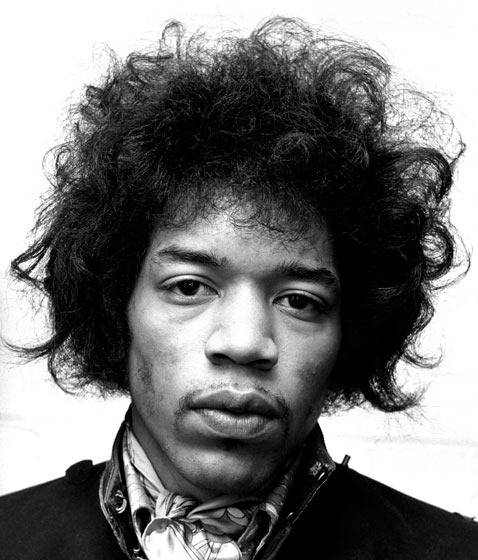
So while the girls were looking exactly where I came to shop, I contented myself to look through the new LPs.  Eventually I noticed they had disappeared, but I hadn’t finished, so I stuck with my systematic flipping of new LPs, going from Z to A.  By the time I had gotten to the I’s, two of the girls were back and jumped into the H’s right next to me, looking for Jimi Hendrix.  They pulled a couple LPs out of the bunch, and one asked the other, “Do they have ‘Purple Haze’?”  The other replied “This one does.”

ZB3276_169191_0308

They put one of Hendrix’s posthumous albums back, and took  Are You Experience with them to the other two girls, and headed to the checkout.  I really wanted to ask them how the hell did they discover Jimi Hendrix, a guy I discovered at 15, almost fifty years ago.  I thought it very strange indeed, like if I had gone in a record store in 1964 and bought a 1924 Bix Beiderbecke record.  It took me until my forties to work back in music history forty years.

I don’t normally talk to teenagers because I worry about invading their space.  When I was that age I didn’t like old people intruding, so I’m hesitant to do it  myself, now that I’m old.  I wanted to know if they read about Jimi Hendrix in a magazine, or their parents or grandparents played him at home, or they heard him on the radio.  And do teens even listen to radio now-a-days?  Jimi Hendrix is legendary, but is he well known among the young?  I imagined it’s not hard to discover him, I was just curious how.  Is he taught in school?  And why didn’t they just steal his .mp3 songs off the net like normal kids?

These little girls, who all looked alike, skinny, brown hair, dressed in dress shorts and blouses, looking like typical Bible Belt Baptists kids that I often see around Memphis, seemed so young and innocent looking.  What the hell are they listening to Jimi Hendrix for?  I remembering tripping at 16 and listening to “Purple Haze.”  Were these little clean-cut girls doing drugs?  Did their grandfathers and grandmothers tell them about the time they dropped acid and saw Hendrix?

Jimi was the ultimate bad boy of the sixties.  Girls loved him.  So I guess it’s not strange that girls might still love him.  I just can’t imagine these little girls going home, putting Hendrix on the turntable, cranking up the amp, and then lighting up a bong.  If I was a young parent today and my kid brought home a Jimi Hendrix record, I’d wonder if they were doing drugs.  Especially when the album is entitled, “Are You Experience.”

But I really doubt these girls got high.  This is a different world than 1967.  So how do 2013 children see 1967 kids?  Can they ever fathom how we grew up?  I’m living in 2013 and can’t imagine what 2013 kids are like.  When we were young we’d say, “Don’t trust anyone over 30.”  Decades later we began to say, “Don’t trust anyone under 30.”  Soon I’ll be thinking, “Don’t trust anyone under 60.”

Or is it a matter of what goes around, comes around?

are-you-experienced

I considered long and hard about buying a new LP version of Electric Ladyland, but hell, I’ve already bought it at least three times in my life (LP, CD, remastered CD).  I ended up buying 180 gram version of Ceremonials by Florence and the Machine.  An older young women, in her early twenties, the cashier, was quite pleased with my selection, and told me it was a wonderful album.  She seemed glad that gramps was trying something new, but  I wondered it she was secretly thinking, “Why doesn’t this old fart act his age and buy a Jimi Hendrix record!”

JWH – 5/27/13

Novel Ambitions

When we were young we’d all dream of growing up to be in the movies, or rocking out on stage, or flying F-16s, or writing great novels, or rocketing to Mars – the kind of careers that look exciting when we don’t know much about how the world works.  Few kids achieve their childhood ambitions.  Most of us get regular nine-to-five jobs, and just daydream about the ways we’d really like to be spending our hours.

I always wanted to be a science fiction novelist.  Because I loved reading science fiction books I assumed I’d love writing them.  As a teen I didn’t know just how wrong that logic was.  I should have wished to grow up and become a professional reader.  Even as a teen I knew kids who compulsively wrote stories.  I didn’t, but I assumed one day I’d get an urge and start.  I should have known better – the only time I wrote was when I took a creative writing class in high school or college and deadlines forced me to write.

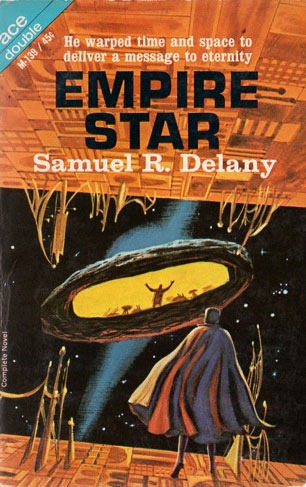
Around 1971 or 72 I went to my first science fiction convention in Kansas City, The Mid-America Con.  I was about 20 at the time and I met a lot of writers there.  But the one that impressed me the most was this kid who looked about my age who told me he had just sold his second story.  He was George R. R. Martin.  I was so impressed and jealous at this very young writer.  I felt like Comet Jo from Empire Star by Samuel R. Delaney, when he first met Ni Ti.  Comet Jo was a naïve rube with dreams that met a guy that had already done everything Comet Jo’s dreamed of doing. 

That was a revelation at that convention – writers write.  And if you want to grow up to write giant bestsellers you’ve got to start young and practice.  Delany was also a writing prodigy, and he dealt with the subject somewhat in Empire Star.

empire-star 

Those early experiences meeting writers should have convinced me to stop daydreaming about writing, but fantasy ambitions aren’t that easily destroyed.  And wanting to be a novelist is different.  Some people don’t start writing until late in life, so I figured I had plenty of time.  If I had wanted to be a football player, fire fighter or astronaut, I’d have known I was over the hill when I turned thirty.  Now that I hope to retire next year, my old fantasy ambition is returning.  I’ll finally have the time.  Probably lack of time wasn’t the real reason I never wrote, and it will be brutally revealed to me soon.  I have to be self-aware enough to recognize that wanting to write and not might be my natural state for my whole life.  But not giving up also seems to be a trait that never goes away either.

Lately, I’ve been thinking about what it means to be a novelist, the grittily specific job details.  I came across “Good Writing vs. Talented Writing” by Maria Popova over at Brain Pickings.  She quotes About Writing by Samuel R. Delany,

Either in content or in style, in subject matter or in rhetorical approach, fiction that is too much like other fiction is bad by definition. However paradoxical it sounds, good writing as a set of strictures (that is, when the writing is good and nothing more) produces most bad fiction. On one level or another, the realization of this is finally what turns most writers away from writing.

Talented writing is, however, something else. You need talent to write fiction.

Good writing is clear. Talented writing is energetic. Good writing avoids errors. Talented writing makes things happen in the reader’s mind — vividly, forcefully — that good writing, which stops with clarity and logic, doesn’t.

This is very telling. The obvious reason why I’m not a writer is the lack the talent.  But what is talent?  Is it a gene?  Is it being born with a muse?  I am reminded of a book, Talent Is Overrated: What Really Separates World-Class Performers from Everybody Else by Geoff Colvin.  Talent is mostly hard work.  If I lack talent its because I’m lazy.  But we also know that some people work very hard and never succeed, even if they put in their 10,000 hours of practice.

But even this isn’t the issue I want to explore.  What skills are really required to write a novel?  Every time I try to write fiction I hit a brick wall.  Writing fiction requires having imagination the size of Jupiter.  I don’t know if you have ever wanted to write novels, plays or movies, but have you ever thought about what goes into creating a great story?   I’ll use movies and television shows for example over books because they are more familiar to people.

Let’s think about of some of the poplar shows on TV like Breaking Bad or The Game of Thrones and dissect how they are put together, and what makes them successful.  Both stories are incredibly addictive.  I believe each has all the elements that make for great fiction.  Maybe not Shakespeare great, but great for seducing people into their story worlds.

Story World

The first aspect of great fiction is creating the story world.  This goes way beyond setting.  And I’m not talking about the world building of fantasy and science fiction, but the creating of a whole fictional reality.  Even when a story is realistic like Breaking Bad, or To Kill a Mockingbird, its creating a whole story world, time and place, with endless defining details.  As much as we’d like to believe that To Kill a Mockingbird is an accurate portrayal of the past, it isn’t.  Every written story involves two imaginations, the writer and the reader.  With movies and television shows, the director, the actors, set designers, cinematographers, costume makers, special effects wizards, also add their imaginations to creating the story world.  But with novels and short stories, the author suggests everything in words, and the readers bring their own imaginations to decode their version of the story world.  Watching The Game of Thrones, meanings most everything has been envisioned for the audience, but readers of the book all imagine something different.

The reason why the Harry Potter books are so great is because of the complete story world that J. K. Rowling created.

If you ever think about becoming a writer, do this experiment.  Each time you read a book or watch a movie, try and list everything that had to be invented by the imagination of the writer.  Most stories involves thousands of imaginative decisions, and stories like The Game of Thrones or the Harry Potter books, involve tens of thousands of mental creations, maybe even hundreds of thousands.  These novels run 100,000-200,000 words, or more.  Thinking tunic or sword are small decisions, but thinking up the details of Quidditch takes some real work.

Characters

It’s hard to say which comes first, characters or story world.  Often writers create characters that generate their story worlds.  Other writers start with the story world first and then create the characters that belong in that story world.  Either way, creating characters is very hard work.  And the best stories seem to have lots of characters.  Would The Game of Thrones or Breaking Bad stories be so compelling if they only followed a handful of main characters?  Walter White is a tremendous creation, but the depth of his character works because of his relationship with Skyler, Jesse, Hank, Walter Jr., Saul, Gus, and so on.  Think about every detail that went into creating Gustavo Fring?  Does thinking up those kinds of character details come from genes, muses or what?  Most great writers are great observers of people.

One of the hardest things to create for your characters is their dialog.  Bad writers make all their characters talk like themselves.  Great writers make all their characters sound like diverse people from all over the world.  Listen to audio books, especially the ones that have narrators who do voices for each character.  It’s not just the sound of the voice, or the accent, but how each character phrases their words.

Each character has to have their own background and history, but more important than that, each character has to have their own motivations and desires.  When we read novels generally they are driven by one or two people’s stories.  But every character that walks into a scene has their own agenda.  Bad writers create minor characters to show off the main characters, but great writers create minor characters that want to make the story their own.  Every character should be trying to steal the scene for themselves, because in reality, every person thinks they are the center of the universe.  Nobody wants to be a red shirt.

Plot

Plot is what drives the story forward.  Will Walter make enough money to leave his family secure before he dies of cancer?  Who will take the Iron Throne from Joffrey Baratheon?

Writing a plot requires imagining a beginning, middle and end.  However, modern binge worthy TV shows have no end, but are sophisticated soap operas.  Readers want a satisfying conclusion at the end of the book, even if its part of a series.  Readers love feeling the need to keep turning pages hoping to find out what happens next. 

Standalone stories, like non-series novels, and movies, have plots that lead to a satisfactory resolution of a problem revealed at the beginning of a story.  Soap opera like stories depend on a series of conflicts that get resolved from time to time.  Great stories will bring the story to a climax, and present an epiphany. 

I saw Star Trek Into Darkness yesterday.  It has the same plot every time.  Kirk and Spock play out their now famously cliché character traits while battling a almost impossible-to-beat foe, with all the minor characters also getting to reinforce their now standardize character traits.  And we love this because it reinforces the familiar and nostalgic essence of what we think of as Star Trek.  Sometimes plots involving giving the audience exactly what they want.

On the other hand, new stories must give readers and audiences something they never seen before.  Shows like Breaking Bad, Big Love, Deadwood, Shameless, Girls, etc. find ways to present new and very different plots.  Let’s face it, some of us are very old and have been consuming fiction for a very long time, and getting jaded to routine plotting is all too easy.

Conflict

Even though I greatly admire The Song of Fire and Ice for its story world, I have to nick it for stretching to the story out too long.  It’s one giant potboiler, generating a steady stream of conflicts and cliffhangers.  My favorite character is Arya Stark, who gets involved in one misadventure after the next.  She never seems to get anywhere, but she always has something life threatening to deal with.  But that’s how you keep readers and watches involved.  Characters need conflict to drive them forward in the story, and creating imaginative conflicts is another trait of a good writer.

To me, the masters of fictional conflict are the creators and writers of Breaking Bad.  Not only do they keep their characters busy, but they create original, unpredictable conflicts that we never see coming.  When I think Jesse is going to have a standard shootout with a villain, Walter shows up at the last second and runs the villain over with his car.  The cliché feeling is to want Jessie to kill the guy.  We the audience are aching for Jessie to kill the guy.  And then out of nowhere Walter runs him over.  That’s great plotting and creative conflict resolution.

Summing Up

I don’t know if creating imaginative story worlds, great characters, compelling plots and satisfying conflicts requires an innate talent.   Is it an ability that can be acquired through long study and practice?  Most books are not that creative.  Thousands of novels are published every year that don’t sell or find fans.  Many of them are competently written.  Delany might be right, that good writing is common, but bad, and talented writing is special.  Or it could be all those mundane story tellers just didn’t work hard enough to be distinctive.   Maybe creativity comes after ten rewrites, or twenty.

I feel all the stories I’ve written so far fail because I didn’t push myself hard to enough to be more creative.  I would like to know if I could push myself to work harder would I be more creative?  I have a novel I’m working on now and I feel it doesn’t even achieve 1% of what it should do.  And I have a sick feeling that even if I worked a hundred times harder it might only succeed at the 10% level.  Maybe if I had a natural talent for story telling I could achieve 90% success with far less work.  But I tend to think talented people are just people who wrote dozens of practice novels and earned their skills at faster creativity.

I have two challenges to test.  First, can I learn to write after I retire, when I have more time to work harder?  And second, is it possible for someone in their sixties to become creative late in life?  I’m not delusional, I know I’m in physical and mental decline.  I’ve already decided that writing a novel is too ambitious for this test, and that I should aim for success with short stories.

Since 2002 I’ve had a renaissance with my love of fiction because of Audible.com and audiobooks.  I have discovered that listening is the best way for me to study great writing.  Listening is like having a powerful magnifying glass for studying fiction.  And in the past year, I’ve gone back to studying fiction with eye ball reading.  What I learned from hearing lets me see words in a new way.  The more I study, the more I realize how little I knew about how fiction is put together.  I might have discovered that in my teens if I had actually tried to write fifty or a hundred stories back then.  You can’t understand fiction completely until you write it.

I don’t know if having all my time free is enough to find success at writing fiction.  Whether I succeed or not, the attempt will be a great learning experience.

JWH – 5/27/13

Buying Vinyl Records Can Be So Goddamn Annoying!!!

I wonder if the phrase “You Can’t Go Home Again” also applies to technology too?  Can we return to living with older inventions?  Why haven’t some people rejected television and returned to radio?  There’s always some Luddites.  Just last week CBS Sunday Morning had a piece about people going back to typewriters.  Really?  Who wants to go back to carbon paper and liquid paper after using a word processing?   Who would even want to return to WordPerfect or WordStar after using Microsoft Word?

Many people want to return to vinyl records.  I’ve been trying to go home again with music too, but it’s like the Thomas Wolfe novel.  I’m having trouble.

I love shopping for old records.  I love the big 12” covers.  But nostalgia is not all its cracked up to be.

I love old records, until I play them.  If they play without incident I love the heck out of them.  But if they skip, skate, crackle, pop, hiss, it shoots my blood pressure way up and pisses me off.  It makes me want to smash the record and give up LPs for good.  But I don’t.

It’s such a crapshoot to buy old records.  Come on, how much can we expect from half-century old plastic? 

I’ve bought LPs that looked mint and they’d have a constant background hiss.  I’ve bought records for one cut, and that cut, and that cut only, causes my stylus to skate.  But I’ve also bought records covered with fine scratches that sound wonderful.  It’s weird, but the heavy beat up old records from the 1950s and 1960s often play far better than the thin, nearly new looking records of the 1970s and 1980s.

Part of my problem is my “good” turntable.  It tracks so light that any imperfection causes a record to skate or skip.  My good turntable is hooked up to my good stereo.  I buy records hoping to find the wonderful warm sound of vinyl.  I play them loud.  So when a record acts up, I hear it jarringly loud, which makes it all the more annoying.  The good turntable is designed to make the records sound better, and to protect LPs from wear by lightly tracking through the grooves.  If a LP doesn’t play well on the good turntable I put it on the bad turntable in my computer room.  This older player, with its much heavier tone arm and tracking, can often play records the good turntable can’t.  But I have to listen to problem records on my computer speakers, which are Klipsch THX and sound good, but they aren’t like listening to the Infinity floor standing speakers in the den.

Maybe I should always use old technology to play old records, and new technology to play new records.

Many audiophiles claim LPs sound superior to CDs, but I disagree.  Yeah, LPs have a warm sound that’s very appealing, but it’s not why I buy records.  Modern CDs sound technically superior by far.  I buy records to travel back in time.  I want to go to a record store and shop for a new LP discovery.  I want to flip past hundreds of albums and find one I want to take a chance on.  I want to bring that album home, put it on the stereo, kick back in my recliner and listen with all my might.  And if I get lost in the experience, thrilled by discovering something wonderful, I find blissful pleasure.

All too often now I’ll be deep in reverie and BLAM! – the tone arm slams into some microscope imperfection.   Or WEEEEEERRNT! as it slides over a portion of the cut.  This is so goddamn irritating.  This seldom happened decades ago when the LPs were new.  And even now it doesn’t happen as much as you’d imagine for such ancient technology, but it happens enough to wonder why I bother with retro tech.  Digital technology is infinitely more convenient and reliable.

Like here’s a favorite LP I fell in love with back in 1968 that I recently rediscovered and bought on vinyl, The Secret Life of J. Eddy Fink by Janis Ian.  The copy I found even had the blue paper insert with a couple extra poems.

secret-life-of-j-eddy-fink

Coming home, I was so happy to have found this LP again.  I put it on with great expectations.  Then it didn’t play right.  I could have save myself a trip and $5.  It’s available to play online for free at Janis Ian’s website, and doesn’t skip there (although the site fades out the end of the song in a way so she’s not giving you’re the real thing).  I do have the same songs on a CD I bought years ago, Society’s Child: The Verve Recordings, or from Rdio, but it’s more fun to play from an LP that looks like the LP I owned 45 years ago.  Because it doesn’t play from the good turntable it ruins the whole experience and fun of buying the album.  It will play from the bad turntable and that’s a consolation, but it deflates the fun.

Does it really matter if a song comes from squiggles on vinyl, pits on a CD, or via electrons over the internet?  Why am I trying to go to a long ago past, when I have a bright and shiny present to explore?

I was buying a lot of old records.  I’ve bought 61 albums since the beginning of the year, but I’ve stopped.  I suppose I could switch to very expensive 180 gram new albums, which run $20-50, but I won’t.  I’ve gone back to mostly listening to Rdio.  It has about a million albums.  I’m not hurting for music to listen to.  It was just fun trying to find lost albums.  I just missed record stores and flipping through bins of records.  But I guess I can’t go home again.

I haven’t completely given up on vinyl.  I’m just more careful.  I’m learning to be a more savvy vinyl shopper.  I keep my eye out for LPs that have never been reprinted, or the CDs have long gone out of print too.  I use digital for most stuff, and vinyl for when digital lets me down.

I guess I’m an old fart when I claim that buying music online is not the same experience as shopping for records in a store.  That something has been lost by modern ways.  But I am willing to admit that the new ways, with modern technology, are far superior.  If I was forced to choose between Rdio and records that played perfectly every time, I’d pick Rdio.  If I was forced to choose between Amazon and bookstores, I’d pick Amazon.  The world wide web is better than CompuServe and GENIE.  I’m not crazy.  I do know a 2013 Ford Mustang is technically superior to its 1965 classic ancestor, even though people will pay far more for the older model.  Nostalgia sells, but modern technology is superior.

We might talk about going home, but now is better.  For instance, a couple weeks ago I got a heart stent.  In 1968 I’d have been shit out of luck.

JWH – 5/25/13

The Evolution and Education of Artificial Minds

After space travel, one of the most loved themes of science fiction is robots.  Many people, going back centuries, have imagined creating artificial people.  Writers of robot stories have seldom explored the technical details behind what it means to create a thinking being, they just assumed it will be done – in the future.  Since the 1950s artificial intelligence has been a real academic pursuit, and even though scientists have produced machines that can play chess and Jeopardy, many people doubt the possibility of ever building a machine that knows it’s playing chess or Jeopardy.

I disagree, although I have no proof or authority to say so.  Let’s just say if I was to bet money on which will come first, a self-aware thinking machine or a successful manned mission to Mars, I put my money on arrival of thinking machines.  I’m hoping for the both sometimes before I die, and I’m 61.

There is a certain amount of basic logic involved in predicting intelligent machines.  If the human mind evolved through random events in nature, and intelligence emerged as a byproduct of ever growing biological complexity, then it’s easy to suggest that machine intelligence can evolve out the development of ever growing computer complexity.

However, there’s talk on the net about the limits of high performance computing (HPC), and the barriers of scaling it larger – see “Power-mad HPC fans told: No exascale for you – for at least 8 years” by Dan Olds at The Register.  The current world’s largest computer needs 8 megawatts to crank out 18 petaflops, but to scale it up to an exaflop machine, would require 144 megawatts of power, or a $450 million dollar annual power bill.  And if current supercomputers aren’t as smart as a human, and cost millions to run, is it very likely we’ll ever have AI machine or android robots that can think like a man?  It makes it damn hard to believe in the Singularity.  But I do.  I believe intelligent machines are one science fictional dream within our grasp.

Titan1

[click on photos for larger images]

Titan is the current speed demon of supercomputers, and is 4352 square feet in size.  Even if all it’s power could be squeezed into a box the size of our heads, it wouldn’t be considered intelligent, not in the way we define human intelligence.  No human could calculate what Titan does, but it’s still considered dumb by human standards of awareness.  However, I think it’s wrong to think the road to artificial awareness lies down the supercomputer path.  Supercomputers can’t even do what a cockroach does cognitively.  They weren’t meant to either.

It’s obvious that our brains aren’t digital computers.  Our brains process patterns and are composed of many subsystems, whose sum are greater than the whole.  Self-aware consciousness seems to be a byproduct of evolutionary development.  The universe has always been an interaction between its countless parts.  At first it was just subatomic particles.  Over time the elements were created.  Then molecules, which led to chemistry.  Along the way biology developed.  As living forms progressed through the unfolding of evolutionary permutations, various forms of sensory organs developed to explore the surrounding reality.  Slowly the awareness of self emerged.

There are folks who believe artificial minds can’t be created because minds are souls, and souls come from outside of physical reality.  I don’t believe this.  One proof I can give is we can alter minds by altering their physical bodies.

To create artificial beings with self-awareness we’ll need to create robots with senses and pattern recognition systems.  My guess is this will take far less computing power than people currently imagine.  I think the human brain is based on simple tricks we’ve yet to discover.  It’s three pounds of gray goo, not magic.

Human brains don’t process information anywhere near as fast as computers.  We shouldn’t need exascale supercomputers to recreate human brains in silicon.  We need a machine that can see, hear, touch, smell, taste, and can learn a language.  Smell, touch and taste might not be essential.  One thing I seldom see discussed is learning.  It takes years for a human to develop into a thinking being.  Years of processing patterns into words and memories.  If we didn’t have language and memory would we even be self-aware?  If it takes us five years to learn to think like a five-year-old, how long will it take a machine?

And if scientists spend years raising up an artificial mind that thinks and is conscious, can we turn it off?  Will that be murder?  And if we turn it off and then back on, will it be the same conscious being as before?  How much of our self-awareness is memory?  Can we be a personality if we only have awareness of the moment?  Won’t self-awareness need a kind of memory that’s different from hard drive type memory?

I believe intelligent, self-aware machines could emerge in our lifetimes, if we all live long enough.  I doubt we’ll see them by 2025, but maybe by 2050.  Science fiction has long imagined first contact with an intelligent species from outer space, but what if we make first contact with beings we created here on Earth? How will that impact society?

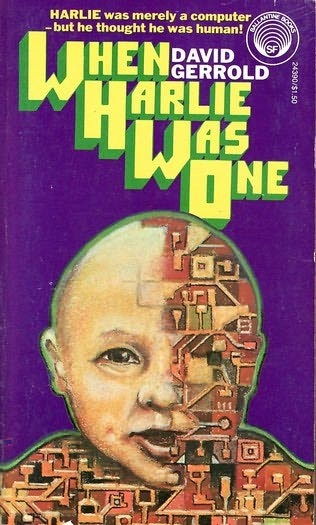
There have been thousands of science fiction stories about artificial minds, but I’m not sure many of them are realistic.  The ones I like best are:  When HARLIE Was One by David Gerrold, Galatea 2.2 by Richard Powers and the Wake, Watch Wonder Trilogy by Robert J. Sawyer.

when-harlie-was-one

galatea-2.2

wake

These books imagine the waking of artificial minds, and their growth and development.  Back in the 1940s Isaac Asimov suggested the positronic brain.  He assumed we’d program the mechanical brain.  I believe we’ll develop a cybernetic brain that can learn, and through interacting with reality, will develop a mind and eventual become self-aware.  What we need is a cybercortex to match our neocortex.  We won’t need an equivalent for the amygdala, because without biology our machine won’t need those kinds of emotions (fear, lust, anger, etc.).  I do imagine our machine will develop intellectual emotions (curiosity, ambition, serenity, etc.).  An interesting philosophical question:  Can there be love without sex?  Maybe there are a hundred types of loves, some of which artificial minds might explore.  And I assume the new cyber brains might feel things we never will.

In the 19th century there were people who imagined heavier than air flight long before it happened.  Now I’m not talking a prophecy.  Most people before October 4, 1957 would not have believed  that man would land on the Moon by 1969.  I supposed we can pat science fiction on the back for preparing people for the future and inspiring inventors, but I don’t know if that’s fair.  Rockets and robots would have been invented without science fiction, but science fiction lets the masses play with emerging concepts, preparing them for social change.

My guess is a cybercortex will be invented accidently sometime soon leading to intelligent robots that will impact society like the iPhone.  These machines with the ability to learn generalized behavior might not be self-aware at first, but they will be smart enough to do real work – work humans like to do now.  And we’ll let them.  For some reason, we never say no to progress.

I’m not really concerned cybernetic doctors and lawyers.  I’m curious what beings with minds that are 2x, 5x, 10x or 100x times smarter than us will do with their great intelligence.  I do not fear AI minds wiping us out.  I’m more worried that they might say, “Want me to fix that global warming problem you have?” Or, “Do you want me to tell the equations for the grand unified theory?”

How will we feel if we’re not the smartest dog around?

JWH – 5/19/13

The Heart (Disease) of the Matter

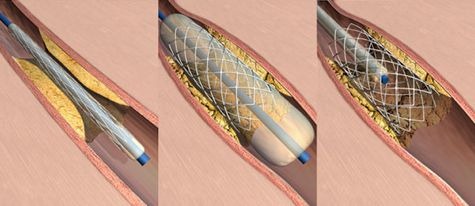
On May 9th, I had a stent put in my coronary artery.  For months I’ve been having out-of-breath episodes, but I thought it was just because I was getting older, and not getting enough exercise.  In the last few weeks it got worse so I went to see my doctor and she sent me for a bunch of tests that ended up with a heart cath and getting a stent.  It’s been an extremely educational month with lots of philosophical implications.

coronary-stent

Our hearts are just pumps, and our veins and arteries just hoses, but when they stop functioning, it feels very metaphysical.  To actually feel them failing is quite revealing about existence and non-existence.  I’m sure the faithful would feel heart disease as a spiritual turning point, a time to communicate with God, and contemplate life after death.  Since I’m an atheist, I contemplated non-existence and thought about physics, chemistry and biology.  The heart and circulatory system is a machine that follows the laws of physics, much like the water pump in your car.  I had a rather fundamental plumbing problem:  a blocked hose.

The first diagnostic test I had was a calcium CT scan.  I got a score of 451, which my doctor didn’t like at all.  My second test was a Thallium treadmill test, which I passed, but the photographs suggested problems.  She sent me to a cardiologist.  It took a couple of weeks to get to see a cardiologist, and that was stressful in itself.  I went to a cardiology center with 32 cardiologists and the earliest appointment I could get was two weeks.  Lots of people with heart problems out there!  Time and again I was told if I needed immediate attention to go to an emergency room.  Fixing hearts is a factory-like affair.  Don’t expect a lot of personal attention.

My advice to the young:  Eat healthy now!  Don’t break your own heart. 

My clogged arteries were my fault.   Yes, the doctors can often fix your heart problems, but if you’ve ever had to deal with an old machine with breaking parts, you know one fix is just temporary before another part will go.  A stent only squishes the plaque up against the artery wall, making more room for blood flow, it’s not a form of healing.  And you don’t get plaque in just one place, it’s all over.  I just had a blockage in two high traffic area, with one bad enough for a stent.

The stent is only part of the solution.  I now have to take a bunch of drugs.  I’ve always been horrified at the sight of elderly people worrying over their prescription medicines.  I’ve always thought being over the hill as living with lots of orange plastic bottles, and now I’m part of that demographic.  Here’s where chemistry and biology comes into this story.  Modern day medicine men are scientists.  Our bodies are biological machines they study.  Millions of chemical reactions go on within our body all the time.  Doctors work by statistical studies, and the numbers tell them that my odds of living longer are improved if I consume certain chemicals.  I can’t argue with them.  I take the drugs.

These are cold equations, indifferent to how we feel philosophical about our health situation.  I hate taking drugs!  I fear drug side effects.  I hate being depended on drugs, even though I’m am quite thankful that science created them.  I’m very lucky to have good health insurance and live in a country where these kinds of problems can routinely be fixed – if they are found in time.  A fellow computer guy died at work from a heart attack recently.

My father died at 49 on his third heart attack.  He also survived a stroke.  He chained smoked Camels, drank a lot of Seagram 7, and his standard chow was steak and potatoes.  I’ve always wondered why he didn’t try to change his lifestyle, and now I know why.  I’ve been overweight for decades.  I didn’t listen to all the warnings.  In the last few years I’ve tried to eat healthier but it’s hard.  Is comes down to this:  Do I do what I like?  Or, do I do what’s good for me?  Even when I was having trouble breathing I’d often be thinking about how I wanted junk food.  I’m pretty sure my father thought “I’d rather die than change.”  Me, I picked change – but at the last minute.  Not very wise.

Since New Year’s I’ve been reading books by Dr. Dean Ornish and Dr. Joel Fuhrman about using diet to reverse heart disease, and watching documentaries on Netflix about reversing chronic disease through proper eating.  Ornish’s book Program for Reversing Heart Disease came out in 1990, and Fuhrman’s Eat to Live came out in 2003.  I even read parts of Eat to Live ten years ago.  But the nightly news programs have been warning about the evils obesity for decades.  Until your heart actually sucker-punches you a good one, it’s hard to take such warnings seriously.  I should have.

My friend Mike asked me if I thought about God in the hospital.  I did, but not in the way he intended.  Feeling the closeness of mortality showed me why people pray.  The gut instinct is to think “Get me out of this!”  You want magic to work.  It doesn’t.  Thinking that an all-powerful being could rescue you is an obvious wish.  I wish there was such a personal savior, but I didn’t find one.  I knew there was a blockage in the artery going to the heart.  I hoped diet would clear it, but my doctor said he doubted it, and I knew I had spent decades building the blockage, so I knew he was probably right.  I knew my only hope was his skill and the scientific knowledge he possessed.  Medicine is collective knowledge that works.  It’s not magic, and it doesn’t always work, but it’s the only real game in town.

We’d like to believe we’re the master of our own fate, or that a magical being cares for us.  But neither positive thinking or spiritual belief affects reality.  My chance of using the power of self-control had long passed.  If I wanted control of my fate, I should have lost weight thirty years ago.  The reality is death comes to us all.  We can extend our lifetimes and improve our health if we work at it, but we have to put in the effort.

I do believe we have the power to affect our health, just watch this video.

I cannot do anything about not starting sooner.  I couldn’t avoid that first stent at the last moment.  I’ve already lost 15 pounds.  Maybe I can avoid the next stent.  I don’t know if a plant based diet can reverse heart disease, but it’s the hypothesis that I’m using  for now.

My final lesson was about dying.  When you think time might be up you learn what you really want:  more time!

Getting close to the end only reinforces the awareness that time comes to an end.

The funny thing was I learned I didn’t want to do big bucket list things, but to have more time for all the little things I do now, and to keep seeing everyone I know now.

JWH –5/12/13